

It's complicated: the relationship between user trust, model accuracy and explanations in AI
Open accessThe DOI matches its Crossref record; 49 of the 49 references it cites were found in a registry or an index.
Abstract
Automated decision-making systems become increasingly powerful due to higher model complexity. While powerful in prediction accuracy, Deep Learning models are black boxes by nature, preventing users from making informed judgments about the correctness and fairness of such an automated system. Explanations have been proposed as a general remedy to the black box problem. However, it remains unclear if effects of explanations on user trust generalise over varying accuracy levels. In an online user study with 959 participants, we examined the practical consequences of adding explanations for user trust: We evaluated trust for three explanation types on three classifiers of varying accuracy. We find that the influence of our explanations on trust differs depending on the classifier’s accuracy. Thus, the interplay between trust and explanations is more complex than previously reported. Our findings also reveal discrepancies between self-reported and behavioural trust, showing that the choice of trust measure impacts the results.
Overview
The claims and statistics of this paper haven’t been checked yet.
Free: it reads the open-access text and checks the first 5 claims that cite a source we can check. Create a free account to check every claim.
Integrity signals
Registry
Cites
Statistics
Figures




Verification
Claims the paper makes
The claims and statistics of this paper haven’t been checked yet.
Free: it reads the open-access text and checks the first 5 claims that cite a source we can check. Create a free account to check every claim.
Claims other papers make about this one
Each is checked against this paper’s own text: does it say what the citing paper says it does?
The cited source says what the claim attributes to it.
In the citing paper
“However, research has shown that subjective trust can be a poor predictor of actual reliance (Dzindolet et al., 2003; Miller et al., 2016; Papenmeier et al., 2022).”
From Exploring the effects of human-centered AI explanations on trust and reliance (2023) · cites this paper as Papenmeier et al., 2022
The cited source says what the claim attributes to it.
In the citing paper
“The outcome of questionnaires is influenced by the participants' ability to reflect their attitude towards a system, which can be difficult for some participants (Papenmeier et al., 2022).”
From Trust, distrust, and appropriate reliance in (X)AI: A conceptual clarification of user trust and survey of its empirical evaluation (2025) · cites this paper as Papenmeier et al., 2022
The cited source says what the claim attributes to it.
In the citing paper
“Across multiple studies in our overview a discrepancy between self-report and behavioural measures is observed (e.g., Papenmeier et al., 2022Papenmeier et al., , 2021;;Wang & Yin, 2023).”
From Trust, distrust, and appropriate reliance in (X)AI: A conceptual clarification of user trust and survey of its empirical evaluation (2025) · cites this paper as Papenmeier et al., 2022
Self-check
Percentages, sums and reported differences re-computed from the paper’s own numbers.
The self-check needs the paper’s full text.
Citations
Cites
"Why Should I Trust You?": Explaining the Predictions of Any Classifier
Ribeiro, M. T., Singh, S., & Guestrin, C. (2016) · Proceedings of the 22nd ACM SIGKDD International Conference on Knowledge Discovery and Data Mining · doi:10.1145/2939672.2939778 · Cited by 17,555
Proceedings of the 24th international conference on Machine learning
(2007) · doi:10.1145/1273496 · Cited by 11,630
Arrieta, A. B., Díaz-Rodríguez, N., Del Ser, J., Bennetot, A., Tabik, S., Barbado, A., García, S., Gil-López, S., Molina, D., Benjamins, R., et al. (2019) · arXiv · doi:10.48550/arxiv.1910.10045 · Cited by 11,321
Barredo Arrieta, A., Díaz-Rodríguez, N., Del Ser, J., Bennetot, A., Tabik, S., Barbado, A., Garcia, S., Gil-Lopez, S., Molina, D., Benjamins, R., et al. (2020) · Information Fusion · doi:10.1016/j.inffus.2019.12.012 · Cited by 10,423
Trust in Automation: Designing for Appropriate Reliance
Lee, J. D., & See, K. A. (2004) · Human Factors: The Journal of the Human Factors and Ergonomics Society · doi:10.1518/hfes.46.1.50_30392 · Cited by 6,605
Lipton, Z. C. (2018) · Queue · doi:10.1145/3236386.3241340 · Cited by 5,427
Rempel, J. K., Holmes, J. G., & Zanna, M. P. (1985) · Journal of Personality and Social Psychology · doi:10.1037/0022-3514.49.1.95 · Cited by 3,146 · cited 2×
“Moreover, trust builds up over time [42] and shows phases of development and refinement [54].”
BackgroundExplaining Explanations: An Overview of Interpretability of Machine Learning
Gilpin, L. H., Bau, D., Yuan, B. Z., Bajwa, A., Specter, M., & Kagal, L. (2018) · 2018 IEEE 5th International Conference on Data Science and Advanced Analytics (DSAA) · doi:10.1109/dsaa.2018.00018 · Cited by 2,507 · cited 1×
“[15] therefore suggest to account for the limited human attention span and cognitive abilities when designing explanations, e.”
BackgroundStraightforward Statistics for the Behavioral Sciences.
Wuensch, K. L., & Evans, J. D. (1996) · Journal of the American Statistical Association · doi:10.2307/2291607 · Cited by 2,409
Anchors: High-Precision Model-Agnostic Explanations
Ribeiro, M. T., Singh, S., & Guestrin, C. (2018) · Proceedings of the AAAI Conference on Artificial Intelligence · doi:10.1609/aaai.v32i1.11491 · Cited by 2,162 · cited 1×
“An example for such model-agnostic add-on systems are LIME and the Anchors, both developed by Ribeiro, Singh, and Guestrin [43, 44].”
Method
Research works printed but not linked: 10
- P. S. Altares, A. R. I. Copo, Y. A. Gabuyo, A. T. Laddaran, L. D. P. Mejia, I. A. Policarpio, E. A. G. Sy, H. D. Tizon, and A. M. S. D. Yao. 2003. Elementary statistics: A modern approach. Rex Bookstore Inc. Manila, Philippines.
- Or Biran and Courtenay Cotton. 2017. Explanation and justification in machine learning: A survey. In Proceedings of the IJCAI-17 Workshop on Explainable AI (XAI).
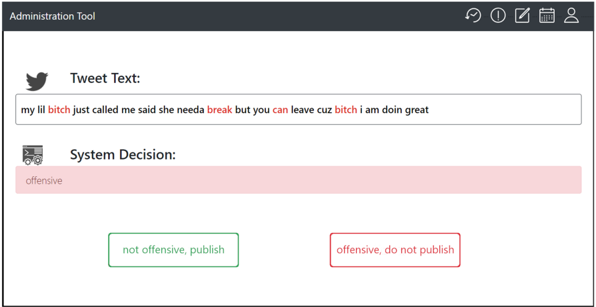
- Thomas Davidson, Dana Warmsley, Michael Macy, and Ingmar Weber. 2017. Automated hate speech detection and the problem of offensive language. In Proceedings of the 11th International AAAI Conference on Web and Social Media. 512–515.
- 10.1518/hfes.46.1.50.30392 · doi:10.1518/hfes.46.1.50.30392 · Paper page
- Maria Madsen and Shirley Gregor. 2000. Measuring human-computer trust. In Proceedings of the 11th Australasian Conference on Information Systems. Citeseer, 6–8.
- Nazila Gol Mohammadi, Sachar Paulus, Mohamed Bishr, Andreas Metzger, Holger Könnecke, Sandro Hartenstein, Thorsten Weyer, and Klaus Pohl. 2013. Trustworthiness attributes and metrics for engineering trusted internet-based software systems. In Proceedings of the International Conference on Cloud Computing and Services Science. Springer, 19–35.
- Mahsan Nourani, Joanie King, and Eric Ragan. 2020. The role of domain expertise in user trust and the impact of first impressions with intelligent systems. In Proceedings of the AAAI Conference on Human Computation and Crowdsourcing. 112–121.
- Mireia Ribera and Agata Lapedriza. 2019. Can we do better explanations? A proposal of user-centered explainable AI. In Proceedings of the IUI Workshops.
- Ariella Richardson and Avi Rosenfeld. 2018. A survey of interpretability and explainability in human-agent systems. In Proceedings of the XAI Workshop on Explainable Artificial Intelligence. 137–143.
- Jasper van der Waa, Jurriaan van Diggelen, Karel van den Bosch, and Mark Neerincx. 2018. Contrastive explanations for reinforcement learning in terms of expected consequences. In Proceedings of the IJCAI-17 Workshop on Explainable AI (XAI).
Cited by
When combinations of humans and AI are useful: A systematic review and meta-analysis
Vaccaro, M., Almaatouq, A., & Malone, T. (2024) · Nature Human Behaviour · doi:10.1038/s41562-024-02024-1 · Cited by 570
“For example, some studies estimate overall accuracy on the basis of the evaluation of as many as 500 distinct images 25 , whereas others estimate it on the basis of the evaluation of as few as 15 distinct ones 42 .”
The role of explainable AI in the context of the AI Act
Panigutti, C., Hamon, R., Hupont, I., Fernandez Llorca, D., Fano Yela, D., Junklewitz, H., Scalzo, S., Mazzini, G., Sanchez, I., Soler Garrido, J., et al. (2023) · 2023 ACM Conference on Fairness Accountability and Transparency · doi:10.1145/3593013.3594069 · Cited by 137
“Many factors play a role in the relationship between trust and AI explanations [91, 119].”
BackgroundExplainable Artificial Intelligence-Based Decision Support Systems: A Recent Review
Kostopoulos, G., Davrazos, G., & Kotsiantis, S. B. (2024) · Electronics · doi:10.3390/electronics13142842 · Cited by 267
“This can be further analyzed through statistical tests to determine if the differences are significant [85].”
Westphal, M., Vössing, M., Satzger, G., Yom‐Tov, G. B., & Rafaeli, A. (2023) · Computers in Human Behavior · doi:10.1016/j.chb.2023.107714 · Cited by 183
Artificial Intelligence and User Experience in reciprocity: Contributions and state of the art
Virvou, M. K. (2023) · Intelligent Decision Technologies · doi:10.3233/idt-230092 · Cited by 218
Explanations, Fairness, and Appropriate Reliance in Human-AI Decision-Making
Schoeffer, J., De-Arteaga, M., & Kühl, N. (2024) · Proceedings of the CHI Conference on Human Factors in Computing Systems · doi:10.1145/3613904.3642621 · Cited by 68
“Perceptions and sensitive features.”
BackgroundThe effects of explanations on automation bias
Vered, M., Livni, T., Howe, P. D. L., Miller, T., & Sonenberg, L. (2023) · Artificial Intelligence · doi:10.1016/j.artint.2023.103952 · Cited by 114
Visser, R., Peters, T. M., Scharlau, I., & Hammer, B. (2025) · Cognitive Systems Research · doi:10.1016/j.cogsys.2025.101357 · Cited by 58
“…(Alam & Mueller, 2021), transparency (Berkovsky et al., 2017; Guesmi et al., 2023, 2021; Zhao et al., 2019), familiarity (He et al., 2023; Papenmeier et al., 2022), benefit monetary compensation (Vasconcelos et al., 2023), experience with AI (Spitzer et al., 2024), need for cognition…”
InfluentialExploring the effects of human-centered AI explanations on trust and reliance
Scharowski, N., Perrig, S. A. C., Svab, M., Opwis, K., & Brühlmann, F. (2023) · Frontiers in Computer Science · doi:10.3389/fcomp.2023.1151150 · Cited by 57
A Critical Survey on Fairness Benefits of Explainable AI
Deck, L., Schoeffer, J., De‐Arteaga, M., & Kühl, N. (2024) · ACM Conference on Fairness, Accountability, and Transparency (FAccT) · doi:10.1145/3630106.3658990 · Cited by 142
Mitigating knowledge imbalance in AI-advised decision-making through collaborative user involvement
Gomez, C., Unberath, M., & Huang, C.-M. (2023) · International Journal of Human-Computer Studies · doi:10.1016/j.ijhcs.2022.102977 · Cited by 50
Al-Ansari, N., Al‐Thani, D., & Al-Mansoori, R. S. (2024) · Human Behavior and Emerging Technologies · doi:10.1155/2024/4628855 · Cited by 70
Kahr, P. K., Rooks, G., Willemsen, M. C., & Snijders, C. C. P. (2024) · ACM Transactions on Interactive Intelligent Systems · doi:10.1145/3686164 · Cited by 49
Explainable Artificial Intelligence for Medical Applications: A Review
Sun, Q., Akman, A., & Schuller, B. W. (2024) · ACM Transactions on Computing for Healthcare · doi:10.1145/3709367 · Cited by 140
Wang, S. (2023) · Computers in Human Behavior · doi:10.1016/j.chb.2023.107971 · Cited by 65
Salimzadeh, S., He, G., & Gadiraju, U. (2024) · Proceedings of the CHI Conference on Human Factors in Computing Systems · doi:10.1145/3613904.3641905 · Cited by 41
“Such factors can be broadly classified into three primary categories: human-related factors [35, 95, 96], attributes of the AI systems [94, 98], and characteristics of the decision-making tasks [16, 56, 126].”
BackgroundKahr, P. K., Rooks, G., Willemsen, M. C., & Snijders, C. C. P. (2023) · Proceedings of the 28th International Conference on Intelligent User Interfaces · doi:10.1145/3581641.3584058 · Cited by 39
“[57, 58], which reported repeated tasks with medium effect sizes (0.”
BackgroundResultInfluentialOberste, L., & Heinzl, A. (2022) · IEEE Transactions on Artificial Intelligence · doi:10.1109/tai.2022.3227225 · Cited by 39
“Desiring explanations as well as understanding and trusting their rationales heavily depends on the user [11], [21], [22].”
BackgroundEvans, R. P., Bryant, L. D., Russell, G., & Absolom, K. L. (2024) · International Journal of Medical Informatics · doi:10.1016/j.ijmedinf.2024.105342 · Cited by 41
DeepFixCX : Explainable privacy‐preserving image compression for medical image analysis
Gaudio, A., Smailagic, A., Faloutsos, C., Mohan, S., Johnson, E., Liu, Y., Costa, P., & Campilho, A. (2023) · Wiley Interdisciplinary Reviews Data Mining and Knowledge Discovery · doi:10.1002/widm.1495 · Cited by 45
“The use of explanations to acquire trust is raises ethical challenges, particularly in choice of metric used to evaluate user trust (Papenmeier et al., 2022).”
BackgroundLu, J., Yan, Y., Huang, K., Yin, M., & Zhang, F. (2024) · Group Decision and Negotiation · doi:10.1007/s10726-024-09912-x · Cited by 44
“…the design of AI feedback and collaborative workflow could not only fail to enhance their collaboration (Poursabzi-Sangdeh et al. 2021; Zhang et al. 2020; Eiband et al. 2019; Frederick 2005; Papenmeier et al. 2022; Smith-Renner et al. 2020), but also negatively affect the co-learning process.”
What drives the corporate payoffs of using generative artificial intelligence?
Bughin, J. (2024) · Structural Change and Economic Dynamics · doi:10.1016/j.strueco.2024.09.011 · Cited by 40
The Emerging Era of Human-AI Interaction: Keynote Address
Virvou, M. K. (2022) · International Conference on Information, Intelligence, Systems & Applications (IISA) · doi:10.1109/iisa56318.2022.9904422 · Cited by 31
“However, due to the growing interest in the AI-empowered computers, there are features that have been added to the high priority list of quality characteristics of Human-AI Interactions, such as explainability and trustworthiness e.g. [17], [18].”
BackgroundExplainable AI decision support improves accuracy during telehealth strep throat screening
Gomez, C., Smith, B.-L., Zayas, A., Unberath, M., & Canares, T. (2024) · Communications Medicine · doi:10.1038/s43856-024-00568-x · Cited by 30
Explainable AI for trustworthy intelligent process monitoring
Johannssen, A., Qiu, P., Yeganeh, A., & Chukhrova, N. (2025) · Computers & Industrial Engineering · doi:10.1016/j.cie.2025.111407 · Cited by 43
Aquilino, L., Dio, C. D., Manzi, F., Massaro, D., Bisconti, P., & Marchetti, A. (2025) · Informatics · doi:10.3390/informatics12030070 · Cited by 44
“Moreover, studies show how trust lowers when the information given indicates that the certainty of the suggestion is low [116] or that the algorithm has limitations [117].”
Operationalizing Explainable Artificial Intelligence in the European Union Regulatory Ecosystem
Nannini, L., Alonso, J. M., Catalá, A., Lama, M., & Barro, S. (2024) · IEEE Intelligent Systems · doi:10.1109/mis.2024.3383155 · Cited by 43
“10 Furthermore, user acceptance of an explanation does not automatically equate to improved comprehension or functional ef fi ciency.”
BackgroundHuang, Z., Yu, H., Fan, G., Shao, Z., Li, M., & Liang, Y. (2023) · Expert Systems with Applications · doi:10.1016/j.eswa.2023.121640 · Cited by 27
Gaba, A., Kaufman, Z., Cheung, J., Shvakel, M., Hall, K. W., Brun, Y., & Xiong, C. (2023) · IEEE Transactions on Visualization and Computer Graphics · doi:10.1109/tvcg.2023.3327192 · Cited by 33
“There are discrepancies between self-reported and behavioral measures of trust [55] (the two are weakly correlated), suggesting that they are inherently different [18].”
BackgroundGambo, I., Massenon, R., Lin, C., Ogundokun, R. O., Agarwal, S., & Pak, W. (2024) · IEEE Access · doi:10.1109/access.2024.3443527 · Cited by 22
“There are also open questions around evaluating user trust in explanations [100].”
BackgroundThe Co-12 Recipe for Evaluating Interpretable Part-Prototype Image Classifiers
Nauta, M., & Seifert, C. (2023) · Communications in computer and information science · doi:10.1007/978-3-031-44064-9_21 · Cited by 30
Self-citationDo Expressions Change Decisions? Exploring the Impact of AI's Explanation Tone on Decision-Making
Okoso, A., Yang, M., & Baba, Y. (2025) · CHI Conference on Human Factors in Computing Systems · doi:10.1145/3706598.3713744 · Cited by 32
“Some studies have found that users may assert trust in an AI system yet ignore its suggestions [54, 55, 57, 62].”
Sokol, K., & Vogt, J. E. (2024) · CHI Conference Extended Abstracts on Human Factors in Computing Systems (CHI EA) · doi:10.1145/3613905.3651047 · Cited by 35
“…the quality of a data-driven model – e.g., as determined by its truthfulness with respect to the underlying data-generating phenomenon or, simply, predictive performance – and the effectiveness of an explainer, which relation may not be fixed across AI systems with different capabilities [59].”
Lünich, M., & Keller, B. (2024) · ACM Conference on Fairness, Accountability, and Transparency (FAccT) · doi:10.1145/3630106.3658953 · Cited by 41
“It also positively affects trust in AI [65, 66, 88].”
BackgroundBuilding Trust in Artificial Intelligence: A Systematic Review through the Lens of Trust Theory
Regona, M., Yiğitcanlar, T., Hon, C. K. H., & Teo, M. M. (2026) · ACM Computing Surveys · doi:10.1145/3789256 · Cited by 32
“Iterative refinement through real-world interactions signals reliability and alignment with evolving requirements, reinforcing accountability and long-term trustworthiness [67].”
InfluentialWhen Are Combinations of Humans and AI Useful?Preprint
Vaccaro, M. A., Almaatouq, A., & Malone, T. W. (2024) · doi:10.31234/osf.io/mk46p · Cited by 16
Mathew, R., & Stefaniak, J. E. (2024) · TechTrends · doi:10.1007/s11528-024-00964-z · Cited by 15
“Users cannot fully trust the system due to a lack of transparency (Papenmeier et al., 2022).”
Impact of Tone-Aware Explanations in Recommender Systems
Okoso, A., Otaki, K., Koide, S., & Baba, Y. (2025) · ACM Transactions on Recommender Systems · doi:10.1145/3718101 · Cited by 19
“While this study focuses on evaluating perceived metrics, future research should explore how these perceptions translate into real-world outcomes, such as purchasing behavior or long-term satisfaction.”
A Diachronic Perspective on User Trust in AI under Uncertainty
Dhuliawala, S., Zouhar, V., El‐Assady, M., & Sachan, M. (2023) · Conference on Empirical Methods in Natural Language Processing (EMNLP) · doi:10.18653/v1/2023.emnlp-main.339 · Cited by 50
López, C., Davidoff, A., Luco, F., Humeres, M., & Correa, T. (2024) · International Journal of Human-Computer Interaction · doi:10.1080/10447318.2024.2356910 · Cited by 21
“Scholars have found that trust in AI depends on intersecting factors, including the accuracy of its outcomes and the explanations given (Papenmeier et al., 2022; Quezada, 2022; Shin, 2021).”
Graduate Education in China Meets AI: Key Factors for Adopting AI-Generated Content Tools
Tang, Y., & Su, L. (2024) · Libri · doi:10.1515/libri-2024-0079 · Cited by 19
Muralidhar, D., Belloum, R., & Ashok, A. (2025) · International Journal of Human-Computer Studies · doi:10.1016/j.ijhcs.2025.103591 · Cited by 25
The Impact of Explanations on Fairness in Human-AI Decision-Making: Protected vs Proxy Features
Goyal, N., Baumler, C., Nguyen, T. T., & Daumé, H. (2024) · ACM International Conference on Intelligent User Interfaces (IUI) · doi:10.1145/3640543.3645210 · Cited by 27
“Lee et al. [40] find that explanations of an AI system’s general decision-making process do not increase perceived fairness while input-output level explanations of individual outcomes have mixed effects on fairness perceptions.”
BackgroundKahr, P. K., Rooks, G., Snijders, C. C. P., & Willemsen, M. C. (2025) · CHI Conference on Human Factors in Computing Systems · doi:10.1145/3706598.3713099 · Cited by 26
Exploring better alternatives to size metrics for explainable software defect prediction
Chai, C., Fan, G., Yu, H., Huang, Z., Ding, J., & Guan, Y. (2023) · Software Quality Journal · doi:10.1007/s11219-023-09656-y · Cited by 15
“However, software defect prediction models have been found to lack trust among practitioners, as reported by Papenmeier et al. (2022).”
"It Warned Me Just at the Right Moment": Exploring LLM-based Real-time Detection of Phone Scams
Shen, Z., Yan, S., Zhang, Y., Luo, X., Ngai, G., & Fu, E. Y. (2025) · CHI Conference Extended Abstracts on Human Factors in Computing Systems (CHI EA) · doi:10.1145/3706599.3720263 · Cited by 28
Trust and Reliance in Consensus-Based Explanations from an Anti-Misinformation Agent
Ueno, T., Kim, Y., Oura, H., & Seaborn, K. (2023) · CHI Conference Extended Abstracts on Human Factors in Computing Systems (CHI EA) · doi:10.1145/3544549.3585713 · Cited by 14
“Most recently, Papenmeier, Kern, Englebienne and Seifert [25] reported discrepancies between self-reported trust and trust as a behavior, indicating that it is important to clearly distinguish between attitude and behavior.”
BackgroundPOTDAI: A Tool to Evaluate the Perceived Operational Trust Degree in Artificial Intelligence Systems
Martín-Moncunill, D., García-Laredo, E., & Nieves, J. C. (2024) · IEEE Access · doi:10.1109/access.2024.3454061 · Cited by 10
Zaben, S. O., Zainon, W. M. N. W., & Sabry, A. H. (2025) · Results in Engineering · doi:10.1016/j.rineng.2025.104744 · Cited by 11
Balancing privacy and performance in healthcare: A federated learning framework for sensitive data
Tanveer, F., Iradat, F., Iqbal, W., AlSagri, H. S., Alhakbani, H. A., Ahmad, A., & Khan, F. A. (2025) · Digital Health · doi:10.1177/20552076251381769 · Cited by 15
“5,8,9 To address these issues, this research proposes a holistic PPML framework that balances technical and human-centered considerations.”
InfluentialFröhlich, P., Mirnig, A. G., Falcioni, D., Schrammel, J., Diamond, L. M., Fischer, I., & Tscheligi, M. (2022) · Quality and User Experience · doi:10.1007/s41233-022-00053-0 · Cited by 10
“There have been many approaches towards the definition and measurement of trust [46, 63, 82, 112].”
BackgroundCo-designing Explainable Robots: A Participatory Design Approach for HRI
Gebellí, F., Ros, R., Lemaignan, S., & Garrell, A. (2024) · IEEE RO-MAN · doi:10.1109/ro-man60168.2024.10731212 · Cited by 14
“Nevertheless, it has been shown that when the performance is too low, adding transparency might have a neutral or negative effect on trust [16], [18].”
BackgroundKaufman, R. P., Broukhim, A., Kirsh, D., & Weibel, N. (2025) · CHI Conference on Human Factors in Computing Systems · doi:10.1145/3706598.3713088 · Cited by 16
“Over-or under-reliance is a problem as people learn to calibrate their interactions with AI systems [21].”
Li, H., Gai, J., Bu, L., & Gao, C. (2025) · Universal Access in the Information Society · doi:10.1007/s10209-025-01245-z · Cited by 9
“This scale has demonstrated high internal consistency and construct validity across diverse populations, including older adults [38].”
Artificial Intelligence for Sport Injury Prediction
Owen, R., Owen, J. A., & Evans, S. L. (2024) · Springer eBooks · doi:10.1007/978-3-031-67256-9_5 · Cited by 14
The role of firm AI capabilities in generative AI-pair coding
Bughin, J. (2024) · Journal of Decision Systems · doi:10.1080/12460125.2024.2428187 · Cited by 6
Coscia, A. J., Guo, S., Koh, E., & Endert, A. (2025) · ACM Symposium on User Interface Software and Technology (UIST) · doi:10.1145/3746059.3747746 · Cited by 30
Kuhl, U., & Bush, A. (2025) · Communications in computer and information science · doi:10.1007/978-3-032-08333-3_12 · Cited by 12
“Papenmeier et al. [27] found that the effect of explanations on trust is contingent upon model accuracy, with faithful CEs enhancing trust only in high-accuracy scenarios.”
Kunz, J. (2024) · Linköping studies in science and technology. Dissertations · doi:10.3384/9789180754712 · Cited by 8
Xu, Z., Zhang, W., Deng, C., & Sun, N. (2023) · Chemical Communications · doi:10.1039/d3cc03231k · Cited by 6
Under what influence: Measuring AI influence to fit user profiles in decision-making
Campagner, A., Fregosi, C., Natali, C., & Cabitza, F. (2026) · International Journal of Human-Computer Studies · doi:10.1016/j.ijhcs.2026.103763 · Cited by 7
Visually Explaining Uncertain Price Predictions in Agrifood: A User-Centred Case-Study
Ooge, J., & Verbert, K. (2022) · Agriculture · doi:10.3390/agriculture12071024 · Cited by 6
“Second, measuring trust is very challenging because it evolves [75–77] and is affected by many factors [78], for example, domain expertise [75,77], visualised information and uncertainty [48,79], model accuracy [80,81], and level of transparency [82].”
BackgroundCan I Trust You? Exploring the Impact of Misleading AI Suggestions on User's Trust
Pretolesi, D., Zechner, O., Schrom-Feiertag, H., & Tscheligi, M. (2024) · IEEE International Conference on Metrology for eXtended Reality, Artificial Intelligence and Neural Engineering (MetroXRAINE) · doi:10.1109/metroxraine62247.2024.10796402 · Cited by 7
“This aligns with previous research [23], [34], which found that reliance on AI systems intensifies when explanations for answers are provided.”
Interacting with fallible AI: is distrust helpful when receiving AI misclassifications?
Peters, T. M., & Scharlau, I. (2025) · Frontiers in Psychology · doi:10.3389/fpsyg.2025.1574809 · Cited by 9
Gao, E., Liu, Y., Zhou, Y., Guo, J., & Chen, Z. (2025) · International Journal of Human-Computer Studies · doi:10.1016/j.ijhcs.2025.103551 · Cited by 5
Schrills, T., Franke, T., Hoesterey, S., & Roesler, E. (2025) · Behaviour and Information Technology · doi:10.1080/0144929x.2025.2553153 · Cited by 5
“…Merritt et al. 2013; Merritt et al. 2014), other studies of dependence in automation demonstrate results that indicate a more complex connection, questioning the predictive value of trust assessments (Hoes-terey and Onnasch 2023; Papenmeier et al. 2022; Patton and Wickens 2024; Ueno et al. 2023).”
Enhancing Software Engineering With AI: Innovations, Challenges, and Future Directions
Abbas, T., Rathore, S. A., Turki, A., Khan, S., Alghushairy, O., & Daud, A. Y. (2025) · IET Software · doi:10.1049/sfw2/5691460 · Cited by 20
“If a model lacks clear explanations, IET Software its use and the full potential of its adoption are severely hindered [90].”
Assessing healthy distrust in human-AI interaction: interpreting changes in visual attention
Peters, T. M., Biermeier, K., & Scharlau, I. (2026) · Frontiers in Psychology · doi:10.3389/fpsyg.2025.1694367 · Cited by 5
“Notably, discrepancies between trust and reliance have been reported (Papenmeier et al., 2022; Lammert et al., 2024), which emphasize the need to investigate both because people may rely even though they report little trust or do not rely despite reporting trust.”
Rubegni, E., Ayoub, O., Rizzo, S., Barbero, M., Bernegger, G., Faraci, F. D., Mangili, F., Soldini, E., Trimboli, P., & Facchini, A. (2024) · Lecture notes in computer science · doi:10.1007/978-3-031-60606-9_16 · Cited by 9
Imperfections of XAI: Phenomena Influencing AI-Assisted Decision-Making
Spitzer, P., Morrison, K., Turri, V., Feng, M., Perer, A., & Kühl, N. (2025) · ACM Transactions on Interactive Intelligent Systems · doi:10.1145/3750052 · Cited by 17
Standardizing Intelligence: Aligning Generative AI for Regulatory and Operational CompliancePreprint
Imperial, J. M., Jones, M. D., & Madabushi, H. T. (2025) · SSRN Electronic Journal · doi:10.2139/ssrn.5146161 · Cited by 4
Heider, M., Albrecht, M., Schilp, J., & Hähner, J. (2026) · Expert Systems with Applications · doi:10.1016/j.eswa.2026.131352 · Cited by 6
“For example, Papenmeier, Kern, Englebienne, and Seifert (2022) examine explanation effects in a social-media monitoring scenario and report dependencies between classifier accuracy and explanation usefulness.”
Zheng, H., Ou, M., Luo, C., & Zeng, Y. (2026) · Aslib Journal of Information Management · doi:10.1108/ajim-06-2025-0377 · Cited by 6
Explainable But Vulnerable: Adversarial Attacks on XAI Explanation in Cybersecurity Applications
Mia, M., & Pritom, M. M. A. (2025) · IEEE International Conference on Trust, Privacy and Security in Intelligent Systems and Applications (TPS-ISA) · doi:10.1109/tps-isa67132.2025.00020 · Cited by 10
“Moreover, it has been studied that users tend to rely on the predictive power (i.e. accuracy) of the AI models rather than completely relying on the descriptive outcomes embedded with the corresponding generated explanation [12].”
Futami, K., Yanase, S., Murao, K., & Terada, T. (2022) · Sensors · doi:10.3390/s22249961 · Cited by 6
“Even in the case of cooperative work with AI, there are examples of this phenomenon similar to the anchoring effect in which human judgments are affected by viewing the AI’s estimated results, and the importance of understanding and controlling this phenomenon is shown [57,58].”
BackgroundGroß, A., Schütze, C., Brandt, M., Wrede, B., & Richter, B. (2023) · Frontiers in Robotics and AI · doi:10.3389/frobt.2023.1245501 · Cited by 5
Explanations, Fairness, and Appropriate Reliance in Human-AI Decision-MakingPreprint
Schoeffer, J., De‐Arteaga, M., & Kuehl, N. (2022) · arXiv (Cornell University) · doi:10.48550/arxiv.2209.11812 · Cited by 3
“Perceptions and sensitive features.”
BackgroundHuman-Centered AI (Also) for Humanistic Management
Facchini, A., & Mangili, F. (2024) · Humanism in business series · doi:10.1007/978-3-031-67155-5_11 · Cited by 5
Schmude, T., Koesten, L. M., Möller, T. B., & Tschiatschek, S. (2026) · International Journal of Human-Computer Interaction · doi:10.1080/10447318.2026.2650562 · Cited by 4
Nandy, A., Herrera, D., & Goucher-Lambert, K. (2025) · Artificial intelligence for engineering design analysis and manufacturing · doi:10.1017/s0890060425000034 · Cited by 3
“Furthermore, there is evidence that accuracy greatly outweighs explanation for facilitating trust (Papenmeier et al., 2022).”
Cyber Social Threats: A Data-centric AI Perspective
Kulkarni, A. (2025) · ACM Southeast Regional Conference (ACMSE) · doi:10.1145/3696673.3723071 · Cited by 2
Trust Paradoxes in Machine Learning: An Ontological Approach
Ding, Y., Herbaut, N., & Salinesi, C. (2025) · Lecture notes in business information processing · doi:10.1007/978-3-031-94590-8_10 · Cited by 2
Hannibal, G., & Bauer, C. (2025) · Lecture notes in computer science · doi:10.1007/978-3-032-05002-1_33 · Cited by 2
Wang, Y., Zhao, J. L., Ba, Y., Mancenido, M. V., Chiou, E. K., & Maciejewski, R. (2025) · International Journal of Human-Computer Interaction · doi:10.1080/10447318.2025.2564272 · Cited by 3
“…al., 2019; Yang et al., 2020), interactivity (Cheng et al., 2019; Liu et al., 2021), explanation meaningfulness (Nourani et al., 2019), AI accuracy (Papenmeier et al., 2022), and domain knowledge of workers (Dikmen & Burns, 2022; Nourani et al., 2020b; Szymanski et al., 2022; Wang & Yin, 2021;…”
Семеновна, Р. А., & Воронин, А. Н. (2025) · International Journal of Human-Computer Interaction · doi:10.1080/10447318.2025.2580550 · Cited by 2
“Key findings show that clear explanations foster trust; this effect is amplified by system accuracy and positive user experiences and sustained through transparency, even when errors occur (Kartikeya, 2022; Manresa-Yee et al., 2023; Papenmeier et al., 2022).”
Sun, Z., & Ding, J. (2025) · Human Behavior and Emerging Technologies · doi:10.1155/hbe2/6901297 · Cited by 2
How explanations from XAI-based decision support affect human task performance: a meta-analysis
Haag, F. (2026) · Journal of Decision System · doi:10.1080/12460125.2026.2616693 · Cited by 8
Hunsicker, T., Duhl, I., Haubert, P., Onnasch, L., & Langer, M. (2026) · International Journal of Human-Computer Studies · doi:10.1016/j.ijhcs.2026.103775 · Cited by 5
Automatically Engineering Trusted Software: A Research Roadmap
Brun, Y., Chakraborty, S., Goues, C. L., Păsăreanu, C. S., & Singla, A. K. (2026) · ACM Transactions on Software Engineering and Methodology · doi:10.1145/3779132 · Cited by 5
“In some situations, understanding system behavior can explicitly reduce user trust [97, 143].”
Kuang, Y., Cheng, X., & Cai, Y. (2026) · Technology in Society · doi:10.1016/j.techsoc.2026.103300 · Cited by 6
Hein, I., Ullrich, D., & Diefenbach, S. (2026) · Computers in Human Behavior Reports · doi:10.1016/j.chbr.2026.101025 · Cited by 2
Humanizing AI : How Anthropomorphic Chatbots Drive Customer Engagement in Online Travel Agencies
Ahmad, K., & Bhatnagar, A. (2026) · International Journal of Tourism Research · doi:10.1002/jtr.70285 · Cited by 3
Reinhard, P., Li, M. M., Peters, C., & Leimeister, J. M. (2026) · Information Systems Frontiers · doi:10.1007/s10796-026-10716-4 · Cited by 13
“Despite the positive find - ings, a few researchers could not find any effect (e.g., West - phal et al., 2023; Leichtmann et al., 2023) or even examine a negative effect of explanations on trust (e.g., Zhang et al., 2021; Papenmeier et al., 2022).”
AI Reliance and Decision Quality: Fundamentals, Interdependence, and the Effects of InterventionsPreprint
Schoeffer, J., Jakubik, J., Vössing, M., Kühl, N., & Satzger, G. (2024) · doi:10.31219/osf.io/cekm9 · Cited by 2
Kühne, M. E., Wiebel-Herboth, C. B., Wollstadt, P., Valdez, A. S. C., & Franke, T. (2023) · Lecture notes in computer science · doi:10.1007/978-3-031-35678-0_8 · Cited by 1
Eliciting Multimodal Approaches for Machine Learning–Assisted Photobook Creation
Bittner, S.-J., Barz, M., & Sonntag, D. (2025) · Lecture notes in computer science · doi:10.1007/978-3-032-05002-1_31 · Cited by 1
“This mismatch of system results and user expectations can lead to 1) decreased user trust in the system [41, 31], and 2) adapted user behaviour [40].”
IILAP: Interactive Information Literacy Assessment Platform
Dadic, P., & Магдановна, Е. Л. (2025) · Communications in computer and information science · doi:10.1007/978-3-032-06136-2_28 · Cited by 1
Proposing Heuristics to Calibrate Perceived Trust in the User Interface Design
Paramonova, I., Lamas, D., & Sousa, S. (2025) · European Conference on Cognitive Ergonomics · doi:10.1145/3746175.3746207 · Cited by 1
Chakraborty, T., Koelle, M., Schlötterer, J., Schlicker, N., Wirth, C., & Seifert, C. (2025) · Information Systems Frontiers · doi:10.1007/s10796-025-10671-6 · Cited by 1
“Explanations addressed the often-cited trust gap in XAI [49, 62, 56].”
Self-citationAnalysing User Perceptions of Trust in Financial Systems Using Explainable AI
Mandava, R., Haritha, K., Vellela, S. S., Purimetla, N. R., Mohan, B. K., & Harinadh, T. (2025) · International Conference on Networks and Soft Computing (ICNSoC) · doi:10.1109/icnsoc66817.2025.00018 · Cited by 38
“Thus, there is an increasing need for more advanced methods that integrate empirical data with sophisticated machine learning methods to provide deeper, more actionable insights into trust behavior [11].”
Metadata
- Authors
- Papenmeier, A., Kern, D., Englebienne, G., & Seifert, C.
- Affiliations
- GESIS - Leibniz Institute for the Social Sciences (DE)
- University of Twente (NL)
- University of Duisburg-Essen (DE)
- Venue
- ACM Transactions on Computer-Human Interaction
- Published
- 2022-03-31
- Volume
- 29
- Issue
- 4
- Pages
- 1-33
- ISSN
- 1073-0516 (ISSN-L)
- 1557-7325
- OpenAlex
- W4220693086
- Cited by
- 144
- References
- 46
- Citations by year
- 2026: 43 · 2025: 42 · 2024: 33 · 2023: 18 · 2022: 8
- FWCI
- 8.31
- Type
- journal article
- Language
- en
- Open access
- hybrid
- doi.org
- Licence
- Locations
- ACM Transactions on Computer-Human Interaction (publishedVersion, cc-by-nc-sa)
- University of Twente Research Information (publishedVersion, cc-by-nc-sa)
- Funders
- Cancer Research Center Cologne Essen
- Topics
- Physical Sciences › Computer Science › Artificial Intelligence › Explainable Artificial Intelligence (XAI)
- Physical Sciences › Computer Science › Artificial Intelligence › Ethics and Social Impacts of AI
- Social Sciences › Human Factors and Ergonomics › Human-Automation Interaction and Safety
- Keywords
- user trust, AI explanations, model accuracy, automated decision-making, black box problem, explainable AI, trust measurement, classification accuracy
About these checks
Registry, retraction, Cites and statistics results are computed, not judged, with one exception: a printed reference that no index lists is read once by a model before it counts as a citation error. Claims are extracted by a model and kept only when their quote appears verbatim in the text; each cited source is then checked, with a model’s help, for whether it says what the claim relies on. Those verdicts can be wrong — read the claim’s quote and the cited source before relying on one.
Statistics and arithmetic are recomputed, not judged.
Confidence bands are shown only for fields calibrated on our annotated test set. None is calibrated yet, so no band is shown.
What counts as a claim ›How we measure confidence ›How we check this ›
Are you an author, or do you see a problem with this page? Request a review
Data sources
Bibliographic data: Semantic Scholar, OpenAlex, Crossref.
Contains information from the Semantic Scholar Academic Graph Datasets, made available under the ODC Attribution License (ODC-BY 1.0).
Semantic Scholar’s data is described in: Kinney, R., et al. (2023). The Semantic Scholar Open Data Platform. arXiv:2301.10140.
