

AiCommentator: A Multimodal Conversational Agent for Embedded Visualization in Football Viewing
Open accessThe DOI matches its Crossref record; 36 of the 36 references it cites were found in a registry or an index.
Abstract
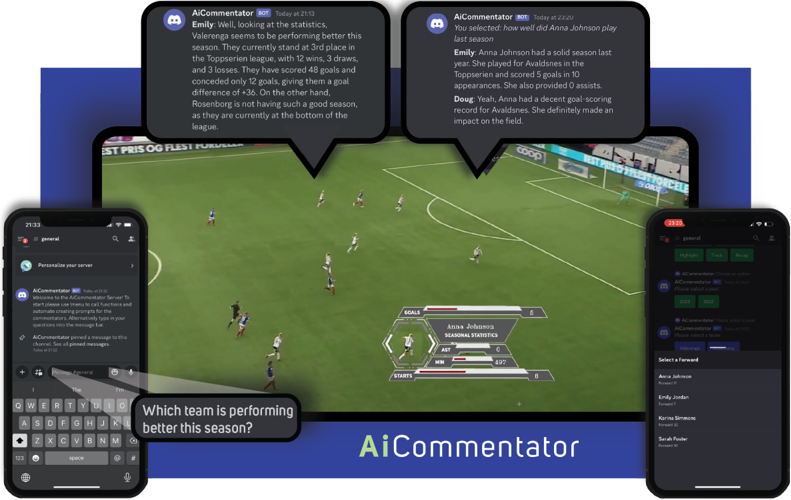
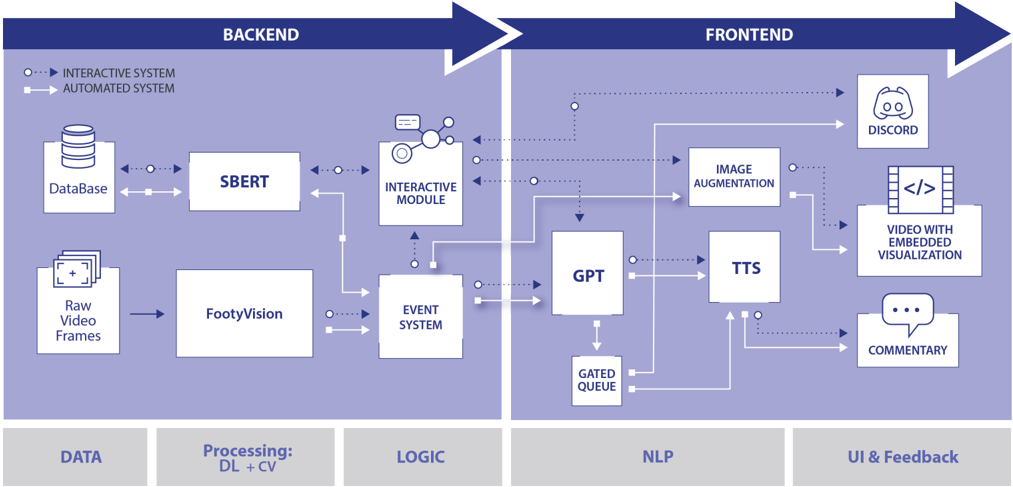
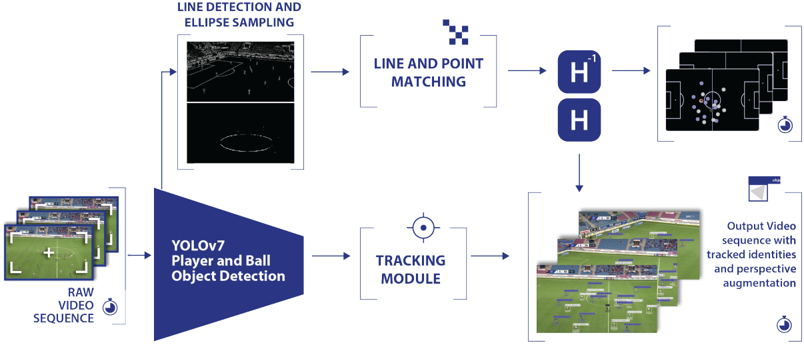
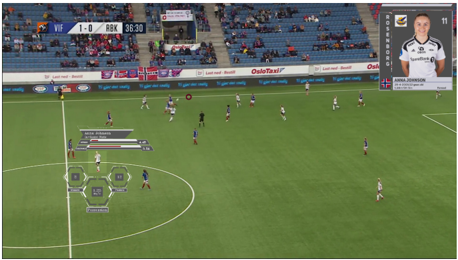
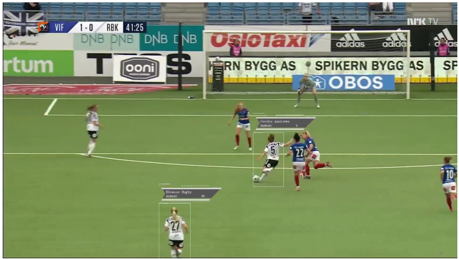
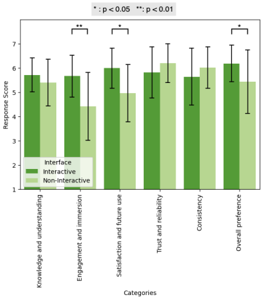
Traditionally, sports commentators provide viewers with diverse information, encompassing in-game developments and player performances. Yet young adult football viewers increasingly use mobile devices for deeper insights during football matches. Such insights into players on the pitch and performance statistics support viewers’ understanding of game stakes, creating a more engaging viewing experience. Inspired by commentators’ traditional roles and to incorporate information into a single platform, we developed AiCommentator, a Multimodal Conversational Agent (MCA) for embedded visualization and conversational interactions in football broadcast video. AiCommentator integrates embedded visualization, either with an automated non-interactive or with a responsive interactive commentary mode. Our system builds upon multimodal techniques, integrating computer vision and large language models, to demonstrate ways for designing tailored, interactive sports-viewing content. AiCommentator’s event system infers game states based on a multi-object tracking algorithm and computer vision backend, facilitating automated responsive commentary. We address three key topics: evaluating young adults’ satisfaction and immersion across the two viewing modes, enhancing viewer understanding of in-game events and players on the pitch, and devising methods to present this information in a usable manner. In a mixed-method evaluation (n=16) of AiCommentator, we found that the participants appreciated aspects of both system modes but preferred the interactive mode, expressing a higher degree of engagement and satisfaction. Our paper reports on our development of AiCommentator and presents the results from our user study, demonstrating the promise of interactive MCA for a more engaging sports viewing experience. Systems like AiCommentator could be pivotal in transforming the interactivity and accessibility of sports content, revolutionizing how sports viewers engage with video content.
Overview
The claims and statistics of this paper haven’t been checked yet.
Free: it reads the open-access text and checks the first 5 claims that cite a source we can check. Create a free account to check every claim.
Integrity signals
Registry
Cites
Statistics
Figures
Verification
Claims the paper makes
The claims and statistics of this paper haven’t been checked yet.
Free: it reads the open-access text and checks the first 5 claims that cite a source we can check. Create a free account to check every claim.
Claims other papers make about this one
Each is checked against this paper’s own text: does it say what the citing paper says it does?
The source backs part of the claim, not all of it — or backs it for a different population, condition or comparison.
In the citing paper
“In Fig. 1, we notice that the AI-creator -only pattern attracts growing research interests , where fully automatic tools across multiple stages emerge [43, 18, 28, 1].”
From Reflection on Data Storytelling Tools in the Generative AI Era from the Human-AI Collaboration Perspective (2025) · cites this paper as [1]
Experimental — accuracy not yet measuredThe check wasn’t confident either way, so it gives no verdict — never disputed.
In the citing paper
“the public release dates of two representative large-scale generative AI techniques, ChatGPT and Stable Diffusion, are Nov. 30, 2022 1 and Aug. 22, 2022 2 , respectively.”
From Reflection on Data Storytelling Tools in the Generative AI Era from the Human-AI Collaboration Perspective (2025) · cites this paper as [1]
Experimental — accuracy not yet measured
Self-check
Percentages, sums and reported differences re-computed from the paper’s own numbers.
The self-check needs the paper’s full text.
Citations
Cites
Using thematic analysis in psychology
Braun, V., & Clarke, V. (2006) · Qualitative Research in Psychology · doi:10.1191/1478088706qp063oa · Cited by 194,414
YOLOv7: Trainable Bag-of-Freebies Sets New State-of-the-Art for Real-Time Object Detectors
Wang, C.-Y., Bochkovskiy, A., & Liao, H.-Y. M. (2023) · 2023 IEEE/CVF Conference on Computer Vision and Pattern Recognition (CVPR) · doi:10.1109/cvpr52729.2023.00721 · Cited by 13,198 · cited 1×
“It was built upon a YOLOv7 [46] backbone and trained on the SoccerNet [9] and ISSIA [10] datasets to achieve state-of-the-art player and ball detection.”
SUS: A 'Quick and Dirty' Usability Scale
(1996) · Usability Evaluation In Industry · doi:10.1201/9781498710411-35 · Cited by 8,989
Preston, C. C., & Colman, A. M. (2000) · Acta Psychologica · doi:10.1016/s0001-6918(99)00050-5 · Cited by 2,106
Chatbots and the new world of HCI
Følstad, A., & Brandtzæg, P. B. (2017) · Interactions · doi:10.1145/3085558 · Cited by 513
Cognitive and Affective Determinants of Fan Satisfaction with Sporting Event Attendance
Madrigal, R. (1995) · Journal of Leisure Research · doi:10.1080/00222216.1995.11949745 · Cited by 497 · cited 1×
“In particular, within the context of two cognitive antecedents – team identification and quality of opponent – documented to increase viewer satisfaction in sports [26].”
Multimodal interaction: A review
Turk, M. (2014) · Pattern Recognition Letters · doi:10.1016/j.patrec.2013.07.003 · Cited by 496
The think aloud method: what is it and how do I use it?
Eccles, D. W., & Arsal, G. (2017) · Qualitative Research in Sport, Exercise and Health · doi:10.1080/2159676x.2017.1331501 · Cited by 421 · cited 1×
“This approach was chosen to ensure that information from the participants’ short-term memory is articulated effectively and accurately while interacting with each test condition [11].”
SoccerNet-v2: A Dataset and Benchmarks for Holistic Understanding of Broadcast Soccer Videos
Deliege, A., Cioppa, A., Giancola, S., Seikavandi, M. J., Dueholm, J. V., Nasrollahi, K., Ghanem, B., Moeslund, T. B., & Van Droogenbroeck, M. (2021) · 2021 IEEE/CVF Conference on Computer Vision and Pattern Recognition Workshops (CVPRW) · doi:10.1109/cvprw53098.2021.00508 · Cited by 186 · cited 1×
“It was built upon a YOLOv7 [46] backbone and trained on the SoccerNet [9] and ISSIA [10] datasets to achieve state-of-the-art player and ball detection.”
Bring It to the Pitch: Combining Video and Movement Data to Enhance Team Sport Analysis
Stein, M., Janetzko, H., Lamprecht, A., Breitkreutz, T., Zimmermann, P., Goldlucke, B., Schreck, T., Andrienko, G., Grossniklaus, M., & Keim, D. A. (2018) · IEEE Transactions on Visualization and Computer Graphics · doi:10.1109/tvcg.2017.2745181 · Cited by 167 · cited 1×
“To visualize movement patterns within video content, Stein et al. [39] tracked football players while applying reverse perspective transformations to analyze localized performance.”
Research works printed but not linked: 11
- K Goldsberry. 2012. CourtVision: New Visual and Spatial Analytics for the NBA. Conference Paper. MIT Sloan Analytics Conference.
- Cagatay Goncu and Daniel J Finnegan. 2021. 'Did You See That⁉'Enhancing the Experience of Sports Media Broadcast for Blind People. In Human-Computer Interaction-INTERACT 2021: 18th IFIP TC 13 International Conference, Bari, Italy, August 30-September 3, 2021, Proceedings, Part I 18. Springer, 396-417.
- Euromonitor International. 2023. Women's World Cup 2023 viewership to cross 2 billion, double from 2019: Euromonitor International. https://www.euromonitor. com/press/press-releases/july-20232/
- Jon A Krosnick and Stanley Presser. 2010. Question and Questionnaire Design. In Handbook of Survey Research (2 ed.), Peter V. Marsden and James D. Wright (Eds.). Emerald Group Publishing Limited, [268-274].
- Tica Lin, Zhutian Chen, Yalong Yang, Daniele Chiappalupi, Johanna Beyer, and Hanspeter Pfister. 2022. The quest for: Embedded visualization for augmenting basketball game viewing experiences. IEEE transactions on visualization and computer graphics 29, 1 (2022), 962-971.
- Tania Modleski. 1986. "Television/Sound" in Studies in entertainment: critical approaches to mass culture. Vol. 7. Indiana University Press.
- Sheena Anees Prathibha.M. 2015. Computational Intelligence Based Color Com- mentary System in Sports. International Journal of Scientific Engineering and Applied Science 1, 7 (2015), 472-475.
- J Ross Quinlan. 2014. C4. 5: programs for machine learning. Elsevier.
- Kumiko Tanaka-Ishii, Kôiti Hasida, and Itsuki Noda. 1998. Reactive content selection in the generation of real-time soccer commentary. In COLING 1998 Volume 2: The 17th International Conference on Computational Linguistics.
- Kaisa Tiippana. 2014. What is the McGurk effect? Frontiers in psychology 5 (2014), 725.
- Dirk Voelz, Elisabeth André, Gerd Herzog, and Thomas Rist. 1999. Rocco: A RoboCup soccer commentator system. In RoboCup-98: Robot Soccer World Cup II 2. Springer, 50-60.
Cited by
Federated and edge learning for large language models
Piccialli, F., Chiaro, D., Qi, P., Bellandi, V., & Damiani, E. (2024) · Information Fusion · doi:10.1016/j.inffus.2024.102840 · Cited by 50
“Rapid advances in AI technology, especially in LLMs, are dramatically reshaping the way we interact with external information [134, 135].”
X-VARS: Introducing Explainability in Football Refereeing with Multi-Modal Large Language Models
Held, J., Itani, H., Cioppa, A., Giancola, S., Ghanem, B., & Droogenbroeck, M. V. (2024) · 2024 IEEE/CVF Conference on Computer Vision and Pattern Recognition Workshops (CVPRW) · doi:10.1109/cvprw63382.2024.00332 · Cited by 39
“…42, 43, 56, 66], keypoint detection [38], summarizing [20,45], player re-identification [43, 60], action spotting in untrimmed videos [8, 9, 14, 23, 27, 57–59], pass prediction and feasibility [2,26], foul recognition [18, 24] or dense video captioning for football broad-casts commentaries [47].”
BackgroundPrompting Generative AI with Interaction-Augmented Instructions
Shen, L., Li, H., Wang, Y., Xie, X., & Qu, H. (2025) · CHI Conference Extended Abstracts on Human Factors in Computing Systems (CHI EA) · doi:10.1145/3706599.3720080 · Cited by 36
Andrews, P., Borch, N. T., & Fjeld, M. (2024) · International Conference on Multimedia and Image Processing (ICMIP) · doi:10.1145/3665026.3665029 · Cited by 21
Self-citationTowards an AI-Powered Video Assistant Referee System (VARS) for Association Football
Held, J., Cioppa, A., Giancola, S., Hamdi, A., Devue, C., Ghanem, B., & Droogenbroeck, M. V. (2025) · Lecture notes in computer science · doi:10.1007/978-3-031-95911-0_21 · Cited by 16
Reflecting on Design Paradigms of Animated Data Video Tools
Shen, L., Li, H., Wang, Y., & Qu, H. (2025) · CHI Conference on Human Factors in Computing Systems · doi:10.1145/3706598.3713449 · Cited by 20
Beyond Words: Infusing Conversational Agents with Human-like Typing Behaviors
Zhou, J., & Hu, Y. (2024) · ACM Conference on Conversational User Interfaces (CUI) · doi:10.1145/3640794.3665560 · Cited by 20
“Open-Source : Our platform is open-source and accessible on GitHub: https://github.com/jigglypuff96/human-like-typing-bot”
BleacherBot: AI Agent as a Sports Co-Viewing Partner
Kim, K., Song, H., Ryu, J., Oh, C., & Suh, B. (2025) · CHI Conference on Human Factors in Computing Systems · doi:10.1145/3706598.3714178 · Cited by 15
“Andrews et al. developed AiCommentator, a conversational agent that enhances football viewing with interactive, real-time commentary and visualizations [3].”
SoccerNet 2023 Challenges ResultsPreprint
Cioppa, A., Giancola, S., Somers, V., Magera, F., Zhou, X., Mkhallati, H., Deliège, A., Held, J., Hinojosa, C., Mansourian, A. M., et al. (2023) · arXiv (Cornell University) · doi:10.48550/arxiv.2309.06006 · Cited by 14
Shen, L., Wang, Y., Qu, H., Xie, X., & Li, H. (2026) · CHI Conference on Human Factors in Computing Systems · doi:10.1145/3772318.3790505 · Cited by 18
“Prior work on human–GenAI collaboration covers communication paradigms, design patterns, and theoretical models; we review these to highlight progress and motivate a unified model of interaction-augmented instructions.”
InfluentialLi, H., Wang, Y., & Qu, H. (2025) · arXiv · doi:10.48550/arxiv.2503.02631 · Cited by 10
“Furthermore, the observation also indicates that the application of different roles across stages can be dependent on each other , which needs further investigation.”
InfluentialDesigning for Automated Sports Commentary Systems
Andrews, P., Nordberg, O. E., Borch, N. T., Guribye, F., & Fjeld, M. (2024) · ACM International Conference on Interactive Media Experiences · doi:10.1145/3639701.3656323 · Cited by 10
Self-citationCompanionCast: Social Collaboration with Multi-Agent Systems in Shared Experiences
Wang, Y., Chen, C., Lin, T., Raj, V., Kimball, J., Cabral, A., & Hester, J. D. (2026) · doi:10.1145/3806096.3844834 · Cited by 8
AiModerator: A Co-Pilot for Hyper-Contextualization in Political Debate Video
Andrews, P., Borch, N. T., & Fjeld, M. (2025) · ACM International Conference on Intelligent User Interfaces (IUI) · doi:10.1145/3708359.3712148 · Cited by 3
Self-citationImproving Human Verification of LLM Reasoning through Interactive Explanation Interfaces
Zhou, R., Nguyen, G., Kharya, N., Nguyen, A., & Agarwal, C. (2026) · Proceedings of the 31st International Conference on Intelligent User Interfaces · doi:10.1145/3742413.3789134 · Cited by 2
A Vision for the Formal Documentation and Digitalization of Sports Commentators’ Commentaries
da Silva, J. A. T., & Scelles, N. (2025) · International Journal of Sport Communication · doi:10.1123/ijsc.2024-0196 · Cited by 2
An End-To-End Pipeline for Virtual Banner Replacement in Football Broadcasts
Gaspar, V., Cioppa, A., Held, J., Giancola, S., Braham, M., Deliège, A., Ghanem, B., & Droogenbroeck, M. V. (2025) · IEEE/CVF Conference on Computer Vision and Pattern Recognition Workshops (CVPRW) · doi:10.1109/cvprw67362.2025.00586 · Cited by 1
Enhancing Sports Experiences Through Video-Based Interactions
Diogo, J. (2025) · ACM International Conference on Multimedia (ACM MM) · doi:10.1145/3746027.3756865 · Cited by 1
Kim, G., Lee, S., Kim, D., Lee, J., & Kim, M. (2025) · ACM International Conference on Multimedia (ACM MM) · doi:10.1145/3746027.3755327 · Cited by 1
“Techniques such as live stream summarization [1, 17, 20, 37, 41, 80] and visual enhancements [12, 42, 79, 81] have shown promise.”
Retelling the News: Exploring AI-Driven Conversational News Interactions
Nordberg, O. E., Okopnyi, P., & Guribye, F. (2026) · CHI Conference on Human Factors in Computing Systems · doi:10.1145/3772318.3791484 · Cited by 1
Self-citationDiving Deep Into Time: Temporal Arrangements for Embedded Visualization in Swimming Videos
Tang, J., Yao, L., Ying, L., Vuillemot, R., & Isenberg, P. (2026) · IEEE Transactions on Visualization and Computer Graphics · doi:10.1109/tvcg.2026.3689361 · Cited by 1
“In addition, audiences may want to craft their own stories by tailoring visualizations to their own needs and preferences [5], [29].”
Who's That Player?: Externalizing Query Interpretation in Spoken XR Sports InteractionPreprint
Lee, C., Lin, T., Yang, Y.-L., & Pfister, H. (2026) · arXiv.org · doi:10.48550/arxiv.2608.00876 · Cited by 1
“With the growing adoption of LLM-based agents in XR environments [6,56], natural language interaction is becoming an increasingly prominent modality for accessing sports data, as demonstrated by conversational and question-answering sports systems [1,33].”
Tu, X., Biondani, F., Amin, D., Fabillar, A., Xuan, T. T. T., Adeel, H. B., Tervola, S. M. H., Berlingeri, C., Fummi, F., Salminen, J. O., et al. (2026) · ACM International Conference on Intelligent User Interfaces (IUI) · doi:10.1145/3742413.3789084
Kim, K., Choi, J., Yang, H., Choi, H., Kim, M., Shin, M., & Suh, B. (2026) · CHI Conference on Human Factors in Computing Systems · doi:10.1145/3772318.3791932
“Furthermore, commentary is not available for all matches [32], and even if available, conventional commentary often fails to accommodate diverse spectator preferences, driving spectators to second-screen usage [5].”
Kant, V., & Ranwan, L. (2026) · Journal of Formative Design in Learning · doi:10.1007/s41686-026-00132-x
Metadata
- Authors
- Andrews, P., Nordberg, O. E., Zubicueta Portales, S., Borch, N., Guribye, F., Fujita, K., & Fjeld, M.
- Affiliations
- University of Bergen (NO)
- The University of Bergen, Norway
- Schibsted, Norway
- Tohoku University (JP)
- ORCID
- Venue
- Proceedings of the 29th International Conference on Intelligent User Interfaces
- Publisher
- ACM
- Published
- 2024-03-18
- Pages
- 14-34
- OpenAlex
- W4393970796
- Semantic Scholar
- 12be14b44201328849d115df7c8f4dd2651e57f5
- Cited by
- 18
- References
- 35
- Citations by year
- 2026: 4 · 2025: 9 · 2024: 5
- FWCI
- 23.61
- Type
- conference paper
- Language
- en
- Open access
- hybrid
- doi.org
- Licence
- Locations
- ACM International Conference on Intelligent User Interfaces (IUI) (publishedVersion, cc-by)
- Chalmers Research (Chalmers University of Technology) (submittedVersion)
- Funders
- MediaFutures (309339)
- JSPS Grants KAKENHI (19KK0258, 21H03473)
- Wallenberg Foundations (MMW/MAW)
- Topics
- Physical Sciences › Engineering › Media Technology › Multimedia Communication and Technology
- Physical Sciences › Computer Science › Human-Computer Interaction › Innovative Human-Technology Interaction
- Physical Sciences › Computer Science › Information Systems › Recommender Systems and Techniques
- Keywords
- sports commentary, multi-target tracking, large language models, computer vision, viewer engagement, immersion
About these checks
Registry, retraction, Cites and statistics results are computed, not judged, with one exception: a printed reference that no index lists is read once by a model before it counts as a citation error. Claims are extracted by a model and kept only when their quote appears verbatim in the text; each cited source is then checked, with a model’s help, for whether it says what the claim relies on. Those verdicts can be wrong — read the claim’s quote and the cited source before relying on one.
Statistics and arithmetic are recomputed, not judged.
Confidence bands are shown only for fields calibrated on our annotated test set. None is calibrated yet, so no band is shown.
What counts as a claim ›How we measure confidence ›How we check this ›
Are you an author, or do you see a problem with this page? Request a review
Data sources
Bibliographic data: Semantic Scholar, OpenAlex, Crossref.
Contains information from the Semantic Scholar Academic Graph Datasets, made available under the ODC Attribution License (ODC-BY 1.0).
Semantic Scholar’s data is described in: Kinney, R., et al. (2023). The Semantic Scholar Open Data Platform. arXiv:2301.10140.
