

The DOI matches its Crossref record; 104 of the 104 references it cites were found in a registry or an index; 14 of the 138 sources its claims cite were checked for support.
The Discovery of Reverse Transcriptase
Open accessAbstract
In 1970 the independent and simultaneous discovery of reverse transcriptase in retroviruses (then RNA tumor viruses) by David Baltimore and Howard Temin revolutionized molecular biology and laid the foundations for retrovirology and cancer biology. In this historical review we describe the formulation of the controversial provirus hypothesis by Temin, which ultimately was proven by his discovery of reverse transcriptase in Rous sarcoma virus virions. Baltimore arrived at the same discovery through his studies on replication of RNA-containing viruses, starting with poliovirus and then moving to vesicular stomatitis virus, where he discovered a virion RNA polymerase. Subsequent studies of reverse transcriptase led to the elucidation of the mechanism of retrovirus replication, the discovery of oncogenes, the advent of molecular cloning, the search for human cancer viruses, and the discovery and treatment of HIV/AIDS.
Overview
CoChat Summary
TL;DR
This historical review recounts the independent, simultaneous 1970 discovery of reverse transcriptase (RT) in retroviruses by Howard Temin and David Baltimore, tracing Temin's decade-long struggle to prove the provirus hypothesis and Baltimore's route through poliovirus and vesicular stomatitis virus. It then surveys how RT enabled elucidation of retroviral replication, oncogene discovery, molecular cloning, and the identification and treatment of HIV/AIDS.
Key findings
- Temin's provirus hypothesis—that RSV RNA is copied into DNA and integrated into host DNA—was supported by inhibitor studies, weak hybridization data (~1% of input, ~10 cpm, with background from endogenous proviruses), the XC cell experiments, Boettiger's BrdU/light inactivation work, and Mizutani's cycloheximide insensitivity, before being proven by the virion RT experiment.
- Baltimore found a virion RNA polymerase in VSV (published early June 1970), then detected DNA polymerase activity in Rauscher MLV by substituting deoxyribonucleoside triphosphates; the two RT papers appeared back-to-back in *Nature* on June 27, 1970, with Temin & Mizutani's received June 15.
- Downstream consequences included: elucidation of reverse transcription and LTR formation; discovery that v-src derives from cellular c-src (Bishop/Varmus, Nobel Prize 1989); endogenous retroviruses (~50 MLV-related proviral copies in mouse; ~8% of the human genome is endogenous retroviral DNA; LINEs and SINEs account for 40–50% of human DNA); and telomerase (TERT).
- RT enabled detection of HTLV-1 (1980, first human cancer-causing retrovirus) and HIV (~2.5 years later); AZT, an RT inhibitor, was first used in 1987, and RT-based quantitative RT-PCR now measures viral load, with current assays detecting less than 1 HIV RNA copy per milliliter of blood.
Methods
- Design: historical/narrative review, not primary research; the authors describe experiments from the literature and include a timeline figure and reproduced key figures from the original 1970 papers.
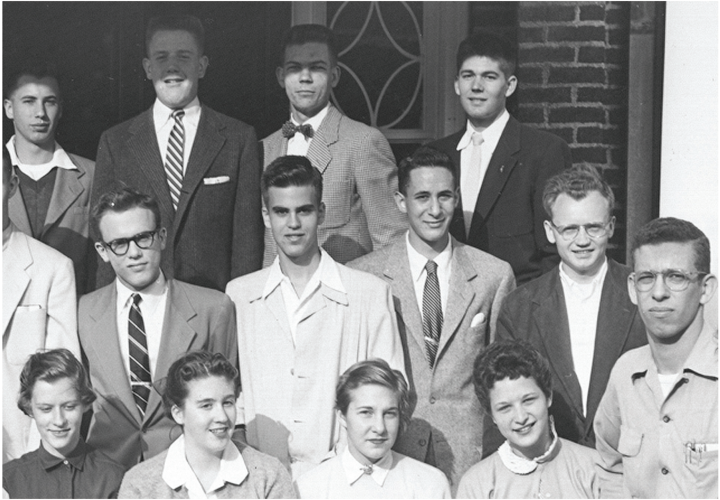
- Data/sample: no new data; the review draws on published studies of RSV, MLV, MSV, VSV, poliovirus, and related systems, plus biographical and archival material (e.g., the 1955 Jackson Laboratory photograph).
- Analysis: chronological and thematic synthesis of the discovery, follow-up work, mechanism of reverse transcription, and applications.
Limitations
- The paper states no formal limitations; it is a historical review written partly by participants (Coffin and Fan, the latter having worked in Baltimore's group), and it notes the authors declare no competing interests.
- Evident from the text: the account is retrospective and selective, relying on the authors' narrative framing of priority and significance, and it does not present systematic or quantitative synthesis of the literature.
Model-written summary. Check it against the paper before relying on it.
Integrity signals
Registry
Cites
Statistics
Figures


Verification
Claims the paper makes
10 Valid · 7 Not valid · 90 Not checked · 45 Own results and interpretations
Every source the paper cites for this claim was checked and supports it.
In the paper
“In short order other investigators showed that the DNA product of the in vitro RT reaction is complementary to the viral RNA (53)”
What the sources say
- Supportedcites [53] source
The paper’s opening summary (p. 1) says hybridization experiments confirmed that the DNA strand synthesized using viral RNA as a template is complementary to that RNA. The Complementarity section (p. 4) reports specific hybridization of the RLV polymerase’s DNA product with homologous viral RNA, but not with the heterologous RNAs tested. (LLM, conf=0.94)
plainstates an association- Asserted: passes — The authors put it forward as true.
- Checkable: passes — It can be checked against evidence.
- Load-bearing: unclear — It is unclear whether the paper’s conclusions depend on it.
- Based: passes — The paper gives a reason why it holds.
- Supported
The cited sources support only part of this claim — read each source’s verdict below.
In the paper
“Although Temin & Rubin's (23) focus assay and similar assays for transforming strains of murine and feline viruses (90) enabled quantitative analysis of oncogene-containing viruses such as RSV and MSV”
What the sources say
- Not checked — no full text of the sourcecites [23] source
- Partly supportedcites [90] sourceExperimental — accuracy not yet measured
The paper’s focus-assay methods and ‘Requirement for helper virus for focus production’ passage (indexed under Abstract; page unavailable) describe counting foci and quantitatively titrating murine MSV. They support the murine-virus part of the citation, but do not describe an assay for feline viruses. (LLM, conf=0.86)
plainstates a cause- Asserted: passes — The authors put it forward as true.
- Checkable: passes — It can be checked against evidence.
- Load-bearing: unclear — It is unclear whether the paper’s conclusions depend on it.
- Based: passes — The paper gives a reason why it holds.
A statement the paper makes itself — it cites no source for it, so there is none to check. The quote shows it is in the paper.
In the paper
“In this historical review we describe the formulation of the controversial provirus hypothesis by Temin, which ultimately was proven by his discovery of reverse transcriptase in Rous sarcoma virus virions.”
- Also stated in: § ABSTRACT · plain
“Temin was recruited in 1959 to the McArdle Laboratory for Cancer Research at UW, where he focused on developing and then proving the provirus hypothesis”
plainstates a cause- Asserted: passes — The authors put it forward as true.
- Checkable: passes — It can be checked against evidence.
- Load-bearing: passes — The paper’s conclusions depend on it.
- Based: passes — The paper gives a reason why it holds.
- Also stated in: § ABSTRACT · plain
A conclusion the paper draws from its own results — it cites no other source for it, so there is none to check. The quote shows it is in the paper.
In the paper
“Subsequent studies of reverse transcriptase led to the elucidation of the mechanism of retrovirus replication, the discovery of oncogenes, the advent of molecular cloning, the search for human cancer viruses, and the discovery and treatment of HIV/AIDS.”
plainstates a cause- Asserted: passes — The authors put it forward as true.
- Checkable: passes — It can be checked against evidence.
- Load-bearing: unclear — It is unclear whether the paper’s conclusions depend on it.
- Based: passes — The paper gives a reason why it holds.
76 more claims
Create a free account to see all 152 claims and to verify the 1 reference still open.
- Probably not a substantial claim. 32
- It may state two separate claims as one. 52
Self-check
Percentages, sums and reported differences re-computed from the paper’s own numbers.
Self-check results appear here once an independent check has confirmed them.
Cited works that were retracted
Works this paper cites that were later retracted, from the retraction notices publishers deposit. Major when the notice came out before this paper was published.
Rated major: it would touch a result — a value a result rests on, reported and recomputed p-values on opposite sides of the significance level, two passages that conflict with no sign which is right, or a cited work retracted before this paper was published.
In the paper
“10.1126/science.1179052”
Cited work 10.1126/science.1179052 · retracted 2011-12-23 · notice 10.1126/science.334.6063.1636-a · this paper published 2016-09-29
Rated major: it would touch a result — a value a result rests on, reported and recomputed p-values on opposite sides of the significance level, two passages that conflict with no sign which is right, or a cited work retracted before this paper was published.
In the paper
“10.1371/journal.ppat.0020025”
Cited work 10.1371/journal.ppat.0020025 · retracted 2012-09-18 · notice 10.1371/annotation/7e2efc01-2e9b-4e9b-aef0-87ab0e4e4732 · this paper published 2016-09-29
Citations
Cites
2 retracted
Urisman, A., Molinaro, R. J., Fischer, N., Plummer, S. J., Casey, G., Klein, E. A., Malathi, K., Magi-Galluzzi, C., Tubbs, R. R., Ganem, D., et al. (2006) · PLoS Pathogens · doi:10.1371/journal.ppat.0020025 · Cited by 577
RetractedLombardi, V. C., Ruscetti, F. W., Das Gupta, J., Pfost, M. A., Hagen, K. S., Peterson, D. L., Ruscetti, S. K., Bagni, R. K., Petrow-Sadowski, C., Gold, B., et al. (2009) · Science · doi:10.1126/science.1179052 · Cited by 538
RetractedInitial sequencing and analysis of the human genome
International Human Genome Sequencing Consortium, Whitehead Institute for Biomedical Research, C. F. G. R., Lander, E. S., Linton, L. M., Birren, B., Nusbaum, C., Zody, M. C., Baldwin, J., Devon, K., Dewar, K., et al. (2001) · Nature · doi:10.1038/35057062 · Cited by 24,216
Molecular Structure of Nucleic Acids: A Structure for Deoxyribose Nucleic Acid
WATSON, J. D., & CRICK, F. H. C. (1953) · Nature · doi:10.1038/171737a0 · Cited by 13,584
Slamon, D. J., Leyland-Jones, B., Shak, S., Fuchs, H., Paton, V., Bajamonde, A., Fleming, T., Eiermann, W., Wolter, J., Pegram, M., et al. (2001) · New England Journal of Medicine · doi:10.1056/nejm200103153441101 · Cited by 11,500
Barré-Sinoussi, F., Chermann, J. C., Rey, F., Nugeyre, M. T., Chamaret, S., Gruest, J., Dauguet, C., Axler-Blin, C., Vézinet-Brun, F., Rouzioux, C., et al. (1983) · Science · doi:10.1126/science.6189183 · Cited by 7,038
Poiesz, B. J., Ruscetti, F. W., Gazdar, A. F., Bunn, P. A., Minna, J. D., & Gallo, R. C. (1980) · Proceedings of the National Academy of Sciences · doi:10.1073/pnas.77.12.7415 · Cited by 5,043
PLAQUE FORMATION AND ISOLATION OF PURE LINES WITH POLIOMYELITIS VIRUSES
Dulbecco, R., & Vogt, M. (1954) · Journal of Experimental Medicine · doi:10.1084/jem.99.2.167 · Cited by 3,824
Central Dogma of Molecular Biology
CRICK, F. (1970) · Nature · doi:10.1038/227561a0 · Cited by 3,444
The Efficacy of Azidothymidine (AZT) in the Treatment of Patients with AIDS and AIDS-Related Complex
Fischl, M. A., Richman, D. D., Grieco, M. H., Gottlieb, M. S., Volberding, P. A., Laskin, O. L., Leedom, J. M., Groopman, J. E., Mildvan, D., Schooley, R. T., et al. (1987) · New England Journal of Medicine · doi:10.1056/nejm198707233170401 · Cited by 2,995
Research works printed but not linked: 18
- Ellerman V, 1908, Zentralbl. Bakteriol. Parasitenkd. Infectionskr. Hyg. Abt. Orig., 46, 595
- Gross L, 1957, Tex. Rep. Biol. Med., 15, 603
- Moloney JB, 1966, Natl. Cancer Inst. Monogr., 22, 139
- Temin HM, 1976, Les Prix Nobel en 1975
- 25. Rubin H. 1970. Replication and persistence of the RNA oncogenic viruses. In Oncology 1970: Being the Proceedings of the Tenth International Cancer Congress , ed. RL Clark, RW Cumley, JE McCay, MM Copeland, pp. 763–68. Chicago: Yearb. Med. Publ.
- Boeke JD, 1997, Retroviruses, 343
- 32. Temin HM. 1970. The DNA provirus of RNA tumor viruses. In Oncology 1970: Being the Proceedings of the Tenth International Cancer Congress , ed. RL Clark, RW Cumley, JE McCay, MM Copeland, pp. 776–80. Chicago: Yearb. Med. Publ.
- Cancer: DNA from an RNA template, 1970, Nature, 226, 1003
- Cancer viruses: more of the same, 1970, Nat. New Biol., 227, 887
- Telesnitsky A, 1997, Retroviruses, 121
- 64. Brown PO. 1997. Integration. In Retroviruses , ed. JM Coffin, SH Hughes, HE Varmus, pp. 161–203. Cold Spring Harbor, NY: Cold Spring Harbor Lab. Press
- Rabson AB, 1997, Retroviruses, 205
- Rosenberg N, 1997, Retroviruses, 475
- Temin HM, 1971, J. Natl. Cancer Inst., 46, 3
- Weiss RA, 1982, RNA Tumor Viruses, 1205
- Bishop JM, 1982, RNA Tumor Viruses, 999
- CDC (Cent. Dis. Control), 1981, Morb. Mortal. Wkly. Rep., 30, 305
- CDC (Cent. Dis. Control), 1981, Morb. Mortal. Wkly. Rep., 30, 250
Cited by
Zhang, L., Richards, A., Barrasa, M. I., Hughes, S. H., Young, R. A., & Jaenisch, R. (2021) · Proceedings of the National Academy of Sciences · doi:10.1073/pnas.2105968118 · Cited by 279
“Human LINE1 elements ( ∼ 17% of the human genome), a type of autonomous retrotransposons, which are able to retro-transpose themselves and other nonautonomous elements such as Alu, are a source of cellular endogenous RT (32 – 34).”
Aldén, M., Olofsson Falla, F., Yang, D., Barghouth, M., Luan, C., Rasmussen, M., & De Marinis, Y. (2022) · Current Issues in Molecular Biology · doi:10.3390/cimb44030073 · Cited by 179
“Human autonomous retrotransposon LINE-1 is a cellular endogenous reverse transcriptase and the only remaining active transposon in humans, able to retrotranspose itself and other nonautonomous elements [40,41], and ~17% of the human genome are comprised of LINE-1 sequences [42].”
Forty Years of Molecular Diagnostics for Infectious Diseases
Schmitz, J. E., Stratton, C. W., Persing, D. H., & Tang, Y. (2022) · Journal of Clinical Microbiology · doi:10.1128/jcm.02446-21 · Cited by 171
“Another key advance was the initial application of reverse transcriptase to PCR specimens (RT-PCR), converting any RNA present to cDNA and allowing PCR to amplify the genomes of RNA viruses or mRNA/rRNA from any microbial target (20).”
BackgroundReconstitution and visualization of HIV-1 capsid-dependent replication and integration in vitro
Christensen, D. E., Ganser-Pornillos, B. K., Johnson, J. S., Pornillos, O., & Sundquist, W. I. (2020) · Science · doi:10.1126/science.abc8420 · Cited by 150
Menéndez-Arias, L., Sebastián-Martín, A., & Álvarez, M. (2017) · Virus Research · doi:10.1016/j.virusres.2016.12.019 · Cited by 123
Metadata
- Authors
- Coffin, J. M., & Fan, H.
- Affiliations
- Tufts University (US)
- University of California, Irvine (US)
- Corresponding author
- Coffin, John M.
- ORCID
- Coffin, John M.
- Venue
- Annual Review of Virology
- Publisher
- Annual Reviews
- Published
- 2016-09-29
- Volume
- 3
- Issue
- 1
- Pages
- 29-51
- ISSN
- 2327-056X (ISSN-L)
- 2327-0578
- OpenAlex
- W2237833791
- Cited by
- 71
- References
- 104
- Citations by year
- 2026: 9 · 2025: 6 · 2024: 11 · 2023: 9 · 2022: 11 · 2021: 9 · 2020: 5 · 2019: 6 · 2018: 2 · 2017: 2 · 2016: 1
- FWCI
- 2.64
- Type
- journal article
- Language
- en
- Open access
- bronze
- doi.org
- Locations
- Annual Review of Virology (publishedVersion)
- PubMed (publishedVersion)
- Funders
- National Cancer Institute (R01CA089441, R35CA200421)
- Topics
- Social Sciences › Arts and Humanities › History and Philosophy of Science › History of Science and Medicine
- Social Sciences › Arts and Humanities › History and Philosophy of Science › Philosophy of Biology and Scientific Explanation
- Life Sciences › Immunology and Microbiology › Immunology › T-cell and Retrovirus Studies
- Keywords
- reverse transcriptase, retroviruses, Rous sarcoma virus, David Baltimore, retroviral replication, RNA tumor viruses, oncogenes, gene cloning, HIV/AIDS, history of molecular biology
- MeSH terms
- Humans, Oncogenes, Retroviridae, RNA-Directed DNA Polymerase, RNA, Viral, Virus Replication, History, 20th Century
About these checks
Registry, retraction, Cites and statistics results are computed, not judged, with one exception: a printed reference that no index lists is read once by a model before it counts as a citation error. Claims are extracted by a model and kept only when their quote appears verbatim in the text; each cited source is then checked, with a model’s help, for whether it says what the claim relies on. Those verdicts can be wrong — read the claim’s quote and the cited source before relying on one.
The claim verdicts this report counts are experimental: their accuracy is not yet measured.
A language model drew the claims from the paper on 2026-09-28, under version 3 of the claim definition (model deepseek-v4.1-flash, prompt extract-v3).
A second model labelled each claim on 2026-09-28 (model jev-1.13-20260917, definition revision gold-guideline-v0.2).
Cited sources are checked with a language model’s help (gpt-6-sol).
Statistics and arithmetic are recomputed, not judged.
Confidence bands are shown only for fields calibrated on our annotated test set. None is calibrated yet, so no band is shown.
What counts as a claim ›How we measure confidence ›How we check this ›
Are you an author, or do you see a problem with this page? Request a review
How to cite
Cite CoChat for the checks on this page, and the paper for its own findings.
- This page
- CoChat. (2026). Citation check: The Discovery of Reverse Transcriptase. https://app.cochat.ai/papers/10.1146/annurev-virology-110615-035556
- The paper
- Coffin, J. M., & Fan, H. (2016). The Discovery of Reverse Transcriptase. Annual Review of Virology. https://doi.org/10.1146/annurev-virology-110615-035556
Data sources
Bibliographic data: Semantic Scholar, OpenAlex, Crossref.
Contains information from the Semantic Scholar Academic Graph Datasets, made available under the ODC Attribution License (ODC-BY 1.0).
Semantic Scholar’s data is described in: Kinney, R., et al. (2023). The Semantic Scholar Open Data Platform. arXiv:2301.10140.
