

Reactive Oxygen Species‐Mediated Mechanisms of Action of Targeted Cancer Therapy
Open accessThe DOI matches its Crossref record; 96 of the 96 references it cites were found in a registry or an index.
Abstract
Targeted cancer therapies, involving tyrosine kinase inhibitors and monoclonal antibodies, for example, have recently led to substantial prolongation of survival in many metastatic cancers. Compared with traditional chemotherapy and radiotherapy, where reactive oxygen species (ROS) have been directly linked to the mediation of cytotoxic effects and adverse events, the field of oxidative stress regulation is still emerging in targeted cancer therapies. Here, we provide a comprehensive review regarding the current evidence of ROS‐mediated effects of antibodies and tyrosine kinase inhibitors, use of which has been indicated in the treatment of solid malignancies and lymphomas. It can be concluded that there is rapidly emerging evidence of ROS‐mediated effects of some of these compounds, which is also relevant in the context of drug resistance and how to overcome it.
Overview
The claims and statistics of this paper haven’t been checked yet.
Free: it reads the open-access text and checks the first 5 claims that cite a source we can check. Create a free account to check every claim.
Integrity signals
Registry
Cites
Statistics
Figures
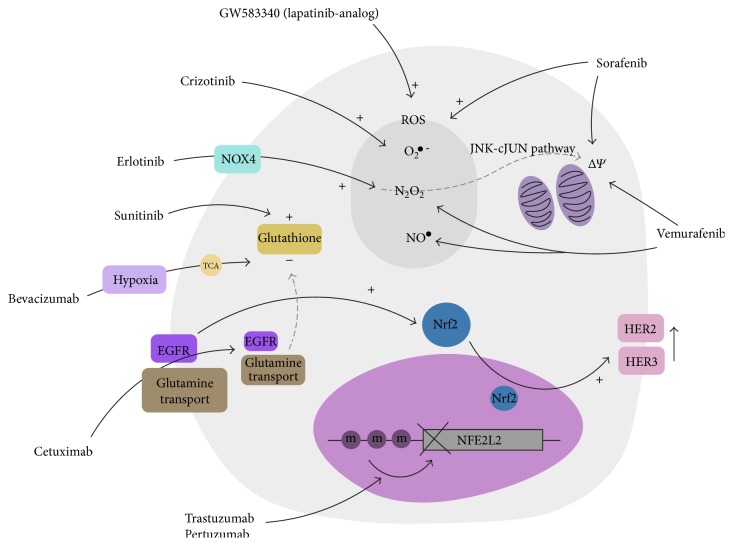
Verification
Claims the paper makes
The claims and statistics of this paper haven’t been checked yet.
Free: it reads the open-access text and checks the first 5 claims that cite a source we can check. Create a free account to check every claim.
Claims other papers make about this one
Each is checked against this paper’s own text: does it say what the citing paper says it does?
The cited source says what the claim attributes to it.
In the citing paper
“The induction of apoptosis by elevated ROS levels has been highlighted as the central mechanism responsible for the positive effects of monoclonal antibodies85 and tyrosine kinase inhibitors86, which represent the core of targeted cancer therapy87.”
From ROS in cancer therapy: the bright side of the moon (2020) · cites this paper as [87]
Self-check
Percentages, sums and reported differences re-computed from the paper’s own numbers.
The self-check needs the paper’s full text.
Citations
Cites
Improved survival with vemurafenib in melanoma with BRAF V600E mutation
Chapman, P. B., Hauschild, A., Robert, C., Haanen, J. B., Ascierto, P., Larkin, J., Dummer, R., Garbe, C., Testori, A., Maio, M., et al. (2011) · New England Journal of Medicine · doi:10.1056/nejmoa1103782 · Cited by 7,720
Crizotinib versus Chemotherapy in Advanced ALK -Positive Lung Cancer
Shaw, A. T., Kim, D.-W., Nakagawa, K., Seto, T., Crinó, L., Ahn, M.-J., De Pas, T., Besse, B., Solomon, B. J., Blackhall, F., et al. (2013) · New England Journal of Medicine · doi:10.1056/nejmoa1214886 · Cited by 3,381 · cited 1×
“Recent landmark trials showed a huge improvement in progression-free survival of crizotinibtreated patients with anaplastic lymphoma kinase (ALK) translocation,metastatic non-small-cell lung cancer (NSCLC) and thereafter changed the treatment of this disease [36, 37].”
BackgroundFirst-Line Crizotinib versus Chemotherapy in ALK -Positive Lung Cancer
Solomon, B. J., Mok, T., Kim, D.-W., Wu, Y.-L., Nakagawa, K., Mekhail, T., Felip, E., Cappuzzo, F., Paolini, J., Usari, T., et al. (2014) · New England Journal of Medicine · doi:10.1056/nejmoa1408440 · Cited by 3,190
Pertuzumab, Trastuzumab, and Docetaxel in HER2-Positive Metastatic Breast Cancer
Swain, S. M., Baselga, J., Kim, S.-B., Ro, J., Semiglazov, V., Campone, M., Ciruelos, E., Ferrero, J.-M., Schneeweiss, A., Heeson, S., et al. (2015) · New England Journal of Medicine · doi:10.1056/nejmoa1413513 · Cited by 2,164 · cited 1×
“Pertuzumab, another humanized monoclonal antibody, inhibits HER2 dimerization with other HER family receptors and significantly enhances the cytotoxicity mediated by trastuzumab in a clinical setting [1].”
BackgroundMendel, D. B., Laird, A., Xin, X., Louie, S. G., Christensen, J. G., Li, G., Schreck, R., Abrams, T. J., Ngai, T. J., Lee, L. B., et al. (2003) · PubMed · Cited by 2,157
The emerging role of the Nrf2–Keap1 signaling pathway in cancer
Jaramillo, M. C., & Zhang, D. D. (2013) · Genes & Development · doi:10.1101/gad.225680.113 · Cited by 1,297
Strategies to improve radiotherapy with targeted drugs
Begg, A. C., Stewart, F. A., & Vens, C. (2011) · Nature Reviews Cancer · doi:10.1038/nrc3007 · Cited by 1,118
Maughan, T. S., Adams, R. A., Smith, C. G., Meade, A. M., Seymour, M. T., Wilson, R. H., Idziaszczyk, S., Harris, R., Fisher, D., Kenny, S. L., et al. (2011) · The Lancet · doi:10.1016/s0140-6736(11)60613-2 · Cited by 960
NRF2 and KEAP1 mutations: permanent activation of an adaptive response in cancer
Hayes, J. D., & McMahon, M. (2009) · Trends in Biochemical Sciences · doi:10.1016/j.tibs.2008.12.008 · Cited by 869
Financial toxicity, Part I: a new name for a growing problem.
Zafar, S. Y., & Abernethy, A. P. (2013) · PubMed · Cited by 714
Research works printed but not linked: 2
- Halperin E. C. Brady L. W. Perez C. A. Wazer D. E. Perez & Brady’s principles and practice of radiation oncology, 6th edition LWW 2013
- Alas S. Ng C. P. Bonavida B. Rituximab modifies the cisplatin-mitochondrial signaling pathway, resulting in apoptosis in cisplatin-resistant non-Hodgkin’s lymphoma Clinical Cancer Research 2002 8 836 845 11895917
Cited by
ROS in cancer therapy: the bright side of the moon
Perillo, B., Di Donato, M., Pezone, A., Di Zazzo, E., Giovannelli, P., Galasso, G., Castoria, G., & Migliaccio, A. (2020) · Experimental & Molecular Medicine · doi:10.1038/s12276-020-0384-2 · Cited by 2,176
A Review on Free Radicals and Antioxidants
Alkadi, H. (2020) · Infectious Disorders - Drug Targets · doi:10.2174/1871526518666180628124323 · Cited by 317
Oxidative Stress in the Tumor Microenvironment and Its Relevance to Cancer Immunotherapy
Aboelella, N. S., Brandle, C., Kim, T., Ding, Z.-C., & Zhou, G. (2021) · Cancers · doi:10.3390/cancers13050986 · Cited by 286
The Influence of Metabolism on Drug Response in Cancer
Zaal, E. A., & Berkers, C. R. (2018) · Frontiers in Oncology · doi:10.3389/fonc.2018.00500 · Cited by 272
Xie, C., Zhou, X., Liang, C., Li, X., Ge, M., Chen, Y., Yin, J., Zhu, J., & Zhong, C. (2021) · Journal of Experimental & Clinical Cancer Research · doi:10.1186/s13046-021-02069-4 · Cited by 202
“Traditional chemotherapeutic drugs used in cancer therapy generally induced ROS production and disturbed the intracellular reduction capacity, resulting in the induction of cell death [58].”
BackgroundImpact of ROS Generated by Chemical, Physical, and Plasma Techniques on Cancer Attenuation
Mitra, S., Nguyen, L. N., Akter, M., Park, G., Choi, E. H., & Kaushik, N. K. (2019) · Cancers · doi:10.3390/cancers11071030 · Cited by 174
“It has been reported that some monoclonal antibodies and tyrosine kinase inhibitors (TKIs) provide anticancer activity on patients via ROS-mediated mechanisms of action, which can also be related to their efficacy [227].”
BackgroundDavalli, P., Marverti, G., Lauriola, A., & D’Arca, D. (2018) · Oxidative Medicine and Cellular Longevity · doi:10.1155/2018/2389523 · Cited by 165
Interplay Between Mitochondrial Peroxiredoxins and ROS in Cancer Development and Progression
Ismail, T., Kim, Y., Lee, H., Lee, D., & Lee, H. (2019) · International Journal of Molecular Sciences · doi:10.3390/ijms20184407 · Cited by 163
Reactive Oxygen Species and Antitumor Immunity—From Surveillance to Evasion
Kotsafti, A., Scarpa, M., Castagliuolo, I., & Scarpa, M. (2020) · Cancers · doi:10.3390/cancers12071748 · Cited by 152
The Double-Faced Role of Nitric Oxide and Reactive Oxygen Species in Solid Tumors
Mijatović, S., Savic-Radojevic, A. R., Pljesa-Ercegovac, M. S., Simic, T. P., Nicoletti, F., & Maksimović‐Ivanić, D. (2020) · Antioxidants · doi:10.3390/antiox9050374 · Cited by 138
Chen, L., You, Q., Hu, L., Gao, J., Meng, Q., Liu, W., Wu, X., & Xu, Q. (2018) · Frontiers in Immunology · doi:10.3389/fimmu.2017.01910 · Cited by 117
Free radicals: Relationship to Human Diseases and Potential Therapeutic applications
Zarić, B. L., Mačvanin, M., & Isenović, E. R. (2022) · The International Journal of Biochemistry & Cell Biology · doi:10.1016/j.biocel.2022.106346 · Cited by 110
Targeting Reactive Oxygen Species in Cancer via Chinese Herbal Medicine
Qian, Q., Chen, W., Cao, Y., Cao, Q., Cui, Y., Li, Y., & Wu, J. (2019) · Oxidative Medicine and Cellular Longevity · doi:10.1155/2019/9240426 · Cited by 90
Rodríguez-Hernández, M. A., de la Cruz‐Ojeda, P., López-Grueso, M. J., Navarro‐Villarán, E., Requejo-Aguilar, R., Castejón‐Vega, B., Negrete, M., Gallego, P., Vega-Ochoa, Á., Víctor, V. M., et al. (2020) · Redox Biology · doi:10.1016/j.redox.2020.101510 · Cited by 77
Cao, P., Xia, Y., He, W., Zhang, T., Lin, H., Zheng, P., Shen, X., Liang, G., Cui, R., & Zou, P. (2019) · International Journal of Biological Sciences · doi:10.7150/ijbs.35265 · Cited by 76
Khan, S., Ali, S., Ali, T., Sharma, H., Kishor, B. N., & Jha, S. K. (2025) · Plasmonics · doi:10.1007/s11468-024-02732-4 · Cited by 73
Farahzadi, R., Valipour, B., Fathi, E., Pirmoradi, S., Molavi, O., Montazersaheb, S., & Sanaat, Z. (2023) · Stem Cell Research & Therapy · doi:10.1186/s13287-023-03571-6 · Cited by 72
Chakraborty, S., Balan, M., Flynn, E. A., Zurakowski, D., Choueiri, T. K., & Pal, S. (2019) · Oncogenesis · doi:10.1038/s41389-018-0116-9 · Cited by 69
Oxidative stress: therapeutic approaches for cervical cancer treatment
Silva, G. Á. F., Nunes, R. A. L., Morale, M. G., Boccardo, E., Aguayo, F., & Termini, L. (2018) · Clinics · doi:10.6061/clinics/2018/e548s · Cited by 63
Emami, F., Pathak, S., Nguyen, T. T., Shrestha, P. S., Maharjan, S., Kim, J. O., Jeong, J., & Yook, S. (2020) · Journal of Controlled Release · doi:10.1016/j.jconrel.2020.10.001 · Cited by 62
Combination of HGF/MET-targeting agents and other therapeutic strategies in cancer
Moosavi, F., Giovannetti, E., Peters, G. J., & Firuzi, O. (2021) · Critical Reviews in Oncology/Hematology · doi:10.1016/j.critrevonc.2021.103234 · Cited by 62
McCormick, P. N., Greenwood, H. E., Glaser, M., Maddocks, O. D. K., Gendron, T., Sander, K., Gowrishankar, G., Hoehne, A., Zhang, T., Shuhendler, A. J., et al. (2018) · Cancer Research · doi:10.1158/0008-5472.can-18-2634 · Cited by 62
Updates on Anticancer Therapy-Mediated Vascular Toxicity and New Horizons in Therapeutic Strategies
Hsu, P.-Y., Mammadova, A., Benkirane-Jessel, N., Désaubry, L., & Nebigil, C. G. (2021) · Frontiers in Cardiovascular Medicine · doi:10.3389/fcvm.2021.694711 · Cited by 60
Amino Acid Transporters as Disease Modifiers and Drug Targets
Bröer, S. (2018) · SLAS DISCOVERY · doi:10.1177/2472555218755629 · Cited by 58
The senescence-associated secretory phenotype: Fueling a wound that never heals
Pulido, T., Velarde, M. C., & Alimirah, F. (2021) · Mechanisms of Ageing and Development · doi:10.1016/j.mad.2021.111561 · Cited by 57
Zhuge, W., Chen, R., Katanaev, V. L., Dong, X., Khan, Z. A., Sun, X., Dai, X., Bao, M., Shen, X., & Liang, G. (2017) · Cancer Letters · doi:10.1016/j.canlet.2017.10.006 · Cited by 56
Sabbatino, F., Conti, V., Liguori, L., Polcaro, G., Corbi, G., Manzo, V., Tortora, V., Carlomagno, C., Vecchione, C., Filippelli, A., et al. (2021) · Life · doi:10.3390/life11020105 · Cited by 55
Horvat, N. K., Chocarro, S., Marques, O., Bauer, T. A., Qiu, R., Diaz-Jimenez, A., Helm, B., Chen, Y., Sawall, S., Sparla, R., et al. (2024) · ACS Nano · doi:10.1021/acsnano.3c08335 · Cited by 53
The Role of ROS as a Double-Edged Sword in (In)Fertility: The Impact of Cancer Treatment
Mendes, S., Sá, R., Ferreira‐Magalhães, M., Marques, F., Sousa, M., & Silva, E. (2022) · Cancers · doi:10.3390/cancers14061585 · Cited by 54
Fisher, T. J., Zhou, Y., Wu, T., Wang, M., Soo, Y. L., & Cheung, C. L. (2019) · Nanoscale · doi:10.1039/c8nr09393h · Cited by 53
Molecular mechanisms and cardiovascular implications of cancer therapy-induced senescence
Abdelgawad, I. Y., Sadak, K. T., Lone, D. W., Dabour, M. S., Niedernhofer, L. J., & Zordoky, B. N. M. (2020) · Pharmacology & Therapeutics · doi:10.1016/j.pharmthera.2020.107751 · Cited by 51
Najafi, A., Keykhaee, M., Khorramdelazad, H., Karimi, M. Y., Samimi, L. N., Aghamohamadi, N., Karimi, M., Falak, R., & Khoobi, M. (2022) · Biomedicine & Pharmacotherapy · doi:10.1016/j.biopha.2022.113483 · Cited by 50
Shome, R., & Ghosh, S. S. (2021) · Cellular Oncology · doi:10.1007/s13402-020-00576-8 · Cited by 50
Prabhu, R., Asik, R. M., Anjali, R., Archunan, G., Prabhu, N. M., Pugazhendhi, A., & Suganthy, N. (2019) · Process Biochemistry · doi:10.1016/j.procbio.2019.06.015 · Cited by 50
Interplay of ROS and behavioral pattern in fluoride exposed Drosophila melanogaster
Khatun, S., Mandi, M., Rajak, P., & Roy, S. (2018) · Chemosphere · doi:10.1016/j.chemosphere.2018.06.074 · Cited by 49
Pyrrole derivatives as potential anti-cancer therapeutics: synthesis, mechanisms of action, safety
Kuznietsova, H. M., Dziubenko, N., Byelinska, I. V., Hurmach, V. V., Bychko, A., Lynchak, O. V., Milokhov, D. S., Khilya, O. V., & Rybalchenko, V. K. (2019) · Journal of drug targeting · doi:10.1080/1061186x.2019.1703189 · Cited by 49
Quagliariello, V., Berretta, M., Buccolo, S., Iovine, M., Paccone, A., Cavalcanti, E., Taibi, R., Montopoli, M., Botti, G., & Maurea, N. (2021) · Frontiers in Oncology · doi:10.3389/fonc.2021.680758 · Cited by 48
Liu, Y., Hao, C., Li, L., Zhang, H., Zha, W., Longbin, M., Chen, L., & Gan, J. (2023) · Current Cancer Drug Targets · doi:10.2174/1568009623666230418121130 · Cited by 47
Giacosa, S., Pillet, C., Séraudie, I., Guyon, L., Wallez, Y., Roelants, C., Battail, C., Evrard, B., Chalmel, F., Barette, C., et al. (2021) · Cancers · doi:10.3390/cancers13030576 · Cited by 47
Reactive Oxygen Species Modulation in the Current Landscape of Anticancer Therapies
Li, J., Justin, L. Y. S., Eu, J. Q., Chan, A. K. M. H., Goh, B. C., Wang, L., & Wong, A. L. (2024) · Antioxidants and Redox Signaling · doi:10.1089/ars.2023.0445 · Cited by 45
Zhou, Y., Yang, J., Zhang, Q., Xu, Q., Lu, L., Wang, J., & Xia, W. (2018) · Molecular Medicine Reports · doi:10.3892/mmr.2018.9660 · Cited by 42
Nishihara, S., Yamaoka, T., Ishikawa, F., Higuchi, K., Hasebe, Y., Manabe, R., Kishino, Y., Kusumoto, S., Andō, K., Kuroda, Y., et al. (2022) · Genes · doi:10.3390/genes13122183 · Cited by 42
Park, J., & Baek, S. H. (2020) · International Journal of Molecular Sciences · doi:10.3390/ijms21176229 · Cited by 40
Golubnitschaja, O., Polívka, J., Yeghiazaryan, K., & Berliner, L. (2018) · The EPMA Journal · doi:10.1007/s13167-018-0146-6 · Cited by 39
PLCγ1 suppression promotes the adaptation of KRAS-mutant lung adenocarcinomas to hypoxia
Saliakoura, M., Sebastiano, M. R., Pozzato, C., Heidel, F. H., Schnoeder, T. M., Prince, S. S., Bubendorf, L., Pinton, P., Schmid, R. A., Baumgartner, J., et al. (2020) · Nature Cell Biology · doi:10.1038/s41556-020-00592-8 · Cited by 34
Grabowska, M. E., Chun, B., Moya, R., & Saucerman, J. J. (2021) · Journal of Molecular and Cellular Cardiology · doi:10.1016/j.yjmcc.2021.02.014 · Cited by 34
Palladium Nanocapsules for Photothermal Therapy in the Near-Infrared II Biological Window
Singh, P., Haloi, P., Singh, K., Roy, S., Sarkar, A., Lokesh, S. B., Choudhary, R., Mohite, C., Chawla, S., Konkimalla, V. B., et al. (2023) · ACS Applied Materials & Interfaces · doi:10.1021/acsami.3c06186 · Cited by 34
Luna-Dulcey, L., Tomasin, R., Naves, M. A., da Silva, J. A., & Cominetti, M. R. (2018) · Oncotarget · doi:10.18632/oncotarget.25704 · Cited by 33
Machado, K. L., Marinello, P. C., da Silva, T. N. X., Silva, C. F. N., Luiz, R. C., Cecchini, R., & Cecchini, A. L. (2020) · Nutrition and Cancer · doi:10.1080/01635581.2020.1795693 · Cited by 33
Lin, W. Y., Wang, X., Diao, M., Wang, Y., Zhao, R., Chen, J., Liao, Y., Long, Q., & Meng, Y. (2024) · Cancer Cell International · doi:10.1186/s12935-024-03418-x · Cited by 32
Yoshida, S., Shime, H., Matsumoto, M., Kasahara, M., & Seya, T. (2019) · Frontiers in Immunology · doi:10.3389/fimmu.2019.00671 · Cited by 30
Olorundare, O. E., Adeneye, A. A., Akinsola, A. O., Soyemi, S. S., Mgbehoma, A. I., Okoye, I. I., Ntambi, J. M., & Mukhtar, H. (2020) · Oxidative Medicine and Cellular Longevity · doi:10.1155/2020/9535426 · Cited by 29
Elevated Oxidative Stress and DNA Damage in Cortical Neurons of Chemotherapy Patients
Torre, M., Dey, A., Woods, J. K., & Feany, M. Β. (2021) · Journal of Neuropathology & Experimental Neurology · doi:10.1093/jnen/nlab074 · Cited by 29
Mitochondria and chronic effects of cancer therapeutics: The clinical implications
Dominic, A., Hamilton, D. J., & Abe, J. (2020) · Journal of Thrombosis and Thrombolysis · doi:10.1007/s11239-020-02313-2 · Cited by 28
Song, C., Attri, P., Ku, S., Han, I., Bogaerts, A., & Choi, E. H. (2021) · Journal of Physics D Applied Physics · doi:10.1088/1361-6463/abdff2 · Cited by 28
Araki, K., Miyata, Y., Ohba, K., Nakamura, Y., Matsuo, T., Mochizuki, Y., & Sakai, H. (2018) · Medicines · doi:10.3390/medicines6010002 · Cited by 28
Rajamanickam, V., Yan, T., Wu, L., Zhao, Y., Xu, X., Zhu, H., Chen, X., Wang, M., Liu, Z., Liu, Z., et al. (2020) · Cancer Management and Research · doi:10.2147/cmar.s227415 · Cited by 27
Gastric Cancer Vascularization and the Contribution of Reactive Oxygen Species
Biagioni, A., Peri, S., Versienti, G., Fiorillo, C., Becatti, M., Magnelli, L., & Papucci, L. (2023) · Biomolecules · doi:10.3390/biom13060886 · Cited by 24
Cavallini, C., Chignola, R., Dando, I., Perbellini, O., Mimiola, E., Lovato, O., Laudanna, C., Pizzolo, G., Donadelli, M., & Scupoli, M. T. (2018) · Blood · doi:10.1182/blood-2017-08-800466 · Cited by 24
Montico, B., Colizzi, F., Giurato, G., Rizzo, A., Salvati, A., Baboçi, L., Benedetti, D., Pivetta, E., Covre, A., Bo, M. D., et al. (2020) · Cell Death and Disease · doi:10.1038/s41419-020-2585-y · Cited by 23
Novitasari, D., Jenie, R. I., Wulandari, F., Utomo, R. Y., Putri, D. D. P., Kato, J., & Meiyanto, E. (2021) · Research Journal of Pharmacy and Technology · doi:10.52711/0974-360x.2021.00760 · Cited by 23
Tang, Y., Yang, H., Yu, J., Zhong, L., Xu, Q., Ding, B., & Jia, G. (2022) · Toxicology and Applied Pharmacology · doi:10.1016/j.taap.2022.115892 · Cited by 23
Signaling pathways activated by PACAP in MCF-7 breast cancer cells
Zibara, K., Zeidan, A., Mallah, K., Kassem, N. A., Awad, A., Mazurier, F., Badran, B. M., & Zein, N. E. (2018) · Cellular Signalling · doi:10.1016/j.cellsig.2018.06.009 · Cited by 23
Maňoušek, J., Kala, P., Lokaj, P., Ondrúš, T., Helánová, K., Miklíková, M., Brázdil, V., Tomandlová, M., Pařenica, J., Goldbergová, M. P., et al. (2021) · Frontiers in Cardiovascular Medicine · doi:10.3389/fcvm.2021.732708 · Cited by 22
Ahn, C. R., Park, J., Kim, J., Ahn, K. S., Kim, Y. W., Jeong, M., Kim, H. J., Park, S. H., & Baek, S. H. (2020) · Biomedicines · doi:10.3390/biomedicines8090357 · Cited by 22
Wang, X., Wei, N., Zhang, Y., Yuan, F., Li, Y., Li, S., Wang, Z., & Sun, C. (2024) · Nanomedicine · doi:10.1080/17435889.2024.2446138 · Cited by 22
Sabarwal, A., Chakraborty, S., Mahanta, S., Banerjee, S., Balan, M., & Pal, S. (2020) · Cancers · doi:10.3390/cancers12071782 · Cited by 22
VCAM-1 Upregulation Contributes to Insensitivity of Vemurafenib in BRAF-Mutant Thyroid Cancer
Chen, S., Su, X., Jiang, X., Zhang, T., Min, I. M., Ding, Y., Wang, X., Mao, Z., Cao, J., Teng, X., et al. (2020) · Translational Oncology · doi:10.1016/j.tranon.2019.10.007 · Cited by 20
Huang, H., Yi, J. K., Lim, S., Park, S., Zhang, H., Kim, E., Jang, S., Lee, M., Liu, K., Kim, K., et al. (2021) · International Journal of Molecular Sciences · doi:10.3390/ijms22147509 · Cited by 20
Chauhan, S. J., Thyagarajan‐Sahu, A., Chen, Y., Travers, J. B., & Sahu, R. P. (2020) · International Journal of Molecular Sciences · doi:10.3390/ijms21228517 · Cited by 19
Samarin, J., Fabrowski, P., Kurilov, R., Nůsková, H., Hummel-Eisenbeiss, J., Pink, H., Li, N., Weru, V., Alborzinia, H., Yildiz, U., et al. (2023) · Redox Biology · doi:10.1016/j.redox.2023.102639 · Cited by 17
Ülker, Ö. C., Panieri, E., Süzen, S., Jaganjac, M., Žarković, N., & Saso, L. (2022) · Journal of Pharmacy and Pharmacology · doi:10.1093/jpp/rgab045 · Cited by 17
Oh, Y., Jung, H. R., Min, S., Kang, J., Jang, D., Shin, S., Kim, J., Lee, S. E., Sung, C. O., Lee, W., et al. (2020) · Cancer Letters · doi:10.1016/j.canlet.2020.10.018 · Cited by 16
Banas, K. H., Rivera-Torres, N., Bialk, P. A., Yoo, B.-C., & Kmiec, E. B. (2020) · Molecular Cancer Research · doi:10.1158/1541-7786.mcr-19-1208 · Cited by 17
Zhivkova, V., Kiecker, F., Langer, P., & Eberle, J. (2018) · Molecular Carcinogenesis · doi:10.1002/mc.22924 · Cited by 17
Ruenchit, P., Reamtong, O., Khowawisetsut, L., Adisakwattana, P., Chulanetra, M., Kulkeaw, K., & Chaicumpa, W. (2022) · Frontiers in Cellular and Infection Microbiology · doi:10.3389/fcimb.2022.882608 · Cited by 16
Prabha, S., Merali, C., Sehgal, D. N., Nicolas, É., Bhaskar, N., Flores, M., Bhatnagar, S., Nethi, S. K., Barrero, C. A., Merali, S., et al. (2023) · Materials Today Bio · doi:10.1016/j.mtbio.2023.100567 · Cited by 16
Radic, T. M., Coric, V. M., Bukumirić, Z., Pljesa-Ercegovac, M. S., Djukic, T. I., Avramović, N., Matic, M. G., Mihailović, S., Dragicevic, D. P., Dzamic, Z. M., et al. (2019) · Cancers · doi:10.3390/cancers11122038 · Cited by 16
Han, Z., Li, Q., Sun, S., Zhao, W., & Shi, L. (2018) · Journal of Cellular Physiology · doi:10.1002/jcp.27176 · Cited by 15
Reduced chemotherapeutic sensitivity in high glucose condition: implication of antioxidant response
Garufi, A., Traversi, G., Montani, M. S. G., D’Orazi, V., Pistritto, G., Cirone, M., & D’Orazi, G. (2019) · Oncotarget · doi:10.18632/oncotarget.27087 · Cited by 15
Olorundare, O. E., Adeneye, A. A., Akinsola, A. O., Ajayi, A. M., Agede, O. A., Soyemi, S. S., Mgbehoma, A. I., Okoye, I. I., Albrecht, R. M., Ntambi, J. M., et al. (2021) · Frontiers in Pharmacology · doi:10.3389/fphar.2020.610331 · Cited by 14
Cryptocaryone Promotes ROS-Dependent Antiproliferation and Apoptosis in Ovarian Cancer Cells
Chen, Y.-C., Yang, C.-W., Chan, T., Farooqi, A. A., Chang, H., Yen, C., Huang, M.-Y., & Chang, H. (2022) · Cells · doi:10.3390/cells11040641 · Cited by 14
Amaro, F., Pisoeiro, C., Valente, M. J., Bastos, M. D. L., de Pinho, P. G., Carvalho, M. C., & Pinto, J. (2022) · International Journal of Molecular Sciences · doi:10.3390/ijms23179898 · Cited by 13
Nene, L. C., Magadla, A., & Nyokong, T. (2022) · Journal of Photochemistry and Photobiology B Biology · doi:10.1016/j.jphotobiol.2022.112553 · Cited by 13
Carbone, M. L., Lulli, D., Passarelli, F., & Pastore, S. (2018) · International Journal of Molecular Sciences · doi:10.3390/ijms19092652 · Cited by 13
Kumar, R., Rani, R., Kumar, S., Sethi, K., Jain, S., Batra, K., Kumar, S., & Tripathi, B. N. (2020) · Parasitology Research · doi:10.1007/s00436-020-06861-7 · Cited by 13
Lu, H.-I., Chen, K., Yen, C., Chen, C., Chien, T., Shu, C., Chen, Y., Jeng, J., Chen, B., & Chang, H. (2024) · Pharmaceuticals · doi:10.3390/ph17020230 · Cited by 12
Monroe, J. D., Moolani, S. A., Irihamye, E. N., Johnston, A. M., & Smith, M. E. (2020) · Neurotoxicity Research · doi:10.1007/s12640-020-00188-y · Cited by 12
Signaling and transcriptional dynamics underlying early adaptation to oncogenic BRAF inhibition
Flower, C. T., Liu, C., Chuang, H.-Y., Ye, X., Cheng, H., Heath, J. R., Wei, W., & White, F. M. (2024) · Cell Systems · doi:10.1016/j.cels.2025.101239 · Cited by 11
Investigating subtypes of lung adenocarcinoma by oxidative stress and immunotherapy related genes
Duan, G., Huang, C., Zhao, J., Zhang, Y., Zhao, W., & Dai, H. (2023) · Scientific Reports · doi:10.1038/s41598-023-47659-8 · Cited by 10
Understanding ROS-Induced DNA Damage for Therapeutics
Moin, I., Mittal, D., & Verma, A. K. (2022) · Springer eBooks · doi:10.1007/978-981-15-9411-3_53 · Cited by 10
Akbarzadeh-Khiavi, M., Farzi-Khajeh, H., Somi, M. H., Safary, A., Barar, J., Ansari, R. A., & Omidi, Y. (2022) · Colloids and Surfaces A Physicochemical and Engineering Aspects · doi:10.1016/j.colsurfa.2022.129890 · Cited by 10
Mihajlović, M., Ivković, B. M., Jančić–Stojanović, B., Zeljković, A., Spasojević‐Kalimanovska, V., Kotur‐Stevuljević, J., & Vujanović, D. (2020) · Anti-Cancer Drugs · doi:10.1097/cad.0000000000000924 · Cited by 10
Shin, S. Y., Jung, E., Lim, Y., Lee, H.-J., Rhee, J. H., Yoo, M., Ahn, S., & Koh, D. (2022) · Crystals · doi:10.3390/cryst12010108 · Cited by 9
Fahmy, O., Ahmed, O. A. A., Khairul‐Asri, M. G., Alhakamy, N. A., Alharbi, W. S., Fahmy, U. A., El‐Moselhy, M. A., Fresta, C. G., Caruso, G., & Caraci, F. (2022) · Biomedicines · doi:10.3390/biomedicines10051101 · Cited by 9
Seledtsov, V. I., & von Delwig, A. A. (2022) · Expert Review of Anticancer Therapy · doi:10.1080/14737140.2022.2070153 · Cited by 9
Yang, C.-W., Chien, T., Yen, C., Wu, W., Sheu, J., & Chang, H. (2022) · Pharmaceuticals · doi:10.3390/ph15080917 · Cited by 8
Yen, H., Lin, C., Chen, B.-S., Chen, C., Wei, K., Yang, M., Hsu, J., & Hsu, Y.-H. (2018) · Free Radical Research · doi:10.1080/10715762.2018.1483580 · Cited by 8
Ahn, C. R., Kim, H. I., Kim, J., Ha, I. J., Ahn, K. S., Park, J., Kim, Y. W., & Baek, S. H. (2023) · Biomedicines · doi:10.3390/biomedicines11020405 · Cited by 8
Oxidative stress induces EGFR inhibition-related skin cell death
Morita, M., Iizuka-Ohashi, M., Watanabe, M., Narita, T., Kato, C., Kakibuchi, D., Kitano, F., Ouchi, Y., Sakaguchi, K., & Taguchi, T. (2021) · Journal of Clinical Biochemistry and Nutrition · doi:10.3164/jcbn.20-112 · Cited by 8
Metadata
- Authors
- Teppo, H.-R., Soini, Y., & Karihtala, P.
- Affiliations
- Oulu University Hospital (FI)
- Corresponding author
- Karihtala, Peeter
- Venue
- Oxidative Medicine and Cellular Longevity
- Publisher
- Wiley
- Published
- 2017-01
- Volume
- 2017
- Issue
- 1
- Pages
- 1485283-1485283
- ISSN
- 1942-0994 (ISSN-L)
- 1942-0900
- PMC
- PMC5494102
- OpenAlex
- W2626044396
- Semantic Scholar
- 35d0d00d0ffbbce4e7072084be9d32169304dafb
- Cited by
- 162
- References
- 96
- Citations by year
- 2026: 6 · 2025: 9 · 2024: 13 · 2023: 13 · 2022: 28 · 2021: 32 · 2020: 23 · 2019: 16 · 2018: 20 · 2017: 2
- FWCI
- 1.56
- Type
- journal article
- Language
- en
- Open access
- hybrid
- doi.org
- Locations
- Oxidative Medicine and Cellular Longevity (publishedVersion, cc-by)
- PubMed Central (publishedVersion, cc-by)
- PubMed (publishedVersion)
- UEF eRepo (University of Eastern Finland) (submittedVersion, cc-by)
- DOAJ (DOAJ: Directory of Open Access Journals) (submittedVersion)
- Topics
- Life Sciences › Biochemistry, Genetics and Molecular Biology › Molecular Biology › Redox biology and oxidative stress
- Life Sciences › Pharmacology, Toxicology and Pharmaceutics › Toxicology › Bioactive Compounds and Antitumor Agents
- Life Sciences › Biochemistry, Genetics and Molecular Biology › Molecular Biology › Cancer and biochemical research
- Keywords
- reactive oxygen species, targeted cancer therapy, tyrosine kinase inhibitors, monoclonal antibodies, oxidative stress, drug resistance, metastatic cancer, lymphoma, solid tumors, cytotoxicity, adverse events
- MeSH terms
- Animals, Antineoplastic Agents, Humans, Neoplasms, Signal Transduction, Reactive Oxygen Species, Oxidative Stress
About these checks
Registry, retraction, Cites and statistics results are computed, not judged, with one exception: a printed reference that no index lists is read once by a model before it counts as a citation error. Claims are extracted by a model and kept only when their quote appears verbatim in the text; each cited source is then checked, with a model’s help, for whether it says what the claim relies on. Those verdicts can be wrong — read the claim’s quote and the cited source before relying on one.
Statistics and arithmetic are recomputed, not judged.
Confidence bands are shown only for fields calibrated on our annotated test set. None is calibrated yet, so no band is shown.
What counts as a claim ›How we measure confidence ›How we check this ›
Are you an author, or do you see a problem with this page? Request a review
Data sources
Bibliographic data: Semantic Scholar, OpenAlex, Crossref.
Contains information from the Semantic Scholar Academic Graph Datasets, made available under the ODC Attribution License (ODC-BY 1.0).
Semantic Scholar’s data is described in: Kinney, R., et al. (2023). The Semantic Scholar Open Data Platform. arXiv:2301.10140.
