

Reactive Oxygen Species‐Mediated Mechanisms of Action of Targeted Cancer Therapy
Open accessThe DOI matches its Crossref record; 96 of the 96 references it cites were found in a registry or an index.
Abstract
Targeted cancer therapies, involving tyrosine kinase inhibitors and monoclonal antibodies, for example, have recently led to substantial prolongation of survival in many metastatic cancers. Compared with traditional chemotherapy and radiotherapy, where reactive oxygen species (ROS) have been directly linked to the mediation of cytotoxic effects and adverse events, the field of oxidative stress regulation is still emerging in targeted cancer therapies. Here, we provide a comprehensive review regarding the current evidence of ROS‐mediated effects of antibodies and tyrosine kinase inhibitors, use of which has been indicated in the treatment of solid malignancies and lymphomas. It can be concluded that there is rapidly emerging evidence of ROS‐mediated effects of some of these compounds, which is also relevant in the context of drug resistance and how to overcome it.
Overview
The claims and statistics of this paper haven’t been checked yet.
Free: it reads the open-access text and checks the first 5 claims that cite a source we can check. Create a free account to check every claim.
Integrity signals
Registry
Cites
Statistics
Figures
Verification
Claims the paper makes
The claims and statistics of this paper haven’t been checked yet.
Free: it reads the open-access text and checks the first 5 claims that cite a source we can check. Create a free account to check every claim.
Claims other papers make about this one
Each is checked against this paper’s own text: does it say what the citing paper says it does?
The cited source says what the claim attributes to it.
In the citing paper
“The induction of apoptosis by elevated ROS levels has been highlighted as the central mechanism responsible for the positive effects of monoclonal antibodies85 and tyrosine kinase inhibitors86, which represent the core of targeted cancer therapy87.”
From ROS in cancer therapy: the bright side of the moon (2020) · cites this paper as [87]
Self-check
Percentages, sums and reported differences re-computed from the paper’s own numbers.
The self-check needs the paper’s full text.
Citations
Cites
Improved survival with vemurafenib in melanoma with BRAF V600E mutation
Chapman, P. B., Hauschild, A., Robert, C., Haanen, J. B., Ascierto, P., Larkin, J., Dummer, R., Garbe, C., Testori, A., Maio, M., et al. (2011) · New England Journal of Medicine · doi:10.1056/nejmoa1103782 · Cited by 7,720
Crizotinib versus Chemotherapy in Advanced ALK -Positive Lung Cancer
Shaw, A. T., Kim, D.-W., Nakagawa, K., Seto, T., Crinó, L., Ahn, M.-J., De Pas, T., Besse, B., Solomon, B. J., Blackhall, F., et al. (2013) · New England Journal of Medicine · doi:10.1056/nejmoa1214886 · Cited by 3,381 · cited 1×
“Recent landmark trials showed a huge improvement in progression-free survival of crizotinibtreated patients with anaplastic lymphoma kinase (ALK) translocation,metastatic non-small-cell lung cancer (NSCLC) and thereafter changed the treatment of this disease [36, 37].”
BackgroundFirst-Line Crizotinib versus Chemotherapy in ALK -Positive Lung Cancer
Solomon, B. J., Mok, T., Kim, D.-W., Wu, Y.-L., Nakagawa, K., Mekhail, T., Felip, E., Cappuzzo, F., Paolini, J., Usari, T., et al. (2014) · New England Journal of Medicine · doi:10.1056/nejmoa1408440 · Cited by 3,190
Pertuzumab, Trastuzumab, and Docetaxel in HER2-Positive Metastatic Breast Cancer
Swain, S. M., Baselga, J., Kim, S.-B., Ro, J., Semiglazov, V., Campone, M., Ciruelos, E., Ferrero, J.-M., Schneeweiss, A., Heeson, S., et al. (2015) · New England Journal of Medicine · doi:10.1056/nejmoa1413513 · Cited by 2,164 · cited 1×
“Pertuzumab, another humanized monoclonal antibody, inhibits HER2 dimerization with other HER family receptors and significantly enhances the cytotoxicity mediated by trastuzumab in a clinical setting [1].”
BackgroundMendel, D. B., Laird, A., Xin, X., Louie, S. G., Christensen, J. G., Li, G., Schreck, R., Abrams, T. J., Ngai, T. J., Lee, L. B., et al. (2003) · PubMed · Cited by 2,157
The emerging role of the Nrf2–Keap1 signaling pathway in cancer
Jaramillo, M. C., & Zhang, D. D. (2013) · Genes & Development · doi:10.1101/gad.225680.113 · Cited by 1,297
Strategies to improve radiotherapy with targeted drugs
Begg, A. C., Stewart, F. A., & Vens, C. (2011) · Nature Reviews Cancer · doi:10.1038/nrc3007 · Cited by 1,118
Maughan, T. S., Adams, R. A., Smith, C. G., Meade, A. M., Seymour, M. T., Wilson, R. H., Idziaszczyk, S., Harris, R., Fisher, D., Kenny, S. L., et al. (2011) · The Lancet · doi:10.1016/s0140-6736(11)60613-2 · Cited by 960
NRF2 and KEAP1 mutations: permanent activation of an adaptive response in cancer
Hayes, J. D., & McMahon, M. (2009) · Trends in Biochemical Sciences · doi:10.1016/j.tibs.2008.12.008 · Cited by 869
Financial toxicity, Part I: a new name for a growing problem.
Zafar, S. Y., & Abernethy, A. P. (2013) · PubMed · Cited by 714
A New Anti-oestrogenic Agent in Late Breast Cancer: An Early Clinical Appraisal of ICI46474
Cole, M. P., Jones, C. T. A., & Todd, I. D. H. (1971) · British Journal of Cancer · doi:10.1038/bjc.1971.33 · Cited by 701
Tyrosine Kinase Inhibitors – A Review on Pharmacology, Metabolism and Side Effects
Hartmann, J., Haap, M., Kopp, H.-G., & Lipp, H.-P. (2009) · Current Drug Metabolism · doi:10.2174/138920009788897975 · Cited by 630
Tveit, K. M., Guren, T., Glimelius, B., Pfeiffer, P., Sorbye, H., Pyrhonen, S., Sigurdsson, F., Kure, E., Ikdahl, T., Skovlund, E., et al. (2012) · Journal of Clinical Oncology · doi:10.1200/jco.2011.38.0915 · Cited by 533
An integrated view of cisplatin-induced nephrotoxicity and ototoxicity
Karasawa, T., & Steyger, P. S. (2015) · Toxicology Letters · doi:10.1016/j.toxlet.2015.06.012 · Cited by 475
KARIHTALA, P., & SOINI, Y. (2007) · APMIS · doi:10.1111/j.1600-0463.2007.apm_514.x · Cited by 339
Self-citationRaha, D., Wilson, T. R., Peng, J., Peterson, D., Yue, P., Evangelista, M., Wilson, C., Merchant, M., & Settleman, J. (2014) · Cancer Research · doi:10.1158/0008-5472.can-13-3456 · Cited by 307 · cited 2×
“As mentioned above, ALDH-mediated protection against ROS has been connected with erlotinib resistance [39].”
BackgroundTaieb, J., Tabernero, J., Mini, E., Subtil, F., Folprecht, G., Van Laethem, J.-L., Thaler, J., Bridgewater, J., Petersen, L. N., Blons, H., et al. (2014) · The Lancet Oncology · doi:10.1016/s1470-2045(14)70227-x · Cited by 291
Chemotherapy-Induced Cardiotoxicity: Overview of the Roles of Oxidative Stress
Angsutararux, P., Luanpitpong, S., & Issaragrisil, S. (2015) · Oxidative Medicine and Cellular Longevity · doi:10.1155/2015/795602 · Cited by 288
Immunotherapy in melanoma: Recent advances and future directions
Franklin, C., Livingstone, E., Roesch, A., Schilling, B., & Schadendorf, D. (2017) · European Journal of Surgical Oncology (EJSO) · doi:10.1016/j.ejso.2016.07.145 · Cited by 278
Reactive oxygen species-dependent signaling regulates cancer
Weinberg, F., & Chandel, N. S. (2009) · Cellular and Molecular Life Sciences · doi:10.1007/s00018-009-0099-y · Cited by 275
Kinase inhibitors and monoclonal antibodies in oncology: clinical implications
Gharwan, H., & Groninger, H. (2016) · Nature Reviews Clinical Oncology · doi:10.1038/nrclinonc.2015.213 · Cited by 224
Bellosillo, B., Villamor, N., López-Guillermo, A., Marcé, S., Esteve, J., Campo, E., Colomer, D., & Montserrat, E. (2001) · Blood · doi:10.1182/blood.v98.9.2771 · Cited by 205
A PGC1α-mediated transcriptional axis suppresses melanoma metastasis
Luo, C., Lim, J.-H., Lee, Y., Granter, S. R., Thomas, A., Vazquez, F., Widlund, H. R., & Puigserver, P. (2016) · Nature · doi:10.1038/nature19347 · Cited by 205
Coriat, R., Nicco, C., Chéreau, C., Mir, O., Alexandre, J., Ropert, S., Weill, B., Chaussade, S., Goldwasser, F., & Batteux, F. (2012) · Molecular Cancer Therapeutics · doi:10.1158/1535-7163.mct-12-0093 · Cited by 199
Gordon, L. I., Burke, M. A., Singh, A. T. K., Prachand, S., Lieberman, E. D., Sun, L., Naik, T. J., Prasad, S. V. N., & Ardehali, H. (2009) · Journal of Biological Chemistry · doi:10.1074/jbc.m804570200 · Cited by 185
Corazao-Rozas, P., Guerreschi, P., Jendoubi, M., André, F., Jonneaux, A., Scalbert, C., Garçon, G., Malet-Martino, M., Balayssac, S., Rocchi, S., et al. (2013) · Oncotarget · doi:10.18632/oncotarget.1420 · Cited by 178
Doherty, K. R., Wappel, R. L., Talbert, D. R., Trusk, P. B., Moran, D. M., Kramer, J. W., Brown, A. M., Shell, S. A., & Bacus, S. (2013) · Toxicology and Applied Pharmacology · doi:10.1016/j.taap.2013.04.027 · Cited by 170
Janas, E., Priest, R., Wilde, J. I., White, J. H., & Malhotra, R. (2005) · Clinical and Experimental Immunology · doi:10.1111/j.1365-2249.2005.02720.x · Cited by 161
KEAP1 loss modulates sensitivity to kinase targeted therapy in lung cancer
Krall, E. B., Wang, B., Munoz, D. M., Ilic, N., Raghavan, S., Niederst, M. J., Yu, K., Ruddy, D. A., Aguirre, A. J., Kim, J. W., et al. (2017) · eLife · doi:10.7554/elife.18970 · Cited by 160
Yamadori, T., Ishii, Y., Homma, S., Morishima, Y., Kurishima, K., Itoh, K., Yamamoto, M. P., Minami, Y., Noguchi, M., & Hizawa, N. (2012) · Oncogene · doi:10.1038/onc.2011.628 · Cited by 159
Bevacizumab treatment induces metabolic adaptation toward anaerobic metabolism in glioblastomas
Fack, F., Espedal, H., Keunen, O., Golebiewska, A., Obad, N., Harter, P. N., Mittelbronn, M. G. A., Bähr, O., Weyerbrock, A., Stuhr, L. E. B., et al. (2014) · Acta Neuropathologica · doi:10.1007/s00401-014-1352-5 · Cited by 157
Prieto‐Domínguez, N., Ordóñez, R., Fernández, A., Méndez‐Blanco, C., Baulies, A., Garcia‐Ruiz, C., Fernández‐Checa, J. C., Mauriz, J. L., & González‐Gallego, J. (2016) · Journal of Pineal Research · doi:10.1111/jpi.12358 · Cited by 137
Molecular Basis for Redox Activation of Epidermal Growth Factor Receptor Kinase
Truong, T. H., Ung, P. M.-U., Palde, P. B., Paulsen, C. E., Schlessinger, A., & Carroll, K. S. (2016) · Cell Chemical Biology · doi:10.1016/j.chembiol.2016.05.017 · Cited by 136
Therapeutic Antibodies: Current State and Future Trends – Is a Paradigm Change Coming Soon?
Dimitrov, D. S., & Marks, J. D. (2009) · Methods in Molecular Biology™ · doi:10.1007/978-1-59745-554-1_1 · Cited by 132 · cited 1×
“At first, targeted cancer therapies were considered to be promising magic bullets with single targets [17, 18], but their wider clinical use has produced much information about their diverse mechanisms of action and development of drug resistance, where also ROS could have a substantial role.”
BackgroundKappers, M. H. W., de Beer, V. J., Zhou, Z., Danser, A. H. J., Sleijfer, S., Duncker, D. J., van den Meiracker, A. H., & Merkus, D. (2011) · Hypertension · doi:10.1161/hypertensionaha.111.182220 · Cited by 130
Programmed Death-1 Controls T Cell Survival by Regulating Oxidative Metabolism
Tkachev, V., Goodell, S., Opipari, A. W., Hao, L.-Y., Franchi, L., Glick, G. D., Ferrara, J. L. M., & Byersdorfer, C. A. (2015) · The Journal of Immunology · doi:10.4049/jimmunol.1402180 · Cited by 121
Inhibition of autophagy enhances anticancer effects of bevacizumab in hepatocarcinoma
Guo, X., Li, D., Sun, K., Wang, J., Liu, Y., Song, J., Zhao, Q., Zhang, S., Deng, W.-J., Zhao, X., et al. (2012) · Journal of Molecular Medicine · doi:10.1007/s00109-012-0966-0 · Cited by 118
Dahan, L., Sadok, A., Formento, J., Seitz, J. F., & Kovacic, H. (2009) · British Journal of Pharmacology · doi:10.1111/j.1476-5381.2009.00341.x · Cited by 117
The Tumorigenic Roles of the Cellular REDOX Regulatory Systems
Castaldo, S. A., Freitas, J. R., Conchinha, N. V., & Madureira, P. A. (2015) · Oxidative Medicine and Cellular Longevity · doi:10.1155/2016/8413032 · Cited by 110
Okon, I. S., Coughlan, K. A., Zhang, M., Wang, Q., & Zou, M.-H. (2015) · Journal of Biological Chemistry · doi:10.1074/jbc.m114.631580 · Cited by 102
Abdel‐Aziz, A. K., Shouman, S. A., El‐Demerdash, E., Elgendy, M., & Abdel‐Naim, A. B. (2014) · Chemico-Biological Interactions · doi:10.1016/j.cbi.2014.04.007 · Cited by 96
Drug Repurposing for Gastrointestinal Stromal Tumor
Pessetto, Z. Y., Weir, S. J., Sethi, G., Broward, M. A., & Godwin, A. K. (2013) · Molecular Cancer Therapeutics · doi:10.1158/1535-7163.mct-12-0968 · Cited by 94
(2002) · PubMed · Cited by 89
Shan, F., Shao, Z., Jiang, S., & Cheng, Z. (2016) · Cancer Medicine · doi:10.1002/cam4.881 · Cited by 88 · cited 1×
“phenomenon by way of administration of the ROS scavenger N-acetyl cysteine [41, 42].”
BackgroundZhang, R., Qiao, H., Chen, S., Chen, X., Dou, K., Li, W., & Zhang, J. (2016) · Cancer Biology & Therapy · doi:10.1080/15384047.2016.1210728 · Cited by 88
Leone, A., Roca, M. S., Ciardiello, C., Terranova-Barberio, M., Vitagliano, C., Ciliberto, G., Mancini, R., Gennaro, E. D., Bruzzese, F., & Budillon, A. (2015) · Free Radical Biology and Medicine · doi:10.1016/j.freeradbiomed.2015.07.155 · Cited by 87
Redox control of catalytic activities of membrane-associated protein tyrosine kinases
Nakashima, I., Takeda, K., Kawamoto, Y., Okuno, Y., Kato, M., & Suzuki, H. (2004) · Archives of Biochemistry and Biophysics · doi:10.1016/j.abb.2004.06.016 · Cited by 87
Alinari, L., Yu, B., Christian, B. A., Yan, F., Shin, J. D., Lapalombella, R., Hertlein, E. K., Lustberg, M. E., Quinion, C. D., Zhang, X., et al. (2011) · Blood · doi:10.1182/blood-2010-08-303354 · Cited by 87
Erlotinib-Mediated Inhibition of EGFR Signaling Induces Metabolic Oxidative Stress through NOX4
Orcutt, K. P., Parsons, A. D., Sibenaller, Z. A., Scarbrough, P. M., Zhu, Y., Sobhakumari, A., Wilke, W. W., Kalen, A. L., Goswami, P. C., Miller, F. J., et al. (2011) · Cancer Research · doi:10.1158/0008-5472.can-10-3425 · Cited by 86
Tesori, V., Piscaglia, A. C., Samengo, D., Barba, M., Bernardini, C., Scatena, R., Pontoglio, A., Castellini, L., Spelbrink, J. N., Maulucci, G., et al. (2015) · Scientific Reports · doi:10.1038/srep09149 · Cited by 78
Chiou, J.-F., Tai, C.-J., Wang, Y.-H., Liu, T.-Z., Jen, Y.-M., & Shiau, C.-Y. (2009) · Cancer Biology & Therapy · doi:10.4161/cbt.8.20.9436 · Cited by 75
Morelli, M. B., Amantini, C., Santoni, M., Soriani, A., Nabissi, M., Cardinali, C., Santoni, A., & Santoni, G. (2015) · Oncotarget · doi:10.18632/oncotarget.5768 · Cited by 73
Pazopanib and sunitinib trigger autophagic and non-autophagic death of bladder tumour cells
Santoni, M., Amantini, C., Morelli, M. B., Liberati, S., Farfariello, V, Nabissi, M., Bonfili, L., Eleuteri, A. M., Mozzicafreddo, M., Burattini, L., et al. (2013) · British Journal of Cancer · doi:10.1038/bjc.2013.420 · Cited by 73
Lu, H., Li, X., Lü, Y., Qiu, S., & Fan, Z. (2016) · Cancer Letters · doi:10.1016/j.canlet.2016.07.020 · Cited by 71
Review of the current targeted therapies for non-small-cell lung cancer
Nguyen, K.-S. H., Neal, J. W., & Wakelee, H. (2014) · World Journal of Clinical Oncology · doi:10.5306/wjco.v5.i4.576 · Cited by 68
Targeted therapy: An elusive cancer target
Brown, C. (2016) · Nature · doi:10.1038/537s106a · Cited by 68
Bauer, D., Werth, F., Nguyen, H. A., Kiecker, F., & Eberle, J. (2017) · Cell Death & Disease · doi:10.1038/cddis.2017.6 · Cited by 68 · cited 1×
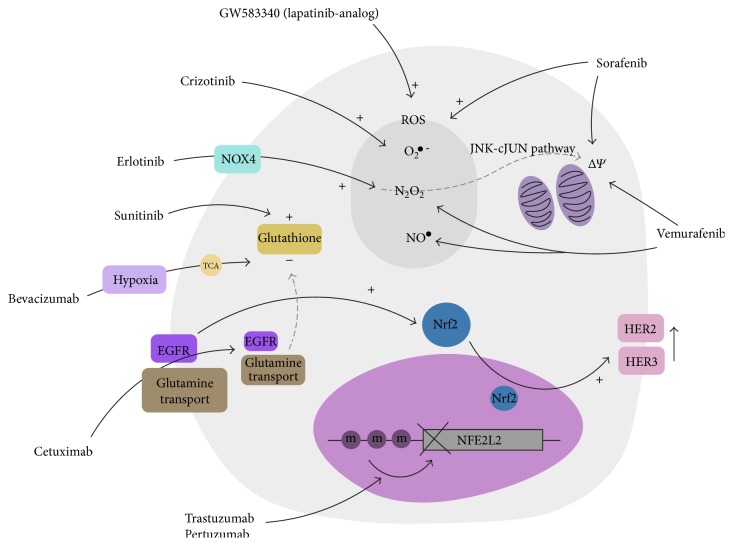
“As an additional mechanism of action, vemurafenib stimulates NO and O2 •− production and it also induces depolarization of mitochondrial membranes in BRAF V600E-mutated melanoma cells, potentially initiating apoptosis and growth inhibition [54, 55].”
BackgroundSantoro, V., Jia, R., Thompson, H., Nijhuis, A. M., Jeffery, R. E., Kiakos, K., Silver, A. R., Hartley, J. A., & Hochhauser, D. (2015) · JNCI Journal of the National Cancer Institute · doi:10.1093/jnci/djv394 · Cited by 67
Immunotherapy for Renal Cell Carcinoma
Itsumi, M., & Tatsugami, K. (2010) · Journal of Immunology Research · doi:10.1155/2010/284581 · Cited by 66
Precision Cancer Medicine: The Future Is Now, Only Better
Tsimberidou, A. M., Eggermont, A. M. M., & Schilsky, R. L. (2014) · American Society of Clinical Oncology Educational Book · doi:10.14694/edbook_am.2014.34.61 · Cited by 60
Aird, K. M., Allensworth, J. L., Batinic-Haberle, I., Lyerly, H. K., Dewhirst, M. W., & Devi, G. R. (2012) · Breast Cancer Research and Treatment · doi:10.1007/s10549-011-1568-1 · Cited by 59
Balin-Gauthier, D., Delord, J., Pillaire, M., Rochaix, P., Hoffman, J.-S., Bugat, R., Cazaux, C., Canal, P., & Allal, B. (2008) · British Journal of Cancer · doi:10.1038/sj.bjc.6604134 · Cited by 56
Korashy, H. M., Attafi, I. M., Ansari, M. A., Assiri, M. A., Belali, O. M., Ahmad, S. F., AL‐Alallah, I. A., Alanazi, F. E., & Alhaider, A. A. (2016) · Toxicology Letters · doi:10.1016/j.toxlet.2016.04.011 · Cited by 54
Megiorni, F., McDowell, H. P., Camero, S., Mannarino, O., Ceccarelli, S., Paiano, M., Losty, P. D., Pizer, B., Shukla, R., Pizzuti, A., et al. (2015) · Journal of Experimental & Clinical Cancer Research · doi:10.1186/s13046-015-0228-4 · Cited by 52
Prewett, M., Deevi, D. S., Bassi, R., Fan, F., Ellis, L. M., Hicklin, D. J., & Tonra, J. R. (2007) · Clinical Cancer Research · doi:10.1158/1078-0432.ccr-07-1768 · Cited by 52
Gillissen, B. F., Richter, A. M., Richter, A., Preißner, R., Schulze‐Osthoff, K., Eßmann, F., & Daniel, P. T. (2017) · Journal of Biological Chemistry · doi:10.1074/jbc.m116.754184 · Cited by 52
Imatinib mesylate induction of ROS-dependent apoptosis in melanoma B16F0 cells
Chang, S.-P., Shen, S.-C., Lee, W.-R., Yang, L.-L., & Chen, Y.-C. (2011) · Journal of Dermatological Science · doi:10.1016/j.jdermsci.2011.03.001 · Cited by 47
An important role for peroxiredoxin II in survival of A549 lung cancer cells resistant to gefitinib
Kwon, T., Rho, J. K., Lee, J. C., Park, Y., Shin, H., Cho, S., Kang, Y., Kim, B.-Y., Yoon, D., & Yu, D. (2015) · Experimental & Molecular Medicine · doi:10.1038/emm.2015.24 · Cited by 44
Bauer, S., & Joensuu, H. (2015) · Drugs · doi:10.1007/s40265-015-0440-8 · Cited by 43
Christian, B. A., Poi, M. J., Jones, J. A., Porcu, P., Maddocks, K. J., Flynn, J. M., Benson, D. M., Phelps, M. A., Wei, L., Byrd, J. C., et al. (2015) · British Journal of Haematology · doi:10.1111/bjh.13354 · Cited by 42
Cao, S., Xia, M., Mao, Y., Zhang, Q., Donkor, P. O., Qiu, F., & Kang, N. (2016) · International Journal of Oncology · doi:10.3892/ijo.2016.3696 · Cited by 39
Sunitinib Produces Neuroprotective Effect Via Inhibiting Nitric Oxide Overproduction
Cui, W., Zhang, Z., Hu, S., Mak, S., Xu, D., Choi, C., Wang, Y., Tsim, K. W. K., Lee, M., Rong, J., et al. (2014) · CNS Neuroscience & Therapeutics · doi:10.1111/cns.12203 · Cited by 37
Khalil, H. S., Langdon, S. P., Goltsov, A., Soininen, T., Harrison, D. J., Bown, J., & Deeni, Y. (2016) · Oncotarget · doi:10.18632/oncotarget.12425 · Cited by 33
Effects of Everolimus on Oxidative Stress in Kidney Model of Ischemia/Reperfusion Injury
Kezić, A., Thaiss, F., Becker, J. U., Tsui, T. Y., & Bajčetić, M. (2013) · American Journal of Nephrology · doi:10.1159/000348496 · Cited by 30
Wattenberg, M. M., Kwilas, A. R., Gameiro, S. R., Dicker, A. P., & Hodge, J. W. (2014) · British Journal of Cancer · doi:10.1038/bjc.2014.79 · Cited by 30
Thijs, A. M. J., van Herpen, C. M. L., Verweij, V., Pertijs, J. C. L. M., van den Broek, P. H. H., van der Graaf, W. T. A., & Rongen, G. A. P. J. M. (2015) · Journal of Hypertension · doi:10.1097/hjh.0000000000000662 · Cited by 29
Lemos, L. G. T., Victorino, V. J., Herrera, A. C. S. A., Aranome, A. M. F., Cecchini, A. L., Simão, A. N. C., Panis, C., & Cecchini, R. (2015) · International Immunopharmacology · doi:10.1016/j.intimp.2015.04.037 · Cited by 28
Correction: KEAP1 loss modulates sensitivity to kinase targeted therapy in lung cancer
Krall, E. B., Wang, B., Muñoz, D. M., Ilić, N., Raghavan, S., Niederst, M. J., Yu, K., Ruddy, D. A., Aguirre, A. J., Kim, J. W., et al. (2017) · eLife · doi:10.7554/elife.33173 · Cited by 27
Suddek, G. M. (2010) · Cancer Chemotherapy and Pharmacology · doi:10.1007/s00280-010-1402-1 · Cited by 26
Triggering of Suicidal Erythrocyte Death by Pazopanib
Signoretto, E., Zierle, J., Bissinger, R., Castagna, M., Bossi, E., & Lang, F. J. W. (2016) · Cellular Physiology and Biochemistry · doi:10.1159/000443045 · Cited by 26
Advances of Targeted Therapy in Treatment of Unresectable Metastatic Colorectal Cancer
Lee, S., & Oh, S. C. (2016) · BioMed Research International · doi:10.1155/2016/7590245 · Cited by 25
Yu, L., Gao, L. X., Ma, X. Q., Hu, F. X., Li, C. M., & Lu, Z. (2014) · Integr. Biol. · doi:10.1039/c4ib00170b · Cited by 23
Rosing, K., Fobker, M., Kannenberg, F., Gunia, S., Dell’Aquila, A. M., Kwiecien, R., Stypmann, J., & Nofer, J. (2013) · Atherosclerosis · doi:10.1016/j.atherosclerosis.2013.07.007 · Cited by 21
Suyanı, E., Derici, Ü., Şahin, T. T., Ofluoğlu, E., Paşaoğlu, H., Erdem, Ö., Barit, G., Reis, K. A., Erten, Y., Arınsoy, T., et al. (2009) · Renal Failure · doi:10.3109/08860220903134555 · Cited by 21
Qian, X., Li, J., Ding, J., Wang, Z., Zhang, W., & Hu, G. (2008) · Clinical and Experimental Pharmacology and Physiology · doi:10.1111/j.1440-1681.2008.05091.x · Cited by 21
Kim, S. J., Kim, Y. J., Kim, N. R., & Chin, H. S. (2015) · Korean Journal of Ophthalmology · doi:10.3341/kjo.2015.29.6.424 · Cited by 19
NRF2 Regulates HER2 and HER3 Signaling Pathway to Modulate Sensitivity to Targeted Immunotherapies
Khalil, H. S., Langdon, S. P., Kankia, I. H., Bown, J., & Deeni, Y. (2015) · Oxidative Medicine and Cellular Longevity · doi:10.1155/2016/4148791 · Cited by 19
Santoro, D., Ahrens, K. P., Vesny, R., Navarro, C., Gatto, H., & Marsella, R. (2017) · Research in Veterinary Science · doi:10.1016/j.rvsc.2017.05.021 · Cited by 18
Wang, K., Jiang, Y. H., Zheng, W., Liu, Z., Li, H., Lou, J., Gu, M., & Wang, X. (2013) · PLoS ONE · doi:10.1371/journal.pone.0056829 · Cited by 16
Combating trastuzumab resistance by targeting thioredoxin-1/PTEN interaction
Sadeghirizi, A., Yazdanparast, R., & Aghazadeh, S. (2015) · Tumor Biology · doi:10.1007/s13277-015-4424-9 · Cited by 16
Karihtala, P., & Puistola, U. (2011) · Current Cancer Therapy Reviews · doi:10.2174/157339411794474128 · Cited by 14
Self-citationAntibodies in diagnosis and therapy. The magic bullet--nearing the century mark.
Raso (1990) · PubMed · Cited by 13
Wang, L., Xu, K., Lin, J., Shao, S., Zhang, T., Huarong, X., Wei, Z., & Zhang, Z. (2013) · PLoS ONE · doi:10.1371/journal.pone.0085650 · Cited by 12
Rituximab sensitizes a Burkitt lymphoma cell line to cell killing by X-irradiation
Fengling, M., Liu, F., Wanxin, W., Lijia, Z., Jiandong, T., Zu, W., Xin, Y., & Qingxiang, G. (2009) · Radiation and Environmental Biophysics · doi:10.1007/s00411-009-0237-9 · Cited by 10
Maughan, R. L., den Heuvel, F. V., & Orton, C. G. (2008) · Medical Physics · doi:10.1118/1.2955553 · Cited by 6
Taı̈eb, J. (2017) · Annals of Oncology · doi:10.1093/annonc/mdx270 · Cited by 1
Research works printed but not linked: 2
- Halperin E. C. Brady L. W. Perez C. A. Wazer D. E. Perez & Brady’s principles and practice of radiation oncology, 6th edition LWW 2013
- Alas S. Ng C. P. Bonavida B. Rituximab modifies the cisplatin-mitochondrial signaling pathway, resulting in apoptosis in cisplatin-resistant non-Hodgkin’s lymphoma Clinical Cancer Research 2002 8 836 845 11895917
Cited by
ROS in cancer therapy: the bright side of the moon
Perillo, B., Di Donato, M., Pezone, A., Di Zazzo, E., Giovannelli, P., Galasso, G., Castoria, G., & Migliaccio, A. (2020) · Experimental & Molecular Medicine · doi:10.1038/s12276-020-0384-2 · Cited by 2,176
A Review on Free Radicals and Antioxidants
Alkadi, H. (2020) · Infectious Disorders - Drug Targets · doi:10.2174/1871526518666180628124323 · Cited by 317
Oxidative Stress in the Tumor Microenvironment and Its Relevance to Cancer Immunotherapy
Aboelella, N. S., Brandle, C., Kim, T., Ding, Z.-C., & Zhou, G. (2021) · Cancers · doi:10.3390/cancers13050986 · Cited by 286
The Influence of Metabolism on Drug Response in Cancer
Zaal, E. A., & Berkers, C. R. (2018) · Frontiers in Oncology · doi:10.3389/fonc.2018.00500 · Cited by 272
Xie, C., Zhou, X., Liang, C., Li, X., Ge, M., Chen, Y., Yin, J., Zhu, J., & Zhong, C. (2021) · Journal of Experimental & Clinical Cancer Research · doi:10.1186/s13046-021-02069-4 · Cited by 202
“Traditional chemotherapeutic drugs used in cancer therapy generally induced ROS production and disturbed the intracellular reduction capacity, resulting in the induction of cell death [58].”
Background
Metadata
- Authors
- Teppo, H.-R., Soini, Y., & Karihtala, P.
- Affiliations
- Oulu University Hospital (FI)
- Corresponding author
- Karihtala, Peeter
- Venue
- Oxidative Medicine and Cellular Longevity
- Publisher
- Wiley
- Published
- 2017-01
- Volume
- 2017
- Issue
- 1
- Pages
- 1485283-1485283
- ISSN
- 1942-0994 (ISSN-L)
- 1942-0900
- PMC
- PMC5494102
- OpenAlex
- W2626044396
- Semantic Scholar
- 35d0d00d0ffbbce4e7072084be9d32169304dafb
- Cited by
- 162
- References
- 96
- Citations by year
- 2026: 6 · 2025: 9 · 2024: 13 · 2023: 13 · 2022: 28 · 2021: 32 · 2020: 23 · 2019: 16 · 2018: 20 · 2017: 2
- FWCI
- 1.56
- Type
- journal article
- Language
- en
- Open access
- hybrid
- doi.org
- Locations
- Oxidative Medicine and Cellular Longevity (publishedVersion, cc-by)
- PubMed Central (publishedVersion, cc-by)
- PubMed (publishedVersion)
- UEF eRepo (University of Eastern Finland) (submittedVersion, cc-by)
- DOAJ (DOAJ: Directory of Open Access Journals) (submittedVersion)
- Topics
- Life Sciences › Biochemistry, Genetics and Molecular Biology › Molecular Biology › Redox biology and oxidative stress
- Life Sciences › Pharmacology, Toxicology and Pharmaceutics › Toxicology › Bioactive Compounds and Antitumor Agents
- Life Sciences › Biochemistry, Genetics and Molecular Biology › Molecular Biology › Cancer and biochemical research
- Keywords
- reactive oxygen species, targeted cancer therapy, tyrosine kinase inhibitors, monoclonal antibodies, oxidative stress, drug resistance, metastatic cancer, lymphoma, solid tumors, cytotoxicity, adverse events
- MeSH terms
- Animals, Antineoplastic Agents, Humans, Neoplasms, Signal Transduction, Reactive Oxygen Species, Oxidative Stress
About these checks
Registry, retraction, Cites and statistics results are computed, not judged, with one exception: a printed reference that no index lists is read once by a model before it counts as a citation error. Claims are extracted by a model and kept only when their quote appears verbatim in the text; each cited source is then checked, with a model’s help, for whether it says what the claim relies on. Those verdicts can be wrong — read the claim’s quote and the cited source before relying on one.
Statistics and arithmetic are recomputed, not judged.
Confidence bands are shown only for fields calibrated on our annotated test set. None is calibrated yet, so no band is shown.
What counts as a claim ›How we measure confidence ›How we check this ›
Are you an author, or do you see a problem with this page? Request a review
Data sources
Bibliographic data: Semantic Scholar, OpenAlex, Crossref.
Contains information from the Semantic Scholar Academic Graph Datasets, made available under the ODC Attribution License (ODC-BY 1.0).
Semantic Scholar’s data is described in: Kinney, R., et al. (2023). The Semantic Scholar Open Data Platform. arXiv:2301.10140.
