

The DOI matches its Crossref record; 33 of the 33 references it cites were found in a registry or an index.
Primary sigmoid vaginoplasty in transwomen: technique and outcomes.
Open accessAbstract
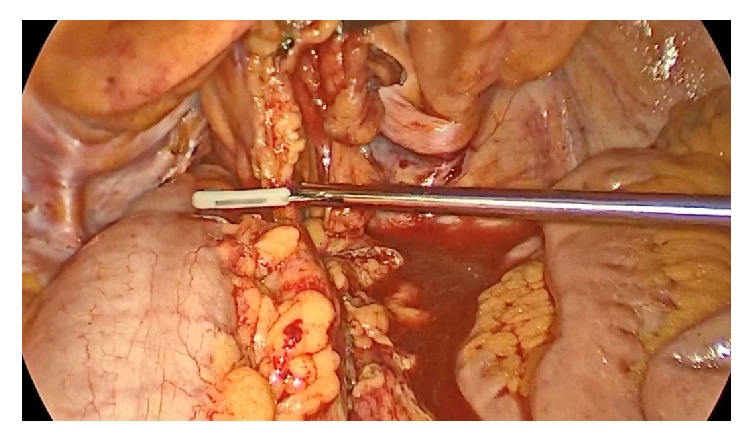
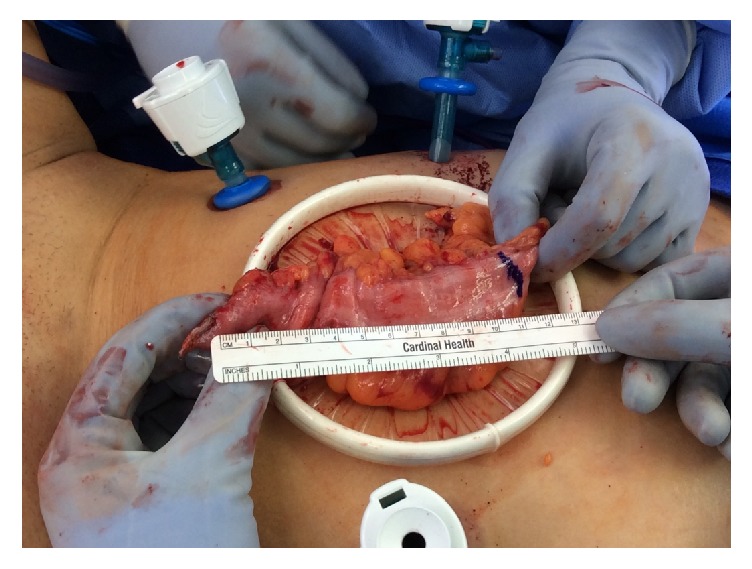
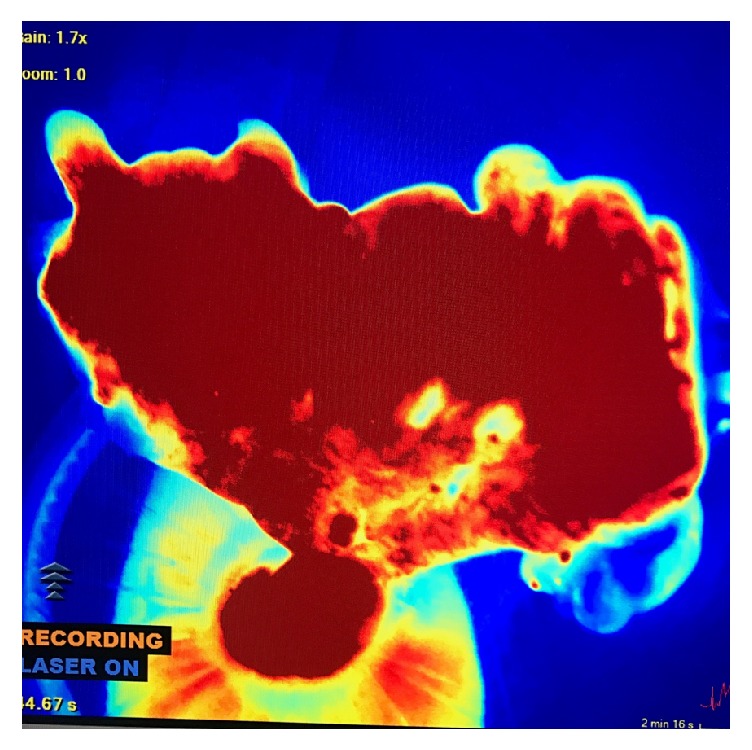
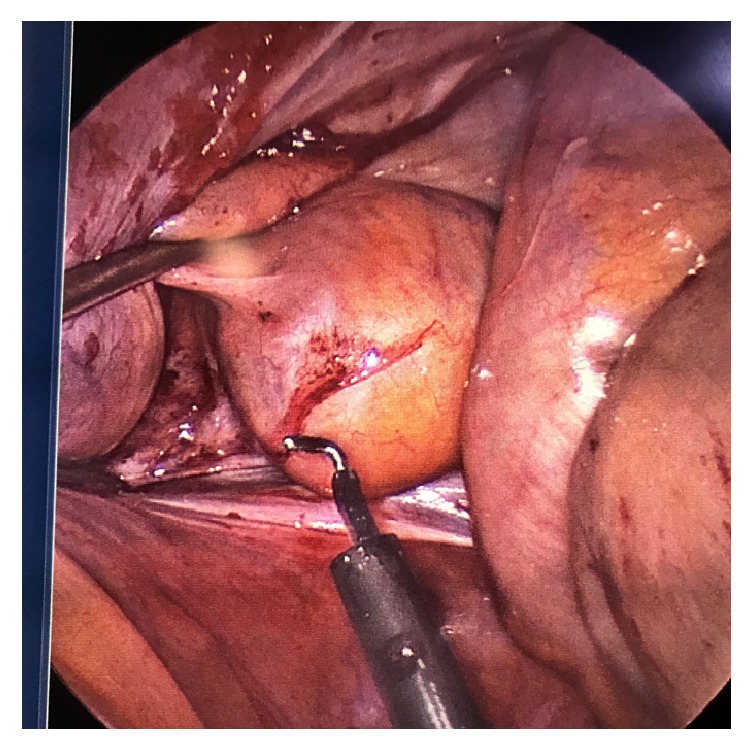
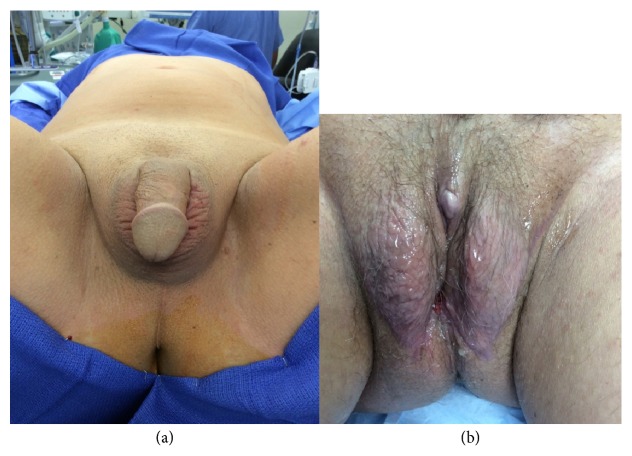
BACKGROUND: Many techniques have been described for reconstruction of the vaginal canal for oncologic, traumatic, and congenital indications. An increasing role exists for these procedures within the transgender community. Most often, inverted phallus skin is used to create the neovagina in transwomen. However, not all patients have sufficient tissue to achieve satisfactory depth and those that do must endure cumbersome postoperative dilation routines to prevent contracture. In selected patients, the sigmoid colon can be used to harvest ample tissue while avoiding the limitations of penile inversion techniques. METHODS: Records were retrospectively reviewed for all transwomen undergoing primary sigmoid vaginoplasty with the University of Miami Gender Reassignment service between 2014 and 2017. RESULTS: Average neovaginal depth was 13.9 +/- 2.0 centimeters in 12 patients. 67% were without complications, and all maintained tissue conducive to sexual activity. No incidences of bowel injury, anastomotic leak, sigmoid necrosis, prolapse, diversion neovaginitis, dyspareunia, or excessive secretions had occurred at last follow-up. CONCLUSIONS: Sigmoid vaginoplasty is a reliable technique for achieving a satisfactory vaginal depth that is sexually functional. Using a collaborative approach, it is now our standard of care to offer this surgery to transwomen with phallus length less than 11.4 centimeters.
Overview
The claims and statistics of this paper haven’t been checked yet.
Run the check — free, no account needed. It reads the open-access text and checks the sources it cites.
Integrity signals
Registry
Cites
Statistics
Figures
Verification
Claims the paper makes
The claims and statistics of this paper haven’t been checked yet.
Run the check — free, no account needed. It reads the open-access text and checks the sources it cites.
Claims other papers make about this one
Each is checked against this paper’s own text: does it say what the citing paper says it does?
The source backs part of the claim, not all of it — or backs it for a different population, condition or comparison.
In the citing paper
“Other surgical techniques use intestinal tissue (e.g., sigmoid colon graft) or split-skin grafts (352).”
From Sexually Transmitted Infections Treatment Guidelines, 2021 (2021) · cites this paper as [352]
Experimental — accuracy not yet measured
Self-check
Percentages, sums and reported differences re-computed from the paper’s own numbers.
The self-check needs the paper’s full text.
Citations
Cites
Coleman, E., Bockting, W. O., Botzer, M., Cohen‐Kettenis, P. T., Cuypere, G. D., Feldman, J., Fraser, L., Green, J., Knudson, G., Meyer, W. J., et al. (2012) · International Journal of Transgenderism · doi:10.1080/15532739.2011.700873 · Cited by 3,273
Endocrine Treatment of Transsexual Persons:An Endocrine Society Clinical Practice Guideline
Hembree, W. C., Cohen‐Kettenis, P. T., de Waal, H. A. D., Gooren, L. J., Meyer, W. J., Spack, N. P., Tangpricha, V., & Montori, V. M. (2009) · The Journal of Clinical Endocrinology & Metabolism · doi:10.1210/jc.2009-0345 · Cited by 1,029
Young Adult Psychological Outcome After Puberty Suppression and Gender Reassignment
de Vries, A. L. C., McGuire, J. K., Steensma, T. D., Wagenaar, E. C. F., DORELEIJERS, T. A. H., & Cohen‐Kettenis, P. T. (2014) · PEDIATRICS · doi:10.1542/peds.2013-2958 · Cited by 931
Canonico, M., Plu-Bureau, G., Lowe, G. D. O., & Scarabin, P.-Y. (2008) · BMJ · doi:10.1136/bmj.39555.441944.be · Cited by 569
Mortality and morbidity in transsexual subjects treated with cross‐sex hormones
van Kesteren, P. J. M., Asscheman, H., Megens, J. A. J., & Gooren, L. J. (1997) · Clinical Endocrinology · doi:10.1046/j.1365-2265.1997.2601068.x · Cited by 532
Sánchez, N. F., Sánchez, J. P., & Danoff, A. (2009) · American Journal of Public Health · doi:10.2105/ajph.2007.132035 · Cited by 434
Outcome of Vaginoplasty in Male-to-Female Transgenders: A Systematic Review of Surgical Techniques
Horbach, S. E. R., Bouman, M., Smit, J. M., Özer, M., Buncamper, M. E., & Mullender, M. G. (2015) · The Journal of Sexual Medicine · doi:10.1111/jsm.12868 · Cited by 351
Bouman, M., van Zeijl, M. C. T., Buncamper, M. E., Meijerink, W. J. H. J., Bodegraven, A. A. V., & Mullender, M. G. (2014) · The Journal of Sexual Medicine · doi:10.1111/jsm.12538 · Cited by 187
Asscheman, H., T'Sjoen, G. G., Lemaire, A., Mas, M., Meriggiola, M. C., Mueller, A., Kühn, A., Dhejne, C., Morel-Journel, N., & Gooren, L. J. (2013) · Andrologia · doi:10.1111/and.12150 · Cited by 133
Bouman, M., van der Sluis, W. B., Hamstra, L. V. W., Buncamper, M. E., Kreukels, B. P. C., Meijerink, W. J. H. J., & Mullender, M. G. (2016) · The Journal of Sexual Medicine · doi:10.1016/j.jsxm.2016.06.009 · Cited by 133
Research works printed but not linked: 3
- 1974, Acta Chirurgiae Plasticae, 16, 35
- 2016, Male-to-Female Gender Affirmation Colon Vaginoplasty: Total Laparoscopic Sigmoid Vaginoplasty, 95
- 2014, Zhonghua Fu Chan Ke Za Zhi, 49, 172
Cited by
Sorted by citations
Sexually Transmitted Infections Treatment Guidelines, 2021
Workowski, K. A., Bachmann, L. H., Chan, P. A., Johnston, C. M., Muzny, C. A., Park, I., Reno, H., Zenilman, J. M., & Bolan, G. A. (2021) · MMWR. Recommendations and Reports · doi:10.15585/mmwr.rr7004a1 · Cited by 3,018
Metadata
- Authors
- Salgado, C. J., Nugent, A., Kuhn, J., Janette, M., & Bahna, H.
- Affiliations
- University of Miami (US)
- University at Buffalo, State University of New York (US)
- Corresponding author
- Salgado, Christopher J.
- Venue
- BioMed Research International
- Publisher
- Wiley
- Published
- 2018
- Volume
- 2018
- Pages
- 1-7
- ISSN
- 1110-7243 (ISSN-L)
- 2314-6133
- 2314-6141
- PMC
- PMC5971241
- OpenAlex
- W2800201827
- Cited by
- 64
- References
- 33
- Citations by year
- 2026: 4 · 2025: 14 · 2024: 6 · 2023: 8 · 2022: 8 · 2021: 8 · 2020: 9 · 2019: 6 · 2018: 1
- FWCI
- 0.93
- Type
- journal article
- Language
- en
- Open access
- hybrid
- doi.org
- Locations
- BioMed Research International (publishedVersion, cc-by)
- Europe PMC (PubMed Central) (publishedVersion, cc-by)
- PubMed Central (publishedVersion, cc-by)
- PubMed (publishedVersion)
- DOAJ (DOAJ: Directory of Open Access Journals) (submittedVersion, cc-by-sa)
- Topics
- Social Sciences › Psychology › Social Psychology › LGBTQ Health, Identity, and Policy
- Health Sciences › Medicine › Urology › Urological Disorders and Treatments
- Health Sciences › Medicine › Obstetrics and Gynecology › Gynecological conditions and treatments
- Keywords
- sigmoid vaginoplasty, transgender women, gender-affirming surgery, sexual function, postoperative complications
- MeSH terms
- Adult, Female, Humans, Male, Colon, Sigmoid, Vagina, Plastic Surgery Procedures, Gender-Affirming Surgery, Sex Reassignment Surgery, Transgender Persons
About these checks
Registry, retraction, Cites and statistics results are computed, not judged, with one exception: a printed reference that no index lists is read once by a model before it counts as a citation error. Claims are extracted by a model and kept only when their quote appears verbatim in the text; each cited source is then checked, with a model’s help, for whether it says what the claim relies on. Those verdicts can be wrong — read the claim’s quote and the cited source before relying on one.
Statistics and arithmetic are recomputed, not judged.
Confidence bands are shown only for fields calibrated on our annotated test set. None is calibrated yet, so no band is shown.
What counts as a claim ›How we measure confidence ›How we check this ›
Are you an author, or do you see a problem with this page? Request a review
How to cite
Cite CoChat for the checks on this page, and the paper for its own findings.
- This page
- CoChat. (2026). Citation check: Primary sigmoid vaginoplasty in transwomen: technique and outcomes. https://app.cochat.ai/papers/10.1155/2018/4907208
- The paper
- Salgado, C. J., Nugent, A., Kuhn, J., Janette, M., & Bahna, H. (2018). Primary sigmoid vaginoplasty in transwomen: technique and outcomes. BioMed Research International. https://doi.org/10.1155/2018/4907208
