

The DOI matches its Crossref record; 5 of the 5 references it cites were found in a registry or an index.
mTOR Modulates Methamphetamine‐Induced Toxicity through Cell Clearing Systems
Abstract
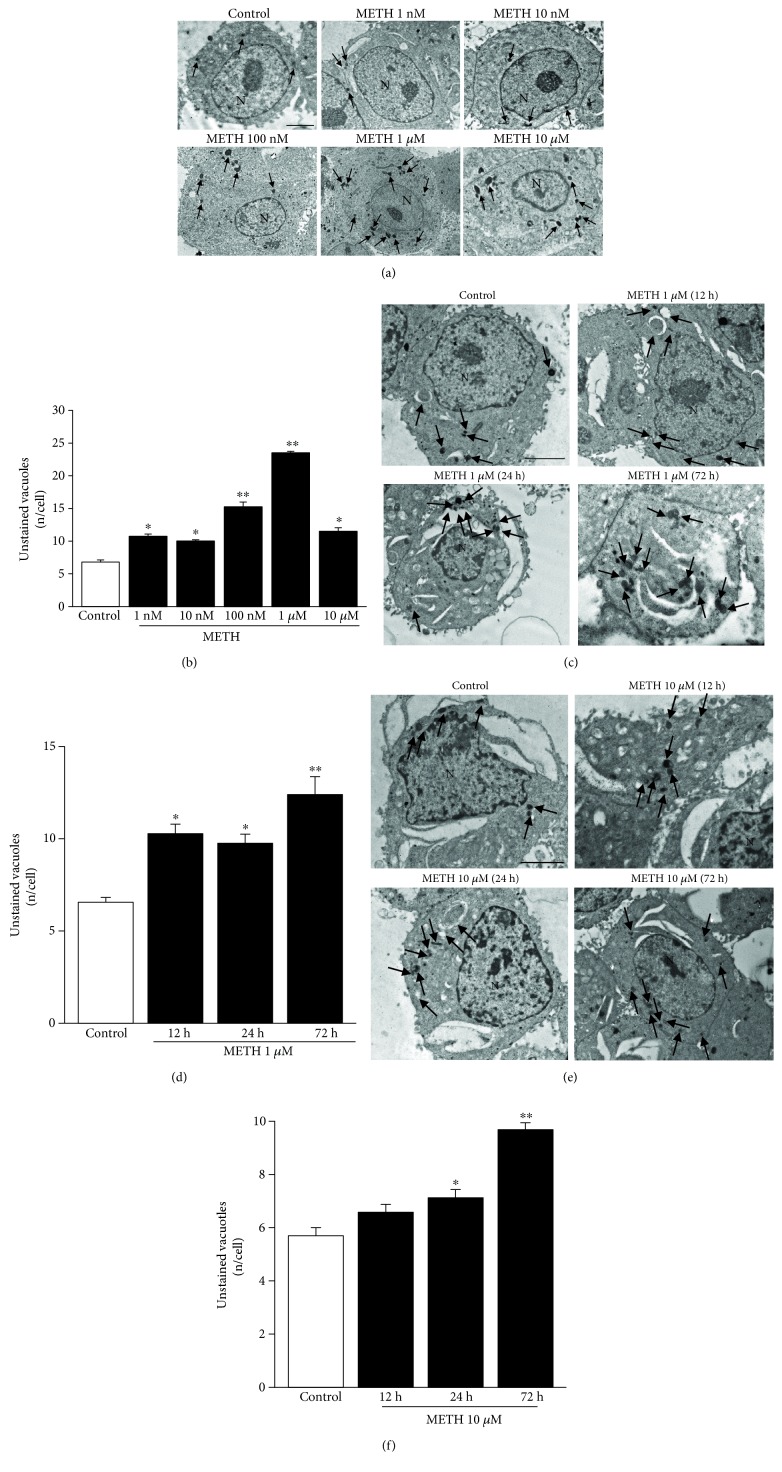
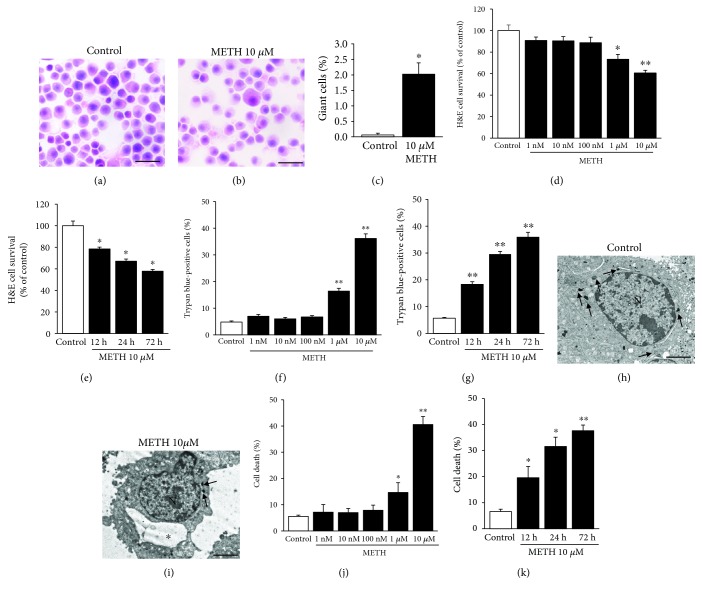
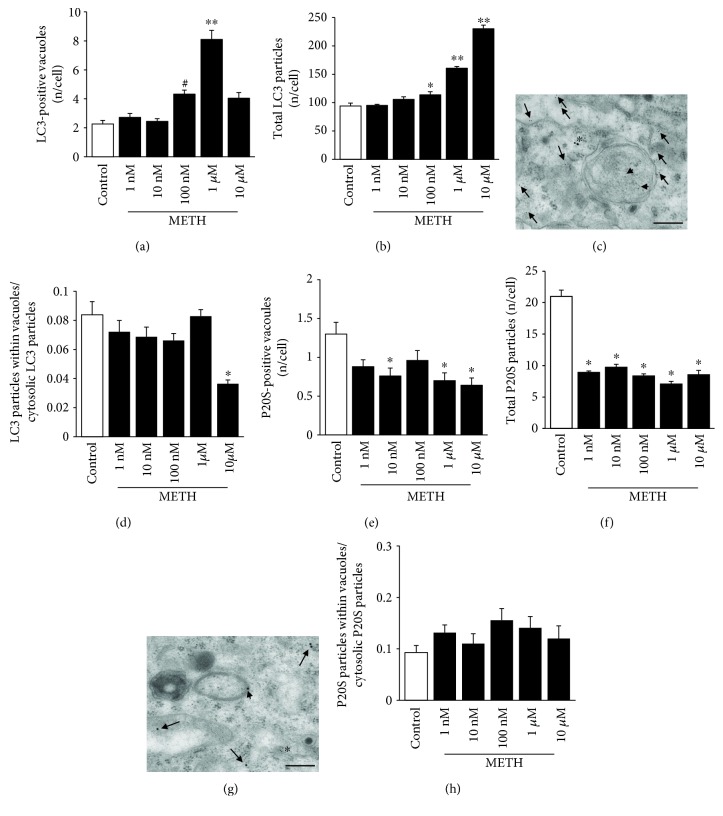
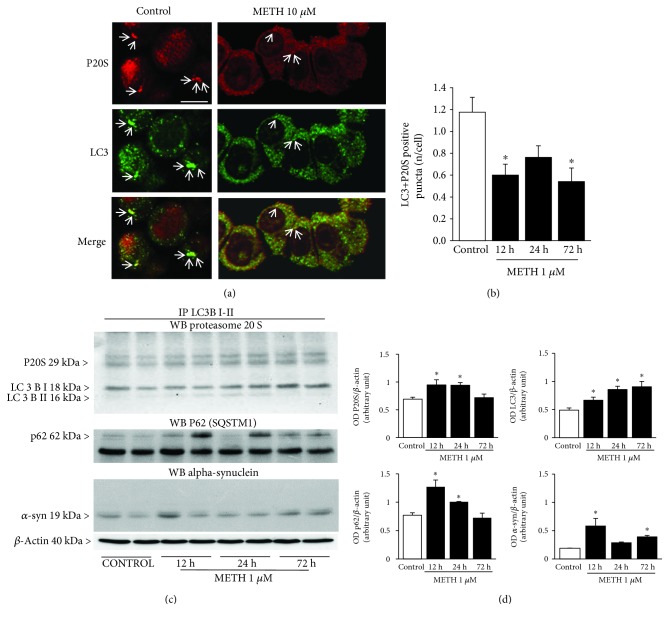
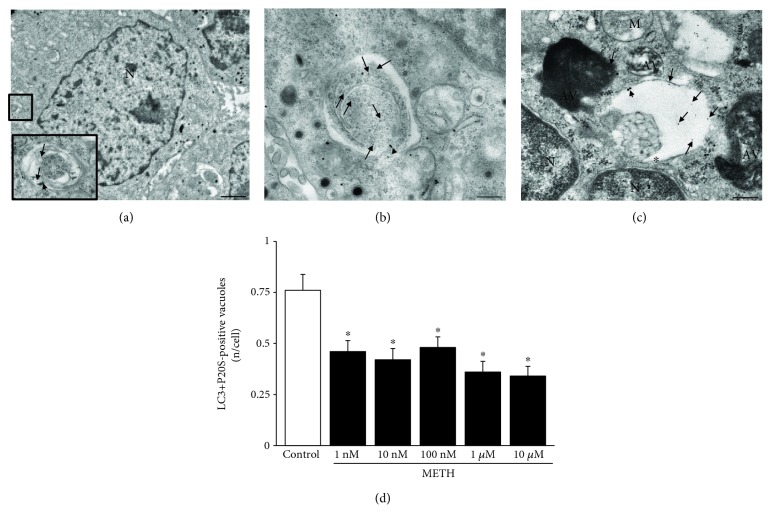
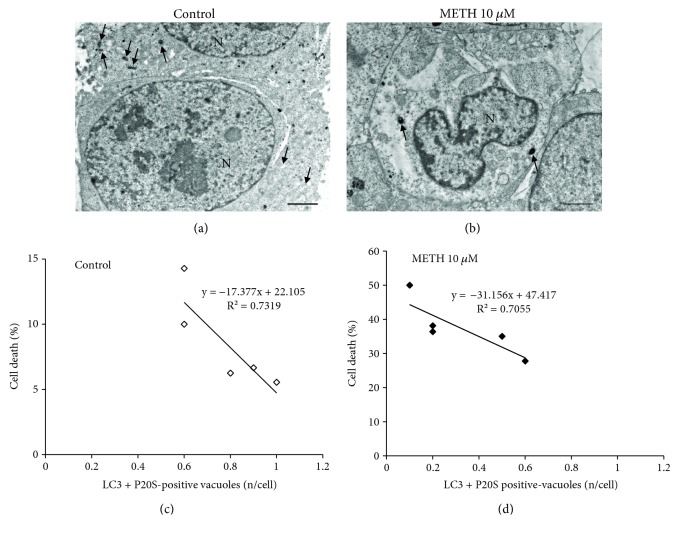
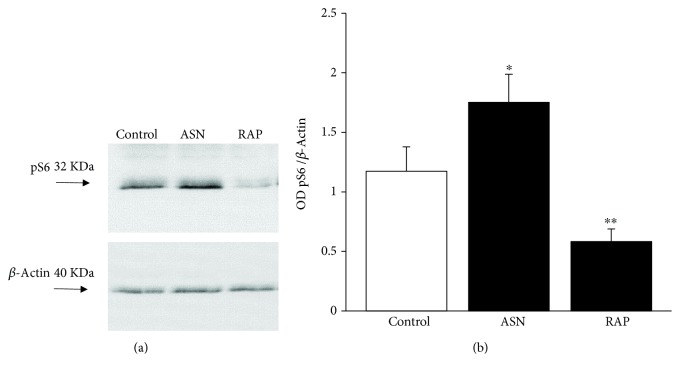
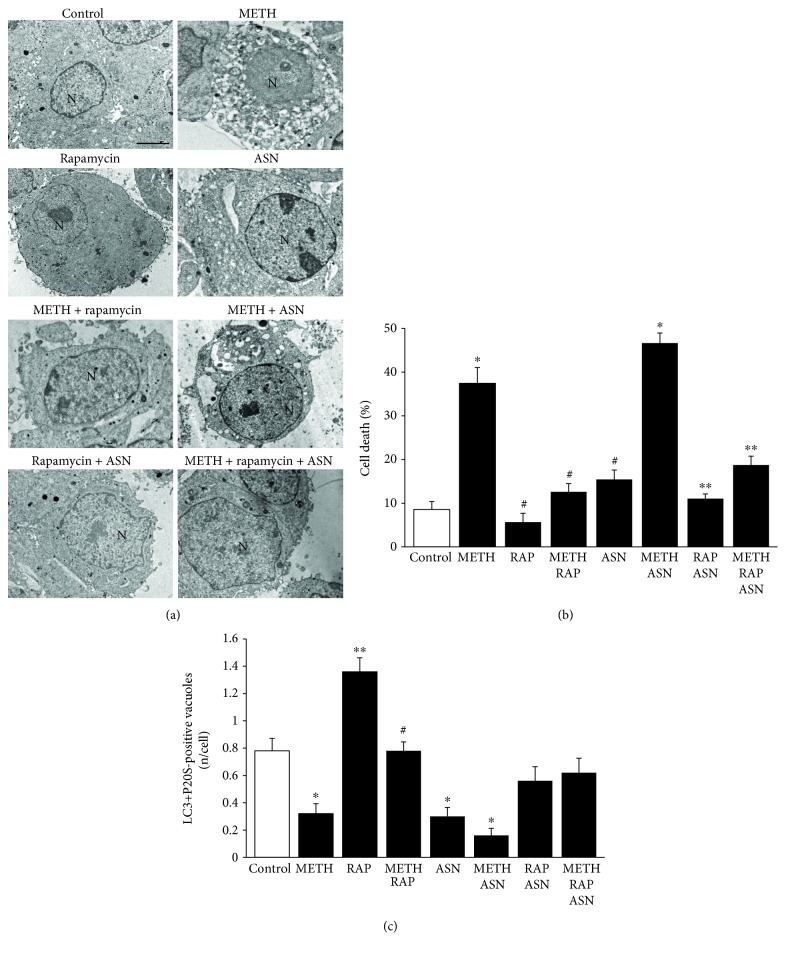
Methamphetamine (METH) is abused worldwide, and it represents a threat for public health. METH exposure induces a variety of detrimental effects. In fact, METH produces a number of oxidative species, which lead to lipid peroxidation, protein misfolding, and nuclear damage. Cell clearing pathways such as ubiquitin‐proteasome (UP) and autophagy (ATG) are involved in METH‐induced oxidative damage. Although these pathways were traditionally considered to operate as separate metabolic systems, recent studies demonstrate their interconnection at the functional and biochemical level. Very recently, the convergence between UP and ATG was evidenced within a single organelle named autophagoproteasome (APP), which is suppressed by mTOR activation. In the present research study, the occurrence of APP during METH toxicity was analyzed. In fact, coimmunoprecipitation indicates a binding between LC3 and P20S particles, which also recruit p62 and alpha‐synuclein. The amount of METH‐induced toxicity correlates with APP levels. Specific markers for ATG and UP, such as LC3 and P20S in the cytosol, and within METH‐induced vacuoles, were measured at different doses and time intervals following METH administration either alone or combined with mTOR modulators. Western blotting, coimmunoprecipitation, light microscopy, confocal microscopy, plain transmission electron microscopy, and immunogold staining were used to document the effects of mTOR modulation on METH toxicity and the merging of UP with ATG markers within APPs. METH‐induced cell death is prevented by mTOR inhibition, while it is worsened by mTOR activation, which correlates with the amount of autophagoproteasomes. The present data, which apply to METH toxicity, are also relevant to provide a novel insight into cell clearing pathways to counteract several kinds of oxidative damage.
Overview
The claims and statistics of this paper haven’t been checked yet.
Run the check — free, no account needed. It reads the open-access text and checks the sources it cites.
Integrity signals
Registry
Cites
Statistics
Figures
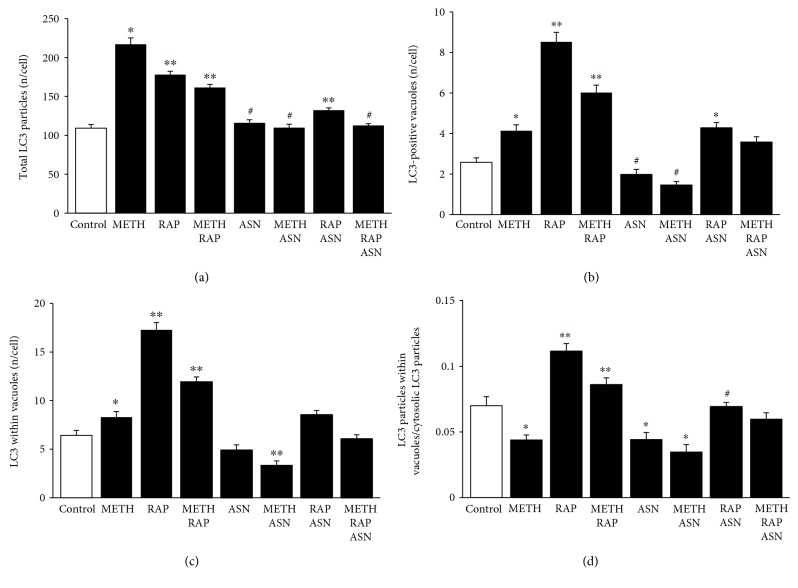
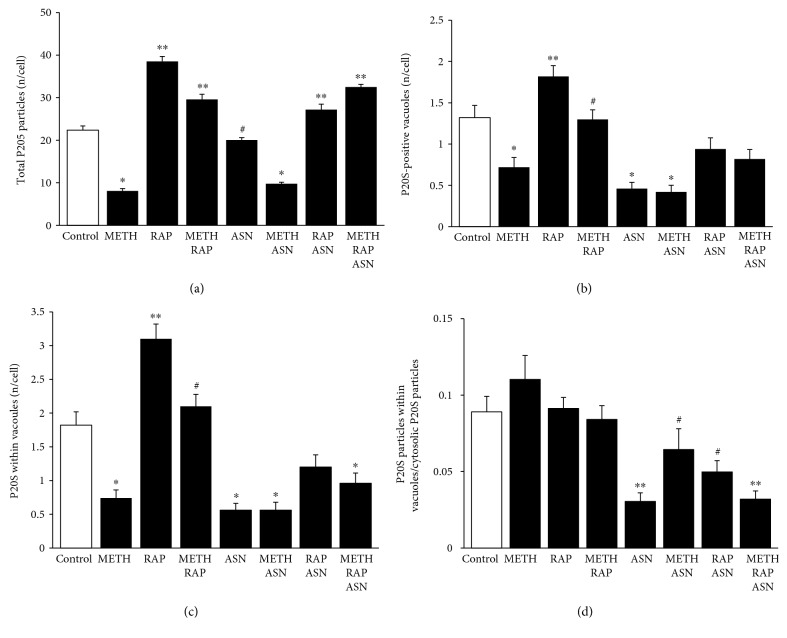
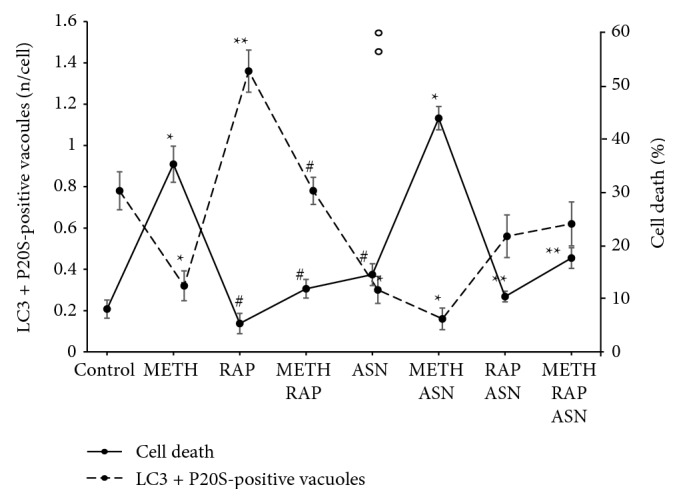
Verification
Claims the paper makes
The claims and statistics of this paper haven’t been checked yet.
Run the check — free, no account needed. It reads the open-access text and checks the sources it cites.
Claims other papers make about this one
Each is checked against this paper’s own text: does it say what the citing paper says it does?
In the citing paper
“In fact, the polarization of LC3 within granules is greatly reduced and LC3 IHC even monitored by confocal microscopy demonstrates cytosolic accumulation of the protein, which, despite being increased, loses its polarization within autophagic granules [549].”
From Guidelines for the use and interpretation of assays for monitoring autophagy (4th edition) 1 (2021) · cites this paper as [549]
In the citing paper
“Similarly, accumulation of large LC3-positive puncta occurring during methamphetamine intoxication does not derive from stagnant autophagic vacuoles.”
From Guidelines for the use and interpretation of assays for monitoring autophagy (4th edition) 1 (2021) · cites this paper as [549]
Self-check
Percentages, sums and reported differences re-computed from the paper’s own numbers.
The self-check needs the paper’s full text.
Citations
Cites
Guidelines for the use and interpretation of assays for monitoring autophagy (3rd edition).
Klionsky, D. J., Abdelmohsen, K., Abe, A., Abedin, M. J., Abeliovich, H., Acevedo Arozena, A., Adachi, H., Adams, C. M., Adams, P. D., Adeli, K., et al. (2016) · Autophagy · doi:10.1080/15548627.2015.1100356 · Cited by 5,894
Self-citationLoewith, R., Jacinto, E., Wullschleger, S., Lorberg, A., Crespo, J. L., Bonenfant, D., Oppliger, W., Jenoe, P., & Hall, M. N. (2002) · Molecular Cell · doi:10.1016/s1097-2765(02)00636-6 · Cited by 1,886
α-Synuclein Is Degraded by Both Autophagy and the Proteasome
Webb, J. L., Ravikumar, B., Atkins, J., Skepper, J. N., & Rubinsztein, D. C. (2003) · Journal of Biological Chemistry · doi:10.1074/jbc.m300227200 · Cited by 1,429
Asparagine promotes cancer cell proliferation through use as an amino acid exchange factor
Krall, A. S., Xu, S., Graeber, T. G., Braas, D., & Christofk, H. R. (2016) · Nature Communications · doi:10.1038/ncomms11457 · Cited by 504
RPN-6 determines C. elegans longevity under proteotoxic stress conditions
Vilchez, D., Morantte, I., Liu, Z., Douglas, P. M., Merkwirth, C., Rodrigues, A. P. C., Manning, G., & Dillin, A. (2012) · Nature · doi:10.1038/nature11315 · Cited by 413
Research works printed but not linked: 102
- 10.1176/appi.ajp.158.3.377 · DOI
- 10.1016/j.ncl.2011.05.004 · DOI
- 10.1016/0006-8993(80)91265-2 · DOI
- 10.1016/0006-8993(82)90198-6 · DOI
- 10.1038/nm0696-699 · DOI
- 10.1046/j.1471-4159.2003.02137.x · DOI
- 10.1002/syn.20307 · DOI
- 10.1038/npp.2013.307 · DOI
- 10.1016/j.nbd.2011.11.005 · DOI
- 10.1007/s12640-009-9106-1 · DOI
- 10.1007/s12640-013-9438-8 · DOI
- 10.1007/s12640-018-9925-z · DOI
- 10.1196/annals.1316.021 · DOI
- 10.1196/annals.1369.007 · DOI
- 10.1111/j.1471-4159.2006.04429.x · DOI
- 10.1016/j.neuroscience.2012.03.004 · DOI
- 10.1016/j.legalmed.2004.11.002 · DOI
- Sonsalla P. K., 1986, Roles of D1 and D2 dopamine receptor subtypes in mediating the methamphetamine-induced changes in monoamine systems, Journal of Pharmacology and Experimental Therapeutics, 238, 932, 10.1016/S0022-3565(25)24344-0 · DOI
- Gibb J. W., 1990, Neurochemical basis of neurotoxicity, Neurotoxicology, 11, 317
- 10.1016/0896-6273(90)90339-H · DOI · Paper page
- 10.1111/j.1749-6632.1992.tb26020.x · DOI
- 10.1523/JNEUROSCI.14-04-02260.1994 · DOI
- 10.1016/0006-2952(80)90493-1 · DOI
- 10.1046/j.1471-4159.1999.0732434.x · DOI
- 10.1016/0014-2999(85)90541-2 · DOI
- 10.1016/j.pneurobio.2015.09.011 · DOI
- 10.1111/j.1749-6632.1994.tb21827.x · DOI
- 10.1046/j.1471-4159.2002.00808.x · DOI
- 10.1002/glia.21229 · DOI
- 10.1093/ijnp/pyw021 · DOI
- 10.1523/JNEUROSCI.19-04-01484.1999 · DOI
- 10.4161/auto.5923 · DOI · Paper page
- 10.12871/000398292017129 · DOI
- 10.1111/j.1471-4159.2010.07147.x · DOI
- 10.1111/j.1471-4159.2005.03379.x · DOI
- 10.1007/s00204-015-1478-9 · DOI
- 10.1111/j.1471-4159.2008.05488.x · DOI · Paper page
- 10.1371/journal.pone.0028946 · DOI
- 10.4449/aib.v150i2/3.1417 · DOI
- Yamamoto B. K., 1998, The effects of methamphetamine on the production of free radicals and oxidative stress, The Journal of Pharmacology and Experimental Therapy, 287, 107, 10.1016/S0022-3565(24)37769-9 · DOI
- 10.1124/jpet.106.109173 · DOI
- 10.1523/JNEUROSCI.23-26-08955.2003 · DOI
- 10.1196/annals.1369.017 · DOI
- 10.1523/jneurosci.22-20-08951.2002 · DOI
- 10.1111/j.1471-4159.2007.05145.x · DOI
- 10.1016/j.toxlet.2018.03.015 · DOI
- 10.3389/fnana.2016.00078 · DOI
- 10.1016/j.brainres.2006.10.071 · DOI
- 10.1002/syn.20365 · DOI
- 10.1038/cddis.2014.503 · DOI
- 10.1016/j.biocel.2014.10.013 · DOI
- 10.1038/cddis.2014.46 · DOI
- 10.4161/auto.23568 · DOI
- 10.1126/science.290.5497.1717 · DOI
- 10.1038/nature03029 · DOI · Paper page
- 10.1016/S1534-5807(03)00296-X · DOI
- 10.1038/msb.2013.35 · DOI
- 10.1042/bj3050245 · DOI
- 10.1007/s13105-010-0037-3 · DOI
- 10.1074/jbc.M004345200 · DOI
- 10.1016/S0092-8674(02)01012-7 · DOI
- 10.1523/JNEUROSCI.08-08-02804.1988 · DOI
- 10.1523/JNEUROSCI.20-16-06048.2000 · DOI
- 10.1523/JNEUROSCI.20-16-06021.2000 · DOI
- 10.1186/s13195-018-0352-4 · DOI
- 10.1111/bph.14137 · DOI
- 10.18632/oncotarget.23877 · DOI
- 10.1038/s41419-017-0229-7 · DOI
- 10.1080/15548627.2017.1375633 · DOI
- 10.1016/S0014-5793(97)00323-2 · DOI
- 10.1016/S0960-9822(98)70037-5 · DOI
- 10.1074/jbc.273.36.23534 · DOI
- 10.1101/gad.995802 · DOI · Paper page
- 10.1074/jbc.M201745200 · DOI
- 10.1177/31.1.6187796 · DOI
- 10.1016/j.micron.2003.10.001 · DOI
- 10.1369/jhc.3A6178.2004 · DOI
- 10.1038/cddis.2014.64 · DOI
- 10.1523/JNEUROSCI.3712-09.2010 · DOI
- 10.1038/s41467-017-02494-0 · DOI
- 10.1016/j.neuroscience.2016.02.072 · DOI · Paper page
- 10.1016/j.nbd.2015.02.024 · DOI
- 10.1111/jnc.13586 · DOI
- 10.18632/oncotarget.13805 · DOI
- 10.4161/auto.19085 · DOI
- 10.1007/s12035-012-8341-2 · DOI
- 10.1016/j.parkreldis.2008.04.025 · DOI
- 10.1038/aps.2013.29 · DOI
- 10.1016/j.toxlet.2012.09.019 · DOI
- 10.1016/j.bbrc.2015.08.005 · DOI
- 10.1111/j.1600-079X.2008.00648.x · DOI
- 10.1016/j.pnpbp.2018.03.017 · DOI
- 10.1111/j.1471-4159.2008.05284.x · DOI
- 10.3390/ijms19051540 · DOI
- 10.1007/s12640-014-9513-9 · DOI
- 10.1038/cddis.2016.317 · DOI
- 10.1016/j.toxlet.2018.05.017 · DOI
- 10.1016/j.cell.2005.09.028 · DOI
- 10.1016/j.bbrc.2005.04.124 · DOI
- 10.1016/S0306-4522(03)00036-8 · DOI
- 10.1073/pnas.1605844113 · DOI
- 10.1074/jbc.M116.714923 · DOI
Cited by
Sorted by citations
Guidelines for the use and interpretation of assays for monitoring autophagy (4th edition) 1
Klionsky, D. J., Abdel-Aziz, A. K., Abdelfatah, S., Abdellatif, M., Abdoli, A., Abel, S., Abeliovich, H., Abildgaard, M. H., Abudu, Y. P., Acevedo-Arozena, A., et al. (2021) · Autophagy · doi:10.1080/15548627.2020.1797280 · Cited by 2,897
Self-citation
Metadata
- Authors
- Lazzeri, G., Biagioni, F., Fulceri, F., Busceti, C. L., Scavuzzo, M. C., Ippolito, C., Salvetti, A., Lenzi, P., & Fornai, F.
- ORCID
- Venue
- Oxidative Medicine and Cellular Longevity
- Publisher
- Wiley
- Published
- 2018-01
- Volume
- 2018
- Issue
- 1
- ISSN
- 1942-0900
- 1942-0994
- PMC
- PMC6311854
- Cited by
- 53
- References
- 5
- Language
- en
- Funders
- Ministero della Salute
About these checks
Registry, retraction, Cites and statistics results are computed, not judged, with one exception: a printed reference that no index lists is read once by a model before it counts as a citation error. Claims are extracted by a model and kept only when their quote appears verbatim in the text; each cited source is then checked, with a model’s help, for whether it says what the claim relies on. Those verdicts can be wrong — read the claim’s quote and the cited source before relying on one.
Statistics and arithmetic are recomputed, not judged.
Confidence bands are shown only for fields calibrated on our annotated test set. None is calibrated yet, so no band is shown.
What counts as a claim ›How we measure confidence ›How we check this ›
Are you an author, or do you see a problem with this page? Request a review
