

Dietary Plant Polyphenols as the Potential Drugs in Neurodegenerative Diseases: Current Evidence, Advances, and Opportunities
Open accessThe DOI matches its Crossref record; 458 of the 458 references it cites were found in a registry or an index.
Abstract
Neurodegenerative diseases, including Alzheimer’s disease (AD), Parkinson’s disease (PD), and Huntington’s disease (HD), are characterized by the progressive degeneration of neurons. Although the etiology and pathogenesis of neurodegenerative diseases have been studied intensively, the mechanism is still in its infancy. In general, most neurodegenerative diseases share common molecular mechanisms, and multiple risks interact and promote the pathologic process of neurogenerative diseases. At present, most of the approved drugs only alleviate the clinical symptoms but fail to cure neurodegenerative diseases. Numerous studies indicate that dietary plant polyphenols are safe and exhibit potent neuroprotective effects in various neurodegenerative diseases. However, low bioavailability is the biggest obstacle for polyphenol that largely limits its adoption from evidence into clinical practice. In this review, we summarized the widely recognized mechanisms associated with neurodegenerative diseases, such as misfolded proteins, mitochondrial dysfunction, oxidative damage, and neuroinflammatory responses. In addition, we summarized the research advances about the neuroprotective effect of the most widely reported dietary plant polyphenols. Moreover, we discussed the current clinical study and application of polyphenols and the factors that result in low bioavailability, such as poor stability and low permeability across the blood‐brain barrier (BBB). In the future, the improvement of absorption and stability, modification of structure and formulation, and the combination therapy will provide more opportunities from the laboratory into the clinic for polyphenols. Lastly, we hope that the present review will encourage further researches on natural dietary polyphenols in the treatment of neurodegenerative diseases.
Overview
The claims and statistics of this paper haven’t been checked yet.
Free: it reads the open-access text and checks the first 5 claims that cite a source we can check. Create a free account to check every claim.
Integrity signals
Registry
Cites
Statistics
Figures
Verification
Claims the paper makes
The claims and statistics of this paper haven’t been checked yet.
Free: it reads the open-access text and checks the first 5 claims that cite a source we can check. Create a free account to check every claim.
Self-check
Percentages, sums and reported differences re-computed from the paper’s own numbers.
The self-check needs the paper’s full text.
Citations
Cites
2 retracted
Muhammad, T., Ikram, M., Ullah, R., Rehman, S., & Kim, M. (2019) · Nutrients · doi:10.3390/nu11030648 · Cited by 443 · cited 4×
“Emerging studies indicate that hesperidin possesses multiple neuroprotective activities, including the inhibition of oxidative damage [167], the suppression of neuroinflammation [168], and antiapoptosis [168].”
InfluentialRetractedPatil, S. P., Jain, P. D., Sancheti, J. S., Ghumatkar, P. J., Tambe, R., & Sathaye, S. (2014) · Neuropharmacology · doi:10.1016/j.neuropharm.2014.07.012 · Cited by 177 · cited 2×
“Meanwhile, apigenin protects dopaminergic neurons against oxidative injury, inhibits microglial activation, and enhances the levels of TH and BDNF in the MPTP-induced mouse model of PD [207].”
RetractedPlant Polyphenols as Dietary Antioxidants in Human Health and Disease
Pandey, K. B., & Rizvi, S. I. (2009) · Oxidative Medicine and Cellular Longevity · doi:10.4161/oxim.2.5.9498 · Cited by 3,942 · cited 2×
“…fruits (e.g., grape, litchi, rambutan, mangosteen, and pita-haya), vegetables (e.g., legumes, cereals, and cauli fl ower), Oxidative Medicine and Cellular Longevity various kinds of tea leaves, and also many medical herbs (e.g., Scutellaria baicalensis , ginkgo leaves, and Lycium bar-barum ) [140].”
The NALP3 inflammasome is involved in the innate immune response to amyloid-β
Halle, A., Hornung, V., Petzold, G. C., Stewart, C. R., Monks, B. G., Reinheckel, T., Fitzgerald, K. A., Latz, E., Moore, K. J., & Golenbock, D. T. (2008) · Nature Immunology · doi:10.1038/ni.1636 · Cited by 2,441 · cited 1×
“In addition, the upregulation of SIRT1 and downregulation of CD147 by resveratrol are closely associated with the abrogation of hypoxia-induced upregulation of exosomal Aβ [263, 264].”
Yang, F., Lim, G. P., Begum, A. N., Ubeda, O. J., Simmons, M. R., Ambegaokar, S. S., Chen, P. P., Kayed, R., Glabe, C. G., Frautschy, S. A., et al. (2005) · Journal of Biological Chemistry · doi:10.1074/jbc.m404751200 · Cited by 2,336 · cited 3×
“Meanwhile, curcumin binds plaques and reduces Aβ in the Tg2576 mouse model of AD [298].”
Oxidative Stress: A Key Modulator in Neurodegenerative Diseases
Singh, A., Kukreti, R., Saso, L., & Kukreti, S. (2019) · Molecules · doi:10.3390/molecules24081583 · Cited by 2,254 · cited 1×
“It is characterized by mitochondrial dysfunction and abnormal accumulation of transition metals, which causes mitochondrial DNA (mtDNA) mutations, changes in membrane permeability, calcium dyshomeostasis, lipid oxidation generation, and protein carbonylation [52].”
Hoeijmakers, J. H. J. (2009) · New England Journal of Medicine · doi:10.1056/nejmra0804615 · Cited by 2,239 · cited 1×
“Therefore, DNA damage is implicated in various diseases, such as cancer, ageing, and neurodegenerative diseases [81 – 83].”
Gut microbiome alterations in Alzheimer’s disease
Vogt, N. M., Kerby, R. L., Dill-McFarland, K. A., Harding, S. J., Merluzzi, A. P., Johnson, S. C., Carlsson, C. M., Asthana, S., Zetterberg, H., Blennow, K., et al. (2017) · Scientific Reports · doi:10.1038/s41598-017-13601-y · Cited by 2,137
Placebo-Controlled Phase 3 Study of Oral BG-12 for Relapsing Multiple Sclerosis
Gold, R., Kappos, L., Arnold, D. L., Bar-Or, A., Giovannoni, G., Selmaj, K., Tornatore, C., Sweetser, M. T., Yang, M., Sheikh, S. I., et al. (2012) · New England Journal of Medicine · doi:10.1056/nejmoa1114287 · Cited by 1,733 · cited 1×
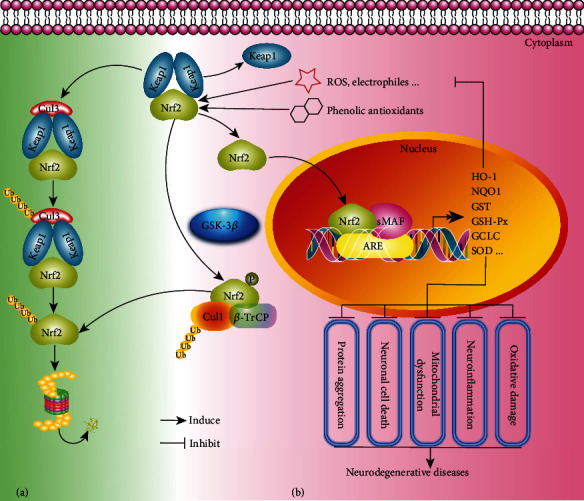
“However, there is limited clinical evidence showing that Nrf2 activation is a clinical target in neurodegenerative disease except for MS [62, 63] (Figure 2).”
Phenolic acids: Natural versatile molecules with promising therapeutic applications
Kumar, N., & Goel, N. (2019) · Biotechnology Reports · doi:10.1016/j.btre.2019.e00370 · Cited by 1,694 · cited 1×
“Numerous studies show that this type of polyphenols is potential therapeutic value in neurodegenerative diseases [216].”
Research works printed but not linked: 2
- 39. A. Lilienbaum, "Relationship between the proteasomal sys- tem and autophagy," International Journal of Biochemistry and Molecular Biology, vol. 4, no. 1, pp. 1-26, 2013.
- 268. L. Liang, H. Wei, Y. Sun, and J. Tian, "Anti-oxidative stress effects of curcumin on rat models of traumatic brain injury," Chinese Journal of Comparative Medicine, vol. 28, no. 4, pp. 73-80, 2018.
Cited by
Andrés, C. M. C., Pérez de la Lastra, J. M., Juan, C. A., Plou, F. J., & Pérez-Lebeña, E. (2023) · Processes · doi:10.3390/pr11092771 · Cited by 187
Polyphenols in Health and Disease: Gut Microbiota, Bioaccessibility, and Bioavailability
Bié, J., Sepodes, B., Fernandes, P. C. B., & Ribeiro, M. H. L. (2023) · Compounds · doi:10.3390/compounds3010005 · Cited by 186
Feng, J., Zheng, Y., Guo, M., Ares, I., Martínez, M., Lopez-Torres, B., Martínez-Larrañaga, M.-R., Wang, X., Anadón, A., & Martínez, M.-A. (2023) · Acta Pharmaceutica Sinica B · doi:10.1016/j.apsb.2023.07.010 · Cited by 168
“The polylactic-glycolic acid copolymer formed by curcumin has 40-fold increased bioavailability compared to curcumin alone in rats 229,292 .”
BackgroundSelf-citationFatima, M. T., Bhat, A. A., Nisar, S., Fakhro, K. A., & Akil, A. A. (2022) · Heliyon · doi:10.1016/j.heliyon.2022.e12698 · Cited by 127
Ren, F., Wei, J., Chen, Q., Hu, M., Yu, L., Mi, J., Zhou, X., Qin, D., Wu, J., & Wu, A. (2025) · Acta Pharmaceutica Sinica B · doi:10.1016/j.apsb.2025.07.030 · Cited by 97
Self-citation
Metadata
- Authors
- Yan, L., Guo, M.-S., Zhang, Y., Yu, L., Wu, J.-M., Tang, Y., Ai, W., Zhu, F.-D., Law, B. Y.-K., Chen, Q., Yu, C.-L., Wong, V. K.-W., Li, H., Li, M., Zhou, X.-G., Qin, D.-L., & Wu, A.-G.
- Affiliations
- Southwest Medical University (CN)
- Macau University of Science and Technology (MO)
- ORCID
- Venue
- Oxidative Medicine and Cellular Longevity
- Publisher
- Wiley
- Published
- 2022-01
- Volume
- 2022
- Issue
- 1
- Pages
- 5288698-5288698
- ISSN
- 1942-0994 (ISSN-L)
- 1942-0900
- PMC
- PMC8885204
- OpenAlex
- W4212904553
- Cited by
- 97
- References
- 458
- Citations by year
- 2026: 16 · 2025: 25 · 2024: 27 · 2023: 19 · 2022: 10
- FWCI
- 1.79
- Type
- journal article
- Language
- en
- Open access
- hybrid
- doi.org
- Licence
- Locations
- Oxidative Medicine and Cellular Longevity (publishedVersion, cc-by)
- PubMed Central (publishedVersion, cc-by)
- PubMed (publishedVersion)
- DOAJ (DOAJ: Directory of Open Access Journals) (submittedVersion, cc-by-sa)
- Funders
- Southwest Medical University (2021ZKMS046, 2021ZKZD018, 2021ZKZD015)
- National Natural Science Foundation of China (81801398, 81903829)
- Topics
- Health Sciences › Medicine › Biochemistry (medical) › Phytochemicals and Antioxidant Activities
- Health Sciences › Medicine › Complementary and alternative medicine › Medicinal Plants and Neuroprotection
- Life Sciences › Neuroscience › Cellular and Molecular Neuroscience › Alzheimer's disease research and treatments
- Keywords
- neurodegenerative diseases, neuroprotection, Alzheimer's disease, Parkinson's disease, Huntington's disease, polyphenol bioavailability, blood-brain barrier, mitochondrial dysfunction, oxidative stress, neuroinflammation, protein misfolding, combination therapy, natural product drug development
- MeSH terms
- Animals, Antioxidants, Biological Availability, Biological Transport, Blood-Brain Barrier, Disease Models, Animal, Humans, Phytotherapy, Plant Extracts, Treatment Outcome, Oxidative Stress, Neuroprotective Agents, Neurodegenerative Diseases, Polyphenols, Phytochemicals
About these checks
Registry, retraction, Cites and statistics results are computed, not judged, with one exception: a printed reference that no index lists is read once by a model before it counts as a citation error. Claims are extracted by a model and kept only when their quote appears verbatim in the text; each cited source is then checked, with a model’s help, for whether it says what the claim relies on. Those verdicts can be wrong — read the claim’s quote and the cited source before relying on one.
Statistics and arithmetic are recomputed, not judged.
Confidence bands are shown only for fields calibrated on our annotated test set. None is calibrated yet, so no band is shown.
What counts as a claim ›How we measure confidence ›How we check this ›
Are you an author, or do you see a problem with this page? Request a review
Data sources
Bibliographic data: Semantic Scholar, OpenAlex, Crossref.
Contains information from the Semantic Scholar Academic Graph Datasets, made available under the ODC Attribution License (ODC-BY 1.0).
Semantic Scholar’s data is described in: Kinney, R., et al. (2023). The Semantic Scholar Open Data Platform. arXiv:2301.10140.
