

An Unsupervised Deep Learning-Based Model Using Multiomics Data to Predict Prognosis of Patients with Stomach Adenocarcinoma
Open accessThe DOI matches its Crossref record; 61 of the 61 references it cites were found in a registry or an index.
Abstract
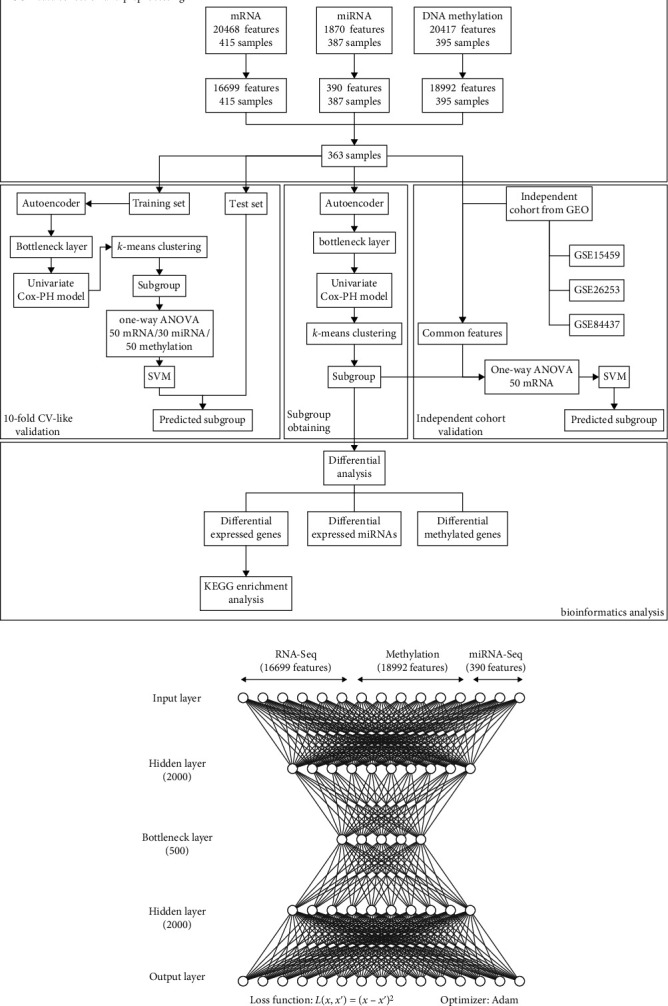
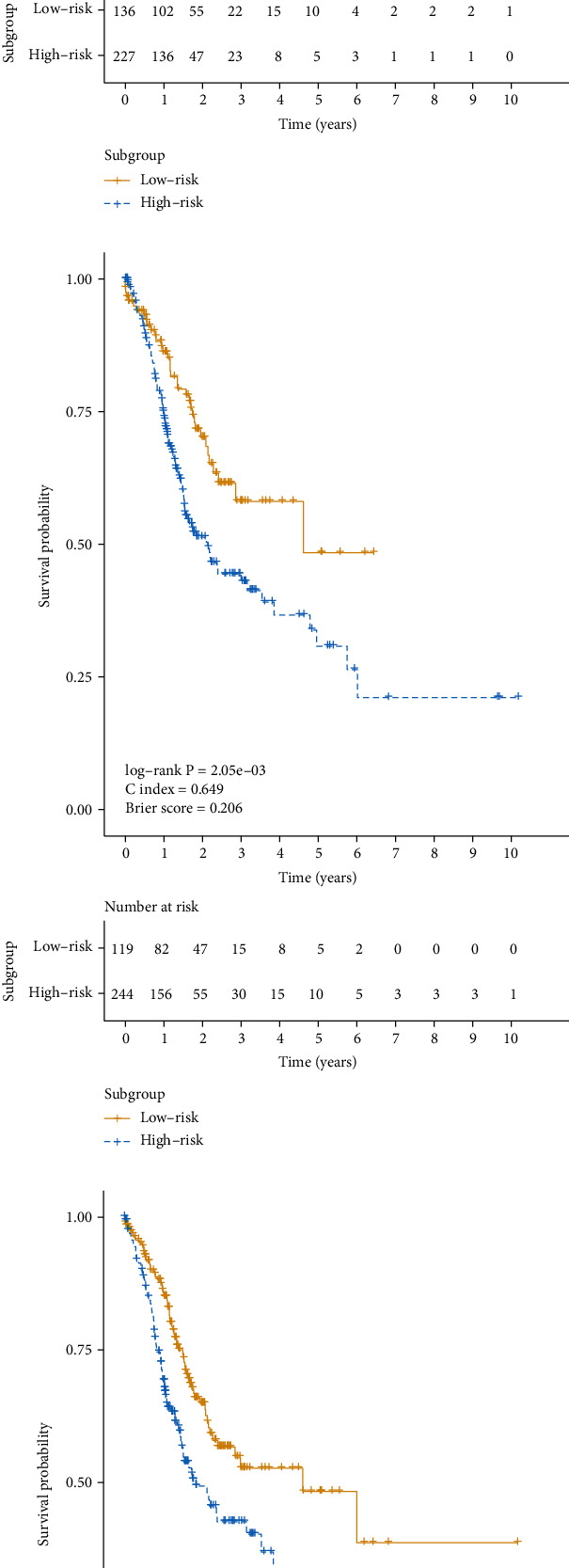
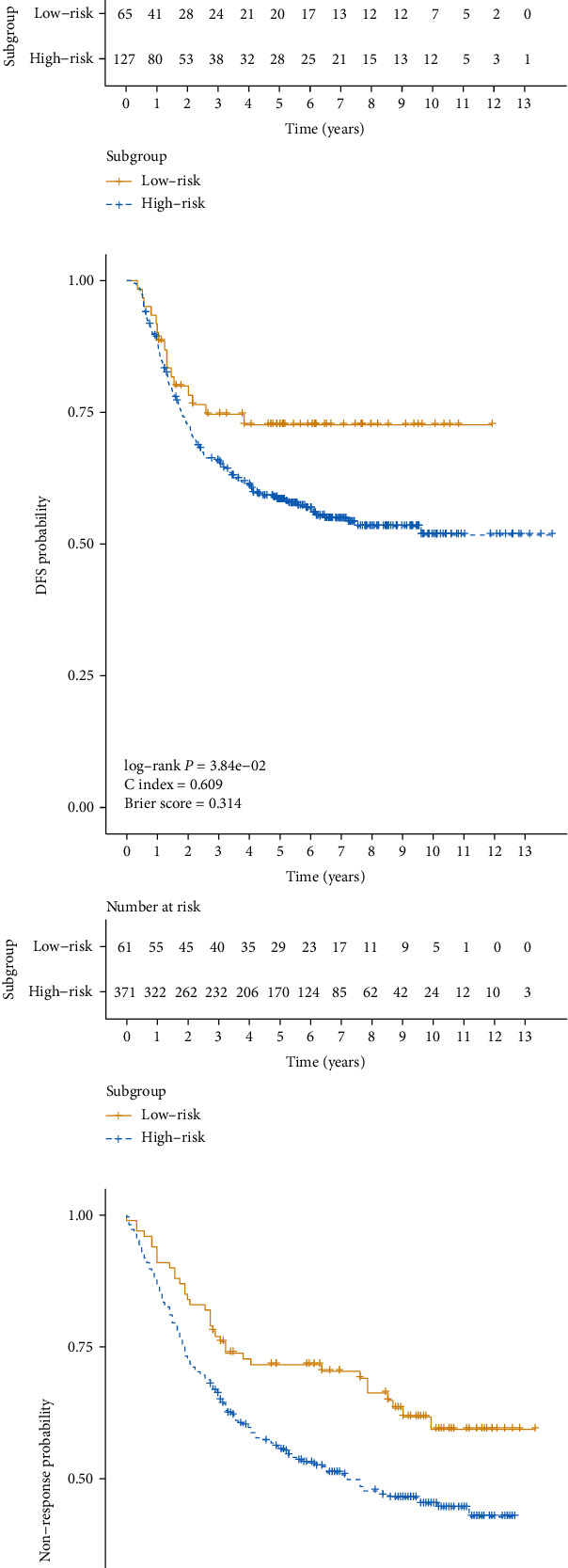
Object. This study is aimed at constructing a deep learning architecture of the autoencoder to integrate multiomics data and identify the risk of patients with stomach adenocarcinoma. Methods. Patients (363 in total) with stomach adenocarcinoma from The Cancer Genome Atlas (TCGA) cohort were included. An autoencoder was constructed to integrate the RNA sequencing, miRNA sequencing, and methylation data. The features of the bottleneck layer were used to perform the k -means clustering algorithm to obtain different subgroups for evaluating the prognosis-related risk of stomach adenocarcinoma. The model’s robustness was verified using a 10-fold cross-validation (CV). Survival was analyzed by the Kaplan-Meier method. Univariate and multivariate Cox regression was used to estimate hazard risk. The model was validated in three independent cohorts with different endpoints. Results. The patients were divided into low-risk and high-risk groups according to the k -means clustering algorithm. The high-risk group had a significantly higher risk of poor survival (log-rank P value = 2.80 e − 06 ; adjusted hazard ratio = 2.386 , 95% confidence interval: 1.607~3.543), a concordance index (C-index) of 0.714, and a Brier score of 0.184. The model performed well both in the 10-fold CV procedure and three independent cohorts from the Gene Expression Omnibus (GEO) repository. Conclusions. A robust and generalizable model based on the autoencoder was proposed to integrate multiomics data and predict the prognosis of patients with stomach adenocarcinoma. The model demonstrates better performance than two alternative approaches on prognosis prediction. The results might provide the grounds for further exploring the potential biomarkers to predict the prognosis of patients with stomach adenocarcinoma.
Overview
The claims and statistics of this paper haven’t been checked yet.
Free: it reads the open-access text and checks the first 5 claims that cite a source we can check. Create a free account to check every claim.
Integrity signals
Registry
Cites
Statistics
Figures
Verification
Claims the paper makes
The claims and statistics of this paper haven’t been checked yet.
Free: it reads the open-access text and checks the first 5 claims that cite a source we can check. Create a free account to check every claim.
Claims other papers make about this one
Each is checked against this paper’s own text: does it say what the citing paper says it does?
The source backs part of the claim, not all of it — or backs it for a different population, condition or comparison.
In the citing paper
“and the model based on the autoencoder-integrating multi-omics analysis showed more suitable performance as a prognostic marker than other clinicopathological features [117].”
From Bioinformatics Analysis and Validation of Potential Markers Associated with Prediction and Prognosis of Gastric Cancer (2024) · cites this paper as [117]
Experimental — accuracy not yet measuredThe cited source says what the claim attributes to it.
In the citing paper
“Notably, implementation of the model based on the autoencoder was superior to those of two alternative familiar integrative multi-omics tools, principal component analysis and similarity network fusion.”
From Bioinformatics Analysis and Validation of Potential Markers Associated with Prediction and Prognosis of Gastric Cancer (2024) · cites this paper as [117]
The cited source says what the claim attributes to it.
In the citing paper
“Interestingly, Chen and colleagues demonstrated a deep learning-based model on GC to find multi-omics features that were associated with the distinctive survival of GC patients [117].”
From Bioinformatics Analysis and Validation of Potential Markers Associated with Prediction and Prognosis of Gastric Cancer (2024) · cites this paper as [117]
The cited source says what the claim attributes to it.
In the citing paper
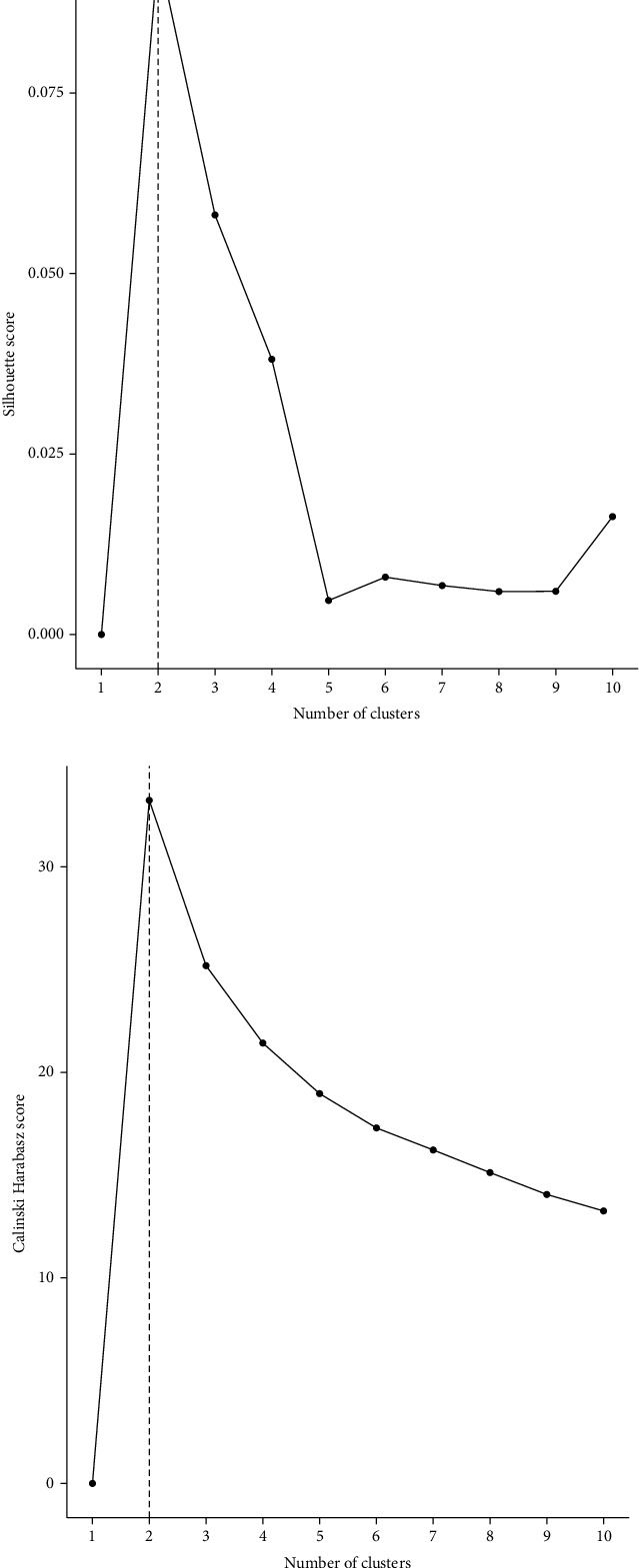
“By the silhouette index and the Calinski–Harabasz criterion, two subgroups were identified from k-means clustering, and a significant difference in prognosis was shown between the two subgroups.”
From Bioinformatics Analysis and Validation of Potential Markers Associated with Prediction and Prognosis of Gastric Cancer (2024) · cites this paper as [117]
The cited source says what the claim attributes to it.
In the citing paper
“Membership in one subgroup was deemed to be a risk factor using the univariate and multivariate Cox-PH model”
From Bioinformatics Analysis and Validation of Potential Markers Associated with Prediction and Prognosis of Gastric Cancer (2024) · cites this paper as [117]
Self-check
Percentages, sums and reported differences re-computed from the paper’s own numbers.
The self-check needs the paper’s full text.
Citations
Cites
1 retracted
RETRACTED: RBFOX3 Promotes Gastric Cancer Growth and Progression by Activating HTERT Signaling
Luo, C. H., Zhu, X., Luo, Q., Bu, F., Huang, C., Zhu, J., Zhao, J., Zhang, W., Kang, L., Hu, C., et al. (2020) · Frontiers in Oncology · doi:10.3389/fonc.2020.01044 · Cited by 4
RetractedSung, H., Ferlay, J., Siegel, R. L., Laversanne, M., Soerjomataram, I., Jemal, A., & Bray, F. (2021) · CA: A Cancer Journal for Clinicians · doi:10.3322/caac.21660 · Cited by 108,699
limma powers differential expression analyses for RNA-sequencing and microarray studies
Ritchie, M. E., Phipson, B., Wu, D., Hu, Y., Law, C. W., Shi, W., & Smyth, G. K. (2015) · Nucleic Acids Research · doi:10.1093/nar/gkv007 · Cited by 40,458
clusterProfiler: an R Package for Comparing Biological Themes Among Gene Clusters
Yu, G., Wang, L.-G., Han, Y., & He, Q.-Y. (2012) · OMICS: A Journal of Integrative Biology · doi:10.1089/omi.2011.0118 · Cited by 36,259
Silhouettes: A graphical aid to the interpretation and validation of cluster analysis
Rousseeuw, P. J. (1987) · Journal of Computational and Applied Mathematics · doi:10.1016/0377-0427(87)90125-7 · Cited by 21,392
clusterProfiler 4.0: A universal enrichment tool for interpreting omics data
(2021) · doi:10.1016/j.xinn.2021.100141 · Cited by 12,455
A guide to deep learning in healthcare
Esteva, A., Robicquet, A., Ramsundar, B., Kuleshov, V., DePristo, M., Chou, K., Cui, C., Corrado, G., Thrun, S., & Dean, J. (2019) · Nature Medicine · doi:10.1038/s41591-018-0316-z · Cited by 5,312
A dendrite method for cluster analysis
Caliński, T., & Harabasz, J. (1974) · Communications in Statistics · doi:10.1080/03610927408827101 · Cited by 4,480
Similarity network fusion for aggregating data types on a genomic scale
Wang, B., Mezlini, A. M., Demir, F., Fiume, M., Tu, Z., Brudno, M., Haibe-Kains, B., & Goldenberg, A. (2014) · Nature Methods · doi:10.1038/nmeth.2810 · Cited by 2,036
lumi: a pipeline for processing Illumina microarray
Du, P., Kibbe, W. A., & Lin, S. M. (2008) · Bioinformatics · doi:10.1093/bioinformatics/btn224 · Cited by 2,019
Multi-omics Data Integration, Interpretation, and Its Application
Subramanian, I., Verma, S., Kumar, S., Jere, A., & Anamika, K. (2020) · Bioinformatics and Biology Insights · doi:10.1177/1177932219899051 · Cited by 1,609
Deep learning-based multi-omics integration robustly predicts survival in liver cancer
Chaudhary, K., Poirion, O. B., Lu, L., & Garmire, L. X. (2018) · Clinical Cancer Research · doi:10.1158/1078-0432.ccr-17-0853 · Cited by 1,091
Methods of integrating data to uncover genotype-phenotype interactions
Ritchie, M. D., Holzinger, E. R., Li, R., Pendergrass, S. A., & Kim, D. (2015) · Nature Reviews Genetics · doi:10.1038/nrg3868 · Cited by 1,085
Shen, R., Olshen, A. B., & Ladanyi, M. (2009) · Bioinformatics · doi:10.1093/bioinformatics/btp543 · Cited by 849 · cited 1×
“Since more information could be provided by multiomics data compared to single-omics data, many algorithms were proposed to integrate different types of omics data, such as similarity network fusion (SNF) [17] and iCluster [18].”
BackgroundMore Is Better: Recent Progress in Multi-Omics Data Integration Methods
Huang, S., Chaudhary, K., & Garmire, L. X. (2017) · Frontiers in Genetics · doi:10.3389/fgene.2017.00084 · Cited by 702
Shen, R., Olshen, A. B., & Ladanyi, M. (2010) · Bioinformatics · doi:10.1093/bioinformatics/btp659 · Cited by 566
Updates on Management of Gastric Cancer
Johnston, F. M., & Beckman, M. (2019) · Current Oncology Reports · doi:10.1007/s11912-019-0820-4 · Cited by 495
survcomp: an R/Bioconductor package for performance assessment and comparison of survival models
Schröder, M. S., Culhane, A. C., Quackenbush, J., & Haibe-Kains, B. (2011) · Bioinformatics · doi:10.1093/bioinformatics/btr511 · Cited by 470
Lei, Z., Tan, I. B., Das, K., Deng, N., Zouridis, H., Pattison, S., Chua, C., Feng, Z., Guan, Y. K., Ooi, C. H., et al. (2013) · Gastroenterology · doi:10.1053/j.gastro.2013.05.010 · Cited by 458
Oncogenic Pathway Combinations Predict Clinical Prognosis in Gastric Cancer
Ooi, C. H., Ivanova, T., Wu, J., Lee, M., Tan, I. B., Tao, J., Ward, L., Koo, J. H., Gopalakrishnan, V., Zhu, Y., et al. (2009) · PLoS Genetics · doi:10.1371/journal.pgen.1000676 · Cited by 447
Clinical and genomic landscape of gastric cancer with a mesenchymal phenotype
Oh, S. C., Sohn, B. H., Cheong, J.-H., Kim, S.-B., Lee, J. E., Park, K. C., Lee, S. H., Park, J.-L., Park, Y.-Y., Lee, H.-S., et al. (2018) · Nature Communications · doi:10.1038/s41467-018-04179-8 · Cited by 424
TCGA-Assembler: open-source software for retrieving and processing TCGA data
Zhu, Y., Qiu, P., & Ji, Y. (2014) · Nature Methods · doi:10.1038/nmeth.2956 · Cited by 406
The Application of Deep Learning in Cancer Prognosis Prediction
Zhu, W., Xie, L., Han, J., & Guo, X. (2020) · Cancers · doi:10.3390/cancers12030603 · Cited by 380
Poirion, O. B., Jing, Z., Chaudhary, K., Huang, S., & Garmire, L. X. (2021) · Genome Medicine · doi:10.1186/s13073-021-00930-x · Cited by 297
Suzuki, H., Oda, I., Abe, S., Sekiguchi, M., Mori, G., Nonaka, S., Yoshinaga, S., & Saito, Y. (2016) · Gastric Cancer · doi:10.1007/s10120-015-0469-0 · Cited by 248
Integrating multi-omics data through deep learning for accurate cancer prognosis prediction
Chai, H., Zhou, X., Zhang, Z., Rao, J., Zhao, H., & Yang, Y. (2021) · Computers in Biology and Medicine · doi:10.1016/j.compbiomed.2021.104481 · Cited by 194
Deconvolution of diffuse gastric cancer and the suppression of CD34 on the BALB/c nude mice model
Yoon, S., Park, J., Shin, Y., Choi, Y., Park, S. W., Kang, S., Son, H. Y., & Huh, Y. (2020) · BMC Cancer · doi:10.1186/s12885-020-06814-4 · Cited by 193
Chia, N.-Y., Deng, N., Das, K., Huang, D., Hu, L., Zhu, Y., Lim, K. H., Lee, M.-H., Wu, J., Sam, X. X., et al. (2015) · Gut · doi:10.1136/gutjnl-2013-306596 · Cited by 168
Subtype-GAN: a deep learning approach for integrative cancer subtyping of multi-omics data
Yang, H., Chen, R., Li, D., & Wang, Z. (2021) · Bioinformatics · doi:10.1093/bioinformatics/btab109 · Cited by 156
A Review on Deep Learning Techniques for IoT Data
Lakshmanna, K., Kaluri, R., Gundluru, N., Alzamil, Z. S., Rajput, D. S., Khan, A. A., Haq, M. A., & Alhussen, A. (2022) · Electronics · doi:10.3390/electronics11101604 · Cited by 154
Nanostring-Based Multigene Assay to Predict Recurrence for Gastric Cancer Patients after Surgery
Lee, J., Sohn, I., Do, I.-G., Kim, K.-M., Park, S. H., Park, J. O., Park, Y. S., Lim, H. Y., Sohn, T. S., Bae, J. M., et al. (2014) · PLoS ONE · doi:10.1371/journal.pone.0090133 · Cited by 141
Integrated multi-omics analysis of ovarian cancer using variational autoencoders
Hira, M. T., Razzaque, M. A., Angione, C., Scrivens, J., Sawan, S., & Sarker, M. (2021) · Scientific Reports · doi:10.1038/s41598-021-85285-4 · Cited by 134 · cited 1×
“[24] TCGAOV mRNA/RNA-seq, CNV, DNA methylation VAE, MMD-VAE —”
Zhao, L., Dong, Q., Luo, C., Wu, Y., Bu, D., Qi, X., Luo, Y., & Zhao, Y. (2021) · Computational and Structural Biotechnology Journal · doi:10.1016/j.csbj.2021.04.067 · Cited by 127 · cited 1×
“[32] proposed a scalable and interpretable multiomics deep learning framework named DeepOmix to identify the relationships between multiomics data and the survival data and to incorporate some prior biological information.”
BackgroundGundluru, N., Rajput, D. S., Lakshmanna, K., Kaluri, R., Shorfuzzaman, M., Uddin, M., & Khan, M. A. R. (2022) · Computational Intelligence and Neuroscience · doi:10.1155/2022/8512469 · Cited by 127
Brain-derived neurotrophic factor/tropomyosin-related kinase B pathway in gastric cancer
Okugawa, Y., Tanaka, K., Inoue, Y., Kawamura, M., Kawamoto, A., Hiro, J., Saigusa, S., Toiyama, Y., Ohi, M., Uchida, K., et al. (2013) · British Journal of Cancer · doi:10.1038/bjc.2012.499 · Cited by 118
Ni, S.-J., Zhao, L.-Q., Wang, X.-F., Wu, Z.-H., Hua, R.-X., Wan, C.-H., Zhang, J.-Y., Zhang, X.-W., Huang, M.-Z., Gan, L., et al. (2018) · Journal of Hematology & Oncology · doi:10.1186/s13045-018-0562-z · Cited by 103
Subhash, V. V., Yeo, M. S., Wang, L., Tan, S. H., Wong, F. Y., Thuya, W. L., Tan, W. L., Peethala, P. C., Soe, M. Y., Tan, D. S. P., et al. (2018) · Scientific Reports · doi:10.1038/s41598-018-30686-1 · Cited by 101
Lee, T.-Y., Huang, K.-Y., Chuang, C.-H., Lee, C.-Y., & Chang, T.-H. (2020) · Computational Biology and Chemistry · doi:10.1016/j.compbiolchem.2020.107277 · Cited by 95 · cited 1×
“[23] TCGALUAD mRNA miRNA DNA methylation CNV Autoencoder GSE81089 GSE63805 GSE63384 TCGA-LUAD CNV (lack of mRNA, miRNA, or methylation information)”
Franco, E. F., Rana, P., Cruz, A., Calderón, V. V., Azevedo, V., Ramos, R. T. J., & Ghosh, P. (2021) · Cancers · doi:10.3390/cancers13092013 · Cited by 92
CLDN6 promotes tumor progression through the YAP1-snail1 axis in gastric cancer
Yu, S., Zhang, Y., Li, Q., Zhang, Z., Zhao, G., & Xu, J. (2019) · Cell Death and Disease · doi:10.1038/s41419-019-2168-y · Cited by 91
Muratani, M., Deng, N., Ooi, W. F., Lin, S. J., Xing, M., Xu, C., Qamra, A., Tay, S. T., Malik, S., Wu, J., et al. (2014) · Nature Communications · doi:10.1038/ncomms5361 · Cited by 90
Baek, B., & Lee, H. (2020) · Scientific Reports · doi:10.1038/s41598-020-76025-1 · Cited by 83
CD44-SLC1A2 Gene Fusions in Gastric Cancer
Tao, J., Deng, N., Ramnarayanan, K., Huang, B., Oh, H. K., Leong, S. H., Lim, S. S., Tan, I. B., Ooi, C.-H., Wu, J., et al. (2011) · Science Translational Medicine · doi:10.1126/scitranslmed.3001423 · Cited by 65
Loss of has-miR-337-3p expression is associated with lymph node metastasis of human gastric cancer
Wang, Z., Wang, J., Yang, Y. F., et al. (2013) · Journal of Experimental & Clinical Cancer Research · doi:10.1186/1756-9966-32-76 · Cited by 65
Wang, T., Lee, C., Lee, T.-Y., Huang, H., Hsu, J. B., & Chang, T. (2021) · Cancers · doi:10.3390/cancers13112528 · Cited by 64
Kohmoto, T., Masuda, K., Shoda, K., Takahashi, R., Ujiro, S., Tange, S., Ichikawa, D., Otsuji, E., & Imoto, I. (2019) · Gastric Cancer · doi:10.1007/s10120-019-01014-x · Cited by 57
Deep Learning data integration for better risk stratification models of bladder cancer.
Poirion, O., Chaudhary, K., & Garmire, L. X. (2018) · Europe PMC (PubMed Central) · Cited by 48
Chang, C., Bhattacharya, S., Vincent, P. M. D. R., Lakshmanna, K., & Srinivasan, K. (2021) · Journal of Healthcare Engineering · doi:10.1155/2021/7517313 · Cited by 44
Choi, B., Lee, E. J., Shin, M., Park, Y. S., Ryu, M., Kim, S., Kim, E., Lee, H. K., & Chang, E. (2016) · Oncotarget · doi:10.18632/oncotarget.10747 · Cited by 44
Gao, F., Li, M., Xiang, R., Zhou, X., Zhu, L., & Zhai, Y. R. (2019) · Oncology Letters · doi:10.3892/ol.2019.10129 · Cited by 40
Lv, J., Wang, J., Shang, X., Liu, F., & Guo, S. (2020) · Bioscience Reports · doi:10.1042/bsr20201482 · Cited by 33
Association Analysis of Deep Genomic Features Extracted by Denoising Autoencoders in Breast Cancer
Liu, Q., & Hu, P. (2019) · Cancers · doi:10.3390/cancers11040494 · Cited by 31
Yu, J., Wu, X., Lv, M., Zhang, Y., Zhang, X., Li, J., Zhu, M., Huang, J., & Zhang, Q. (2020) · Oncology Letters · doi:10.3892/ol.2020.12250 · Cited by 29
Zhao, Z., Li, Y., Wu, Y., & Chen, R. (2019) · Cancer Biomarkers · doi:10.3233/cbm-190380 · Cited by 23
Past, present and future of gene feature selection for breast cancer classification – a survey
Chowdhary, C. L., Khare, N., Patel, H., et al. (2022) · International Journal of Engineering Systems Modelling and Simulation · doi:10.1504/ijesms.2022.123355 · Cited by 13
Luo, S., Liao, X., & Zhu, X. (2019) · Journal of Cancer · doi:10.7150/jca.33250 · Cited by 13
Xu, J., Yao, Y., Xu, B., Li, Y., & Su, Z. (2021) · Future Oncology · doi:10.2217/fon-2021-1059 · Cited by 12
Self-citationEvaluation of the prognostic value of CBXs in gastric cancer patients
He, M., Yue, L., Wang, H., Yu, F., Yu, M., Ni, P., Zhang, K., Chen, S., Duan, G., & Zhang, R. (2021) · Scientific Reports · doi:10.1038/s41598-021-91649-7 · Cited by 12
Self-citationShuangshuang, L., Qi, L., Tie, Y., & Fenghui, L. (2020) · International Conference on Mechanical, Control and Computer Engineering (ICMCCE) · doi:10.1109/icmcce51767.2020.00375 · Cited by 10
Du, Y., Wang, Z., & Wan, W. (2021) · Journal of Cancer · doi:10.7150/jca.63029 · Cited by 6
CBX7 and HOXC10 promote gastric cancer cell proliferation and metastasis through NF-κB activation
Peng, P., & Han, X. (2021) · Acta Poloniae Pharmaceutica - Drug Research · doi:10.32383/appdr/132891 · Cited by 1
Cited by
Navigating Challenges and Opportunities in Multi-Omics Integration for Personalized Healthcare
Mohr, A. E., Ortega-Santos, C. P., Whisner, C. M., Klein-Seetharaman, J., & Jasbi, P. (2024) · Biomedicines · doi:10.3390/biomedicines12071496 · Cited by 311
“To date, its application has been primarily in stomach adenocarcinoma prognosis prediction [114].”
BackgroundMatsuoka, T., & Yashiro, M. (2024) · International Journal of Molecular Sciences · doi:10.3390/ijms25115880 · Cited by 83
“Membership in one subgroup was deemed to be a risk factor using the univariate and multivariate Cox-PH model, and the model based on the autoencoder-integrating multi-omics analysis showed more suitable performance as a prognostic marker than other clinicopathological features [117].”
BackgroundMethod
Metadata
- Authors
- Chen, S., Zang, Y., Xu, B., Lu, B., Ma, R., Miao, P., & Chen, B.
- Affiliations
- Southeast University (CN)
- Nanjing Drum Tower Hospital (CN)
- Corresponding author
- Chen, Bingwei
- Venue
- Computational and Mathematical Methods in Medicine
- Publisher
- Wiley
- Published
- 2022-10-27
- Volume
- 2022
- Pages
- 1-20
- ISSN
- 1748-670X (ISSN-L)
- 1748-6718
- PMC
- PMC9633210
- OpenAlex
- W4307638651
- Cited by
- 15
- References
- 61
- Citations by year
- 2026: 2 · 2025: 6 · 2024: 4 · 2023: 3
- FWCI
- 2.10
- Type
- journal article
- Language
- en
- Open access
- hybrid
- doi.org
- Locations
- Computational and Mathematical Methods in Medicine (publishedVersion, cc-by)
- PubMed Central (publishedVersion, cc-by)
- PubMed (publishedVersion)
- DOAJ (DOAJ: Directory of Open Access Journals) (submittedVersion)
- Funders
- Postgraduate Research & Practice Innovation Program of Jiangsu Province (SJCX21_0086)
- Topics
- Health Sciences › Medicine › Oncology › Gastric Cancer Management and Outcomes
- Life Sciences › Biochemistry, Genetics and Molecular Biology › Molecular Biology › Gene expression and cancer classification
- Life Sciences › Biochemistry, Genetics and Molecular Biology › Cancer Research › Cancer-related molecular mechanisms research
- Keywords
- gastric adenocarcinoma, outcome prediction, autoencoder, multi-omics integration, RNA sequencing, miRNA sequencing, DNA methylation, risk stratification, K-means clustering, survival analysis, prognostic factors
- MeSH terms
- Deep Learning, Adenocarcinoma, Humans, Prognosis, Stomach Neoplasms
About these checks
Registry, retraction, Cites and statistics results are computed, not judged, with one exception: a printed reference that no index lists is read once by a model before it counts as a citation error. Claims are extracted by a model and kept only when their quote appears verbatim in the text; each cited source is then checked, with a model’s help, for whether it says what the claim relies on. Those verdicts can be wrong — read the claim’s quote and the cited source before relying on one.
Statistics and arithmetic are recomputed, not judged.
Confidence bands are shown only for fields calibrated on our annotated test set. None is calibrated yet, so no band is shown.
What counts as a claim ›How we measure confidence ›How we check this ›
Are you an author, or do you see a problem with this page? Request a review
Data sources
Bibliographic data: Semantic Scholar, OpenAlex, Crossref.
Contains information from the Semantic Scholar Academic Graph Datasets, made available under the ODC Attribution License (ODC-BY 1.0).
Semantic Scholar’s data is described in: Kinney, R., et al. (2023). The Semantic Scholar Open Data Platform. arXiv:2301.10140.
