

The DOI matches its Crossref record; 1 of the 1 references it cites were found in a registry or an index.
Cytotoxicity against Human Hepatocellular Carcinoma (HepG2) Cells and Anti-Oxidant Activity of Selected Endemic or Medicinal Plants in Sri Lanka
Open accessAbstract
Hepatocellular carcinoma (HCC) is the most fatal cancer globally with limited treatment options. Plants and herbs have been used to treat cancer and other diseases for a long time by traditional practitioners in Sri Lanka. In the present study, leaf and bark extracts of selected plants were investigated for cytotoxic properties on HepG2 cells. Anti-oxidant activity and total phenolic and flavonoid contents were also determined. Plant extracts that exerted cytotoxic effects on the HepG2 cell line with IC50 <100 μg/mL were tested on normal liver epithelial cells (THLE-3). Out of the 56 extracts, 21 exhibited potent cytotoxic effects (IC50 < 100 µg/mL) on HepG2 cells after 48 h exposure, and 12 were less toxic (IC50 > 100 μg/mL) to THLE-3 normal liver cells. Six extracts exhibited potent radical scavenging activity with EC50 < 100 μg/mL against 2,2-diphenyl-1-picrylhydrazyl (DPPH) assay, while 17 extracts showed potent anti-oxidant activity (Trolox equivalents > 100 mg/g) against ferric reducing anti-oxidant power (FRAP) assay. Out of the 56 extracts, 15 had total phenolic content above 100 mg/g of gallic acid equivalents, and 4 had flavonoid content above 100 mg/g of quercetin equivalents. Among the extracts screened, hexane, dichloromethane, ethyl acetate, and methanol extracts of Allophylus cobbe leaves (IC50 – 9.388, 6.8, 19.95, and 11.3 μg/mL, respectively), Madhuca longiflora bark (IC50 – 14.42 μg/mL), methanol extract of Munronia pinnata bark (IC50 – 52.06 μg/mL), and hexane, dichloromethane, ethyl acetate, and methanol extracts of Adenanthera bicolor (IC50 – 45.86, 27.35, 24.56, and 61.83 μg/mL, respectively) exerted potent cytotoxicity against HepG2 with less toxicity (IC50 > 100 μg/mL) to THLE-3 cells after 48 h of incubation. These findings provide a direction to isolate possible anti-cancer compounds for hepatocellular carcinoma.
Overview
The claims and statistics of this paper haven’t been checked yet.
Run the check — free, no account needed. It reads the open-access text and checks the sources it cites.
Integrity signals
Registry
Cites
Statistics
Figures
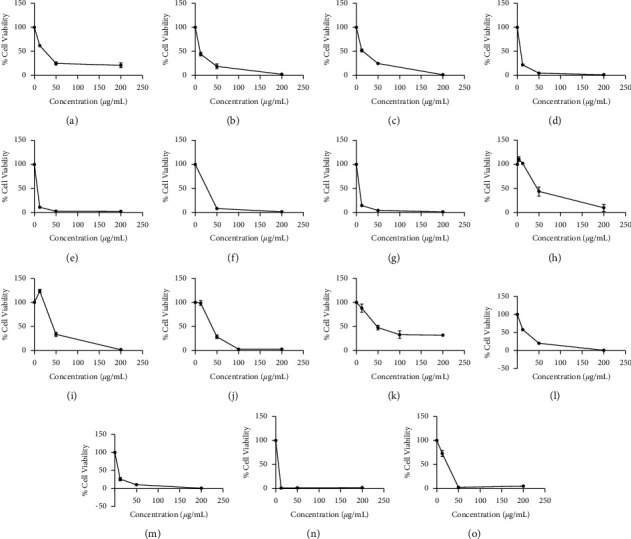
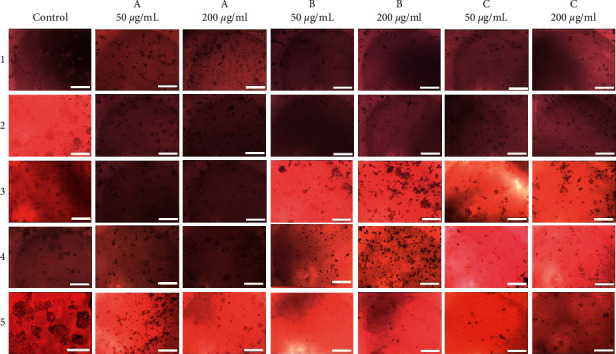
Verification
Claims the paper makes
The claims and statistics of this paper haven’t been checked yet.
Run the check — free, no account needed. It reads the open-access text and checks the sources it cites.
Claims other papers make about this one
Each is checked against this paper’s own text: does it say what the citing paper says it does?
The source backs part of the claim, not all of it — or backs it for a different population, condition or comparison.
In the citing paper
“In addition, this cell line is convenient for simultaneously monitoring viability and cytotoxicity markers to avoid mistaking the “anti-steatotic” effect for a consequence of cell death [95,96,97].”
From The HepG2 Cell Line as a Model for Studying Metabolic Dysfunction-Associated Steatotic Liver Disease (2026) · cites this paper as [97]
Experimental — accuracy not yet measured
Self-check
Percentages, sums and reported differences re-computed from the paper’s own numbers.
The self-check needs the paper’s full text.
Citations
Cites
I NHIBITION OF C ARCINOGENESIS BY D IETARY P OLYPHENOLIC C OMPOUNDS
Yang, C. S., Landau, J. M., Huang, M.-T., & Newmark, H. L. (2001) · Annual Review of Nutrition · doi:10.1146/annurev.nutr.21.1.381 · Cited by 1,260
Research works printed but not linked: 31
- 10.1634/theoncologist.2010-s4-05 · DOI
- 2020, National Cancer Incidence and Mortality Data Sri Lanka- 2012, National Cancer Registry by National Cancer Control Programme
- G. M. Cragg, 2005, Plants as a source of anti-cancer agents, Journal of Ethnopharmacology, 100, 72, 10.1016/j.jep.2005.05.011 · DOI
- 10.1016/s0959-8049(00)00103-9 · DOI
- M. Kashif, 2018, In vitro antiproliferative and apoptosis inducing effect of a methanolic extract of Azadirachta indica oil on selected cancerous and noncancerous cell lines, Asian Pacific Journal of Tropical Medicine, 11, 555, 10.4103/1995-7645.244515 · DOI
- 10.1016/s2221-1691(15)30150-7 · DOI
- 10.1016/j.lfs.2003.09.047 · DOI
- 10.1016/0031-9422(88)80254-1 · DOI
- C. T. Ho, 1994, Food Phytochemicals for Cancer Prevention II: Teas, Spices, and Herbs
- 10.1016/s0024-3205(99)00642-6 · DOI
- 10.1002/1099-0690(20022)2002:3<564::aid-ejoc564>3.0.co;2-f · DOI
- 10.1021/jf0201273 · DOI
- 10.5958/2395-146x.2020.00066.6 · DOI
- 10.5897/jmpr11.1404 · DOI
- A. Abbas, 2021, Phytochemical Analysis, Antioxidant and Antimicrobial Screening of Seriphidium Oliverianum Plant Extracts, Dose-Response, 1
- M. Madhu, 2016, Quantitative phytochemical analysis of selected medicinal plant species by using various organic solvents, Journal of Pharmacognosy and Phytochemistry, 5, 25
- 10.3390/ijms22020618 · DOI
- A. Ahmed, 2016, Anti-cancer activity of Quercetin, Gallic acid and Ellagic acid against HepG2 and HCT116 cell lines: In Vitro, International Journal of Pharma and Bio Sciences, 7, 584
- 10.9734/ejmp/2016/26591 · DOI
- 10.9734/ejmp/2016/26107 · DOI
- 10.3390/molecules26123600 · DOI
- 10.1155/2021/6640789 · DOI
- J. W. Mclarty, 1997, Antioxidants and cancer: the epidemiologic evidence
- 10.1007/978-4-431-67017-9_10 · DOI
- 10.1155/2017/9854083 · DOI
- 10.3892/ol.2016.4087 · DOI
- I. F. F. Benzine, 1999, Total antioxidant capacity of teas by the ferric reducing antioxidant power assay, Journal of Agricultural and Food Chemistry, 47, 633, 10.1021/jf9807768 · DOI · Paper page
- 10.1080/14786419.2021.1881960 · DOI
- 10.1007/s10616-016-0048-1 · DOI
- A. J. R. Sophy, 2015, Evaluation of Adenanthera pavonina bark extracts for antioxidant activity and cytotoxicity against cancer cell lines, International Journal of Science and Research, 4, 2319
- R. V. Chavan, 2017, The Ethnobotany, Phytochemistry and Biological properties of Allophylus species used in traditional medicine: a Review, World Journal of Pharmacy and Pharmaceutical science, 5, 664
Cited by
Sorted by citations
The HepG2 Cell Line as a Model for Studying Metabolic Dysfunction-Associated Steatotic Liver Disease
Kotlyarova, A., Iskrina, A., & Kotlyarov, S. (2026) · International journal of molecular sciences · doi:10.3390/ijms27083399 · Cited by 10
Metadata
- Authors
- Thusyanthan, J., Wickramaratne, N. S., Senathilake, K. S., Rajagopalan, U., Tennekoon, K. H., Thabrew, I., & Samarakoon, S. R.
- Affiliations
- Institute of Biochemistry, Molecular Biology and Biotechnology (LK)
- Corresponding author
- Samarakoon, Sameera Ranganath
- ORCID
- Venue
- Advances in Pharmacological and Pharmaceutical Sciences
- Publisher
- Wiley
- Published
- 2022-03-30
- Volume
- 2022
- Pages
- 1-9
- ISSN
- 2633-4690 (ISSN-L)
- 2633-4682
- PMC
- PMC8986432
- OpenAlex
- W4221119921
- Cited by
- 29
- References
- 1
- Citations by year
- 2026: 5 · 2025: 6 · 2024: 9 · 2023: 5 · 2022: 4
- FWCI
- 3.30
- Type
- journal article
- Language
- en
- Open access
- gold
- doi.org
- Locations
- Advances in Pharmacological and Pharmaceutical Sciences (publishedVersion, cc-by)
- PubMed Central (publishedVersion, cc-by)
- PubMed (publishedVersion)
- DOAJ (DOAJ: Directory of Open Access Journals) (submittedVersion)
- Funders
- National Science Foundation (RPHS/2016/C 07)
- Topics
- Life Sciences › Agricultural and Biological Sciences › Plant Science › Medicinal Plant Research
- Physical Sciences › Chemistry › Organic Chemistry › Phytochemical Studies and Bioactivities
- Life Sciences › Agricultural and Biological Sciences › Plant Science › Phytochemistry Medicinal Plant Applications
- Keywords
- hepatocellular carcinoma, HepG2 cells, plant extracts, cytotoxicity, antioxidant activity, phenolic content, flavonoids, Allophylus cobbe, medicinal plants, Sri Lanka, liver cancer, free radical scavenging, hepatotoxicity, traditional medicine
About these checks
Registry, retraction, Cites and statistics results are computed, not judged, with one exception: a printed reference that no index lists is read once by a model before it counts as a citation error. Claims are extracted by a model and kept only when their quote appears verbatim in the text; each cited source is then checked, with a model’s help, for whether it says what the claim relies on. Those verdicts can be wrong — read the claim’s quote and the cited source before relying on one.
Statistics and arithmetic are recomputed, not judged.
Confidence bands are shown only for fields calibrated on our annotated test set. None is calibrated yet, so no band is shown.
What counts as a claim ›How we measure confidence ›How we check this ›
Are you an author, or do you see a problem with this page? Request a review
