

Effect of Statins on Serum level of hs-CRP and CRP in Patients with Cardiovascular Diseases: A Systematic Review and Meta-Analysis of Randomized Controlled Trials
Open accessThe DOI matches its Crossref record; 101 of the 101 references it cites were found in a registry or an index.
Abstract
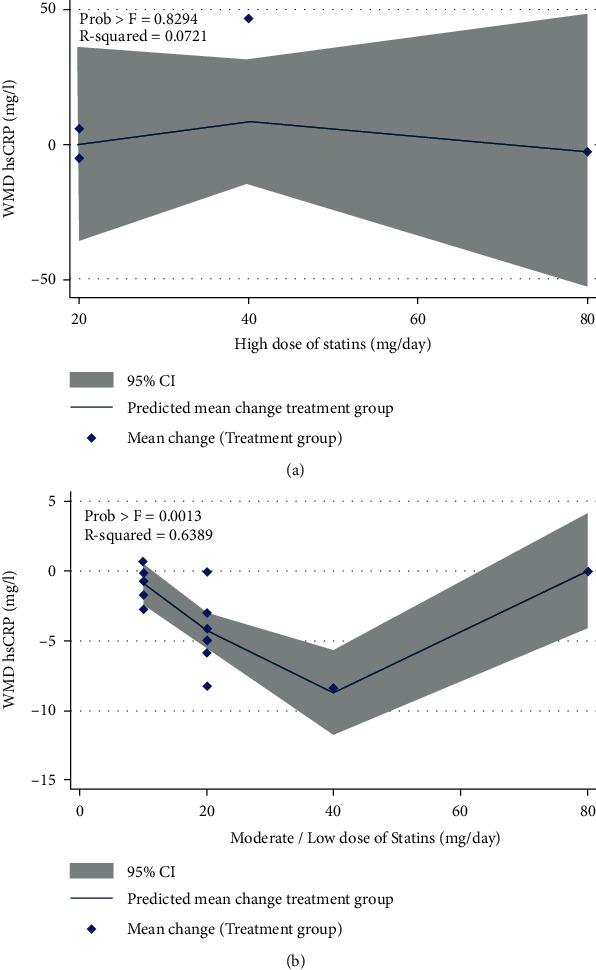
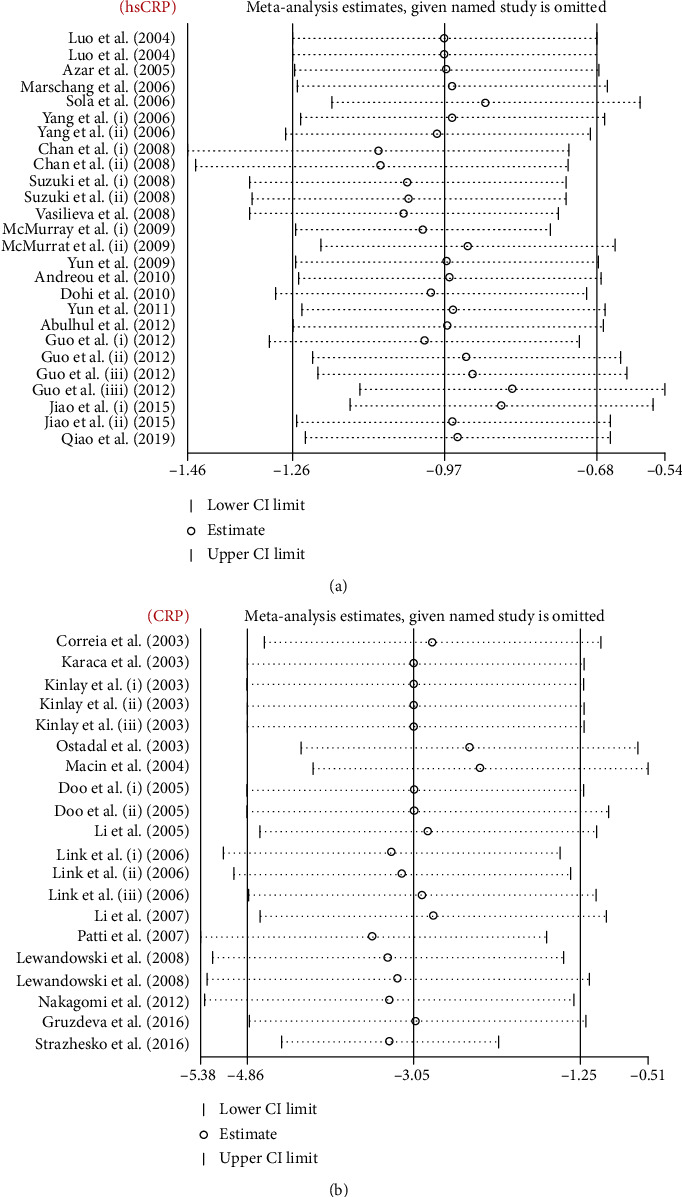
Background. Several studies have reported that statins have anti-inflammatory effects. Nevertheless, results of clinical trials concerning the effect of statins on the levels of C-reactive protein (CRP) and high-sensitivity CRP (hs-CRP) have been inconsistent. Therefore, we performed a systematic review and meta-analysis of randomized clinical trials (RCTs) evaluating the effect of statins on CRP and hs-CRP levels in patients with cardiovascular diseases (CVDs). Methods. Literature search of the major databases was performed to find eligible RCTs assessing the effect of statins on serum levels of CRP and hs-CRP from the inception until the last week of April 2021. The effect sizes were determined for weighted mean difference (WMD) and 95% confidence intervals (CI). Results. 26 studies were identified (3010 patients and 2968 controls) for hs-CRP and 20 studies (3026 patients and 2968 controls) for CRP. Statins reduced the serum levels of hs-CRP ( WMD = − 0.97 mg / L ; 95% CI: -1.26 to -0.68 mg/L; P < 0.001 ) and CRP ( WMD = − 3.05 mg / L ; 95% CI: -4.86 to -1.25 mg/L; P < 0.001 ) in patients with CVDs. Statins decreased the serum levels of hs-CRP in patients receiving both high-intensity and moderate/low-intensity treatments with these drugs. In addition, the duration of treatment longer than 10 weeks decreased hs-CRP levels. Only high-intensity statin treatment could marginally decrease serum levels of CRP in CVDs patients. Conclusions. This meta-analysis showed the efficacy of statins to reduce the concentrations of CRP and hs-CRP in patients with different types of CVDs.
Overview
The claims and statistics of this paper haven’t been checked yet.
Free: it reads the open-access text and checks the first 5 claims that cite a source we can check. Create a free account to check every claim.
Integrity signals
Registry
Cites
Statistics
Figures
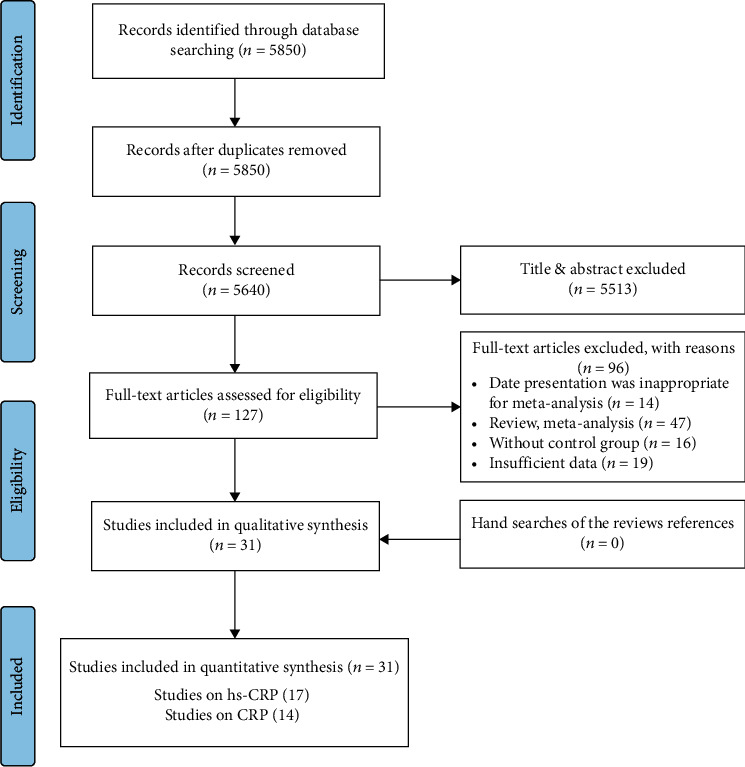
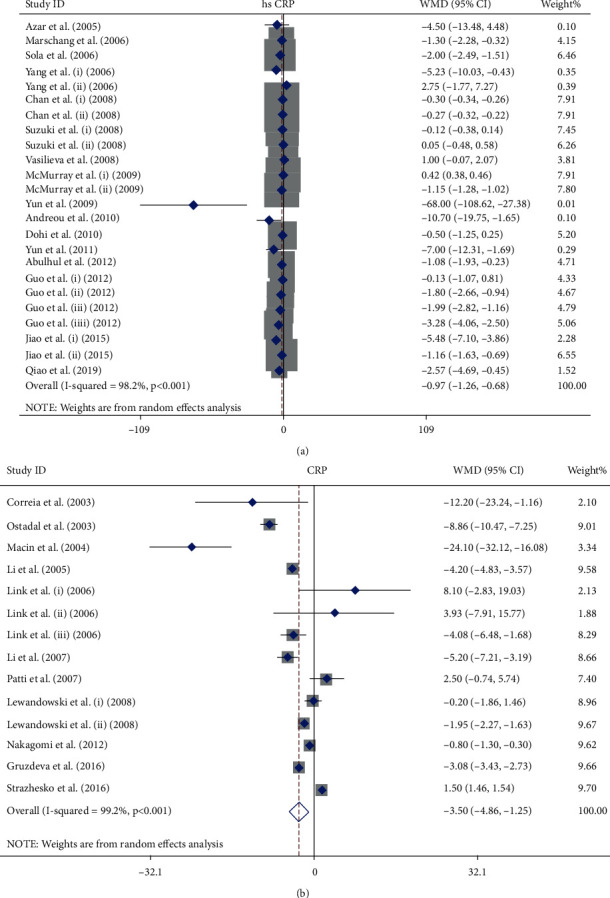
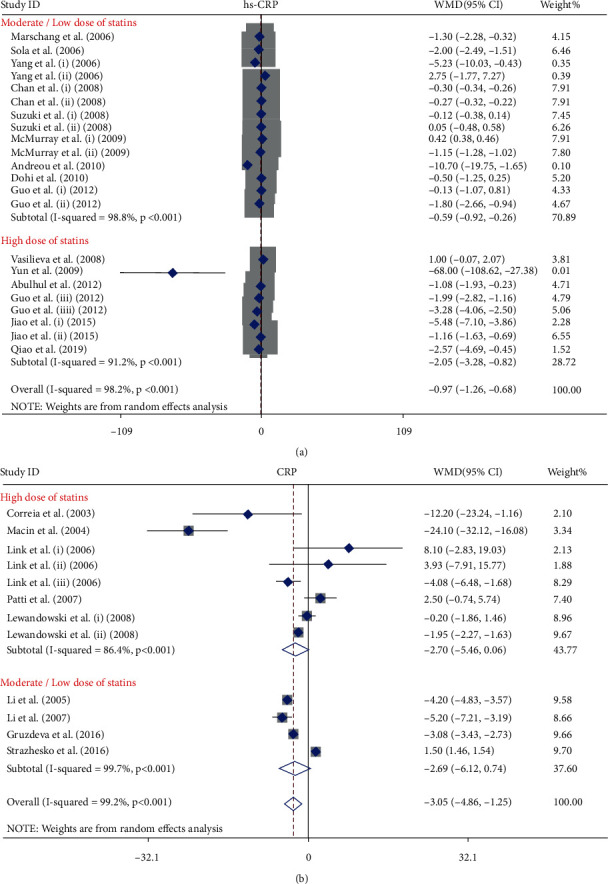
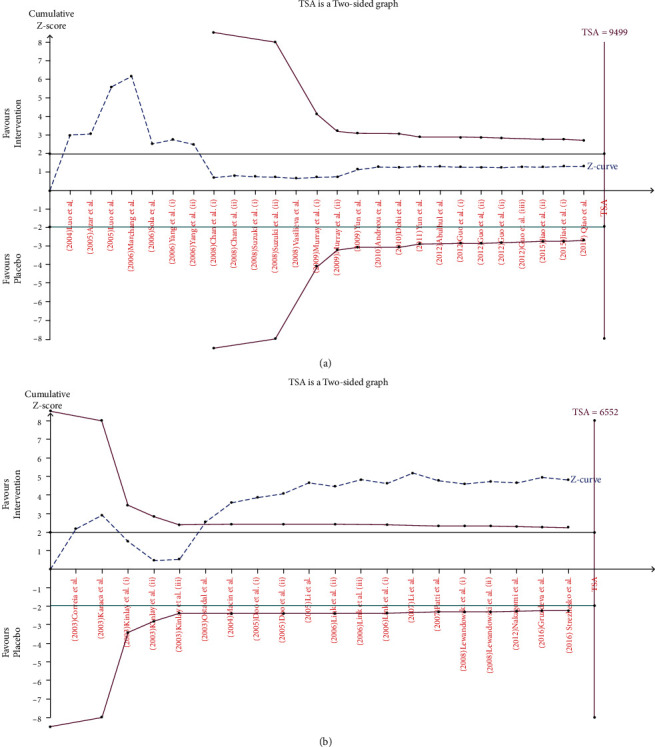
Verification
Claims the paper makes
The claims and statistics of this paper haven’t been checked yet.
Free: it reads the open-access text and checks the first 5 claims that cite a source we can check. Create a free account to check every claim.
Claims other papers make about this one
Each is checked against this paper’s own text: does it say what the citing paper says it does?
The cited source says what the claim attributes to it.
In the citing paper
“This has been confirmed in a recent meta-analysis that showed statins reduce hsCRP levels in patients with CV disease [6].”
From Impact of semaglutide on high-sensitivity C-reactive protein: exploratory patient-level analyses of SUSTAIN and PIONEER randomized clinical trials (2022) · cites this paper as [6]
The cited source says what the claim attributes to it.
In the citing paper
“to account for the effect of statins, which are known to reduce hsCRP levels [5, 6], a sensitivity analysis was conducted for the effect of treatment (semaglutide or comparators) on ratios to baseline by statin use (yes/no) at baseline.”
From Impact of semaglutide on high-sensitivity C-reactive protein: exploratory patient-level analyses of SUSTAIN and PIONEER randomized clinical trials (2022) · cites this paper as [6]
Self-check
Percentages, sums and reported differences re-computed from the paper’s own numbers.
The self-check needs the paper’s full text.
Citations
Cites
The PRISMA 2020 statement: An updated guideline for reporting systematic reviews
Page, M. J., McKenzie, J. E., Bossuyt, P. M., Boutron, I., Hoffmann, T. C., Mulrow, C. D., Shamseer, L., Tetzlaff, J. M., Akl, E. A., Brennan, S. E., et al. (2021) · BMJ · doi:10.1136/bmj.n71 · Cited by 108,283
Bias in meta-analysis detected by a simple, graphical test
Egger, M., Smith, G. D., Schneider, M., & Minder, C. (1997) · BMJ · doi:10.1136/bmj.315.7109.629 · Cited by 56,722
Meta-analysis in clinical trials
DerSimonian, R., & Laird, N. (1986) · Controlled Clinical Trials · doi:10.1016/0197-2456(86)90046-2 · Cited by 39,552 · cited 1×
“Accordingly, heterogeneity was considered significant if I2 was >50% and Cochrane’s Q was P < 0:10, while I2 < 50% and Cochrane’s Q (P > 0:10) did not prove a heterogeneity [41, 42].”
BackgroundQuantifying heterogeneity in a meta‐analysis
Higgins, J. P. T., & Thompson, S. G. (2002) · Statistics in Medicine · doi:10.1002/sim.1186 · Cited by 36,763 · cited 1×
“Accordingly, heterogeneity was considered significant if I2 was >50% and Cochrane’s Q was P < 0:10, while I2 < 50% and Cochrane’s Q (P > 0:10) did not prove a heterogeneity [41, 42].”
BackgroundAtherosclerosis--an inflammatory disease
Ross, R. (1999) · New England Journal of Medicine · doi:10.1056/nejm199901143400207 · Cited by 21,725
Assessing the quality of reports of randomized clinical trials: Is blinding necessary?
Jadad, A. R., Moore, R. A., Carroll, D., Jenkinson, C., Reynolds, D. J. M., Gavaghan, D. J., & McQuay, H. J. (1996) · Controlled Clinical Trials · doi:10.1016/0197-2456(95)00134-4 · Cited by 17,582 · cited 1×
“Jadad tool was used for evaluating the quality of RCTs by assessing the randomization, blinding, and dropouts (withdrawals) [40].”
MethodOperating characteristics of a rank correlation test for publication bias
Begg, C. B., & Mazumdar, M. (1994) · Biometrics · doi:10.2307/2533446 · Cited by 16,955
Zhang, Q., Wang, C., Zheng, M., Li, Y., Li, J., Zhang, L., Shang, X., & Yan, C. (2015) · Cerebrovascular Diseases · doi:10.1159/000369778 · Cited by 11,533
Intravenous Fluids and Acute Kidney Injury
Ding, X., Cheng, Z., & Qian, Q. (2017) · Blood Purification · doi:10.1159/000452702 · Cited by 6,827
Rosuvastatin to Prevent Vascular Events in Men and Women with Elevated C-Reactive Protein
Ridker, P. M., Danielson, E., Fonseca, F. A. H., Genest, J., Gotto, A. M., Kastelein, J. J. P., Koenig, W., Libby, P., Lorenzatti, A. J., MacFadyen, J. G., et al. (2008) · New England Journal of Medicine · doi:10.1056/nejmoa0807646 · Cited by 6,674
Cited by
Items 101–156 of 156
Diabetic dyslipidemia: focus on pathogenesis and treatment
Zhuravlyova, L. V., Sokolnikova, N. V., & Rogachova, T. (2022) · Shidnoevropejskij zurnal vnutrisnoi ta simejnoi medicini · doi:10.15407/internalmed2022.02.049 · Cited by 2
Serum CCL20: A novel potential marker of cardiovascular risk in alopecia areata patients
Hamed, A. M., Maksoud, A. M. A., Elfallah, A. A., Sweed, E. M. M., & Ibrahim, S. E. (2023) · Journal of the Egyptian Womenʼs Dermatologic Society · doi:10.4103/jewd.jewd_27_23 · Cited by 2
Pavlyha, M., Hunter, M. D., Nowygrod, R., Patel, V. I., Morrissey, N. J., Bajakian, D. R., Li, Y., & Reyes‐Soffer, G. (2024) · JVS Vascular Science · doi:10.1016/j.jvssci.2024.100211 · Cited by 2
“In addition, given apo(a) ’ s role in propagating the in fl ammatory cascade implicated in atherosclerotic plaque formation, 12-14 we also assessed the relationship of pro-in fl ammatory markers (interleukin [IL]-6, IL-18, high-sensitivity C-reactive protein [hs-CRP], tumor necrosis factor alpha [TNF…”
BackgroundHan, H. J., Park, K. Y., Jang, C. K., Chung, J., Kim, Y. B., Lee, S. H., Kim, K. M., Kang, H., Kim, J. E., & Cho, W. (2025) · BMC Neurology · doi:10.1186/s12883-025-04257-7 · Cited by 2
“For evaluation of anti-inflammatory effects as one of pleiotropic effects of the statin, we measured the level of hs-CRP, which was presented as a sensitive inflammatory marker in patients with cardio-vascular disease [25].”
Residual cardiovascular risk in CKD: Reevaluating remnant cholesterol and inflammation
Huang, H., & Dong, G.-R. (2025) · Atherosclerosis · doi:10.1016/j.atherosclerosis.2025.120453 · Cited by 2
Kognition und wortschatzarbeit
Pilzecker, B. (1996) · Zielsprache Deutsch · Cited by 2
Stafeev, I., Yudaeva, A., Michurina, S. S., Menshikov, M. Y., Shestakova, M. V., & Parfyonova, Y. V. (2023) · Diabetes Mellitus · doi:10.14341/dm12982 · Cited by 2
Lu, C., Lu, F. Y., Zhu, Y., Zheng, L., & Liu, D. (2023) · IntechOpen eBooks · doi:10.5772/intechopen.1001350 · Cited by 2
Atorvastatin Effect on COVID-19 Outcomes: A Propensity Score Matched Study on Hospitalized Patients
Pourhoseingholi, M. A., Yazdani, O., Looha, M. A., Safavi‐Naini, S. A. A., Esbati, R., Ilkhani, S., Taraghikhah, N., Hatamabadi, H., Sadeghi, A., Heidari, K., et al. (2024) · Current Medicinal Chemistry · doi:10.2174/0109298673264305231025093939 · Cited by 2
Self-citationKesavadev, J., Krishnan, G., Basanth, A., Renukadevi, S., & Sreelakshmi, R. (2025) · International Journal of Diabetes and Technology · doi:10.4103/ijdt.ijdt_3_25 · Cited by 2
The effect of atorvastatin topical solution on preventing peritoneal adhesion in rats
Yazdi, R. H., Abedi, F., Vafaeipour, Z., Shirzad, S., Etezadpour, M., Rahmanian‐Devin, P., Mohammadpour, A. H., & Jomehzadeh, V. (2025) · Majallah-i dānishgāh-i ̒ulum-i pizishkī-i Kirmān. · doi:10.34172/jkmu.3803 · Cited by 1
“Human research has demonstrated that statins can decrease serum hs-CRP levels in hyperlipidemic subjects (14).”
Park, C. M., & Jung, H. W. (2025) · Journal of Clinical Medicine · doi:10.3390/jcm14103363 · Cited by 1
“The role of statins in lowering CRP and hsCPR has been presented in many previous studies [3–5].”
Li, K., Wang, P., Wang, Z., Xu, C., Wang, S., Li, Z., & Wang, P. (2025) · Journal of Global Health · doi:10.7189/jogh.15.04131 · Cited by 1
“While attempts have been made to reduce hs-CRP levels to prevent CVD [ 4 , 9 , 10 ], effective clinical approaches to directly lower hs-CRP have only recently emerged [ 4 ].”
Bhardwaj, S., Tewari, S., Laller, K. S., Kumar, A., & Arora, M. (2025) · Cureus · doi:10.2139/ssrn.5366499 · Cited by 1
Feng, D., Shang, R., Hu, L., Zhang, P., Li, Z., Liu, Z., Xu, W., & Liu, X. (2025) · Quantitative Imaging in Medicine and Surgery · doi:10.21037/qims-2024-2752 · Cited by 1
“An important factor in the formation of atherosclerotic plaques is vascular inflammation (6-8).”
Sex differences in inflammatory biomarkers during long-term evolocumab therapy
Fogacci, F., Yerlitaş, S. İ., Giovannini, M., Imbalzano, E., Mitselman, D., Borghi, C., Zararsız, G., & Cicero, A. F. G. (2025) · Journal of clinical lipidology · doi:10.1016/j.jacl.2025.11.011 · Cited by 1
Semaglutide Therapy and Cardiorenal Risk Management in Type 2 Diabetes: hsCRP as a Biomarker of Risk
Kostadinov, N. K., Totomirova, T., & Nonchev, B. (2025) · Diabetology · doi:10.3390/diabetology6120142 · Cited by 1
Capucha, T., Lin, S., Noy, D., Ohayon, C., Grupper, M., Moreinos, D., Rothman, M., Shilo, D., Emodi, O., Rachmiel, A., et al. (2026) · Dentistry Journal · doi:10.3390/dj14020071 · Cited by 1
“Therefore, CRP is not specific to bacterial infections [29,33,46].”
Fancher, A. J., López‐Candales, A., & Sawalha, K. (2026) · Journal of Lipid and Atherosclerosis · doi:10.12997/jla.2026.15.2.216 · Cited by 1
“42 This expands upon a key randomized crossover study from 2002 that demonstrated simvastatin’s ability to lower CRP independent of LDL-C reduction as soon as 14 days after initiation.”
Arab, Z. N., Razavi, S. M., Golikhatir, K., Momeni, A., Hashemi, N., Ramezani, F., Momtaz, S., Eid, A. H., Jamialahmadi, T., Kesharwani, P., et al. (2026) · Molecular Biology Reports · doi:10.1007/s11033-026-12137-7 · Cited by 1
Self-citationAkoum, A., Wang, C., Wehbeh, B. E. D., Guo, Y. Y., Bockus, L. B., Chiang, J. C., Chen, K., Kwon, Y., Lin, H., Malhotra, R., et al. (2026) · American Heart Journal Plus Cardiology Research and Practice · doi:10.1016/j.ahjo.2026.100872 · Cited by 1
“Although statins reduce CRP and LDL-C levels and improve outcomes in patients with established cardiovascular disease [1,9], their role in primary prevention of PVD remains inadequately defined, as existing evidence is largely extrapolated from cardiovascular outcomes such as stroke and myocardial…”
Bell, M., Bremberg, A., Mellbin, L., & Valadkhani, A. (2026) · European Journal of Preventive Cardiology · doi:10.1093/eurjpc/zwag532 · Cited by 1
Lee, J., Joo, K.-C., Choi, K.-S., & Yoon, D.-S. (2024) · Cardiovascular Prevention and Pharmacotherapy · doi:10.36011/cpp.2024.6.e10 · Cited by 1
“However, a combined exercise program targeting older women over the age of 70 years did not result in statistically significant changes in blood lipids (total cholesterol, triglycerides, and LDL-C) and hs-CRP levels [32,33].”
BackgroundYang, S., Yin, W., Shen, H., Chen, T., & Du, H. (2024) · Frontiers in Pharmacology · doi:10.3389/fphar.2024.1371959 · Cited by 1
Coulibaly, M., Kondé, A., Traoré, D., Bah, O., Sagara, V., & Maiga, B. (2023) · International Journal of Clinical Biochemistry and Research · doi:10.18231/j.ijcbr.2023.014
Protective Effect of Statin Therapy in Ankylosing Spondylitis
Tavasolian, F., Abdollahi, E., Inman, R. D., & Sahebkar, A. (2024) · Current Drug Therapy · doi:10.2174/0115748855272102231205111945
Self-citationNguyen, P., Singh, V., Thakur, V., Dwivedi, A. K., & Chattopadhyay, M. (2024) · Journal of Investigative Medicine · doi:10.1177/10815589241234962
“34 Similarly, another systematic review confirmed the beneficial effect of statins on CRP levels.”
BackgroundMendoza‐Marí, Y., Wilson, V. E. D., Wilson, D. R., & Agrawal, D. K. (2024) · Advances in biochemistry in health and disease · doi:10.1007/978-3-031-62806-1_23
Body Fat Percentage and Nutritional Status with Hs-CRP Levels in Hyperlipidemic Individuals
Azizah, A. N., Marliyati, S. A., & Riyadi, H. (2024) · Jurnal Ilmiah Kesehatan (JIKA) · doi:10.36590/jika.v6i2.1115
Ross, L. J. (2025) · Physician Assistant Clinics · doi:10.1016/j.cpha.2024.11.011
Novel therapies – IMID Co-morbidities
Lam, T. T., So, H., & Tam, L. (2025) · Best Practice & Research Clinical Rheumatology · doi:10.1016/j.berh.2025.102089
Yeasmin, F., Ahsan, A. S. M. A., & Fatema, K. (2025) · Bangladesh Critical Care Journal · doi:10.3329/bccj.v13i2.84415
“While Yoo et al 36 This study also found Monocyte Lymphocyte Ratio (MLR) to be a better mortality predictor in ARDS than Neutrophil Lymphocyte Ratio (NLR), with an AUC of 0.69 (p 0.05) vs. 0.56, consistent with Kandelouei et al 11 and Tudurachi et al 14 .”
InfluentialVikram, N. K., Kushwaha, K., Saxena, A., Vohra, R., Shrivastava, R., Pandey, S. K., & Jadon, R. S. (2025) · Journal of Herbal Medicine · doi:10.1016/j.hermed.2025.101069
Mosenzon, O., Capehorn, M. S., Remigis, A. D., Rasmussen, S., Weimers, P., & Rosenstock, J. (2022) · Figshare · doi:10.6084/m9.figshare.20882123
Balls, E. (2024) · Open Access at Essex (University of Essex)
Structured role of C-reactive Protein (CRP) in Clinical diagnostic and Prognostic medicine
Zubair, M., Mishra, P. K., & Singhal, S. (2025) · Chemical Biology Letters · doi:10.62110/sciencein.cbl.2025.v12.1280
Khan, M. M., Iqbal, J. J., Akbar, S., Ali, H. N., Sarwar, N., & Ahmad, F. (2025) · Biological and Clinical Sciences Research Journal · doi:10.54112/bcsrj.v6i5.2148
Alkabazi, M., Alatefi, D., Alanzi, A. K., Alshokri, M. M. E., & Aldieb, E. (2026) · Odontology · doi:10.1007/s10266-026-01345-z
Khedhir, N. H. (2026) · Dijlah Journal of Medical Sciences · doi:10.65204/djms-may-imi-shi
“The high levels of hs-CRP as shown in Figure 5 give substantial evidence of systemic inflammatory activation [42].”
Farahmand, A., Houshmand, B., Shirazi, A., Zadeh, Y. A., Namin, S. T., Zohary, M., & Sadeghi, M. R. (2026) · Journal of Advanced Periodontology & Implant Dentistry · doi:10.34172/japid.026.3919
“17,18 In addition, they enhance osteoblastic differentiation through bone morphogenic protein 2 (BMP-2).”
Tahvilian, N., Heydarian, A., & Hosseinzadeh, M. (2026) · BMC Nutrition · doi:10.1186/s40795-026-01335-y
“C-reactive protein (CRP) is a well-known inflammatory biomarker produced by liver cells as an acute-phase protein [9].”
Bi, Y., Peng, X., Lu, F., Li, Y., Meng, F., Jin, S., Li, F., Ma, C., Liu, H. L., Dong, J. I. A. N. Z. E., et al. (2026) · Heart Rhythm · doi:10.1016/j.hrthm.2026.06.010
Britto, R. P. D. A., Silva‐Neto, L. G. R., Florêncio, T. M. D. M. T., Bueno, N. B., Clemente, A. P. G., das Chagas, L. A., Callado, G. Y., Júnior, E. A., & Sawaya, A. L. (2026) · JRSM Cardiovascular Disease · doi:10.1177/20480040261461825
Rodríguez-Romero, M. D., Carabí‐Gassol, P., Cabana‐Domínguez, J., Llonga, N., Zubizarreta‐Arruti, U., Graell, M., Macias‐Chimborazo, V., Ramos‐Quiroga, J. A., Arteaga-Henríquez, G., Ribasés, M., et al. (2026) · European Neuropsychopharmacology · doi:10.1016/j.euroneuro.2026.112901
Плейотропні ефекти статинів: більше ніж просто зниження холестерину
Kanishcheva, O., Tselik, N. E., Lebedynska, M. M., & Shop, I. V. (2026) · Ukrainian Journal of Cardiology · doi:10.31928/2664-4479-2026.3.4656
Qi, J., Aguilar, D., Joyner, D., Wing-Gaia, S. L., Hanaki, S., Dowdell, B. T., & Stein, J. (2026) · Nutrients · doi:10.3390/nu18142273
“…age [40], sex [41], BMI [42,43], alcohol intake [44,45], family history of hypercholesterolemia [46,47], NSAID use [48], cholesterol medication use [49,50], smoker [51,52], and antihypertensive treatment, as each has been shown to potentially confound diet–inflammation associations (Table S2).”
Ясюкайть, Н. В., Павлова, О. С., Denisevich, T. L., Барбук, О. А., & Ивановна, Р. И. (2026) · Emergency Cardiology and Cardiovascular Risks · doi:10.51922/2616-633x.2026.10.1.2774
Metabolic and clinical markers of T2D in obese Indians: an age-sex matched case-control study
VYAWAHARE, A. R., Tripathi, P., KADAM, N. S., Tiwari, D., Sharma, B., Kathrikolly, T., GANLA, M. H., & Saboo, B. (2026) · Frontiers in Clinical Diabetes and Healthcare · doi:10.3389/fcdhc.2026.1809646
Hassanpour, H., Nasiri, L., Mojtahed, M., Shayan, T. K., & Vaez-Mahdavi, M.-R. (2026) · International Journal of Cardiology Cardiovascular Risk and Prevention · doi:10.1016/j.ijcrp.2026.200695
“Each of these drug classes independently suppresses the very biomarkers examined in this meta-analysis, statins lower hsCRP and adhesion molecules [76], ACE inhibitors reduce inflammatory markers and troponin [77], beta-blockers decrease myocardial strain and NT-proBNP, and antiplatelet agents…”
Emerging Sensor Platforms for Statin Monitoring in Biological Matrices: Materials‐Driven Innovations
Ranjbari, S., Kesharwani, P., & Sahebkar, A. (2026) · Electroanalysis · doi:10.1002/elan.70203
Self-citationSarti, A., Sciaramenti, G., Camaiti, G., Cioci, P., Rizza, C., Tezze, R., Vocale, L. R., Hoxha, K., Maccaferri, I., Paparazzo, F., et al. (2026) · Journal of Clinical Medicine · doi:10.3390/jcm15166358
“A meta-analysis by Kandelouei et al. demonstrated that statin therapy consistently reduces hs-CRP concentrations across a broad spectrum of cardiovascular conditions, confirming that lipid-lowering treatment also exerts clinically relevant anti-inflammatory effects [35].”
Ma, Q., Wang, S., & Chen, H. (2026) · Cardiovascular Diagnosis and Therapy · doi:10.21037/cdt-2026-1-0047
“However, there are obvious individual differences in the change trend of hs-CRP in different patients (7).”
Gasik, R. E., Thierry, A. D., & Thorpe, R. J. (2026) · Psychoneuroendocrinology · doi:10.1016/j.psyneuen.2026.108032
Athari, M., Safaei, S., & Komlakh, K. (2022) · Journal of Pharmaceutical Negative Results
Wang, T., Yang, S., Long, Y., & Hou, Z. (2026) · International Orthopaedics · doi:10.1007/s00264-026-07061-1
Zhang, J., Wang, X., Tian, W., Wang, T., Jia, J., Lai, R., Wang, T., Zhang, Z., Song, L., Ju, J., et al. (2022) · doi:10.3389/fcvm.2022.936817.s007
Metadata
- Authors
- Kandelouei, T., Abbasifard, M., Imani, D., Aslani, S., Razi, B., Fasihi, M., Shafiekhani, S., Mohammadi, K., Jamialahmadi, T., Reiner, Ž., & Sahebkar, A.
- Affiliations
- University of Utah (US)
- Rafsanjan University of Medical Sciences (IR)
- Tehran University of Medical Sciences (IR)
- Tarbiat Modares University (IR)
- Mashhad University of Medical Sciences (IR)
- University Hospital Centre Zagreb (HR)
- Corresponding author
- Razi, Bahman
- Sahebkar, Amirhossein
- ORCID
- Venue
- Mediators of Inflammation
- Publisher
- Wiley
- Published
- 2022-01-28
- Volume
- 2022
- Pages
- 1-20
- ISSN
- 0962-9351 (ISSN-L)
- 1466-1861
- PMC
- PMC8816584
- OpenAlex
- W4210294380
- Cited by
- 136
- References
- 101
- Citations by year
- 2026: 18 · 2025: 35 · 2024: 38 · 2023: 30 · 2022: 14
- FWCI
- 6.95
- Type
- journal article
- Language
- en
- Open access
- gold
- doi.org
- Locations
- Mediators of Inflammation (publishedVersion, cc-by)
- PubMed Central (publishedVersion, cc-by)
- PubMed (publishedVersion)
- DOAJ (DOAJ: Directory of Open Access Journals) (submittedVersion, cc-by-sa)
- Topics
- Health Sciences › Medicine › Cardiology and Cardiovascular Medicine › Lipoproteins and Cardiovascular Health
- Life Sciences › Immunology and Microbiology › Immunology › Atherosclerosis and Cardiovascular Diseases
- Life Sciences › Biochemistry, Genetics and Molecular Biology › Cancer Research › Cancer, Lipids, and Metabolism
- Keywords
- statins, high-sensitivity C-reactive protein, C-reactive protein, cardiovascular disease, anti-inflammatory activity, statin intensity, treatment duration
- MeSH terms
- C-Reactive Protein, Cardiovascular Diseases, Humans, Randomized Controlled Trials as Topic, Hydroxymethylglutaryl-CoA Reductase Inhibitors
About these checks
Registry, retraction, Cites and statistics results are computed, not judged, with one exception: a printed reference that no index lists is read once by a model before it counts as a citation error. Claims are extracted by a model and kept only when their quote appears verbatim in the text; each cited source is then checked, with a model’s help, for whether it says what the claim relies on. Those verdicts can be wrong — read the claim’s quote and the cited source before relying on one.
Statistics and arithmetic are recomputed, not judged.
Confidence bands are shown only for fields calibrated on our annotated test set. None is calibrated yet, so no band is shown.
What counts as a claim ›How we measure confidence ›How we check this ›
Are you an author, or do you see a problem with this page? Request a review
Data sources
Bibliographic data: Semantic Scholar, OpenAlex, Crossref.
Contains information from the Semantic Scholar Academic Graph Datasets, made available under the ODC Attribution License (ODC-BY 1.0).
Semantic Scholar’s data is described in: Kinney, R., et al. (2023). The Semantic Scholar Open Data Platform. arXiv:2301.10140.
