

Music's dual role in emotion regulation: network analysis of music use, emotion regulation self-efficacy, alexithymia, anxiety, and depression
Open accessThe DOI matches its Crossref record; 48 of the 48 references it cites were found in a registry or an index.
Abstract
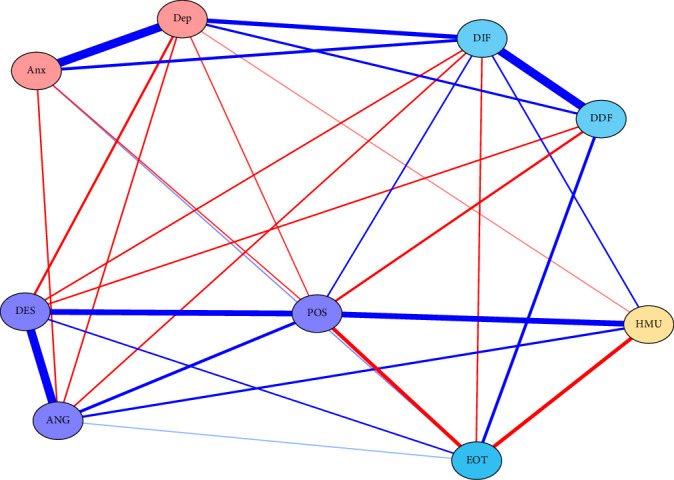
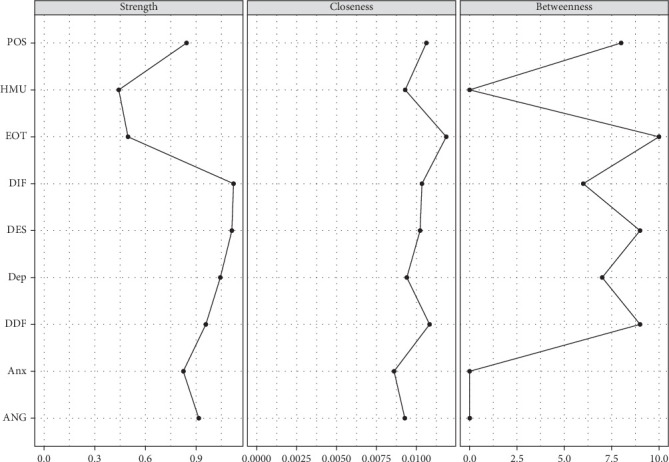
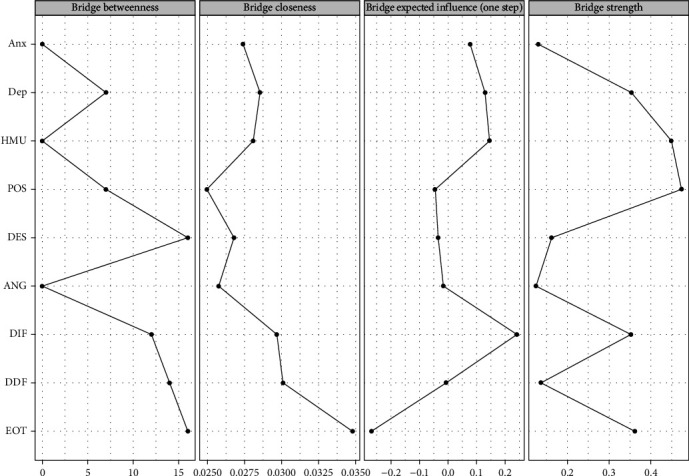
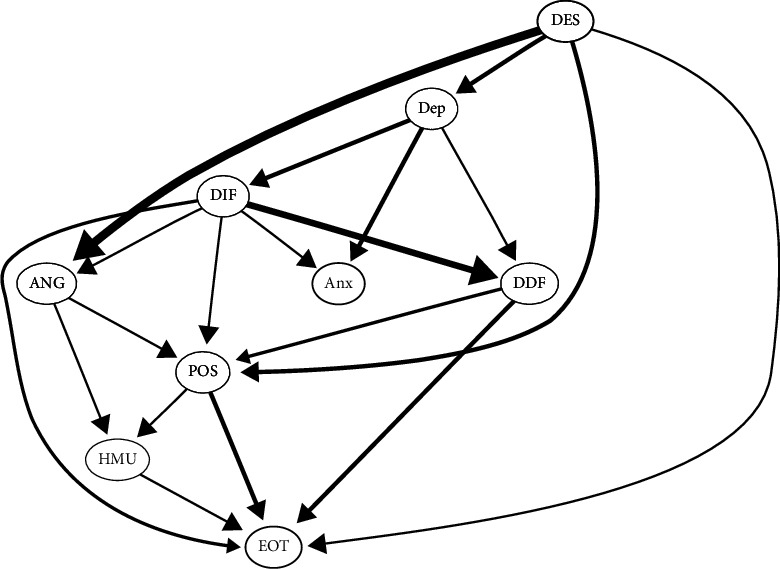
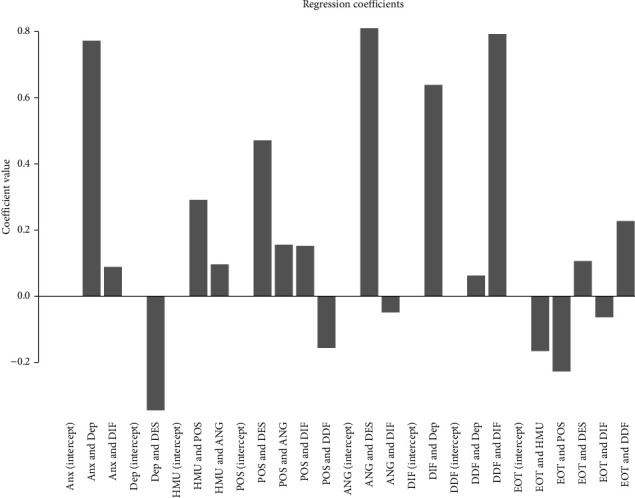
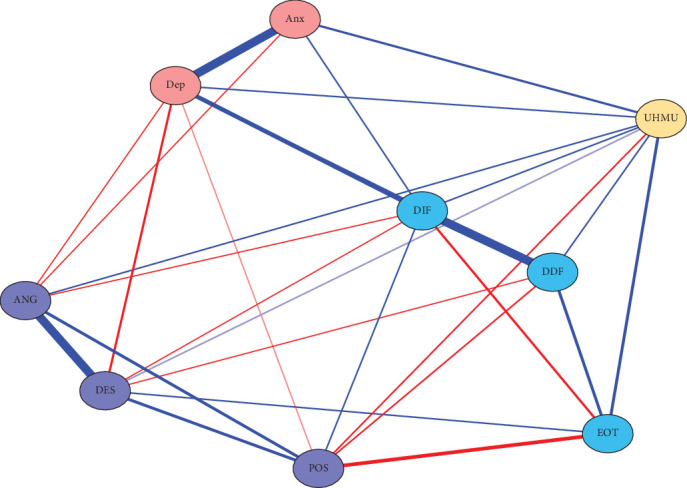
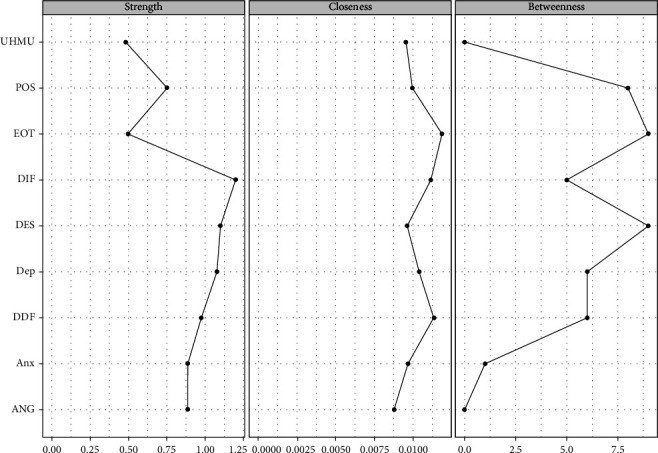
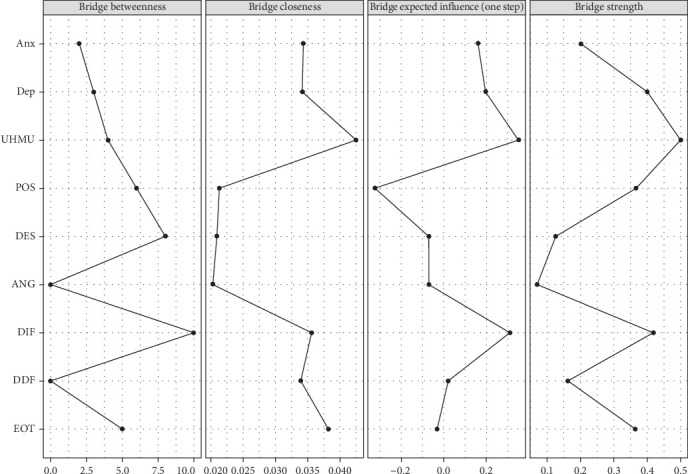
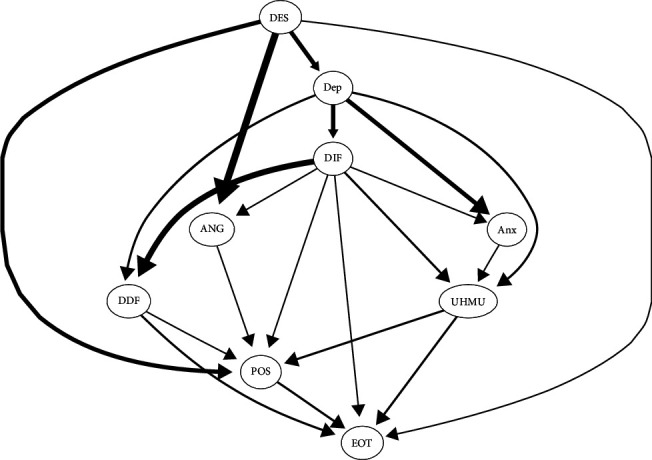
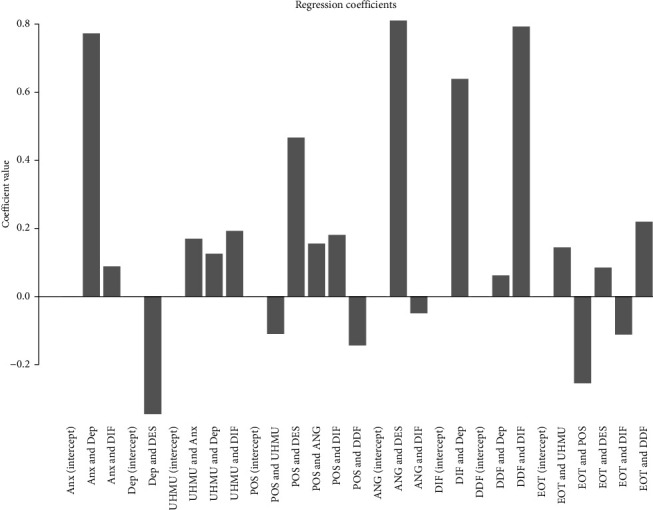
Music serves as a prevalent emotional regulation tool among young people. However, the correlational and causal relationships between music use, emotion regulation ability, and emotional symptoms remain unclear. This study aimed to investigate the associations and causal relationships between healthy and unhealthy music use, emotion regulation ability, and emotional symptoms, including alexithymia, depression, and anxiety. This study included 16,588 college students nationwide in China. All participants were assessed online with the Healthy‐Unhealthy Music Scale (HUMS), the Regulatory Emotional Self‐Efficacy Scale (RESE), the Toronto Alexithymia Scale (TAS‐20), and the 10‐item Kessler Psychological Stress Scale (K10) using a cluster convenience sampling method. We applied a regularized partial correlation network (RPCN) and Bayesian network to analyze the network characteristics of the outcomes. In the RPCN analysis, healthy music use showed the second strongest expected influence (one‐step) and correlated positively with emotion regulation self‐efficacy while inversely correlating with externally oriented thinking of alexithymia and depression. The Bayesian network indicated that healthy music use was located downstream of the network, positively predicted by managing anger‐irritation and expressing positive affect in emotion regulation self‐efficacy. In contrast, unhealthy music use in the RPCN displayed the strongest bridge strength and bridge expected influence (one‐step). It negatively correlated with expressing positive affect in emotion regulation self‐efficacy and positively correlated with alexithymia, anxiety, and depression. The Bayesian network highlighted that unhealthy music use was positively affected by anxiety, depression, and difficulty identifying feelings. In addition, managing despondency‐distress influences difficulty identifying feelings through depression, subsequently affecting unhealthy music use and, finally, influencing externally oriented thinking. This study provides a novel framework for understanding the role of emotion regulation self‐efficacy and alexithymia in the relationship between music use and emotional symptoms. Emotion regulation and mental health may benefit from music‐based interventions and therapies informed by the findings of this study.
Overview
The claims and statistics of this paper haven’t been checked yet.
Free: it reads the open-access text and checks the first 5 claims that cite a source we can check. Create a free account to check every claim.
Integrity signals
Registry
Cites
Statistics
Figures
Verification
Claims the paper makes
The claims and statistics of this paper haven’t been checked yet.
Free: it reads the open-access text and checks the first 5 claims that cite a source we can check. Create a free account to check every claim.
Claims other papers make about this one
Each is checked against this paper’s own text: does it say what the citing paper says it does?
The check wasn’t confident either way, so it gives no verdict — never disputed.
In the citing paper
“Repeated exposure to short, emotionally salient, and algorithmically sequenced music-based clips may gradually train students into patterns of attention fragmentation”
From Algorithmic short-video music consumption and academic related functions: a three-wave longitudinal study of university students (2026) · cites this paper as Tan et al., 2024
Experimental — accuracy not yet measured
Self-check
Percentages, sums and reported differences re-computed from the paper’s own numbers.
The self-check needs the paper’s full text.
Citations
Cites
Estimating psychological networks and their accuracy: A tutorial paper
Epskamp, S., Borsboom, D., & Fried, E. I. (2018) · Behavior Research Methods · doi:10.3758/s13428-017-0862-1 · Cited by 5,715
Handbook of Emotion Regulation
Lambert, K. G. (2007) · JAMA · doi:10.1001/jama.298.15.1808 · Cited by 4,902
qgraph: Network Visualizations of Relationships in Psychometric Data
Epskamp, S., Cramer, A. O. J., Waldorp, L. J., Schmittmann, V. D., & Borsboom, D. (2012) · Journal of Statistical Software · doi:10.18637/jss.v048.i04 · Cited by 4,856 · cited 1×
“The construction of the network graph was facilitated by the qgraph package, version 1.9.5 [44].”
InfluentialA tutorial on regularized partial correlation networks
Epskamp, S., & Fried, E. I. (2018) · Psychological Methods · doi:10.1037/met0000167 · Cited by 2,918 · cited 1×
“To re fi ne the GGM model, we applied the Lasso algorithm, which serves to exclude the inclusion of tenuously correlated edges within the network graph [43].”
Emotional responses to music: The need to consider underlying mechanisms
Juslin, P. N., & Västfjäll, D. (2008) · Behavioral and Brain Sciences · doi:10.1017/s0140525x08005293 · Cited by 1,914 · cited 1×
“Music evokes emotions in a variety of ways, such as activating brain stem re fl exes, activating visual imagination, and awakening memories [21].”
Bridge Centrality: A Network Approach to Understanding Comorbidity
Jones, P. J., Ma, R., & McNally, R. J. (2021) · Multivariate Behavioral Research · doi:10.1080/00273171.2019.1614898 · Cited by 1,741
Learning Bayesian Networks with the bnlearnR Package
Scutari, M. (2010) · Journal of Statistical Software · doi:10.18637/jss.v035.i03 · Cited by 1,733
Symbolic Description of Factorial Models for Analysis of Variance
Wilkinson, G. N., & Rogers, C. E. (1973) · Applied Statistics · doi:10.2307/2346786 · Cited by 901
Self-regulation of mood: Strategies for changing a bad mood, raising energy, and reducing tension.
Thayer, R. E., Newman, J. R., & McClain, T. M. (1994) · Journal of Personality and Social Psychology · doi:10.1037/0022-3514.67.5.910 · Cited by 877
The Critical Relationship Between Anxiety and Depression
Kalin, N. H. (2020) · American Journal of Psychiatry · doi:10.1176/appi.ajp.2020.20030305 · Cited by 702 · cited 1×
“Anxiety and depression are two common emotional disorders that are highly comorbid [10] and positively correlated [11].”
Research works printed but not linked: 9
- Liu X. C. Mao M. Q. Study on the correlation between anxiety, depression and sleep quality in college students Chinese Journal of Mental Health 1997 11 1 25 27
- Wang X. M. Chen B. P. Liang F. Research on alexithymia in patients with depression and anxiety Chinese Medical Guide 2019 17 32 p. 2
- Uhlig S. Jaschke A. Scherder E. Luck G. Brabant O. Effects of music on emotion regulation: a systematic litterature review Proceedings of the 3rd International Conference on Music & Emotion (ICME3) June 2013 Jyväskylä, Finland University of Jyväskylä, Department of Music 436 441
- Cai S. J. A study on positive emotion and emotion regulation strategies of college students listening to music 2018 Institute of Educational Psychology and Counseling, Tamkang University 1 91 M. S. thesis
- Wang X. J. Zhang X. J. To explore the relationship between music listening and negative emotion regulation strategies of college students Advances in Psychological Science 2018 2 1 148 157
- Zhou Chengchao Chu J. Wang T. Evaluation of the reliability and validity of the Chinese version of the Simple psychological status Rating scale Kessler10 Chinese Journal of Clinical Psychology 2008 16 3 3
- Zhang P. Zhang M. Zhang J. M. Analysis of trial results of emotional regulation self-efficacy scale in Chinese college students Chinese Journal of Clinical Psychology 2010 18 5 3 6
- Zhao T. Liu H. Roeder K. Lafferty J. Wasserman L. The huge package for high-dimensional undirected graph estimation in R Journal of Machine Learning Research (JMLR) 2022 13 1.59 0.62 PMC4729207 26834510
- Miller S. J. The Method of Least Squares 2006 8 Mathematics Department Brown University 1 7
Cited by
Ballmann, C. G., Schmid, D. G., Rogers, R. R., Oakes, H. K., & Osburn, S. C. (2026) · Neurology International · doi:10.3390/neurolint18030045 · Cited by 4
“Music may further improve resilience to psychological stress through enhancement of coping and recovery by down-regulation of negative affect, reducing cognitive burden through dissociation, self-efficacy enhancement, and stabilization of mood [46,74,75].”
Music-based emotion regulation: a bibliometric systematic review (2000–2024)
Lu, X., & Song, S. (2025) · Frontiers in Psychology · doi:10.3389/fpsyg.2025.1565614 · Cited by 8
Song, Z., Liang, S., Liu, S., Song, L., Zhang, Y., & Yu, Y. (2025) · Journal of Affective Disorders · doi:10.1016/j.jad.2025.120545 · Cited by 4
Maekawa, E., Martins, M. M. D. S., Nakamura, C. A., Araya, R., Peters, T. J., van de Ven, P. W. J., & Scazufca, M. (2024) · Applied Sciences · doi:10.3390/app14167258 · Cited by 2
Lang, M., & Guo, Q. (2025) · Journal of Health Psychology · doi:10.1177/13591053251322035 · Cited by 3
“For example, it has been reported that regulatory emotional self-efficacy is negatively associated with anxiety and depressive symptoms (Tan et al., 2024; Wu et al., 2022).”
Fan, L.-H., Huang, T., Liao, M.-Q., Xiao, N., Li, J., Luo, Q.-P., & Yi, L.-J. (2025) · Medicine · doi:10.1097/md.0000000000046029 · Cited by 2
Liang, Q., & Fan, D. (2026) · Acta Psychologica · doi:10.1016/j.actpsy.2026.107397 · Cited by 1
Yang, J. H., & Chen, Y. (2025) · Noise and Health · doi:10.4103/nah.nah_139_25 · Cited by 1
Xu, X., Gao, H., Li, X., Feng, Z., Wu, K., Qian, L., Hu, F., Wang, H., & Sun, Y. (2026) · International Journal of Neural Systems · doi:10.1142/s0129065726500280 · Cited by 3
Li, P., & Gao, X. (2026) · Frontiers in Psychology · doi:10.3389/fpsyg.2026.1824427 · Cited by 1
Dong, J., Zhang, H., Zhao, J., & Yuan, R. (2026) · Frontiers in Psychology · doi:10.3389/fpsyg.2026.1907189
Neural Network based Adaptive Framework for Music Emotion Regulation
Chi, R., & Tan, J. (2025) · International Conference on Distributed Computing and Electrical Circuits and Electronics (ICDCECE) · doi:10.1109/icdcece65353.2025.11035501
“Tan et al. (2024) [19] explored the dual role of music in emotion regulation using a network analysis approach.”
Longshu, Z., Chen, Y., Li, H., Zhou, L., Zhou, M., & Zhang, X. (2025) · Medicine · doi:10.1097/md.0000000000044220
“[29] Those with scores ranging from 10 to 19 were considered to have mild or no emotional distress and were suitable for inclusion in our study.”
Joshi, A. M., Mehta, S. A., Tandiya, P., Sonwani, V., Pervez, S., Jain, S., Singh, R., & Wadhwani, S. R. (2025) · Supportive Care in Cancer · doi:10.1007/s00520-025-09901-z · Cited by 2
How Familiarity, Musical Affinity, and ADHD Shape Adolescents’ Perception of Musical Emotions
Robaczewski, A., Harkins, E., Pelland-Goulet, P., & Gosselin, N. H. (2025) · Behavioral Sciences · doi:10.3390/bs15111570
“Recent research suggests that individuals with poorer emotion-regulation abilities engage with music differently and experience altered emotional responses (Kahn et al., 2025; Tan et al., 2024).”
Abadeh, P., Noorian, Z., Zarrinkalam, F., & Ghenai, A. (2026) · ACM Transactions on Information Systems · doi:10.1145/3797892
Puspitasari, D. N., Kafrawi, F. R., Wahyudi, H., & Pudjijuniarto (2026) · COMPETITOR Jurnal Pendidikan Kepelatihan Olahraga · doi:10.26858/cpjok.v18i1.613
IMJP-Net: inertial–music joint prediction for emotion-aware recommendation via smart-glasses sensing
Hao, Y., She, D., Li, W., Luo, S., Gao, Y., & Jin, Z. (2026) · CCF Transactions on Pervasive Computing and Interaction · doi:10.1007/s42486-026-00240-4
Yue, J., Zhai, R., Xu, Z., Wu, X., & Wang, L. (2026) · Frontiers in Psychiatry · doi:10.3389/fpsyt.2026.1891113
Parida, M., & Das, P. P. P. (2026) · SN Social Sciences · doi:10.1007/s43545-026-01632-0
“The paper argues that music-based interventions and therapies could help mental health if they encourage adaptive, mindful engagement with music rather than emotional rumination (Tan et al. 2024).”
Muqaffi, Afendy, P. M., Nadhirah, N. A., Ilfiandra, Nurihsan, J., Saripah, I., Akhmad, S. N., & Hartanto, D. (2026) · Advances in Psychological Sciences and Applications · doi:10.56741/iistr.apsa.002341
“The primary consequences identified are, first, significant improvements in emotion regulation as demonstrated by increased ability to identify, express, and manage emotions adaptively following Arts and music-based interventions [30], [31], [33], [45].”
Xu, H., & LIU, W. (2026) · Frontiers in Psychology · doi:10.3389/fpsyg.2026.1956213
“Other research has highlighted the relevance of music use to learning, well-being, emotion-regulation self-efficacy, and related psychological functioning, as well as the potential role of music education in students’ mental health (Hu et al., 2021; Tan et al., 2024; Wang et al., 2022).”
陶蕾伃, & Xing, X. (2026) · Frontiers in Psychology · doi:10.3389/fpsyg.2026.1989359
Metadata
- Authors
- Tan, M., Zhou, X., Shen, L., Li, Y., & Chen, X.
- Affiliations
- Chinese Academy of Sciences (CN)
- Corresponding author
- Chen, Xijing
- Venue
- Depression and Anxiety
- Publisher
- Wiley
- Published
- 2024-01
- Volume
- 2024
- Issue
- 1
- Pages
- 1790168-1790168
- ISSN
- 1091-4269 (ISSN-L)
- 1520-6394
- PMC
- PMC11921861
- OpenAlex
- W4400120526
- Cited by
- 25
- References
- 47
- Citations by year
- 2026: 14 · 2025: 10 · 2024: 1
- FWCI
- 11.82
- Type
- journal article
- Language
- en
- Open access
- hybrid
- doi.org
- Locations
- Depression and Anxiety (publishedVersion, cc-by)
- PubMed Central (publishedVersion, cc-by)
- PubMed (publishedVersion)
- Institutional Repository of Institute of Psychology, Chinese Academy of Sciences (Institute of Psychology, Chinese Academy of Sciences) (submittedVersion)
- Topics
- Social Sciences › Psychology › Social Psychology › Music Therapy and Health
- Social Sciences › Psychology › Experimental and Cognitive Psychology › Mental Health Research Topics
- Social Sciences › Psychology › Experimental and Cognitive Psychology › Anxiety, Depression, Psychometrics, Treatment, Cognitive Processes
- Keywords
- music use, emotion regulation, emotion regulation self-efficacy, alexithymia, anxiety, depression, university students, young adults, emotional symptoms, music intervention, network analysis
- MeSH terms
- Emotional Regulation, Adolescent, Adult, Affective Symptoms, Anxiety, Bayes Theorem, China, Depression, Female, Humans, Male, Music, Self Efficacy, Young Adult
About these checks
Registry, retraction, Cites and statistics results are computed, not judged, with one exception: a printed reference that no index lists is read once by a model before it counts as a citation error. Claims are extracted by a model and kept only when their quote appears verbatim in the text; each cited source is then checked, with a model’s help, for whether it says what the claim relies on. Those verdicts can be wrong — read the claim’s quote and the cited source before relying on one.
Statistics and arithmetic are recomputed, not judged.
Confidence bands are shown only for fields calibrated on our annotated test set. None is calibrated yet, so no band is shown.
What counts as a claim ›How we measure confidence ›How we check this ›
Are you an author, or do you see a problem with this page? Request a review
Data sources
Bibliographic data: Semantic Scholar, OpenAlex, Crossref.
Contains information from the Semantic Scholar Academic Graph Datasets, made available under the ODC Attribution License (ODC-BY 1.0).
Semantic Scholar’s data is described in: Kinney, R., et al. (2023). The Semantic Scholar Open Data Platform. arXiv:2301.10140.
