

The Epigenetic Evolution of Glioma Is Determined by the IDH1 Mutation Status and Treatment Regimen
Open accessPublished version of a preprint
The DOI matches its Crossref record; 98 of the 98 references it cites were found in a registry or an index.
Abstract
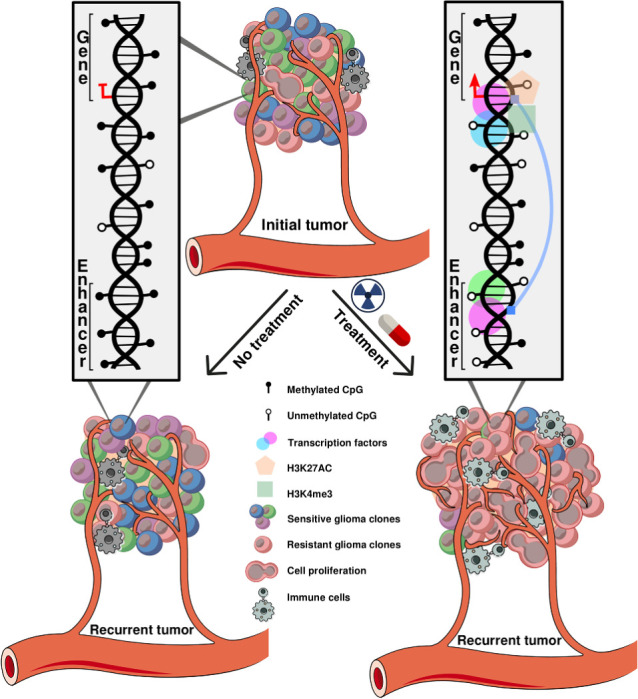
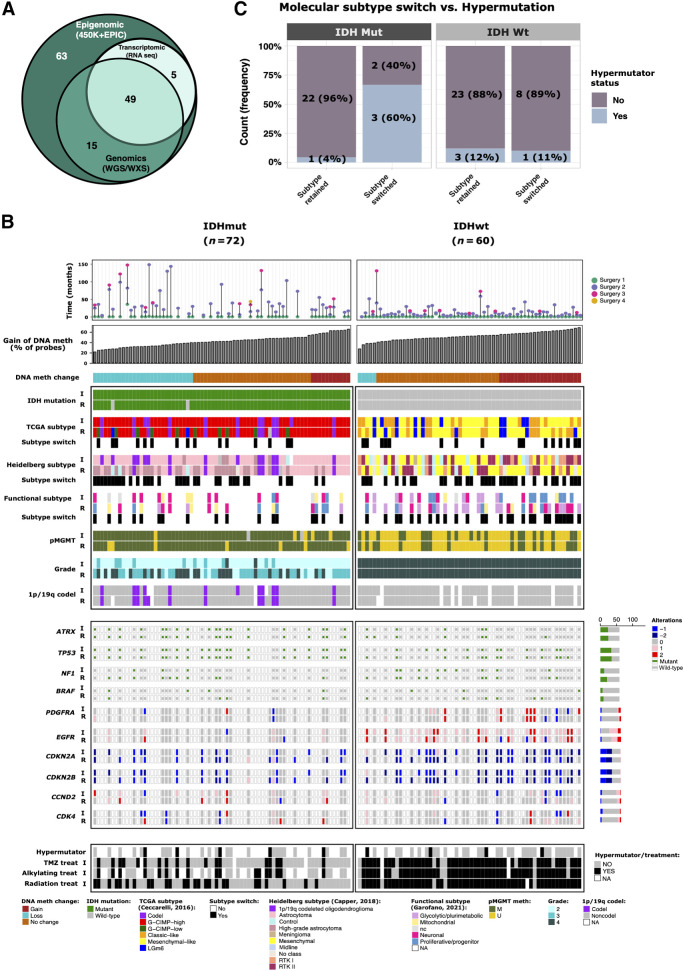
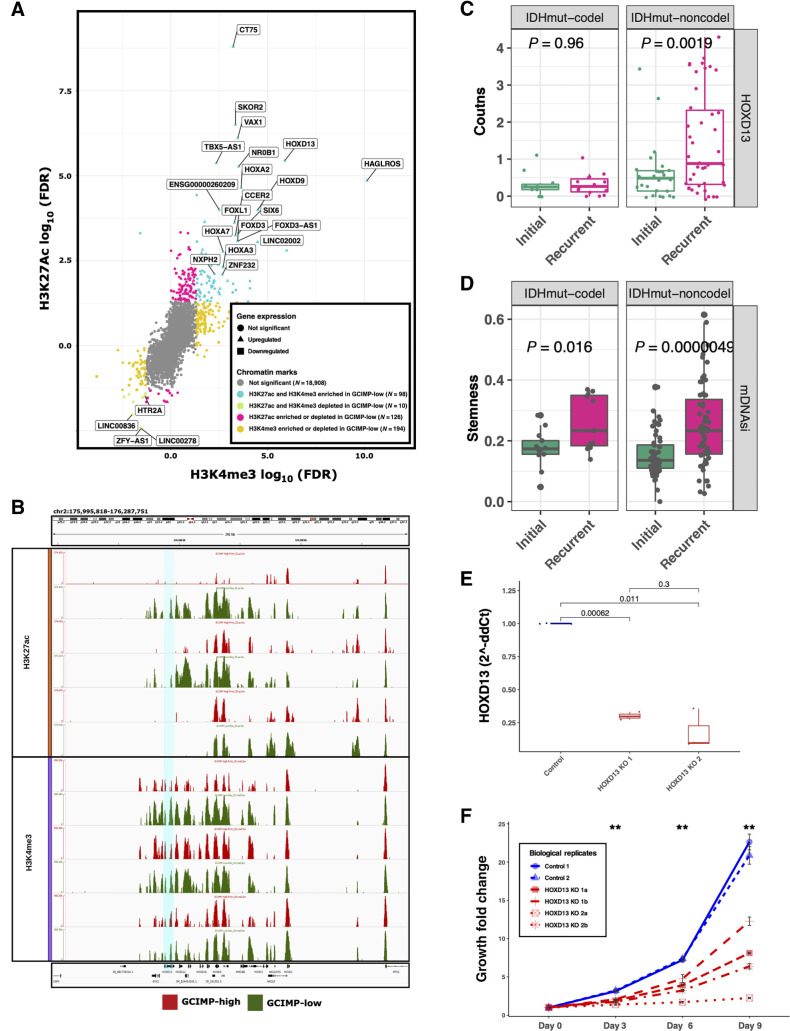
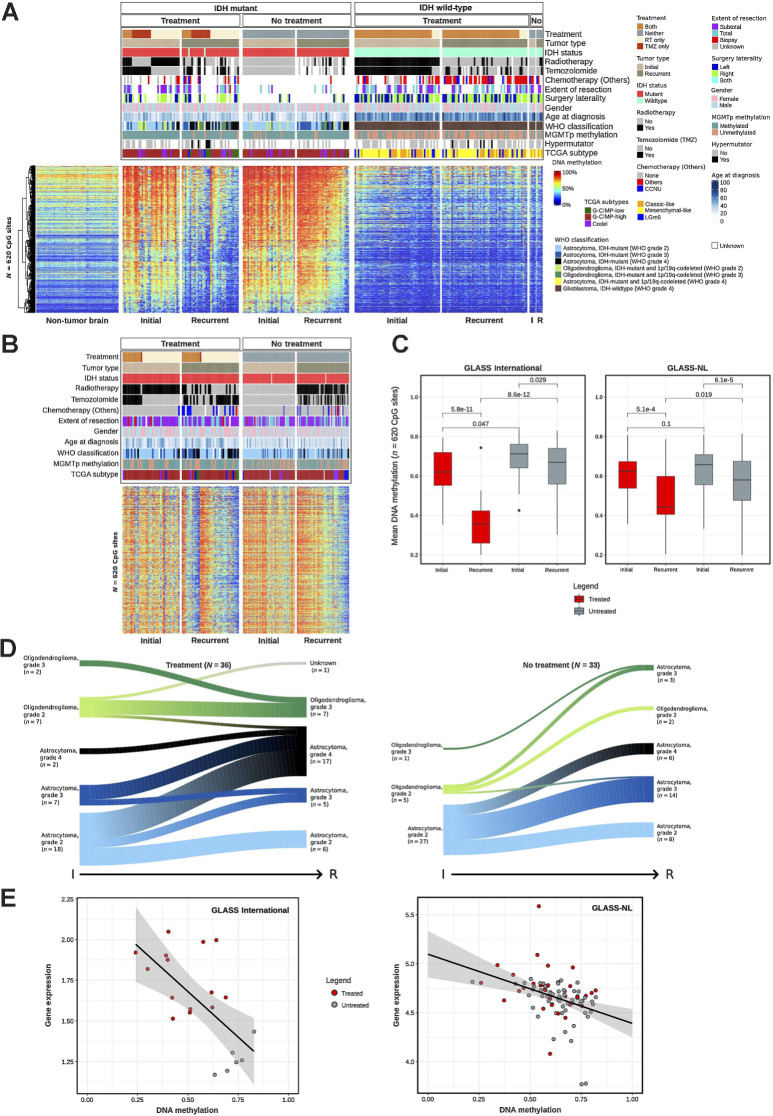
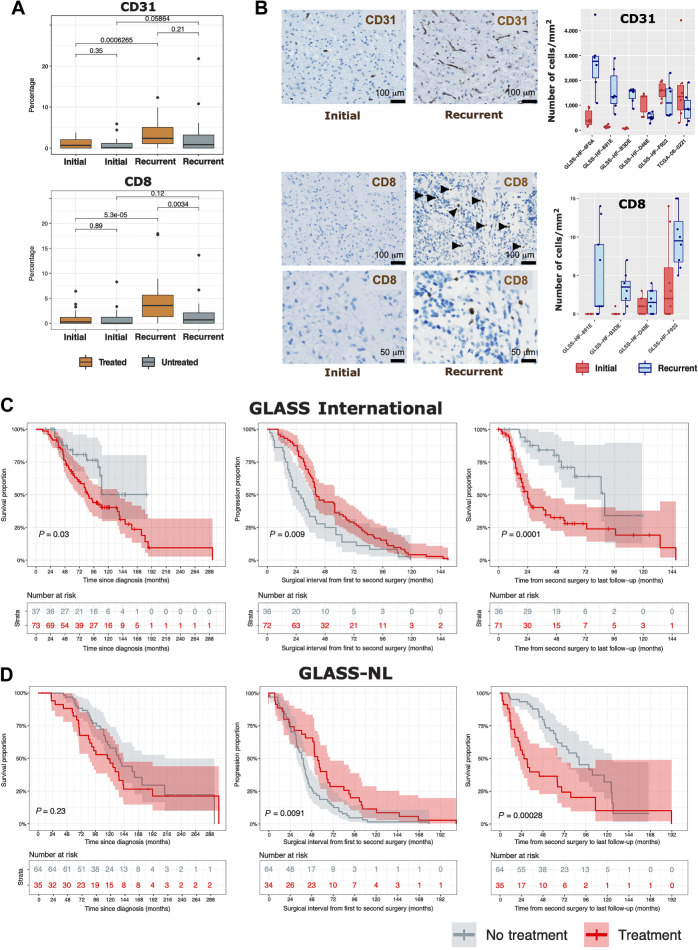
Tumor adaptation or selection is thought to underlie therapy resistance in glioma. To investigate longitudinal epigenetic evolution of gliomas in response to therapeutic pressure, we performed an epigenomic analysis of 132 matched initial and recurrent tumors from patients with IDH-wildtype (IDHwt) and IDH-mutant (IDHmut) glioma. IDHwt gliomas showed a stable epigenome over time with relatively low levels of global methylation. The epigenome of IDHmut gliomas showed initial high levels of genome-wide DNA methylation that was progressively reduced to levels similar to those of IDHwt tumors. Integration of epigenomics, gene expression, and functional genomics identified HOXD13 as a master regulator of IDHmut astrocytoma evolution. Furthermore, relapse of IDHmut tumors was accompanied by histologic progression that was associated with survival, as validated in an independent cohort. Finally, the initial cell composition of the tumor microenvironment varied between IDHwt and IDHmut tumors and changed differentially following treatment, suggesting increased neoangiogenesis and T-cell infiltration upon treatment of IDHmut gliomas. This study provides one of the largest cohorts of paired longitudinal glioma samples with epigenomic, transcriptomic, and genomic profiling and suggests that treatment of IDHmut glioma is associated with epigenomic evolution toward an IDHwt-like phenotype. Significance: Standard treatments are related to loss of DNA methylation in IDHmut glioma, resulting in epigenetic activation of genes associated with tumor progression and alterations in the microenvironment that resemble treatment-naïve IDHwt glioma.
Overview
The claims and statistics of this paper haven’t been checked yet.
Free: it reads the open-access text and checks the first 5 claims that cite a source we can check. Create a free account to check every claim.
Integrity signals
Registry
Cites
Statistics
Figures
Verification
Claims the paper makes
The claims and statistics of this paper haven’t been checked yet.
Free: it reads the open-access text and checks the first 5 claims that cite a source we can check. Create a free account to check every claim.
Claims other papers make about this one
Each is checked against this paper’s own text: does it say what the citing paper says it does?
The source backs part of the claim, not all of it — or backs it for a different population, condition or comparison.
In the citing paper
“However, the grading criteria in the current classification schema for oligodendrogliomas continues to predominantly rely upon histopathologic examination; the differentiating criterion between grade 2 and grade 3 oligodendrogliomas are the presence of conspicuous microvascular proliferation and/or 6 mitoses per 10 high-power field [3,4,5,6,7,8,9,10,11].”
From BPC 157 Therapy of Myotendinous Junction Injury in Rats (2025) · cites this paper as [4]
Experimental — accuracy not yet measured
Self-check
Percentages, sums and reported differences re-computed from the paper’s own numbers.
The self-check needs the paper’s full text.
Citations
Cites
1 retracted
Tang, B., Qi, G., Sun, X., Tang, F., Yuan, S., Wang, Z., Liang, X., Li, B., Yu, S., Liu, J., et al. (2016) · Molecular Cancer · doi:10.1186/s12943-016-0540-4 · Cited by 41 · cited 1×
“The MethylCIBERSORT R package was used to derive the DNA methylation signature for the deconvolution and the signature matrix was exported and uploaded to the CIBERSORTx portal to be deconvoluted using 1,000 permutations without quantile normalization.”
RetractedThe Sequence Alignment/Map format and SAMtools
Li, H., Handsaker, B., Wysoker, A., Fennell, T., Ruan, J., Homer, N., Marth, G., Abecasis, G., Durbin, R., & 1000 Genome Project Data Processing Subgroup (2009) · Bioinformatics · doi:10.1093/bioinformatics/btp352 · Cited by 62,041
Model-based Analysis of ChIP-Seq (MACS)
Zhang, Y., Liu, T., Meyer, C. A., Eeckhoute, J., Johnson, D. S., Bernstein, B. E., Nusbaum, C., Myers, R. M., Brown, M., Li, W., et al. (2008) · Genome Biology · doi:10.1186/gb-2008-9-9-r137 · Cited by 18,386
The 2016 World Health Organization Classification of Tumors of the Central Nervous System: a summary
Louis, D. N., Perry, A., Reifenberger, G., von Deimling, A., Figarella-Branger, D., Cavenee, W. K., Ohgaki, H., Wiestler, O. D., Kleihues, P., & Ellison, D. W. (2016) · Acta Neuropathologica · doi:10.1007/s00401-016-1545-1 · Cited by 15,657
Self-citationThe 2021 WHO classification of tumors of the central nervous system: a summary
Louis, D. N., Perry, A., Wesseling, P., Brat, D. J., Cree, I. A., Figarella-Branger, D., Hawkins, C., Ng, H. K., Pfister, S. M., Reifenberger, G., et al. (2021) · Neuro-Oncology · doi:10.1093/neuonc/noab106 · Cited by 12,273 · cited 1×
“Allimageswereanalyzedin a blinded fashion.”
Self-citationBioconductor: open software development for computational biology and bioinformatics
Gentleman, R. C., Carey, V. J., Bates, D. M., Bolstad, B., Dettling, M., Dudoit, S., Ellis, B., Gautier, L., Ge, Y., Gentry, J., et al. (2004) · Genome Biology · doi:10.1186/gb-2004-5-10-r80 · Cited by 12,172 · cited 3×
“Blood.450k Bioconductor package version 1.30.0 (44).”
InfluentialMultiQC: summarize analysis results for multiple tools and samples in a single report
Ewels, P., Magnusson, M., Lundin, S., & Käller, M. (2016) · Bioinformatics · doi:10.1093/bioinformatics/btw354 · Cited by 10,143
Leek, J. T., Johnson, W. E., Parker, H. S., Jaffe, A. E., & Storey, J. D. (2012) · Bioinformatics · doi:10.1093/bioinformatics/bts034 · Cited by 6,231 · cited 1×
“Next, batch effects due to the different Aliquot Batches were corrected using the COMBAT algorithm with aliquots as covariates (25).”
MethodDetermining cell type abundance and expression from bulk tissues with digital cytometry
Newman, A. M., Steen, C. B., Liu, C. L., Gentles, A. J., Chaudhuri, A. A., Scherer, F., Khodadoust, M. S., Esfahani, M. S., Luca, B. A., Steiner, D., et al. (2019) · Nature Biotechnology · doi:10.1038/s41587-019-0114-2 · Cited by 4,478
Aryee, M. J., Jaffe, A. E., Corrada-Bravo, H., Ladd-Acosta, C., Feinberg, A. P., Hansen, K. D., & Irizarry, R. A. (2014) · Bioinformatics · doi:10.1093/bioinformatics/btu049 · Cited by 4,397
Cited by
van den Bent, M. J., French, P. J., Brat, D., Tonn, J. C., Touat, M., Ellingson, B. M., Young, R. J., Pallud, J., von Deimling, A., Sahm, F., et al. (2024) · Neuro-Oncology · doi:10.1093/neuonc/noae107 · Cited by 88
“132,133 In parallel to these findings, a German group developed a classifier to aid the typing of brain tumors.”
BackgroundSelf-citationSystemic and local immunosuppression in glioblastoma and its prognostic significance
Stepanenko, A. A., Sosnovtseva, A. O., Valikhov, M. P., Chernysheva, A. A., Abramova, O. V., Ka, P., & Chekhonin, V. P. (2024) · Frontiers in Immunology · doi:10.3389/fimmu.2024.1326753 · Cited by 50
Lucas, C. G., Al-Adli, N. N., Young, J. S., Gupta, R. K., Morshed, R. A., Wu, J., Ravindranathan, A., Shai, A., Bush, N. A. O., Taylor, J. W., et al. (2024) · Neuro-Oncology · doi:10.1093/neuonc/noae214 · Cited by 44
Self-citationMotevasseli, M., Darvishi, M., Khoshnevisan, A., Zeinalizadeh, M., Saffar, H., Bayat, S., Najafi, A., Abbaspour, M. J., Mamivand, A., Olson, S. B., et al. (2024) · Acta Neuropathologica Communications · doi:10.1186/s40478-024-01837-5 · Cited by 34
“This demethylation event could lead to the epigenetic activation of genes associated with tumor progression, creating a TME resembling treatment-naive IDH-WT gliomas [92].”
BackgroundLu, J., Huo, W., Ma, Y., Wang, X., & Yu, J. (2024) · Cancer Letters · doi:10.1016/j.canlet.2024.217185 · Cited by 29
The role of vorasidenib in the treatment of isocitrate dehydrogenase-mutant glioma
de la Fuente, M. I., Touat, M., van den Bent, M. J., Preusser, M., Peters, K. B., Young, R. J., Huang, R. Y., Ellingson, B. M., Capper, D., Phillips, J. J., et al. (2024) · Neuro-Oncology · doi:10.1093/neuonc/noae259 · Cited by 32
Self-citationOncolytic viral therapy for gliomas: Advances in the mechanisms and approaches to delivery
Romanishin, A. O., Vasilev, A., Khasanshin, E., Evtekhov, A., Pusynin, E., Rubina, K., Kakotkin, V., Agapov, M., & Semina, E. (2024) · Virology · doi:10.1016/j.virol.2024.110033 · Cited by 26
Clinical utility of a blood based assay for the detection of IDH1.R132H-mutant gliomas
Batool, S. M., Escobedo, A. K., Hsia, T., Ekanayake, E., Khanna, S. K., Gamblin, A. S., Zheng, H., Skog, J., Miller, J. J., Stemmer-Rachamimov, A. O., et al. (2024) · Nature Communications · doi:10.1038/s41467-024-51332-7 · Cited by 24
“Interestingly, while the MAF does correlate with overall outcomes in treatment naive glioma patients, the pattern is different in recurrent tumors undergoing treatment 41,42 .”
State of the Art in Low-Grade Glioma Management: Insights From Isocitrate Dehydrogenase and Beyond
Schaff, L. R., Ioannou, M., Geurts, M., van den Bent, M. J., Mellinghoff, I. K., & Schreck, K. C. (2024) · American Society of Clinical Oncology Educational Book · doi:10.1200/edbk_431450 · Cited by 27
Ghisai, S. A., van Hijfte, L., Vallentgoed, W., Tesileanu, C. M. S., de Heer, I. J., Kros, J. M., Sanson, M., Gorlia, T., Wick, W., Vogelbaum, M. A., et al. (2024) · Acta Neuropathologica · doi:10.1007/s00401-024-02811-0 · Cited by 23
“This finding highlights a potential epigenetic activation mechanism in these tumours [23].”
Self-citationVallentgoed, W., Hoogstrate, Y., van Garderen, K. A., van Hijfte, L., van Dijk, E., Kouwenhoven, M. C. M., Niers, J. M., Draaisma, K., Martin, I., de Leng, W. W. J., et al. (2025) · Nature Cancer · doi:10.1038/s43018-025-01023-z · Cited by 21
Self-citationThe epigenetic dysfunction underlying malignant glioma pathogenesis
Dharmaiah, S., & Huse, J. T. (2022) · Laboratory Investigation · doi:10.1038/s41374-022-00741-7 · Cited by 17
Self-citationTargeting epigenetic mechanisms of resistance to chemotherapy in gliomas
Skouras, P., Markouli, M., Papadatou, I., & Piperi, C. (2024) · Critical Reviews in Oncology/Hematology · doi:10.1016/j.critrevonc.2024.104532 · Cited by 14
A deep learning model to predict glioma recurrence using integrated genomic and clinical data
Patricoski, J., Nagpal, S., Singh, R., Warner, J. L., & Uzun, E. D. G. (2025) · Communications Medicine · doi:10.1038/s43856-025-01083-3 · Cited by 15
“Using cBioPortal, we downloaded clinical data,somaticmutations,andgeneexpressiondataforprimarytumorsinthe DiffuseGliomaGLASSdataset(version2022-05-31) 43,44 .”
Expanding the molecular grading criteria in IDH-mutant astrocytoma
Virata, M., Samanamud, J. L., Slocum, C., Kandoi, S., Nguyen, P., Savani, M. R., Shi, D. D., Sharma, S., Hiya, S., Maldonado‐Díaz, C., et al. (2026) · Neuro-Oncology · doi:10.1093/neuonc/noag069 · Cited by 14
Lanskikh, D., Kuziakova, O., Baklanov, I., Penkova, A. O., Doroshenko, V., Buriak, I., Zhmenia, V., & Kumeiko, V. V. (2024) · Cells · doi:10.3390/cells13242085 · Cited by 12
Șerban, M., Toader, C., & Covache-Busuioc, R.-A. (2025) · International Journal of Molecular Sciences · doi:10.3390/ijms26178114 · Cited by 18
“Compared to conventional approaches, epigenetics-based therapy has provided each clinical diagnosis a unique treatment option which means that manipulation of histone and DNA methylation could represent valuable new treatments for tumor-associated neuropsychiatric dysfunction [65].”
Dipasquale, A., Franceschi, E., Giordano, L., Maccari, M., Barigazzi, C., Nunno, V. D., Losurdo, A., Persico, P., Muzio, A. D., Navarria, P., et al. (2024) · ESMO Open · doi:10.1016/j.esmoop.2024.103485 · Cited by 12
“30,31 In our series, the low number of patients having received medical treatments before their CNS WHO G4 diagnosis ( n ¼ 22/41) and precluding solid analysis may explain this result.”
BackgroundZhuang, Z., Lin, J., Wan, Z., Weng, J., Yuan, Z., Xie, Y., Liu, Z., Xie, P., Mao, S., Wang, Z., et al. (2024) · BMC Medicine · doi:10.1186/s12916-024-03573-y · Cited by 14
“IDH mutation-related DNA methylation patterns, such as glioma-CpG island methylator phenotype (G-CIMP), are highly associated with the prognosis of glioma and are commonly used to stratify patients in the WHO classification [21–23].”
BackgroundIDH-mutant gliomas in children and adolescents - from biology to clinical trials
Evans, L., Trinder, S. M., Dodgshun, A. J., Eisenstat, D. D., Whittle, J. R., Hansford, J. R., & Valvi, S. (2025) · Frontiers in Oncology · doi:10.3389/fonc.2024.1515538 · Cited by 11
“Recurrent tumors are more likely to display a hypermutation phenotype and genome-wide loss of DNA methylation (135, 136).”
Wei, Y., Chen, D., Zhang, Q., You, F., Fu, Y., Zheng, L., Zhang, L., Zhang, N., Liang, G., Yang, J., et al. (2025) · npj Precision Oncology · doi:10.1038/s41698-025-01100-7 · Cited by 10
Analysis of DNA Methylation in Gliomas: Assessment of Preanalytical Variables
Bomsztyk, K., Mar, D., Denisenko, O. N., Powell, S. Z.-E., Vishnoi, M., Yin, Z. Q., Delegard, J., Hadley, C. C., Tandon, N., Patel, A. J., et al. (2024) · Laboratory Investigation · doi:10.1016/j.labinv.2024.102160 · Cited by 10
HOXD12 defines an age-related aggressive subtype of oligodendroglioma
Nuechterlein, N., Cimino, S., Shelbourn, A., Ha, V., Arora, S., Rajan, S., Shapiro, L. G., Holland, E. C., Aldape, K., McGranahan, T. M., et al. (2024) · Acta Neuropathologica · doi:10.1007/s00401-024-02802-1 · Cited by 10
“The gene HOXD13 has also been implicated in glioma progression in a ChIP-seq analyses of 14 IDH-mutant gliomas, but this phenotype was not validated in oligodendroglioma [46].”
BackgroundSelf-citationTargeting Glioblastoma Stem Cells: Therapeutic Strategies and Clinical Perspectives
Rachamala, H. K., Lourembam, S. D., Mukhopadhyay, D., & Angom, R. S. (2026) · Cancers · doi:10.3390/cancers18091353 · Cited by 7
“This reinforces the concept that epigenetic stability and drift may contribute to tumor recurrence, intratumoral heterogeneity, and therapy resistance [92].”
Nomura, M., Raviram, R., Schiffman, J. S., Bussema, L., Lu, V., Wheeler, N., Lee, J. J. Y., Fan, Y., Zheng, M., Ruiz, F., et al. (2026) · Nature Genetics · doi:10.1038/s41588-026-02642-7 · Cited by 8
“Although most cases display shared CNA patterns, in some instances, CNA patterns may diverge, especially in some IDH-A cases.”
InfluentialSelf-citationTumor-initiating genetics and therapy drive divergent molecular evolution in IDH-mutant gliomasPreprint
Chowdhury, T., Tesileanu, C. M. S., Kocakavuk, E., Johnson, K. C., Lee, J.-H., Erson-Omay, Z., Heo, C., Aldape, K., Amin, S. B., Anderson, K. J., et al. (2025) · bioRxiv (Cold Spring Harbor Laboratory) · doi:10.1101/2025.07.11.664189 · Cited by 6
Self-citationErmini, L., Lipsa, A., Hau, A., Krokhmal, I., Nosirov, B., Tóth, R., Klein, E., Oudin, A., Houben, L., Fritah, S., et al. (2025) · bioRxiv (Cold Spring Harbor Laboratory) · doi:10.1101/2025.09.09.675145 · Cited by 6
Self-citationMatek, D., Pevec, D., Boban-Blagaic, A., & Sikiric, P. (2025) · Biomedicines · doi:10.3390/biomedicines13010201 · Cited by 4
LINC00601 promotes the progression of glioma via the p-STAT3 signaling pathway
Ma, C., Wang, L., Zhang, R., Li, T., Li, P., Ding, Y., Wu, D., & Wang, Y. (2025) · Cancer Cell International · doi:10.1186/s12935-025-03735-9 · Cited by 6
DNMT1 drives glioma progression and modulates therapy response: A novel therapeutic target
Armoundas, A. A., & Piperi, C. (2025) · European Journal of Medicinal Chemistry · doi:10.1016/j.ejmech.2025.118255 · Cited by 6
Baumert, B. G., Hegi, M. E., van den Bent, M. J., von Deimling, A., Gorlia, T., Hoang‐Xuan, K., Brandes, A. A., Sargos, P., TAPHOORN, M. J. B., Vauléon, É., et al. (2026) · Journal of Clinical Oncology · doi:10.1200/jco-25-02735 · Cited by 6
Self-citationWeakly Supervised IDH-Status Glioma Classification from H&E-Stained Whole Slide Images
Innani, S., Baheti, B., Nasrallah, M. P., & Bakas, S. (2024) · IEEE International Symposium on Biomedical Imaging (ISBI) · doi:10.1109/isbi56570.2024.10635869 · Cited by 6
“Currently, determining IDH status is challenging due to tumor heterogeneity, sampling error, time-intensive laboratory techniques, complex result interpretation, integration with clinical data, and the evolving nature of tumor genetics[11, 12].”
BackgroundSelf-citationOligosarcoma uniformly exhibits a HOX gene family hypermethylation signature
Ha, V., Nuechterlein, N., Rivers, M., Pratt, D. W., & Cimino, P. J. (2025) · Acta Neuropathologica · doi:10.1007/s00401-025-02905-3 · Cited by 3
“Recently, several independent studies have shown that a subset of aggressive IDH-mutant adult-type diffuse gliomas display aberrant DNA methylation patterns across developmentally regulated HOX gene family members [3, 6–8].”
A cellular epigenetic classification system for glioblastoma
Silverbush, D., Jürgensen, L., Freeburg, N. F., Pooley, C. S., Boniolo, F., Gaiti, F., Suvà, M. L., & Hovestadt, V. (2026) · Neuro-Oncology · doi:10.1093/neuonc/noaf299 · Cited by 4
Seyve, A., & Ducray, F. (2025) · Current Opinion in Oncology · doi:10.1097/cco.0000000000001193 · Cited by 4
Oncogenic drivers shape the tumor microenvironment in human gliomasPreprint
Zhao, B., Cho, C. Y., Ye, L., Keal, T., Mitchell, T. J., Martín-Barrio, I., Faraj, C. A., Unal, M., Alsing, J., Lawson, N. M., et al. (2025) · bioRxiv (Cold Spring Harbor Laboratory) · doi:10.1101/2025.05.16.654515 · Cited by 6
Self-citationScaffold modification and synthesis routes for targeting mutant IDH 1: a review
Pai, V. S., & Kumar, N. (2025) · Discover Applied Sciences · doi:10.1007/s42452-025-07293-7 · Cited by 2
“When altered by mutation or dysregulation, they contribute to a wide range of human diseases [20, 21].”
Transcriptomic analysis identifies a potential target for bevacizumab resistant glioblastoma
Lodha, R., Muller-Greven, G. M., Maqbool, M. A., Guo, L., Buchan, G. B. J., Singh, K., Qadan, M. A., Chelakkot, V. S., Decker, P. A., Bakken, K. K., et al. (2025) · Scientific Reports · doi:10.1038/s41598-025-20847-4 · Cited by 2
“RNA-sequencing data stored in The Cancer Genome Atlas (TCGA) 22,23 and in the GLASS database 24,25 were used, and data was downloaded from cBioPortal.”
Darlix, A., Bady, P., Deverdun, J., Bars, E. L., Coget, A., Meriadec, J., Carriere, M., Duffau, H., & Hegi, M. E. (2025) · Neuro-Oncology · doi:10.1093/neuonc/noaf296 · Cited by 2
TET CpG sequence-context-specific DNA demethylation shapes progression of IDH-mutant gliomas
Hoogstrate, Y., Ghisai, S. A., van Hijfte, L., Head, R., de Heer, I. J., Padovan, M., de Wit, M., Vallentgoed, W., Dipasquale, A., Wijnenga, M. M. J., et al. (2026) · Cell Reports Medicine · doi:10.1016/j.xcrm.2026.102682 · Cited by 2
“26,44,49 Conversely, genes of the olfactory receptor family were characterized by methylation loss.”
Self-citationKafka, A., Pećina‐Šlaus, N., Drmić, D., Bukovac, A., Njirić, N., Žarković, K., & Jakovčević, A. (2024) · Frontiers in Molecular Neuroscience · doi:10.3389/fnmol.2024.1398872 · Cited by 1
The molecular history of IDH‐mutant astrocytomas without adjuvant treatment
Shi, Z., Li, K. K., Kwan, J. S. H., Chung, N. Y., Wong, S., Chu, A. W., Chen, H., Chan, D. T.-M., Mao, Y. Q., & Ng, H. (2024) · Brain Pathology · doi:10.1111/bpa.13300 · Cited by 1
Future Directions in the Treatment of Low-Grade Gliomas
Kinslow, C. J., & Mehta, M. P. (2025) · The Cancer Journal · doi:10.1097/ppo.0000000000000759 · Cited by 1
Preserved IDH mutation and methylation class in vorasidenib nonresponders: A report of 2 cases
Touat, M., Lehmann‐Che, J., Kacimi, S. E. O., Barka, B., Adle‐Biassette, H., Villa, C., Poirot, B., Froelich, S. C., Bielle, F., & Mandonnet, E. (2025) · Neuro-Oncology Practice · doi:10.1093/nop/npaf081 · Cited by 1
Towards a disease digital twin: Howard T. Odum's legacy for cancer biology and medicine
Surra, F., Conte, L., Cavarzerani, E., Rizzolio, F., Romano, A., & Gonella, F. (2025) · Ecological Modelling · doi:10.1016/j.ecolmodel.2025.111326 · Cited by 2
Wang, W., Wen, R., Li, Q., Cai, Z., Ou, Z., & Zheng, L. (2025) · Aggregate · doi:10.1002/agt2.70182 · Cited by 1
“In addition to gene expression data, epigenomic and metabolomic data may also be utilized to further enhance the model’s predictive performance [93], with the epigenomic and metabolomic atlas of gliomas being continuously improved [115, 116].”
Kassaeyan, V., Arashlow, F. T., Ahmadi, S., Mosayebi, N., & Bastani, P. B. (2025) · Journal of Molecular Neuroscience · doi:10.1007/s12031-025-02442-4 · Cited by 2
“Subtype-specific stratification is needed in future analyses (Malta et al. 2024).”
Epigenetic evolution of isocitrate dehydrogenase-wildtype glioblastomas
Deng, B., Head, R., Draaisma, K., Hoeben, A., Lukacova, S., Lombardi, G., Leenstra, S., Hanse, M. C. J., Fleischeuer, R. E. M., Watts, C., et al. (2026) · Neuro-Oncology · doi:10.1093/neuonc/noaf298 · Cited by 1
Self-citationSingh, A., Mehani, B., Gopalan, V., Puri, S., Aldape, K., & Hannenhalli, S. S. (2026) · Molecular Systems Biology · doi:10.1038/s44320-026-00201-0 · Cited by 1
“IDH-mut gliomas are characterized by distinct metabolic, epigenetic, molecular, and histological features (Malta et al, 2024).”
Self-citationPrisciandaro, J. I., Zoberi, J. E., Cohen, G. N., Kim, Y., Johnson, P. B., Paulson, E. S., Song, W. Y., Hwang, K., Erickson, B. E., Beriwal, S., et al. (2022) · Medical Physics · doi:10.1002/mp.15991
EGFR transcript variants: Potential diagnostic biomarker for glioblastoma, IDH-wildtype?
Cook, D. J., Decker, P. A., Hardcastle, J. J., Kollmeyer, T. M., Smoley, S. A., Isaacson, M. D., Gandham, M., Dasari, S., Abdullaev, Z., Aldape, K., et al. (2025) · Journal of Neuropathology & Experimental Neurology · doi:10.1093/jnen/nlaf041
Self-citationDarlix, A., Bady, P., Deverdun, J., Bars, E. L., Coget, A., Meriadec, J., Carriere, M., Duffau, H., & Hegi, M. E. (2025) · medRxiv · doi:10.1101/2025.10.21.25338454
Comparative cross-methodological analysis of the IDH-wildtype glioblastoma tumor microenvironment
Cakmak, P., Lun, J. H., Köhler, M. I., Burger, M. C., Macas, J., Starzetz, T., Schulz, M. H., Reiss, Y., Plate, K. H., & Weber, K. J. (2026) · Journal of Cancer Research and Clinical Oncology · doi:10.1007/s00432-026-06428-6
Hu, X., Zhang, X., Zhang, G., Wang, Y., Xie, R., (15110045), X. L., Ta, D.-A., & Ding, H. (2026) · Ultrasound in Medicine & Biology · doi:10.1016/j.ultrasmedbio.2026.02.021
Ünlü, A., & Aydın, A. A. (2026) · Journal of Medicine and Palliative Care · doi:10.47582/jompac.1864399
Changes of major genes related to cellular senescence in gliomaPreprint
Pećina‐Šlaus, N., Težak, J., Babić, K., Štajduhar, A., & Hrašćan, R. (2026) · Research Square · doi:10.21203/rs.3.rs-9084247/v1
Da, R., Wang, M., Jiang, H., & Wang, W. (2026) · BMC Neurology · doi:10.1186/s12883-026-04982-7
Clinical diagnostic utility of MGMT promoter methylation
Lehmann, U. (2026) · Epigenomics · doi:10.1080/17501911.2026.2688974
Integrating MRI radiomics and transcriptomics to predict IDH mutation status and prognosis in glioma
Zhong, R.-D., Li, Q., Wang, H., Kou, Z., Guo, S., Chen, F.-F., Zhang, N., Huang, G.-D., & Liu, Y.-S. (2026) · Cancer Cell International · doi:10.1186/s12935-026-04384-2
“Secondly, complex genetic mutations and epigenetic changes contribute to treatment resistance and recurrence, making successful outcomes difficult to achieve [5].”
Charting intratumor heterogeneity from bench to bedside
Wan, J. C. M., McGranahan, N., & Swanton, C. (2026) · Nature Cancer · doi:10.1038/s43018-026-01198-z · Cited by 1
“The potential for cooperation between mutations and methylation alterations can influence fitness and has been observed across tumor types 132,135,136 .”
He, Q., Wu, R., Yu, X., Song, X., Walker, M. N., Tiek, D. M., Jiang, T., Li, X.-N., Her, C., Hu, B., et al. (2026) · Neuro-Oncology · doi:10.1093/neuonc/noag225
Alkhouli, L., & Dhawan, A. (2026) · Cancer Heterogeneity and Plasticity · doi:10.47248/chp2603030012
Gezer, E., Charkhian, H., & Tunçer, Ş. B. (2026) · Journal of Neuropathology & Experimental Neurology · doi:10.1093/jnen/nlag096
HOXD12 as an oncofetal protein expressed in WNT-activated medulloblastomas
Ha, V., Shelbourn, A., Eberhart, C., Chiang, J., Orr, B. A., Arora, S., Holland, E. C., Nuechterlein, N., Rood, B. R., Pratt, D., et al. (2026) · Journal of Neuropathology & Experimental Neurology · doi:10.1093/jnen/nlag104
Ejaz, F., Alam, M., Aslam, S., Jehangir, A., Zaidi, S. F. H., Manzoor, A., & Laique, T. (2026) · Cureus · doi:10.7759/cureus.117623
Liu, Q., Yu, Y., Li, W., Chen, X., Shi, Z., Li, G., Wei, S., & Luo, Z. (2026) · Frontiers in Cell and Developmental Biology · doi:10.3389/fcell.2026.1943655
“…of paired primary and recurrent gliomas have demonstrated substantial changes in DNA methylation during disease progression and treatment, with recent studies further linking methylation evolution to altered differentiation and stem-like cell states (Malta et al., 2024; Nomura et al., 2026).”
Divergent genomic evolution in astrocytomas and oligodendrogliomas
Chowdhury, T., Tesileanu, C. M. S., Kocakavuk, E., Johnson, K. C., Lee, J. H., Erson-Omay, Z., Heo, C., Aldape, K., Amin, S. B., Anderson, K. J., et al. (2026) · Nature · doi:10.1038/s41586-026-11150-x · Cited by 8
Self-citationYu, W., Guo, S., Liu, B., & Wei, Q. (2026) · Human Mutation · doi:10.1155/humu/7543241
Metadata
- Authors
- Malta, T. M., Sabedot, T. S., Morosini, N. S., Datta, I., Garofano, L., Vallentgoed, W., Varn, F. S., Aldape, K., D'Angelo, F., Bakas, S., Barnholtz-Sloan, J. S., Gan, H. K., Hasanain, M., Hau, A.-C., Johnson, K. C., Cazacu, S., deCarvalho, A. C., Khasraw, M., Kocakavuk, E., Kouwenhoven, M. C. M., Migliozzi, S., Niclou, S. P., Niers, J. M., Ormond, D. R., Paek, S. H., Reifenberger, G., Sillevis Smitt, P. A., Smits, M., Stead, L. F., van den Bent, M. J., Van Meir, E. G., Walenkamp, A., Weiss, T., Weller, M., Westerman, B. A., Ylstra, B., Wesseling, P., Lasorella, A., French, P. J., Poisson, L. M., Consortium The GLASS, Woehrer, A., Lowman, A. K., deCarvalho, A. C., Castro, A. V., Transou, A., Brodbelt, A. R., Hau, A.-C., Lasorella, A., Golebiewska, A., Walenkamp, A., Molinaro, A. M., Iavarone, A., Ismail, A., Westerman, B. A., Ylstra, B., Bock, C., Ormond, D. R., Brat, D. J., Kocakavuk, E., Van Meir, E. G., Barthel, F. P., Varn, F. S., D'Angelo, F., Finocchiaro, G., Rao, G., Zadeh, G., Reifenberger, G., ngNg, H. K., Kim, H., Noushmehr, H., Miletic, H., Gan, H. K., Datta, I., Rock, J., Snyder, J. M., Huse, J. T., Connelly, J. M., Barnholtz-Sloan, J. S., Niers, J. M., deGroot, J. F., Akdemir, K. C., Kannan, K. S., Ligon, K. L., Aldape, K., Bulsara, K. R., Johnson, K. C., Alfaro, K. D., Poisson, L. M., Garofano, L., Stead, L. F., Nasrallah, M. P., Smits, M., van den Bent, M. J., Kouwenhoven, M. C., Weller, M., Hasanain, M., Khasraw, M., Gould, P. V., Smitt, P. A. S., LaViolette, P. S., Tatman, P. D., Wesseling, P., French, P. J., Beroukhim, R., Verhaak, R. G. W., Migliozzi, S., Niclou, S. P., Bakas, S., Kalkanis, S., Paek, S. H., Short, S. C., Ghazaleh, T., Malta, T. M., Sabedot, T. S., Weiss, T., Walbert, T., Baid, U., Vallentgoed, W., Yung, W. K. A., Verhaak, R. G. W., Iavarone, A., & Noushmehr, H.
- Affiliations
- Henry Ford Health (US)
- 16Department of Neurology, Cancer Center Amsterdam, Amsterdam UMC, Vrije Universiteit Amsterdam, Amsterdam, the Netherlands.
- Yale University (US)
- ORCID
- Venue
- Cancer Research
- Published
- 2023-12-20
- Volume
- 84
- Issue
- 5
- Pages
- 741-756
- ISSN
- 0008-5472 (ISSN-L)
- 1538-7445
- PMC
- PMC10911804
- OpenAlex
- W4389992531
- Semantic Scholar
- 36d12110776dbbd9213a53736f7f6e4557835c27
- Cited by
- 68
- References
- 97
- Citations by year
- 2026: 23 · 2025: 24 · 2024: 19
- FWCI
- 11.39
- Type
- journal article
- Language
- en
- Open access
- hybrid
- doi.org
- Licence
- Locations
- Cancer Research (publishedVersion, cc-by-nc-nd)
- bioRxiv (Cold Spring Harbor Laboratory) (acceptedVersion)
- PubMed Central (publishedVersion, cc-by-nc-nd)
- PubMed (publishedVersion)
- Amsterdam UMC (VU Amsterdam) - Institutional Repository (publishedVersion, other-oa)
- EUR Research Repository (Erasmus University Rotterdam) (publishedVersion, cc-by-nc-nd)
- University of Groningen research database (University of Groningen / Centre for Information Technology) (publishedVersion, cc-by-nc-nd)
- Zurich Open Repository and Archive (University of Zurich) (acceptedVersion, cc-by-nc-nd)
- White Rose Research Online (University of Leeds, The University of Sheffield, University of York) (submittedVersion)
- Open Repository and Bibliography (University of Luxembourg) (submittedVersion, cc-by-nc-nd)
- Digital Commons-TMC (Texas Medical Center) (submittedVersion)
- Universitätsbibliographie, Universität Duisburg-Essen (submittedVersion)
- The Mouseion at the JAXlibrary (Jackson Laboratory) (submittedVersion, cc-by-nc-nd)
- Zurich Open Repository and Archive (University of Zurich) (submittedVersion, cc-by-nc-nd)
- Zurich Open Repository and Archive (University of Zurich)
- Funders
- Fundação de Amparo à Pesquisa do Estado de São Paulo (2018/00583-0, 2019/14928-1)
- National Institutes of Health (R01CA222146, R21 NS114873, Cancer Center Support Grant P30 CA034196, R01CA270365, R01NS096236, R01NS117666, R01NS042645, P50CA190991-07)
- Fonds National de la Recherche Luxembourg (CORE C20/BM/14646004, FNRS-Televie TETHER)
- Jackson Laboratory (JAX Scholar Program and a postdoctoral fellowship from The Jane Coffin Childs Memorial Fund for Medi)
- U.S. Department of Defense (CA170278)
- Anschutz Medical Campus, University of Colorado
- Topics
- Health Sciences › Medicine › Oncology › Glioma Diagnosis and Treatment
- Life Sciences › Biochemistry, Genetics and Molecular Biology › Molecular Biology › Epigenetics and DNA Methylation
- Health Sciences › Medicine › Hematology › Acute Myeloid Leukemia Research
- Keywords
- glioma, IDH mutation, epigenetic evolution, DNA methylation, treatment resistance, recurrent glioma, HOXD13, astrocytoma, tumor microenvironment, neoangiogenesis, T cell infiltration, tumor recurrence, histological progression, epigenetic reprogramming
- MeSH terms
- Brain Neoplasms, Glioma, Humans, Isocitrate Dehydrogenase, Mutation, Neoplasm Recurrence, Local, Epigenesis, Genetic, Epigenomics, Tumor Microenvironment
About these checks
Registry, retraction, Cites and statistics results are computed, not judged, with one exception: a printed reference that no index lists is read once by a model before it counts as a citation error. Claims are extracted by a model and kept only when their quote appears verbatim in the text; each cited source is then checked, with a model’s help, for whether it says what the claim relies on. Those verdicts can be wrong — read the claim’s quote and the cited source before relying on one.
Statistics and arithmetic are recomputed, not judged.
Confidence bands are shown only for fields calibrated on our annotated test set. None is calibrated yet, so no band is shown.
What counts as a claim ›How we measure confidence ›How we check this ›
Are you an author, or do you see a problem with this page? Request a review
Data sources
Bibliographic data: Semantic Scholar, OpenAlex, Crossref.
Contains information from the Semantic Scholar Academic Graph Datasets, made available under the ODC Attribution License (ODC-BY 1.0).
Semantic Scholar’s data is described in: Kinney, R., et al. (2023). The Semantic Scholar Open Data Platform. arXiv:2301.10140.
