

Clinical and Biological Activity of Chemoimmunotherapy in Advanced Endometrial Adenocarcinoma: A Phase II Trial of the Big Ten Cancer Research Consortium
Open accessPublished version of a preprint
The DOI matches its Crossref record; 52 of the 52 references it cites were found in a registry or an index.
Abstract
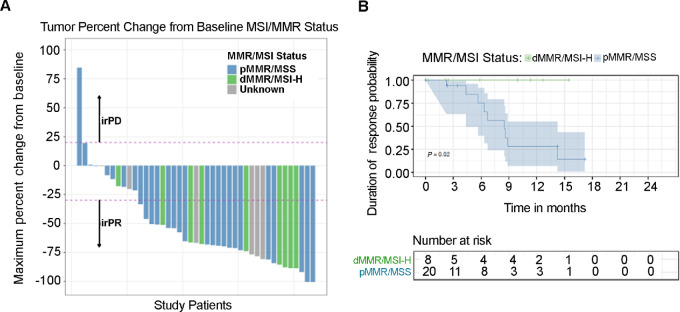
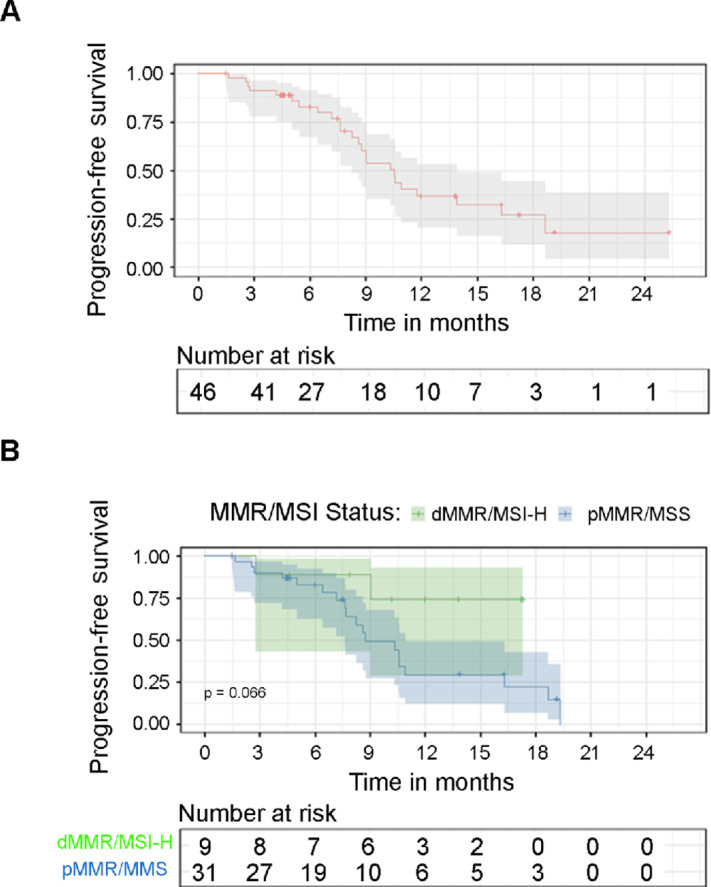
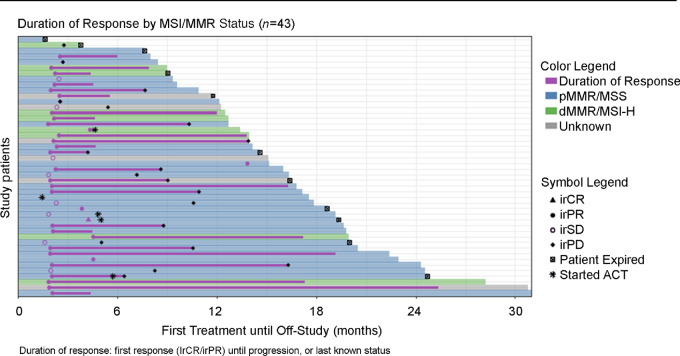
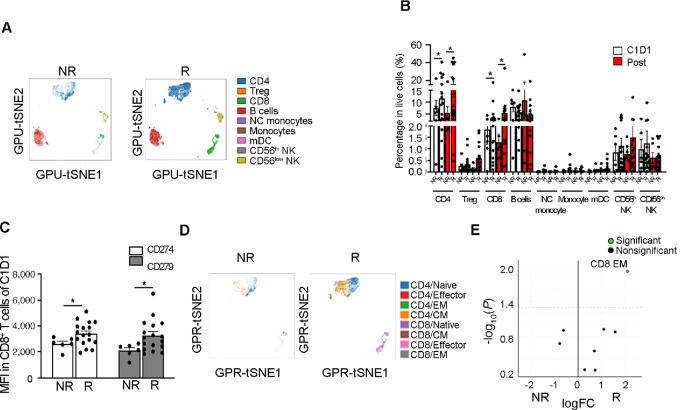
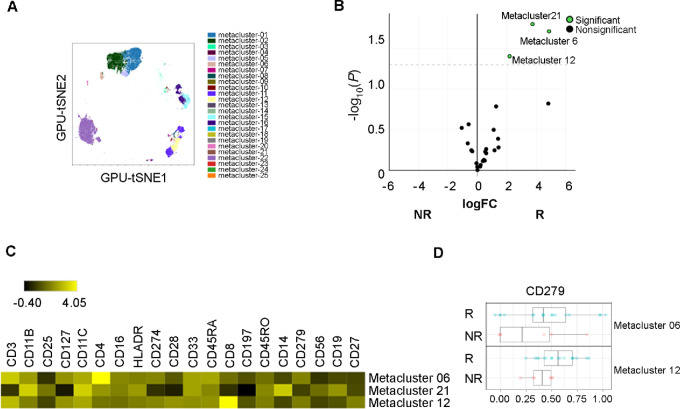
Purpose: The objective of this study was to assess the efficacy and safety of pembrolizumab in combination with standard carboplatin/paclitaxel in patients with advanced endometrial cancer. Patients and Methods: This single-arm, open-label, multicenter phase II study enrolled patients with RECIST measurable advanced endometrial cancer. Patients could have received ≤ 1 prior platinum-based regimen and ≤ one non-platinum chemotherapy. The primary endpoint was objective response rate (ORR). Planned sample size of 46 subjects provided 80% power to detect 15% ORR improvement compared with historical control rate of 50%. Results: A total of 46 patients were enrolled and 43 were evaluable for ORR. Median age was 66 (range: 43–86). Thirty-four (73.9%) patients had recurrent and 12 (26.1%) primary metastatic endometrial cancer. Patients received carboplatin AUC6, paclitaxel 175 mg/m2, and pembrolizumab 200 mg i.v. every 3 weeks for up to six cycles. ORR was 74.4% (32/43), higher than historic controls (P = 0.001). Median progression-free survival (PFS) was 10.6 months (95% confidence interval, 8.3–13.9 months). The most common grade 1–2 treatment-related adverse event (TRAE) included anemia (56.5%), alopecia (47.8%), fatigue (47.8%), and neuropathy (13%), while the most common grade 3–4 TRAEs were lymphopenia, leukopenia, and anemia (19.6% each). High-dimensional spectral flow cytometry (CyTEK) identified enrichment in peripheral CD8+ and CD4+ T-cell populations at baseline in responders. The CD8+ T-cell compartment in responders exhibited greater expression levels of PD-1 and PD-L1 and higher abundance of effector memory CD8+ cells compared with nonresponders. Conclusions: Addition of pembrolizumab to carboplatin and paclitaxel for advanced endometrial cancer was tolerated and improved ORR compared with historical outcomes. Significance: The results of the study support that the combination of pembrolizumab with carboplatin and paclitaxel is well tolerated and active in patients with advanced endometrial cancer. The duration of response and the PFS were significantly longer in patients with mismatch repair deficient/microsatellite instability-high compared with mismatch repair proficient/microsatellite stable tumors. Responders to treatment tend to have enriched CD8+ T-cell and CD4+ T-cell populations among peripheral blood mononuclear cells at baseline.
Overview
The claims and statistics of this paper haven’t been checked yet.
Free: it reads the open-access text and checks the first 5 claims that cite a source we can check. Create a free account to check every claim.
Integrity signals
Registry
Cites
Statistics
Figures
Verification
Claims the paper makes
The claims and statistics of this paper haven’t been checked yet.
Free: it reads the open-access text and checks the first 5 claims that cite a source we can check. Create a free account to check every claim.
Claims other papers make about this one
Each is checked against this paper’s own text: does it say what the citing paper says it does?
The source backs part of the claim, not all of it — or backs it for a different population, condition or comparison.
In the citing paper
“Notably, in patients with advanced endometrial cancer, the addition of pembrolizumab to carboplatin/paclitaxel was found to improve ORR and was well tolerated compared to the placebo/chemotherapy group (ORR: 74.4%; P = 0.001, and mPFS: 10.6 months) [108].”
From Advances in platinum-based cancer therapy: overcoming platinum resistance through rational combinatorial strategies (2025) · cites this paper as [108]
Experimental — accuracy not yet measured
Self-check
Percentages, sums and reported differences re-computed from the paper’s own numbers.
The self-check needs the paper’s full text.
Citations
Cites
Robinson, M. D., McCarthy, D. J., & Smyth, G. K. (2010) · Bioinformatics · doi:10.1093/bioinformatics/btp616 · Cited by 41,364
PD-1 and PD-L1 Immune Checkpoint Blockade to Treat Breast Cancer
Hartkopf, A. D., Taran, F.-A., Wallwiener, M., Walter, C. B., Krämer, B., Grischke, E.-M., & Brucker, S. Y. (2016) · Breast Care · doi:10.1159/000453569 · Cited by 30,845
Adverse Renal Effects of Immune Checkpoint Inhibitors: A Narrative Review
Wanchoo, R., Karam, S., Uppal, N. N., Barta, V. S., Deray, G., Devoe, C., Launay-Vacher, V., Jhaveri, K. D., & on behalf of Cancer and Kidney International Network Workgroup on Immune Checkpoint Inhibitors (2017) · American Journal of Nephrology · doi:10.1159/000455014 · Cited by 15,256
In silico prediction of protein-protein interactions in human macrophages
Souiai, O., Guerfali, F., Ben Miled, S., Brun, C., & Benkahla, A. (2014) · BMC Research Notes · doi:10.1186/1756-0500-7-157 · Cited by 10,803
Significance analysis of microarrays applied to the ionizing radiation response
Tusher, V. G., Tibshirani, R., & Chu, G. (2001) · Proceedings of the National Academy of Sciences · doi:10.1073/pnas.091062498 · Cited by 10,568
Safety and activity of anti-PD-L1 antibody in patients with advanced cancer
Brahmer, J. R., Tykodi, S. S., Chow, L. Q. M., Hwu, W.-J., Topalian, S. L., Hwu, P., Drake, C. G., Camacho, L. H., Kauh, J., Odunsi, K., et al. (2012) · New England Journal of Medicine · doi:10.1056/nejmoa1200694 · Cited by 7,945
Self-citationRahib, L., Smith, B. D., Aizenberg, R., Rosenzweig, A. B., Fleshman, J. M., & Matrisian, L. M. (2014) · Cancer Research · doi:10.1158/0008-5472.can-14-0155 · Cited by 7,094
Mismatch repair deficiency predicts response of solid tumors to PD-1 blockade
Le, D. T., Durham, J. N., Smith, K. N., Wang, H., Bartlett, B. R., Aulakh, L. K., Lu, S., Kemberling, H., Wilt, C., Luber, B. S., et al. (2017) · Science · doi:10.1126/science.aan6733 · Cited by 6,645 · cited 1×
“Pembrolizumab, a mAb that targets the programmed death receptor-1 (PD-1), is approved for treatment of solid tumors that are microsatellite unstable (MSI-H) or mismatch repair deficient (dMMR), independent of tumor site of origin (13, 14).”
BackgroundPD-1 blockade induces responses by inhibiting adaptive immune resistance
Tumeh, P. C., Harview, C. L., Yearley, J. H., Shintaku, I. P., Taylor, E. J. M., Robert, L., Chmielowski, B., Spasic, M., Henry, G., Ciobanu, V., et al. (2014) · Nature · doi:10.1038/nature13954 · Cited by 6,609 · cited 1×
“During cancer progression, this immune inhibitory pathway is activated when PD-1 ligands (PD-L1 and PD-L2) are upregulated on either tumor or immune cells in the tumor microenvironment (TME) and permits evasion from antitumor immune surveillance (11).”
BackgroundPembrolizumab plus chemotherapy in metastatic non–small-cell lung cancer
Gandhi, L., Rodríguez-Abreu, D., Gadgeel, S., Esteban, E., Felip, E., De Angelis, F., Domine, M., Clingan, P., Hochmair, M. J., Powell, S. F., et al. (2018) · New England Journal of Medicine · doi:10.1056/nejmoa1801005 · Cited by 6,607 · cited 2×
“Chemotherapy has been shown to be synergistic with immunotherapy in other tumor types (20, 21).”
BackgroundPembrolizumab versus Ipilimumab in Advanced Melanoma
Robert, C., Schachter, J., Long, G. V., Arance, A., Grob, J. J., Mortier, L., Daud, A., Carlino, M. S., McNeil, C., Lotem, M., et al. (2015) · New England Journal of Medicine · doi:10.1056/nejmoa1503093 · Cited by 5,887 · cited 1×
“PD-1–targeted therapy removes this block, allowing the immune system to attack and eliminate tumor cells (12).”
BackgroundIntegrated genomic characterization of endometrial carcinoma
The Cancer Genome Atlas Research Network, & Levine, D. A. (2013) · Nature · doi:10.1038/nature12113 · Cited by 5,784 · cited 1×
“Most patients with endometrial cancer have pMMR/MSS tumors (38).”
BackgroundPembrolizumab plus chemotherapy for squamous non-small-cell lung cancer
Paz-Ares, L., Luft, A., Vicente, D., Tafreshi, A., Gümüş, M., Mazières, J., Hermes, B., Çay Şenler, F., Csőszi, T., Fülöp, A., et al. (2018) · New England Journal of Medicine · doi:10.1056/nejmoa1810865 · Cited by 3,617 · cited 1×
“Chemotherapy has been shown to be synergistic with immunotherapy in other tumor types (20, 21).”
BackgroundMarabelle, A., Le, D. T., Ascierto, P. A., Di Giacomo, A. M., De Jesus-Acosta, A., Delord, J.-P., Geva, R., Gottfried, M., Penel, N., Hansen, A. R., et al. (2020) · Journal of Clinical Oncology · doi:10.1200/jco.19.02105 · Cited by 3,048
FlowSOM: Using self‐organizing maps for visualization and interpretation of cytometry data
Van Gassen, S., Callebaut, B., Van Helden, M. J., Lambrecht, B. N., Demeester, P., Dhaene, T., & Saeys, Y. (2015) · Cytometry Part A · doi:10.1002/cyto.a.22625 · Cited by 1,919
Ahmadzadeh, M., Johnson, L. A., Heemskerk, B., Wunderlich, J. R., Dudley, M. E., White, D. E., & Rosenberg, S. A. (2009) · Blood · doi:10.1182/blood-2008-12-195792 · Cited by 1,766
T-cell invigoration to tumour burden ratio associated with anti-PD-1 response
Huang, A. C., Postow, M. A., Orlowski, R. J., Mick, R., Bengsch, B., Manne, S., Xu, W., Harmon, S., Giles, J. R., Wenz, B., et al. (2017) · Nature · doi:10.1038/nature22079 · Cited by 1,664 · cited 2×
“Notably, we found higher levels of PD-1 and/or PD-L1 especially on peripheral CD8 TEMRA lacking costimulatory receptors CD27 and CD28 in responders than those in nonresponders, indicating these cells are potentially susceptible to reinvigoration by combined anti-anti-1/PD-L1 ICI treatment as these cells likely retain…”
BackgroundResultAmir, E.-A. D., Davis, K. L., Tadmor, M. D., Simonds, E. F., Levine, J. H., Bendall, S. C., Shenfeld, D. K., Krishnaswamy, S., Nolan, G. P., & Pe'er, D. (2013) · Nature Biotechnology · doi:10.1038/nbt.2594 · Cited by 1,550
Distinct cellular mechanisms underlie anti-CTLA-4 and anti-PD-1 checkpoint blockade
Wei, S. C., Levine, J. H., Cogdill, A. P., Zhao, Y., Anang, N.-A. A. S., Andrews, M. C., Sharma, P., Wang, J., Wargo, J. A., Pe’er, D., et al. (2017) · Cell · doi:10.1016/j.cell.2017.07.024 · Cited by 1,302
Gettinger, S. N., Horn, L., Gandhi, L., Spigel, D. R., Antonia, S. J., Rizvi, N. A., Powderly, J. D., Heist, R. S., Carvajal, R. D., Jackman, D. M., et al. (2015) · Journal of Clinical Oncology · doi:10.1200/jco.2014.58.3708 · Cited by 1,177
Gide, T. N., Quek, C., Menzies, A. M., Tasker, A. T., Shang, P., Holst, J., Madore, J., Lim, S. Y., Velickovic, R., Wongchenko, M., et al. (2019) · Cancer Cell · doi:10.1016/j.ccell.2019.01.003 · Cited by 1,047
Prospects for combining targeted and conventional cancer therapy with immunotherapy
Gotwals, P., Cameron, S., Cipolletta, D., Cremasco, V., Crystal, A., Hewes, B., Mueller, B., Quaratino, S., Sabatos-Peyton, C., Petruzzelli, L., et al. (2017) · Nature Reviews Cancer · doi:10.1038/nrc.2017.17 · Cited by 953
Kamphorst, A. O., Pillai, R. N., Yang, S., Nasti, T. H., Akondy, R. S., Wieland, A., Sica, G. L., Yu, K., Koenig, L., Patel, N. T., et al. (2017) · Proceedings of the National Academy of Sciences · doi:10.1073/pnas.1705327114 · Cited by 854 · cited 1×
“Notably, we found higher levels of PD-1 and/or PD-L1 especially on peripheral CD8 TEMRA lacking costimulatory receptors CD27 and CD28 in responders than those in nonresponders, indicating these cells are potentially susceptible to reinvigoration by combined anti-anti-1/PD-L1 ICI treatment as these cells likely retain…”
BackgroundShu, C. A., Gainor, J. F., Awad, M. M., Chiuzan, C., Grigg, C. M., Pabani, A., Garofano, R. F., Stoopler, M. B., Cheng, S. K., White, A., et al. (2020) · The Lancet Oncology · doi:10.1016/s1470-2045(20)30140-6 · Cited by 623 · cited 1×
“Thus, immunochemotherapy combinations have resulted in increased clinical efficacy in other malignancies, such as lung cancer (20, 25).”
BackgroundCurrent recommendations and recent progress in endometrial cancer
Brooks, R. A., Fleming, G. F., Lastra, R. R., Lee, N. K., Moroney, J. W., Son, C. H., Tatebe, K., & Veneris, J. L. (2019) · CA: A Cancer Journal for Clinicians · doi:10.3322/caac.21561 · Cited by 573
The Next Immune-Checkpoint Inhibitors: PD-1/PD-L1 Blockade in Melanoma
Mahoney, K. M., Freeman, G. J., & McDermott, D. F. (2015) · Clinical Therapeutics · doi:10.1016/j.clinthera.2015.02.018 · Cited by 571
Fleming, G. F., Brunetto, V. L., Cella, D., Look, K. Y., Reid, G. C., Munkarah, A. R., Kline, R., Burger, R. A., Goodman, A., & Burks, R. T. (2004) · Journal of Clinical Oncology · doi:10.1200/jco.2004.07.184 · Cited by 565
Nishino, M., Giobbie-Hurder, A., Gargano, M., Suda, M., Ramaiya, N. H., & Hodi, F. S. (2013) · Clinical Cancer Research · doi:10.1158/1078-0432.ccr-13-0895 · Cited by 522
Lenvatinib plus pembrolizumab in patients with advanced endometrial cancer
Makker, V., Taylor, M. H., Aghajanian, C., Oaknin, A., Mier, J., Cohn, A. L., Romeo, M., Bratos, R., Brose, M. S., DiSimone, C., et al. (2020) · Journal of Clinical Oncology · doi:10.1200/jco.19.02627 · Cited by 522 · cited 3×
“4% in pMMR/MSS tumors exceeded the response rate to carboplatin and paclitaxel alone (18); however, median DOR was only 8.”
BackgroundOtt, P. A., Bang, Y.-J., Berton-Rigaud, D., Elez, E., Pishvaian, M. J., Rugo, H. S., Puzanov, I., Mehnert, J. M., Aung, K. L., Lopez, J., et al. (2017) · Journal of Clinical Oncology · doi:10.1200/jco.2017.72.5952 · Cited by 506
Damage-associated molecular patterns in cancer: a double-edged sword
Hernandez, C., Huebener, P., & Schwabe, R. F. (2016) · Oncogene · doi:10.1038/onc.2016.104 · Cited by 480
Makker, V., Rasco, D., Vogelzang, N. J., Brose, M. S., Cohn, A. L., Mier, J., Di Simone, C., Hyman, D. M., Stepan, D. E., Dutcus, C. E., et al. (2019) · The Lancet Oncology · doi:10.1016/s1470-2045(19)30020-8 · Cited by 476 · cited 1×
“The combination of pembrolizumab and lenvatinib was recently approved for the treatment of recurrentMSS uterine cancer, based on favorable progression-free and overall survival (PFS andOS) inKEYNOTE-775 trial comparedwith physician’s choice chemotherapy (18, 19).”
BackgroundMoore, K. N., Bookman, M., Sehouli, J., Miller, A., Anderson, C., Scambia, G., Myers, T., Taskiran, C., Robison, K., Mäenpää, J., et al. (2021) · Journal of Clinical Oncology · doi:10.1200/jco.21.00306 · Cited by 414
Miller, D. S., Filiaci, V. L., Mannel, R. S., Cohn, D. E., Matsumoto, T., Tewari, K. S., DiSilvestro, P., Pearl, M. L., Argenta, P. A., Powell, M. A., et al. (2020) · Journal of Clinical Oncology · doi:10.1200/jco.20.01076 · Cited by 351
Fader, A. N., Roque, D. M., Siegel, E., Buza, N., Hui, P., Abdelghany, O., Chambers, S., Secord, A. A., Havrilesky, L., O'Malley, D. M., et al. (2020) · Clinical Cancer Research · doi:10.1158/1078-0432.ccr-20-0953 · Cited by 314
CD4+ T-cell Immunity in the Peripheral Blood Correlates with Response to Anti-PD-1 Therapy
Kagamu, H., Kitano, S., Yamaguchi, O., Yoshimura, K., Horimoto, K., Kitazawa, M., Fukui, K., Shiono, A., Mouri, A., Nishihara, F., et al. (2020) · Cancer Immunology Research · doi:10.1158/2326-6066.cir-19-0574 · Cited by 256 · cited 1×
“In non–small cell lung cancer (NSCLC), malignant pleural mesothelioma (45) and melanoma (46), EM-like CD4 T cells (47) and/or CD8 TEMRA at baseline were associated with response to ICI.”
BackgroundKansy, B. A., Concha-Benavente, F., Srivastava, R. M., Jie, H.-B., Shayan, G., Lei, Y., Moskovitz, J., Moy, J., Li, J., Brandau, S., et al. (2017) · Cancer Research · doi:10.1158/0008-5472.can-16-3167 · Cited by 246
Uterine Cancer Incidence and Mortality — United States, 1999–2016
Henley, S. J., Miller, J. W., Dowling, N. F., Benard, V. B., & Richardson, L. C. (2018) · MMWR. Morbidity and Mortality Weekly Report · doi:10.15585/mmwr.mm6748a1 · Cited by 246
Konstantinopoulos, P. A., Luo, W., Liu, J. F., Gulhan, D. C., Krasner, C., Ishizuka, J. J., Gockley, A. A., Buss, M., Growdon, W. B., Crowe, H., et al. (2019) · Journal of Clinical Oncology · doi:10.1200/jco.19.01021 · Cited by 224
Constantine, G. D., Kessler, G., Graham, S., & Goldstein, S. R. (2019) · Journal of Women's Health · doi:10.1089/jwh.2018.6956 · Cited by 162
Solari, J. I. G., Filippi‐Chiela, E. C., Pilar, E. F. S., Nunes, V. B. D. S., Gonzalez, E. A., Figueiró, F., Andrade, C., & Klamt, F. (2020) · BMC Cancer · doi:10.1186/s12885-020-06964-5 · Cited by 148
Clinical Utility of Prospective Molecular Characterization in Advanced Endometrial Cancer
Soumerai, T. E., Donoghue, M. T. A., Bandlamudi, C., Srinivasan, P., Chang, M. T., Zamarin, D., Cadoo, K. A., Grisham, R. N., O'Cearbhaill, R. E., Tew, W. P., et al. (2018) · Clinical Cancer Research · doi:10.1158/1078-0432.ccr-18-0412 · Cited by 145
Mazzaschi, G., Facchinetti, F., Missale, G., Canetti, D., Madeddu, D., Zecca, A., Veneziani, M., Gelsomino, F., Goldoni, M., Buti, S., et al. (2018) · Lung Cancer · doi:10.1016/j.lungcan.2018.11.038 · Cited by 135
Immunotherapy in endometrial cancer: rationale, practice and perspectives
Cao, W., Ma, X., Fischer, J. V., Sun, C., Kong, B., & Zhang, Q. H. (2021) · Biomarker Research · doi:10.1186/s40364-021-00301-z · Cited by 112
Adaptation of the Immune Related Response Criteria: Irrecist
Bohnsack, O., Hoos, A., & Ludajic, K. (2014) · Annals of Oncology · doi:10.1093/annonc/mdu342.23 · Cited by 95
Nagao, S., Nishio, S., Michimae, H., Tanabe, H., Okada, S., Otsuki, T., Tanioka, M., Fujiwara, K., Suzuki, M., & Kigawa, J. (2013) · Gynecologic Oncology · doi:10.1016/j.ygyno.2013.09.021 · Cited by 85
Antill, Y. C., Kok, P., Robledo, K. P., Barnes, E. H., Friedlander, M. L., Baron-Hay, S. E., Shannon, C., Coward, J. I. G., Beale, P. J., Goss, G., et al. (2019) · Journal of Clinical Oncology · doi:10.1200/jco.2019.37.15_suppl.5501 · Cited by 62
Kunert, A., Basak, E. A., Hurkmans, D. P., Balcioglu, H. E., Klaver, Y., van Brakel, M., Oostvogels, A. A. M., Lamers, C. H. J., Bins, S., Koolen, S. L. W., et al. (2019) · Journal for ImmunoTherapy of Cancer · doi:10.1186/s40425-019-0608-y · Cited by 59
Kim, J., Kim, S., Lee, H. S., Yang, W., Cho, H., Chay, D. B., Cho, S. J., Hong, S., & Kim, J. (2018) · Gynecologic Oncology · doi:10.1016/j.ygyno.2018.02.013 · Cited by 54
Oaknin, A., Duska, L., Sullivan, R. J., Pothuri, B., Ellard, S. L., Leath, C. A., Moreno, V., Kristeleit, R. S., Guo, W., Danaee, H., et al. (2019) · Gynecologic Oncology · doi:10.1016/j.ygyno.2019.04.044 · Cited by 49
Mankor, J. M., Disselhorst, M. J., Poncin, M., Baas, P., Aerts, J. G. J. V., & Vroman, H. (2020) · eBioMedicine · doi:10.1016/j.ebiom.2020.103040 · Cited by 45 · cited 1×
“In non–small cell lung cancer (NSCLC), malignant pleural mesothelioma (45) and melanoma (46), EM-like CD4 T cells (47) and/or CD8 TEMRA at baseline were associated with response to ICI.”
BackgroundImmunotherapy in ovarian cancer: we are not there yet
Barber, E. L., & Matei, D. E. (2021) · The Lancet Oncology · doi:10.1016/s1470-2045(21)00303-x · Cited by 26
Self-citation
Cited by
Yusoh, N. A., Ahmad, H., Vallis, K. A., & Gill, M. R. (2025) · Medical Oncology · doi:10.1007/s12032-025-02812-3 · Cited by 40
“Notably, in patients with advanced endometrial cancer, the addition of pembrolizumab to carboplatin/paclitaxel was found to improve ORR and was well tolerated compared to the placebo/chemotherapy group (ORR: 74.4%; P = 0.001, and mPFS: 10.6 months) [108].”
InfluentialFull spectrum flow cytometry in the clinical laboratory
Brestoff, J. R. (2023) · International Journal of Laboratory Hematology · doi:10.1111/ijlh.14098 · Cited by 36
Bian, X., Sun, C., Cheng, J., & Hong, B. (2023) · Pharmaceutics · doi:10.3390/pharmaceutics15092241 · Cited by 20
Davis, J. M., Rushton, T., Nsiah, F., Stone, R. L., Beavis, A., Gaillard, S. L., Dobi, A., & Fader, A. N. (2024) · Gynecologic Oncology Reports · doi:10.1016/j.gore.2024.101380 · Cited by 10
Kaya, M., Schaddelee, M. P., Creutzberg, C. L., Kroep, J. R., & Horeweg, N. (2025) · International Journal of Gynecological Cancer · doi:10.1016/j.ijgc.2025.101759 · Cited by 9
Metadata
- Authors
- Barber, E. L., Chen, S., Pineda, M. J., Robertson, S. E., Hill, E. K., Teoh, D., Schilder, J., O'Shea, K. L., Kocherginsky, M., Zhang, B., & Matei, D.
- Affiliations
- Northwestern University (US)
- 4Ironwood Cancer and Research Centers, Gilbert, Arizona.
- Indiana University Indianapolis (US)
- University of Iowa Hospitals and Clinics (US)
- University of Minnesota (US)
- 8Department of Preventive Medicine, Northwestern University, Chicago, Illinois.
- Corresponding author
- Zhang, Bin
- Matei, Daniela
- ORCID
- Venue
- Cancer Research Communications
- Published
- 2022-10-28
- Volume
- 2
- Issue
- 10
- Pages
- 1293-1303
- ISSN
- 2767-9764 (ISSN-L)
- PMC
- PMC9648489
- OpenAlex
- W4293010058
- Cited by
- 9
- References
- 52
- Citations by year
- 2025: 4 · 2024: 2 · 2023: 3
- FWCI
- 2.27
- Type
- journal article
- Language
- en
- Open access
- gold
- doi.org
- Licence
- Locations
- Cancer Research Communications (publishedVersion, cc-by)
- PubMed Central (publishedVersion, cc-by)
- PubMed (publishedVersion)
- IUScholarWorks (Indiana University) (submittedVersion, cc-by)
- Funders
- HHS | National Institutes of Health (K12 HD050121)
- HHS | NIH | National Cancer Institute (CA208354, CA222963, CA250101)
- Big Ten Research Consortium
- GOG Foundation
- Topics
- Health Sciences › Medicine › Obstetrics and Gynecology › Endometrial and Cervical Cancer Treatments
- Health Sciences › Medicine › Oncology › Ovarian cancer diagnosis and treatment
- Health Sciences › Medicine › Oncology › Cancer Immunotherapy and Biomarkers
- Keywords
- endometrial adenocarcinoma, pembrolizumab, chemoimmunotherapy, carboplatin, paclitaxel, PD-1 inhibitors, objective response rate, progression-free survival, CD8+ T cells, PD-L1 expression, PD-1, treatment-related adverse events, immunotherapy biomarkers, recurrent endometrial cancer, metastatic endometrial cancer
- MeSH terms
- Adenocarcinoma, Aged, Antineoplastic Combined Chemotherapy Protocols, Carcinoma, Female, Humans, Lung Neoplasms, Carboplatin, Endometrial Neoplasms, Paclitaxel
About these checks
Registry, retraction, Cites and statistics results are computed, not judged, with one exception: a printed reference that no index lists is read once by a model before it counts as a citation error. Claims are extracted by a model and kept only when their quote appears verbatim in the text; each cited source is then checked, with a model’s help, for whether it says what the claim relies on. Those verdicts can be wrong — read the claim’s quote and the cited source before relying on one.
Statistics and arithmetic are recomputed, not judged.
Confidence bands are shown only for fields calibrated on our annotated test set. None is calibrated yet, so no band is shown.
What counts as a claim ›How we measure confidence ›How we check this ›
Are you an author, or do you see a problem with this page? Request a review
Data sources
Bibliographic data: Semantic Scholar, OpenAlex, Crossref.
Contains information from the Semantic Scholar Academic Graph Datasets, made available under the ODC Attribution License (ODC-BY 1.0).
Semantic Scholar’s data is described in: Kinney, R., et al. (2023). The Semantic Scholar Open Data Platform. arXiv:2301.10140.
