

Long-Lasting Response to Lorlatinib in Patients with ALK-Driven Relapsed or Refractory Neuroblastoma Monitored with Circulating Tumor DNA Analysis
Open accessPublished version of a preprint
The DOI matches its Crossref record; 47 of the 47 references it cites were found in a registry or an index.
Abstract
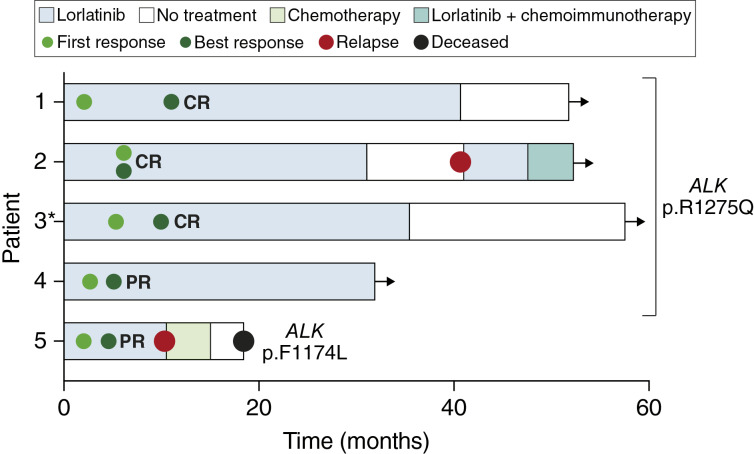
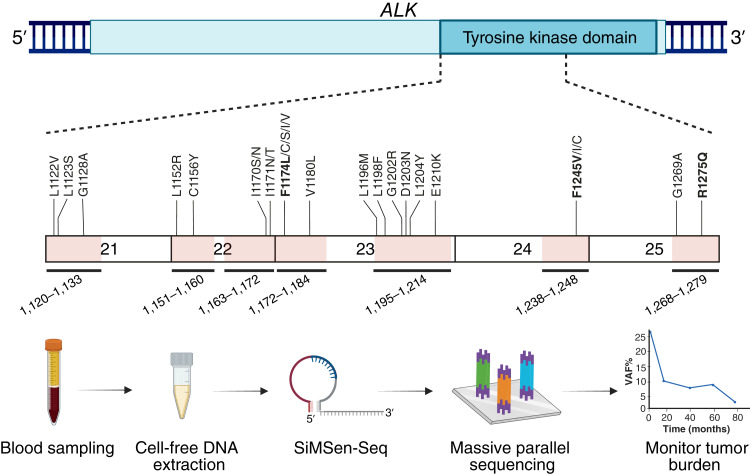
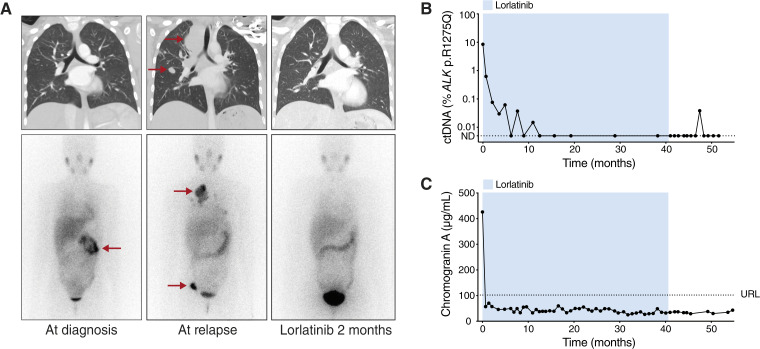
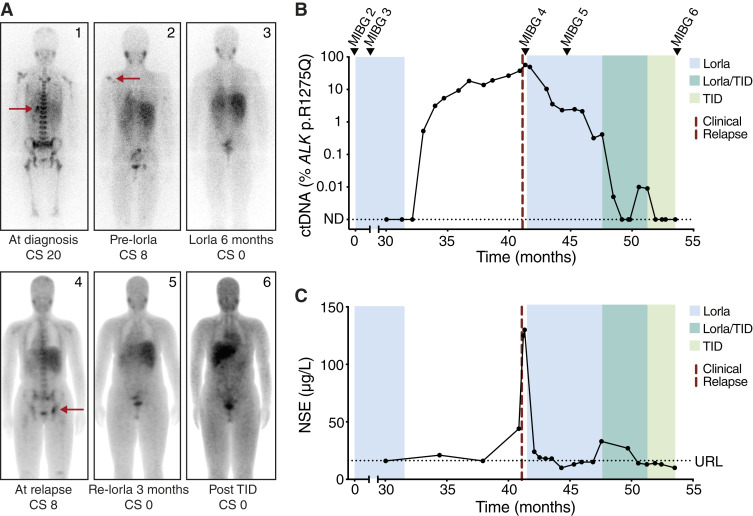
Patients with anaplastic lymphoma kinase (ALK)–driven neuroblastoma may respond to tyrosine kinase inhibitors, but resistance to treatment occurs and methods currently used for detection of residual disease have limited sensitivity. Here, we present a national unselected cohort of five patients with relapsed or refractory ALK-driven neuroblastoma treated with lorlatinib as monotherapy and test the potential of targeted circulating tumor DNA (ctDNA) analysis as a guide for treatment decisions in these patients. We developed a sequencing panel for ultrasensitive detection of ALK mutations associated with neuroblastoma or resistance to tyrosine kinase inhibitors and used it for ctDNA analysis in 83 plasma samples collected longitudinally from the four patients who harbored somatic ALK mutations. All four patients with ALK p.R1275Q experienced major responses and were alive 35 to 61 months after starting lorlatinib. A fifth patient with ALK p.F1174L initially had a partial response but relapsed after 10 months of treatment. In all cases, ctDNA was detected at the start of lorlatinib single-agent treatment and declined gradually, correlating with clinical responses. In the two patients exhibiting relapse, ctDNA increased 9 and 3 months, respectively, before clinical detection of disease progression. In one patient harboring HRAS p.Q61L in the relapsed tumor, retrospective ctDNA analysis showed that the mutation appeared de novo after 8 months of lorlatinib treatment. We conclude that some patients with relapsed or refractory high-risk neuroblastoma show durable responses to lorlatinib as monotherapy, and targeted ctDNA analysis is effective for evaluation of treatment and early detection of relapse in ALK-driven neuroblastoma. Significance: We present five patients with ALK-driven relapsed or refractory neuroblastoma treated with lorlatinib as monotherapy. All patients responded to treatment, and four of them were alive after 3 to 5 years of follow-up. We performed longitudinal ctDNA analysis with ultra-deep sequencing of the ALK tyrosine kinase domain. We conclude that ctDNA analysis may guide treatment decisions in ALK-driven neuroblastoma, also when the disease is undetectable using standard clinical methods.
Overview
The claims and statistics of this paper haven’t been checked yet.
Free: it reads the open-access text and checks the first 5 claims that cite a source we can check. Create a free account to check every claim.
Integrity signals
Registry
Cites
Statistics
Figures
Verification
Claims the paper makes
The claims and statistics of this paper haven’t been checked yet.
Free: it reads the open-access text and checks the first 5 claims that cite a source we can check. Create a free account to check every claim.
Claims other papers make about this one
Each is checked against this paper’s own text: does it say what the citing paper says it does?
The source backs part of the claim, not all of it — or backs it for a different population, condition or comparison.
In the citing paper
“Multiple studies in small cohorts of patients with pediatric solid tumors, including rhabdomyosarcoma, NBL, EWS, and OS, have similarly shown associations between ctDNA burden and response to neoadjuvant therapy and disease relapse and recurrence.19,27,28”
From Clinical Liquid Biopsy Testing for Detection of Actionable Genomic Alterations in Children and Young Adults With Advanced Solid Tumors on the GAIN Study (2026) · cites this paper as [28]
Experimental — accuracy not yet measured
Self-check
Percentages, sums and reported differences re-computed from the paper’s own numbers.
The self-check needs the paper’s full text.
Citations
Cites
Childhood and adolescent cancer statistics, 2014
Ward, E., DeSantis, C., Robbins, A., Kohler, B., & Jemal, A. (2014) · CA: A Cancer Journal for Clinicians · doi:10.3322/caac.21219 · Cited by 2,412 · cited 1×
“Neuroblastoma is a heterogeneous disease that accounts for 7% of all childhood malignancies (1).”
BackgroundMatthay, K. K., Maris, J. M., Schleiermacher, G., Nakagawara, A., Mackall, C. L., Diller, L., & Weiss, W. A. (2016) · Nature Reviews Disease Primers · doi:10.1038/nrdp.2016.78 · Cited by 1,419
Identification of ALK as a major familial neuroblastoma predisposition gene
Mossé, Y. P., Laudenslager, M., Longo, L., Cole, K. A., Wood, A., Attiyeh, E. F., Laquaglia, M. J., Sennett, R., Lynch, J. E., Perri, P., et al. (2008) · Nature · doi:10.1038/nature07261 · Cited by 1,407 · cited 1×
“Mutations in the anaplastic lymphoma kinase ( ALK ) receptor tyrosine kinase occur in ∼ 10% of the cases at primary diagnosis, most commonly at positions F1174, F1245, or R1275 within the tyrosine kinase domain (6–10).”
BackgroundOncogenic mutations of ALK kinase in neuroblastoma
Chen, Y., Takita, J., Choi, Y. L., Kato, M., Ohira, M., Sanada, M., Wang, L., Soda, M., Kikuchi, A., Igarashi, T., et al. (2008) · Nature · doi:10.1038/nature07399 · Cited by 916
Somatic and germline activating mutations of the ALK kinase receptor in neuroblastoma
Janoueix-Lerosey, I., Lequin, D., Brugières, L., Ribeiro, A., de Pontual, L., Combaret, V., Raynal, V., Puisieux, A., Schleiermacher, G., Pierron, G., et al. (2008) · Nature · doi:10.1038/nature07398 · Cited by 894
Activating mutations in ALK provide a therapeutic target in neuroblastoma
George, R. E., Sanda, T., Hanna, M., Fröhling, S., II, W. L., Zhang, J., Ahn, Y., Zhou, W., London, W. B., McGrady, P., et al. (2008) · Nature · doi:10.1038/nature07397 · Cited by 893
Mossé, Y. P., Lim, M. S., Voss, S. D., Wilner, K., Ruffner, K., Laliberte, J., Rolland, D., Balis, F. M., Maris, J. M., Weigel, B. J., et al. (2013) · The Lancet Oncology · doi:10.1016/s1470-2045(13)70095-0 · Cited by 712 · cited 3×
“ALK TKIs have emerged as promising targeted therapy in ALK-driven neuroblastoma, although primary or acquired resistance to treatment occur frequently (13, 18–20, 24, 39, 40).”
BackgroundRelapsed neuroblastomas show frequent RAS-MAPK pathway mutations
Eleveld, T. F., Oldridge, D. A., Bernard, V., Koster, J., Daage, L. C., Diskin, S. J., Schild, L., Bentahar, N. B., Bellini, A., Chicard, M., et al. (2015) · Nature Genetics · doi:10.1038/ng.3333 · Cited by 540 · cited 1×
“Genetic alterations of ALK are associated with unfavorable prognosis when present at diagnosis and are identified in 20% to 43% of patients with relapsed or refractory neuroblastoma (11–17).”
BackgroundPark, J. R., Bagatell, R., Cohn, S. L., Pearson, A. D., Villablanca, J. G., Berthold, F., Burchill, S., Boubaker, A., McHugh, K., Nuchtern, J. G., et al. (2017) · Journal of Clinical Oncology · doi:10.1200/jco.2016.72.0177 · Cited by 365 · cited 1×
“Complete response was defined according to the revised International Neuro-blastoma Response Criteria (31).”
MethodLadenstein, R., Pötschger, U., Pearson, A. D. J., Brock, P., Luksch, R., Castel, V., Yaniv, I., Papadakis, V., Laureys, G., Malis, J., et al. (2017) · The Lancet Oncology · doi:10.1016/s1470-2045(17)30070-0 · Cited by 350 · cited 1×
“Risk-based intensified multimodal treatments have improved survival, but clinical outcome is still unsatisfactory in children with high-risk disease, and effective targeted therapy may be necessary to further improve clinical outcome (4, 5).”
BackgroundSelf-citationSystematic evaluation of error rates and causes in short samples in next-generation sequencing
Pfeiffer, F., Gröber, C., Blank, M., Händler, K., Beyer, M., Schultze, J. L., & Mayer, G. (2018) · Scientific Reports · doi:10.1038/s41598-018-29325-6 · Cited by 336
Sources of PCR-induced distortions in high-throughput sequencing data sets
Kebschull, J. M., & Zador, A. M. (2015) · Nucleic Acids Research · doi:10.1093/nar/gkv717 · Cited by 299
Carén, H., Abel, F., Kogner, P., & Martinsson, T. (2008) · Biochemical Journal · doi:10.1042/bj20081834 · Cited by 280 · cited 1×
“Mutations in the anaplastic lymphoma kinase ( ALK ) receptor tyrosine kinase occur in ∼ 10% of the cases at primary diagnosis, most commonly at positions F1174, F1245, or R1275 within the tyrosine kinase domain (6–10).”
BackgroundSelf-citationCarén, H., Kryh, H., Nethander, M., Sjöberg, R.-M., Träger, C., Nilsson, S., Abrahamsson, J., Kogner, P., & Martinsson, T. (2010) · Proceedings of the National Academy of Sciences · doi:10.1073/pnas.0910684107 · Cited by 232 · cited 1×
“Tumors are characterized by risk-defining structural genetic alterations, such as amplification of MYCN and chromosomal copy number gains or losses (2, 3).”
BackgroundSelf-citationEmergence of New ALK Mutations at Relapse of Neuroblastoma
Schleiermacher, G., Javanmardi, N., Bernard, V., Leroy, Q., Cappo, J., Rio Frio, T., Pierron, G., Lapouble, E., Combaret, V., Speleman, F., et al. (2014) · Journal of Clinical Oncology · doi:10.1200/jco.2013.54.0674 · Cited by 215 · cited 1×
“ALK TKIs have emerged as promising targeted therapy in ALK-driven neuroblastoma, although primary or acquired resistance to treatment occur frequently (13, 18–20, 24, 39, 40).”
BackgroundSelf-citationInfarinato, N. R., Park, J. H., Krytska, K., Ryles, H. T., Sano, R., Szigety, K. M., Li, Y., Zou, H. Y., Lee, N. V., Smeal, T., et al. (2016) · Cancer Discovery · doi:10.1158/2159-8290.cd-15-1056 · Cited by 183
London, W. B., Bagatell, R., Weigel, B. J., Fox, E., Guo, D., Van Ryn, C., Naranjo, A., & Park, J. R. (2017) · Cancer · doi:10.1002/cncr.30934 · Cited by 175 · cited 1×
“These responses are notable compared with previous reports that show a median progression-free survival of 2 to 6 months and a median overall survival of 16 months in patients with relapsed or refractory neuroblastoma (41, 42).”
Goldsmith, K. C., Park, J. R., Kayser, K., Malvar, J., Chi, Y., Groshen, S. G., Villablanca, J. G., Krytska, K., Lai, L. M., Acharya, P. T., et al. (2023) · Nature Medicine · doi:10.1038/s41591-023-02297-5 · Cited by 163 · cited 5×
“ALK TKIs have emerged as promising targeted therapy in ALK-driven neuroblastoma, although primary or acquired resistance to treatment occur frequently (13, 18–20, 24, 39, 40).”
BackgroundInfluentialChicard, M., Colmet-Daage, L., Clement, N., Danzon, A., Bohec, M., Bernard, V., Baulande, S., Bellini, A., Deveau, P., Pierron, G., et al. (2018) · Clinical Cancer Research · doi:10.1158/1078-0432.ccr-17-1586 · Cited by 148 · cited 2×
“Previous studies have utilized whole-exome sequencing or broad NGS panels for ctDNA analysis in patients with neuroblastoma, which was focused on determining disease mechanisms rather than monitoring tumor burden (25, 29, 30).”
BackgroundStåhlberg, A., Krzyzanowski, P. M., Egyud, M., Filges, S., Stein, L. D., & Godfrey, T. E. (2017) · Nature Protocols · doi:10.1038/nprot.2017.006 · Cited by 140 · cited 3×
“The SiMSen-seq assays were tested as singleplex and as multiplex reactions, as described previously (34).”
BackgroundMethodInfluentialSelf-citationEnrichment of Targetable Mutations in the Relapsed Neuroblastoma Genome
Padovan-Merhar, O. M., Raman, P., Ostrovnaya, I., Kalletla, K., Rubnitz, K. R., Sanford, E. M., Ali, S. M., Miller, V. A., Mossé, Y. P., Granger, M. P., et al. (2016) · PLOS Genetics · doi:10.1371/journal.pgen.1006501 · Cited by 135
Foster, J. H., Voss, S. D., Hall, D. C., Minard, C. G., Balis, F. M., Wilner, K. D., Berg, S. L., Fox, E., Adamson, P. C., Blaney, S. M., et al. (2021) · Clinical Cancer Research · doi:10.1158/1078-0432.ccr-20-4224 · Cited by 132 · cited 2×
“ALK TKIs have emerged as promising targeted therapy in ALK-driven neuroblastoma, although primary or acquired resistance to treatment occur frequently (13, 18–20, 24, 39, 40).”
BackgroundResultConsiderations and quality controls when analyzing cell-free tumor DNA
Johansson, G., Andersson, D., Filges, S., Li, J., Muth, A., Godfrey, T. E., & Ståhlberg, A. (2019) · Biomolecular Detection and Quantification · doi:10.1016/j.bdq.2018.12.003 · Cited by 121 · cited 1×
“…using Vivacon 500 centrifugal units with a 30 kDa molecular weight cutoff (Sartorius) to a final volume of 10 to 14 µ L. Inhibition test was done using a 74-bp PDGFRA quantitative PCR assay, with Roche Human Genomic DNA (Sigma-Aldrich) as the positive control, as described previously (33).”
MethodSelf-citationChicard, M., Boyault, S., Colmet Daage, L., Richer, W., Gentien, D., Pierron, G., Lapouble, E., Bellini, A., Clement, N., Iacono, I., et al. (2016) · Clinical Cancer Research · doi:10.1158/1078-0432.ccr-16-0500 · Cited by 113 · cited 1×
“Circulating tumor DNA (ctDNA) has proved useful for investigating the evolution of tumor heterogeneity and therapy resistance in neuroblastoma (25, 28–30).”
BackgroundMosse, Y. P., Diskin, S. J., Wasserman, N., Rinaldi, K., Attiyeh, E. F., Cole, K., Jagannathan, J., Bhambhani, K., Winter, C., & Maris, J. M. (2007) · Genes, Chromosomes and Cancer · doi:10.1002/gcc.20477 · Cited by 110 · cited 1×
“Tumors are characterized by risk-defining structural genetic alterations, such as amplification of MYCN and chromosomal copy number gains or losses (2, 3).”
BackgroundFischer, M., Moreno, L., Ziegler, D. S., Marshall, L. V., Zwaan, C. M., Irwin, M. S., Casanova, M., Sábado, C., Wulff, B., Stegert, M., et al. (2021) · The Lancet Oncology · doi:10.1016/s1470-2045(21)00536-2 · Cited by 106 · cited 2×
“Patients with ALK p.R1275Q have shown a trend toward better response to the first-and second-generation ALK inhibitors ceritinib and crizotinib compared with those with other ALK mutations (19, 39).”
BackgroundResultMoreno, L., Rubie, H., Varo, A., Deley, M. L., Amoroso, L., Chevance, A., Garaventa, A., Gambart, M., Bautista, F. J., Valteau‐Couanet, D., et al. (2016) · Pediatric Blood & Cancer · doi:10.1002/pbc.26192 · Cited by 100 · cited 1×
“These responses are notable compared with previous reports that show a median progression-free survival of 2 to 6 months and a median overall survival of 16 months in patients with relapsed or refractory neuroblastoma (41, 42).”
Guan, J., Tucker, E. R., Wan, H., Chand, D., Danielson, L. S., Ruuth, K., Wakil, A. E., Witek, B., Jamin, Y., Umapathy, G., et al. (2016) · Disease Models & Mechanisms · doi:10.1242/dmm.024448 · Cited by 94 · cited 1×
“On the other hand, the third-generation ALK TKI lorlatinib is highly effective against a wide range of ALK mutant variants expressed in neuroblastoma (21–23).”
BackgroundSelf-citationBellini, A., Pötschger, U., Bernard, V., Lapouble, E., Baulande, S., Ambros, P. F., Auger, N., Beiske, K., Bernkopf, M., Betts, D. R., et al. (2021) · Journal of Clinical Oncology · doi:10.1200/jco.21.00086 · Cited by 91 · cited 1×
“Genetic alterations of ALK are associated with unfavorable prognosis when present at diagnosis and are identified in 20% to 43% of patients with relapsed or refractory neuroblastoma (11–17).”
BackgroundSelf-citationGenomic ALK alterations in primary and relapsed neuroblastoma
Rosswog, C., Fassunke, J., Ernst, A., Schömig‐Markiefka, B., Merkelbach‐Bruse, S., Bartenhagen, C., Cartolano, M., Ackermann, S., Theißen, J., Blattner-Johnson, M., et al. (2023) · British Journal of Cancer · doi:10.1038/s41416-023-02208-y · Cited by 84
EML4‐ALK biology and drug resistance in non‐small cell lung cancer: a new phase of discoveries
Elshatlawy, M., Sampson, J., Clarke, K., & Bayliss, R. W. (2023) · Molecular Oncology · doi:10.1002/1878-0261.13446 · Cited by 79
Targeting anaplastic lymphoma kinase in neuroblastoma
Umapathy, G., Mendoza-García, P., Hallberg, B., & Palmer, R. H. (2019) · Apmis · doi:10.1111/apm.12940 · Cited by 76
Self-citationSources of PCR-induced distortions in high-throughput sequencing datasetsPreprint
Kebschull, J. M., & Zador, A. M. (2014) · bioRxiv (Cold Spring Harbor Laboratory) · doi:10.1101/008375 · Cited by 67
Tumour markers are poor predictors for relapse or progression in neuroblastoma
Simon, T., Hero, B., HUNNEMAN, D. H., & Berthold, F. (2003) · European Journal of Cancer · doi:10.1016/s0959-8049(03)00376-9 · Cited by 63 · cited 1×
“Cate-cholamine metabolites in urine and blood and neuron-specific enolase (NSE) and chromogranin A in blood are frequently used for diagnosis and monitoring but have limited sensitivity for detection of relapse (27).”
BackgroundBerlak, M., Tucker, E., Dorel, M., Winkler, A., McGearey, A., Rodriguez-Fos, E., da Costa, B. M., Barker, K., Fyle, E., Calton, E., et al. (2022) · Molecular Cancer · doi:10.1186/s12943-022-01583-z · Cited by 62 · cited 1×
“Alternatively, mutation that was previously shown to cause resistance to lorlatinib (46).”
BackgroundBerko, E. R., Witek, G. M., Matkar, S., Petrova, Z. O., Wu, M. A., Smith, C. M., Daniels, A., Kalna, J., Kennedy, A., Gostuski, I., et al. (2023) · Nature Communications · doi:10.1038/s41467-023-38195-0 · Cited by 53 · cited 4×
“Previous studies have utilized whole-exome sequencing or broad NGS panels for ctDNA analysis in patients with neuroblastoma, which was focused on determining disease mechanisms rather than monitoring tumor burden (25, 29, 30).”
BackgroundInfluentialLodrini, M., Graef, J., Thole-Kliesch, T. M., Astrahantseff, K., Sprüssel, A., Grimaldi, M., Peitz, C., Linke, R. B., Hollander, J. F., Lankes, E., et al. (2022) · Clinical Cancer Research · doi:10.1158/1078-0432.ccr-21-3716 · Cited by 51
Bosse, K. R., Giudice, A. M., Lane, M. V., McIntyre, B., Schürch, P. M., Pascual-Pasto, G., Buongervino, S. N., Suresh, S., Fitzsimmons, A., Hyman, A., et al. (2022) · Cancer Discovery · doi:10.1158/2159-8290.cd-22-0287 · Cited by 51 · cited 1×
“Previous studies have utilized whole-exome sequencing or broad NGS panels for ctDNA analysis in patients with neuroblastoma, which was focused on determining disease mechanisms rather than monitoring tumor burden (25, 29, 30).”
Guan, J., Fransson, S. M., Siaw, J. T., Treis, D., den Eynden, J. V., Chand, D., Umapathy, G., Ruuth, K., Svenberg, P., Wessman, S., et al. (2018) · Molecular Case Studies · doi:10.1101/mcs.a002550 · Cited by 49 · cited 2×
“ALK TKIs have emerged as promising targeted therapy in ALK-driven neuroblastoma, although primary or acquired resistance to treatment occur frequently (13, 18–20, 24, 39, 40).”
BackgroundSelf-citationLiu, T., Merguerian, M., Rowe, S. P., Pratilas, C. A., Chen, A. R., & Ladle, B. H. (2021) · Molecular Case Studies · doi:10.1101/mcs.a006064 · Cited by 35 · cited 1×
“On the other hand, the third-generation ALK TKI lorlatinib is highly effective against a wide range of ALK mutant variants expressed in neuroblastoma (21–23).”
BackgroundÖsterlund, T., Filges, S., Johansson, G., & Ståhlberg, A. (2022) · Clinical Chemistry · doi:10.1093/clinchem/hvac136 · Cited by 27 · cited 1×
“NB-ALK sequencing data were analyzed bioinformatically with UMIError-Correct as described previously (35).”
MethodSelf-citationBrenner, A. K., & Gunnes, M. W. (2021) · Pharmaceutics · doi:10.3390/pharmaceutics13091427 · Cited by 25 · cited 1×
“36–38 ).”
Fransson, S. M., Östensson, M., Djos, A., Javanmardi, N., Kogner, P., & Martinsson, T. (2016) · International Journal of Oncology · doi:10.3892/ijo.2016.3349 · Cited by 24
Self-citationPastorino, F., Capasso, M., Brignole, C., Lasorsa, V. A., Bensa, V., Perri, P., Cantalupo, S., Giglio, S., Provenzi, M., Rabusin, M., et al. (2023) · Cancers · doi:10.3390/cancers15030560 · Cited by 16
Treis, D., Umapathy, G., Fransson, S. M., Guan, J., Mendoza-García, P., Siaw, J. T., Wessman, S., Murkes, L. G., Stenman, J. J. E., Djos, A., et al. (2022) · JCO Precision Oncology · doi:10.1200/po.21.00271 · Cited by 15 · cited 1×
“ALK TKIs have emerged as promising targeted therapy in ALK-driven neuroblastoma, although primary or acquired resistance to treatment occur frequently (13, 18–20, 24, 39, 40).”
BackgroundSelf-citationAktaş, T. Ç., Kızmazoglu, D., Aktaş, S., Erol, A., Serinan, E. O., Gökbayrak, Ö. E., Ozdemir, S. M., Altun, Z., Özer, E., Çeçen, E., et al. (2023) · Frontiers in Bioscience-Landmark · doi:10.31083/j.fbl2808171 · Cited by 7
Usmani, N., Deyell, R. J., Portwine, C., Rafael, M., Moorehead, P. C., Shammas, A., Vali, R., Farfan, M., Vanniyasingam, T., Morgenstern, D. A., et al. (2021) · Pediatric Blood & Cancer · doi:10.1002/pbc.29289 · Cited by 6 · cited 1×
“Computed tomography or magnetic resonance imaging scans are not able to differentiate between active disease and differentiated tumor tissue, and residual MIBG positivity may occasionally persist in patients without progressive disease after the end of treatment (26).”
Background
Cited by
ALK in cancer: from function to therapeutic targeting
Voena, C., Ambrogio, C., Iannelli, F., & Chiarle, R. (2025) · Nature reviews. Cancer · doi:10.1038/s41568-025-00797-9 · Cited by 56
“However, neuroblastoma that developed resistance to lorlatinib shows enrichment of mutations in the MAPK and PI3K pathways, including oncogenic alterations of MET, BRAF, EGFR, FGFR1, PTPN11, PIK3CA and RAS GTPases 185,205 .”
Karlsson, J., Briggs, M., Vedi, A., & Gisselsson, D. (2025) · Seminars in Cancer Biology · doi:10.1016/j.semcancer.2025.10.001 · Cited by 8
Wei, W., Fader, M. E., Kushner, B. H., Cardenas, F. I., Kramer, K., Basu, E. M., & Modak, S. I. (2025) · Pediatric Blood & Cancer · doi:10.1002/pbc.31845 · Cited by 7
Acquired resistance of cancer therapies: Mechanisms and perspectives
Wang, M., Zhai, X., Li, J., Chen, J., Gai, X., Liu, X., Liu, Y., Zhou, Q., & Chen, C. (2026) · Chinese Medical Journal · doi:10.1097/cm9.0000000000004048 · Cited by 8
“[183,189] The JAK-STAT pathway is frequently activated via IL-10 signaling in ALK + anaplastic large cell lymphoma (ALCL), thereby promoting resistance to ALK TKIs.”
Detection of Targetable Genetic Abnormalities in Neuroblastoma Circulating Tumour DNA
Danilenko, M., Nath, S., Baines, J. P., Gordon, F., Merugu, S., Allinson, L. M., Potts, A., Collins, B., Goodman, A., Kidman, S. E., et al. (2025) · International Journal of Molecular Sciences · doi:10.3390/ijms26199466 · Cited by 3
“…of ALK mutations in longitudinal ctDNA sampling during successful patient treatment with ALK inhibitors [7,15,26,28,29,33,34] but also the emergence of resistance mutations, including both bypass mutations, particularly of the RAS-MAPK pathway [26,28,29,34], as well as compound ALK mutations [29].”
Metadata
- Authors
- Ek, T., Ibrahim, R. R., Vogt, H., Georgantzi, K., Träger, C., Gaarder, J., Djos, A., Rahmqvist, I., Mellström, E., Pujol-Calderón, F., Vannas, C., Hansson, L., Fagman, H., Treis, D., Fransson, S., Österlund, T., Chuang, T.-P., Verhoeven, B. M., Ståhlberg, A., Palmer, R. H., Hallberg, B., Martinsson, T., Kogner, P., & Dalin, M.
- Affiliations
- Sahlgrenska University Hospital (SE)
- Wallenberg Centre for Molecular and Translational Medicine (SE)
- Linköping University (SE)
- Karolinska University Hospital (SE)
- Uppsala University (SE)
- University of Gothenburg (SE)
- Karolinska Institutet (SE)
- Corresponding author
- Dalin, Martin
- ORCID
- Ek, Torben
- Ibrahim, Raghda R.
- Vogt, Hartmut
- Georgantzi, Kleopatra
- Träger, Catarina
- Gaarder, Jennie
- Djos, Anna
- Rahmqvist, Ida
- Mellström, Elisabeth
- Pujol-Calderón, Fani
- Vannas, Christoffer
- Hansson, Lina
- Fagman, Henrik
- Treis, Diana
- Fransson, Susanne
- Österlund, Tobias
- Chuang, Tzu-Po
- Verhoeven, Bronte Manouk
- Ståhlberg, Anders
- Palmer, Ruth H.
- Hallberg, Bengt
- Martinsson, Tommy
- Kogner, Per
- Dalin, Martin
- Venue
- Cancer Research Communications
- Published
- 2024-09-01
- Volume
- 4
- Issue
- 9
- Pages
- 2553-2564
- ISSN
- 2767-9764 (ISSN-L)
- PMC
- PMC11440348
- OpenAlex
- W4401815780
- Semantic Scholar
- 4169454ce96cf30dd0a48196540cdf64e396f819
- Cited by
- 15
- References
- 46
- Citations by year
- 2026: 9 · 2025: 5 · 2024: 1
- FWCI
- 4.01
- Type
- journal article
- Language
- en
- Open access
- gold
- doi.org
- Licence
- Locations
- Cancer Research Communications (publishedVersion, cc-by)
- PubMed Central (publishedVersion, cc-by)
- PubMed (publishedVersion)
- Diva portal (Dalarna University Library) (submittedVersion, other-oa)
- Uppsala University Publications (Uppsala University) (submittedVersion, other-oa)
- Topics
- Health Sciences › Medicine › Oncology › Neuroblastoma Research and Treatments
- Life Sciences › Biochemistry, Genetics and Molecular Biology › Cancer Research › Cancer Genomics and Diagnostics
- Health Sciences › Medicine › Clinical Neurology › Neurofibromatosis and Schwannoma Cases
- Keywords
- lorlatinib, circulating tumor DNA, liquid biopsy, tyrosine kinase inhibitor resistance, early relapse detection, ultra-deep sequencing, longitudinal ctDNA monitoring, treatment response monitoring
- MeSH terms
- Circulating Tumor DNA, Anaplastic Lymphoma Kinase, Aminopyridines, Child, Child, Preschool, Female, Humans, Infant, Lactams, Male, Mutation, Neoplasm Recurrence, Local, Neuroblastoma, Pyrazoles, Treatment Outcome, Drug Resistance, Neoplasm, Lactams, Macrocyclic, Protein Kinase Inhibitors
About these checks
Registry, retraction, Cites and statistics results are computed, not judged, with one exception: a printed reference that no index lists is read once by a model before it counts as a citation error. Claims are extracted by a model and kept only when their quote appears verbatim in the text; each cited source is then checked, with a model’s help, for whether it says what the claim relies on. Those verdicts can be wrong — read the claim’s quote and the cited source before relying on one.
Statistics and arithmetic are recomputed, not judged.
Confidence bands are shown only for fields calibrated on our annotated test set. None is calibrated yet, so no band is shown.
What counts as a claim ›How we measure confidence ›How we check this ›
Are you an author, or do you see a problem with this page? Request a review
Data sources
Bibliographic data: Semantic Scholar, OpenAlex, Crossref.
Contains information from the Semantic Scholar Academic Graph Datasets, made available under the ODC Attribution License (ODC-BY 1.0).
Semantic Scholar’s data is described in: Kinney, R., et al. (2023). The Semantic Scholar Open Data Platform. arXiv:2301.10140.
