

The DOI matches its Crossref record; 16 of the 16 references it cites were found in a registry or an index.
Quaking Inhibits Doxorubicin-Mediated Cardiotoxicity Through Regulation of Cardiac Circular RNA Expression
Open accessAbstract
Rationale: RBPs (RNA-binding proteins) have been described to be expressed and regulated in various organs including the heart. Little is known about the role of RBPs in heart failure induced by the chemotherapy drug doxorubicin and their interaction with circular RNAs. Objective: We aimed to identify key RBPs involved in doxorubicin-mediated heart failure and to elucidate their function. Methods and Results: Global transcriptome profiling from murine myocardium exposed to doxorubicin identified 5 differentially expressed RBPs. Expression of the RBP QKI (Quaking) in response to doxorubicin was strongly downregulated in rodent cardiomyocytes and human induced pluripotent stem cell–derived cardiomyocytes in vitro and in vivo in mice. Knockdown of Qki in primary cardiomyocytes increased apoptosis and atrophy after treatment with doxorubicin, whereas lentiviral mediated overexpression of Qki5 inhibited the doxorubicin-induced apoptosis in cardiomyocytes. In vivo, AAV9 (adeno-associated virus serotype 9)–mediated cardiac overexpression of Qki5 prevented cardiac apoptosis and cardiac atrophy induced by doxorubicin and improved cardiac function. Mechanistically, by lentiviral-based overexpression and CRISPR/Cas9-mediated silencing of Qki5 , we identified regulated expression of specific circular RNAs derived from Ttn (Titin), Fhod3 (Formin homology 2 domain containing 3), and Strn3 (Striatin, calmodulin-binding protein 3). Moreover, inhibition of Ttn -derived circular RNA increased the susceptibility of cardiomyocytes to doxorubicin. Conclusions: We here show that overexpression of Qki5 strongly attenuates the toxic effect of doxorubicin via regulating a set of circular RNAs. Qki5 is, thus, an interesting target molecule to combat doxorubicin-induced cardiotoxicity.
Overview
The claims and statistics of this paper haven’t been checked yet.
Run the check — free, no account needed. It reads the open-access text and checks the sources it cites.
Integrity signals
Registry
Cites
Statistics
Figures
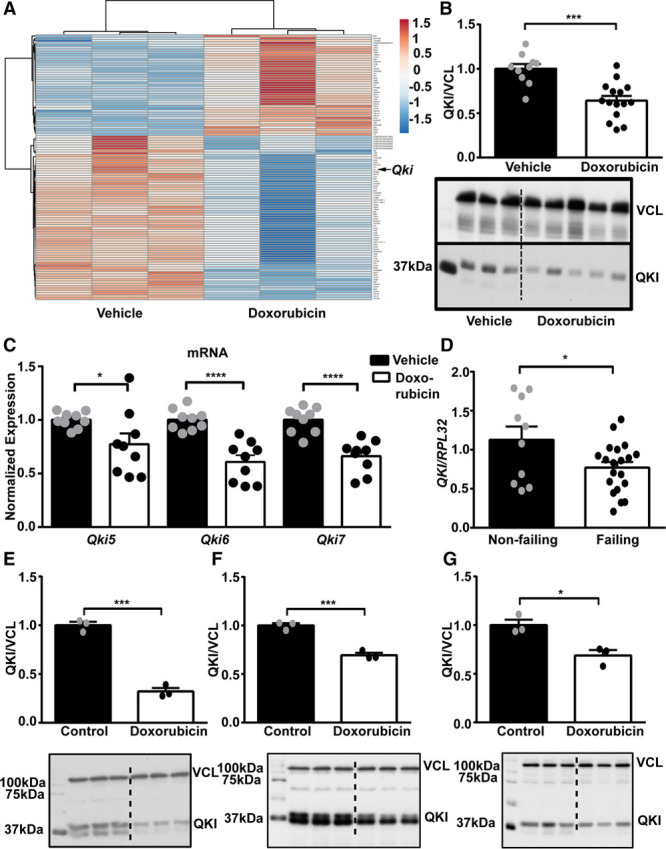
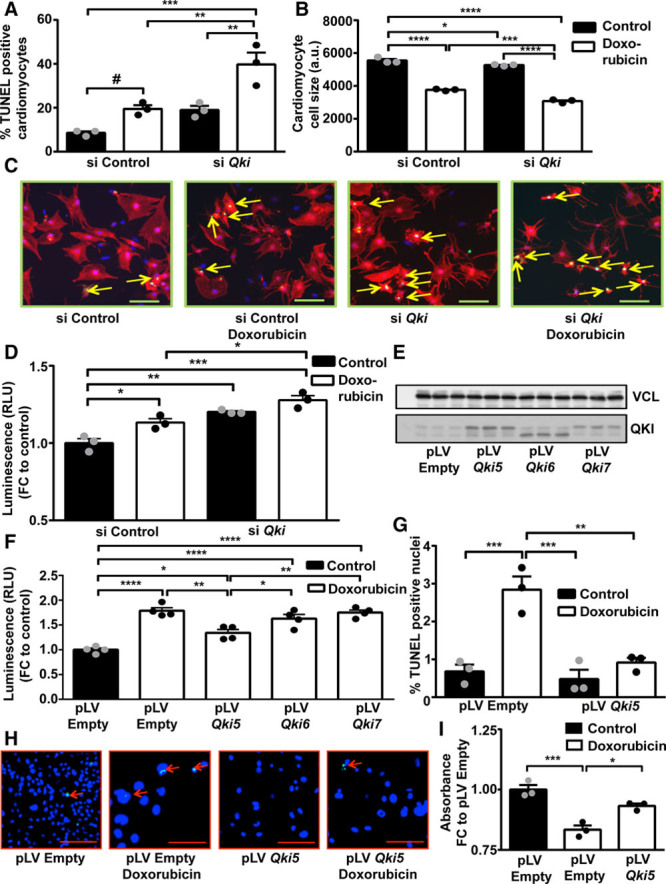
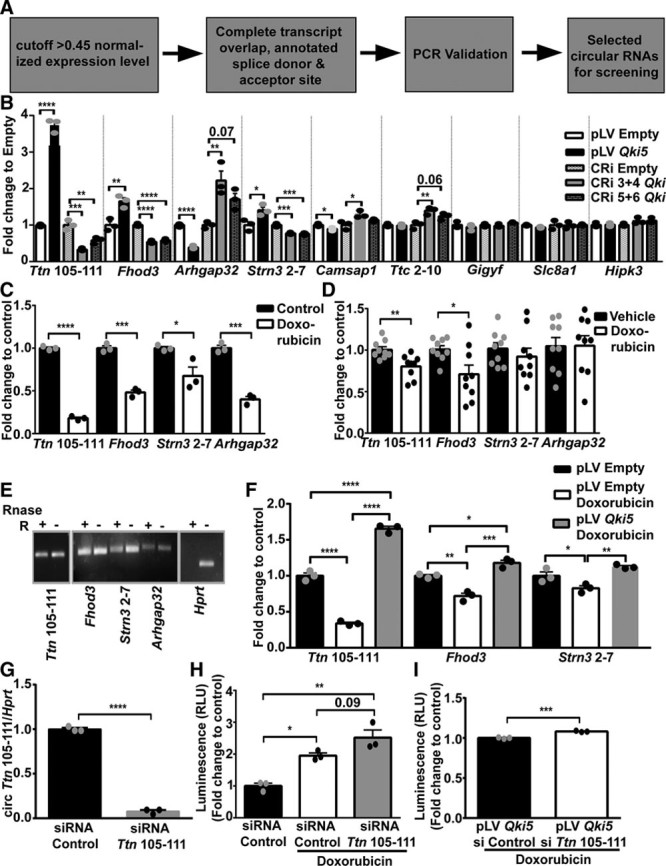
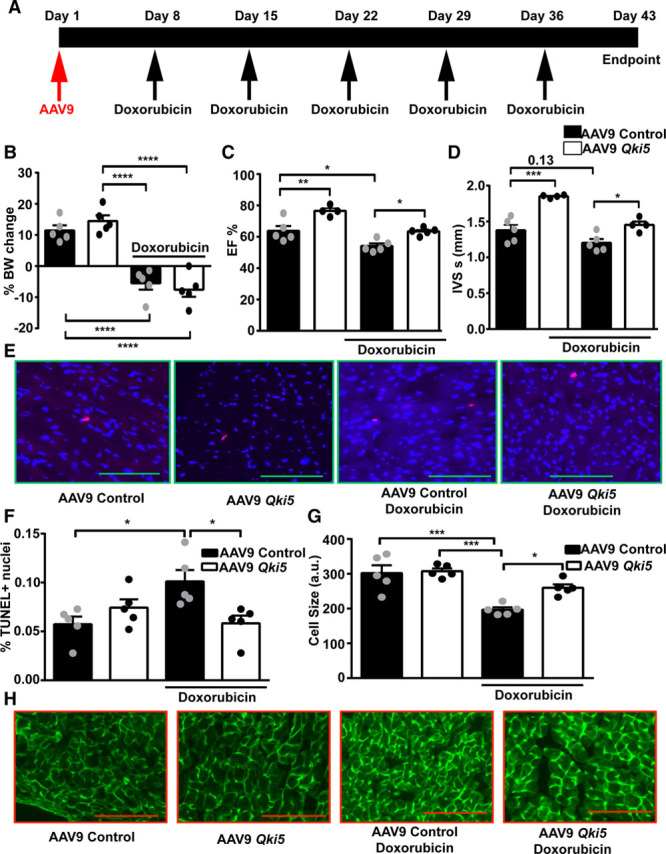
Verification
Claims the paper makes
The claims and statistics of this paper haven’t been checked yet.
Run the check — free, no account needed. It reads the open-access text and checks the sources it cites.
Claims other papers make about this one
Each is checked against this paper’s own text: does it say what the citing paper says it does?
In the citing paper
“Previous studies have confirmed that DOX is a cytotoxic drug which suffered from severe side effects such as cardiotoxicity.58–60”
Self-check
Percentages, sums and reported differences re-computed from the paper’s own numbers.
The self-check needs the paper’s full text.
Citations
Cites
Circular RNAs are a large class of animal RNAs with regulatory potency
Memczak, S., Jens, M., Elefsinioti, A., Torti, F., Krueger, J., Rybak, A., Maier, L., Mackowiak, S. D., Gregersen, L. H., Munschauer, M., et al. (2013) · Nature · doi:10.1038/nature11928 · Cited by 7,990
Congestive heart failure in patients treated with doxorubicin
Swain, S. M., Whaley, F. S., & Ewer, M. S. (2003) · Cancer · doi:10.1002/cncr.11407 · Cited by 2,315
The RNA Binding Protein Quaking Regulates Formation of circRNAs
Conn, S. J., Pillman, K. A., Toubia, J., Conn, V. M., Salmanidis, M., Phillips, C. A., Roslan, S., SCHREIBER, A. W., Gregory, P. A., & Goodall, G. J. (2015) · Cell · doi:10.1016/j.cell.2015.02.014 · Cited by 2,205
A census of human RNA-binding proteins
Gerstberger, S., Hafner, M., & Tuschl, T. (2014) · Nature Reviews Genetics · doi:10.1038/nrg3813 · Cited by 2,032
Wang, K., Long, B., Liu, F., Wang, J., Liu, C.-Y., Zhao, B., Zhou, L., Sun, T., Wang, M., Yu, T., et al. (2016) · European Heart Journal · doi:10.1093/eurheartj/ehv713 · Cited by 869
Du, W. W., Yang, W., Chen, Y., Wu, Z., Foster, F. S., Yang, Z., Li, X., & Yang, B. B. (2016) · European Heart Journal · doi:10.1093/eurheartj/ehw001 · Cited by 736
RBPDB: a database of RNA-binding specificities
Cook, K. B., Kazan, H., Zuberi, K., Morris, Q., & Hughes, T. R. (2011) · Nucleic Acids Research · doi:10.1093/nar/gkq1069 · Cited by 638
Geng, H.-H., Li, R., Su, Y., Xiao, J., Pan, M., Cai, X., & Ji, X. (2016) · PLoS ONE · doi:10.1371/journal.pone.0151753 · Cited by 391
Characterization of circular RNAs in human, mouse and rat hearts
Werfel, S., Nothjunge, S., Schwarzmayr, T., Strom, T.-M., Meitinger, T., & Engelhardt, S. H. (2016) · Journal of Molecular and Cellular Cardiology · doi:10.1016/j.yjmcc.2016.07.007 · Cited by 304
A landscape of circular RNA expression in the human heart
Tan, W. L. W., Lim, B., Anene-Nzelu, C. G., Ackers-Johnson, M. A., Dashi, A., See, K., Tiang, Z., Lee, D. P., Chua, W. W., Luu, T. D. A., et al. (2016) · Cardiovascular Research · doi:10.1093/cvr/cvw250 · Cited by 270
Streckfuß‐Bömeke, K., Wolf, F., Azizian, A., Stauske, M., Tiburcy, M., Wagner, S., Hübscher, D., Dressel, R., Chen, S., Jende, J., et al. (2012) · European Heart Journal · doi:10.1093/eurheartj/ehs203 · Cited by 186
Self-citationEmerging roles for RNA-binding proteins as effectors and regulators of cardiovascular disease
de Bruin, R. G., Rabelink, T. J., van Zonneveld, A. J., & van der Veer, E. P. (2016) · European Heart Journal · doi:10.1093/eurheartj/ehw567 · Cited by 133
Pilotte, J., Larocque, D., & Richard, S. (2001) · Genes & Development · doi:10.1101/gad.860301 · Cited by 101
Emerging functions of the Quaking RNA ‐binding proteins and link to human diseases
Darbelli, L., & Richard, S. (2016) · Wiley Interdisciplinary Reviews - RNA · doi:10.1002/wrna.1344 · Cited by 99
Guo, W., Jiang, T., Lian, C., Wang, H., Zheng, Q., & Ma, H. (2014) · Journal of Molecular and Cellular Cardiology · doi:10.1016/j.yjmcc.2014.07.010 · Cited by 63
Breast Cancer Treatment and Adverse Cardiac Events: What Are the Molecular Mechanisms?
Roca-Alonso, L., Pellegrino, L., Castellano, L., & Stebbing, J. (2012) · Cardiology · doi:10.1159/000339858 · Cited by 48
Cited by
Sorted by citations
The emerging roles of circRNAs in cancer and oncology
Kristensen, L. S., Jakobsen, T., Hager, H., & Kjems, J. (2021) · Nature Reviews Clinical Oncology · doi:10.1038/s41571-021-00585-y · Cited by 1,273
Circular RNA-protein interactions: functions, mechanisms, and identification
Huang, A., Zheng, H., Wu, Z., Chen, M., & Huang, Y. (2020) · Theranostics · doi:10.7150/thno.42174 · Cited by 914
Circular RNA in cardiovascular disease
Altesha, M., Ni, T. T., Khan, A., Liu, K., & Zheng, X. (2018) · Journal of Cellular Physiology · doi:10.1002/jcp.27384 · Cited by 523
A comprehensive review on time-tested anticancer drug doxorubicin
Sritharan, S., & Sivalingam, N. (2021) · Life Sciences · doi:10.1016/j.lfs.2021.119527 · Cited by 516
Kong, C., Guo, Z., Song, P. K., Zhang, X., Yuan, Y., Teng, T., Yan, L., & Tang, Q. (2021) · International Journal of Biological Sciences · doi:10.7150/ijbs.65258 · Cited by 430
Metadata
- Authors
- Gupta, S. K., Garg, A., Bär, C., Chatterjee, S., Foinquinos, A., Milting, H., Streckfuß-Bömeke, K., Fiedler, J., & Thum, T.
- Affiliations
- University Hospitals of the Ruhr-University of Bochum (DE)
- From the Institute of Molecular and Translational Therapeutic Strategies (S.K.G., A.G., C.B., S.C., A.F., J.F., T.T.) and Excellence Cluster REBIRTH (T.T.), Hannover Medical School, Germany; Herz- und Diabeteszentrum NRW, Universitätsklinikum der Ruhr Universität Bochum, Erich und Hanna Klessmann-Institute for Cardiovascular Research and Development, Bad Oeynhausen, Germany (H.M.); Clinic for Cardiology and Pneumology, Stem Cell Laboratory, University Medical Center, Gottingen, Germany (K.S.-B.);...
- Corresponding author
- Gupta, Shashi Kumar
- Thum, Thomas
- ORCID
- Venue
- Circulation Research
- Published
- 2018-01-19
- Volume
- 122
- Issue
- 2
- Pages
- 246-254
- ISSN
- 0009-7330 (ISSN-L)
- 1524-4571
- PMC
- PMC5771684
- OpenAlex
- W2770047542
- Cited by
- 227
- References
- 16
- Citations by year
- 2026: 9 · 2025: 17 · 2024: 26 · 2023: 20 · 2022: 28 · 2021: 42 · 2020: 39 · 2019: 21 · 2018: 25
- FWCI
- 17.96
- Type
- journal article
- Language
- en
- Open access
- hybrid
- doi.org
- Licence
- cc-by
- Locations
- Circulation Research (publishedVersion, cc-by)
- Europe PMC (PubMed Central) (publishedVersion, cc-by)
- PubMed Central (publishedVersion, cc-by)
- PubMed (publishedVersion)
- GoeScholar The Publication Server of the Georg-August-Universität Göttingen (Georg-August-Universität Göttingen) (submittedVersion, cc-by)
- GoeScholar The Publication Server of the Georg-August-Universität Göttingen (Georg-August-Universität Göttingen) (submittedVersion, other-oa)
- Funders
- European Commission
- Deutsche Forschungsgemeinschaft (GU-1664/1-1, 01EO1302)
- Fondation Leducq
- Bundesministerium für Bildung und Forschung (01EO1302)
- Medizinischen Hochschule Hannover
- Topics
- Health Sciences › Medicine › Cardiology and Cardiovascular Medicine › Chemotherapy-induced cardiotoxicity and mitigation
- Life Sciences › Biochemistry, Genetics and Molecular Biology › Molecular Biology › Circular RNAs in diseases
- Health Sciences › Medicine › Cardiology and Cardiovascular Medicine › Cardiac Fibrosis and Remodeling
- Keywords
- doxorubicin cardiotoxicity, Quaking (QKI), RNA-binding proteins, circular RNA, heart failure, cardiomyocyte apoptosis, cardiac atrophy, titin, striatin, AAV9 gene therapy, iPSC-derived cardiomyocytes, cardioprotection
- MeSH terms
- RNA, Circular, Animals, Antibiotics, Antineoplastic, Doxorubicin, Mice, Inbred C57BL, Random Allocation, RNA, Gene Expression, RNA-Binding Proteins, Myocytes, Cardiac, Mice, Cardiotoxicity
About these checks
Registry, retraction, Cites and statistics results are computed, not judged, with one exception: a printed reference that no index lists is read once by a model before it counts as a citation error. Claims are extracted by a model and kept only when their quote appears verbatim in the text; each cited source is then checked, with a model’s help, for whether it says what the claim relies on. Those verdicts can be wrong — read the claim’s quote and the cited source before relying on one.
Statistics and arithmetic are recomputed, not judged.
Confidence bands are shown only for fields calibrated on our annotated test set. None is calibrated yet, so no band is shown.
What counts as a claim ›How we measure confidence ›How we check this ›
Are you an author, or do you see a problem with this page? Request a review
