

The DOI matches its Crossref record; 14 of the 14 references it cites were found in a registry or an index.
Clinical Implications of the New York Heart Association Classification
Open accessAbstract
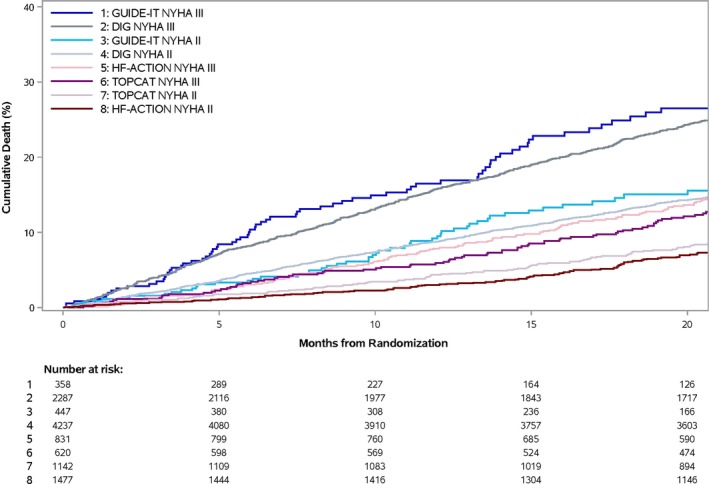
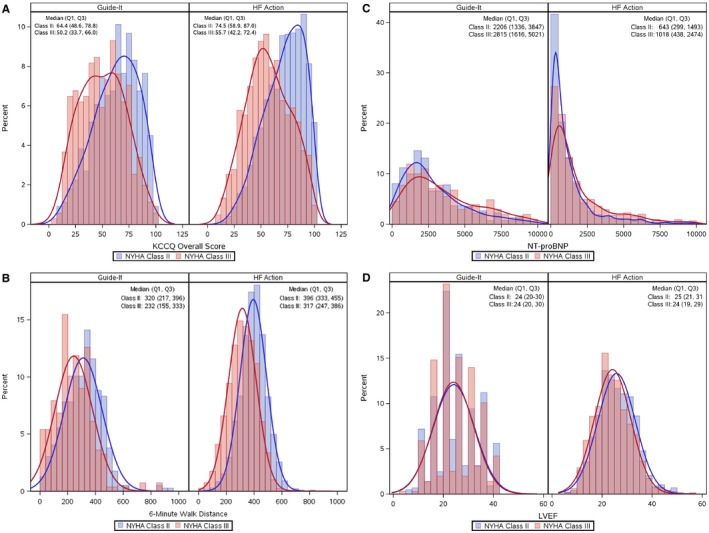
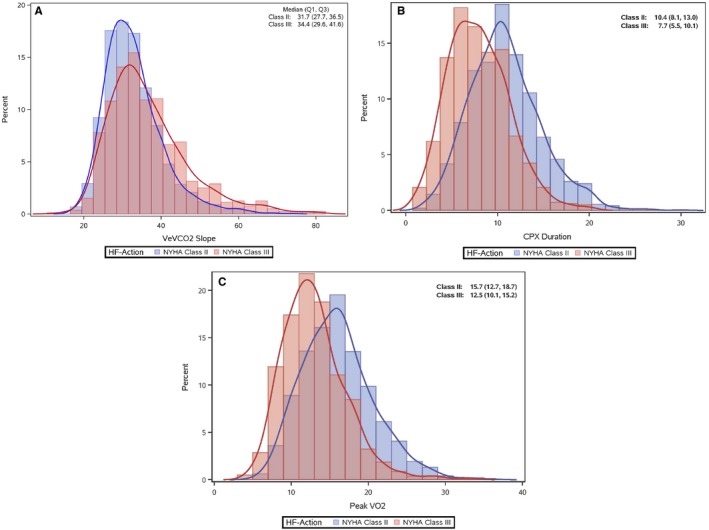
Background The New York Heart Association ( NYHA ) classification has served as a fundamental tool for risk stratification of heart failure ( HF ) and determines clinical trial eligibility and candidacy for drugs and devices. However, its ability to adequately stratify risk is unclear. Methods and Results To compare NYHA class with objective assessments and survival in patients with HF , we performed secondary analyses of 4 multicenter National Institutes of Health–funded HF clinical trials that included patients classified as NYHA class II or III: TOPCAT (Treatment of Preserved Cardiac Function Heart Failure with an Aldosterone Antagonist), DIG (The Effect of Digoxin on Mortality and Morbidity in Patients With Heart Failure), HF‐ACTION (Efficacy and Safety of Exercise Training in Patients With Chronic Heart Failure), and GUIDE‐IT (Guiding Evidence‐Based Therapy Using Biomarker Intensified Treatment in Heart Failure). Twenty‐month cumulative survival was compared between classes using Kaplan–Meier curves and the log rank test. NT ‐proBNP (N‐terminal pro–B‐type natriuretic peptide), Kansas City Cardiomyopathy Questionnaire ( KCCQ ) scores, 6‐minute walk distances, left ventricular ejection fraction, and cardiopulmonary test parameters were compared using Wilcoxon rank sum tests and percentage overlap using kernel density estimations. Cumulative mortality varied significantly across NYHA classes and HF clinical trials (likelihood ratio, P <0.001). Mortality at 20 months for NYHA class II ranged from 7% for patients in HF ‐ ACTION to 15% in GUIDE ‐ IT , whereas mortality for NYHA class III ranged from 12% in TOPCAT to 26% in GUIDE ‐ IT . There was substantial percentage overlap in values for NT ‐pro BNP levels (79% and 69%), KCCQ scores (63% and 54%), 6‐minute walk distances (63% and 54%), and left ventricular ejection fraction (88% and 83%). Similarly, there was substantial overall in values for minute ventilation–carbon dioxide production relationship (71%), maximal oxygen uptake (54%), and exercise duration (53%). Conclusions The NYHA system poorly discriminates HF patients across the spectrum of functional impairment. These findings raise important questions about the need for improved phenotyping of these patients to facilitate risk stratification and response to interventions.
Overview
The claims and statistics of this paper haven’t been checked yet.
Run the check — free, no account needed. It reads the open-access text and checks the sources it cites.
Integrity signals
Registry
Cites
Statistics
Figures
Verification
Claims the paper makes
The claims and statistics of this paper haven’t been checked yet.
Run the check — free, no account needed. It reads the open-access text and checks the sources it cites.
Claims other papers make about this one
Each is checked against this paper’s own text: does it say what the citing paper says it does?
The source backs part of the claim, not all of it — or backs it for a different population, condition or comparison.
In the citing paper
“The commonly utilized NYHA class has variable sensitivity in gauging dyspnoea and classifying patients. 54”
From Prioritizing symptom management in the treatment of chronic heart failure (2020) · cites this paper as [54]
Experimental — accuracy not yet measured
Self-check
Percentages, sums and reported differences re-computed from the paper’s own numbers.
The self-check needs the paper’s full text.
Citations
Cites
Yancy, C. W., Jessup, M., Bozkurt, B., Butler, J., Casey, D. E., Drazner, M. H., Fonarow, G. C., Geraci, S. A., Horwich, T., Januzzi, J. L., et al. (2013) · Circulation · doi:10.1161/cir.0b013e31829e8807 · Cited by 3,304
Self-citationThe effect of digoxin on mortality and morbidity in patients with heart failure
(1997) · New England Journal of Medicine · doi:10.1056/nejm199702203360801 · Cited by 3,016
Spironolactone for heart failure with preserved ejection fraction
Pitt, B., Pfeffer, M. A., Assmann, S. F., Boineau, R., Anand, I. S., Claggett, B., Clausell, N., Desai, A. S., Diaz, R., Fleg, J. L., et al. (2014) · New England Journal of Medicine · doi:10.1056/nejmoa1313731 · Cited by 2,809
O'Connor (2009) · doi:10.1001/jama.2009.454 · Cited by 2,173
Self-citationAbraham, W. T., Adamson, P. B., Bourge, R. C., Aaron, M. F., Costanzo, M. R., Stevenson, L. W., Strickland, W., Neelagaru, S., Raval, N., Krueger, S., et al. (2011) · The Lancet · doi:10.1016/s0140-6736(11)60101-3 · Cited by 1,744
Pfeffer, M. A., Claggett, B. L., Assmann, S. F., Boineau, R., Anand, I. S., Clausell, N., Desai, A. S., Díaz, R., Fleg, J. L., Gordeev, I. G., et al. (2014) · Circulation · doi:10.1161/circulationaha.114.013255 · Cited by 1,083
Goldman, L., Hashimoto, B. E., Cook, E. F., & Loscalzo, A. (1981) · Circulation · doi:10.1161/01.cir.64.6.1227 · Cited by 974
Rogers, J. G., Aaronson, K. D., Boyle, A. J., Russell, S. D., Milano, C. A., Pagani, F. D., Edwards, B. S., Park, S., John, R., Conte, J. V., et al. (2010) · Journal of the American College of Cardiology · doi:10.1016/j.jacc.2009.12.052 · Cited by 591
Felker, G. M., Anstrom, K. J., Adams, K. F., Ezekowitz, J. A., Fiuzat, M., Miller, N. H., Januzzi, J. L., Mark, D. B., Piña, I. L., Passmore, G., et al. (2017) · JAMA · doi:10.1001/jama.2017.10565 · Cited by 554
Self-citationRaphael, C., Briscoe, C., Davies, J. E., Whinnett, Z. I., Manisty, C., Sutton, R., Mayet, J., & Francis, D. P. (2006) · Heart · doi:10.1136/hrt.2006.089656 · Cited by 479
Cited by
Sorted by citations
2021 ESC guidelines for the diagnosis and treatment of acute and chronic heart failure
McDonagh, T. A., Metra, M., Adamo, M., Gardner, R. S., Baumbach, A., Böhm, M., Burri, H., Butler, J., Čelutkienė, J., Chioncel, O., et al. (2021) · European Heart Journal · doi:10.1093/eurheartj/ehab368 · Cited by 13,344
Heidenreich, P. A., Bozkurt, B., Aguilar, D., Allen, L. A., Byun, J. J., Colvin, M. M., Deswal, A., Drazner, M. H., Dunlay, S. M., Evers, L. R., et al. (2022) · Circulation · doi:10.1161/cir.0000000000001063 · Cited by 4,922
2022 AHA/ACC/HFSA Guideline for the Management of Heart Failure
Heidenreich, P. A., Bozkurt, B., Aguilar, D., Allen, L. A., Byun, J. J., Colvin, M. M., Deswal, A., Drazner, M. H., Dunlay, S. M., Evers, L. R., et al. (2022) · Journal of the American College of Cardiology · doi:10.1016/j.jacc.2021.12.012 · Cited by 2,862
2021 ESC Guidelines for the Diagnosis and Treatment of Acute and Chronic Heart Failure
Authors/Task Force Members:, McDonagh, T. A., Metra, M., Adamo, M., Gardner, R. S., Baumbach, A., Böhm, M., Burri, H., Butler, J., Čelutkienė, J., et al. (2022) · European Journal of Heart Failure · doi:10.1002/ejhf.2333 · Cited by 2,356
Expert consensus on the monitoring of transthyretin amyloid cardiomyopathy
García‐Pavía, P., Bengel, F. M., Brito, D. A., Damy, T., Duca, F., Dorbala, S., Nativi-Nicolau, J. N., Obici, L. P., Rapezzi, C., Sekijima, Y., et al. (2021) · European Journal of Heart Failure · doi:10.1002/ejhf.2198 · Cited by 188
Metadata
- Authors
- Caraballo, C., Desai, N. R., Mulder, H., Alhanti, B., Wilson, F. P., Fiuzat, M., Felker, G. M., Piña, I. L., O'Connor, C. M., Lindenfeld, J., Januzzi, J. L., Cohen, L. S., & Ahmad, T.
- Affiliations
- Yale University (US)
- Duke Clinical Research Institute (US)
- Detroit Medical Center (US)
- Inova Heart and Vascular Institute Fairfax VA
- Vanderbilt University Medical Center (US)
- Massachusetts General Hospital (US)
- Corresponding author
- Ahmad, Tariq
- ORCID
- Venue
- Journal of the American Heart Association
- Published
- 2019-12-03
- Volume
- 8
- Issue
- 23
- Pages
- e014240-e014240
- ISSN
- 2047-9980 (ISSN-L)
- PMC
- PMC6912957
- OpenAlex
- W2991004728
- Cited by
- 351
- References
- 14
- Citations by year
- 2026: 48 · 2025: 76 · 2024: 65 · 2023: 74 · 2022: 43 · 2021: 34 · 2020: 10
- FWCI
- 15.73
- Type
- journal article
- Language
- en
- Open access
- gold
- doi.org
- Licence
- cc-by-nc
- Locations
- Journal of the American Heart Association (publishedVersion, cc-by-nc)
- Europe PMC (PubMed Central) (publishedVersion, cc-by-nc)
- PubMed Central (publishedVersion, cc-by-nc)
- PubMed (publishedVersion)
- DOAJ (DOAJ: Directory of Open Access Journals) (submittedVersion)
- Funders
- National Institutes of Health (UL1TR001863)
- National Institute of Diabetes and Digestive and Kidney Diseases (P30DK079310)
- National Center for Advancing Translational Sciences
- Topics
- Health Sciences › Medicine › Cardiology and Cardiovascular Medicine › Heart Failure Treatment and Management
- Health Sciences › Medicine › Cardiology and Cardiovascular Medicine › Heart rate and cardiovascular health
- Health Sciences › Medicine › Physiology (medical) › Cardiovascular and exercise physiology
- Keywords
- NYHA functional class, heart failure, risk stratification, mortality, NT-proBNP, Kansas City Cardiomyopathy Questionnaire, 6-minute walk distance, left ventricular ejection fraction, exercise capacity, patient phenotyping, TOPCAT, dig
- MeSH terms
- Heart Failure, Humans, New York, Societies, Medical, Risk Assessment
About these checks
Registry, retraction, Cites and statistics results are computed, not judged, with one exception: a printed reference that no index lists is read once by a model before it counts as a citation error. Claims are extracted by a model and kept only when their quote appears verbatim in the text; each cited source is then checked, with a model’s help, for whether it says what the claim relies on. Those verdicts can be wrong — read the claim’s quote and the cited source before relying on one.
Statistics and arithmetic are recomputed, not judged.
Confidence bands are shown only for fields calibrated on our annotated test set. None is calibrated yet, so no band is shown.
What counts as a claim ›How we measure confidence ›How we check this ›
Are you an author, or do you see a problem with this page? Request a review
