

The DOI matches its Crossref record; 14 of the 14 references it cites were found in a registry or an index.
Clinical Implications of the New York Heart Association Classification
Open accessAbstract
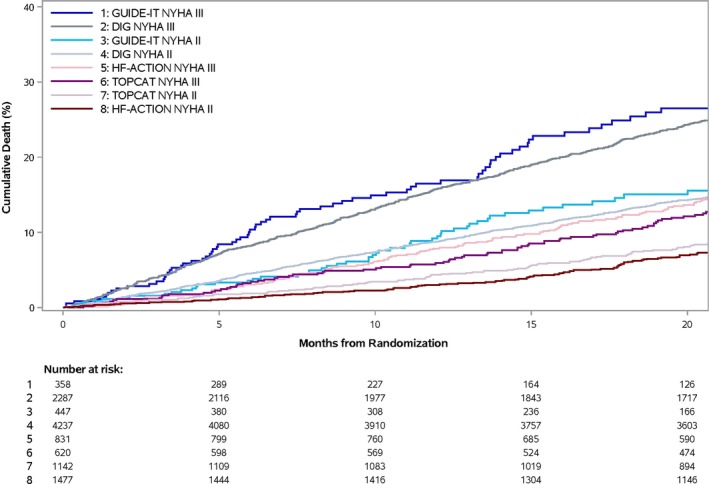
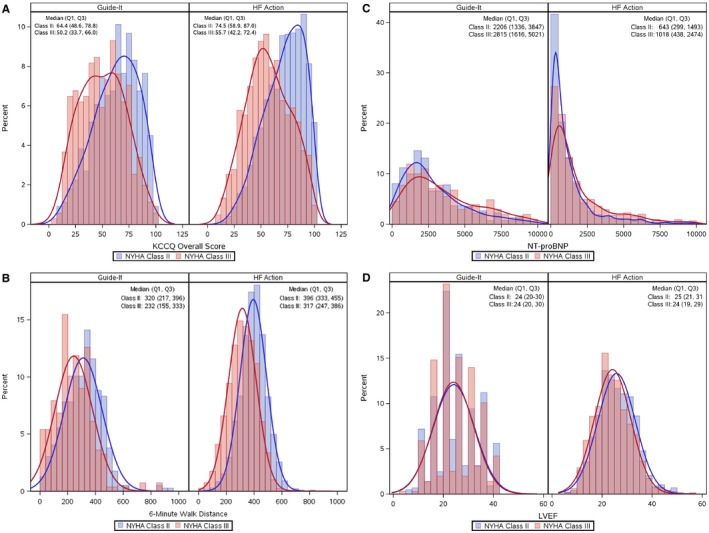
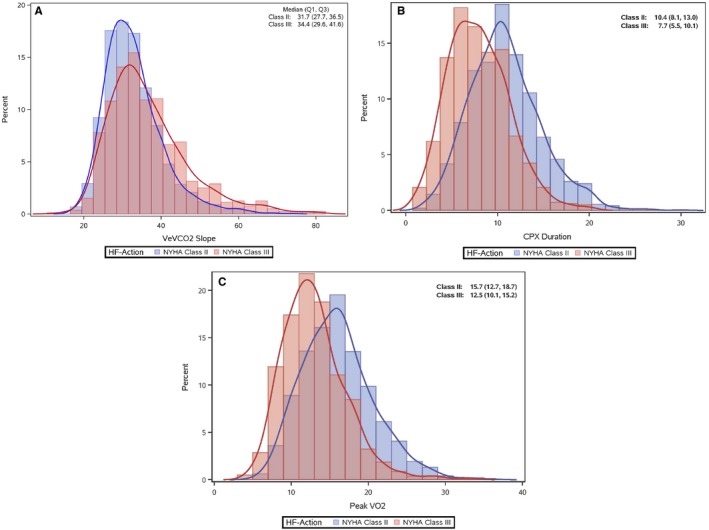
Background The New York Heart Association ( NYHA ) classification has served as a fundamental tool for risk stratification of heart failure ( HF ) and determines clinical trial eligibility and candidacy for drugs and devices. However, its ability to adequately stratify risk is unclear. Methods and Results To compare NYHA class with objective assessments and survival in patients with HF , we performed secondary analyses of 4 multicenter National Institutes of Health–funded HF clinical trials that included patients classified as NYHA class II or III: TOPCAT (Treatment of Preserved Cardiac Function Heart Failure with an Aldosterone Antagonist), DIG (The Effect of Digoxin on Mortality and Morbidity in Patients With Heart Failure), HF‐ACTION (Efficacy and Safety of Exercise Training in Patients With Chronic Heart Failure), and GUIDE‐IT (Guiding Evidence‐Based Therapy Using Biomarker Intensified Treatment in Heart Failure). Twenty‐month cumulative survival was compared between classes using Kaplan–Meier curves and the log rank test. NT ‐proBNP (N‐terminal pro–B‐type natriuretic peptide), Kansas City Cardiomyopathy Questionnaire ( KCCQ ) scores, 6‐minute walk distances, left ventricular ejection fraction, and cardiopulmonary test parameters were compared using Wilcoxon rank sum tests and percentage overlap using kernel density estimations. Cumulative mortality varied significantly across NYHA classes and HF clinical trials (likelihood ratio, P <0.001). Mortality at 20 months for NYHA class II ranged from 7% for patients in HF ‐ ACTION to 15% in GUIDE ‐ IT , whereas mortality for NYHA class III ranged from 12% in TOPCAT to 26% in GUIDE ‐ IT . There was substantial percentage overlap in values for NT ‐pro BNP levels (79% and 69%), KCCQ scores (63% and 54%), 6‐minute walk distances (63% and 54%), and left ventricular ejection fraction (88% and 83%). Similarly, there was substantial overall in values for minute ventilation–carbon dioxide production relationship (71%), maximal oxygen uptake (54%), and exercise duration (53%). Conclusions The NYHA system poorly discriminates HF patients across the spectrum of functional impairment. These findings raise important questions about the need for improved phenotyping of these patients to facilitate risk stratification and response to interventions.
Overview
The claims and statistics of this paper haven’t been checked yet.
Run the check — free, no account needed. It reads the open-access text and checks the sources it cites.
Integrity signals
Registry
Cites
Statistics
Figures
Verification
Claims the paper makes
The claims and statistics of this paper haven’t been checked yet.
Run the check — free, no account needed. It reads the open-access text and checks the sources it cites.
Claims other papers make about this one
Each is checked against this paper’s own text: does it say what the citing paper says it does?
The source backs part of the claim, not all of it — or backs it for a different population, condition or comparison.
In the citing paper
“The commonly utilized NYHA class has variable sensitivity in gauging dyspnoea and classifying patients. 54”
From Prioritizing symptom management in the treatment of chronic heart failure (2020) · cites this paper as [54]
Experimental — accuracy not yet measured
Self-check
Percentages, sums and reported differences re-computed from the paper’s own numbers.
The self-check needs the paper’s full text.
Citations
Cites
Yancy, C. W., Jessup, M., Bozkurt, B., Butler, J., Casey, D. E., Drazner, M. H., Fonarow, G. C., Geraci, S. A., Horwich, T., Januzzi, J. L., et al. (2013) · Circulation · doi:10.1161/cir.0b013e31829e8807 · Cited by 3,304
Self-citationThe effect of digoxin on mortality and morbidity in patients with heart failure
(1997) · New England Journal of Medicine · doi:10.1056/nejm199702203360801 · Cited by 3,016
Spironolactone for heart failure with preserved ejection fraction
Pitt, B., Pfeffer, M. A., Assmann, S. F., Boineau, R., Anand, I. S., Claggett, B., Clausell, N., Desai, A. S., Diaz, R., Fleg, J. L., et al. (2014) · New England Journal of Medicine · doi:10.1056/nejmoa1313731 · Cited by 2,809
O'Connor (2009) · doi:10.1001/jama.2009.454 · Cited by 2,173
Self-citationAbraham, W. T., Adamson, P. B., Bourge, R. C., Aaron, M. F., Costanzo, M. R., Stevenson, L. W., Strickland, W., Neelagaru, S., Raval, N., Krueger, S., et al. (2011) · The Lancet · doi:10.1016/s0140-6736(11)60101-3 · Cited by 1,744
Pfeffer, M. A., Claggett, B. L., Assmann, S. F., Boineau, R., Anand, I. S., Clausell, N., Desai, A. S., Díaz, R., Fleg, J. L., Gordeev, I. G., et al. (2014) · Circulation · doi:10.1161/circulationaha.114.013255 · Cited by 1,083
Goldman, L., Hashimoto, B. E., Cook, E. F., & Loscalzo, A. (1981) · Circulation · doi:10.1161/01.cir.64.6.1227 · Cited by 974
Rogers, J. G., Aaronson, K. D., Boyle, A. J., Russell, S. D., Milano, C. A., Pagani, F. D., Edwards, B. S., Park, S., John, R., Conte, J. V., et al. (2010) · Journal of the American College of Cardiology · doi:10.1016/j.jacc.2009.12.052 · Cited by 591
Felker, G. M., Anstrom, K. J., Adams, K. F., Ezekowitz, J. A., Fiuzat, M., Miller, N. H., Januzzi, J. L., Mark, D. B., Piña, I. L., Passmore, G., et al. (2017) · JAMA · doi:10.1001/jama.2017.10565 · Cited by 554
Self-citationRaphael, C., Briscoe, C., Davies, J. E., Whinnett, Z. I., Manisty, C., Sutton, R., Mayet, J., & Francis, D. P. (2006) · Heart · doi:10.1136/hrt.2006.089656 · Cited by 479
Cited by
Sorted by citations
2021 ESC guidelines for the diagnosis and treatment of acute and chronic heart failure
McDonagh, T. A., Metra, M., Adamo, M., Gardner, R. S., Baumbach, A., Böhm, M., Burri, H., Butler, J., Čelutkienė, J., Chioncel, O., et al. (2021) · European Heart Journal · doi:10.1093/eurheartj/ehab368 · Cited by 13,344
2022 AHA/ACC/HFSA Guideline for the Management of Heart Failure
Heidenreich, P. A., Bozkurt, B., Aguilar, D., Allen, L. A., Byun, J. J., Colvin, M. M., Deswal, A., Drazner, M. H., Dunlay, S. M., Evers, L. R., et al. (2022) · Journal of the American College of Cardiology · doi:10.1016/j.jacc.2021.12.012 · Cited by 2,862
Heidenreich, P. A., Bozkurt, B., Aguilar, D., Allen, L. A., Byun, J. J., Colvin, M. M., Deswal, A., Drazner, M. H., Dunlay, S. M., Evers, L. R., et al. (2022) · Circulation · doi:10.1161/cir.0000000000001063 · Cited by 4,922
2021 ESC Guidelines for the Diagnosis and Treatment of Acute and Chronic Heart Failure
Authors/Task Force Members:, McDonagh, T. A., Metra, M., Adamo, M., Gardner, R. S., Baumbach, A., Böhm, M., Burri, H., Butler, J., Čelutkienė, J., et al. (2022) · European Journal of Heart Failure · doi:10.1002/ejhf.2333 · Cited by 2,356
Expert consensus on the monitoring of transthyretin amyloid cardiomyopathy
García‐Pavía, P., Bengel, F. M., Brito, D. A., Damy, T., Duca, F., Dorbala, S., Nativi-Nicolau, J. N., Obici, L. P., Rapezzi, C., Sekijima, Y., et al. (2021) · European Journal of Heart Failure · doi:10.1002/ejhf.2198 · Cited by 188
Greene, S. J., Butler, J., Spertus, J. A., Hellkamp, A. S., Vaduganathan, M., DeVore, A. D., Albert, N. M., Duffy, C. I., Patterson, J. H., Thomas, L. E., et al. (2021) · JAMA Cardiology · doi:10.1001/jamacardio.2021.0372 · Cited by 167
Guía ESC 2021 sobre el diagnóstico y tratamiento de la insuficiencia cardiaca aguda y crónica
McDonagh, T. A., Metra, M., Adamo, M., Gardner, R. S., Baumbach, A., Böhm, M., Burri, H., Butler, J., Čelutkienė, J., Chioncel, O. D., et al. (2022) · Revista Española de Cardiología · doi:10.1016/j.recesp.2021.11.027 · Cited by 147
Shumba, A.-T., Montanaro, T., Sergi, I., Bramanti, A., Ciccarelli, M., Rispoli, A., Carrizzo, A., De Vittorio, M., & Patrono, L. (2023) · Sensors · doi:10.3390/s23156896 · Cited by 74
Guideline-Directed Medical Therapy for the Treatment of Heart Failure with Reduced Ejection Fraction
Patel, J., Rassekh, N., Fonarow, G. C., DEEDWANIA, P. C., Sheikh, F. H., Ahmed, A., & Lam, P. H. (2023) · Drugs · doi:10.1007/s40265-023-01887-4 · Cited by 74
Prioritizing symptom management in the treatment of chronic heart failure
Koshy, A. O., Gallivan, E. R., McGinlay, M., Straw, S., Drozd, M., Toms, A. G., Gierula, J., Cubbon, R. M., Kearney, M. T., & Witte, K. K. (2020) · ESC Heart Failure · doi:10.1002/ehf2.12875 · Cited by 66
“The commonly utilized NYHA class has variable sensitivity in gauging dyspnoea and classifying patients.(54) Assessment of dyspnoea is challenging because patient activity level affects their sense and the impact of dyspnoea on QoL.”
MethodSchou, M., Petrie, M. C., Borlaug, B. A., Butler, J., Davies, M. J., Kitzman, D. W., Shah, S. J., Verma, S., Patel, S., Chinnakondepalli, K., et al. (2024) · Journal of the American College of Cardiology · doi:10.1016/j.jacc.2024.04.038 · Cited by 63
Compression Therapy for Leg Oedema in Patients with Heart Failure
Urbanek, T., Juśko, M., & Kuczmik, W. B. (2020) · ESC Heart Failure · doi:10.1002/ehf2.12848 · Cited by 57
Rohde, L. E. P., Zimerman, A., Vaduganathan, M., Claggett, B. L., Packer, M., Desai, A. S., Zile, M. R., Rouleau, J. L., Swedberg, K. B., Lefkowitz, M. P., et al. (2022) · JAMA Cardiology · doi:10.1001/jamacardio.2022.4427 · Cited by 51
NYHA Functional Classification and Outcomes After Transcatheter Mitral Valve Repair in Heart Failure
Giustino, G., Lindenfeld, J. M., Abraham, W. T., Kar, S., Lim, D. S., Grayburn, P. A., Kapadia, S. R., Cohen, D. J., Kotinkaduwa, L. N., Weissman, N. J., et al. (2020) · JACC: Cardiovascular Interventions · doi:10.1016/j.jcin.2020.06.058 · Cited by 51
Self-citationPoletti, V., Pagnini, F., Banfi, P. I., & Volpato, E. (2022) · Current Cardiology Reports · doi:10.1007/s11886-022-01815-0 · Cited by 45
Packer, M., Januzzi, J. L., Ferreira, J. P., Anker, S. D., Butler, J., Filippatos, G. S., Pocock, S., Brueckmann, M., Jamal, W., Cotton, D., et al. (2021) · European Journal of Heart Failure · doi:10.1002/ejhf.2256 · Cited by 41
Self-citationChoi, E., Park, J., Min, D., Ahn, S., & Ahn, J. (2023) · BMC Cardiovascular Disorders · doi:10.1186/s12872-023-03039-8 · Cited by 41
Wu, Q., Chen, Y., Zhou, Y., Zhang, X., Huang, Y., & Liu, R. (2023) · Medicine · doi:10.1097/md.0000000000033979 · Cited by 36
Ostrominski, J. W., Vaduganathan, M., Claggett, B. L., de Boer, R. A., Desai, A. S., Dobreanu, D., Hernandez, A. F., Inzucchi, S. E., Jhund, P. S., Kosiborod, M., et al. (2022) · European Journal of Heart Failure · doi:10.1002/ejhf.2652 · Cited by 36
Jamieson, A., Chico, T., Jones, S. H., Chaturvedi, N., Hughes, A. D., & Orini, M. (2025) · npj Cardiovascular Health · doi:10.1038/s44325-025-00082-6 · Cited by 41
Building a Heart Failure Clinic: A Practical Guide from the Heart Failure Society of America
Greene, S. J., Adusumalli, S., Albert, N. M., Hauptman, P. J., Rich, M. W., Heidenreich, P. A., & Butler, J. (2020) · Journal of Cardiac Failure · doi:10.1016/j.cardfail.2020.10.008 · Cited by 33
Wang, Q.-G., Cheng, B., He, Y., Li, L., Ling, Y., Luo, G., Wang, L., Shan, L., & Zhang, Y. (2021) · Experimental and Therapeutic Medicine · doi:10.3892/etm.2021.10305 · Cited by 31
Zhang, H., Zhang, N., Jiang, W., & Lun, X. (2021) · Experimental and Therapeutic Medicine · doi:10.3892/etm.2021.9943 · Cited by 30
Revisiting heart failure assessment based on objective measures in NYHA functional classes I and II
Blacher, M., Zimerman, A., Engster, P. H. D. B., Grespan, E., Polanczyk, C. A., Rover, M. M., Neto, J. A. D. F., Danzmann, L. C., Bertoldi, E. G., Simões, M. V., et al. (2020) · Heart · doi:10.1136/heartjnl-2020-317984 · Cited by 27
Heede, K. V. D., Brusselaers, N., Gaujoux, S., Ménégaux, F., & Chéreau, N. (2022) · World Journal of Surgery · doi:10.1007/s00268-022-06666-y · Cited by 27
The Role of Stem Cells in the Treatment of Cardiovascular Diseases
Bakinowska, E., Kiełbowski, K., Boboryko, D., Bratborska, A. W., Olejnik-Wojciechowska, J., Rusiński, M., & Pawlik, A. (2024) · International Journal of Molecular Sciences · doi:10.3390/ijms25073901 · Cited by 26
Ahmad, T., Yamamoto, Y., Biswas, A., Ghazi, L., Martin, M. C., Simonov, M., Hsiao, A., Kashyap, N., Velazquez, E. J., Desai, N. R., et al. (2021) · JACC Heart Failure · doi:10.1016/j.jchf.2021.03.006 · Cited by 26
Self-citationReliability and validity of six-minute step test in patients with heart failure
Marinho, R. S., Jürgensen, S. P., Arcuri, J. F., Goulart, C. D. L., dos Santos, P. B., Roscani, M. G., Mendes, R. G., de Oliveira, C. R., Caruso, F., & Borghi‐Silva, A. (2021) · Brazilian Journal of Medical and Biological Research · doi:10.1590/1414-431x2020e10514 · Cited by 28
Lewis, G. D., Docherty, K. F., Voors, A. A., Solal, A. C., Metra, M., Whellan, D. J., Ezekowitz, J. A., Ponikowski, P., Böhm, M., Teerlink, J. R., et al. (2022) · Circulation Heart Failure · doi:10.1161/circheartfailure.121.008970 · Cited by 25
Self-citationTogo, S., Sugiura, Y., Suzuki, S., Ohno, K., Akita, K., Suwa, K., Shibata, S., Kimura, M., & Maekawa, Y. (2023) · Open Heart · doi:10.1136/openhrt-2023-002414 · Cited by 24
Qu, B., Hou, Q., Men, X., Zhai, X., Jiang, T., & Wang, R. (2021) · PubMed Central · Cited by 24
Safety and Efficacy of Mavacamten and Aficamten in Patients With Hypertrophic Cardiomyopathy
Davis, B. J., Volk, H., Nguyen, O., Kamna, D., Chen, H., Villa, R. B., García‐Pavía, P., Olivotto, I., OWENS, A. T., COATS, C. J., et al. (2025) · Journal of the American Heart Association · doi:10.1161/jaha.124.038758 · Cited by 25
Exercise Training in Heart Failure: Current Evidence and Future Directions
Eleyan, L., Gonnah, A. R., Farhad, I., Labib, A., Varia, A., Eleyan, A., Almehandi, A., Al-Naseem, A., & Roberts, D. H. (2025) · Journal of Clinical Medicine · doi:10.3390/jcm14020359 · Cited by 22
Fang, F., Zhang, X., Li, B., & Gan, S. (2022) · Journal of Cardiothoracic Surgery · doi:10.1186/s13019-022-01802-0 · Cited by 21
Xu, L., Wei, J., Liu, J., Feng, Y., Wang, L., Wang, S., Li, Q., He, S., Chen, Y. X., Peng, Y., et al. (2022) · European Journal of Preventive Cardiology · doi:10.1093/eurjpc/zwac269 · Cited by 21
Ariyanto, H., & Rosa, E. M. (2024) · Journal of Taibah University Medical Sciences · doi:10.1016/j.jtumed.2024.04.009 · Cited by 21
Spoto, S., Argemí, J., Costanzo, R. D., Gómez, J. J. G., González, N. S., Basili, S., Cangemi, R., Abbate, A., Locorriere, L., Masini, F., et al. (2023) · Journal of Personalized Medicine · doi:10.3390/jpm13071155 · Cited by 22
New York Heart Association Class and Kansas City Cardiomyopathy Questionnaire in Acute Heart Failure
Huo, X., Pu, B., Wang, W., Peng, Y., Li, J., Lei, L., Zhang, L., & Li, J. (2023) · JAMA Network Open · doi:10.1001/jamanetworkopen.2023.39458 · Cited by 20
Cosiano, M. F., Vista, A., Sun, J., Alhanti, B., Harrington, J., Butler, J., Starling, R. C., Mentz, R. J., & Greene, S. J. (2022) · Circulation Heart Failure · doi:10.1161/circheartfailure.122.010107 · Cited by 19
Self-citationThe Downstaging Concept in Treatment-Resistant Depression: Spotlight on Ketamine
Wilkowska, A., & Cubała, W. J. (2022) · International Journal of Molecular Sciences · doi:10.3390/ijms232314605 · Cited by 19
Shuvy, M., von Bardeleben, R. S., Grasso, C., Raake, P. W. J., Lurz, P. C., Zamorano, J. L., Asch, F. M., Kar, S., Maisano, F., & EXPAND Investigators (2023) · ESC Heart Failure · doi:10.1002/ehf2.14273 · Cited by 19
Han, S., Fang, J., Yu, L., Li, B., Hu, Y., Chen, R., Li, C., Zhao, C., Li, J., Wang, Y., et al. (2023) · Molecular Medicine Reports · doi:10.3892/mmr.2023.13090 · Cited by 19
NYHA Classification for Decision-Making in Heart Failure: Time to Reassess?
Zimerman, A., da Silveira, A. D., Solomon, S. D., & Rohde, L. E. P. (2023) · European Journal of Heart Failure · doi:10.1002/ejhf.2923 · Cited by 18
Myocardial work and left heart deformation parameters across primary mitral regurgitation severity
Pastore, M. C., Vannuccini, F., Mandoli, G. E., Lisi, M., Iuliano, M. A., Santoro, A., Niglio, F. P., Diviggiano, E. E., Lorenz, V., Montesi, G., et al. (2024) · International Journal of Cardiology · doi:10.1016/j.ijcard.2024.131772 · Cited by 18
Zhao, M., Jun-xian, S., Zheng, F., Huang, L., & Feng, Y. (2021) · Clinical Interventions in Aging · doi:10.2147/cia.s305006 · Cited by 18
Khajavi, A., Moshki, M., Minaee, S., Vakilian, F., Montazeri, A., & Hashemizadeh, H. (2023) · BMC Cardiovascular Disorders · doi:10.1186/s12872-023-03197-9 · Cited by 17
Symptom Burden among Hospitalised Older Patients with Heart Failure in Hanoi, Vietnam
Nguyen, T. T., Nguyen, T. X., Nguyen, T. T. H., Nguyen, T. N., Nguyen, H. T. T., Nguyen, H. T. T., Nguyen, A. T., Pham, T., & Vu, H. T. T. (2022) · International Journal of Environmental Research and Public Health · doi:10.3390/ijerph192013593 · Cited by 16
Li, R., Dai, G., Guan, H., Gao, W., Ren, L.-L., Wang, X.-M., & Qu, H.-W. (2023) · Scientific Reports · doi:10.1038/s41598-023-31578-9 · Cited by 16
Cavero‐Redondo, I., Saz‐Lara, A., Bizzozero‐Peroni, B., Núñez-Martínez, L., Goñi, V. D., Calero‐Paniagua, I., Martínez‐García, I., & Pascual‐Morena, C. (2024) · Sports Medicine - Open · doi:10.1186/s40798-024-00740-6 · Cited by 23
Cardio-Microcurrent Device for Chronic Heart Failure: First-in-Human Clinical Study
Kosevic, D., Wiedemann, D., Vukovic, P. M., Ristić, V., Riebandt, J., Radak, U., Brandes, K., Göttel, P., Duengen, H., Tahirović, E., et al. (2021) · ESC Heart Failure · doi:10.1002/ehf2.13242 · Cited by 15
Artificial Intelligence: A Shifting Paradigm in Cardio-Cerebrovascular Medicine
Abedi, V., Razavi, S., Khan, A., Avula, V., Tompe, A. P., Poursoroush, A., Sadr, A. V., Li, J., & Zand, R. (2021) · Journal of Clinical Medicine · doi:10.3390/jcm10235710 · Cited by 17
Zimerman, A., da Silveira, A. D., Borges, M. S., Engster, P. H. D. B., Schaan, T., de Souza, G. C., de Souza, I. P. M. A., Ritt, L. E. F., Stein, R., Berwanger, O. B., et al. (2023) · ESC Heart Failure · doi:10.1002/ehf2.14287 · Cited by 15
Gonnah, A. R., Abdel‐Wahab, M., Taylor, R., Labib, A., Masoud, O., Dębski, M., Abdelaziz, H. K., & Roberts, D. H. (2023) · Clinical Medicine · doi:10.7861/clinmed.2023-0258 · Cited by 15
Zhou, L., Yang, Y., & Han, W. (2021) · Annals of Palliative Medicine · doi:10.21037/apm-21-2694 · Cited by 15
Tóth, K., Szabó, A., Menyhárd, J., Benke, K., Radovits, T., Pólos, M., Merkely, B. P., Gál, J., & Székely, A. D. (2022) · Journal of Cardiothoracic and Vascular Anesthesia · doi:10.1053/j.jvca.2022.04.035 · Cited by 14
The Interplay of Comorbidities in Chronic Heart Failure: Challenges and Solutions
Agress, S., Sheikh, J. S., Ramos, A. A. P., Kashyap, D., Razmjouei, S., Kumar, J., Singh, M., Lak, M. A., Osman, A., & Haq, M. Z. U. (2024) · Current Cardiology Reviews · doi:10.2174/011573403x289572240206112303 · Cited by 16
Sukosd, I. E., Pescariu, S. A., Faur, C. I., Dănilă, A.-I., Prodan-Bărbulescu, C., & Firă-Mladinescu, O. (2024) · Diseases · doi:10.3390/diseases12040064 · Cited by 15
CoenzymeQ in cellular redox regulation and clinical heart failure
Yuan, S. S., Schmidt, H. M., Wood, K. C., & Straub, A. C. (2021) · Free Radical Biology and Medicine · doi:10.1016/j.freeradbiomed.2021.03.011 · Cited by 16
Son, Y., Kim, S., Lee, W. S., Shin, S. Y., Won, H., Cho, J. H., Kim, H. M., Hong, J., & Choi, J. (2022) · Journal of Advanced Nursing · doi:10.1111/jan.15248 · Cited by 13
Li, J., Liu, B., Wang, Z., El-Ansary, D., Adams, R., Han, J., & Meng, S. (2022) · Frontiers in Cardiovascular Medicine · doi:10.3389/fcvm.2022.853376 · Cited by 12
Hanna, M. A., Fine, N. M., Gundapaneni, B. K., Sultan, M. B., & Witteles, R. M. (2022) · JACC Advances · doi:10.1016/j.jacadv.2022.100148 · Cited by 12
Prokopidis, K., Ishiguchi, H., Jordan, C., Irlik, K., Nabrdalik, K., Formiga, F., Sankaranarayanan, R., Lip, G. Y. H., & Isanejad, M. (2024) · Aging Clinical and Experimental Research · doi:10.1007/s40520-024-02713-x · Cited by 11
An Updated Review of the Management of Chronic Heart Failure in Patients with Chronic Kidney Disease
Tumelty, E. H., Chung, I., Hussain, S., Ali, M. A., Addada, H., & Banerjee, D. (2024) · Reviews in Cardiovascular Medicine · doi:10.31083/j.rcm2504144 · Cited by 11
Hogea, P., Tudorache, E., Firă-Mladinescu, O., Marc, M. S., Velescu, D. R., Manolescu, D., Bratosin, F., Roșca, O., Mavrea, A., & Oancea, C. I. (2023) · Journal of Personalized Medicine · doi:10.3390/jpm13060998 · Cited by 11
Nomali, M., Mohammadrezaei, R., Yaseri, M., Tayebi, A., Ayati, A., Roshandel, G., Keshtkar, A., Ghiyasvandian, S., Alipasandi, K., Navid, H., et al. (2024) · International Journal of Nursing Studies · doi:10.1016/j.ijnurstu.2024.104704 · Cited by 11
Chen, W., Wang, Y., Pan, Z., Chen, X., Luo, D., & Wang, H. (2021) · Experimental and Therapeutic Medicine · doi:10.3892/etm.2021.9844 · Cited by 11
Canadian Cardiovascular Society 2023 Guidelines on the Fitness to Drive
Guerra, P. G., Simpson, C. S., Spall, H. G. C. V., Asgar, A., Billia, F., Cadrin‐Tourigny, J., Chakrabarti, S., Cheung, C. C., Dore, A., Fordyce, C. B., et al. (2023) · Canadian Journal of Cardiology · doi:10.1016/j.cjca.2023.09.033 · Cited by 11
He, S., Hu, X. L., Zhu, J., Wang, W., Ma, C., Ran, P., Chen, O., Chen, F., Qing, H., Ma, J., et al. (2025) · Nature Communications · doi:10.1038/s41467-025-60184-8 · Cited by 10
Physical Functioning in Heart Failure With Preserved Ejection Fraction
Cosiano, M. F., Tobin, R. S., Mentz, R. J., & Greene, S. J. (2021) · Journal of Cardiac Failure · doi:10.1016/j.cardfail.2021.04.013 · Cited by 10
Prognostic Value of Combined Biomarkers in Patients With Heart Failure: The Heartmarker Score
van der Stam, J. A., Bouwmeester, S., van Loon, S. L. M., van Riel, N. A. W., Dekker, L., Boer, A., Houthuizen, P., & Scharnhorst, V. (2022) · Annals of Laboratory Medicine · doi:10.3343/alm.2023.43.3.253 · Cited by 10
Fuentes-Abolafio, I. J., Trinidad‐Fernández, M., Ricci, M., Roldán‐Jiménez, C., Gómez‐Huelgas, R., Arjona-Caballero, J. M., Escriche-Escuder, A., Bernal-López, M. R., Perez-Belmonte, L. M., & Cuesta‐Vargas, A. (2023) · European Journal of Cardiovascular Nursing · doi:10.1093/eurjcn/zvad027 · Cited by 9
Prognostic Clinical Phenotypes of Patients with Acute Decompensated Heart Failure
Mohammadi, T., Tofighi, S., Mohammadi, B., Halimi, S., & Gharebakhshi, F. (2023) · High Blood Pressure & Cardiovascular Prevention · doi:10.1007/s40292-023-00598-x · Cited by 10
Alonso, W., Faulkner, K. M., Pozehl, B., Hupcey, J. E., Kitko, L. A., & Lee, C. S. (2020) · Research in Nursing & Health · doi:10.1002/nur.22052 · Cited by 10
The Relationship between Serum Uric Acid and Ejection Fraction of the Left Ventricle
Ivan, V. S., Buzaș, R., Morgovan, A., Ciubotaru, P. G., Ardelean, M., Goje, I.-D., Rosca, C. I., Timar, R. Z., & Lighezan, D. (2021) · Journal of Clinical Medicine · doi:10.3390/jcm10174026 · Cited by 10
Diagnosis and Outcome of Cardiac Paragangliomas: A Retrospective Observational Cohort Study in China
Dong, X., Meng, X., Zhang, T., Zhao, L. Y., Liu, F., Han, X., Liu, Y., Zhu, H., Zhou, X., Miao, Q., et al. (2022) · Frontiers in Cardiovascular Medicine · doi:10.3389/fcvm.2021.780382 · Cited by 10
Kolovos, S., Bellanca, L., Groyer, H., Rosano, G. M. C., Solé, A., Gaultney, J. G., & Linden, S. (2023) · ESC Heart Failure · doi:10.1002/ehf2.14470 · Cited by 9
Khiali, S., Sadeghi, M. T., Sarbakhsh, P., Khezerlouy‐Aghdam, N., & Entezari‐Maleki, T. (2023) · European Journal of Clinical Pharmacology · doi:10.1007/s00228-023-03582-5 · Cited by 9
Dysregulation of N-terminal acetylation causes cardiac arrhythmia and cardiomyopathy
Yoshinaga, D., Craven, I., Feng, R., Prondzynski, M., Shani, K., Tharani, Y., Mayourian, J., Milosh, J., Walker, D., Bortolin, R. H., et al. (2025) · Nature Communications · doi:10.1038/s41467-025-58539-2 · Cited by 9
Li, Q., Chen, Y., Qin, D., Li, S., Zhang, S., Liu, F., Zhu, J., Wang, Y., Mao, Y., & Zhang, L. (2023) · International Journal of Nursing Sciences · doi:10.1016/j.ijnss.2023.03.014 · Cited by 9
Engster, P. H. D. B., Zimerman, A., Schaan, T., Borges, M. S., Souza, G. H. N., Costa, G. D., Rohde, L. E. P., & da Silveira, A. D. (2023) · Arquivos Brasileiros de Cardiologia · doi:10.36660/abc.20230077 · Cited by 9
Finerenone and NYHA Functional Class in Heart Failure
Ostrominski, J. W., Vaduganathan, M., Claggett, B. L., Desai, A. S., Jhund, P. S., Lam, C. S. P., Senni, M., Shah, S. J., Voors, A. A., Zannad, F. M., et al. (2025) · JACC Heart Failure · doi:10.1016/j.jchf.2025.03.007 · Cited by 8
Providers’ assignment of NYHA functional class in patients with heart failure: A vignette study
Stamp, K. D., Prasun, M. A., McCoy, T. P., & Rathman, L. D. (2021) · Heart & Lung · doi:10.1016/j.hrtlng.2021.07.009 · Cited by 8
Mohammadi, T., & Mohammadi, B. (2022) · Psychology Health & Medicine · doi:10.1080/13548506.2022.2147558 · Cited by 8
Wang, J., Wu, X., Wang, L., & Zhao, C. (2023) · International Heart Journal · doi:10.1536/ihj.22-174 · Cited by 8
Çolak, A. (2023) · Turk Kardiyoloji Dernegi Arsivi-Archives of the Turkish Society of Cardiology · doi:10.5543/tkda.2023.78074 · Cited by 8
Attaway, A. H., Faress, J. A., Jacono, F. J., & Dasarathy, S. (2021) · Journal of Clinical Medicine · doi:10.3390/jcm10091814 · Cited by 8
Huang, Y., Wang, H., Wen, J., Yang, Z., & Gui, C. (2022) · Scientific Reports · doi:10.1038/s41598-022-12249-7 · Cited by 8
Bhattacharjee, P., & Khan, Z. U. (2023) · Cureus · doi:10.7759/cureus.48674 · Cited by 10
Titz, M., Schwameis, M., Kienbacher, C. L., Buchtele, N., von Roth, D., Duma, A., Nägele, P., Schoergenhofer, C., & Herkner, H. (2020) · British Journal of Anaesthesia · doi:10.1016/j.bja.2020.08.006 · Cited by 8
A novel NT-proBNP assay for heart failure diagnosis: A prospective, multicenter clinical trial
Guidi, J. L., Allen, B. R., Headden, G. F., Winden, N., Alahapperuma, D., Christenson, R. H., Peacock, W. F., & Januzzi, J. L. (2025) · Clinica Chimica Acta · doi:10.1016/j.cca.2025.120249 · Cited by 7
Self-citationJain, V., Nabi, N., Aggarwal, S., Alam, Z., Chandra, K., Singh, D., Kashyap, V., Islam, F., & Kohli, S. (2023) · Journal of Clinical Nursing · doi:10.1111/jocn.16652 · Cited by 7
Kim, M., Lee, Y. S., Park, Y. M., Jung, A., So, H., Park, J., Park, J., Choi, D., Kim, S., & Park, S. (2024) · ESC Heart Failure · doi:10.1002/ehf2.14918 · Cited by 7
Embracing the promise of patient reported outcome measures in cardiology
Wilkinson, C., Bhatty, A., Smith, A. B., Dwight, J., Sanders, J., & Gale, C. P. (2024) · European Heart Journal - Quality of Care and Clinical Outcomes · doi:10.1093/ehjqcco/qcae073 · Cited by 7
Gut dysbiosis and neutrophil extracellular traps in chronic heart failure
Bratseth, V., Nendl, A., Raju, S. C., Holm, K., Broch, K., Hov, J. R., Seljeflot, I., Trøseid, M., & Awoyemi, A. (2024) · International Journal of Cardiology · doi:10.1016/j.ijcard.2024.132689 · Cited by 7
Thapa, A., Rayens, M. K., Chung, M. L., Biddle, M., Wu, J. R., Lin, C., Kang, J., & Moser, D. K. (2025) · Research in Nursing & Health · doi:10.1002/nur.22440 · Cited by 7
Gao, Y.-P., Liu, H.-Y., Bi, X.-J., Sun, J., Zhu, Y., Zhou, W., Fan, Y.-T., Cheng, X.-Q., Huang, P., Liu, Y., et al. (2025) · ESC Heart Failure · doi:10.1002/ehf2.15247 · Cited by 8
Zamanian, M. Y., Maleki, S., Oghenemaro, E. F., Singh, M., Mohammadi, M., Alkhayyat, A., Sapaev, I. B., Kaur, P., Shirsalimi, N., & Nagarwal, A. (2025) · Naunyn-Schmiedeberg s Archives of Pharmacology · doi:10.1007/s00210-025-04008-y · Cited by 7
Cotté, F.-E., Hurst, M. A., Akarkoub, S., Ho, M., Vernon, J., Chambry, L., & Leproust, S. (2025) · The European Journal of Health Economics · doi:10.1007/s10198-025-01808-0 · Cited by 7
Bouali, Y., Galli, E., Paven, E., Clément, L., Hubert, A., Oger, E., & Donal, E. (2021) · Advances in Clinical and Experimental Medicine · doi:10.17219/acem/143433 · Cited by 7
Vijiiac, A. E., Onciul, S., Deaconu, S., Vatasescu, R. G., Guzu, C., Verinceanu, V., Scărlătescu, A. I., Zamfir, D., Petre, I. G., Scafa‐Udriște, A., et al. (2022) · Echocardiography · doi:10.1111/echo.15288 · Cited by 7
Metadata
- Authors
- Caraballo, C., Desai, N. R., Mulder, H., Alhanti, B., Wilson, F. P., Fiuzat, M., Felker, G. M., Piña, I. L., O'Connor, C. M., Lindenfeld, J., Januzzi, J. L., Cohen, L. S., & Ahmad, T.
- Affiliations
- Yale University (US)
- Duke Clinical Research Institute (US)
- Detroit Medical Center (US)
- Inova Heart and Vascular Institute Fairfax VA
- Vanderbilt University Medical Center (US)
- Massachusetts General Hospital (US)
- Corresponding author
- Ahmad, Tariq
- ORCID
- Venue
- Journal of the American Heart Association
- Published
- 2019-12-03
- Volume
- 8
- Issue
- 23
- Pages
- e014240-e014240
- ISSN
- 2047-9980 (ISSN-L)
- PMC
- PMC6912957
- OpenAlex
- W2991004728
- Cited by
- 351
- References
- 14
- Citations by year
- 2026: 48 · 2025: 76 · 2024: 65 · 2023: 74 · 2022: 43 · 2021: 34 · 2020: 10
- FWCI
- 15.73
- Type
- journal article
- Language
- en
- Open access
- gold
- doi.org
- Licence
- cc-by-nc
- Locations
- Journal of the American Heart Association (publishedVersion, cc-by-nc)
- Europe PMC (PubMed Central) (publishedVersion, cc-by-nc)
- PubMed Central (publishedVersion, cc-by-nc)
- PubMed (publishedVersion)
- DOAJ (DOAJ: Directory of Open Access Journals) (submittedVersion)
- Funders
- National Institutes of Health (UL1TR001863)
- National Institute of Diabetes and Digestive and Kidney Diseases (P30DK079310)
- National Center for Advancing Translational Sciences
- Topics
- Health Sciences › Medicine › Cardiology and Cardiovascular Medicine › Heart Failure Treatment and Management
- Health Sciences › Medicine › Cardiology and Cardiovascular Medicine › Heart rate and cardiovascular health
- Health Sciences › Medicine › Physiology (medical) › Cardiovascular and exercise physiology
- Keywords
- NYHA functional class, heart failure, risk stratification, mortality, NT-proBNP, Kansas City Cardiomyopathy Questionnaire, 6-minute walk distance, left ventricular ejection fraction, exercise capacity, patient phenotyping, TOPCAT, dig
- MeSH terms
- Heart Failure, Humans, New York, Societies, Medical, Risk Assessment
About these checks
Registry, retraction, Cites and statistics results are computed, not judged, with one exception: a printed reference that no index lists is read once by a model before it counts as a citation error. Claims are extracted by a model and kept only when their quote appears verbatim in the text; each cited source is then checked, with a model’s help, for whether it says what the claim relies on. Those verdicts can be wrong — read the claim’s quote and the cited source before relying on one.
Statistics and arithmetic are recomputed, not judged.
Confidence bands are shown only for fields calibrated on our annotated test set. None is calibrated yet, so no band is shown.
What counts as a claim ›How we measure confidence ›How we check this ›
Are you an author, or do you see a problem with this page? Request a review
