

The DOI matches its Crossref record; 76 of the 78 references it cites were found in a registry or an index.
Widening Access to Applied Machine Learning With TinyML
Open accessAbstract
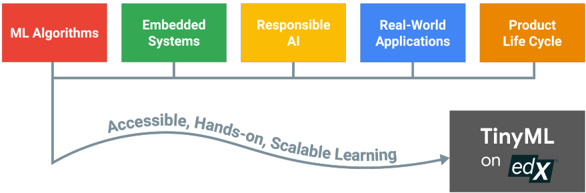
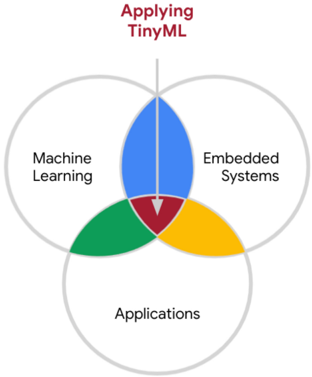
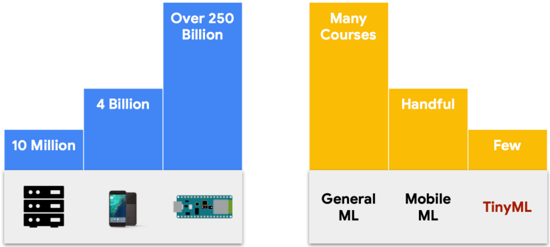
Broadening access to both computational and educational resources is critical to diffusing machine learning (ML) innovation. However, today, most ML resources and experts are siloed in a few countries and organizations. In this article, we describe our pedagogical approach to increasing access to applied ML through a massive open online course (MOOC) on Tiny Machine Learning (TinyML). We suggest that TinyML, applied ML on resource-constrained embedded devices, is an attractive means to widen access because TinyML leverages low-cost and globally accessible hardware and encourages the development of complete, self-contained applications, from data collection to deployment. To this end, a collaboration between academia and industry produced a four part MOOC that provides application-oriented instruction on how to develop solutions using TinyML. The series is openly available on the edX MOOC platform, has no prerequisites beyond basic programming, and is designed for global learners from a variety of backgrounds. It introduces real-world applications, ML algorithms, data-set engineering, and the ethical considerations of these technologies through hands-on programming and deployment of TinyML applications in both the cloud and on their own microcontrollers. To facilitate continued learning, community building, and collaboration beyond the courses, we launched a standalone website, a forum, a chat, and an optional course-project competition. We also open-sourced the course materials, hoping they will inspire the next generation of ML practitioners and educators and further broaden access to cutting-edge ML technologies.
Overview
The claims and statistics of this paper haven’t been checked yet.
Free: it reads the open-access text and checks the first 5 claims that cite a source we can check. Create a free account to check every claim.
Integrity signals
Registry
Cites
Statistics
Figures
Verification
Claims the paper makes
The claims and statistics of this paper haven’t been checked yet.
Free: it reads the open-access text and checks the first 5 claims that cite a source we can check. Create a free account to check every claim.
Claims other papers make about this one
Each is checked against this paper’s own text: does it say what the citing paper says it does?
The check wasn’t confident either way, so it gives no verdict — never disputed.
In the citing paper
“NPU is substantially quicker than traditional processors such as CPU or GPU [43] in performing matrix multiplications, which are the essential operations of neural networks.”
From A Comprehensive Survey on TinyML (2023) · cites this paper as [43]
Experimental — accuracy not yet measured
Self-check
Percentages, sums and reported differences re-computed from the paper’s own numbers.
The self-check needs the paper’s full text.
Citations
Cites
ImageNet: A large-scale hierarchical image database
Deng, J., Dong, W., Socher, R., Li, L.-J., Li, K., & Fei-Fei, L. (2009) · 2009 IEEE Conference on Computer Vision and Pattern Recognition · doi:10.1109/cvpr.2009.5206848 · Cited by 65,333
MobileNets: Efficient Convolutional Neural Networks for Mobile Vision Applications
Howard, A. G., Zhu, M., Chen, B., Kalenichenko, D., Wang, W., Weyand, T., Andreetto, M., & Adam, H. (2017) · arXiv · doi:10.48550/arxiv.1704.04861 · Cited by 19,015
Chandola, V., Banerjee, A., & Kumar, V. (2009) · ACM Computing Surveys · doi:10.1145/1541880.1541882 · Cited by 11,687
Learning Transferable Architectures for Scalable Image Recognition
Zoph, B., Vasudevan, V., Shlens, J., & Le, Q. V. (2018) · 2018 IEEE/CVF Conference on Computer Vision and Pattern Recognition · doi:10.1109/cvpr.2018.00907 · Cited by 6,249
How transferable are features in deep neural networks?
Yosinski, J., Clune, J., Bengio, Y., & Lipson, H. (2014) · arXiv · doi:10.48550/arxiv.1411.1792 · Cited by 6,061
Federated Learning: Strategies for Improving Communication Efficiency
Konečný, J., McMahan, H. B., Yu, F. X., Richtárik, P., Suresh, A. T., & Bacon, D. (2016) · arXiv · doi:10.48550/arxiv.1610.05492 · Cited by 3,766
(2018) · Cited by 3,510
A Survey of Data Mining and Machine Learning Methods for Cyber Security Intrusion Detection
Buczak, A. L., & Guven, E. (2016) · IEEE Communications Surveys & Tutorials · doi:10.1109/comst.2015.2494502 · Cited by 3,332 · cited 2×
“…accessible and scalable, we focused on the emerging TinyML domain and released the course as a MOOC on edX. autonomous vehicles [3, 4], robotics [5], health care [6], transportation [7, 8], security [9], and education [10, 11], with new application use cases continuously emerging every few days.”
BackgroundMethodModel Cards for Model Reporting
Mitchell, M., Wu, S., Zaldivar, A., Barnes, P., Vasserman, L., Hutchinson, B., Spitzer, E., Raji, I. D., & Gebru, T. (2019) · Proceedings of the Conference on Fairness, Accountability, and Transparency · doi:10.1145/3287560.3287596 · Cited by 2,681
The Cambridge handbook of multimedia learning
(2006) · Choice Reviews Online · doi:10.5860/choice.43-5643 · Cited by 2,313
Research works printed but not linked: 9
- Bruner, J. S. (2009). The process of education. Harvard University Press.
- Chuvpilo, G. (2020). Who's ahead in AI research AT NeurIPS 2020? https://chuvpilo.medium. com/whos-ahead-in-ai-research-at-neurips-2020-bf2a40a54325
- Doyu, H., Morabito, R., & Höller, J. (2020). Bringing machine learning to the deepest IoT edge with TinyML as-a-service. IEEE IoT Newsl.
- Fosdick, A. (2021). Introduction to Embedded Systems Software and Development Environments. https://www.coursera.org/learn/introduction-embedded-systems Frame.io. (2021). Video review and collaboration software. Frame.io. https://www.frame.io/
- Grosz, B. J., Grant, D. G., Vredenburgh, K., Behrends, J., Hu, L., Simmons, A., & Waldo, J. (2019). Embedded ethiCS: Integrating ethics across CS curriculum [https: //cacm.acm. org/magazines/2019/8/238345-embedded-ethics/fulltext]. Communications of the ACM, 62 (8), 54-61.
- Jamieson, P. (2011). Arduino for teaching embedded systems. are computer scientists and engineer- ing educators missing the boat? Proceedings of the international conference on frontiers in education: computer science and computer engineering (FECS), 1.
- Maedche, A., Legner, C., Benlian, A., Berger, B., Gimpel, H., Hess, T., Hinz, O., Morana, S., & Söll- ner, M. (2019). AI-based digital assistants. Business & Information Systems Engineering, 61 (4), 535-544.
- Tiwari, V. (2010). MFCC and its applications in speaker recognition. International journal on emerging technologies, 1 (1).
- Zhang, G., Yan, C., Ji, X., Zhang, T., Zhang, T., & Xu, W. (2017). Dolphinattack: Inaudible voice commands. In Proceedings of the 2017 ACM SIGSAC Conference on Computer and Communications Security, 103-117.
Cited by
A Comprehensive Survey on TinyML
Abadade, Y., Temouden, A., Bamoumen, H., Benamar, N., Chtouki, Y., & Hafid, A. S. (2023) · IEEE Access · doi:10.1109/access.2023.3294111 · Cited by 366
Intelligence at the Extreme Edge: A Survey on Reformable TinyML
Rajapakse, V., Karunanayake, I., & Ahmed, N. (2023) · ACM Computing Surveys · doi:10.1145/3583683 · Cited by 176
A Review on the emerging technology of TinyML
Tsoukas, V., Gkogkidis, A., Boumpa, E., & Kakarountas, A. P. (2024) · ACM Computing Surveys · doi:10.1145/3661820 · Cited by 149
TinyML: A Systematic Review and Synthesis of Existing Research
Han, H., & Siebert, J. (2022) · International Conference on Artificial Intelligence in Information and Communication (ICAIIC) · doi:10.1109/icaiic54071.2022.9722636 · Cited by 155
Giordano, M., Baumann, N., Crabolu, M., Fischer, R., Bellusci, G., & Magno, M. (2022) · IEEE Transactions on Instrumentation and Measurement · doi:10.1109/tim.2022.3165816 · Cited by 72
Metadata
- Authors
- Janapa Reddi, V., Plancher, B., Kennedy, S., Moroney, L., Warden, P., Suzuki, L., Agarwal, A., Banbury, C., Banzi, M., Bennett, M., Brown, B., Chitlangia, S., Ghosal, R., Grafman, S., Jaeger, R., Krishnan, S., Lam, M., Leiker, D., Mann, C., Mazumder, M., Pajak, D., Ramaprasad, D., Smith, J. E., Stewart, M., & Tingley, D.
- Affiliations
- Edge Computing Lab, John A. Paulson School of Engineering and Applied Sciences, Harvard University, Cambridge, Massachusetts, United States of America
- Harvard University (US)
- Google (United States) (US)
- Arduino, Boston, Massachusetts, United States of America
- Creative Class LLC, Westminster, Colorado, United States of America
- ORCID
- Venue
- Harvard Data Science Review
- Publisher
- MIT Press
- Published
- 2022-01-27
- Volume
- 4
- Issue
- 1
- ISSN
- 2644-2353 (ISSN-L)
- 2688-8513
- OpenAlex
- W3168641996
- Cited by
- 62
- References
- 78
- Citations by year
- 2026: 6 · 2025: 8 · 2024: 11 · 2023: 30 · 2022: 6
- FWCI
- 10.63
- Type
- journal article
- Language
- en
- Open access
- diamond
- doi.org
- Licence
- cc-by
- Locations
- Harvard Data Science Review (publishedVersion, cc-by)
- arXiv (Cornell University) (submittedVersion)
- DSpace@MIT (Massachusetts Institute of Technology) (submittedVersion, cc-by)
- DOAJ (DOAJ: Directory of Open Access Journals) (submittedVersion, cc-by-sa)
- PhilPapers (PhilPapers Foundation) (submittedVersion)
- arXiv (Cornell University)
- Funders
- Abdus Salam International Centre for Theoretical Physics
- Topics
- Physical Sciences › Computer Science › Computer Science Applications › Online Learning and Analytics
- Physical Sciences › Computer Science › Computer Science Applications › Teaching and Learning Programming
- Physical Sciences › Mathematics › Statistics and Probability › Statistics Education and Methodologies
- Keywords
- TinyML, massive open online courses, embedded devices, microcontroller, resource-constrained devices, applied machine learning, open educational resources, academia-industry collaboration, machine learning ethics, data engineering, community building
About these checks
Registry, retraction, Cites and statistics results are computed, not judged, with one exception: a printed reference that no index lists is read once by a model before it counts as a citation error. Claims are extracted by a model and kept only when their quote appears verbatim in the text; each cited source is then checked, with a model’s help, for whether it says what the claim relies on. Those verdicts can be wrong — read the claim’s quote and the cited source before relying on one.
Statistics and arithmetic are recomputed, not judged.
Confidence bands are shown only for fields calibrated on our annotated test set. None is calibrated yet, so no band is shown.
What counts as a claim ›How we measure confidence ›How we check this ›
Are you an author, or do you see a problem with this page? Request a review
How to cite
Cite CoChat for the checks on this page, and the paper for its own findings.
- This page
- CoChat. (2026). Citation check: Widening Access to Applied Machine Learning With TinyML. https://app.cochat.ai/papers/10.1162/99608f92.762d171a
- The paper
- Janapa Reddi, V., Plancher, B., Kennedy, S., Moroney, L., Warden, P., Suzuki, L., Agarwal, A., Banbury, C., Banzi, M., Bennett, M., Brown, B., Chitlangia, S., Ghosal, R., Grafman, S., Jaeger, R., Krishnan, S., Lam, M., Leiker, D., Mann, C., . . . Tingley, D. (2022). Widening Access to Applied Machine Learning With TinyML. Harvard Data Science Review. https://doi.org/10.1162/99608f92.762d171a
Data sources
Bibliographic data: Semantic Scholar, OpenAlex, Crossref.
Contains information from the Semantic Scholar Academic Graph Datasets, made available under the ODC Attribution License (ODC-BY 1.0).
Semantic Scholar’s data is described in: Kinney, R., et al. (2023). The Semantic Scholar Open Data Platform. arXiv:2301.10140.
