

The DOI matches its Crossref record; 5 of the 6 references it cites were found in a registry or an index; none of the 1 sources its claims cite is checked for support yet.
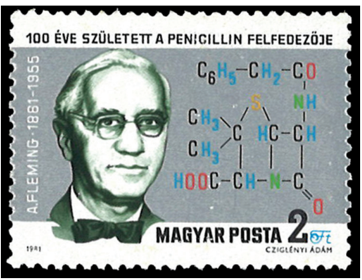
Alexander Fleming (1881–1955): Discoverer of penicillin
Open accessAbstract
I did not invent penicillin
Overview
AI snapshot
Written from the paper’s full text.
TL;DR
A short biographical narrative of Alexander Fleming (1881–1955), tracing his Scottish upbringing, medical training at St Mary's, the accidental discoveries of lysozyme and penicillin, and his later honours and death. It is a commemorative biography rather than an original research study.
Key findings
- Fleming was born on August 6, 1881 at Lochfield Farm, Scotland, graduated with distinction from St Mary's Medical School in 1906, and remained with Sir Almroth Wright's research group throughout his career.
- In 1922 he discovered lysozyme, an enzyme with weak antibacterial properties found in nasopharyngeal mucus, tears, saliva, skin, hair, fingernails and egg white; it was effective against only a small number of non-harmful bacteria.
- In 1928, an uncovered Petri dish contaminated with mould led him to identify the Penicillium genus and name its antibacterial "mould juice" penicillin; he found it effective against all Gram-positive pathogens (e.g. scarlet fever, pneumonia, gonorrhoea, meningitis, diphtheria).
- His 1929 publication in the British Journal of Experimental Pathology met little initial enthusiasm, and large-scale isolation was achieved only in 1940 by Howard Florey and Ernst Chain; Fleming shared the 1945 Nobel Prize in Physiology/Medicine with them.
Methods
- Design: narrative biography, not an empirical study; no stated study design, dataset, or analysis.
- Content is organised chronologically/thematically (Beginnings, Fortunate Choices, "Mould Juice", Personal Life) and draws on a bibliography of secondary sources (e.g. MacFarlane, Maurois, Ludovici, Nobel Lectures).
- No sample, statistical analysis, or systematic methodology is reported.
Limitations
- Not stated in the paper: the article presents no limitations section.
- Evident from the text: it is a biographical narrative relying on secondary sources rather than primary archival research, with no stated methods for source selection or verification.
Model-written summary. Check it against the paper before relying on it.
Integrity signals
Registry
Cites
Statistics
Figures
Verification
Claims the paper makes
24 No basis given · 3 Own result · 1 Sources not found
In the paper
“Although Fleming published the discovery of penicillin in the British Journal of Experimental Pathology in 1929”
What the sources say
- Not matchedcites Fleming A. On the antibacterial action of cultures of a penicillium, with special reference to their use in the isolation of B. influenzae. 1929.
Couldn’t be matched to a paper in Crossref, so it can’t be checked.
plain- Asserted: passes — The authors put it forward as true.
- Checkable: passes — It can be checked against evidence.
- Load-bearing: unclear — It is unclear whether the paper’s conclusions depend on it.
- Based: passes — The paper gives a reason why it holds.
- Not matched
The paper states this without a source or data behind it here, so there is nothing to check it against. The quote shows it is in the paper.
In the paper
“He discerned that it was not the mould itself but some 'juice' it had produced that had killed the bacteria.”
plaindirect- Asserted: passes — The authors put it forward as true.
- Checkable: passes — It can be checked against evidence.
- Load-bearing: passes — The paper’s conclusions depend on it.
- Based: passes — The paper gives a reason why it holds.
The paper states this without a source or data behind it here, so there is nothing to check it against. The quote shows it is in the paper.
In the paper
“earned Fleming - together with Howard Florey and Ernst Chain, who devised methods for the large-scale isolation and production of penicillin - the 1945 Nobel Prize in Physiology/Medicine.”
plaindirect- Asserted: passes — The authors put it forward as true.
- Checkable: passes — It can be checked against evidence.
- Load-bearing: unclear — It is unclear whether the paper’s conclusions depend on it.
- Based: passes — The paper gives a reason why it holds.
The paper states this without a source or data behind it here, so there is nothing to check it against. The quote shows it is in the paper.
In the paper
“Fleming observed that the bacteria in proximity to the mould colonies were dying, as evidenced by the dissolving and clearing of the surrounding agar gel.”
plaindirect- Asserted: passes — The authors put it forward as true.
- Checkable: passes — It can be checked against evidence.
- Load-bearing: passes — The paper’s conclusions depend on it.
- Based: passes — The paper gives a reason why it holds.
A result the paper reports from its own data — it cites no other source for it, so there is none to check. The quote shows it is in the paper.
In the paper
“experiments found that this enzyme was effective against only a small number of non-harmful bacteria.”
plain- Asserted: passes — The authors put it forward as true.
- Checkable: passes — It can be checked against evidence.
- Load-bearing: unclear — It is unclear whether the paper’s conclusions depend on it.
- Based: passes — The paper gives a reason why it holds.
A result the paper reports from its own data — it cites no other source for it, so there is none to check. The quote shows it is in the paper.
In the paper
“It was not until 1940, just as he was contemplating retirement, that two scientists, Howard Florey and Ernst Chain, became interested in penicillin.”
plain- Asserted: passes — The authors put it forward as true.
- Checkable: passes — It can be checked against evidence.
- Load-bearing: unclear — It is unclear whether the paper’s conclusions depend on it.
- Based: passes — The paper gives a reason why it holds.
The paper states this without a source or data behind it here, so there is nothing to check it against. The quote shows it is in the paper.
In the paper
“In time, they were able to mass-produce it for use during World War II.”
plaindirect- Asserted: passes — The authors put it forward as true.
- Checkable: passes — It can be checked against evidence.
- Load-bearing: unclear — It is unclear whether the paper’s conclusions depend on it.
- Based: passes — The paper gives a reason why it holds.
- Probably not a substantial claim. 20
- It may state two separate claims as one. 3
The paper states this without a source or data behind it here, so there is nothing to check it against. The quote shows it is in the paper.
In the paper
“earned Fleming - together with Howard Florey and Ernst Chain, who devised methods for the large-scale isolation and production of penicillin - the 1945 Nobel Prize in Physiology/Medicine.”
plain- Asserted: passes — The authors put it forward as true.
- Checkable: passes — It can be checked against evidence.
- Load-bearing: fails — The paper’s conclusions may not depend on it.
- Based: passes — The paper gives a reason why it holds.
Probably not a substantial claim. The paper’s conclusions may not depend on it.
The paper states this without a source or data behind it here, so there is nothing to check it against. The quote shows it is in the paper.
In the paper
“in 1922, he discovered lysozyme, an enzyme with weak antibacterial properties.”
plaindirect- Asserted: passes — The authors put it forward as true.
- Checkable: passes — It can be checked against evidence.
- Load-bearing: fails — The paper’s conclusions may not depend on it.
- Based: passes — The paper gives a reason why it holds.
Probably not a substantial claim. The paper’s conclusions may not depend on it.
The paper states this without a source or data behind it here, so there is nothing to check it against. The quote shows it is in the paper.
In the paper
“An uncovered Petri dish sitting next to an open window became contaminated with mould spores.”
plain- Asserted: passes — The authors put it forward as true.
- Checkable: passes — It can be checked against evidence.
- Load-bearing: passes — The paper’s conclusions depend on it.
- Based: passes — The paper gives a reason why it holds.
Probably not a substantial claim.
The paper states this without a source or data behind it here, so there is nothing to check it against. The quote shows it is in the paper.
In the paper
“He was elected a Fellow of the Royal Society in 1943”
plain- Asserted: passes — The authors put it forward as true.
- Checkable: passes — It can be checked against evidence.
- Load-bearing: fails — The paper’s conclusions may not depend on it.
- Based: passes — The paper gives a reason why it holds.
Probably not a substantial claim. The paper’s conclusions may not depend on it.
The paper states this without a source or data behind it here, so there is nothing to check it against. The quote shows it is in the paper.
In the paper
“In 1928, Fleming began a series of experiments involving the common staphylococcal bacteria.”
plain- Asserted: passes — The authors put it forward as true.
- Checkable: passes — It can be checked against evidence.
- Load-bearing: fails — The paper’s conclusions may not depend on it.
- Based: passes — The paper gives a reason why it holds.
Probably not a substantial claim. The paper’s conclusions may not depend on it.
The paper states this without a source or data behind it here, so there is nothing to check it against. The quote shows it is in the paper.
In the paper
“A recipient of some thirty honorary degrees”
plain- Asserted: passes — The authors put it forward as true.
- Checkable: passes — It can be checked against evidence.
- Load-bearing: fails — The paper’s conclusions may not depend on it.
- Based: passes — The paper gives a reason why it holds.
Probably not a substantial claim. The paper’s conclusions may not depend on it.
The paper states this without a source or data behind it here, so there is nothing to check it against. The quote shows it is in the paper.
In the paper
“He found it to be effective against all Gram-positive pathogens, which are responsible for diseases such as scarlet fever, pneumonia, gonorrhoea, meningitis and diphtheria.”
plaindirect- Asserted: passes — The authors put it forward as true.
- Checkable: passes — It can be checked against evidence.
- Load-bearing: fails — The paper’s conclusions may not depend on it.
- Based: fails — The paper may give no reason why it holds.
Probably not a substantial claim. The paper’s conclusions may not depend on it. The paper may give no reason why it holds. It may state two separate claims as one.
The paper states this without a source or data behind it here, so there is nothing to check it against. The quote shows it is in the paper.
In the paper
“He was soon able to isolate larger amounts of lysozyme from egg white”
plain- Asserted: passes — The authors put it forward as true.
- Checkable: passes — It can be checked against evidence.
- Load-bearing: fails — The paper’s conclusions may not depend on it.
- Based: passes — The paper gives a reason why it holds.
Probably not a substantial claim. The paper’s conclusions may not depend on it.
The paper states this without a source or data behind it here, so there is nothing to check it against. The quote shows it is in the paper.
In the paper
“the scientific community greeted his work with little initial enthusiasm.”
plain- Asserted: passes — The authors put it forward as true.
- Checkable: passes — It can be checked against evidence.
- Load-bearing: fails — The paper’s conclusions may not depend on it.
- Based: passes — The paper gives a reason why it holds.
Probably not a substantial claim. The paper’s conclusions may not depend on it.
The paper states this without a source or data behind it here, so there is nothing to check it against. The quote shows it is in the paper.
In the paper
“He also discovered lysozyme in tears, saliva, skin, hair and fingernails.”
plain- Asserted: passes — The authors put it forward as true.
- Checkable: passes — It can be checked against evidence.
- Load-bearing: fails — The paper’s conclusions may not depend on it.
- Based: passes — The paper gives a reason why it holds.
Probably not a substantial claim. The paper’s conclusions may not depend on it.
A result the paper reports from its own data — it cites no other source for it, so there is none to check. The quote shows it is in the paper.
In the paper
“and a Knight Grand Cross of the Order of Alfonso X the Wise in 1948.”
plain- Asserted: passes — The authors put it forward as true.
- Checkable: passes — It can be checked against evidence.
- Load-bearing: fails — The paper’s conclusions may not depend on it.
- Based: passes — The paper gives a reason why it holds.
Probably not a substantial claim. The paper’s conclusions may not depend on it.
The paper states this without a source or data behind it here, so there is nothing to check it against. The quote shows it is in the paper.
In the paper
“In 1928, he became Professor of Bacteriology at St Mary's.”
plain- Asserted: passes — The authors put it forward as true.
- Checkable: passes — It can be checked against evidence.
- Load-bearing: fails — The paper’s conclusions may not depend on it.
- Based: passes — The paper gives a reason why it holds.
Probably not a substantial claim. The paper’s conclusions may not depend on it.
The paper states this without a source or data behind it here, so there is nothing to check it against. The quote shows it is in the paper.
In the paper
“in 1945, he won the most prestigious award, the Nobel Prize in Physiology/ Medicine.”
plain- Asserted: passes — The authors put it forward as true.
- Checkable: passes — It can be checked against evidence.
- Load-bearing: fails — The paper’s conclusions may not depend on it.
- Based: passes — The paper gives a reason why it holds.
Probably not a substantial claim. The paper’s conclusions may not depend on it.
The paper states this without a source or data behind it here, so there is nothing to check it against. The quote shows it is in the paper.
In the paper
“He named the 'mould juice' penicillin.”
plain- Asserted: passes — The authors put it forward as true.
- Checkable: passes — It can be checked against evidence.
- Load-bearing: fails — The paper’s conclusions may not depend on it.
- Based: passes — The paper gives a reason why it holds.
Probably not a substantial claim. The paper’s conclusions may not depend on it.
The paper states this without a source or data behind it here, so there is nothing to check it against. The quote shows it is in the paper.
In the paper
“He was able to isolate the mould and identified it as a member of the Penicillium genus.”
plain- Asserted: passes — The authors put it forward as true.
- Checkable: passes — It can be checked against evidence.
- Load-bearing: unclear — It is unclear whether the paper’s conclusions depend on it.
- Based: passes — The paper gives a reason why it holds.
It may state two separate claims as one.
The paper states this without a source or data behind it here, so there is nothing to check it against. The quote shows it is in the paper.
In the paper
“He was made a Knight Bachelor by King George VI in 1944”
plain- Asserted: passes — The authors put it forward as true.
- Checkable: passes — It can be checked against evidence.
- Load-bearing: fails — The paper’s conclusions may not depend on it.
- Based: passes — The paper gives a reason why it holds.
Probably not a substantial claim. The paper’s conclusions may not depend on it.
The paper states this without a source or data behind it here, so there is nothing to check it against. The quote shows it is in the paper.
In the paper
“Time Magazine named Fleming one of the 100 most important people of the 20th century.”
plain- Asserted: passes — The authors put it forward as true.
- Checkable: passes — It can be checked against evidence.
- Load-bearing: fails — The paper’s conclusions may not depend on it.
- Based: passes — The paper gives a reason why it holds.
Probably not a substantial claim. The paper’s conclusions may not depend on it.
The paper states this without a source or data behind it here, so there is nothing to check it against. The quote shows it is in the paper.
In the paper
“in 1922, he discovered lysozyme, an enzyme with weak antibacterial properties.”
plain- Asserted: passes — The authors put it forward as true.
- Checkable: passes — It can be checked against evidence.
- Load-bearing: fails — The paper’s conclusions may not depend on it.
- Based: passes — The paper gives a reason why it holds.
Probably not a substantial claim. The paper’s conclusions may not depend on it.
The paper states this without a source or data behind it here, so there is nothing to check it against. The quote shows it is in the paper.
In the paper
“Additionally, Fleming found it difficult to isolate this precious 'mould juice' in large quantities.”
plain- Asserted: passes — The authors put it forward as true.
- Checkable: passes — It can be checked against evidence.
- Load-bearing: fails — The paper’s conclusions may not depend on it.
- Based: passes — The paper gives a reason why it holds.
Probably not a substantial claim. The paper’s conclusions may not depend on it.
The paper states this without a source or data behind it here, so there is nothing to check it against. The quote shows it is in the paper.
In the paper
“A lexander Fleming was a Scottish physician-scientist who was recognised for discovering penicillin.”
plain- Asserted: passes — The authors put it forward as true.
- Checkable: passes — It can be checked against evidence.
- Load-bearing: fails — The paper’s conclusions may not depend on it.
- Based: passes — The paper gives a reason why it holds.
Probably not a substantial claim. The paper’s conclusions may not depend on it. It may state two separate claims as one.
The paper states this without a source or data behind it here, so there is nothing to check it against. The quote shows it is in the paper.
In the paper
“elevated to the level of Emeritus Professor of Bacteriology at the University of London in 1948.”
plain- Asserted: passes — The authors put it forward as true.
- Checkable: passes — It can be checked against evidence.
- Load-bearing: fails — The paper’s conclusions may not depend on it.
- Based: passes — The paper gives a reason why it holds.
Probably not a substantial claim. The paper’s conclusions may not depend on it.
The paper relies on this without support.
Penicillin has saved millions of lives.
“The simple discovery and use of the antibiotic agent has saved millions of lives”
Citations
Cites
Fleming, A. (2001) · PubMed Central · Cited by 245
Three Centuries of Microbiology.
(1975) · Annals of Internal Medicine · doi:10.7326/0003-4819-82-1-132_4 · Cited by 118
Nobelstiftelsen, Lindsten, J., & Jörnvall, H. (1964) · Cited by 35
The Life of Sir Alexander Fleming.
BEAN, W. B. (1960) · Archives of Internal Medicine · doi:10.1001/archinte.1960.00270130184022 · Cited by 33
The life of Sir Alexander Fleming, discoverer of penicillin
Maurois, A. (1959) · Cited by 20
Research works printed but not linked: 3
- • Berger M. Famous Men of Modern Biology. New York: Thomas Y. Crowell Company, 1968.
- • Ludovici LJ. Fleming: Discoverer of Penicillin. London: The Scientific Book Club, 1952.
- • MacFarlane G. Alexander Fleming. Cambridge: Harvard University Press, 1984.
Cited by
Sorted by citations
Items 101–200 of 341
Harnessing antimicrobial peptides in endodontics
Kong, X., Vishwanath, V., Neelakantan, P., & Ye, Z. (2024) · International Endodontic Journal · doi:10.1111/iej.14043 · Cited by 22
Nutritional Influences on Immunity and Infection
Noland, J., & Noland, D. (2020) · Springer eBooks · doi:10.1007/978-3-030-30730-1_20 · Cited by 22
Antibiotic-Resistant Salmonella in Animal Products Jeopardize Human Health
Oh, H., Choi, Y., & Lee, J. (2025) · Food Science of Animal Resources · doi:10.5851/kosfa.2025.e4 · Cited by 26
Tan, L., Li, Y., Pan, X., Marina, M. L., & Jiang, Z. (2019) · Journal of Chromatography A · doi:10.1016/j.chroma.2019.460776 · Cited by 20
Metal and metal oxide nanostructures applied as alternatives of antibiotics
Mir, S. A., Shrotriya, V., Al‐Muhimeed, T. I., Hossain, M. A., & Zaman, M. B. (2023) · Inorganic Chemistry Communications · doi:10.1016/j.inoche.2023.110503 · Cited by 21
Light‐Assisted 3D‐Printed Hydrogels for Antibacterial Applications
Zhang, L., Nasar, N. K. A., Huang, X., Hu, C., Pang, X., Chen, X., Qiao, R., & Davis, T. P. (2024) · Small Science · doi:10.1002/smsc.202400097 · Cited by 21
Spectroscopic, DFT studies and electronic properties of novel functionalized bis-1,3,4-thiadiazoles
Dena, A. S. A., Muhammad, Z. A., & Hassan, W. M. I. (2019) · Chemical Papers · doi:10.1007/s11696-019-00833-7 · Cited by 19
Antibiotic conjugates: Using molecular Trojan Horses to overcome drug resistance
Li, X., Dong, S., Pan, Q., Liu, N., & Zhang, Y. (2025) · Biomedicine & Pharmacotherapy · doi:10.1016/j.biopha.2025.118007 · Cited by 18
Rai, A., & Khairnar, K. (2021) · Brazilian Journal of Microbiology · doi:10.1007/s42770-021-00566-4 · Cited by 18
Combining Bacteriophages with Other Antibacterial Agents to Combat Bacteria
Knežević, P., & Sabo, V. A. (2019) · Springer eBooks · doi:10.1007/978-3-030-26736-0_10 · Cited by 18
Juknius, T., Juknienė, I., Tamulevičius, T., Ružauskas, M., Pamparienė, I., Oberauskas, V., Jurkevičiūtė, A., Vasiliauskas, A., & Tamulevičius, S. (2020) · Materials · doi:10.3390/ma13143180 · Cited by 18
Bridging the gap with bacterial art
Frankel, E., Temple, J., Dikener, E., & Berkmen, M. (2023) · FEMS Microbiology Letters · doi:10.1093/femsle/fnad025 · Cited by 17
Antimicrobial biomaterials with non‐antibiotic strategy
Ge, X. (2019) · Biosurface and Biotribology · doi:10.1049/bsbt.2019.0010 · Cited by 17
Plant Disease Management by Bioactive Natural Products
Singh, S., Kumar, V., Datta, S., Dhanjal, D. S., & Singh, J. (2020) · Springer eBooks · doi:10.1007/978-981-15-3024-1_2 · Cited by 17
Penicillium genus as a source for anti-leukemia compounds: an overview from 1984 to 2020
de Carvalho, A. C., Ogawa, C. Y., Rodrigues, L. D. C., de Medeiros, L. S., & Veiga, T. A. M. (2021) · Leukemia & lymphoma/Leukemia and lymphoma · doi:10.1080/10428194.2021.1897804 · Cited by 17
The Penicillin Pioneer: Alexander Fleming’s Journey to a Medical Breakthrough
Chhabra, S., Taksande, A. B., & Munjewar, P. (2024) · Cureus · doi:10.7759/cureus.65179 · Cited by 16
Jahangir, N., Niazi, N. S., Aljawadi, A., Reid, A. J., Wong, J. K. F., Drampalos, E., & Pillai, A. (2019) · Journal of Orthopaedics · doi:10.1016/j.jor.2019.03.013 · Cited by 16
Mendonça, J., Soares-Guedes, C., Silva, C., Sá, S., de Oliveira, M. D., Accioly, G., Baylina, P., Barata, P., Pereira, C., & Fernandes, R. (2022) · Biology · doi:10.3390/biology11020256 · Cited by 15
Nanotechnology Involved in Treating Urinary Tract Infections: An Overview
Crintea, A., Carpa, R., Mitre, A. O., Petho, R. I., Chelaru, V.-F., Nădășan, S.-M., Neamți, L., & Duţu, A. (2023) · Nanomaterials · doi:10.3390/nano13030555 · Cited by 19
Employing synthetic biology to expand antibiotic discovery
Cook, G. D., & Stasulli, N. M. (2024) · SLAS TECHNOLOGY · doi:10.1016/j.slast.2024.100120 · Cited by 17
Zhang, H., Lee, B. J. Y., Wang, T., Xiang, X., Tan, Y., Han, Y., Bi, Y., Zhi, F., Wang, X., He, F., et al. (2025) · hLife · doi:10.1016/j.hlife.2025.04.004 · Cited by 19
Lalchhandama, K. (2021) · WikiJournal of Medicine · doi:10.15347/wjm/2021.003 · Cited by 14
Sharma, V., Sharma, J. K., Kansay, V., Dutta, A., Raj, M., Singh, M. P., Kapoor, A., Pahwa, C., Sharma, A., Kumar, S., et al. (2024) · Nano Express · doi:10.1088/2632-959x/ad2997 · Cited by 14
Biotechnological Application of Health-Promising Bioactive Compounds
Singh, A., & Negi, P. S. (2025) · Sustainable landscape planning and natural resources management · doi:10.1007/978-3-031-76859-0_5 · Cited by 15
Nature-Inspired Antimicrobial Surfaces and Their Potential Applications in Food Industries
Soni, A., & Brightwell, G. (2022) · Foods · doi:10.3390/foods11060844 · Cited by 14
Bacteriophages: Potential Biocontrol Agents and Treatment Options for Bacterial Pathogens
Harshitha, N., Rajasekhar, A., Saurabh, S., Sonalkar, R., Tejashwini, M. M., & Mitra, S. D. (2022) · Clinical Microbiology Newsletter · doi:10.1016/j.clinmicnews.2022.02.002 · Cited by 13
Priya, Gaur, P. K., & Kumar, S. (2024) · Assay and Drug Development Technologies · doi:10.1089/adt.2024.060 · Cited by 13
Synthesis of poly-tetrahydropyrimidine antibacterial polymers and research of their basic properties
Xu, T., Li, W., Zhang, R., Guo, S., Yu, B., Cong, H., & Shen, Y. (2021) · Biomaterials Science · doi:10.1039/d1bm01465j · Cited by 13
Bacteria and Their Industrial Importance
Akoijam, N., Kalita, D., & Joshi, S. R. (2022) · Springer eBooks · doi:10.1007/978-981-16-5214-1_2 · Cited by 15
Nanomedicine and Phage Capsids
Serwer, P., & Wright, E. T. (2018) · Viruses · doi:10.3390/v10060307 · Cited by 12
Strategies Used for the Discovery of New Microbial Metabolites with Antibiotic Activity
Dasí-Delgado, P., Andreu, C., & del Olmo, M. (2025) · Molecules · doi:10.3390/molecules30132868 · Cited by 11
Pedraza‐Sánchez, S., Cruz-González, A., Palmeros-Rojas, O., Gálvez-Romero, J. L., Bellanti, J. A., & Torres, M. (2023) · Frontiers in Immunology · doi:10.3389/fimmu.2022.987231 · Cited by 10
Recent Progress in Terrestrial Biota Derived Antibacterial Agents for Medical Applications
Vladkova, T. G., Smani, Y., Martinov, B. L., & Gospodinova, D. N. (2024) · Molecules · doi:10.3390/molecules29204889 · Cited by 14
Recent Developments in Penem Antibiotics: Structural and Therapeutic Perspectives
Rusu, A., Moldovan, O.-L., Donici, E., & Uncu, L. (2025) · Molecules · doi:10.3390/molecules30102126 · Cited by 11
Serendipity: A way of stimulating researchers' creativity
Kennedy, I., Whitehead, D., & Ferdinand, D. (2021) · Journal of Creativity · doi:10.1016/j.yjoc.2021.100014 · Cited by 11
Seaton, D., Ashiru-Oredope, D. A. I., Charlesworth, J., Gemmell, I., & Harrison, R. S. (2022) · Pharmacy · doi:10.3390/pharmacy10040098 · Cited by 11
Biodiversity of Actinomycetes and Their Secondary Metabolites: A Comprehensive Review
khan, S., Shanzeba, Gul, A., Jehan, S., Khan, Z., saeed, J., Shirazi, R., Raziq, A., Khan, M. W., & Ullah, H. (2022) · Journal of advanced Biomedical and Pharmaceutical Sciences · doi:10.21608/jabps.2022.161607.1165 · Cited by 13
Reappraising Fleming’s snot and mould
Lalchhandama, K. (2020) · Science Vision · doi:10.33493/scivis.20.01.03 · Cited by 11
Acyldepsipeptide Analogues: A Future Generation Antibiotics for Tuberculosis Treatment
Cobongela, S. Z. Z., Makatini, M. M., Mdluli, P. S., & Sibuyi, N. R. S. (2022) · Pharmaceutics · doi:10.3390/pharmaceutics14091956 · Cited by 11
Muthu, S., Venkateshbabu, G., Al-Younis, Z. K., Altemimi, A. B., Perumal, P., Lakshmikanthan, M., Krishnan, K., Najm, M. A. A., Giuffrè, A. M., & Govindan, L. (2024) · European Food Research and Technology · doi:10.1007/s00217-024-04467-2 · Cited by 10
Mukomena, P. N., Simuunza, M. C., Munsaka, S. M., Kwenda, G., Bumbangi, F. N., Yamba, K., Kabwe, J., Kayembe, J.-M., & Muma, J. B. (2024) · JAC-Antimicrobial Resistance · doi:10.1093/jacamr/dlae139 · Cited by 10
Photocatalytic Degradation of Tetracycline Hydrochloride by Zinc oxide/Polypyrrole/Carbon nanotubes
Lv, Y., Gong, Z., Ren, Z., Guan, Y., Wu, J., & Lv, K. (2023) · ChemistrySelect · doi:10.1002/slct.202204762 · Cited by 10
Agar-based ZIF-90 antibacterial hydrogels for biomedical applications
Tian, Y., Jiao, C., Wang, S., Cong, H., Shen, Y., & Yu, B. (2020) · Ferroelectrics · doi:10.1080/00150193.2020.1760605 · Cited by 10
Xu, F., Cudmore, E., Walji, S., Zhang, L., Kostashuk, M., Jun, I., Randhawa, G., Pan, Z., & Hoare, T. R. (2025) · Advanced Healthcare Materials · doi:10.1002/adhm.202403800 · Cited by 9
Antibiotic Resistance Crisis: From Bacterial Bioprospecting to Artificial Intelligence
Cunha-Ferreira, I. C., Vizzotto, C. S., Peixoto, J., & Krüger, R. H. (2025) · Environmental Microbiology Reports · doi:10.1111/1758-2229.70267 · Cited by 9
Lyndem, S., Gazi, R., Jana, M., Belwal, V. K., & Roy, A. S. (2021) · Journal of Biomolecular Structure and Dynamics · doi:10.1080/07391102.2021.1995499 · Cited by 9
Role of pyridine and its privileged derivatives as anti-infective agents
Sharma, P., Suthar, V., Aggarwal, M., Singh, R., & Kumar, K. P. (2022) · Elsevier eBooks · doi:10.1016/b978-0-323-91221-1.00016-6 · Cited by 8
Wu, L., Du, T., Pang, Y., Liu, B., Li, L., Liu, Y., Lv, H., & Huang, B. (2023) · Journal of Materials Science Materials in Electronics · doi:10.1007/s10854-023-10778-z · Cited by 9
Antimicrobial Stewardship in Low- and Middle-Income Countries
Dapás, J. I., & Quiros, R. E. (2018) · Current treatment options in infectious diseases/Current treatment options in infectious disease · doi:10.1007/s40506-018-0141-4 · Cited by 9
Rybak, B., Wawrzyniak, N., Wolska, L., & Potrykus, M. (2021) · Acta Biochimica Polonica · doi:10.18388/abp.2020_5740 · Cited by 9
Chang, W.-H., Yu, J.-C., Yang, S.-Y., Lin, Y.-C., Wang, C., You, H.-L., Wu, J.-J., Lee, M. S.-S., & Lee, G. (2017) · Biomicrofluidics · doi:10.1063/1.4977439 · Cited by 9
Therapeutic Potential of Microbial Metabolites: New Insights and Perspectives
Hashmi, M. A. T. S., Khawar, M. B., Naseem, R., Afzal, A., Shahid, N., Abbasi, M. H., Sheikh, N., Afzal, N., Mukhtar, M., Shahzaman, S., et al. (2023) · Biomedical Research and Therapy · doi:10.15419/bmrat.v10i4.805 · Cited by 8
Harnessing biocatalysis as a green tool in antibiotic synthesis and discovery
Fernandes, G., Kim, S., & Castagnolo, D. (2024) · RSC Advances · doi:10.1039/d4ra04824e · Cited by 9
The Use of Calcium Phosphate Bioceramics for the Treatment of Osteomyelitis
Oliveira, C. S., Neguț, I., & Bita, B. I. (2024) · Ceramics · doi:10.3390/ceramics7040113 · Cited by 8
Synthetic and biopolymers-based antimicrobial hybrid hydrogels: a focused review
Singh, A., Sharma, J. J., Mohanta, B., Sood, A., Han, S. S., & Sharma, A. (2023) · Journal of Biomaterials Science Polymer Edition · doi:10.1080/09205063.2023.2278814 · Cited by 8
Halawa, M., Akantibila, M., Reid, B. E., & Carabetta, V. J. (2023) · Frontiers in Bacteriology · doi:10.3389/fbrio.2023.1304444 · Cited by 8
Lamiyan, A. K., Dalal, R., & Kumar, N. R. (2020) · The Journal of venomous animals and toxins including tropical diseases · doi:10.1590/1678-9199-jvatitd-2020-0001 · Cited by 8
Healthcare Artificial Intelligence in India and Ethical Aspects
Sarkar, A., Singh, P., & Varkey, M. (2024) · Springer eBooks · doi:10.1007/978-981-97-0503-0_7 · Cited by 10
Microbial Products: Protein, Enzyme, Secondary Metabolites and Chemicals
Ranghar, S., Agrawal, S., & Agrawal, P. K. (2019) · Springer eBooks · doi:10.1007/978-981-32-9084-6_17 · Cited by 8
Sverdrup, H. U., Frolova, L. L., & Sverdrup, A. E. (2020) · Water Air & Soil Pollution · doi:10.1007/s11270-020-04526-w · Cited by 8
Velhal, M., Dave, M., Sun, E., Holla, S., & Liang, H. Y. (2024) · Materials Today Sustainability · doi:10.1016/j.mtsust.2024.100885 · Cited by 7
The British Army's contribution to tropical medicine
Herron, J. B. T., & Dunbar, J. A. T. (2018) · Clinical Medicine · doi:10.7861/clinmedicine.18-5-380 · Cited by 7
Antibiotic Prescription Patterns for Endodontic Procedures in India: A KAP Survey
Vengidesh, R., Kadandale, S., Ramachandran, A., Srinivasan, S., Parthasarathy, R., Thanikachalam, Y., & Kumar, P. (2023) · Cureus · doi:10.7759/cureus.37804 · Cited by 7
Marine Biotechnology and Its Applications in Drug Discovery
Sankarapandian, V., Jothirajan, B., Arasu, S. P., Subramaniam, S., & Maran, B. A. V. (2023) · Springer eBooks · doi:10.1007/978-981-99-0624-6_9 · Cited by 8
Lessons learned for postoperative wound healing: respect the past and embrace the future
Zelle, B. A., & Stahel, P. F. (2019) · Patient Safety in Surgery · doi:10.1186/s13037-019-0185-5 · Cited by 7
The Mongoose Phenomenon: A New Logical Heuristic
Varkey, T., Varkey, J. A., Sivakumar, M., & Merhavy, Z. (2022) · Galician Medical Journal · doi:10.21802/gmj.2022.2.6 · Cited by 7
Novel fungal diversity: A new prospect for the commercial production of future anti-cancer compounds
Kumar, P., Sharma, A., Bamrah, G. K., & Choi, K. (2024) · Fungal Biology Reviews · doi:10.1016/j.fbr.2023.100355 · Cited by 6
Possible Alternative Strategies to Combat Antimicrobial Resistance
Aziz, E. A. A., El-Sheikh, S. M. A., Galal, A. A. A., & Refky, Y. (2024) · Zagazig Veterinary Journal/Zagazig Veterinary Journal (Online) · doi:10.21608/zvjz.2024.241916.1222 · Cited by 6
Pham, T.-T.-H., Le, H.-M.-T., Le, H.-M., Phan, Q.-H., Vo, V.-T., & Truong, P. L. (2024) · Optics & Laser Technology · doi:10.1016/j.optlastec.2024.111302 · Cited by 6
Bayati, S. A. (2018) · International Journal of Current Microbiology and Applied Sciences · doi:10.20546/ijcmas.2018.701.229 · Cited by 6
Understanding the Small World: The Microbes
Chanda, P., & Joshi, S. R. (2022) · Springer eBooks · doi:10.1007/978-981-16-5214-1_1 · Cited by 6
Antibiotic susceptibility of wound isolates in plastic surgery patients at a tertiary care centre
Patil, S. B., Paramne, A. V., & Harsh, S. (2016) · Indian Journal of Plastic Surgery · doi:10.4103/0970-0358.191324 · Cited by 6
Miller, M. J. (2025) · ACS Infectious Diseases · doi:10.1021/acsinfecdis.5c00911 · Cited by 5
Zhang, Y., Li, D., & Tian, X. (2024) · Molecules · doi:10.3390/molecules29174115 · Cited by 5
Elsayed, N. (2025) · Next Nanotechnology · doi:10.1016/j.nxnano.2025.100182 · Cited by 5
Establishment and Management of Culture Collections of Microorganisms (mBRC): An Overview
Hợp, D. V. (2018) · Soil biology · doi:10.1007/978-3-319-96971-8_3 · Cited by 5
Urine Tests for Diagnosis of Infectious Diseases and Antibiotic-Resistant Pathogens
Eltai, N. O., Alhussain, H., Doiphode, S., Thani, A. A. A., & Yassine, H. M. (2019) · IntechOpen eBooks · doi:10.5772/intechopen.89231 · Cited by 6
Patient-centered Outcomes for Individuals with a Venous Leg Ulcer: A Scoping Review
Lazar, M., Ershadi, S., Bolton, L. L., & Phillips, T. J. (2022) · Advances in Skin & Wound Care · doi:10.1097/01.asw.0000902496.57391.80 · Cited by 5
New Trends on Photoswitchable Antibiotics: From Syntheses to Applications
Aubert, A., Fayeulle, A., Vayssade, M., Billamboz, M., & L閛nard, E. (2023) · Photocatalysis: research and potential · doi:10.35534/prp.2023.10007 · Cited by 5
History and Epidemiology of Pediatric Appendicitis
Ares, G. J., & Hunter, C. J. (2019) · Springer eBooks · doi:10.1007/978-3-030-15006-8_1 · Cited by 5
Old fusidane-type antibiotics for new challenges: Chemistry and biology
Chuan, T. I. A. N., Ke, W. A. N. G., ZHANG, X., Gang, L. I., & Hong-Xiang, L. O. U. (2022) · Chinese Journal of Natural Medicines · doi:10.1016/s1875-5364(21)60114-0 · Cited by 5
Raimond, L., Halbus, A. F., Athab, Z. H., & Paunov, V. N. (2022) · Materials Advances · doi:10.1039/d2ma00271j · Cited by 5
Hartmann’s operation 100 years later: Time to think and stop?
Hassranah, S. C., Naraynsingh, V., Harnarayan, P., Harnanan, D., Cawich, S. O., Singh, Y., & Islam, S. (2022) · Medical Hypotheses · doi:10.1016/j.mehy.2022.110911 · Cited by 4
Antibiotic Resistance: The Silent Pandemia (in the COVID-19 Era)
Salgado-Peralvo, Á.-O., Kewalramani, N., & Mateos‐Moreno, M. (2023) · International Dental Journal · doi:10.1016/j.identj.2023.01.003 · Cited by 4
Unlocking the Therapeutic Potential of Microorganisms in Revolutionizing Pharmaceuticals
Shreya, S., Gupta, J., & Verma, A. (2024) · Springer eBooks · doi:10.1007/978-981-99-9617-9_7 · Cited by 4
Hong, D., Nie, C.-J., Gao, L., & Liu, Y. (2024) · Analytical Methods · doi:10.1039/d4ay00884g · Cited by 4
Rehan, M., Akhtar, J., Islam, A., Badruddeen, B., Khan, M. I., Ahmad, A., & Ahmad, M. K. (2025) · IntechOpen eBooks · doi:10.5772/intechopen.1009429 · Cited by 4
IJAR, Chalabi, R., Mohammed, R., Adnan, R., & Bayati, S. A. (2017) · International Journal of Advanced Research · doi:10.21474/ijar01/4228 · Cited by 4
Art and Spirituality in the Covid-19 Epoch: An Exploratory Reading of Ben Okri’s Poetry
Ratau, N. S. (2021) · Pharos Journal of Theology · doi:10.46222/pharosjot.102.214 · Cited by 4
Stern (2021) · The Journal of Family Practice · doi:10.12788/jfp.0250 · Cited by 4
Casciaro, B., Ghirga, F., Cappiello, F., Vergine, V., Loffredo, M. R., Cammarone, S., Puglisi, E., Tortora, C., Quaglio, D., Mori, M., et al. (2022) · Antibiotics · doi:10.3390/antibiotics11010084 · Cited by 4
Bioprospecting potential of microbes for the therapeutic application
Aware, C. B., & Jadhav, J. P. (2022) · Elsevier eBooks · doi:10.1016/b978-0-323-90958-7.00023-6 · Cited by 4
Kırmusaoğlu, S., & Bhardwaj, S. B. (2019) · IntechOpen eBooks · doi:10.5772/intechopen.78081 · Cited by 5
Colistin the last resort drug in 21st century antibiotics to combat Multidrug resistance superbugs
Sahoo, S., Mohanty, J. N., Routray, S. P., Khandia, R., Das, J., Shah, S., & Swarnkar, T. (2023) · Journal of Experimental Biology and Agricultural Sciences · doi:10.18006/2023.11(6).919.929 · Cited by 4
Regulatory Aspects of the Therapeutic Use of Bacteriophages: Europe
Pelfrene, E., Sebris, Z., & Cavaleri, M. (2021) · Springer eBooks · doi:10.1007/978-3-319-41986-2_51 · Cited by 4
Role of Bioinformatics in Early Drug Discovery: An Overview and Perspective
Swain, S. S., & Hussain, T. (2021) · doi:10.1002/9781119654803.ch3 · Cited by 4
Why economists should learn more from nature?Preprint
Khuc, Q. V. (2022) · doi:10.31219/osf.io/ysvnm · Cited by 4
Fu, Q., Yan, B., Xu, J., Ding, Y., Chen, X., Wang, Y., Sun, Z., & Li, J. (2026) · Microbial Pathogenesis · doi:10.1016/j.micpath.2026.108421 · Cited by 3
The need for verification in artificial intelligence-driven scientific discovery
Cornelio, C., Ito, T., Cory-Wright, R., Dash, S., & Lior Horesh, C. (2026) · Philosophical Transactions of the Royal Society A Mathematical Physical and Engineering Sciences · doi:10.1098/rsta.2024.0591 · Cited by 20
The Beauty of Serendipity in Organic Synthesis: Unveiling Unexpected Pathways to Novel Molecules
Pegu, C. D., Baruah, B., & Deb, M. L. (2025) · ChemistrySelect · doi:10.1002/slct.202501055 · Cited by 3
Metadata
- Authors
- Tan, S., & Tatsumura, Y.
- Affiliations
- University of Hawaii System (US)
- University of Hawaiʻi at Mānoa (US)
- Venue
- Singapore Medical Journal
- Published
- 2015-07
- Volume
- 56
- Issue
- 07
- Pages
- 366-367
- ISSN
- 0037-5675 (ISSN-L)
- PMC
- PMC4520913
- OpenAlex
- W1582926274
- Cited by
- 342
- References
- 6
- Citations by year
- 2026: 26 · 2025: 32 · 2024: 45 · 2023: 51 · 2022: 47 · 2021: 45 · 2020: 42 · 2019: 22 · 2018: 22 · 2017: 8 · 2016: 2
- FWCI
- 8.63
- Type
- journal article
- Language
- en
- Open access
- diamond
- doi.org
- Licence
- cc-by-nc-sa
- Locations
- Singapore Medical Journal (publishedVersion, cc-by-nc-sa)
- Europe PMC (PubMed Central) (publishedVersion)
- PubMed Central (publishedVersion)
- PubMed (publishedVersion)
- Topics
- Health Sciences › Medicine › Pharmacology (medical) › Historical Medical Research and Treatments
- Social Sciences › Arts and Humanities › History and Philosophy of Science › History of Science and Medicine
- Social Sciences › Arts and Humanities › History › Medical History and Innovations
- Keywords
- Alexander Fleming, penicillin, penicillin discovery, history of antibiotics
- MeSH terms
- Bacteriology, Humans, Penicillins, Philately, Scotland, History, 20th Century
About these checks
Registry, retraction, Cites and statistics results are computed, not judged, with one exception: a printed reference that no index lists is read once by a model before it counts as a citation error. Claims are extracted by a model and kept only when their quote appears verbatim in the text; each cited source is then checked, with a model’s help, for whether it says what the claim relies on. Those verdicts can be wrong — read the claim’s quote and the cited source before relying on one.
A language model drew the claims from the paper on 2026-10-30, under version 3 of the claim definition (model deepseek-v4.1-flash, prompt extract-v3).
A second model labelled each claim on 2026-10-30 (model jev-1.13-20260917, definition revision gold-guideline-v0.2).
Statistics and arithmetic are recomputed, not judged.
Confidence bands are shown only for fields calibrated on our annotated test set. None is calibrated yet, so no band is shown.
What counts as a claim ›How we measure confidence ›How we check this ›
Are you an author, or do you see a problem with this page? Request a review
