

The DOI matches its Crossref record; 5 of the 6 references it cites were found in a registry or an index; none of the 1 sources its claims cite is checked for support yet.
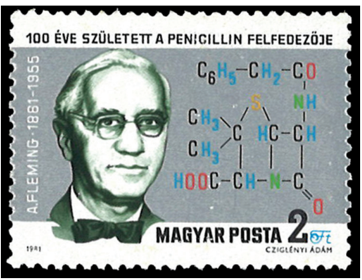
Alexander Fleming (1881–1955): Discoverer of penicillin
Open accessAbstract
I did not invent penicillin
Overview
AI snapshot
Written from the paper’s full text.
TL;DR
A short biographical narrative of Alexander Fleming (1881–1955), tracing his Scottish upbringing, medical training at St Mary's, the accidental discoveries of lysozyme and penicillin, and his later honours and death. It is a commemorative biography rather than an original research study.
Key findings
- Fleming was born on August 6, 1881 at Lochfield Farm, Scotland, graduated with distinction from St Mary's Medical School in 1906, and remained with Sir Almroth Wright's research group throughout his career.
- In 1922 he discovered lysozyme, an enzyme with weak antibacterial properties found in nasopharyngeal mucus, tears, saliva, skin, hair, fingernails and egg white; it was effective against only a small number of non-harmful bacteria.
- In 1928, an uncovered Petri dish contaminated with mould led him to identify the Penicillium genus and name its antibacterial "mould juice" penicillin; he found it effective against all Gram-positive pathogens (e.g. scarlet fever, pneumonia, gonorrhoea, meningitis, diphtheria).
- His 1929 publication in the British Journal of Experimental Pathology met little initial enthusiasm, and large-scale isolation was achieved only in 1940 by Howard Florey and Ernst Chain; Fleming shared the 1945 Nobel Prize in Physiology/Medicine with them.
Methods
- Design: narrative biography, not an empirical study; no stated study design, dataset, or analysis.
- Content is organised chronologically/thematically (Beginnings, Fortunate Choices, "Mould Juice", Personal Life) and draws on a bibliography of secondary sources (e.g. MacFarlane, Maurois, Ludovici, Nobel Lectures).
- No sample, statistical analysis, or systematic methodology is reported.
Limitations
- Not stated in the paper: the article presents no limitations section.
- Evident from the text: it is a biographical narrative relying on secondary sources rather than primary archival research, with no stated methods for source selection or verification.
Model-written summary. Check it against the paper before relying on it.
Integrity signals
Registry
Cites
Statistics
Figures
Verification
Claims the paper makes
24 No basis given · 3 Own result · 1 Sources not found
In the paper
“Although Fleming published the discovery of penicillin in the British Journal of Experimental Pathology in 1929”
What the sources say
- Not matchedcites Fleming A. On the antibacterial action of cultures of a penicillium, with special reference to their use in the isolation of B. influenzae. 1929.
Couldn’t be matched to a paper in Crossref, so it can’t be checked.
plain- Asserted: passes — The authors put it forward as true.
- Checkable: passes — It can be checked against evidence.
- Load-bearing: unclear — It is unclear whether the paper’s conclusions depend on it.
- Based: passes — The paper gives a reason why it holds.
- Not matched
The paper states this without a source or data behind it here, so there is nothing to check it against. The quote shows it is in the paper.
In the paper
“He discerned that it was not the mould itself but some 'juice' it had produced that had killed the bacteria.”
plaindirect- Asserted: passes — The authors put it forward as true.
- Checkable: passes — It can be checked against evidence.
- Load-bearing: passes — The paper’s conclusions depend on it.
- Based: passes — The paper gives a reason why it holds.
The paper states this without a source or data behind it here, so there is nothing to check it against. The quote shows it is in the paper.
In the paper
“earned Fleming - together with Howard Florey and Ernst Chain, who devised methods for the large-scale isolation and production of penicillin - the 1945 Nobel Prize in Physiology/Medicine.”
plaindirect- Asserted: passes — The authors put it forward as true.
- Checkable: passes — It can be checked against evidence.
- Load-bearing: unclear — It is unclear whether the paper’s conclusions depend on it.
- Based: passes — The paper gives a reason why it holds.
The paper states this without a source or data behind it here, so there is nothing to check it against. The quote shows it is in the paper.
In the paper
“Fleming observed that the bacteria in proximity to the mould colonies were dying, as evidenced by the dissolving and clearing of the surrounding agar gel.”
plaindirect- Asserted: passes — The authors put it forward as true.
- Checkable: passes — It can be checked against evidence.
- Load-bearing: passes — The paper’s conclusions depend on it.
- Based: passes — The paper gives a reason why it holds.
A result the paper reports from its own data — it cites no other source for it, so there is none to check. The quote shows it is in the paper.
In the paper
“experiments found that this enzyme was effective against only a small number of non-harmful bacteria.”
plain- Asserted: passes — The authors put it forward as true.
- Checkable: passes — It can be checked against evidence.
- Load-bearing: unclear — It is unclear whether the paper’s conclusions depend on it.
- Based: passes — The paper gives a reason why it holds.
A result the paper reports from its own data — it cites no other source for it, so there is none to check. The quote shows it is in the paper.
In the paper
“It was not until 1940, just as he was contemplating retirement, that two scientists, Howard Florey and Ernst Chain, became interested in penicillin.”
plain- Asserted: passes — The authors put it forward as true.
- Checkable: passes — It can be checked against evidence.
- Load-bearing: unclear — It is unclear whether the paper’s conclusions depend on it.
- Based: passes — The paper gives a reason why it holds.
The paper states this without a source or data behind it here, so there is nothing to check it against. The quote shows it is in the paper.
In the paper
“In time, they were able to mass-produce it for use during World War II.”
plaindirect- Asserted: passes — The authors put it forward as true.
- Checkable: passes — It can be checked against evidence.
- Load-bearing: unclear — It is unclear whether the paper’s conclusions depend on it.
- Based: passes — The paper gives a reason why it holds.
- Probably not a substantial claim. 20
- It may state two separate claims as one. 3
The paper states this without a source or data behind it here, so there is nothing to check it against. The quote shows it is in the paper.
In the paper
“earned Fleming - together with Howard Florey and Ernst Chain, who devised methods for the large-scale isolation and production of penicillin - the 1945 Nobel Prize in Physiology/Medicine.”
plain- Asserted: passes — The authors put it forward as true.
- Checkable: passes — It can be checked against evidence.
- Load-bearing: fails — The paper’s conclusions may not depend on it.
- Based: passes — The paper gives a reason why it holds.
Probably not a substantial claim. The paper’s conclusions may not depend on it.
The paper states this without a source or data behind it here, so there is nothing to check it against. The quote shows it is in the paper.
In the paper
“in 1922, he discovered lysozyme, an enzyme with weak antibacterial properties.”
plaindirect- Asserted: passes — The authors put it forward as true.
- Checkable: passes — It can be checked against evidence.
- Load-bearing: fails — The paper’s conclusions may not depend on it.
- Based: passes — The paper gives a reason why it holds.
Probably not a substantial claim. The paper’s conclusions may not depend on it.
The paper states this without a source or data behind it here, so there is nothing to check it against. The quote shows it is in the paper.
In the paper
“An uncovered Petri dish sitting next to an open window became contaminated with mould spores.”
plain- Asserted: passes — The authors put it forward as true.
- Checkable: passes — It can be checked against evidence.
- Load-bearing: passes — The paper’s conclusions depend on it.
- Based: passes — The paper gives a reason why it holds.
Probably not a substantial claim.
The paper states this without a source or data behind it here, so there is nothing to check it against. The quote shows it is in the paper.
In the paper
“He was elected a Fellow of the Royal Society in 1943”
plain- Asserted: passes — The authors put it forward as true.
- Checkable: passes — It can be checked against evidence.
- Load-bearing: fails — The paper’s conclusions may not depend on it.
- Based: passes — The paper gives a reason why it holds.
Probably not a substantial claim. The paper’s conclusions may not depend on it.
The paper states this without a source or data behind it here, so there is nothing to check it against. The quote shows it is in the paper.
In the paper
“In 1928, Fleming began a series of experiments involving the common staphylococcal bacteria.”
plain- Asserted: passes — The authors put it forward as true.
- Checkable: passes — It can be checked against evidence.
- Load-bearing: fails — The paper’s conclusions may not depend on it.
- Based: passes — The paper gives a reason why it holds.
Probably not a substantial claim. The paper’s conclusions may not depend on it.
The paper states this without a source or data behind it here, so there is nothing to check it against. The quote shows it is in the paper.
In the paper
“A recipient of some thirty honorary degrees”
plain- Asserted: passes — The authors put it forward as true.
- Checkable: passes — It can be checked against evidence.
- Load-bearing: fails — The paper’s conclusions may not depend on it.
- Based: passes — The paper gives a reason why it holds.
Probably not a substantial claim. The paper’s conclusions may not depend on it.
The paper states this without a source or data behind it here, so there is nothing to check it against. The quote shows it is in the paper.
In the paper
“He found it to be effective against all Gram-positive pathogens, which are responsible for diseases such as scarlet fever, pneumonia, gonorrhoea, meningitis and diphtheria.”
plaindirect- Asserted: passes — The authors put it forward as true.
- Checkable: passes — It can be checked against evidence.
- Load-bearing: fails — The paper’s conclusions may not depend on it.
- Based: fails — The paper may give no reason why it holds.
Probably not a substantial claim. The paper’s conclusions may not depend on it. The paper may give no reason why it holds. It may state two separate claims as one.
The paper states this without a source or data behind it here, so there is nothing to check it against. The quote shows it is in the paper.
In the paper
“He was soon able to isolate larger amounts of lysozyme from egg white”
plain- Asserted: passes — The authors put it forward as true.
- Checkable: passes — It can be checked against evidence.
- Load-bearing: fails — The paper’s conclusions may not depend on it.
- Based: passes — The paper gives a reason why it holds.
Probably not a substantial claim. The paper’s conclusions may not depend on it.
The paper states this without a source or data behind it here, so there is nothing to check it against. The quote shows it is in the paper.
In the paper
“the scientific community greeted his work with little initial enthusiasm.”
plain- Asserted: passes — The authors put it forward as true.
- Checkable: passes — It can be checked against evidence.
- Load-bearing: fails — The paper’s conclusions may not depend on it.
- Based: passes — The paper gives a reason why it holds.
Probably not a substantial claim. The paper’s conclusions may not depend on it.
The paper states this without a source or data behind it here, so there is nothing to check it against. The quote shows it is in the paper.
In the paper
“He also discovered lysozyme in tears, saliva, skin, hair and fingernails.”
plain- Asserted: passes — The authors put it forward as true.
- Checkable: passes — It can be checked against evidence.
- Load-bearing: fails — The paper’s conclusions may not depend on it.
- Based: passes — The paper gives a reason why it holds.
Probably not a substantial claim. The paper’s conclusions may not depend on it.
A result the paper reports from its own data — it cites no other source for it, so there is none to check. The quote shows it is in the paper.
In the paper
“and a Knight Grand Cross of the Order of Alfonso X the Wise in 1948.”
plain- Asserted: passes — The authors put it forward as true.
- Checkable: passes — It can be checked against evidence.
- Load-bearing: fails — The paper’s conclusions may not depend on it.
- Based: passes — The paper gives a reason why it holds.
Probably not a substantial claim. The paper’s conclusions may not depend on it.
The paper states this without a source or data behind it here, so there is nothing to check it against. The quote shows it is in the paper.
In the paper
“In 1928, he became Professor of Bacteriology at St Mary's.”
plain- Asserted: passes — The authors put it forward as true.
- Checkable: passes — It can be checked against evidence.
- Load-bearing: fails — The paper’s conclusions may not depend on it.
- Based: passes — The paper gives a reason why it holds.
Probably not a substantial claim. The paper’s conclusions may not depend on it.
The paper states this without a source or data behind it here, so there is nothing to check it against. The quote shows it is in the paper.
In the paper
“in 1945, he won the most prestigious award, the Nobel Prize in Physiology/ Medicine.”
plain- Asserted: passes — The authors put it forward as true.
- Checkable: passes — It can be checked against evidence.
- Load-bearing: fails — The paper’s conclusions may not depend on it.
- Based: passes — The paper gives a reason why it holds.
Probably not a substantial claim. The paper’s conclusions may not depend on it.
The paper states this without a source or data behind it here, so there is nothing to check it against. The quote shows it is in the paper.
In the paper
“He named the 'mould juice' penicillin.”
plain- Asserted: passes — The authors put it forward as true.
- Checkable: passes — It can be checked against evidence.
- Load-bearing: fails — The paper’s conclusions may not depend on it.
- Based: passes — The paper gives a reason why it holds.
Probably not a substantial claim. The paper’s conclusions may not depend on it.
The paper states this without a source or data behind it here, so there is nothing to check it against. The quote shows it is in the paper.
In the paper
“He was able to isolate the mould and identified it as a member of the Penicillium genus.”
plain- Asserted: passes — The authors put it forward as true.
- Checkable: passes — It can be checked against evidence.
- Load-bearing: unclear — It is unclear whether the paper’s conclusions depend on it.
- Based: passes — The paper gives a reason why it holds.
It may state two separate claims as one.
The paper states this without a source or data behind it here, so there is nothing to check it against. The quote shows it is in the paper.
In the paper
“He was made a Knight Bachelor by King George VI in 1944”
plain- Asserted: passes — The authors put it forward as true.
- Checkable: passes — It can be checked against evidence.
- Load-bearing: fails — The paper’s conclusions may not depend on it.
- Based: passes — The paper gives a reason why it holds.
Probably not a substantial claim. The paper’s conclusions may not depend on it.
The paper states this without a source or data behind it here, so there is nothing to check it against. The quote shows it is in the paper.
In the paper
“Time Magazine named Fleming one of the 100 most important people of the 20th century.”
plain- Asserted: passes — The authors put it forward as true.
- Checkable: passes — It can be checked against evidence.
- Load-bearing: fails — The paper’s conclusions may not depend on it.
- Based: passes — The paper gives a reason why it holds.
Probably not a substantial claim. The paper’s conclusions may not depend on it.
The paper states this without a source or data behind it here, so there is nothing to check it against. The quote shows it is in the paper.
In the paper
“in 1922, he discovered lysozyme, an enzyme with weak antibacterial properties.”
plain- Asserted: passes — The authors put it forward as true.
- Checkable: passes — It can be checked against evidence.
- Load-bearing: fails — The paper’s conclusions may not depend on it.
- Based: passes — The paper gives a reason why it holds.
Probably not a substantial claim. The paper’s conclusions may not depend on it.
The paper states this without a source or data behind it here, so there is nothing to check it against. The quote shows it is in the paper.
In the paper
“Additionally, Fleming found it difficult to isolate this precious 'mould juice' in large quantities.”
plain- Asserted: passes — The authors put it forward as true.
- Checkable: passes — It can be checked against evidence.
- Load-bearing: fails — The paper’s conclusions may not depend on it.
- Based: passes — The paper gives a reason why it holds.
Probably not a substantial claim. The paper’s conclusions may not depend on it.
The paper states this without a source or data behind it here, so there is nothing to check it against. The quote shows it is in the paper.
In the paper
“A lexander Fleming was a Scottish physician-scientist who was recognised for discovering penicillin.”
plain- Asserted: passes — The authors put it forward as true.
- Checkable: passes — It can be checked against evidence.
- Load-bearing: fails — The paper’s conclusions may not depend on it.
- Based: passes — The paper gives a reason why it holds.
Probably not a substantial claim. The paper’s conclusions may not depend on it. It may state two separate claims as one.
The paper states this without a source or data behind it here, so there is nothing to check it against. The quote shows it is in the paper.
In the paper
“elevated to the level of Emeritus Professor of Bacteriology at the University of London in 1948.”
plain- Asserted: passes — The authors put it forward as true.
- Checkable: passes — It can be checked against evidence.
- Load-bearing: fails — The paper’s conclusions may not depend on it.
- Based: passes — The paper gives a reason why it holds.
Probably not a substantial claim. The paper’s conclusions may not depend on it.
The paper relies on this without support.
Penicillin has saved millions of lives.
“The simple discovery and use of the antibiotic agent has saved millions of lives”
Citations
Cites
Fleming, A. (2001) · PubMed Central · Cited by 245
Three Centuries of Microbiology.
(1975) · Annals of Internal Medicine · doi:10.7326/0003-4819-82-1-132_4 · Cited by 118
Nobelstiftelsen, Lindsten, J., & Jörnvall, H. (1964) · Cited by 35
The Life of Sir Alexander Fleming.
BEAN, W. B. (1960) · Archives of Internal Medicine · doi:10.1001/archinte.1960.00270130184022 · Cited by 33
The life of Sir Alexander Fleming, discoverer of penicillin
Maurois, A. (1959) · Cited by 20
Research works printed but not linked: 3
- • Berger M. Famous Men of Modern Biology. New York: Thomas Y. Crowell Company, 1968.
- • Ludovici LJ. Fleming: Discoverer of Penicillin. London: The Scientific Book Club, 1952.
- • MacFarlane G. Alexander Fleming. Cambridge: Harvard University Press, 1984.
Cited by
Sorted by citations
Items 201–300 of 341
Global and Temporal Trends in the Use of Antibiotics and Spread of Antimicrobial Resistance
Sarfraz, I., Rasul, A., Hussain, G., Hussain, S. M., Samiullah, K., Rasool, B., Riaz, A., Asrar, M., & Selamoğlu, Z. (2020) · Emerging contaminants and associated treatment technologies · doi:10.1007/978-3-030-40422-2_4 · Cited by 3
Translational medical research in Nigeria: challenges, prospects and recommendations for the future
Salami, A. A., & Kanmodi, K. K. (2021) · European Journal of Translational and Clinical Medicine · doi:10.31373/ejtcm/133109 · Cited by 3
Applications of Microbes in Antibiotics
Cobongela, S. Z. Z. (2022) · Environmental and microbial biotechnology · doi:10.1007/978-981-16-2225-0_25 · Cited by 3
Adegun, A. (2023) · Nigerian Journal of Pharmacy · doi:10.51412/psnnjp.2023.18 · Cited by 3
Antimicrobial applications of MXenes
Seele, P. P., & Mlambo, M. (2024) · Elsevier eBooks · doi:10.1016/b978-0-443-13589-7.00009-2 · Cited by 3
Identifying Opportunity Targets in Gram-Negative Pathogens for Infectious Disease Mitigation
Paddy, I. A., & Dassama, L. M. K. (2025) · ACS Central Science · doi:10.1021/acscentsci.4c01437 · Cited by 3
Antibacterial activity of Saponaria officinalis and Zanthoxylum aramatum
Veda, G., Mallikarjuna Rao, T., & Ganga Rao, B. (2016) · International Journal of Pharmacology and Toxicology · doi:10.14419/ijpt.v5i1.6898 · Cited by 3
Targeting Biofilms in Translational Research
Ashton, N. N., & Williams, D. L. (2019) · Springer eBooks · doi:10.1007/978-3-030-30667-0_9 · Cited by 3
Frolova, L. L., Sverdrup, A. E., & Sverdrup, H. U. (2020) · Water Air & Soil Pollution · doi:10.1007/s11270-020-04756-y · Cited by 3
Uncovering potential interspecies signaling factors in plant-derived mixed microbial culture
Domzalski, A., Perez, S. D., Yoo, B., Velasquez, A. E., Vigo, V., Pasolli, H. A., Oldham, A. L., Henderson, D. P., & Kawamura, A. (2021) · Bioorganic & Medicinal Chemistry · doi:10.1016/j.bmc.2021.116254 · Cited by 3
Antibiotic Susceptibility of Wound Isolates in Plastic Surgery Patients at a Tertiary Care Centre
Patil, S. B., & Harsh, S. (2018) · Recent clinical techniques, results, and research in wounds · doi:10.1007/15695_2017_71 · Cited by 3
The COVID-19 Enemy is Still Advancing
Scott, R. J., Means, O. J., & Shields, P. M. (2020) · The US Army War College Quarterly Parameters · doi:10.55540/0031-1723.2672 · Cited by 3
Khoshbayan, A., Shariati, A., Ghaznavi‐Rad, E., van Belkum, A., & Darban‐Sarokhalil, D. (2020) · Acta Microbiologica et Immunologica Hungarica · doi:10.1556/030.2020.01273 · Cited by 3
Understanding antibiotic resistance: Challenges and solutions
Khathami, M. M. M. A., Alenazi, A. M., Alareefi, . S., & Alomran, . W. (2021) · International Journal of Health Sciences · doi:10.53730/ijhs.v5ns1.15182 · Cited by 2
Two perfectly cromulent ferrocene containing ruthenium(II)-arene antibacterial agents
Bollinger, T. A., Murphy, B. J., Dagar, M., Hacker, R. M., Oskard, S. M., Brennessel, W. W., & Webb, M. I. (2025) · Canadian Journal of Chemistry · doi:10.1139/cjc-2024-0182 · Cited by 2
Antimicrobial peptides and proteins: Mechanism of action and therapeutic potential
Dubey, A. K., Mishra, A., & Prajapati, V. K. (2025) · Advances in protein chemistry and structural biology · doi:10.1016/bs.apcsb.2025.07.001 · Cited by 2
Regulatory Aspects of the Therapeutic Use of Bacteriophages: Europe
Pelfrene, E., Sebris, Z., & Cavaleri, M. (2020) · Springer eBooks · doi:10.1007/978-3-319-40598-8_51-1 · Cited by 2
Bacterial infections: Antimicrobial mechanism of action and bacterial resistance
Ovung, A., & Bhattacharyya, J. (2023) · Elsevier eBooks · doi:10.1016/b978-0-323-85730-7.00067-9 · Cited by 2
What is the current evidence for antibiotic prophylaxis in orthopaedic surgery?
Holmes, B., Ismayl, G., & Nisar, S. (2023) · Orthopaedics and Trauma · doi:10.1016/j.mporth.2023.05.007 · Cited by 2
Nanomedicines for the Treatment of Bacterial Diseases
Siddique, R., Saleem, A., Muhammad, F., Akhtar, M. F., Akhtar, B., & Sharif, A. (2023) · Learning materials in biosciences · doi:10.1007/978-981-99-7626-3_3 · Cited by 2
Retrospective analysis of an outbreak of scarlet fever in United Arab Emirates
Sobh, E. K., Kumarasamy, T. A., & Sobh, Z. K. (2024) · Eastern Mediterranean Health Journal · doi:10.26719/2024.30.5.363 · Cited by 2
Use and applications of bioactive microbial metabolites in human health
Singh, S., Verma, P., & Kumari, P. (2024) · Elsevier eBooks · doi:10.1016/b978-0-443-18568-7.00001-x · Cited by 2
Dai, S. P., Zhou, H. Y., Ren, L. J., Jiang, S. Q., Wang, Y., Chen, Y., Chen, J. L., & Park, H. J. (2024) · ChemistrySelect · doi:10.1002/slct.202403502 · Cited by 2
A Short Review on Antibiotics and Ever-Changing Microbial Resistance Mechanisms
Ali, A. S. (2018) · British Journal of Pharmacy · doi:10.5920/bjpharm.2018.04 · Cited by 2
The interdisciplinarity in drug discovery
Araújo, C. R. M., Santos, V. L. D. A., Guimarães, D. G., & Gonsalves, A. D. A. (2018) · Journal of Analytical & Pharmaceutical Research · doi:10.15406/japlr.2018.07.00229 · Cited by 2
Zhang, D., Morgan, K. D., & Liu, L. (2023) · Frontiers in Microbiology · doi:10.3389/fmicb.2023.1253850 · Cited by 2
Editorial: Natural remedies repositioned: advancing drug discovery for infectious diseases
Igoli, J. O., Ntie‐Kang, F., Ebiloma, G. U., Ismail, N., & Okoli, B. J. (2025) · Frontiers in Pharmacology · doi:10.3389/fphar.2025.1655921 · Cited by 2
Infectious Agents: From the Red Queen Paradigm to Some of Their Genuine Traits
Land, W. G. (2023) · Springer eBooks · doi:10.1007/978-3-031-21776-0_2 · Cited by 2
Akbar, N., Khan, N. A., Giddey, A. D., Soares, N. C., Alharbi, A. M., Alfahemi, H. H., & Siddiqui, R. (2023) · Microorganisms · doi:10.3390/microorganisms11041072 · Cited by 1
Unseen Threat: The Growing Problem of Antimicrobial Resistance
Tiwari, P., Tiwari, P., & Patel, P. (2025) · Asian Journal of Pharmacy and Technology · doi:10.52711/2231-5713.2025.00029 · Cited by 1
Antibiotic resistance and development of alternative therapies
Thakur, D., Kaniska, & Kumar, L. (2025) · Elsevier eBooks · doi:10.1016/b978-0-443-22300-6.00030-9 · Cited by 1
Tian, J., Zhang, Y.-F., Sun, Y., Yan, D., Hu, S., Xing, R., Wang, R., Li, Y., & Chen, X. (2026) · Journal of Chromatography A · doi:10.1016/j.chroma.2026.466673 · Cited by 1
Steinert, J. M., & Seifert, R. (2026) · Naunyn-Schmiedeberg s Archives of Pharmacology · doi:10.1007/s00210-026-05197-w · Cited by 1
Krishnamoorthi, R., Kaviyadharshini, M., Mahalingam, P. U., Srinivash, M., Rajkannan, P., Keerthivsan, M., Paulraj, S., & Anand, M. A. V. (2026) · Engineering Microbiology · doi:10.1016/j.engmic.2026.100277 · Cited by 1
Dahiya, S., Sharma, N., & Nehra, K. (2026) · Discover Viruses. · doi:10.1007/s44370-026-00048-x · Cited by 1
Megment vagy elpusztít: a higany és arzén gyógyászati karrierje. II. rész arzén
Madarász, B. (2019) · Kaleidoscope History · doi:10.17107/kh.2019.19.137-146 · Cited by 1
Global health crisis and antimicrobial resistance: The need for increased metagenomics studies
Abdulkadir, M. (2022) · Annals of Medicine and Surgery · doi:10.1016/j.amsu.2022.104817 · Cited by 1
Microbial synthesized antibiotics in healthcare management
Afifa, Hussain, N., & Baqar, Z. (2023) · Elsevier eBooks · doi:10.1016/b978-0-323-99476-7.00007-7 · Cited by 1
McKillip, J. L. (2023) · Fine Focus · doi:10.33043/ff.9.1.6-11 · Cited by 1
Divergent Approaches Toward Drug Discovery and Development
Koul, S. (2023) · Springer eBooks · doi:10.1007/978-981-99-1284-1_34 · Cited by 1
Olayiwola, B., O’Neill, F., Kavanagh, D. F., O’Neill, L., & O’Hara, R. (2023) · Plasma Medicine · doi:10.1615/plasmamed.2023050382 · Cited by 1
Prawo do ochrony zdrowia a organizacja systemu opieki medycznej w Polsce powojennej (1945–1952)
Płonka‐Syroka, B., Legnica, P., & Stych, M. (2023) · Miscellanea Historico-Iuridica · doi:10.15290/mhi.2023.22.02.12 · Cited by 1
Sattar, A., Abbas, A. S., Naseem, S., Mumtaz, M., Shabbir, A., & Mirza, S. (2024) · Journal of Health and Rehabilitation Research · doi:10.61919/jhrr.v4i1.174 · Cited by 1
ROUTE OF ADMINISTRATION OF NANOPARTICLES COMBATING A RESISTANT BACTERIUM.
Naeem, A., Qaisrani, Z. N., Shazia, Noor, A., Hussain, I., & Raheem, A. (2024) · Pakistan Journal of Biotechnology · doi:10.34016/pjbt.2024.21.01.861 · Cited by 1
Onu, E. N., Ilang, D. C., Azi, C. I., Eze, T. O., Akpa, C. O., Kelechi-Mathew, O. O., Ogbonna, O. E., & Agada, S. E. (2024) · American Journal of Plant Sciences · doi:10.4236/ajps.2024.1510054 · Cited by 1
Deepshikha, D., Kumar, R. R., Mondal, S., & Chaturvedi, V. (2025) · Springer eBooks · doi:10.1007/978-981-96-2022-7_8 · Cited by 1
Hydrogels for infectious diseases
Sajeev, D., Abhirami, S., Biju, A., Kumaar, R. N., & Nair, S. C. (2025) · Elsevier eBooks · doi:10.1016/b978-0-443-29260-6.00013-5 · Cited by 1
Az infekciókontroll mérföldkövei – történelmi kitekintés
Glózik, Á. (2020) · Kaleidoscope History · doi:10.17107/kh.2020.21.313-323
Can Bees Help us Find New Antibiotics?
Goggin, K. A., & Baillie, L. W. J. (2021) · Frontiers for Young Minds · doi:10.3389/frym.2021.611604 · Cited by 1
Antibiotic Prescribing Practices of Endodontic Postgraduate Trainees in Karachi, Pakistan
Aliuddin, A. M., Morani, S. S., Sheikh, A., Rashid, S., Ali, M. A., & Abdullah, F. (2021) · Journal of The Pakistan Dental Association · doi:10.25301/jpda.303.183 · Cited by 1
Hagiya, H., Yamada, H., Kajita, S., Iwamoto, Y., Hara, N., & Okayama Consortium for Antimicrobial Stewardship Task force (O-CAST) (2021) · Journal of Chemotherapy · doi:10.1080/1120009x.2021.1994689 · Cited by 1
New Strategies for Commercialization of Microbial Technologies
Patil, P. B., & Sarkar, A. (2021) · Springer eBooks · doi:10.1007/978-981-16-2922-8_23 · Cited by 1
Antibiotic Stewardship in Onco-Critical Patient
Jain, R., Rajani, M., & Javeri, Y. (2022) · Springer eBooks · doi:10.1007/978-981-16-9929-0_16 · Cited by 1
Plettenburg, O. (2021) · Wiley eBooks · doi:10.1002/9783527826872.ch1 · Cited by 1
Serendipity and the Brain, or How We Make Great DiscoveriesPreprint
Kondziella, D. (2021) · Preprints.org · doi:10.20944/preprints202108.0114.v1 · Cited by 1
Herbal Antibiotics for Treating Drug‐Resistant Bacteria
Chen, H., & Li, S. (2022) · Wiley eBooks · doi:10.1002/9781119818779.ch2 · Cited by 1
Attwood, M., Brönstrup, M., Das, S., Fuchs, H. L. S., Griffin, P., Lebrat, J., macklin, B., Marchand, S., Mercer, D. K., Michel, F., et al. (2026) · bioRxiv (Cold Spring Harbor Laboratory) · doi:10.64898/2026.06.11.731574 · Cited by 1
Skagseth, S. (2017) · NORA - Norwegian Open Research Archives
Moral Authority in Scientific Research
Sowers, E. (2018)
Abordagem Terapêutica nas Infeções por Staphylococcus aureus Resistentes à Meticilina
de Freitas, A. L. R. C., Marcos, I., Fontes, L., & Martins, S. (2017) · Gazeta Médica · doi:10.29315/gm.v3i4.47
Yadav, V., Bisht, D., & Kumar, P. R. (2019) · Bioscience Biotechnology Research Communications · doi:10.21786/bbrc/12.2/20
Deans, M. T. (2020) · European Journal of Medical and Health Sciences · doi:10.24018/ejmed.2020.2.3.268
Parameters, U. (2020) · The US Army War College Quarterly Parameters · doi:10.55540/0031-1723.2668
How to Be a Great Student: Strategies for Effective Learning
Phillips, J. A., & Wieczorkiewicz, S. M. (2019) · ASHP eBooks · doi:10.37573/9781585285020.001
Novel Bioactive Compound Production by Microbial Biota: Potential Antimicrobials
Hayee, S. (2020) · Pakistan BioMedical Journal · doi:10.52229/pbmj.v3i1.8
Why is knowing the history of syphilis is critical, even during the COVID-19 pandemic?
Braga, A., Côrtes, J. P. D. R., Pritsivelis, C. P. D., & Junior, L. J. M. (2021) · Jornal Brasileiro de Doenças Sexualmente Transmissíveis · doi:10.5327/dst-2177-8264-20213305
A REVIEW ON ANTIBIOTICS: HISTORY AND PRESENT
Mustajab, M. (2021) · International journal of advance research and innovative ideas in education
Alexander Fleming (to the 140th anniversary of his birth)
Voloshyn, O., Humeniuk, H. B., & Chen, I. B. (2021) · Faktori eksperimental noi evolucii organizmiv · doi:10.7124/feeo.v28.1393
Rangapriya, M., Lorance, A., Varghese, A. M., Hanif, A., & Aruna, S. (2021) · Asian Journal of Pharmaceutical and Clinical Research · doi:10.22159/ajpcr.2021.v14i11.42046
Metilsulfenilação de olefinas eletrofílicas
Carvalho, B. B. P. P. (2021) · doi:10.34019/ufjf/di/2021/00225
Recent Advances in Antimicrobial Peptides to Improve Fish Health
Priyam, M., Bhat, R. A., & Kumar, N. (2021) · Springer eBooks · doi:10.1007/978-981-16-5195-3_8
(2021) · Emerald Group Publishing Limited eBooks · doi:10.1108/978-1-78756-675-020211019
dos Santos, G. A. A. (2022) · Springer eBooks · doi:10.1007/978-3-030-94383-7_1
French, D. (2020) · Elsevier eBooks · doi:10.1016/b978-0-12-815846-3.00007-7
Medina-Cruz, D. (2020) · doi:10.17760/d20398254
Tiểu sử Alexander FlemingPreprint
Cranier, L. (2022) · doi:10.31219/osf.io/62eak
Fazzolari, J. R., Ferguson, B., & Eisig, S. B. (2022) · Springer eBooks · doi:10.1007/978-3-030-89563-1_8
Descubrimiento de nuevos anticonvulsivos que actúan mediante interacciones con canales iónicos
Llanos, M. A. (2022) · El Servicio de Difusión de la Creación Intelectual (National University of La Plata) · doi:10.35537/10915/140503
y Terrón, R. P. (2020) · Research in Medical & Engineering Sciences · doi:10.31031/rmes.2020.08.000694
Coastal Sediments of La Paz Bay BCS: Bacteria Reserve with Biotechnological Potential
Montano-Lopez, F., González‐Acosta, B., Cardona-Félix, C. S., Muñoz‐Ochoa, M., & Sánchez-Burgos, J. A. (2023) · Springer eBooks · doi:10.1007/978-981-19-4336-2_11
Anti-Microbial Peptides from Medicinal Plants as an Alternative against Multi Drug Resistance
Singh, A. P. S. A. P., Pamidimarri, S. D. V. N., & Chauhan, S. (2022) · Journal of Bacteriology and Mycology · doi:10.26420/jbacteriolmycol.2022.1199
The Plagues Pandemics: 2000 Years of Recurrent Devastations: The Black Death
Ferreira, C., Doursout, M.-F. J., & Balingit, J. S. (2023) · Springer eBooks · doi:10.1007/978-3-031-10035-2_2
Peres, C. (2023) · Abhandlungen zur Medien- und Kulturwissenschaft · doi:10.1007/978-3-662-65196-4_11
The Well-Entrenched Label of β-Lactam “Allergy”
Bon, J. J. (2023) · Infectious Diseases in Clinical Practice · doi:10.1097/ipc.0000000000001271
Warguła, J. (2022) · Prospects in Pharmaceutical Sciences · doi:10.56782/pps.121
Analyzing Functional Interactions of Designed Peptides by NMR Spectroscopy
Choi, W. (2023) · Chapman University Digital Commons (Chapman University) · doi:10.36837/chapman.000507
Chakraborty, A. K. (2023) · bioRxiv (Cold Spring Harbor Laboratory) · doi:10.1101/2023.09.04.556143
Exploring the Genetic Interactions of Quinolone Resistance Mutations in Escherichia coli
Porter, C. E. (2023) · Carleton University's Institutional Repository (MacOdrum Library, Carleton University) · doi:10.22215/etd/2023-15792
KAUSHIK, S., Samuel, M. P., RAI, J., & KAUSHIK, S. (2023) · Asian Journal of Pharmaceutical and Clinical Research · doi:10.22159/ajpcr.2023.v16i12.48314
Endophytes as an Alternative Source for Anticancer Agents
Poonar, N., Meena, P., Pareek, A., & Meena, A. (2024) · BENTHAM SCIENCE PUBLISHERS eBooks · doi:10.2174/9789815079753124030016
Lucky Idiots and Incompetent Villains: Luck and Responsibility in Meaningful Lives
Stevenson, C. M. (2024) · Philosophia · doi:10.1007/s11406-024-00737-1
Charlesworth, P. M., & Klaassen, M. F. (2024) · Springer eBooks · doi:10.1007/978-3-031-53104-0_7
Značaj i uloga plijesni u proizvodnji vina
Kajić, S., Rajković, M. G., Sikora, S., & Rajnović, I. (2024) · Glasnik zaštite bilja · doi:10.31727/gzb.47.3.9
The needs, challenges, and opportunities from the academic researchers' perspective
Gasthuys, E., Allegaert, K., Degraeuwe, E., Nakamura, H., Walle, J. V., & Kearns, G. L. (2024) · Elsevier eBooks · doi:10.1016/b978-0-323-88459-4.00006-7
Volatile organic compounds from endophytic fungi
Fadiji, A. E., Lanrewaju, A. A., & Babalola, O. O. (2024) · Elsevier eBooks · doi:10.1016/b978-0-323-99314-2.00006-1
Sinha, A., Rani, A., Mishra, V., Chaubey, S., & Mujeeb, F. (2024) · Springer eBooks · doi:10.1007/978-981-97-5272-0_30 · Cited by 3
Metadata
- Authors
- Tan, S., & Tatsumura, Y.
- Affiliations
- University of Hawaii System (US)
- University of Hawaiʻi at Mānoa (US)
- Venue
- Singapore Medical Journal
- Published
- 2015-07
- Volume
- 56
- Issue
- 07
- Pages
- 366-367
- ISSN
- 0037-5675 (ISSN-L)
- PMC
- PMC4520913
- OpenAlex
- W1582926274
- Cited by
- 342
- References
- 6
- Citations by year
- 2026: 26 · 2025: 32 · 2024: 45 · 2023: 51 · 2022: 47 · 2021: 45 · 2020: 42 · 2019: 22 · 2018: 22 · 2017: 8 · 2016: 2
- FWCI
- 8.63
- Type
- journal article
- Language
- en
- Open access
- diamond
- doi.org
- Licence
- cc-by-nc-sa
- Locations
- Singapore Medical Journal (publishedVersion, cc-by-nc-sa)
- Europe PMC (PubMed Central) (publishedVersion)
- PubMed Central (publishedVersion)
- PubMed (publishedVersion)
- Topics
- Health Sciences › Medicine › Pharmacology (medical) › Historical Medical Research and Treatments
- Social Sciences › Arts and Humanities › History and Philosophy of Science › History of Science and Medicine
- Social Sciences › Arts and Humanities › History › Medical History and Innovations
- Keywords
- Alexander Fleming, penicillin, penicillin discovery, history of antibiotics
- MeSH terms
- Bacteriology, Humans, Penicillins, Philately, Scotland, History, 20th Century
About these checks
Registry, retraction, Cites and statistics results are computed, not judged, with one exception: a printed reference that no index lists is read once by a model before it counts as a citation error. Claims are extracted by a model and kept only when their quote appears verbatim in the text; each cited source is then checked, with a model’s help, for whether it says what the claim relies on. Those verdicts can be wrong — read the claim’s quote and the cited source before relying on one.
A language model drew the claims from the paper on 2026-10-30, under version 3 of the claim definition (model deepseek-v4.1-flash, prompt extract-v3).
A second model labelled each claim on 2026-10-30 (model jev-1.13-20260917, definition revision gold-guideline-v0.2).
Statistics and arithmetic are recomputed, not judged.
Confidence bands are shown only for fields calibrated on our annotated test set. None is calibrated yet, so no band is shown.
What counts as a claim ›How we measure confidence ›How we check this ›
Are you an author, or do you see a problem with this page? Request a review
