

The DOI matches its Crossref record; 5 of the 5 references it cites were found in a registry or an index.
Ketone body β -hydroxybutyrate is an autophagy-dependent vasodilator
Abstract
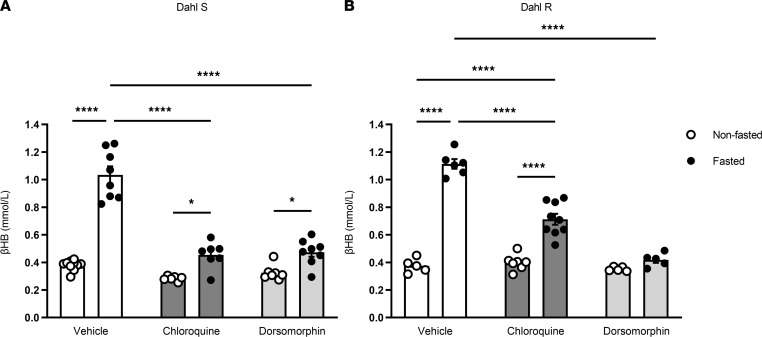
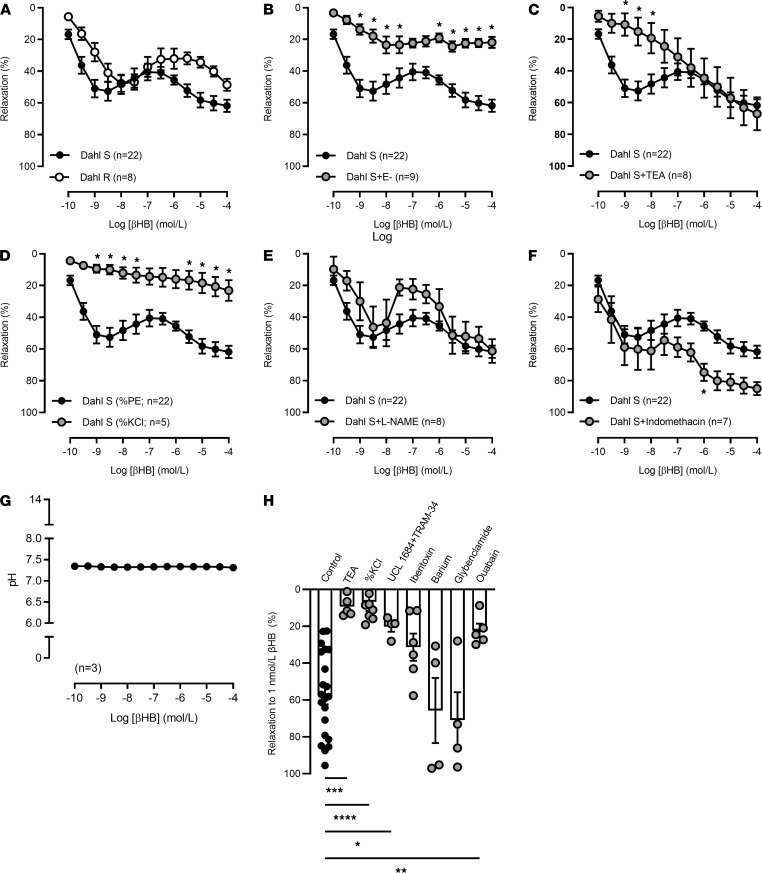
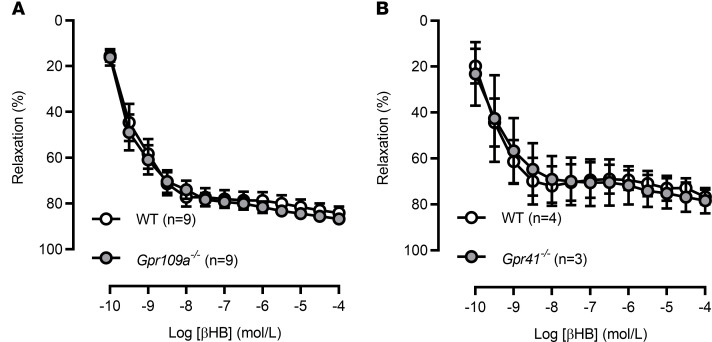
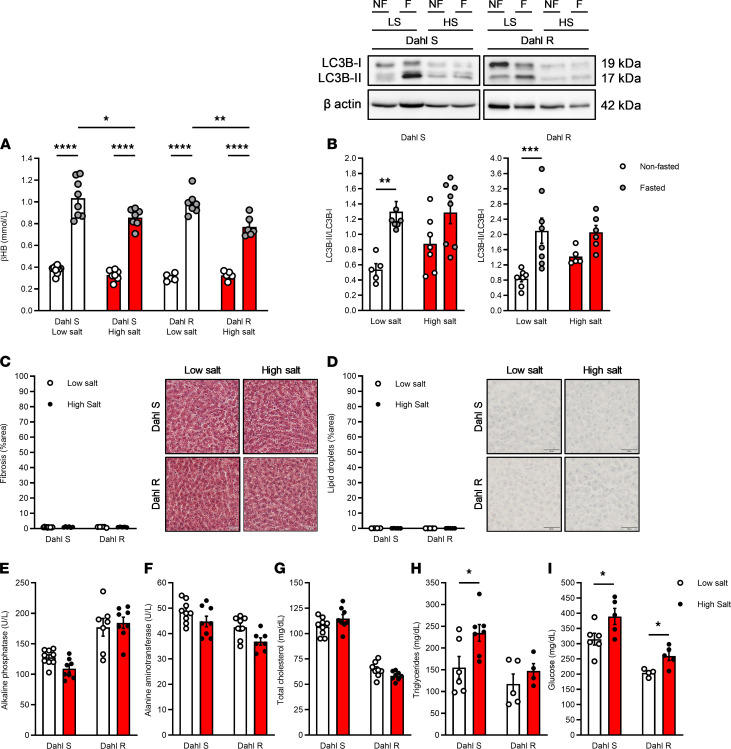
Autophagy has long been associated with longevity, and it is well established that autophagy reverts and prevents vascular deterioration associated with aging and cardiovascular diseases. Currently, our understanding of how autophagy benefits the vasculature is centered on the premise that reduced autophagy leads to the accumulation of cellular debris, resulting in inflammation and oxidative stress, which are then reversed by reconstitution or upregulation of autophagic activity. Evolutionarily, autophagy also functions to mobilize endogenous nutrients in response to starvation. Therefore, we hypothesized that the biosynthesis of the most physiologically abundant ketone body, β-hydroxybutyrate (βHB), would be autophagy dependent and exert vasodilatory effects via its canonical receptor, Gpr109a. To the best of our knowledge, we have revealed for the first time that the biosynthesis of βHB can be impaired by preventing autophagy. Subsequently, βHB caused potent vasodilation via potassium channels but not Gpr109a. Finally, we observed that chronic consumption of a high-salt diet negatively regulates both βHB biosynthesis and hepatic autophagy and that reconstitution of βHB bioavailability prevents high-salt diet–induced endothelial dysfunction. In summary, this work offers an alternative mechanism to the antiinflammatory and antioxidative stress hypothesis of autophagy-dependent vasculoprotection. Furthermore, it reveals a direct mechanism by which ketogenic interventions (e.g., intermittent fasting) improve vascular health.
Overview
The claims and statistics of this paper haven’t been checked yet.
Run the check — free, no account needed. It reads the open-access text and checks the sources it cites.
Integrity signals
Registry
Cites
Statistics
Figures
Verification
Claims the paper makes
The claims and statistics of this paper haven’t been checked yet.
Run the check — free, no account needed. It reads the open-access text and checks the sources it cites.
Claims other papers make about this one
Each is checked against this paper’s own text: does it say what the citing paper says it does?
The cited source doesn’t support the claim as written.
In the citing paper
“Mechanistically, 3-hydroxybutyrate induces vasodilatation and activates immune responses acting on GTP protein coupled receptor 109A 158 , while it directly inhibits the NLRP3 inflammasome 160 , indicating a potential pleiotropic mode of action.”
From Hallmarks of aging: An expanding universe (2023) · cites this paper as [158]
Checked by a reasoning model — may be wrong.
Experimental — accuracy not yet measuredThe source backs part of the claim, not all of it — or backs it for a different population, condition or comparison.
In the citing paper
“Both fasting and ketogenic diet increase the production of ketone bodies (in particular 3-hydroxybutyrate), which are synthesized from acetyl coenzyme A in the liver in an autophagy-dependent fashion, can reach millimolar concentrations in the plasma and replace glucose as an essential fuel, for instance for the maintenance of brain function 158 .”
From Hallmarks of aging: An expanding universe (2023) · cites this paper as [158]
Experimental — accuracy not yet measured
Self-check
Percentages, sums and reported differences re-computed from the paper’s own numbers.
The self-check needs the paper’s full text.
Citations
Cites
Autophagy regulates lipid metabolism
Singh, R., Kaushik, S., Wang, Y., Xiang, Y., Novak, I., Komatsu, M., Tanaka, K., Cuervo, A. M., & Czaja, M. J. (2009) · Nature · doi:10.1038/nature07976 · Cited by 3,975
Samuel, B. S., Shaito, A., Motoike, T., Rey, F. E., Backhed, F., Manchester, J. K., Hammer, R. E., Williams, S. C., Crowley, J., Yanagisawa, M., et al. (2008) · Proceedings of the National Academy of Sciences · doi:10.1073/pnas.0808567105 · Cited by 1,564
Global Sodium Consumption and Death from Cardiovascular Causes
Mozaffarian, D., Fahimi, S., Singh, G. M., Micha, R., Khatibzadeh, S., Engell, R. E., Lim, S., Danaei, G., Ezzati, M., & Powles, J. (2014) · New England Journal of Medicine · doi:10.1056/nejmoa1304127 · Cited by 1,218 · cited 1×
“Regardless of the underlying mechanism, the decreased autophagy phenotype is translationally significant, as 90% of Americans exceed recommendations for salt consumption (20), and excess salt consumption is responsible for 1 of every 10 cardiovascular deaths (21).”
Self-citationKetone bodies as signaling metabolites
Newman, J. C., & Verdin, E. (2014) · Trends in Endocrinology & Metabolism · doi:10.1016/j.tem.2013.09.002 · Cited by 966
Overexpression of Atg5 in mice activates autophagy and extends lifespan
Pyo, J.-O., Yoo, S.-M., Ahn, H.-H., Nah, J., Hong, S.-H., Kam, T.-I., Jung, S., & Jung, Y.-K. (2013) · Nature Communications · doi:10.1038/ncomms3300 · Cited by 721
Research works printed but not linked: 29
- 10.15252/embr.201439076 · DOI
- Yen, 2008, How to live long and prosper: autophagy, mitochondria, and aging, Physiology (Bethesda), 23, 248
- 10.1161/CIRCRESAHA.118.312208 · DOI · Paper page
- 10.1161/CIRCRESAHA.116.303805 · DOI
- 10.1007/s00395-020-0802-6 · DOI
- 10.1016/j.mad.2013.04.004 · DOI
- 10.1113/jphysiol.2012.229690 · DOI
- 10.1152/ajpheart.00227.2019 · DOI
- 10.1146/annurev.nutr.27.061406.093749 · DOI
- Rui, 2014, Energy metabolism in the liver, Compr Physiol, 4, 177, 10.1002/j.2040-4603.2014.tb00548.x · DOI
- 10.1080/15548627.2016.1151597 · DOI
- 10.1016/j.celrep.2018.09.058 · DOI
- 10.3109/10641963.2016.1148155 · DOI
- 10.1093/jn/101.12.1719 · DOI
- 10.5487/TR.2014.30.3.141 · DOI
- 10.1016/j.bbamcr.2018.02.005 · DOI
- 10.15585/mmwr.mm6452a1 · DOI
- Hughes, 2021, Critical interaction between telomerase and autophagy in mediating flow-induced human arteriolar vasodilation, Arterioscler Thromb Vasc Biol, 41, 446, 10.1161/ATVBAHA.120.314944 · DOI
- 10.1161/ATVBAHA.117.309510 · DOI
- 10.1074/jbc.C500213200 · DOI
- 10.1073/pnas.1016088108 · DOI · Paper page
- 10.1523/JNEUROSCI.3102-13.2013 · DOI
- 10.1084/jem.114.2.231 · DOI
- Rapp, 1973, Genetic control of blood pressure and corticosteroid production in rats, Circ Res, 32, 139
- Rapp, 1985, Development and characteristics of inbred strains of Dahl salt-sensitive and salt-resistant rats, Hypertension, 7, 340, 10.1161/01.HYP.7.3.340 · DOI
- 10.1152/ajprenal.00359.2019 · DOI
- 10.1038/nm824 · DOI
- 10.1038/260617a0 · DOI
- 10.1152/ajpheart.01021.2020 · DOI
Cited by
Sorted by citations
Hallmarks of aging: An expanding universe
López-Otín, C., Blasco, M. A., Partridge, L., Serrano, M., & Kroemer, G. (2023) · Cell · doi:10.1016/j.cell.2022.11.001 · Cited by 6,549
Efficacy and safety of prolonged water fasting: A narrative review of human trials
Ezpeleta, M., Cienfuegos, S., Lin, S., Pavlou, V., Gabel, K., & Varady, K. A. (2024) · Nutrition Reviews · doi:10.1093/nutrit/nuad081 · Cited by 32
Xiao, Y., Liu, Y., Zhao, L., & Zhou, Y. (2022) · Metabolic Syndrome and Related Disorders · doi:10.1089/met.2022.0014 · Cited by 26
Metadata
- Authors
- McCarthy, C. G., Chakraborty, S., Singh, G., Yeoh, B. S., Schreckenberger, Z. J., Singh, A., Mell, B., Bearss, N. R., Yang, T., Cheng, X., Vijay-Kumar, M., Wenceslau, C. F., & Joe, B.
- Venue
- JCI Insight
- Published
- 2021-10-22
- Volume
- 6
- Issue
- 20
- ISSN
- 2379-3708
- PMC
- PMC8564907
- Cited by
- 74
- References
- 5
- Language
- en
- Funders
- American Heart Association (18POST34060003)
- National Institutes of Health (K99HL151889,R01CA219144,R00GM118885,R01HL149762,R01HL143082)
About these checks
Registry, retraction, Cites and statistics results are computed, not judged, with one exception: a printed reference that no index lists is read once by a model before it counts as a citation error. Claims are extracted by a model and kept only when their quote appears verbatim in the text; each cited source is then checked, with a model’s help, for whether it says what the claim relies on. Those verdicts can be wrong — read the claim’s quote and the cited source before relying on one.
Statistics and arithmetic are recomputed, not judged.
Confidence bands are shown only for fields calibrated on our annotated test set. None is calibrated yet, so no band is shown.
What counts as a claim ›How we measure confidence ›How we check this ›
Are you an author, or do you see a problem with this page? Request a review
