

Vortioxetine disinhibits pyramidal cell function and enhances synaptic plasticity in the rat hippocampus
Open accessThe DOI matches its Crossref record; 66 of the 66 references it cites were found in a registry or an index.
Abstract
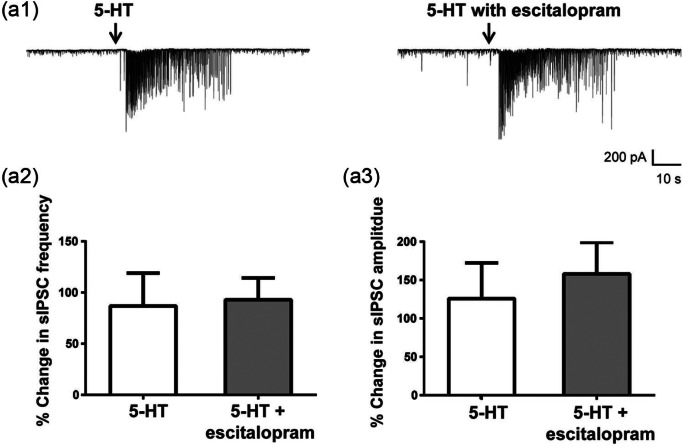
Vortioxetine, a novel antidepressant with multimodal action, is a serotonin (5-HT) 3 , 5-HT 7 and 5-HT 1D receptor antagonist, a 5-HT 1B receptor partial agonist, a 5-HT 1A receptor agonist and a 5-HT transporter (SERT) inhibitor. Vortioxetine has been shown to improve cognitive performance in several preclinical rat models and in patients with major depressive disorder. Here we investigated the mechanistic basis for these effects by studying the effect of vortioxetine on synaptic transmission, long-term potentiation (LTP), a cellular correlate of learning and memory, and theta oscillations in the rat hippocampus and frontal cortex. Vortioxetine was found to prevent the 5-HT-induced increase in inhibitory post-synaptic potentials recorded from CA1 pyramidal cells, most likely by 5-HT 3 receptor antagonism. Vortioxetine also enhanced LTP in the CA1 region of the hippocampus. Finally, vortioxetine increased fronto-cortical theta power during active wake in whole animal electroencephalographic recordings. In comparison, the selective SERT inhibitor escitalopram showed no effect on any of these measures. Taken together, our results indicate that vortioxetine can increase pyramidal cell output, which leads to enhanced synaptic plasticity in the hippocampus. Given the central role of the hippocampus in cognition, these findings may provide a cellular correlate to the observed preclinical and clinical cognition-enhancing effects of vortioxetine.
Overview
The claims and statistics of this paper haven’t been checked yet.
Free: it reads the open-access text and checks the first 5 claims that cite a source we can check. Create a free account to check every claim.
Integrity signals
Registry
Cites
Statistics
Figures




Verification
Claims the paper makes
The claims and statistics of this paper haven’t been checked yet.
Free: it reads the open-access text and checks the first 5 claims that cite a source we can check. Create a free account to check every claim.
Claims other papers make about this one
Each is checked against this paper’s own text: does it say what the citing paper says it does?
In the citing paper
“In rodents, vortioxetine increases hippocampal synaptic plasticity and dendritic spine maturation [101, 102].”
From Beyond the serotonin deficit hypothesis: Communicating a neuroplasticity framework of major depressive disorder (2024) · cites this paper as [102]
In the citing paper
“Preclinical studies have shown that vortioxetine may influence learning and memory processes by improving hippocampal synaptic plasticity and increasing the output of pyramidal cells [89].”
From Cognitive remission: a novel objective for the treatment of major depression? (2016) · cites this paper as [89]
Self-check
Percentages, sums and reported differences re-computed from the paper’s own numbers.
The self-check needs the paper’s full text.
Citations
Cites
EEG alpha and theta oscillations reflect cognitive and memory performance: a review and analysis
Klimesch, W. (1999) · Brain Research Reviews · doi:10.1016/s0165-0173(98)00056-3 · Cited by 6,889
Millan, M. J., Agid, Y., Brüne, M., Bullmore, E. T., Carter, C. S., Clayton, N. S., Connor, R., Davis, S., Deakin, B., DeRubeis, R. J., et al. (2012) · Nature Reviews Drug Discovery · doi:10.1038/nrd3628 · Cited by 1,292
Gating of human theta oscillations by a working memory task
Raghavachari, S., Kahana, M. J., Rizzuto, D. S., Caplan, J. B., Kirschen, M. P., Bourgeois, B., Madsen, J. R., & Lisman, J. E. (2001) · The Journal of Neuroscience · doi:10.1523/jneurosci.21-09-03175.2001 · Cited by 792 · cited 2×
“…oscillations are predominantly driven via hippocampal entorhinal-cortical projections (Young and McNaughton, 2009) and have been linked to cognitive functions in preclinical as well as clinical studies (Basar et al., 2000; Caplan et al., 2001; Klimesch, 1999; Raghavachari et al., 2001, 2006).”
Bang-Andersen, B., Ruhland, T., Jørgensen, M., Smith, G., Frederiksen, K., Jensen, K. G., Zhong, H., Nielsen, S. M., Hogg, S., Mørk, A., et al. (2011) · Journal of Medicinal Chemistry · doi:10.1021/jm101459g · Cited by 606 · cited 2×
“=33 nM; IA 55%), 5-HT1A receptor agonist (Ki=15 nM) and inhibitor of the 5-HT transporter (SERT; Ki=1.6 nM (Bang-Andersen et al., 2011; Westrich et al., 2012).”
InfluentialAndrade, R., & Nicoll, R. A. (1987) · The Journal of Physiology · doi:10.1113/jphysiol.1987.sp016862 · Cited by 552
Sanchez, C., Asin, K. E., & Artigas, F. (2015) · Pharmacology & Therapeutics · doi:10.1016/j.pharmthera.2014.07.001 · Cited by 547
Owens, M. J., Knight, D. L., & Nemeroff, C. B. (2001) · Biological Psychiatry · doi:10.1016/s0006-3223(01)01145-3 · Cited by 516
Conradi, H. J., Ormel, J., & de Jonge, P. (2011) · Psychological Medicine · doi:10.1017/s0033291710001911 · Cited by 515
Katona, C., Hansen, T., & Olsen, C. K. (2012) · International Clinical Psychopharmacology · doi:10.1097/yic.0b013e3283542457 · Cited by 445
Role of serotonin in memory impairment.
Buhot, M.-C., Martin, S., & Segu, L. (2000) · Annals of Medicine · doi:10.3109/07853890008998828 · Cited by 419 · cited 1×
“The activation of 5-HT2A, 5-HT4 and 5-HT1A receptors has positive effects on memory and cognitive functioning in animal studies (Buhot et al., 2000; Meneses, 2003).”
Brain oscillations in perception and memory
Başar, E., Başar-Eroğlu, C., Karakaş, S., & Schürmann, M. (2000) · International Journal of Psychophysiology · doi:10.1016/s0167-8760(99)00047-1 · Cited by 393
Berger, T. W., Rinaldi, P. C., Weisz, D. J., & Thompson, R. F. (1983) · Journal of Neurophysiology · doi:10.1152/jn.1983.50.5.1197 · Cited by 383
Facilitated induction of hippocampal long-lasting potentiation during blockade of inhibition
Wigström, H., & Gustafsson, B. (1983) · Nature · doi:10.1038/301603a0 · Cited by 354
Otto, T., Eichenbaum, H., Wible, C. G., & Wiener, S. I. (1991) · Hippocampus · doi:10.1002/hipo.450010206 · Cited by 303
Theta Oscillations in Human Cortex During a Working-Memory Task: Evidence for Local Generators
Raghavachari, S., Lisman, J. E., Tully, M., Madsen, J. R., Bromfield, E. B., & Kahana, M. J. (2006) · Journal of Neurophysiology · doi:10.1152/jn.00409.2005 · Cited by 302
Vortioxetine (Lu AA21004), a novel multimodal antidepressant, enhances memory in rats
Mørk, A., Montezinho, L. P., Miller, S., Trippodi-Murphy, C., Plath, N., Li, Y., Gulinello, M., & Sanchez, C. (2013) · Pharmacology Biochemistry and Behavior · doi:10.1016/j.pbb.2013.01.019 · Cited by 298
Self-citationMørk, A., Pehrson, A., Brennum, L. T., Nielsen, S. M., Zhong, H., Lassen, A. B., Miller, S., Westrich, L., Boyle, N. J., Sánchez, C., et al. (2012) · The Journal of Pharmacology and Experimental Therapeutics · doi:10.1124/jpet.111.189068 · Cited by 271 · cited 2×
“Escitalopram was tested at half the concentration of vortioxetine since it has a higher affinity for the SERT (Ki=1.1nM for escitalopram vs 1.6 nM for vortioxetine, (Mørk et al., 2012; Owens et al., 2001).”
InfluentialSelf-citationDistinct Patterns of Brain Oscillations Underlie Two Basic Parameters of Human Maze Learning
Caplan, J. B., Madsen, J. R., Raghavachari, S., & Kahana, M. J. (2001) · Journal of Neurophysiology · doi:10.1152/jn.2001.86.1.368 · Cited by 246
Activation of Serotonin Receptors Modulates Synaptic Transmission in Rat Cerebral Cortex
Zhou, F.-M., & Hablitz, J. J. (1999) · Journal of Neurophysiology · doi:10.1152/jn.1999.82.6.2989 · Cited by 239
McClintock, S. M., Husain, M. M., Wisniewski, S. R., Nierenberg, A. A., Stewart, J. W., Trivedi, M. H., Cook, I., Morris, D., Warden, D., & Rush, A. J. (2011) · Journal of Clinical Psychopharmacology · doi:10.1097/jcp.0b013e31820ebd2c · Cited by 234 · cited 1×
“Since cognitive dysfunction is one of the most common residual symptoms of MDD, it follows that currently used antidepressants do not offer adequate therapeutic efficacy and that there is a need for new treatment options (McClintock et al., 2011).”
Serotonin facilitates GABAergic transmission in the CA1 region of rat hippocampus in vitro.
Ropert, N., & Guy, N. (1991) · The Journal of Physiology · doi:10.1113/jphysiol.1991.sp018742 · Cited by 233
Alvarez, E., Perez, V., Dragheim, M., Loft, H., & Artigas, F. (2012) · The International Journal of Neuropsychopharmacology · doi:10.1017/s1461145711001027 · Cited by 225 · cited 2×
“Vortioxetine, an antidepressant with a multimodal mechanism of action (Adell, 2010; Alvarez et al., 2012), has recently been approved for the treatment of MDD.”
Staubli, U., & Xu, F. (1995) · The Journal of Neuroscience · doi:10.1523/jneurosci.15-03-02445.1995 · Cited by 217
Rendleman, R., & Walkup, J. T. (2012) · Swaiman's Pediatric Neurology · doi:10.1016/b978-1-4377-0435-8.00049-4 · Cited by 196
Factors regulating the magnitude of long-term potentiation induced by theta pattern stimulation
Arai, A., & Lynch, G. (1992) · Brain Research · doi:10.1016/0006-8993(92)90181-8 · Cited by 193
Young, C. K., & McNaughton, N. (2009) · Cerebral Cortex · doi:10.1093/cercor/bhn055 · Cited by 173
Pehrson, A. L., & Sanchez, C. (2014) · CNS Spectrums · doi:10.1017/s1092852913000540 · Cited by 161
Self-citationHippocampal Interneurons Are Excited Via Serotonin-Gated Ion Channels
McMahon, L. L., & Kauer, J. A. (1997) · Journal of Neurophysiology · doi:10.1152/jn.1997.78.5.2493 · Cited by 144
Corradetti, R., Ballerini, L., Pugliese, A. M., & Pepeu, G. (1992) · Neuroscience · doi:10.1016/0306-4522(92)90140-w · Cited by 141 · cited 3×
“…slices 5-HT is known to decrease hippocampal LTP, in part by prolonging the GABAB receptor-mediated inhibition of pyramidal cells during the LTP induction phase and thereby decreasing the depolarization of pyramidal cells (Corradetti et al., 1992; Passani et al., 1994; Staubli and Otaky, 1994).”
5-Hydroxytryptamine2 Receptor Facilitates GABAergic Neurotransmission in Rat Hippocampus
Shen, R.-Y., & Andrade, R. (1998) · The Journal of Pharmacology and Experimental Therapeutics · doi:10.1016/s0022-3565(24)37472-5 · Cited by 135
du Jardin, K. G., Jensen, J. B., Sanchez, C., & Pehrson, A. L. (2014) · European Neuropsychopharmacology · doi:10.1016/j.euroneuro.2013.07.001 · Cited by 133
Horiguchi, M., Huang, M., & Meltzer, H. Y. (2011) · Journal of Pharmacology and Experimental Therapeutics · doi:10.1124/jpet.111.180638 · Cited by 130
Cowen, P., & Sherwood, A. C. (2013) · Journal of Psychopharmacology · doi:10.1177/0269881113482531 · Cited by 122
Neuromodulatory Role of Serotonin in the Ferret Thalamus
Monckton, J. E., & McCormick, D. A. (2002) · Journal of Neurophysiology · doi:10.1152/jn.00650.2001 · Cited by 121
Tan, H., Zhong, P., & Yan, Z. (2004) · The Journal of Neuroscience · doi:10.1523/jneurosci.0143-04.2004 · Cited by 112
Meneses, A. (2003) · Learning & Memory · doi:10.1101/lm.60503 · Cited by 112
Transient and long‐lasting actions of 5‐HT on rat dentate gyrus neurones in vitro.
Piguet, P., & Galvan, M. (1994) · The Journal of Physiology · doi:10.1113/jphysiol.1994.sp020469 · Cited by 108
Staubli, U. V., & Otaky, N. (1994) · Brain Research · doi:10.1016/0006-8993(94)90003-5 · Cited by 104
Turner, T. J., Mokler, D. J., & Luebke, J. I. (2004) · Neuroscience · doi:10.1016/j.neuroscience.2004.08.020 · Cited by 101
Kawa, K. (1994) · Journal of Neurophysiology · doi:10.1152/jn.1994.71.5.1935 · Cited by 101
Jensen, J. B., du Jardin, K. G., Song, D., Budac, D., Smagin, G., Sanchez, C., & Pehrson, A. L. (2014) · European Neuropsychopharmacology · doi:10.1016/j.euroneuro.2013.10.011 · Cited by 96 · cited 2×
“In rodent studies, vortioxetine has shown positive effects against cognitive dysfunction (Du Jardin et al., 2013; Jensen et al., 2013; Mørk et al., 2013).”
West, P. J., Marcy, V. R., Marino, M. J., & Schaffhauser, H. (2009) · Neuroscience · doi:10.1016/j.neuroscience.2009.07.061 · Cited by 95
Koyama, S., Matsumoto, N., Kubo, C., & Akaike, N. (2000) · The Journal of Physiology · doi:10.1111/j.1469-7793.2000.00373.x · Cited by 93
Horisawa, T., Ishibashi, T., Nishikawa, H., Enomoto, T., Toma, S., Ishiyama, T., & Taiji, M. (2011) · Behavioural Brain Research · doi:10.1016/j.bbr.2011.01.034 · Cited by 80
Pharmacological and functional analysis of a novel serotonin receptor in the rat hippocampus
Chaput, Y., Araneda, R. C., & Andrade, R. (1990) · European Journal of Pharmacology · doi:10.1016/0014-2999(90)90041-4 · Cited by 80
Role of 5-HT receptor mechanisms in sub-chronic PCP-induced reversal learning deficits in the rat
McLean, S. L., Woolley, M. L., Thomas, D. W., & Neill, J. C. (2009) · Psychopharmacology · doi:10.1007/s00213-009-1618-0 · Cited by 74
Deng, P.-Y., & Lei, S. (2008) · Molecular and Cellular Neuroscience · doi:10.1016/j.mcn.2008.07.005 · Cited by 71
The effects of 5-HT3 receptor antagonists on cognitive performance in aged monkeys
Arnsten, A. F. T., Lin, C. H., Van Dyck, C. H., & Stanhope, K. J. (1997) · Neurobiology of Aging · doi:10.1016/s0197-4580(96)00162-5 · Cited by 66
Spiperone differentiates multiple 5-hydroxytryptamine responses in rat hippocampal slices in vitro
Beck, S. G., Clarke, W. P., & Goldfarb, J. (1985) · European Journal of Pharmacology · doi:10.1016/0014-2999(85)90206-7 · Cited by 66
Leiser, S. C., Pehrson, A. L., Robichaud, P. J., & Sanchez, C. (2014) · British Journal of Pharmacology · doi:10.1111/bph.12782 · Cited by 63
Self-citationParmentier‐Batteur, S., O’Brien, J. A., Doran, S. M., Nguyen, S. J., Flick, R. B., Uslaner, J. M., Chen, H., Finger, E. N., Williams, T. M., Jacobson, M. A., et al. (2010) · Neuropharmacology · doi:10.1016/j.neuropharm.2010.11.013 · Cited by 62
Ondansetron improves cognitive performance in the Morris water maze spatial navigation task
Fontana, D., Daniels, S. E., Henderson, C., Eglen, R. M., & Wong, E. H. F. (1995) · Psychopharmacology · doi:10.1007/bf02245812 · Cited by 58
Maeda, T., Kaneko, S., & Satoh, M. (1994) · Neuroscience Research · doi:10.1016/0168-0102(94)90163-5 · Cited by 54
5-HT7 receptors modulate GABAergic transmission in rat hippocampal CA1 area.
Tokarski, K., Kusek, M., & Hess, G. (2011) · PubMed · Cited by 53
5-HT excites globus pallidus neurons by multiple receptor mechanisms
Chen, L., Yung, K. K. L., Chan, Y., & Yung, W. (2007) · Neuroscience · doi:10.1016/j.neuroscience.2007.11.003 · Cited by 52
Mnie‐Filali, O., Mansari, M. E., Espana, A., Sánchez, C., & Haddjeri, N. (2005) · Neuroscience Letters · doi:10.1016/j.neulet.2005.10.044 · Cited by 49
Passani, M. B., Pugliese, A. M., Azzurrini, M., & Corradetti, R. (1994) · British Journal of Pharmacology · doi:10.1111/j.1476-5381.1994.tb13132.x · Cited by 49
Pitsikas, N., Brambilla, A., & Borsini, F. (1994) · Pharmacology Biochemistry and Behavior · doi:10.1016/0091-3057(94)90116-3 · Cited by 40
Systemic injection of p-chloroamphetamine eliminates the effect of the 5-HT3 compounds on learning
Hong, E., & Meneses, A. (1996) · Pharmacology Biochemistry and Behavior · doi:10.1016/0091-3057(95)02104-3 · Cited by 38
Bastlund, J. F., Jennum, P., Mohapel, P., Vogel, V., & Watson, W. P. (2004) · Journal of Neuroscience Methods · doi:10.1016/j.jneumeth.2004.03.004 · Cited by 37
Lu-AA21004, a multimodal serotonergic agent, for the potential treatment of depression and anxiety.
Adell, A. (2010) · PubMed · Cited by 35
Vogel, V., Sánchez, C., & Jennum, P. (2002) · Journal of Neuroscience Methods · doi:10.1016/s0165-0270(02)00148-6 · Cited by 30
Dorostkar, M. M., & Boehm, S. (2006) · Journal of Neurochemistry · doi:10.1111/j.1471-4159.2006.04218.x · Cited by 30
Brambilla, A., Ghiorzi, A., Pitsikas, N., & Borsini, F. (1993) · Journal of Pharmacy and Pharmacology · doi:10.1111/j.2042-7158.1993.tb05698.x · Cited by 25
Pitsikas, N., & Borsini, F. (1996) · European Journal of Pharmacology · doi:10.1016/0014-2999(96)00586-9 · Cited by 22
SLEEP-WAKE RHYTHMS AND COGNITION
Maire, M., Reichert, C., & Schmidt, C. (2013) · ORBi (University of Liège) · Cited by 22
Research works printed but not linked: 4
- Adell A, 2010, IDrugs, 13, 900
- Maire M, 2013, J Cogn Behav Psychother, 13, 133
- Tokarski K, 2011, J Physiol Pharmacol, 62, 535
- Westrich L, 2012, Int J Psychiatry Clin Pract, 16, 47
Cited by
Sanchez, C., Asin, K. E., & Artigas, F. (2015) · Pharmacology & Therapeutics · doi:10.1016/j.pharmthera.2014.07.001 · Cited by 547
Cognitive remission: a novel objective for the treatment of major depression?
Bortolato, B., Miskowiak, K. W., Köhler, C. A., Maes, M., Fernandes, B. S., Berk, M., & Carvalho, A. F. (2016) · BMC Medicine · doi:10.1186/s12916-016-0560-3 · Cited by 252
Baune, B. T., Brignone, M., & Larsen, K. G. (2018) · International Journal of Neuropsychopharmacology · doi:10.1093/ijnp/pyx070 · Cited by 140
Vortioxetine: a novel antidepressant for the treatment of major depressive disorder
Gonda, X., Sharma, S. R., & Tarazi, F. I. (2019) · Expert Opinion on Drug Discovery · doi:10.1080/17460441.2019.1546691 · Cited by 123
Vortioxetine: A review of the pharmacology and clinical profile of the novel antidepressant
Sowa-Kućma, M., Pańczyszyn-Trzewik, P., Misztak, P., Jaeschke, R. R., Sendek, K., Styczeń, K., Datka, W., & Koperny, M. (2017) · Pharmacological Reports · doi:10.1016/j.pharep.2017.01.030 · Cited by 86
Metadata
- Authors
- Dale, E., Zhang, H., Leiser, S. C., Xiao, Y., Lu, D., Yang, C. R., Plath, N., & Sanchez, C.
- Affiliations
- Lundbeck Research USA, Paramus, NJ, USA
- Shanghai Chempartner Co. Ltd., Shanghai, China
- Lundbeck (Denmark) (DK)
- Corresponding author
- Dale, Elena
- Venue
- Journal of Psychopharmacology
- Publisher
- SAGE Publications
- Published
- 2014-08-13
- Volume
- 28
- Issue
- 10
- Pages
- 891-902
- ISSN
- 0269-8811 (ISSN-L)
- 1461-7285
- PMC
- PMC4230848
- OpenAlex
- W2135657370
- Cited by
- 93
- References
- 66
- Citations by year
- 2026: 3 · 2025: 5 · 2024: 6 · 2023: 8 · 2022: 4 · 2021: 7 · 2020: 6 · 2019: 5 · 2018: 8 · 2017: 14 · 2016: 11 · 2015: 14 · 2014: 2
- FWCI
- 9.94
- Type
- journal article
- Language
- en
- Update notices
- correction (2014-11-06)
- Open access
- hybrid
- doi.org
- Licence
- cc-by-nc
- journals.sagepub.com/page/policies/text-and-data-mining-license (tdm)
- Locations
- Journal of Psychopharmacology (publishedVersion, cc-by-nc)
- Europe PMC (PubMed Central) (publishedVersion, cc-by-nc)
- PubMed Central (publishedVersion, cc-by-nc)
- PubMed (publishedVersion)
- Topics
- Health Sciences › Medicine › Pharmacology (medical) › Treatment of Major Depression
- Life Sciences › Neuroscience › Cellular and Molecular Neuroscience › Neuroscience and Neuropharmacology Research
- Life Sciences › Neuroscience › Cellular and Molecular Neuroscience › Neurotransmitter Receptor Influence on Behavior
- Keywords
- vortioxetine, serotonin receptors, 5-HT3 receptor antagonism, synaptic plasticity, long-term potentiation, CA1 pyramidal neurons, inhibitory postsynaptic potentials, theta oscillations, serotonin transporter inhibition, escitalopram, cognitive enhancement, major depressive disorder, antidepressants
- MeSH terms
- Vortioxetine, Animals, Antidepressive Agents, Frontal Lobe, Synaptic Transmission, Neuronal Plasticity, Piperazines, Serotonin, Serotonin Antagonists, Sulfides, Theta Rhythm, Citalopram, Pyramidal Cells, Rats, Inhibitory Postsynaptic Potentials, CA1 Region, Hippocampal
About these checks
Registry, retraction, Cites and statistics results are computed, not judged, with one exception: a printed reference that no index lists is read once by a model before it counts as a citation error. Claims are extracted by a model and kept only when their quote appears verbatim in the text; each cited source is then checked, with a model’s help, for whether it says what the claim relies on. Those verdicts can be wrong — read the claim’s quote and the cited source before relying on one.
Statistics and arithmetic are recomputed, not judged.
Confidence bands are shown only for fields calibrated on our annotated test set. None is calibrated yet, so no band is shown.
What counts as a claim ›How we measure confidence ›How we check this ›
Are you an author, or do you see a problem with this page? Request a review
Data sources
Bibliographic data: Semantic Scholar, OpenAlex, Crossref.
Contains information from the Semantic Scholar Academic Graph Datasets, made available under the ODC Attribution License (ODC-BY 1.0).
Semantic Scholar’s data is described in: Kinney, R., et al. (2023). The Semantic Scholar Open Data Platform. arXiv:2301.10140.
