

Impact of subanesthetic doses of ketamine on AMPA-mediated responses in rats: An in vivo electrophysiological study on monoaminergic and glutamatergic neurons
Open accessThe DOI matches its Crossref record; 56 of the 56 references it cites were found in a registry or an index.
Abstract
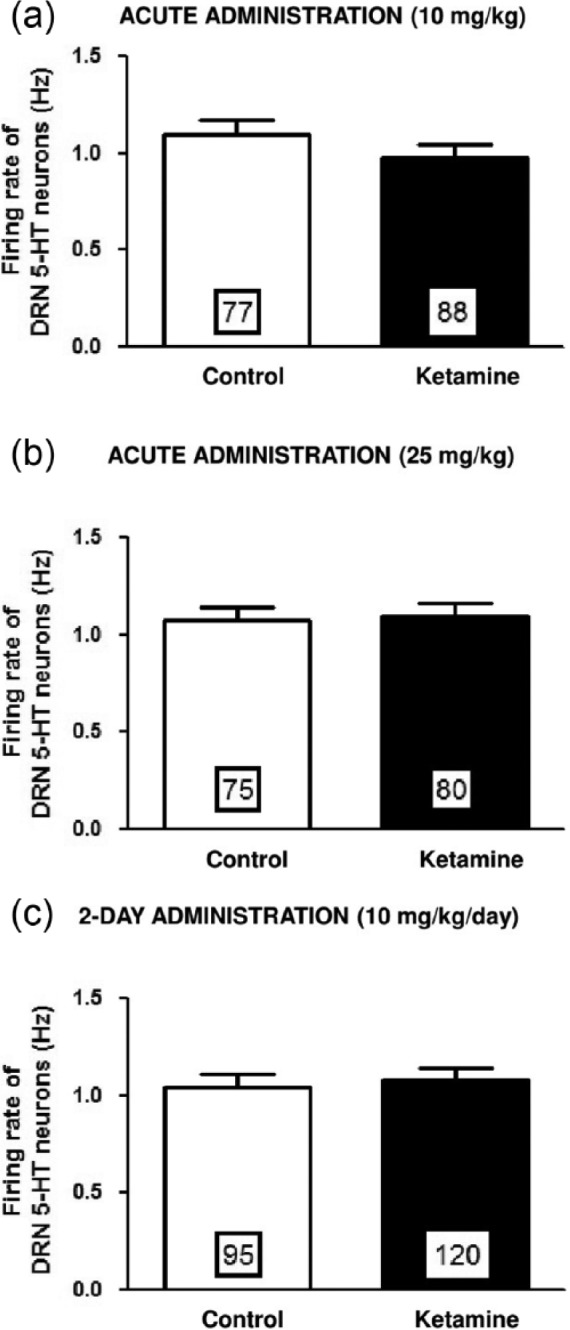
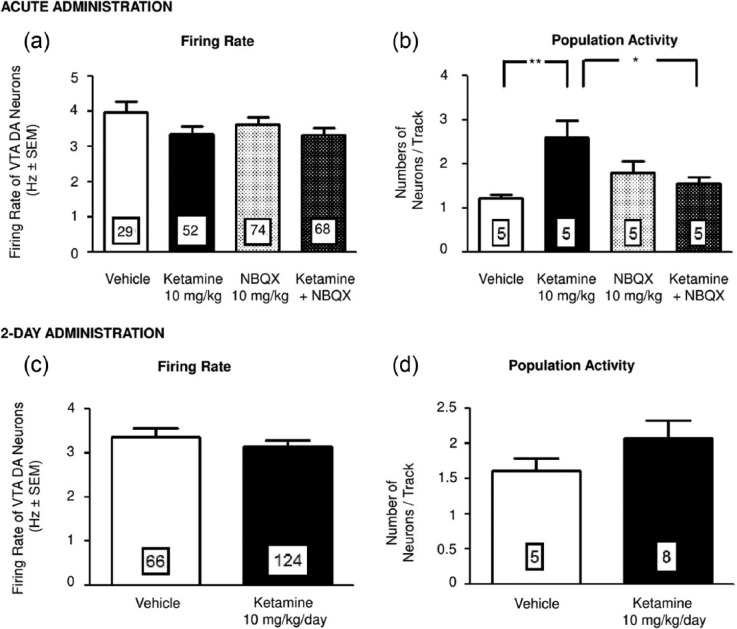
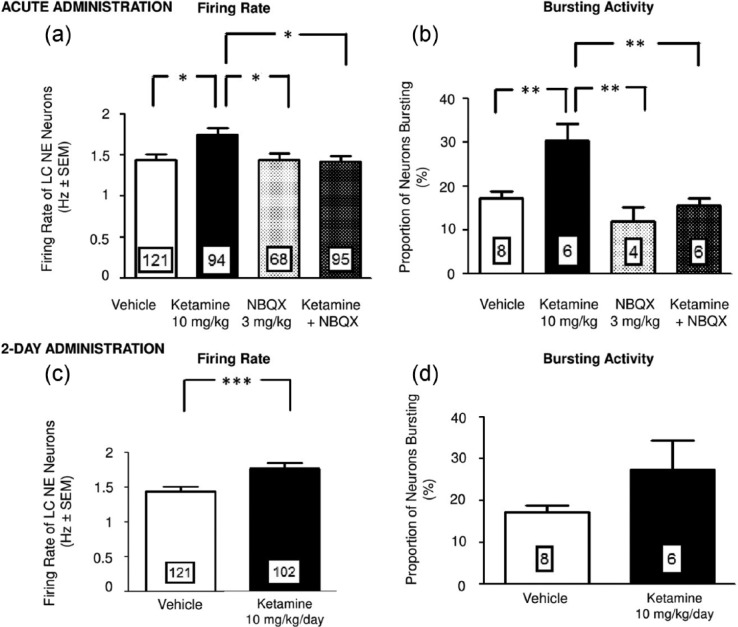
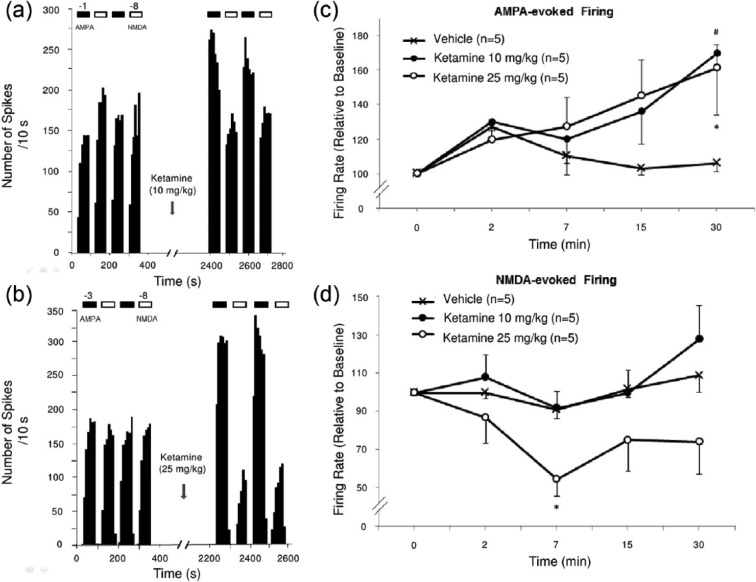
The rapid antidepressant action of a subanesthetic dose of ketamine in treatment-resistant patients represents the most striking recent breakthrough in the understanding of the antidepressant response. Evidence demonstrates tight interactions between the glutamatergic and monoaminergic systems. It is thus hypothesized that monoamine systems may play a role in the immediate/rapid effects of ketamine. In vivo electrophysiological recordings were carried in male rats following ketamine administration (10 and 25 mg/kg, i.p.) to first assess its effects on monoaminergic neuron firing. In a second series of experiments, the effects of ketamine administration on α-amino-3-hydroxy-5-methyl-4-isoxazolepropionic acid (AMPA)- and N-methyl-D-aspartate receptor (NMDA)-evoked responses in hippocampus CA3 pyramidal neurons were also investigated using micro-iontophoretic applications. Although acute (~2 hours) ketamine administration did not affect the mean firing activity of dorsal raphe serotonin and ventral tegmental area dopamine neurons, it did increase that of locus coeruleus norepinephrine neurons. In the latter brain region, while ketamine also enhanced bursting activity, it did increase population activity of dopamine neurons in the ventral tegmental area. These effects of ketamine were prevented by the prior administration of the AMPA receptor antagonist 2,3-dioxo-6-nitro-1,2,3,4-tetrahydrobenzo[ f]quinoxaline-7-sulfonamide. An increase in AMPA-evoked response of CA3 pyramidal neurons was also observed 30 minutes following acute ketamine administration. The present findings suggest that acute ketamine administration produces a rapid enhancement of catecholaminergic neurons firing activity through an amplification of AMPA transmission. These effects may play a crucial role in the antidepressant effects of ketamine observed shortly following its infusion in depressed patients.
Overview
The claims and statistics of this paper haven’t been checked yet.
Free: it reads the open-access text and checks the first 5 claims that cite a source we can check. Create a free account to check every claim.
Integrity signals
Registry
Cites
Statistics
Figures
Verification
Claims the paper makes
The claims and statistics of this paper haven’t been checked yet.
Free: it reads the open-access text and checks the first 5 claims that cite a source we can check. Create a free account to check every claim.
Claims other papers make about this one
Each is checked against this paper’s own text: does it say what the citing paper says it does?
The check wasn’t confident either way, so it gives no verdict — never disputed.
In the citing paper
“Brexpiprazole, a partial dopamine D2 and 5-hydroxytryptamine 1A (5-HT1A) agonist with 5-hydroxytryptamine 2A (5-HT2A) antagonism, facilitates AMPAR-mediated transmission in medial prefrontal cortex through a dopamine D1-dependent cascade, particularly when combined with selective serotonin reuptake inhibitors (SSRIs) such as escitalopram [384].”
From Synaptic Plasticity—Intrinsic Excitability and Antidepressant Discovery (2026) · cites this paper as [384]
Experimental — accuracy not yet measuredIn the citing paper
“Ketamine administration was also shown to enhance AMPA-evoked electrophysiological responses in the rat hippocampus and medial PFC, suggesting that ketamine may augment AMPA receptor transmission.99,100”
From Ketamine as an antidepressant: Overview of its mechanisms of action and potential predictive biomarkers (2020) · cites this paper as [99]
In the citing paper
“In fact, low doses of ketamine were shown to induce an enhancement of AMPAR-mediated synaptic transmission in the mPFC 145 and hippocampus 146 of rats, as measured by AMPAR currents in pyramidal neurons and extracellular in vivo electrophysiological recordings in CA3 pyramidal neurons respectively.”
From Mechanisms of ketamine action as an antidepressant (2018) · cites this paper as [146]
Self-check
Percentages, sums and reported differences re-computed from the paper’s own numbers.
The self-check needs the paper’s full text.
Citations
Cites
The Rat Brain in Stereotaxic Coordinates
(1982) · Elsevier eBooks · doi:10.1016/c2009-0-63235-9 · Cited by 51,963
The rat brain in stereotaxic coordinates
Palkovits, M. (1983) · Neuropeptides · doi:10.1016/0143-4179(83)90049-5 · Cited by 28,831 · cited 1×
“A burr hole was drilled at the stereotaxic coordinates corresponding to the brain structure of interest (Paxinos and Watson, 2007).”
MethodMolecular Mechanisms of Depression: Perspectives on New Treatment Strategies
Lang, U. E., & Borgwardt, S. (2013) · Cellular Physiology and Biochemistry · doi:10.1159/000350094 · Cited by 8,475
Antidepressant effects of ketamine in depressed patients
Berman, R. M., Cappiello, A., Anand, A., Oren, D. A., Heninger, G. R., Charney, D. S., & Krystal, J. H. (2000) · Biological Psychiatry · doi:10.1016/s0006-3223(99)00230-9 · Cited by 3,856 · cited 1×
“Significant improvement in depressive symptoms occurred within 72 hours following infusion of ketamine in seven subjects in the first placebo-controlled double-blind study (Berman et al., 2000).”
BackgroundInfluentialA randomized trial of an N-methyl-D-aspartate antagonist in treatment-resistant major depression.
Zarate, C. A., Singh, J. B., Carlson, P. J., Brutsche, N. E., Ameli, R., Luckenbaugh, D. A., Charney, D. S., & Manji, H. K. (2006) · Archives of General Psychiatry · doi:10.1001/archpsyc.63.8.856 · Cited by 3,766 · cited 1×
“This was replicated in a larger double-blind study (Zarate et al., 2006).”
ResultmTOR-Dependent Synapse Formation Underlies the Rapid Antidepressant Effects of NMDA Antagonists
Li, N., Lee, B., Liu, R.-J., Banasr, M., Dwyer, J. M., Iwata, M., Li, X.-Y., Aghajanian, G., & Duman, R. S. (2010) · Science · doi:10.1126/science.1190287 · Cited by 2,881 · cited 10×
“In the case where 10 mg/kg (Li et al., 2010) did not induce any effect, 25 mg/kg dose of ketamine was used as in Gigliucci et al. (2013); at this dose, ketamine is still subanesthetic and produces a significant effect in the FST model (Li et al., 2010; Gigliucci et al., 2013).”
BackgroundMethodInfluentialDrevets, W. C., Price, J. L., & Furey, M. L. (2008) · Brain Structure and Function · doi:10.1007/s00429-008-0189-x · Cited by 2,241 · cited 1×
“Due to its pivotal role in neurocircuitry involved in major depression (see Drevets et al. 2008) and in light of studies showing neuronal plasticity following ketamine administration (see Kavalali and Monteggia, 2012), the hippocampus was selected to assess whether the responsiveness of CA3…”
BackgroundNMDA receptor blockade at rest triggers rapid behavioural antidepressant responses
Autry, A. E., Adachi, M., Nosyreva, E., Na, E. S., Los, M. F., Cheng, P.-F., Kavalali, E. T., & Monteggia, L. M. (2011) · Nature · doi:10.1038/nature10130 · Cited by 1,926 · cited 2×
“Furthermore, while Li et al. (2010) showed that pre-administration of rapamycin blocked the ketamine-mediated decrease in immobility time in the forced swim test (FST), investigations by Autry et al. (2011) revealed that rapamycin failed to reverse such an effect.”
BackgroundMoghaddam, B., Adams, B., Verma, A., & Daly, D. (1997) · The Journal of Neuroscience · doi:10.1523/jneurosci.17-08-02921.1997 · Cited by 1,793 · cited 4×
“**p < 0.01; *p < 0.05. ketamine (Lorrain et al., 2003a; Moghaddam et al., 1997) would have increased firing activity of 5-HT neurons through AMPA receptors.”
BackgroundInfluentialHomayoun, H., & Moghaddam, B. (2007) · The Journal of Neuroscience · doi:10.1523/jneurosci.2213-07.2007 · Cited by 1,231 · cited 2×
“Indeed, blockade by MK-801 of NMDA receptors located on GABA neurons leads to decreased inhibition (disinhibition) following a surge in glutamate, thus resulting in an enhancement of AMPA activation (Abdallah et al., 2014; Homayoun and Moghaddam, 2007).”
Background
Cited by
Mechanisms of ketamine action as an antidepressant
Zanos, P., & Gould, T. D. (2018) · Molecular Psychiatry · doi:10.1038/mp.2017.255 · Cited by 1,127
Kokkinou, M., Ashok, A. H., & Howes, O. D. (2018) · Molecular Psychiatry · doi:10.1038/mp.2017.190 · Cited by 247
Psychedelics in Psychiatry: Neuroplastic, Immunomodulatory, and Neurotransmitter Mechanisms
Inserra, A., De Gregorio, D., & Gobbi, G. (2021) · Pharmacological Reviews · doi:10.1124/pharmrev.120.000056 · Cited by 232
Aleksandrova, L. R., Phillips, A. G., & Wang, Y. T. (2017) · Journal of Psychiatry and Neuroscience · doi:10.1503/jpn.160175 · Cited by 228
Matveychuk, D., Thomas, R. K., Swainson, J., Khullar, A., MacKay, M.-A., Baker, G. B., & Dursun, S. M. (2020) · Therapeutic Advances in Psychopharmacology · doi:10.1177/2045125320916657 · Cited by 209
Pham, T. H., & Gardier, A. M. (2019) · Pharmacology & Therapeutics · doi:10.1016/j.pharmthera.2019.02.017 · Cited by 186
Convergent Mechanisms Underlying Rapid Antidepressant Action
Zanos, P., Thompson, S. M., Duman, R. S., Zarate, C. A., & Gould, T. D. (2018) · CNS Drugs · doi:10.1007/s40263-018-0492-x · Cited by 171
“Indeed, electrophysiological indicate that ketamine application enhances AMPAR-mediated synaptic transmission in pyramidal neurons of mPFC [260] and the CA3 region of hippocampus [261] of stress-naive rats.”
BackgroundPham, T. H., Mendez-David, I., Defaix, C., Guiard, B. P., Tritschler, L., David, D. J., & Gardier, A. M. (2017) · Neuropharmacology · doi:10.1016/j.neuropharm.2016.05.010 · Cited by 136
Kokkinou, M., Irvine, E. E., Bonsall, D. R., Natesan, S., Wells, L. A., Smith, M., Glegola, J. A., Paul, E. J., Tossell, K., Veronese, M., et al. (2020) · Molecular Psychiatry · doi:10.1038/s41380-020-0740-6 · Cited by 116
Zhang, T. R., Larosa, A., Raddo, M.-E. D., Wong, V., Wong, A. S., & Wong, T. P. (2019) · Journal of Neuroscience · doi:10.1523/jneurosci.1958-18.2019 · Cited by 86
“Therapeutic effects of classical (e.g. fluoxetine) and fast-acting (e.g. ketamine) antidepressants have been associated with hippocampal neurogenesis (Santarelli et al., 2003) and altered hippocampal glutamate receptor function (Maeng et al., 2008; El Iskandrani et al., 2015), respectively.”
BackgroundRole of Serotonin and Noradrenaline in the Rapid Antidepressant Action of Ketamine
López-Gil, X., Jiménez-Sánchez, L., Campa, L., Castro, E., Frago, C., & Adell, A. (2019) · ACS Chemical Neuroscience · doi:10.1021/acschemneuro.9b00288 · Cited by 80
du Jardin, K. G., Müller, H. K., Elfving, B., Dale, E., Wegener, G., & Sanchez, C. (2016) · Progress in Neuro-Psychopharmacology and Biological Psychiatry · doi:10.1016/j.pnpbp.2016.05.007 · Cited by 53
“One recent report did not find any effect of systemic ketamine at antidepressant doses on neuronal firing in the dorsal raphe nuclei of rats (El Iskandrani et al., 2015).”
Uncovering the Underlying Mechanisms of Ketamine as a Novel Antidepressant
Xu, S., Yao, X., Li, B., Cui, R., Zhu, C., Wang, Y., & Yang, W. (2022) · Frontiers in Pharmacology · doi:10.3389/fphar.2021.740996 · Cited by 56
Ketamine’s rapid antidepressant effects are mediated by Ca2+-permeable AMPA receptors
Zaytseva, A., Bouckova, E., Wiles, M. J., Wustrau, M. H., Schmidt, I. G., Mendez-Vazquez, H., Khatri, L., & Kim, S. (2023) · eLife · doi:10.7554/elife.86022 · Cited by 48
In vivo electrophysiological recordings of the effects of antidepressant drugs
Fitzgerald, P. J., & Watson, B. O. (2019) · Experimental Brain Research · doi:10.1007/s00221-019-05556-5 · Cited by 54
Liebe, T., Li, M., Čolić, L., Munk, M. H. J., Sweeney‐Reed, C. M., Woelfer, M., Kretzschmar, M., Steiner, J., von Düring, F., Behnisch, G., et al. (2018) · NeuroImage Clinical · doi:10.1016/j.nicl.2018.09.001 · Cited by 48
Scotton, E., Antqueviezc, B., Vasconcelos, M., Dalpiaz, G., Géa, L. P., Goularte, J. F., Colombo, R., & Rosa, A. R. (2022) · Biochemical Pharmacology · doi:10.1016/j.bcp.2022.114963 · Cited by 40
Nawwar, D. A., Zaki, H. F., & Sayed, R. H. (2021) · Inflammopharmacology · doi:10.1007/s10787-022-01031-w · Cited by 43
“Novel object recognition task We performed the test as described previously (Ennaceur and Delacour 1988; Boultadakis and Pitsikas 2010).”
MethodSlovik, M., Rosin, B., Moshel, S., Mitelman, R., Schechtman, E., Eitan, R., Raz, A., & Bergman, H. (2017) · Journal of Neurophysiology · doi:10.1152/jn.00765.2016 · Cited by 36
“This supposition is supported by the parallel emergence of sustained gamma oscillations as well as increased hyperactivity and stereotypic behavior in ketamine-treated rats (Caixeta et al. 2013; El Iskandrani et al. 2015; Jones et al. 2012; Kocsis 2012; Pinault 2008).”
BackgroundHCN channel antagonist ZD7288 ameliorates neuropathic pain and associated depression
Yang, L., Liu, X., Yao, K., Sun, Y., Jiang, F., Yan, H., Mao, P., Fan, S., Wei, X., Liu, Y., et al. (2019) · Brain Research · doi:10.1016/j.brainres.2019.03.036 · Cited by 34
Llamosas, N., Pérez-Caballero, L., Berrocoso, E., Bruzos-Cidón, C., Ugedo, L., & Torrecilla, M. (2018) · Progress in Neuro-Psychopharmacology and Biological Psychiatry · doi:10.1016/j.pnpbp.2018.07.022 · Cited by 34
“First, the in vivo firing activity of DR neurons was not affected by the administration of ketamine at a dose similar to that used here (Irifune et al., 1992; Petrenko et al., 2004; El Iskandrani et al., 2015).”
Chaki, S., & Fukumoto, K. (2019) · International Journal of Molecular Sciences · doi:10.3390/ijms20061270 · Cited by 30
“[50] reported that systemic administration of ketamine increased the firing activity of norepinephrine (NE) neurons in the locus coeruleus (LC) through AMPA receptor stimulation, while exerting no such effect on the DRN 5-HT neurons or ventral tegmental area (VTA) dopamine neurons.”
BackgroundIro, C. M., Hamati, R., Mansari, M. E., & Blier, P. (2021) · The International Journal of Neuropsychopharmacology · doi:10.1093/ijnp/pyab010 · Cited by 31
“…acutely increases locus coeruleus (LC) NE neurons firing and burst activity and ventral tegmental area (VTA) DA neuron population activity (Belujon and Grace, 2014; El Iskandrani et al., 2015; Witkin et al., 2016) but not dorsal raphe nucleus (DRN) 5-HT neurons (El Iskandrani et al., 2015).”
BackgroundSelf-citationKetamine and the Disinhibition Hypothesis: Neurotrophic Factor-Mediated Treatment of Depression
Borsellino, P., Krider, R. I., Chea, D., Grinnell, R., & Vida, T. A. (2023) · Pharmaceuticals · doi:10.3390/ph16050742 · Cited by 34
Kučerová, J., Babinská, Z., Štark, T., & Micale, V. (2017) · Neurotoxicity Research · doi:10.1007/s12640-017-9718-9 · Cited by 28
Botanas, C. J., de la Peña, J. B., Custodio, R. J. P., Peña, I. J. D., Kim, M., Woo, T., Kim, H. J., Kim, H. I., Cho, M. C., Lee, Y. S., et al. (2017) · Neuropharmacology · doi:10.1016/j.neuropharm.2017.08.038 · Cited by 24
“Moreover, it has been reported that low doses of ketamine do not affect the serotonin activity in the brain (El Iskandrani et al., 2015).”
Morena, M., Colucci, P., Mancini, G. F., Castro, V. D., Peloso, A., Schelling, G., & Campolongo, P. (2020) · Neurobiology of Learning and Memory · doi:10.1016/j.nlm.2020.107362 · Cited by 21
Brand, S. J., & Harvey, B. H. (2016) · Acta Neuropsychiatrica · doi:10.1017/neu.2016.50 · Cited by 21
“However, ketamine is known to act via various mechanisms that may target 5HT indirectly (81), whereas at least acute ketamine administration produces a rapid increase in the activity of locus coeruleus NA neurons through an amplification of α-amino-3-hydroxy-5-methyl-4isoxazolepropionic acid (AMPA) transmission (82).”
BackgroundPhillips, A. G., Geyer, M. A., & Robbins, T. W. (2018) · Biological Psychiatry · doi:10.1016/j.biopsych.2018.01.014 · Cited by 22
Cai, M., Zhu, Y., Shanley, M. R., Morel, C., Ku, S. M., Zhang, H., Shen, Y., Friedman, A. K., & Han, M.-H. (2023) · Neurobiology of Stress · doi:10.1016/j.ynstr.2023.100565 · Cited by 18
Transcranial magnetic stimulation and ketamine: implications for combined treatment in depression
Dębowska, W., Więdłocha, M., Dębowska, M. D., Kownacka, Z., Marcinowicz, P., & Szulc, A. (2023) · Frontiers in Neuroscience · doi:10.3389/fnins.2023.1267647 · Cited by 23
Ketamine: A Review for Clinicians
Sanacora, G., & Katz, R. R. (2018) · FOCUS The Journal of Lifelong Learning in Psychiatry · doi:10.1176/appi.focus.20180012 · Cited by 22
“In addition, ketamine also has reported downstream effects on monoaminergic (18) and neuropeptide signaling (19), as well as inflammation (20).”
BackgroundTargeting of Metabotropic Glutamate Receptors for the Development of Novel Antidepressants
Chaki, S., Koike, H., & Fukumoto, K. (2019) · Chronic Stress · doi:10.1177/2470547019837712 · Cited by 21
Hasegawa, S., Yoshimi, A., Mouri, A., Uchida, Y., Hida, H., Mishina, M., Yamada, K., Ozaki, N., Nabeshima, T., & Noda, Y. (2018) · Neuropharmacology · doi:10.1016/j.neuropharm.2018.12.020 · Cited by 18
Okada, M., & Fukuyama, K. (2020) · Biomolecules · doi:10.3390/biom10070990 · Cited by 16
Riggs, L. M., Thompson, S. M., & Gould, T. D. (2022) · Neuropharmacology · doi:10.1016/j.neuropharm.2022.109153 · Cited by 16
Noradrenergic modulation of stress resilience
Zhai, X., Zhou, D., Han, Y., Han, M., & Zhang, H. (2022) · Pharmacological Research · doi:10.1016/j.phrs.2022.106598 · Cited by 14
Fernandes, A., & Li, Y.-W. (2017) · Brain Research · doi:10.1016/j.brainres.2017.05.008 · Cited by 14
“Recent studies have suggested potential involvement of both nuclei in mediating antidepressant effects of ketamine (El Iskandrani et al., 2015, Fukumoto et al., 2016).”
BackgroundChoquet, D., Opazo, P., & Zhang, H. (2025) · Translational Neurodegeneration · doi:10.1186/s40035-025-00470-z · Cited by 13
Daniels, S., Mansari, M. E., Hamoudeh, R. A., & Blier, P. (2023) · Frontiers in Pharmacology · doi:10.3389/fphar.2023.1276309 · Cited by 12
Self-citationMiceli, M. D., Husson, Z., Ruel, P., Layé, S., Cota, D., Fioramonti, X., Bosch‐Bouju, C., & Gronier, B. (2020) · Frontiers in Neural Circuits · doi:10.3389/fncir.2020.00051 · Cited by 14
“( Continued ) Valenti et al., 2012; Oosterhof et al., 2014, 2015; El Iskandrani et al., 2015) and freely behaving animals (Hyland et al., 2002; Shen, 2003; Dahan et al., 2007; Li et al., 2012).”
BackgroundViana, G. S. D. B., Xavier, C. C., do Vale, E. M., Lopes, M. J. P., Alves, V. D. J., Costa, R. D. O., & Neves, K. R. T. (2017) · IBRO Reports · doi:10.1016/j.ibror.2017.11.001 · Cited by 12
Ebrahimzadeh, M. A., Mansari, M. E., & Blier, P. (2017) · Neuropharmacology · doi:10.1016/j.neuropharm.2017.10.036 · Cited by 11
“Consistent with this hypothesis, it has been reported that acute low doses of ketamine increased the responsiveness of AMPA receptors of the pyramidal neurons in the rat hippocampus (El Iskandrani et al., 2015).”
BackgroundSelf-citationNeuromodulation as a therapeutic approach for post-traumatic stress disorder: the evidence to date
Manocchio, F., Enepekides, J., Nestor, S. M., Giacobbe, P., Rabin, J. S., Burke, M. J., Lanctôt, K. L., Goubran, M., Meng, Y., Lipsman, N., et al. (2024) · Expert Review of Neurotherapeutics · doi:10.1080/14737175.2024.2442658 · Cited by 10
“Activating AMPA receptors has been associated with downstream effects such as increasing levels of BDNF [199,200].”
mGlu2/3 receptor as a novel target for rapid acting antidepressants
Chaki, S. (2020) · Advances in pharmacology · doi:10.1016/bs.apha.2020.04.001 · Cited by 10
Methoxetamine: A foe or friend?
Botanas, C. J., de la Peña, J. B., Kim, H. J., Lee, Y. S., & Cheong, J. H. (2018) · Neurochemistry International · doi:10.1016/j.neuint.2018.10.020 · Cited by 9
Qin, Y., Li, H., Zhang, Y. T., Cao, J., Zhang, W., & Zhang, H. (2023) · Pharmacology Biochemistry and Behavior · doi:10.1016/j.pbb.2023.173590 · Cited by 9
Mansoori, A., Bazrafshan, A., Ahmadi, J., & Mosavat, S. H. (2025) · Trials · doi:10.1186/s13063-025-08836-4 · Cited by 9
Matar, D., Serhan, A., Bilani, S. E., Faraj, R. A., Hadi, B. A., & Fakhoury, M. (2024) · Advances in experimental medicine and biology · doi:10.1007/978-981-97-4402-2_2 · Cited by 7
Computational Model of Antidepressant Response Heterogeneity as Multi-pathway Neuroadaptation
Camacho, M. B., & Anastasio, T. J. (2017) · Frontiers in Pharmacology · doi:10.3389/fphar.2017.00925 · Cited by 7
“…Blier group (and others) found that these receptors adjust under chronic antidepressant treatment (Blier and de Montigny, 1987; Szabo and Blier, 2001, 2002; El Mansari et al., 2008; Chernoloz et al., 2009; Ghanbari et al., 2010; Katz et al., 2010; Madhavan et al., 2013; El Iskandrani et al., 2015).”
BackgroundDaniels, S., Mansari, M. E., & Blier, P. (2024) · Neuropsychopharmacology · doi:10.1038/s41386-024-01958-4 · Cited by 7
Self-citationEffect of ketamine administration, alone and in combination with E-6837, on climbing behavior
Briones-Aranda, A., Suárez-Santiago, J. E., Picazo, O., & Castellanos-Pérez, M. (2016) · Behavioural Pharmacology · doi:10.1097/fbp.0000000000000235 · Cited by 5
Research Progress on the Mechanism of Ketamine in Neuropathic Pain Comorbid Depression
Li, Q., Liu, S., Qin, B., & Liu, X. (2025) · Neuropsychiatric Disease and Treatment · doi:10.2147/ndt.s534938 · Cited by 3
“29 The downstream response of AMPAR stimulation includes the release of BDNF, which interacts with the postsynaptic TrkB receptor.”
Filipović, D., & Turck, C. W. (2025) · Molecular Neurobiology · doi:10.1007/s12035-025-05013-1 · Cited by 5
Zhan, Y., Zhang, Y., Liu, Z., Yin, Z., Wang, D., Xie, X., & Wang, L. (2025) · Drug Design Development and Therapy · doi:10.2147/dddt.s567980 · Cited by 3
Li, L., Ma, S., Wang, J., Chen, Y., Wang, F., Zheng, M., Zhang, K., Miao, S., & Shi, X. (2023) · Neuroscience · doi:10.1016/j.neuroscience.2023.02.022 · Cited by 2
Ketamine Potentiates AMPA Receptor-mediated Activity in the Somatosensory Cortex
Yasin, B., Williams, D. J., Troyas, C., Harrison, N. L., Makinson, C. D., & García, P. S. (2024) · Anesthesiology · doi:10.1097/aln.0000000000005108 · Cited by 2
Kokkinou, M., Irvine, E. E., Bonsall, D. R., Natesan, S., Wells, L. A., Smith, M., Glegola, J. A., Paul, E. J., Tossell, K., Veronese, M., et al. (2019) · bioRxiv (Cold Spring Harbor Laboratory) · doi:10.1101/748665 · Cited by 2
KETAMINE: Neural- and network-level changes
Bharmauria, V., Ramezanpour, H., Ouelhazi, A., Belkacemi, Y. Y., Flouty, O. E., & Molotchnikoff, S. (2024) · Neuroscience · doi:10.1016/j.neuroscience.2024.09.010 · Cited by 1
Lemeshova, A., Patel, K. A., Bloom, A. J., Golan, L., Haidari, H., Limbada, A., Zhao, C., & Honeycutt, J. A. (2025) · Pharmacology Biochemistry and Behavior · doi:10.1016/j.pbb.2025.174144 · Cited by 3
Role of Interferon-Gamma and Leucine-Rich Repeat Kinase 2 in Stress-Related Pathology
Litteljohn, D. (2016) · Carleton University's Institutional Repository (MacOdrum Library, Carleton University) · doi:10.22215/etd/2016-11660
Synaptic Plasticity—Intrinsic Excitability and Antidepressant Discovery
Tanaka, M. (2026) · Biomedicines · doi:10.3390/biomedicines14061265
The Search for Rapid Acting Antidepressants: Research Synthesis and Perspectives
Sanacora, G., Kitay, B. M., & Wilkinson, S. T. (2019) · Elsevier eBooks · doi:10.1016/b978-0-12-813333-0.00035-4
Iro, C. M., Mansari, M. E., & Blier, P. (2019) · European Neuropsychopharmacology · doi:10.1016/j.euroneuro.2018.11.1058
Self-citationEmergence of Ketamine as a Rapid Acting Antidepressant: Mechanistic Insights and Future Directions
Singh, A., & Bedi, P. M. S. (2022) · IntechOpen eBooks · doi:10.5772/intechopen.99765
Xu, B., Carrasco, C., Chen, Y.-W., & Aoki, C. J. (2025) · SSRN Electronic Journal · doi:10.2139/ssrn.5375443
Ketamine’s Multifaceted Neuropharmacological and Neurobiological Actions
Kohtala, S., & Annala, I. (2025) · Neuromethods · doi:10.1007/978-1-0716-4603-8_2
Es-Safi, S., Bourcier‐Lucas, C., Abrial, E., Cathala, A., Lesté-Lasserre, T., Deurwaerdère, P. D., Revest, J., Mazella, J., Haddjeri, N., & Lucas, G. (2025) · bioRxiv (Cold Spring Harbor Laboratory) · doi:10.1101/2025.10.24.684353
Canada, A. (2025) · Nursing Clinics of North America · doi:10.1016/j.cnur.2025.09.004
Ahmed, A., Mansari, M. E., & Blier, P. (2026) · Journal of Psychopharmacology · doi:10.1177/02698811251405691
“While the enhancing effect of L-655,708 is sustained for up to 1 week with a single injection, that of ketamine requires 2 weeks of repeated injections to produce a sustained increase, and it lasts only 3 days (El Iskandrani et al., 2015; Iro et al., 2021).”
Self-citationXu, B., Carrasco, C., Chen, Y., & Aoki, C. J. (2026) · Synapse · doi:10.1002/syn.70046
“…of ketamine increases levels of AMPARs in brain homogenates (Li et al. 2010 ; Zanos et al. 2016 ), increases AMPA-evoked response of hippocampal CA3 pyramidal neurons (PNs) (El Iskandrani et al. 2015 ), and increases excitatory postsynaptic currents (EPSCs) in the mPFC of rats (Li et al. 2010 ).”
Mansari, M. E., Okamoto, N., & Blier, P. (2026) · The International Journal of Neuropsychopharmacology · doi:10.1093/ijnp/pyag020 · Cited by 1
“23 Such results are concordant with several lines of evidence showing that hours after ketamine is eliminated, there was an enhancement in excitatory transmission mediated by glutamate AMPARs 8 , 20 , 33 , 34 and enhanced AMPAR-induced current in mPFC pyramidal neurons.”
Self-citationMischke, J., Luedtke, K., & Marshall, L. (2026) · Journal of Psychopharmacology · doi:10.1177/02698811261456185 · Cited by 1
Liou, Y., Cheng, L., Lin, W.-C., Su, T.-P., Chen, L.-F., Tu, P., Li, C.-T., Bai, Y.-M., Tsai, S., & Chen, M.-H. (2026) · Journal of Affective Disorders · doi:10.1016/j.jad.2026.122673
Metadata
- Authors
- El Iskandrani, K. S., Oosterhof, C. A., El Mansari, M., & Blier, P.
- Affiliations
- University of Ottawa Institute of Mental Health Research, Mood Disorders Research, Ottawa, ON, Canada
- University of Ottawa (CA)
- ORCID
- Blier, Pierre
- Venue
- Journal of Psychopharmacology
- Publisher
- SAGE Publications
- Published
- 2015-03-10
- Volume
- 29
- Issue
- 7
- Pages
- 792-801
- ISSN
- 0269-8811 (ISSN-L)
- 1461-7285
- PMC
- PMC4469544
- OpenAlex
- W2064513288
- Cited by
- 75
- References
- 56
- Citations by year
- 2026: 6 · 2025: 10 · 2024: 5 · 2023: 8 · 2022: 4 · 2021: 3 · 2020: 7 · 2019: 10 · 2018: 8 · 2017: 9 · 2016: 5
- FWCI
- 5.28
- Type
- journal article
- Language
- en
- Open access
- hybrid
- doi.org
- Licence
- cc-by
- journals.sagepub.com/page/policies/text-and-data-mining-license (tdm)
- Locations
- Journal of Psychopharmacology (publishedVersion, cc-by)
- PubMed Central (publishedVersion, cc-by)
- PubMed (publishedVersion)
- Funders
- University of Ottawa
- Topics
- Health Sciences › Medicine › Pharmacology (medical) › Treatment of Major Depression
- Life Sciences › Neuroscience › Cellular and Molecular Neuroscience › Neuroscience and Neuropharmacology Research
- Life Sciences › Neuroscience › Cellular and Molecular Neuroscience › Neurotransmitter Receptor Influence on Behavior
- Keywords
- ketamine, subanesthetic doses, rapid antidepressant effects, AMPA receptors, NMDA receptor, locus coeruleus, noradrenergic neurons, ventral tegmental area, dopaminergic neurons, dorsal raphe nucleus, serotonergic neurons, CA3 pyramidal cells, hippocampus, AMPA receptor antagonists, treatment-resistant depression
- MeSH terms
- Animals, Antidepressive Agents, Brain, Dose-Response Relationship, Drug, Hippocampus, Ketamine, Male, Neurons, Quinoxalines, Receptors, N-Methyl-D-Aspartate, Rats, Sprague-Dawley, Receptors, AMPA, Excitatory Amino Acid Antagonists, Rats, Electrophysiological Phenomena, Dopaminergic Neurons
About these checks
Registry, retraction, Cites and statistics results are computed, not judged, with one exception: a printed reference that no index lists is read once by a model before it counts as a citation error. Claims are extracted by a model and kept only when their quote appears verbatim in the text; each cited source is then checked, with a model’s help, for whether it says what the claim relies on. Those verdicts can be wrong — read the claim’s quote and the cited source before relying on one.
Statistics and arithmetic are recomputed, not judged.
Confidence bands are shown only for fields calibrated on our annotated test set. None is calibrated yet, so no band is shown.
What counts as a claim ›How we measure confidence ›How we check this ›
Are you an author, or do you see a problem with this page? Request a review
Data sources
Bibliographic data: Semantic Scholar, OpenAlex, Crossref.
Contains information from the Semantic Scholar Academic Graph Datasets, made available under the ODC Attribution License (ODC-BY 1.0).
Semantic Scholar’s data is described in: Kinney, R., et al. (2023). The Semantic Scholar Open Data Platform. arXiv:2301.10140.
