

Impact of subanesthetic doses of ketamine on AMPA-mediated responses in rats: An in vivo electrophysiological study on monoaminergic and glutamatergic neurons
Open accessThe DOI matches its Crossref record; 56 of the 56 references it cites were found in a registry or an index.
Abstract
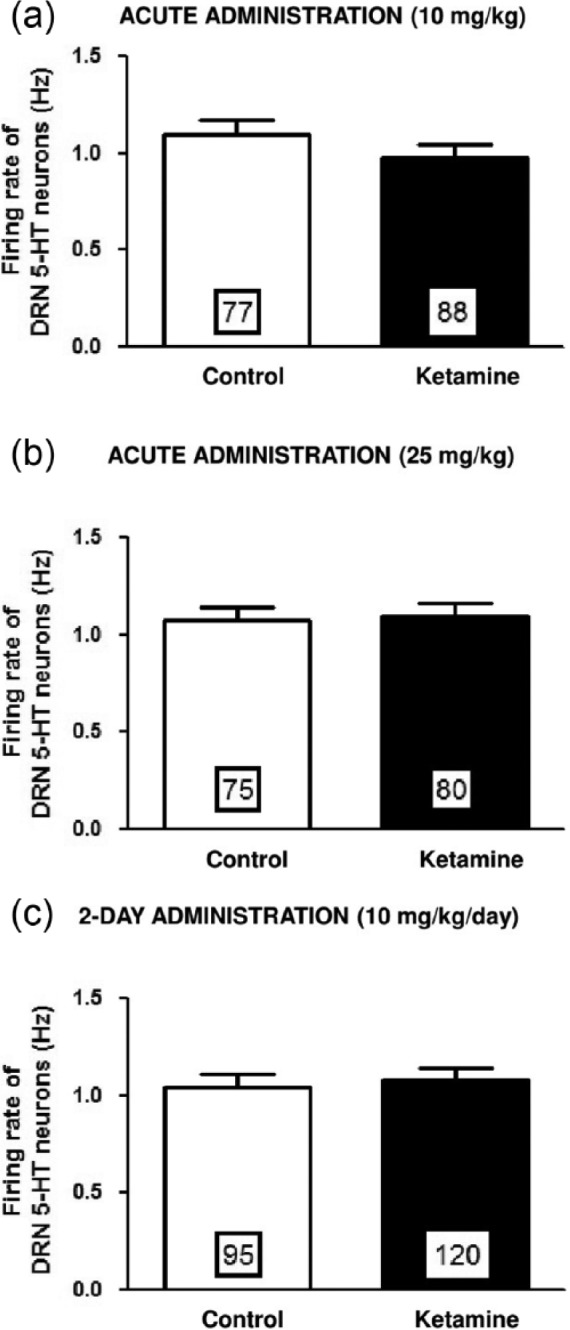
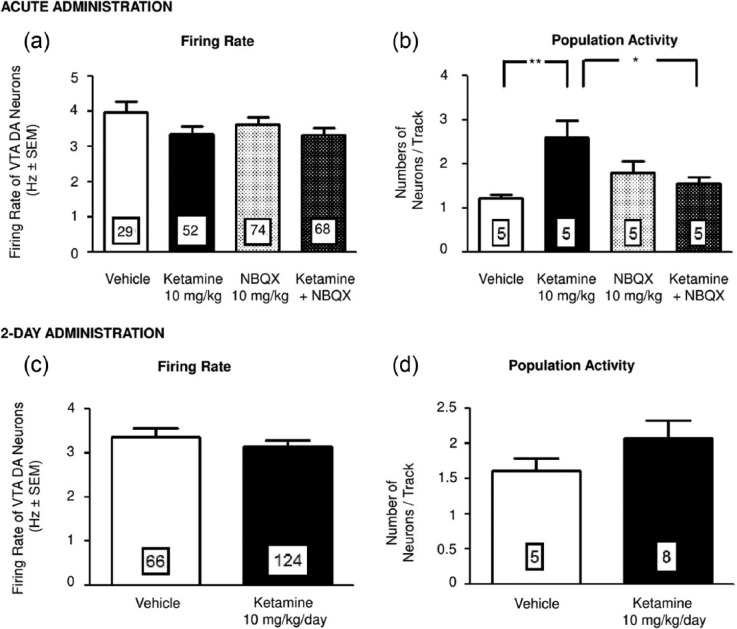
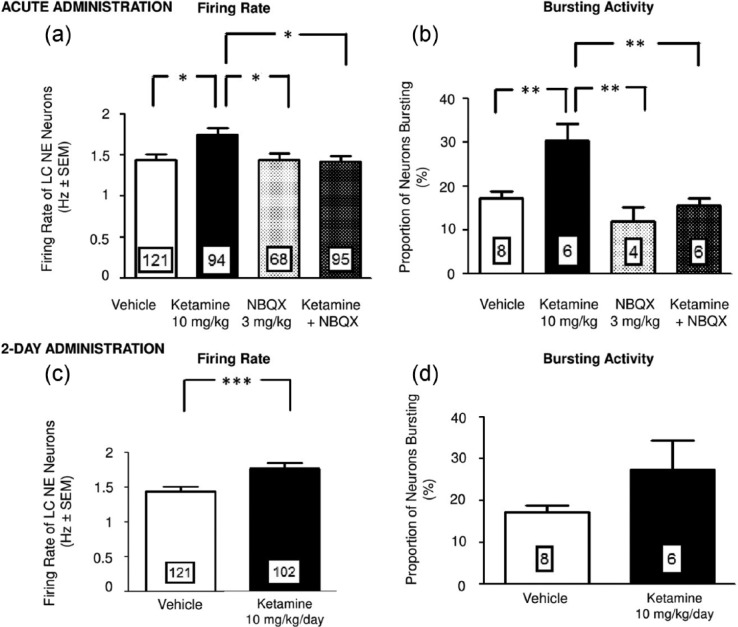
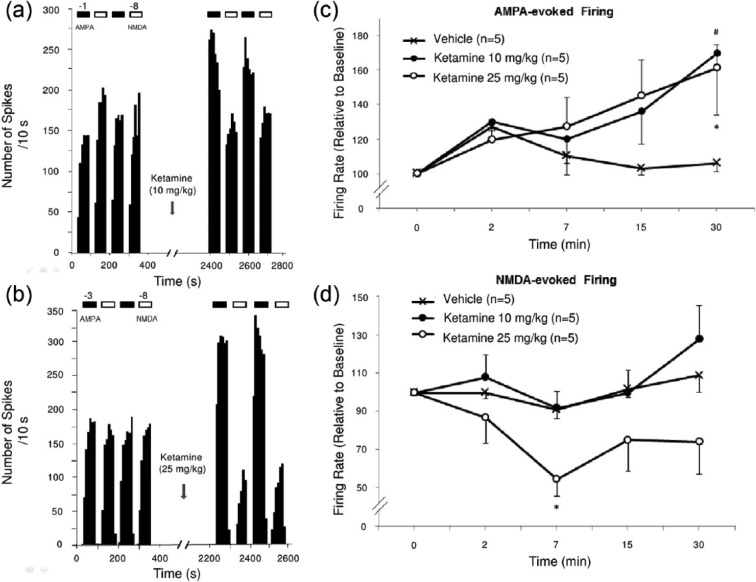
The rapid antidepressant action of a subanesthetic dose of ketamine in treatment-resistant patients represents the most striking recent breakthrough in the understanding of the antidepressant response. Evidence demonstrates tight interactions between the glutamatergic and monoaminergic systems. It is thus hypothesized that monoamine systems may play a role in the immediate/rapid effects of ketamine. In vivo electrophysiological recordings were carried in male rats following ketamine administration (10 and 25 mg/kg, i.p.) to first assess its effects on monoaminergic neuron firing. In a second series of experiments, the effects of ketamine administration on α-amino-3-hydroxy-5-methyl-4-isoxazolepropionic acid (AMPA)- and N-methyl-D-aspartate receptor (NMDA)-evoked responses in hippocampus CA3 pyramidal neurons were also investigated using micro-iontophoretic applications. Although acute (~2 hours) ketamine administration did not affect the mean firing activity of dorsal raphe serotonin and ventral tegmental area dopamine neurons, it did increase that of locus coeruleus norepinephrine neurons. In the latter brain region, while ketamine also enhanced bursting activity, it did increase population activity of dopamine neurons in the ventral tegmental area. These effects of ketamine were prevented by the prior administration of the AMPA receptor antagonist 2,3-dioxo-6-nitro-1,2,3,4-tetrahydrobenzo[ f]quinoxaline-7-sulfonamide. An increase in AMPA-evoked response of CA3 pyramidal neurons was also observed 30 minutes following acute ketamine administration. The present findings suggest that acute ketamine administration produces a rapid enhancement of catecholaminergic neurons firing activity through an amplification of AMPA transmission. These effects may play a crucial role in the antidepressant effects of ketamine observed shortly following its infusion in depressed patients.
Overview
The claims and statistics of this paper haven’t been checked yet.
Free: it reads the open-access text and checks the first 5 claims that cite a source we can check. Create a free account to check every claim.
Integrity signals
Registry
Cites
Statistics
Figures
Verification
Claims the paper makes
The claims and statistics of this paper haven’t been checked yet.
Free: it reads the open-access text and checks the first 5 claims that cite a source we can check. Create a free account to check every claim.
Claims other papers make about this one
Each is checked against this paper’s own text: does it say what the citing paper says it does?
The check wasn’t confident either way, so it gives no verdict — never disputed.
In the citing paper
“Brexpiprazole, a partial dopamine D2 and 5-hydroxytryptamine 1A (5-HT1A) agonist with 5-hydroxytryptamine 2A (5-HT2A) antagonism, facilitates AMPAR-mediated transmission in medial prefrontal cortex through a dopamine D1-dependent cascade, particularly when combined with selective serotonin reuptake inhibitors (SSRIs) such as escitalopram [384].”
From Synaptic Plasticity—Intrinsic Excitability and Antidepressant Discovery (2026) · cites this paper as [384]
Experimental — accuracy not yet measuredIn the citing paper
“Ketamine administration was also shown to enhance AMPA-evoked electrophysiological responses in the rat hippocampus and medial PFC, suggesting that ketamine may augment AMPA receptor transmission.99,100”
From Ketamine as an antidepressant: Overview of its mechanisms of action and potential predictive biomarkers (2020) · cites this paper as [99]
In the citing paper
“In fact, low doses of ketamine were shown to induce an enhancement of AMPAR-mediated synaptic transmission in the mPFC 145 and hippocampus 146 of rats, as measured by AMPAR currents in pyramidal neurons and extracellular in vivo electrophysiological recordings in CA3 pyramidal neurons respectively.”
From Mechanisms of ketamine action as an antidepressant (2018) · cites this paper as [146]
Self-check
Percentages, sums and reported differences re-computed from the paper’s own numbers.
The self-check needs the paper’s full text.
Citations
Cites
The Rat Brain in Stereotaxic Coordinates
(1982) · Elsevier eBooks · doi:10.1016/c2009-0-63235-9 · Cited by 51,963
The rat brain in stereotaxic coordinates
Palkovits, M. (1983) · Neuropeptides · doi:10.1016/0143-4179(83)90049-5 · Cited by 28,831 · cited 1×
“A burr hole was drilled at the stereotaxic coordinates corresponding to the brain structure of interest (Paxinos and Watson, 2007).”
MethodMolecular Mechanisms of Depression: Perspectives on New Treatment Strategies
Lang, U. E., & Borgwardt, S. (2013) · Cellular Physiology and Biochemistry · doi:10.1159/000350094 · Cited by 8,475
Antidepressant effects of ketamine in depressed patients
Berman, R. M., Cappiello, A., Anand, A., Oren, D. A., Heninger, G. R., Charney, D. S., & Krystal, J. H. (2000) · Biological Psychiatry · doi:10.1016/s0006-3223(99)00230-9 · Cited by 3,856 · cited 1×
“Significant improvement in depressive symptoms occurred within 72 hours following infusion of ketamine in seven subjects in the first placebo-controlled double-blind study (Berman et al., 2000).”
BackgroundInfluentialA randomized trial of an N-methyl-D-aspartate antagonist in treatment-resistant major depression.
Zarate, C. A., Singh, J. B., Carlson, P. J., Brutsche, N. E., Ameli, R., Luckenbaugh, D. A., Charney, D. S., & Manji, H. K. (2006) · Archives of General Psychiatry · doi:10.1001/archpsyc.63.8.856 · Cited by 3,766 · cited 1×
“This was replicated in a larger double-blind study (Zarate et al., 2006).”
ResultmTOR-Dependent Synapse Formation Underlies the Rapid Antidepressant Effects of NMDA Antagonists
Li, N., Lee, B., Liu, R.-J., Banasr, M., Dwyer, J. M., Iwata, M., Li, X.-Y., Aghajanian, G., & Duman, R. S. (2010) · Science · doi:10.1126/science.1190287 · Cited by 2,881 · cited 10×
“In the case where 10 mg/kg (Li et al., 2010) did not induce any effect, 25 mg/kg dose of ketamine was used as in Gigliucci et al. (2013); at this dose, ketamine is still subanesthetic and produces a significant effect in the FST model (Li et al., 2010; Gigliucci et al., 2013).”
BackgroundMethodInfluentialDrevets, W. C., Price, J. L., & Furey, M. L. (2008) · Brain Structure and Function · doi:10.1007/s00429-008-0189-x · Cited by 2,241 · cited 1×
“Due to its pivotal role in neurocircuitry involved in major depression (see Drevets et al. 2008) and in light of studies showing neuronal plasticity following ketamine administration (see Kavalali and Monteggia, 2012), the hippocampus was selected to assess whether the responsiveness of CA3…”
BackgroundNMDA receptor blockade at rest triggers rapid behavioural antidepressant responses
Autry, A. E., Adachi, M., Nosyreva, E., Na, E. S., Los, M. F., Cheng, P.-F., Kavalali, E. T., & Monteggia, L. M. (2011) · Nature · doi:10.1038/nature10130 · Cited by 1,926 · cited 2×
“Furthermore, while Li et al. (2010) showed that pre-administration of rapamycin blocked the ketamine-mediated decrease in immobility time in the forced swim test (FST), investigations by Autry et al. (2011) revealed that rapamycin failed to reverse such an effect.”
BackgroundMoghaddam, B., Adams, B., Verma, A., & Daly, D. (1997) · The Journal of Neuroscience · doi:10.1523/jneurosci.17-08-02921.1997 · Cited by 1,793 · cited 4×
“**p < 0.01; *p < 0.05. ketamine (Lorrain et al., 2003a; Moghaddam et al., 1997) would have increased firing activity of 5-HT neurons through AMPA receptors.”
BackgroundInfluentialHomayoun, H., & Moghaddam, B. (2007) · The Journal of Neuroscience · doi:10.1523/jneurosci.2213-07.2007 · Cited by 1,231 · cited 2×
“Indeed, blockade by MK-801 of NMDA receptors located on GABA neurons leads to decreased inhibition (disinhibition) following a surge in glutamate, thus resulting in an enhancement of AMPA activation (Abdallah et al., 2014; Homayoun and Moghaddam, 2007).”
BackgroundMurrough, J. W., Iosifescu, D. V., Chang, L. C., Al Jurdi, R. K., Green, C. E., Perez, A. M., Iqbal, S., Pillemer, S., Foulkes, A., Shah, A., et al. (2013) · American Journal of Psychiatry · doi:10.1176/appi.ajp.2013.13030392 · Cited by 1,205 · cited 3×
“A larger twosite trial using the benzodiazepine midazolam to control for the psychotropic effects of ketamine confirmed a rapid onset of antidepressant effects (Murrough et al., 2013a).”
BackgroundInfluentialLi, N., Liu, R.-J., Dwyer, J. M., Banasr, M., Lee, B., Son, H., Li, X.-Y., Aghajanian, G., & Duman, R. S. (2011) · Biological Psychiatry · doi:10.1016/j.biopsych.2010.12.015 · Cited by 1,082 · cited 5×
“, 2013), ultimately leading to enhanced synaptic plasticity and neurotrophic changes (Li et al., 2011).”
BackgroundInfluentialGrace, A. A., & Bunney, B. S. (1983) · Neuroscience · doi:10.1016/0306-4522(83)90135-5 · Cited by 934 · cited 2×
“Population activity was determined as the number of neurons encountered in each rat divided by the number of tracks carried out (Grace and Bunney, 1983).”
BackgroundInfluentialMurrough, J. W., Perez, A. M., Pillemer, S., Stern, J., Parides, M. K., aan het Rot, M., Collins, K. A., Mathew, S. J., Charney, D. S., & Iosifescu, D. V. (2013) · Biological Psychiatry · doi:10.1016/j.biopsych.2012.06.022 · Cited by 786 · cited 3×
“A larger twosite trial using the benzodiazepine midazolam to control for the psychotropic effects of ketamine confirmed a rapid onset of antidepressant effects (Murrough et al., 2013a).”
BackgroundInfluentialCatecholamine receptors on locus coeruleus neurons: Pharmacological characterization
Cedarbaum, J. M., & Aghajanian, G. K. (1977) · European Journal of Pharmacology · doi:10.1016/0014-2999(77)90312-0 · Cited by 712 · cited 2×
“5–5 Hz), a biphasic action potential of long duration (~2 ms), and a characteristic volley of spikes followed by a quiescent period in response to a nociceptive pinch of the contralateral hind paw (Cedarbaum and Aghajanian, 1977).”
BackgroundInfluentialInteractions Between Monoamines, Glutamate, and GABA in Schizophrenia: New Evidence
Carlsson, A., Waters, N., Holm-Waters, S., Tedroff, J., Nilsson, M., & Carlsson, M. L. (2001) · Annual Review of Pharmacology and Toxicology · doi:10.1146/annurev.pharmtox.41.1.237 · Cited by 688 · cited 2×
“These effects could be a consequence of a direct effect of ketamine on NE and DA neurons, or indirectly due to an effect of ketamine on their glutamatergic afferents which have previously been shown to control monoaminergic neuron firing (Carlsson et al., 2001; Millan, 2006; Paul and Skolnick, 2003).”
BackgroundELECTROPHYSIOLOGY OF HIPPOCAMPAL NEURONS: II. AFTER-POTENTIALS AND REPETITIVE FIRING
Kandel, E. R., & Spencer, W. A. (1961) · Journal of Neurophysiology · doi:10.1152/jn.1961.24.3.243 · Cited by 688 · cited 2×
“2 ms) simple action potentials, alternating with complex spike discharges (Kandel and Spencer, 1961).”
BackgroundInfluentialFloresco, S. B., Todd, C. L., & Grace, A. A. (2001) · The Journal of Neuroscience · doi:10.1523/jneurosci.21-13-04915.2001 · Cited by 556 · cited 3×
“Although the role of NMDA receptors was reported (Floresco et al., 2001), the present study showed an increase in AMPA receptor activation in the dorsal hippocampus following ketamine administration, providing a possible additional mechanism involved in the elevation of population activity in the…”
BackgroundInfluentialMillan, M. J. (2006) · Pharmacology & Therapeutics · doi:10.1016/j.pharmthera.2005.11.006 · Cited by 551 · cited 3×
“These effects could be a consequence of a direct effect of ketamine on NE and DA neurons, or indirectly due to an effect of ketamine on their glutamatergic afferents which have previously been shown to control monoaminergic neuron firing (Carlsson et al., 2001; Millan, 2006; Paul and Skolnick, 2003).”
BackgroundVandermaelen, C. P., & Aghajanian, G. K. (1983) · Brain Research · doi:10.1016/0006-8993(83)90011-2 · Cited by 499 · cited 2×
“5-HT neurons are then identified according to the following criteria: a slow (0.5–2.5 Hz), regular firing pattern, long duration and a positive action potential (VanderMaelen and Aghajanian, 1983).”
BackgroundInfluentialKapur, S., & Seeman, P. (2002) · Molecular Psychiatry · doi:10.1038/sj.mp.4001093 · Cited by 459 · cited 1×
“Several clinical studies have demonstrated the rapid but transient antidepressant effects of subanesthetic doses of the noncompetitive NMDA receptor antagonist ketamine (Ki = 0.5 μM; Kapur and Seeman, 2002) in patients with treatment-resistant major depressive disorder (MDD).”
BackgroundInfluentialAre you or aren’t you? Challenges associated with physiologically identifying dopamine neurons
Ungless, M. A., & Grace, A. A. (2012) · Trends in Neurosciences · doi:10.1016/j.tins.2012.02.003 · Cited by 447 · cited 2×
“…a typical triphasic action potential with a marked negative deflection; a characteristic long duration (>2.5 ms) often with an inflection or ‘notch’ on the rising phase; a slow spontaneous firing rate (0.5–9 Hz) with an irregular single spiking pattern with burst activity (Ungless and Grace, 2012).”
BackgroundInfluentialLorrain, D. S., Baccei, C. S., Bristow, L. J., Anderson, J. J., & Varney, M. A. (2003) · Neuroscience · doi:10.1016/s0306-4522(02)00652-8 · Cited by 432 · cited 2×
“**p < 0.01; *p < 0.05. ketamine (Lorrain et al., 2003a; Moghaddam et al., 1997) would have increased firing activity of 5-HT neurons through AMPA receptors.”
BackgroundInfluentialAbdallah, C. G., Sanacora, G., Duman, R. S., & Krystal, J. H. (2015) · Annual Review of Medicine · doi:10.1146/annurev-med-053013-062946 · Cited by 422 · cited 2×
“Indeed, blockade by MK-801 of NMDA receptors located on GABA neurons leads to decreased inhibition (disinhibition) following a surge in glutamate, thus resulting in an enhancement of AMPA activation (Abdallah et al., 2014; Homayoun and Moghaddam, 2007).”
BackgroundGlutamate and Depression: Clinical and Preclinical Studies
PAUL, I. A., & SKOLNICK, P. (2003) · Annals of the New York Academy of Sciences · doi:10.1196/annals.1300.016 · Cited by 408
Zhou, W., Wang, N., Yang, C., Li, X.-M., Zhou, Z.-Q., & Yang, J.-J. (2014) · European Psychiatry · doi:10.1016/j.eurpsy.2013.10.005 · Cited by 390
ACTION OF PSYCHOTOGENIC DRUGS ON SINGLE MIDBRAIN RAPHE NEURONS
AGHAJANIAN, G. K., FOOTE, W. E., & SHEARD, M. H. (1970) · The Journal of Pharmacology and Experimental Therapeutics · doi:10.1016/s0022-3565(25)28462-2 · Cited by 309 · cited 1×
“Intravenous injection of PCP decreases firing rate of locus coeruleus (LC) norepinephrine (NE) neurons (Raja and Guyenet, 1980), while not modifying the firing activity of 5-HT neurons (Aghajanian et al., 1970; Raja and Guyenet, 1980).”
BackgroundElectrophysiology of Hippocampal Neurons
Schwartzkroin, P. A., & Mueller, A. L. (1987) · Cerebral Cortex · doi:10.1007/978-1-4615-6616-8_8 · Cited by 300
Acute suppression of spontaneous neurotransmission drives synaptic potentiation
Nosyreva, E., Szabla, K., Autry, A. E., Ryazanov, A. G., Monteggia, L. M., & Kavalali, E. T. (2013) · The Journal of Neuroscience · doi:10.1523/jneurosci.4998-12.2013 · Cited by 283 · cited 1×
“Furthermore, this was coupled with an increase in surface expression of both GluA1 and GluA2 subunits of AMPA receptors, which was inhibited by an AMPA receptor antagonist 6,7-dinitroquinoxaline-2,3-dione (DNQX; Nosyreva et al., 2013).”
BackgroundLodge, D. J., & Grace, A. A. (2006) · Neuropsychopharmacology · doi:10.1038/sj.npp.1300963 · Cited by 280 · cited 2×
“However, the current study showed an enhancement in population activity of DA neurons, yielding possibly an increased response in the DA phasic bursts, therefore amplifying the salience signal (Lodge and Grace, 2006).”
BackgroundPapp, M., & Moryl, E. (1994) · European Journal of Pharmacology · doi:10.1016/0014-2999(94)90516-9 · Cited by 272 · cited 1×
“Moreover, this study suggests that the antidepressant effect of ketamine could be occurring directly on the glutamatergic system, as shown by the increase in AMPA receptors responsiveness in the hippocampus (see Papp and Moryl, 1994).”
BackgroundSynaptic Mechanisms Underlying Rapid Antidepressant Action of Ketamine
Kavalali, E. T., & Monteggia, L. M. (2012) · American Journal of Psychiatry · doi:10.1176/appi.ajp.2012.12040531 · Cited by 258 · cited 1×
“…involved in major depression (see Drevets et al. 2008) and in light of studies showing neuronal plasticity following ketamine administration (see Kavalali and Monteggia, 2012), the hippocampus was selected to assess whether the responsiveness of CA3 pyramidal neurons to ketamine could as well…”
BackgroundSerotonin and beyond: therapeutics for major depression
Blier, P., & El Mansari, M. (2013) · Philosophical Transactions of the Royal Society B: Biological Sciences · doi:10.1098/rstb.2012.0536 · Cited by 257
Self-citationMaeng, S., & Zarate, C. A. (2007) · Current Psychiatry Reports · doi:10.1007/s11920-007-0063-1 · Cited by 229 · cited 2×
“Although studies have reported rapid antidepressant effects of ketamine 24 hours following an infusion, an immediate therapeutic effect of ketamine can manifest as early as an hour or two following intravenous infusions, once its psychotomimetic effects have subsided (Blier et al., 2012; Maeng and Zarate, 2007; Murrou…”
BackgroundInfluentialEnhanced norepinephrine release in prefrontal cortex with burst stimulation of the locus coeruleus
Florin-Lechner, S. M., Druhan, J. P., Aston-Jones, G., & Valentino, R. J. (1996) · Brain Research · doi:10.1016/s0006-8993(96)00967-5 · Cited by 226 · cited 1×
“Interestingly, when the LC was stimulated with burst pulses, it was previously shown that it enhances prefrontal cortex NE levels significantly higher than when tonic stimulation was applied (Florin-Lechner et al., 1996).”
BackgroundBelujon, P., & Grace, A. A. (2014) · Biological Psychiatry · doi:10.1016/j.biopsych.2014.04.014 · Cited by 225 · cited 1×
“This increase is concordant with the recently reported data showing that ketamine reversed a decrease in DA neurons population activity in Wistar–Kyoto rats exposed to inescapable and uncontrollable footshocks (Belujon and Grace, 2014).”
ResultZhang, X.-F., Hu, X.-T., White, F. J., & Wolf, M. E. (1997) · The Journal of Pharmacology and Experimental Therapeutics · doi:10.1016/s0022-3565(24)36671-6 · Cited by 210
Naughton, M., Clarke, G., O′Leary, O. F., Cryan, J. F., & Dinan, T. G. (2014) · Journal of Affective Disorders · doi:10.1016/j.jad.2013.11.014 · Cited by 190 · cited 1×
“…target of rapamycin (mTOR) pathway (Li et al., 2010, 2011) which results in an increase in translation of the brain-derived neurotrophic factor (BDNF) protein (Naughton et al., 2014; Zhou et al., 2013), ultimately leading to enhanced synaptic plasticity and neurotrophic changes (Li et al., 2011).”
BackgroundKetamine elicits sustained antidepressant-like activity via a serotonin-dependent mechanism
Gigliucci, V., O’Dowd, G., Casey, S., Egan, D., Gibney, S., & Harkin, A. (2013) · Psychopharmacology · doi:10.1007/s00213-013-3024-x · Cited by 177 · cited 7×
“In the case where 10 mg/kg (Li et al., 2010) did not induce any effect, 25 mg/kg dose of ketamine was used as in Gigliucci et al. (2013); at this dose, ketamine is still subanesthetic and produces a significant effect in the FST model (Li et al., 2010; Gigliucci et al., 2013).”
BackgroundMethodInfluentialTizabi, Y., Bhatti, B. H., Manaye, K. F., Das, J. R., & Akinfiresoye, L. (2012) · Neuroscience · doi:10.1016/j.neuroscience.2012.03.052 · Cited by 173 · cited 1×
“Interestingly, chronic administration of ketamine resulted in a significant increase in AMPA but not NMDA receptor density in Wistar–Kyoto rats (a model for depression), whereas basal densities of these receptors were not significantly different when compared to Wistar rats (Tizabi et al., 2012).”
ResultRanck, J. B. (1975) · The Hippocampus · doi:10.1007/978-1-4684-2979-4_7 · Cited by 161
Non-competitive antagonists are potent activators of ventral tegmental A10 dopamine neurons
French, E. D., & Ceci, A. (1990) · Neuroscience Letters · doi:10.1016/0304-3940(90)90823-r · Cited by 152 · cited 4×
“These results revealed that the increase in the number of c-Fos-positive cells following administration of the NMDA antagonist MK-801 was altered by application of tetrodotoxin in the medial prefrontal cortex (mPFC), but not the in DRN.”
BackgroundInfluentialRelevance of Norepinephrine–Dopamine Interactions in the Treatment of Major Depressive Disorder
El Mansari, M., Guiard, B. P., Chernoloz, O., Ghanbari, R., Katz, N., & Blier, P. (2010) · CNS Neuroscience & Therapeutics · doi:10.1111/j.1755-5949.2010.00146.x · Cited by 146 · cited 1×
“All antidepressants currently in clinical use target one or more monoamine systems (El Mansari et al., 2010; Blier and El Mansari, 2013).”
BackgroundSelf-citationRasmussen, K., Kendrick, W. T., Kogan, J. H., & Aghajanian, G. K. (1996) · Neuropsychopharmacology · doi:10.1016/s0893-133x(96)00094-2 · Cited by 123 · cited 1×
“Interestingly, it was previously shown that the effect of glutamate upon NE neurons is largely of excitatory nature as demonstrated, for instance, by the fact that the AMPA antagonist LY293558 concentration-dependently blocked that effect (Rasmussen et al., 1996; see Jodo and Aston-Jones, 1997).”
BackgroundActivation of locus coeruleus by prefrontal cortex is mediated by excitatory amino acid inputs
Jodo, E., & Aston‐Jones, G. (1997) · Brain Research · doi:10.1016/s0006-8993(97)00703-8 · Cited by 113 · cited 1×
“Interestingly, it was previously shown that the effect of glutamate upon NE neurons is largely of excitatory nature as demonstrated, for instance, by the fact that the AMPA antagonist LY293558 concentration-dependently blocked that effect (Rasmussen et al., 1996; see Jodo and Aston-Jones, 1997).”
BackgroundChristoffersen, C. L., & Meltzer, L. T. (1995) · Neuroscience · doi:10.1016/0306-4522(95)00047-m · Cited by 113
Amargós-Bosch, M., López-Gil, X., Artigas, F., & Adell, A. (2006) · The International Journal of Neuropsychopharmacology · doi:10.1017/s1461145705005900 · Cited by 104 · cited 2×
“In order to determine whether this effect was due to stimulation of 5-HT neurons or local action in the prefrontal cortex, c-Fos experiments were carried out (Lopez-Gil et al., 2006).”
MethodTong, Z.-Y., Overton, P. G., & Clark, D. T. (1996) · Journal of Neural Transmission · doi:10.1007/bf01291780 · Cited by 103 · cited 1×
“The involvement of AMPA receptors in the VTA is supported by data showing that local application of AMPA on DA neurons stimulates their neuronal firing (Tong et al., 1996; Zhang et al., 1997).”
BackgroundLorrain, D. S., Schaffhauser, H., Campbell, U. C., Baccei, C. S., Correa, L. D., Rowe, B. A., Rodriguez, D. E., Anderson, J. J., Varney, M. A., Pinkerton, A. B., et al. (2003) · Neuropsychopharmacology · doi:10.1038/sj.npp.1300238 · Cited by 93 · cited 2×
“**p < 0.01; *p < 0.05. ketamine (Lorrain et al., 2003a; Moghaddam et al., 1997) would have increased firing activity of 5-HT neurons through AMPA receptors.”
BackgroundInfluentialOlanzapine activates the rat locus coeruleus: in vivo electrophysiology and c-Fos immunoreactivity
Dawe, G. S., Huff, K. D., Vandergriff, J. L., Sharp, T., O’Neill, M. J., & Rasmussen, K. (2001) · Biological Psychiatry · doi:10.1016/s0006-3223(01)01171-4 · Cited by 77 · cited 1×
“The termination of a burst was defined as an ISI > 0.16 s for NE and DA (Dawe et al., 2001; Grace and Bunney, 1983) and ISI > 0.01 s for 5-HT (Hajos and Sharp, 1996).”
BackgroundInfluentialOn the safety and benefits of repeated intravenous injections of ketamine for depression.
Blier, P., Zigman, D., & Blier, J. (2012) · Biological Psychiatry · doi:10.1016/j.biopsych.2012.02.039 · Cited by 64 · cited 2×
“Although studies have reported rapid antidepressant effects of ketamine 24 hours following an infusion, an immediate therapeutic effect of ketamine can manifest as early as an hour or two following intravenous infusions, once its psychotomimetic effects have subsided (Blier et al., 2012; Maeng and Zarate, 2007; Murrou…”
BackgroundSelf-citationEffects of phencyclidine on the spontaneous activity of monoaminergic neurons
Raja, S. N., & Guyenet, P. G. (1980) · European Journal of Pharmacology · doi:10.1016/0014-2999(80)90452-5 · Cited by 60 · cited 2×
“Intravenous injection of PCP decreases firing rate of locus coeruleus (LC) norepinephrine (NE) neurons (Raja and Guyenet, 1980), while not modifying the firing activity of 5-HT neurons (Aghajanian et al.”
BackgroundGartside, S. E., Cole, A. J., Williams, A. P., McQuade, R., & Judge, S. J. (2007) · European Journal of Neuroscience · doi:10.1111/j.1460-9568.2007.05577.x · Cited by 50 · cited 2×
“However, it was previously shown that the AMPA response was a direct effect on 5-HT neurons rather than resulting from local release of glutamate (Gartside et al., 2007).”
BackgroundLópez-Gil, X., Jiménez-Sánchez, L., Romón, T., Campa, L., Artigas, F., & Adell, A. (2012) · The International Journal of Neuropsychopharmacology · doi:10.1017/s1461145711001064 · Cited by 33 · cited 1×
“While this result indicates an involvement of the mPFC, it did not show a greater activation in DRN following NMDA receptor blockade (Lopez-Gil et al., 2011), which is concordant with results obtained herein on the firing activity of 5-HT neurons.”
ResultHajós, M., & Sharp, T. (1996) · Neuroscience Letters · doi:10.1016/0304-3940(96)12333-8 · Cited by 30 · cited 1×
“The termination of a burst was defined as an ISI > 0.16 s for NE and DA (Dawe et al., 2001; Grace and Bunney, 1983) and ISI > 0.01 s for 5-HT (Hajos and Sharp, 1996).”
BackgroundInfluentialEffects of general anaesthetics on 5-HT neuronal activity in the dorsal raphe nucleus
McCardle, C., & Gartside, S. E. (2011) · Neuropharmacology · doi:10.1016/j.neuropharm.2011.12.003 · Cited by 27 · cited 1×
“However, several studies were able to detect positive effects when measuring glutamatergic transmission under chloral hydrate anesthesia (see Christophersen and Meltzer, 1995; McCardle and Gartside, 2012).”
Background
Cited by
Mechanisms of ketamine action as an antidepressant
Zanos, P., & Gould, T. D. (2018) · Molecular Psychiatry · doi:10.1038/mp.2017.255 · Cited by 1,127
Kokkinou, M., Ashok, A. H., & Howes, O. D. (2018) · Molecular Psychiatry · doi:10.1038/mp.2017.190 · Cited by 247
Psychedelics in Psychiatry: Neuroplastic, Immunomodulatory, and Neurotransmitter Mechanisms
Inserra, A., De Gregorio, D., & Gobbi, G. (2021) · Pharmacological Reviews · doi:10.1124/pharmrev.120.000056 · Cited by 232
Aleksandrova, L. R., Phillips, A. G., & Wang, Y. T. (2017) · Journal of Psychiatry and Neuroscience · doi:10.1503/jpn.160175 · Cited by 228
Matveychuk, D., Thomas, R. K., Swainson, J., Khullar, A., MacKay, M.-A., Baker, G. B., & Dursun, S. M. (2020) · Therapeutic Advances in Psychopharmacology · doi:10.1177/2045125320916657 · Cited by 209
Metadata
- Authors
- El Iskandrani, K. S., Oosterhof, C. A., El Mansari, M., & Blier, P.
- Affiliations
- University of Ottawa Institute of Mental Health Research, Mood Disorders Research, Ottawa, ON, Canada
- University of Ottawa (CA)
- ORCID
- Blier, Pierre
- Venue
- Journal of Psychopharmacology
- Publisher
- SAGE Publications
- Published
- 2015-03-10
- Volume
- 29
- Issue
- 7
- Pages
- 792-801
- ISSN
- 0269-8811 (ISSN-L)
- 1461-7285
- PMC
- PMC4469544
- OpenAlex
- W2064513288
- Cited by
- 75
- References
- 56
- Citations by year
- 2026: 6 · 2025: 10 · 2024: 5 · 2023: 8 · 2022: 4 · 2021: 3 · 2020: 7 · 2019: 10 · 2018: 8 · 2017: 9 · 2016: 5
- FWCI
- 5.28
- Type
- journal article
- Language
- en
- Open access
- hybrid
- doi.org
- Licence
- cc-by
- journals.sagepub.com/page/policies/text-and-data-mining-license (tdm)
- Locations
- Journal of Psychopharmacology (publishedVersion, cc-by)
- PubMed Central (publishedVersion, cc-by)
- PubMed (publishedVersion)
- Funders
- University of Ottawa
- Topics
- Health Sciences › Medicine › Pharmacology (medical) › Treatment of Major Depression
- Life Sciences › Neuroscience › Cellular and Molecular Neuroscience › Neuroscience and Neuropharmacology Research
- Life Sciences › Neuroscience › Cellular and Molecular Neuroscience › Neurotransmitter Receptor Influence on Behavior
- Keywords
- ketamine, subanesthetic doses, rapid antidepressant effects, AMPA receptors, NMDA receptor, locus coeruleus, noradrenergic neurons, ventral tegmental area, dopaminergic neurons, dorsal raphe nucleus, serotonergic neurons, CA3 pyramidal cells, hippocampus, AMPA receptor antagonists, treatment-resistant depression
- MeSH terms
- Animals, Antidepressive Agents, Brain, Dose-Response Relationship, Drug, Hippocampus, Ketamine, Male, Neurons, Quinoxalines, Receptors, N-Methyl-D-Aspartate, Rats, Sprague-Dawley, Receptors, AMPA, Excitatory Amino Acid Antagonists, Rats, Electrophysiological Phenomena, Dopaminergic Neurons
About these checks
Registry, retraction, Cites and statistics results are computed, not judged, with one exception: a printed reference that no index lists is read once by a model before it counts as a citation error. Claims are extracted by a model and kept only when their quote appears verbatim in the text; each cited source is then checked, with a model’s help, for whether it says what the claim relies on. Those verdicts can be wrong — read the claim’s quote and the cited source before relying on one.
Statistics and arithmetic are recomputed, not judged.
Confidence bands are shown only for fields calibrated on our annotated test set. None is calibrated yet, so no band is shown.
What counts as a claim ›How we measure confidence ›How we check this ›
Are you an author, or do you see a problem with this page? Request a review
Data sources
Bibliographic data: Semantic Scholar, OpenAlex, Crossref.
Contains information from the Semantic Scholar Academic Graph Datasets, made available under the ODC Attribution License (ODC-BY 1.0).
Semantic Scholar’s data is described in: Kinney, R., et al. (2023). The Semantic Scholar Open Data Platform. arXiv:2301.10140.
