

Psychiatric risks for worsened mental health after psychedelic use
Open accessThe DOI matches its Crossref record; 108 of the 109 references it cites were found in a registry or an index.
Abstract
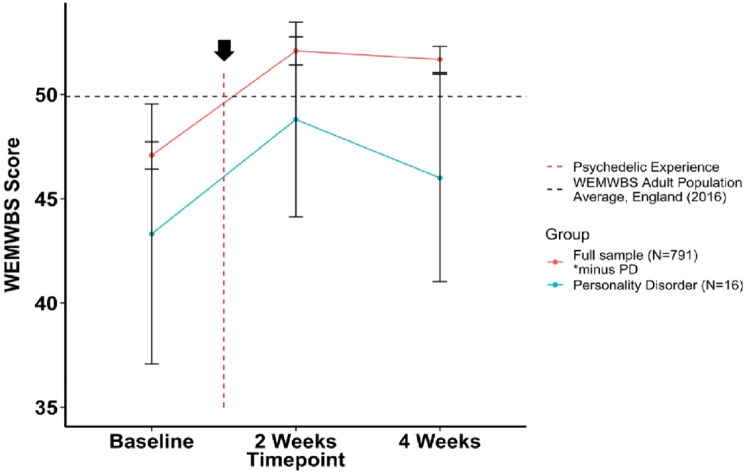
Background: Resurgent psychedelic research has largely supported the safety and efficacy of psychedelic therapy for the treatment of various psychiatric disorders. As psychedelic use and therapy increase in prevalence, so does the importance of understanding associated risks. Cases of prolonged negative psychological responses to psychedelic therapy seem to be rare; however, studies are limited by biases and small sample sizes. The current analytical approach was motivated by the question of whether rare but significant adverse effects have been under-sampled in psychedelic research studies. Methods: A “bottom margin analysis” approach was taken to focus on negative responders to psychedelic use in a pool of naturalistic, observational prospective studies ( N = 807). We define “negative response” by a clinically meaningful decline in a generic index of mental health, that is, one standard error from the mean decrease in psychological well-being 4 weeks post-psychedelic use (vs pre-use baseline). We then assessed whether a history of diagnosed mental illness can predict negative responses. Results: We find that 16% of the cohort falls into the “negative responder” subset. Parsing the sample by self-reported history of psychiatric diagnoses, results revealed a disproportionate prevalence of negative responses among those reporting a prior personality disorder diagnosis (31%). One multivariate regression model indicated a greater than four-fold elevated risk of adverse psychological responses to psychedelics in the personality disorder subsample ( b = 1.425, p < 0.05). Conclusion: We infer that the presence of a personality disorder may represent an elevated risk for psychedelic use and hypothesize that the importance of psychological support and good therapeutic alliance may be increased in this population.
Overview
The claims and statistics of this paper haven’t been checked yet.
Free: it reads the open-access text and checks the first 5 claims that cite a source we can check. Create a free account to check every claim.
Integrity signals
Registry
Cites
Statistics
Figures
Verification
Claims the paper makes
The claims and statistics of this paper haven’t been checked yet.
Free: it reads the open-access text and checks the first 5 claims that cite a source we can check. Create a free account to check every claim.
Claims other papers make about this one
Each is checked against this paper’s own text: does it say what the citing paper says it does?
The source backs part of the claim, not all of it — or backs it for a different population, condition or comparison.
In the citing paper
“Additional reported concerns include the risk of emotional instability during sessions, challenges to establishing therapeutic rapport, and difficulty integrating psychedelic experiences (17–19).”
From Psychoanalytically informed MDMA-assisted therapy for pathological narcissism: a novel theoretical approach (2025) · cites this paper as [17]
Experimental — accuracy not yet measuredThe cited source says what the claim attributes to it.
In the citing paper
“One naturalistic, uncontrolled study found that individuals with personality disorders were over four times more likely to experience worsened mental health following psychedelic use of psilocybin, lysergic acid diethylamide (LSD)), ayahuasca, N,N-Dimethyltryptamine (DMT)), mescaline, and iboga (17).”
From Psychoanalytically informed MDMA-assisted therapy for pathological narcissism: a novel theoretical approach (2025) · cites this paper as [17]
Self-check
Percentages, sums and reported differences re-computed from the paper’s own numbers.
The self-check needs the paper’s full text.
Citations
Cites
Diagnostic and Statistical Manual of Mental Disorders
American Psychiatric Association (2013) · doi:10.1176/appi.books.9780890425596 · Cited by 116,369
Journal of Clinical Psychiatry
(2018) · Journal of Clinical Psychiatry · doi:10.5505/kpd · Cited by 13,651
A very brief measure of the Big-Five personality domains
Gosling, S. D., Rentfrow, P. J., & Swann, W. B. (2003) · Journal of Research in Personality · doi:10.1016/s0092-6566(03)00046-1 · Cited by 8,307 · cited 4×
“Given the heterogeneity between different PD diagnoses, aimed to understand the profile of participants with self-reported PD, as per a univariate regression on the Ten-Item Personality Inventory (TIPI) elements (Gosling et al., 2003) (Supplemental Table 1).”
MethodInfluentialCognitive-Behavioral Treatment of Borderline Personality Disorder
Cary, G. L. (1994) · American Journal of Psychotherapy · doi:10.1176/appi.psychotherapy.1994.48.1.155 · Cited by 6,283
The Warwick-Edinburgh Mental Well-being Scale (WEMWBS): development and UK validation
Tennant, R., Hiller, L., Fishwick, R., Platt, S., Joseph, S., Weich, S., Parkinson, J., Secker, J., & Stewart-Brown, S. (2007) · Health and Quality of Life Outcomes · doi:10.1186/1477-7525-5-63 · Cited by 5,031
Griffiths, R. R., Johnson, M. W., Carducci, M. A., Umbricht, A., Richards, W. A., Richards, B. D., Cosimano, M. P., & Klinedinst, M. A. (2016) · Journal of Psychopharmacology · doi:10.1177/0269881116675513 · Cited by 2,201 · cited 1×
“…of psychedelic therapy as a treatment for a wide range of psychiatric disorders, from major depressive disorder (MDD) to addiction, obsessive-compulsive disorder (OCD), end-of-life anxiety, etc. (Bogenschutz et al., 2015; Carhart-Harris et al., 2021b; Griffiths et al., 2016; Moreno et al., 2006).”
BackgroundCarhart-Harris, R. L., Bolstridge, M., Rucker, J., Day, C. M. J., Erritzoe, D., Kaelen, M., Bloomfield, M., Rickard, J. A., Forbes, B., Feilding, A., et al. (2016) · The Lancet Psychiatry · doi:10.1016/s2215-0366(16)30065-7 · Cited by 1,540 · cited 2×
“In accordance with the current exclusion criteria of psy-chedelic clinical trials (Carhart-Harris et al., 2016, 2021b), we found that the highest proportion of negative responders was in a group of individuals with a history of PD diagnosis (31%, i.e., 5 cases of 16, Table 2).”
BackgroundSelf-citationThe Revised NEO Personality Inventory (NEO-PI-R)
Costa, P. T., & McCrae, R. R. (2008) · The SAGE Handbook of Personality Theory and Assessment: Volume 2 — Personality Measurement and Testing · doi:10.4135/9781849200479.n9 · Cited by 1,463 · cited 1×
“…within our cohort, we assessed for correlations with individual items in the TIPI (Gosling et al., 2003), measuring the five major personality domains: openness to experience, extraversion, agreeableness, conscientiousness, and emotional stability (inverse of neuroticism) (Costa and McCrae, 2008).”
MethodTrial of Psilocybin versus Escitalopram for Depression
Carhart-Harris, R., Giribaldi, B., Watts, R., Baker-Jones, M., Murphy-Beiner, A., Murphy, R., Martell, J., Blemings, A., Erritzoe, D., & Nutt, D. J. (2021) · New England Journal of Medicine · doi:10.1056/nejmoa2032994 · Cited by 1,391
Self-citationStewart-Brown, S., Tennant, A., Tennant, R., Platt, S., Parkinson, J., & Weich, S. (2009) · Health and Quality of Life Outcomes · doi:10.1186/1477-7525-7-15 · Cited by 1,251
Research works printed but not linked: 5
- 2. American Psychiatric Association (1987) DSM III-R. Diagnostic and Statistical Manual of Mental Disorders—Third Revised Version. Arlington: American Psychiatric Association Publishing.
- 11. Biskin RS Paris J (2013) Comorbidities in borderline personality disorder: Real-world issues and treatment implications. Psychiatric Times 30: 29– 29.
- 47. Grinspoon L Doblin R (2001) Psychedelics as catalysts of insight-oriented psychotherapy. Social Research 68: 677– 695.
- 54. Iliff J Moslehi S (2022) Could psychedelics treat personality disorders? Journal of Addiction Science 8: 10– 19.
- 57. Kahneman D (2011) Thinking, Fast and Slow, 7th edn. New York, NY: Farrar, Straus and Giroux.
Cited by
Weiss, F., Magnesa, A., Gambini, M., Gurrieri, R., Annuzzi, E., Elefante, C., Perugi, G., & Marazziti, D. (2025) · Brain Sciences · doi:10.3390/brainsci15020117 · Cited by 74
“Moreover, psychedelics might prove harmful in those conditions, which are typically characterized by baseline deficits in various complexity levels of self-representation (e.g., subjects at high risk for psychosis or subjects with a borderline personality organization) [121,128].”
Pellegrini, L., Fineberg, N. A., O'Connor, S., de Souza, A. M. F. L. P., Godfrey, K., Reed, S., Peill, J. M., Healy, M. P., Rohani-Shukla, C., Lee, H., et al. (2025) · Comprehensive Psychiatry · doi:10.1016/j.comppsych.2025.152619 · Cited by 33
“While psilocybin is generally regarded as safe when administered in controlled environments [24], there are concerns regarding its potential to induce adverse psychological effects, particularly in individuals with a history of bipolar disorder or psychosis [24 – 26].”
Self-citationWalther, R. F. E., & van Schie, H. T. (2024) · Psychoactives · doi:10.3390/psychoactives3030026 · Cited by 22
“While cases in the literature might seem rare, there is a realistic possibility that they are overlooked or under-reported due to flawed designs, small sample sizes, imprecise follow-ups, or biased reporting [202].”
Elfrink, S., & Bergin, L. (2025) · Frontiers in Psychology · doi:10.3389/fpsyg.2025.1528253 · Cited by 20
“Furthermore, personality disorders, which are frequently associated with trauma, constitute another significant risk factor for adverse psychological events following psychedelic use (Yuan et al., 2023; Marrocu et al., 2024).”
Psychedelic-related deaths in England, Wales and Northern Ireland (1997–2022)
Kopra, E. I., Penttinen, J., Rucker, J., & Copeland, C. S. (2024) · Progress in Neuro-Psychopharmacology and Biological Psychiatry · doi:10.1016/j.pnpbp.2024.111177 · Cited by 13
Healing, Harms, and Humility: Expanding the Scope of Psychedelic-Assisted Psychotherapy Research
O’Donnell, K. C., Grigsby, J., & Grob, C. S. (2025) · American Journal of Psychiatry · doi:10.1176/appi.ajp.20230785 · Cited by 11
Adverse Events Should Not Be Surprising in Psychedelic Research
Ehrenkranz, R. C., Agrawal, M., Nayak, S. M., & Yaden, D. B. (2024) · Psychedelic Medicine · doi:10.1089/psymed.2024.0006 · Cited by 10
“20 While psychedelics have so far demonstrated a favorable risk pro fi le in controlled research contexts, that pro fi le does not necessarily translate into broader clinical practice, where these risks will likely be greater due to fewer controls.”
Caraccio, M., Cheung, K., Mann, S. P., Bruce, L., Jacobs, E., Villiger, D., Sandbrink, J. D., Register, C., Hannikainen, I. R., Høeg, M. L., et al. (2025) · Philosophical Psychology · doi:10.1080/09515089.2025.2532761 · Cited by 11
“Some studies give reason to suspect higher rates of adverse events among such groups (Bremler et al., 2023; Marrocu et al., 2024; Morton et al., 2023).”
Roseby, W., Kettner, H., Roseman, L., Spriggs, M. J., Lyons, T., Peill, J., Giribaldi, B., Erritzøe, D., Nutt, D. J., & Carhart-Harris, R. L. (2025) · Frontiers in Psychology · doi:10.3389/fpsyg.2025.1580663 · Cited by 11
Self-citationOffering Psychedelic Treatments Before Assisted Dying for Psychiatric Conditions
Poppe, C. J., Bublitz, C., & Repantis, D. (2025) · JAMA Psychiatry · doi:10.1001/jamapsychiatry.2025.1457 · Cited by 7
Albert, A. E., & Back, A. L. (2025) · Frontiers in Psychiatry · doi:10.3389/fpsyt.2025.1529427 · Cited by 6
“…naturalistic, uncontrolled study found that individuals with personality disorders were over four times more likely to experience worsened mental health following psychedelic use of psilocybin, lysergic acid diethylamide (LSD)), ayahuasca, N,N-Dimethyltryptamine (DMT)), mescaline, and iboga (17).”
InfluentialForsberg, S., Downey, A. E., Bruett, L. D., Hail, L., Fernandes‐Osterhold, G., Woolley, J. D., Lafrance, A., & Raymond‐Flesch, M. (2025) · Child and Adolescent Psychiatry and Mental Health · doi:10.1186/s13034-025-00930-4 · Cited by 6
“A history of unresolved or current abuse between the caregiver and adolescent may be a contraindication, as psychedelic experiences may amplify trauma-related content that cannot be safely processed in their current environment [58, 59].”
Chwyl, C., Wilson‐Poe, A. R., Hoffman, K. A., Bazinet, A. D., Pertl, K., Luoma, J. B., Jarlais, D. C. D., Bielavitz, S., & Korthuis, P. T. (2025) · International Journal of Drug Policy · doi:10.1016/j.drugpo.2025.104938 · Cited by 7
Leveraging meditation research for the study of psychedelic-related adverse effects
Palitsky, R., Canby, N. K., Dam, N. T. V., Levin-Aspenson, H. F., Kaplan, D. M., Maples‐Keller, J. L., Raison, C. L., Grant, G. H., Dunlop, B. W., & Britton, W. B. (2024) · International Review of Psychiatry · doi:10.1080/09540261.2024.2420745 · Cited by 8
“Recent psychedelic studies have begun to examine determinants of beneficial response, nonresponse, and AEs, largely through crosssectional analyses based on survey studies or reanalysis of clinical trial data (Haijen et al., 2018; Marrocu et al., 2024; Romeo et al., 2021).”
Andersen, K. A. A., Holmøy, B., Kvam, T.-M., & Johnson, M. W. (2025) · Journal of Psychiatric Research · doi:10.1016/j.jpsychires.2025.05.062 · Cited by 6
Persistent Altered States: Psychological Treatment of Psychedelic Adverse Effects
Holmøy, B., & Andersen, K. A. A. (2025) · Tidsskrift for Norsk psykologforening · doi:10.52734/hgsn7664 · Cited by 4
Psychedelics in functional disorders: A scoping review
Bhagavan, C., Carter, O. L., Bryson, A., Dandash, O., & Kanaan, R. (2026) · Progress in Neuro-Psychopharmacology and Biological Psychiatry · doi:10.1016/j.pnpbp.2026.111642 · Cited by 4
Exploring serotonergic psychedelics as a treatment for personality disorders
Carrithers, B. M., Roberts, D. E., Weiss, B., King, J. D., Carhart-Harris, R. L., Gordon, A. R., Pagni, B. A., Moreau, M., Ross, S., & Zeifman, R. J. (2025) · Neuropharmacology · doi:10.1016/j.neuropharm.2025.110413 · Cited by 4
Self-citationGezon, L. L., & Bartlett, K. (2025) · Anthropology of Consciousness · doi:10.1111/anoc.70010 · Cited by 3
How to set up a psychedelic study: Unique considerations for research involving human participants
Glennon, M. J., Bird, C., Yadav, P., Kleine, P., Suseelan, S., Boman-Markaki, C., Kotoula, V., Butler, M., Leech, R., Roseman, L., et al. (2026) · Neuroscience & Biobehavioral Reviews · doi:10.1016/j.neubiorev.2026.106657 · Cited by 5
Exploring Psychedelics for Unmet Needs in Women’s Reproductive Health
Shoar, S., Bazinet, A. D., & Jairaj, C. (2025) · Psychedelic Medicine · doi:10.1089/psymed.2024.0033 · Cited by 6
“64,65 Breastfeeding Breastfeeding can be an important aspect of postpartum care, bene fi ting both mother and infant.”
David, J., Berkovich‐Ohana, A., & Dor‐Ziderman, Y. (2025) · Psychopharmacology · doi:10.1007/s00213-025-06792-0 · Cited by 6
Beyond prohibition: A public health analysis of naturalistic psychedelic use
Haden, M., Paschall, S. A., & Woods, B. (2025) · Journal of Psychedelic Studies · doi:10.1556/2054.2025.00450 · Cited by 6
Serotonergic psychedelics for depression: A comprehensive overview
Wingert, A. M., Agnorelli, C., Peill, J., Reed, S., Nutt, D. J., & Erritzoe, D. (2025) · International Review of Neurobiology · doi:10.1016/bs.irn.2025.04.009 · Cited by 3
Qeadan, F., McCunn, A., Tingey, B., & Thielking, P. D. (2025) · Frontiers in Psychiatry · doi:10.3389/fpsyt.2025.1648104 · Cited by 2
“Second, although research highlights bene fi ts of psychedelics in treating substance use (24, 27 – 30, 35, 36), adverse effects are still possible (21, 22, 58).”
Kruger, D. J., Mersereau, G., Sullivan, A., Barron, J., Herberholz, M., Pouyan, N., Aday, J. S., & Boehnke, K. F. (2025) · Harm Reduction Journal · doi:10.1186/s12954-025-01337-2 · Cited by 4
“Even those with very extensive psychedelic experiences can have serious adverse events [58].”
Anchesi, I., Astorino, M. F., Raffaele, I., Donato, D. S., Silvestro, S., Minuti, A., Calabrò, M., Scuruchi, M., & Cipriano, G. L. (2025) · Cells · doi:10.3390/cells14231872 · Cited by 3
“For instance, individuals with a prior diagnosis of a personality disorder show a more than four-fold elevated risk of adverse psychological responses after psychedelic use [115].”
Norris, J. J. (2026) · Journal of Psychopharmacology · doi:10.1177/02698811261436577 · Cited by 2
Yang, K. H., Rasmussen, M., Bhatt, K. V., Satybaldiyeva, N., Kepner, W. E., Moore, A. A., & Bergstrom, J. (2026) · Journal of Psychoactive Drugs · doi:10.1080/02791072.2026.2673845 · Cited by 3
“…2024), with reported adverse effects ranging from acute cardiovascular and psychiatric symptoms to longer-term perceptual abnormalities (Evans et al. 2023; Hinkle et al. 2024; Marrocu et al. 2024; Myran et al. 2025; Simonsson et al. 2023, 2024; Yang, Han, and Palamar 2022; Yerubandi et al. 2024).”
Psychedelic-induced hypomania and mania: a systematic review and meta-analysis
Eskinazi, M., Nasserdine, R., Cusin, R. M., Baniotoupoulos, P., Saccaro, L. F., Pieri, M. D., Corino, T., Seragnoli, F., Briefer, J.-F., Brakha, T. A., et al. (2026) · Molecular Psychiatry · doi:10.1038/s41380-026-03657-6 · Cited by 3
“In contrast, the only large hallucinogen-speci fi c population cohort to date reported a low absolute prevalence of transition to bipolar disorder (3 – 6%), comparable to background rates and not exceeding prevalences observed with other substances [37, 40].”
InfluentialLanglitz, N., Greenway, K. T., Pronovost-Morgan, C., & Gainsley, R. (2026) · Neuroethics · doi:10.1007/s12152-026-09663-3 · Cited by 2
“Other studies identify subgroups of “negative responders” who experience worsening mental health following psychedelic use, particularly among individuals with prior personality pathology [58].”
Miller, C. W. T., & Kozak, Z. (2025) · Harvard Review of Psychiatry · doi:10.1097/hrp.0000000000000425 · Cited by 2
The way of O: phenomenology of psychedelic use and the path to ultimate reality
Miller, C. W. T. (2024) · Psychodynamic Practice · doi:10.1080/14753634.2024.2371787 · Cited by 3
“…is some evidence that individuals with maladaptive personality traits may not have as strong of a response to psyche-delics; it may also not be advisable to rely on the psychedelic sessions as the principal impetus for clinical change in patients with personality disorders (Marrocu et al., 2024).”
Psykologisk behandling av vedvarende vansker etter bruk av psykedelika
Holmøy, B., & Andersen, K. A. A. (2025) · Tidsskrift for Norsk psykologforening · doi:10.52734/qaow7353 · Cited by 1
Mehmood, M., Bremler, R., Spriggs, M. J., Kettner, H., Roseman, L., Damgaard, L., Carhart-Harris, R. L., Erritzøe, D., & Zeifman, R. J. (2025) · Psychedelic Medicine · doi:10.1177/28314425251392251 · Cited by 4
“39,40 To date, a limited number of studies have explored the relationship between ACEs and psychedelic use.”
Self-citationKhan, Z., Weaver, S., Dando, R. V., Schlag, A. K., Neill, J. C., & Wainwright, V. (2026) · Qualitative Health Research · doi:10.1177/10497323261419338 · Cited by 1
Trials, trips, and tribulations: pathways for implementing psychedelic therapy in Ireland
Kelly, J. R., Sheridan, C., Iusan, P., Coakley, L., Burke, L., Brennan, C., MacDonald, A. A., Ivers, J., Trépel, D., Tormey, G., et al. (2026) · The International Journal of Neuropsychopharmacology · doi:10.1093/ijnp/pyag028 · Cited by 1
“185 , 186 Currently in Ireland, apart from ECT, cohesive interventional psychiatry pathways are not fully established.”
Postránecká, Z., Lucký, M., Mravčík, V., & Páleníček, T. (2026) · Journal of Psychedelic Studies · doi:10.1556/2054.2026.00514 · Cited by 1
Blay, M., Benmakhlouf, I., & Speranza, M. (2025) · Psychiatry Research Case Reports · doi:10.1016/j.psycr.2025.100245 · Cited by 1
Kerna, N. A., Pruitt, K. D., Carsrud, N. D. V., Kadivi, K., Ngwu, D. C., Holets, H. M., Flores, J. V., Nnake, I., Azi, C. I., Anderson, J., et al. (2024) · European Journal of Arts Humanities and Social Sciences · doi:10.59324/ejahss.2024.1(3).10
“Medical supervision of entheogen use minimizes negative outcomes (Marrocu et al., 2024; Schlag, Aday, Salam, Neill, & Nutt, 2022).”
BackgroundThe Use of Psychedelics as an Adjunct to Psychotherapy: An overview
Watt, J. S. (2024) · Psychotherapie-Wissenschaft · doi:10.30820/1664-9583-2024-2-53
How to Mitigate Risk in the Treatment of Patients with Borderline Personality Disorder
Hersh, R. G. (2024) · Current Psychiatry Reports · doi:10.1007/s11920-024-01558-5 · Cited by 1
Furnell, M., & Gordon, W. V. (2025) · IntechOpen eBooks · doi:10.5772/intechopen.1008802 · Cited by 4
Bahceci, D., Siefried, K. J., Steele, M., Harrod, M., Bell, G., Barratt, M. J., Nicholas, C. R. N., Rodgers, A., Hendricks, P. S., Stauffer, C. S., et al. (2025) · Drug and Alcohol Dependence · doi:10.1016/j.drugalcdep.2025.112699 · Cited by 1
The therapeutic use of psychedelic drugs: Legal, policy, and neuroscientific perspectives
Rahmani, S., Crupi, R., Riley, A. L., & Davidson, T. L. (2025) · Pharmacology Biochemistry and Behavior · doi:10.1016/j.pbb.2025.174087 · Cited by 1
Self-Integration after Recreational Psychedelic Use: Is it a Bulwark against Identity Disturbance?
Versace, J., & Rucker, J. (2025) · Journal of Humanistic Psychology · doi:10.1177/00221678251369932
Himmelseher, S., Vogelmann, U., & Priller, J. (2025) · Neuromethods · doi:10.1007/978-1-0716-4603-8_11
Roseby, W., & Moar, C. O. (2025) · Psychoactives · doi:10.3390/psychoactives4040041
“This can further the understanding of the relationship between baseline state and eventual outcomes, as well as tailor therapies to specific cognitive or neural profiles [322,323].”
Gordon, A. R., Carrithers, B. M., Pagni, B. A., Kettner, H., MRes, A. M., Nayak, S. M., Weiss, B., Carhart-Harris, R. L., Roberts, D. E., Erritzøe, D., et al. (2025) · Psychedelic Medicine · doi:10.1177/28314425251382930
“49 However, no prospective cohort studies have examined the effect of psychedelic use on affective symptoms (e.g., depressive symptoms or anxiety) or potential psychological mechanisms (e.g., emotion regulation, cognitive fl exibility) among individuals with a PD diagnosis.”
InfluentialSelf-citationHappawana, K. (2025) · Springer eBooks · doi:10.1007/978-3-032-06290-1_6
Contextualizing Violence Risk Associated With Hallucinogens
Durns, T. A., & Iannuzzi, G. (2026) · FOCUS The Journal of Lifelong Learning in Psychiatry · doi:10.1176/appi.focus.20250027
Post-traumatic stress disorder symptoms following psychedelic use: a naturalistic survey study
Evens, R., Uyar, A., Gosslau, E., Dambeck, F., Repantis, D., Wolff, M., & Lueken, U. (2026) · Psychological Medicine · doi:10.1017/s0033291726103754
“…and post-acute difficulties, including lack of preparation, high doses, unsafe settings, unawareness of preexisting vulnerabilities or risk factors, or the combination of different drugs (Evans et al., 2023; Goldy et al., 2025; Marrocu et al., 2024; Nayak et al., 2021; Simonsson et al., 2023).”
Carhart-Harris, R. L., Zeifman, R. J., Pasquini, L., Nandi, B., Rohani-Shukla, C., Suseelan, S., Mediano, P. A. M., Rosas, F. E., Timmermann, C., Kettner, H., et al. (2026) · Frontiers in Neuroscience · doi:10.3389/fnins.2026.1875339 · Cited by 1
“For example, individuals with a history of personality disorder or psychotic disorder appear to have more volatile (i.e., less reliably favorable) responses to psychedelics (Marrocu et al., 2024).”
Self-citationde Oliveira, A. B. P., & Hein, M. (2026) · L Encéphale · doi:10.1016/j.encep.2026.04.004
McAlpine, R. G., Utanğaç, M., Kuc, J., Pankhurst, H., Sellers, A., Kraft, D., Litchy, A., Gupta, N. E., Timmermann, C., Kamboj, S. K., et al. (2026) · Mindfulness · doi:10.1007/s12671-026-02957-w · Cited by 6
Broman, M. J., Acharya, J. N., Ahmed, K., Armstrong, S. B., & Davis, A. K. (2026) · Current Addiction Reports · doi:10.1007/s40429-026-00774-8
Psychedelics and suicidality: A double-edged sword - risks, mechanisms, and moving forward
Mallevays, M., & Berkovitch, L. (2026) · European Neuropsychopharmacology · doi:10.1016/j.euroneuro.2026.113878
Moving beyond 5-HT2A: language models map neurotransmitter receptors to experiential semantics
Suresh, P., Kins, J., Levkovskyy, L., Thieme, A., Wren, P. B., Ray, T., Barrett, F. S., Carhart-Harris, R. L., & Bzdok, D. (2026) · Psychopharmacology · doi:10.1007/s00213-026-07170-0
Self-citationŻełabowski, K., Wieczorek, T., & Hamed, A. (2026) · Frontiers in Pharmacology · doi:10.3389/fphar.2026.1852799
“The proper reference point for an adverse psychological response is the characterization by Marrocu et al., who, in a self-selected naturalistic cohort using mixed psychedelics, found that 16.4% exceeded a one-standard-error-of-measurement decline threshold in psychological wellbeing at 4 weeks.”
InfluentialRojas‐Hernández, J., Borkel, L. F., del Pino, Á. S., Hernández, D. J. Q., & Henríquez‐Hernández, L. A. (2026) · Psychiatry Research · doi:10.1016/j.psychres.2026.117516
Metadata
- Authors
- Marrocu, A., Kettner, H., Weiss, B., Zeifman, R. J., Erritzoe, D., & Carhart-Harris, R. L.
- Affiliations
- Imperial College London (GB)
- NYU Langone Health (US)
- Centre for Psychedelic Research, Division of Psychiatry, Department of Brain Sciences, Faculty of Medicine, Imperial College London, London, UK
- University of California, San Francisco (US)
- Corresponding author
- Kettner, Hannes
- ORCID
- Venue
- Journal of Psychopharmacology
- Publisher
- SAGE Publications
- Published
- 2024-03
- Volume
- 38
- Issue
- 3
- Pages
- 225-235
- ISSN
- 0269-8811 (ISSN-L)
- 1461-7285
- PMC
- PMC10944581
- OpenAlex
- W4392369508
- Cited by
- 60
- References
- 109
- Citations by year
- 2026: 19 · 2025: 33 · 2024: 8
- FWCI
- 30.08
- Type
- journal article
- Language
- en
- Open access
- hybrid
- doi.org
- Locations
- Journal of Psychopharmacology (publishedVersion, cc-by)
- PubMed Central (publishedVersion, cc-by)
- PubMed (publishedVersion)
- eScholarship (California Digital Library) (submittedVersion, cc-by)
- Funders
- Centre for Psychedelic Research
- Topics
- Social Sciences › Psychology › Clinical Psychology › Psychedelics and Drug Studies
- Social Sciences › Health › Religion, Spirituality, and Psychology
- Social Sciences › Psychology › Clinical Psychology › Psychotherapy Techniques and Applications
- Keywords
- psychedelic use, personality disorders, history of mental illness, psychological well-being, therapeutic relationship
- MeSH terms
- Mental Disorders, Hallucinogens, Humans, Mental Health, Prospective Studies, Self Report
About these checks
Registry, retraction, Cites and statistics results are computed, not judged, with one exception: a printed reference that no index lists is read once by a model before it counts as a citation error. Claims are extracted by a model and kept only when their quote appears verbatim in the text; each cited source is then checked, with a model’s help, for whether it says what the claim relies on. Those verdicts can be wrong — read the claim’s quote and the cited source before relying on one.
Statistics and arithmetic are recomputed, not judged.
Confidence bands are shown only for fields calibrated on our annotated test set. None is calibrated yet, so no band is shown.
What counts as a claim ›How we measure confidence ›How we check this ›
Are you an author, or do you see a problem with this page? Request a review
Data sources
Bibliographic data: Semantic Scholar, OpenAlex, Crossref.
Contains information from the Semantic Scholar Academic Graph Datasets, made available under the ODC Attribution License (ODC-BY 1.0).
Semantic Scholar’s data is described in: Kinney, R., et al. (2023). The Semantic Scholar Open Data Platform. arXiv:2301.10140.
