

Events per variable (EPV) and the relative performance of different strategies for estimating the out-of-sample validity of logistic regression models
Open accessThe DOI matches its Crossref record; 31 of the 31 references it cites were found in a registry or an index.
Abstract
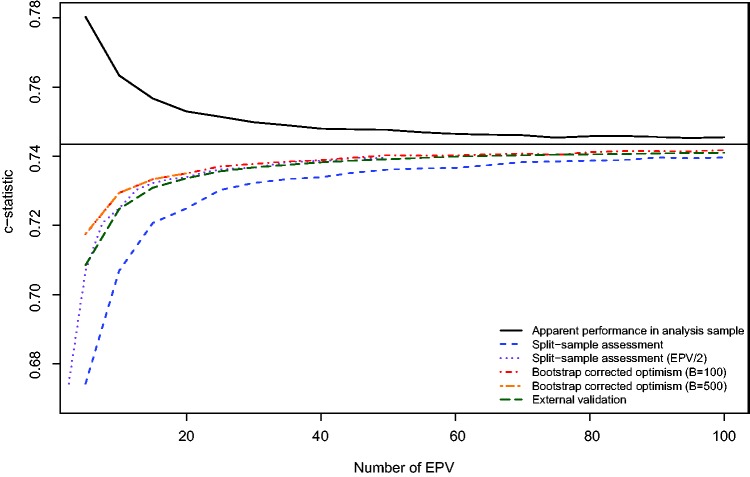
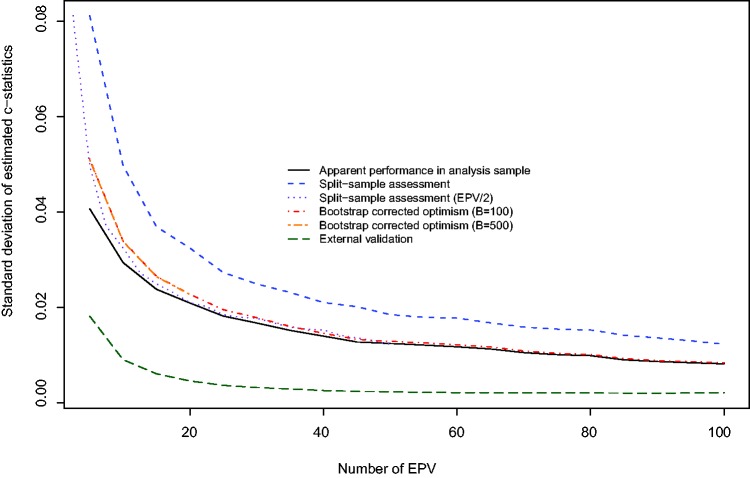
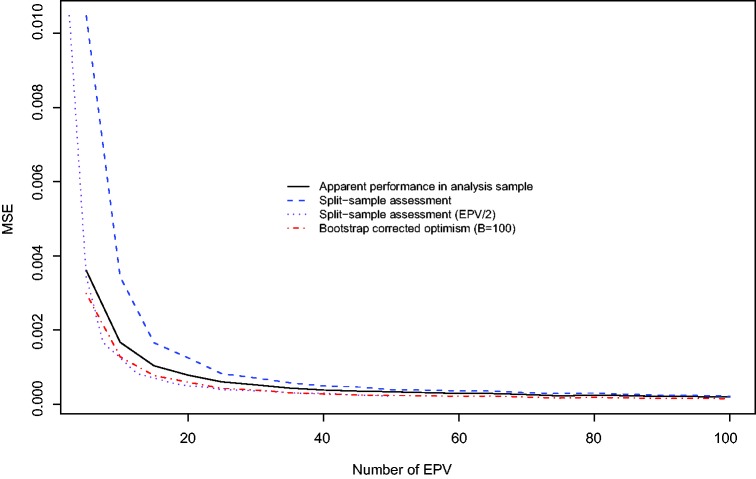
We conducted an extensive set of empirical analyses to examine the effect of the number of events per variable (EPV) on the relative performance of three different methods for assessing the predictive accuracy of a logistic regression model: apparent performance in the analysis sample, split-sample validation, and optimism correction using bootstrap methods. Using a single dataset of patients hospitalized with heart failure, we compared the estimates of discriminatory performance from these methods to those for a very large independent validation sample arising from the same population. As anticipated, the apparent performance was optimistically biased, with the degree of optimism diminishing as the number of events per variable increased. Differences between the bootstrap-corrected approach and the use of an independent validation sample were minimal once the number of events per variable was at least 20. Split-sample assessment resulted in too pessimistic and highly uncertain estimates of model performance. Apparent performance estimates had lower mean squared error compared to split-sample estimates, but the lowest mean squared error was obtained by bootstrap-corrected optimism estimates. For bias, variance, and mean squared error of the performance estimates, the penalty incurred by using split-sample validation was equivalent to reducing the sample size by a proportion equivalent to the proportion of the sample that was withheld for model validation. In conclusion, split-sample validation is inefficient and apparent performance is too optimistic for internal validation of regression-based prediction models. Modern validation methods, such as bootstrap-based optimism correction, are preferable. While these findings may be unsurprising to many statisticians, the results of the current study reinforce what should be considered good statistical practice in the development and validation of clinical prediction models.
Overview
The claims and statistics of this paper haven’t been checked yet.
Free: it reads the open-access text and checks the first 5 claims that cite a source we can check. Create a free account to check every claim.
Integrity signals
Registry
Cites
Statistics
Figures
Verification
Claims the paper makes
The claims and statistics of this paper haven’t been checked yet.
Free: it reads the open-access text and checks the first 5 claims that cite a source we can check. Create a free account to check every claim.
Claims other papers make about this one
Each is checked against this paper’s own text: does it say what the citing paper says it does?
The source backs part of the claim, not all of it — or backs it for a different population, condition or comparison.
In the citing paper
“Sample size for estimating calibration depends not on the total sample size but the size of the smaller group, which determines the events per predictor (EPP).65”
From Calibrating machine learning approaches for probability estimation: A comprehensive comparison (2023) · cites this paper as [65]
Experimental — accuracy not yet measuredThe check wasn’t confident either way, so it gives no verdict — never disputed.
In the citing paper
“Harms, especially serious harms, tend to be rare, and such data in nature are more susceptible to random or systematic errors than are common outcomes. 7 8”
From Validity of data extraction in evidence synthesis practice of adverse events: reproducibility study (2022) · cites this paper as [7]
Experimental — accuracy not yet measured
Self-check
Percentages, sums and reported differences re-computed from the paper’s own numbers.
The self-check needs the paper’s full text.
Citations
Cites
Breiman, L. (2001) · Machine Learning · doi:10.1023/a:1010933404324 · Cited by 133,538
An Introduction to the Bootstrap
Efron, B., & Tibshirani, R. J. (1994) · doi:10.1201/9780429246593 · Cited by 40,500
The Elements of Statistical Learning
Hastie, T., Tibshirani, R., & Friedman, J. (2009) · Springer Series in Statistics · doi:10.1007/978-0-387-84858-7 · Cited by 25,970
The Elements of Statistical Learning
Hastie, T., Friedman, J., & Tibshirani, R. (2001) · Springer Series in Statistics · doi:10.1007/978-0-387-21606-5 · Cited by 24,162
Classification and Regression Trees.
Gordon, A. D., Breiman, L., Friedman, J. H., Olshen, R. A., & Stone, C. J. (1984) · Biometrics · doi:10.2307/2530946 · Cited by 23,522
An Introduction to the Bootstrap
Efron, B., & Tibshirani, R. J. (1993) · doi:10.1007/978-1-4899-4541-9 · Cited by 21,230
The Elements of Statistical Learning: Data Mining, Inference, and Prediction
John Lu, Z. Q. (2010) · Journal of the Royal Statistical Society Series A: Statistics in Society · doi:10.1111/j.1467-985x.2010.00646_6.x · Cited by 12,390
Classification And Regression Trees
Breiman, L., Friedman, J. H., Olshen, R. A., & Stone, C. J. (2017) · doi:10.1201/9781315139470 · Cited by 11,417
A simulation study of the number of events per variable in logistic regression analysis
Peduzzi, P., Concato, J., Kemper, E., Holford, T. R., & Feinstein, A. R. (1996) · Journal of Clinical Epidemiology · doi:10.1016/s0895-4356(96)00236-3 · Cited by 9,655 · cited 2×
“A key concept in the development of prediction models for binary outcomes is the number of events per variable (EPV).(8) When outcomes are binary, the number of events is the smaller of the number of subjects who experienced the outcome and the number of subjects who did not experience the outcome.”
BackgroundMethodHarrell, F. E. (2001) · Springer Series in Statistics · doi:10.1007/978-1-4757-3462-1 · Cited by 9,195
Cited by
Items 301–400 of 516
Zhao, Q., Wu, Q.-Z., Lai, R., & Luan, S. (2025) · BMJ Open · doi:10.1136/bmjopen-2024-097806 · Cited by 2
“58 15 The sample size was calculated as 15 times the number of variables, yielding a requirement of 270 participants.”
Perceived and behavioral distress tolerance: links with avoidance and anxiety
Ishimuro, H. S., DePrince, A. P., McRae, K., & Rozenman, M. S. (2025) · Anxiety Stress & Coping · doi:10.1080/10615806.2025.2564330 · Cited by 3
“Second, it was decided a priori that if a sufficient proportion (at least 20%; Austin & Steyerberg, 2017; Peduzzi et al., 1996) of the sample terminated the task, we would use categorical termination (yes/no) as a secondary measure of behavioral DT consistent with prior research (e.g., Pedrelli et…”
Knorr, A. C., & Ammerman, B. A. (2025) · Journal of Affective Disorders · doi:10.1016/j.jad.2025.120361 · Cited by 5
“This study’s sample size does not meet the minimum number of participants required for between-person logistic regression (n = 15 predictors), as per existing standards (Austin and Steyerberg, 2017; Bujang et al., 2018; Peduzzi et al., 1996; Steyerberg et al., 2000).”
Fields, K. G., Milner, G. D. M., Ma, J., Dhiman, P., Redfern, O., Karamnov, S., He, J., Gerry, S., Alhassan, H. A., Providencia, R. A., et al. (2025) · Anesthesiology · doi:10.1097/aln.0000000000005665 · Cited by 3
Bonura, A., Musotto, G., Rossi, S. S., Santoro, F., Pillitteri, P., Sferruzzi, M., Lazzaro, V. D., Pilato, F., Iaccarino, G., & Alessiani, M. (2025) · Stroke · doi:10.1161/strokeaha.125.052997 · Cited by 2
Co, D. X., Luong, C. Q., Manabe, T., Nguyen, M. H., Pham, D. T., Pham, Q. T., Vu, T. T., Truong, H. T., Khuong, D. Q., Dang, H. D., et al. (2025) · PLoS ONE · doi:10.1371/journal.pone.0337071 · Cited by 6
Li, Y., Wang, X., Hu, H., Zhou, X., Hu, N., Liu, W., Zhang, Y., Mao, P., Xu, L., Zhu, Q., et al. (2025) · Frontiers in Endocrinology · doi:10.3389/fendo.2025.1651493 · Cited by 2
Maternal and perinatal risk factors of hypospadias: A case–control study
Chagas, Y. E. W., Ide, T. F., Paulino, G. H. B., Arantes, R. R., Aguiar, M. J. B., Oliveira, E. A., & Silva, A. C. S. E. (2026) · Journal of Pediatric Urology · doi:10.1016/j.jpurol.2026.105798 · Cited by 2
Understanding women’s decisions to seek an endometriosis diagnosis: A Health Belief Model approach
Pavic, T., Redjem, I. D., David, J.-C., Nadarajah, K., Loyal, D., Terrade, F., & Cabagno, G. (2026) · Women & Health · doi:10.1080/03630242.2026.2637497 · Cited by 2
“For the binary outcome, sample size adequacy was assessed using the events per variable (EPV) criterion (Austin and Steyerberg 2017; Peduzzi et al. 1996).”
Core concepts in statistics and research methods. Part 6: Sample size calculations
Bould, M. D., & McIsaac, D. (2026) · BJA Education · doi:10.1016/j.bjae.2026.02.002 · Cited by 2
Ye, L., Liao, L., Wang, L., Zhao, X., Zeng, J., & Xu, X. (2026) · BMC Cancer · doi:10.1186/s12885-026-15877-8 · Cited by 2
“EPV is defined as the ratio of the number of outcome events to the total number of candidate predictors considered at any stage of model development [45].”
Çolak, R., Gül, İ., & Çiçek, O. (2026) · Journal of Clinical Medicine · doi:10.3390/jcm15114338 · Cited by 2
“Accordingly, the total sample size of 180 participants was considered adequate for the regression analysis performed in this study [31,32].”
Cahyawulan, W., Lu, J., Klassen, R. M., & Wang, H. (2026) · Teaching and Teacher Education · doi:10.1016/j.tate.2026.105686 · Cited by 2
Deguines, N., Lorrillière, R., Dozières, A., Bessa‐Gomes, C., & Chiron, F. (2020) · The Science of The Total Environment · doi:10.1016/j.scitotenv.2020.139263 · Cited by 4
Utility of CVLT–3 response bias as a measure of performance validity after traumatic brain injury
Donders, J., & Vos, M. (2022) · The Clinical Neuropsychologist · doi:10.1080/13854046.2022.2051152 · Cited by 2
Evaluation of Prediction-Oriented Model Selection Metrics for Extended Redundancy Analysis
Kim, S., & Hwang, H. (2022) · Frontiers in Psychology · doi:10.3389/fpsyg.2022.821897 · Cited by 2
“…work has been done on the use of CV and bootstrap variants for out-of-sample model assessment in various prediction models (e.g., Steyerberg et al., 2001; Molinaro et al., 2005; Smith et al., 2014; Austin and Steyerberg, 2017), to date, no research has applied these general tools to ERA.”
MethodE-Ticarette Bilişsel Önyargılar ve Tüketici Kararlarına Etkileri
BOZYER, S., & Doğan, S. (2022) · Bartın Üniversitesi İktisadi ve İdari Bilimler Fakültesi Dergisi · doi:10.47129/bartiniibf.1181624 · Cited by 4
Petrik, A. F., Johnson, E. S., Mummadi, R. R., Slaughter, M. T., Coronado, G. D., Lin, S. C., Savitz, L. A., & Wallace, N. (2023) · Preventive Medicine Reports · doi:10.1016/j.pmedr.2023.102366 · Cited by 3
“(Austin and Steyerberg, 2017).”
Social Factors Associated with the Risk of Glaucoma Suspect Conversion to Glaucoma
Wu, J., Halfpenny, W., Bu, J. J., Brar, M. S., Weinreb, R. N., & Baxter, S. L. (2024) · Ophthalmology Glaucoma · doi:10.1016/j.ogla.2024.06.007 · Cited by 2
Machine Learning for Treatment Management Prediction in Laryngeal Fractures
Alabi, R. O., & Mäkitie, R. E. (2024) · Journal of Voice · doi:10.1016/j.jvoice.2024.09.029 · Cited by 2
Halstensen, T.-D., Hardeland, C., Ghanima, W., Grøndahl, V. A., Hubin, A., & Tavoly, M. (2024) · Research and Practice in Thrombosis and Haemostasis · doi:10.1016/j.rpth.2024.102608 · Cited by 3
Dorina, I., Mullan, B. A., & Boyes, M. E. (2024) · Psychology and Health · doi:10.1080/08870446.2024.2422828 · Cited by 2
“…multiple regression analyses based on sensitivity power analyses, it is acknowledged that the study’s sample size is not sufficient based on the rule of events per variable for prediction models with binary outcomes (where > 10 is acceptable, and > 20 is recommended; Austin & Steyerberg, 2017).”
Wu, J.-R., Wu, H.-L., Wu, Y.-M., Cata, J. P., Chen, J.-T., Cherng, Y., & Tai, Y. (2025) · BMC Anesthesiology · doi:10.1186/s12871-025-03520-1 · Cited by 2
“The sample size was determined based on Austin et al., [21]. recommending a minimum of 20 events per variable for logistic regression.”
Magni, N., Rice, D. A., & McNair, P. J. (2022) · Musculoskeletal Science and Practice · doi:10.1016/j.msksp.2022.102659 · Cited by 2
Geographic heterogeneity in Black-white infant mortality disparities
Côté-Gendreau, M., & Moran, K. D. (2022) · Frontiers in Public Health · doi:10.3389/fpubh.2022.995585 · Cited by 2
Snigurska, U. A., Liu, Y., Ser, S. E., Macieira, T. G. R., Ansell, M., Lindberg, D. S., Prosperi, M., Bjarnadóttir, R. I., & Lucero, R. J. (2023) · PLoS ONE · doi:10.1371/journal.pone.0285527 · Cited by 2
Reply: Should we operate for an intraabdominal emergency in the setting of disseminated cancer?
Scaife, C. L., Hewitt, K. C., Sheng, X., Russell, K. W., & Mone, M. C. (2015) · Surgery · doi:10.1016/j.surg.2015.10.032 · Cited by 2
Regarding: Should we operate for an intra-abdominal emergency in the setting of disseminated cancer?
Gonzales, J. A., Poma, P. V. U., Jauregui, A. M., & Hernández, A. V. (2016) · Surgery · doi:10.1016/j.surg.2015.11.021 · Cited by 2
Asymptotically Optimal Bias Reduction for Parametric ModelsPreprint
Guerrier, S., Karemera, M., Orso, S., & Victoria‐Feser, M. (2020) · arXiv (Cornell University) · doi:10.48550/arxiv.2002.08757 · Cited by 2
“…(EPV), that is the number of occurrences of the least frequent event over the number of covariates, which is used in practice to choose the maximal number of covariates one is “allowed” to use in a logistic regression (see for example Austin and Steyerberg, 2017 and the references therein).”
MethodBruce, S. L., & Wilkerson, G. B. (2021) · Frontiers in Sports and Active Living · doi:10.3389/fspor.2021.733567 · Cited by 1
“The “events per variable” (EPV) is the ratio of events (i.e., CLEI occurrence), to the number of predictor variables, which has been recommended to be no <10:1 (Moons et al., 2014; Pavlou et al., 2016; Austin and Steyerberg, 2017).”
BackgroundAjnakina, O., Fadilah, I., Quattrone, D., Arango, C., Berardi, D., Bernardo, M., Bobes, J., de Haan, L., Del‐Ben, C. M., Gayer-Anderson, C. E., et al. (2023) · Schizophrenia Bulletin Open · doi:10.1093/schizbullopen/sgad008 · Cited by 3
“…not only on the number of events relative to the number of candidate predictor, which is a well-known rule of thumb for the required sample size, 39 but also on the total number of participants, the outcome proportion (incidence) in the study population, and the expected predictive performance…”
BackgroundThe impact of stress and well‐being during the COVID‐19 pandemic on mental health in U.S. veterans
Serier, K. N., Zhao, Z., Vogt, D. S., Kehle‐Forbes, S., Smith, B. N., & Mitchell, K. S. (2023) · Stress and Health · doi:10.1002/smi.3357 · Cited by 1
Pezzotti, E., Provenzi, L., Naboni, C., Capelli, E., Ghirardello, S., Borgatti, R., & Orcesi, S. (2024) · Infant Behavior and Development · doi:10.1016/j.infbeh.2024.101947 · Cited by 1
Evans, W. R. H., Akyea, R. K., Simms, A. D., Kai, J., & Qureshi, N. (2024) · Journal of Community Genetics · doi:10.1007/s12687-024-00742-7 · Cited by 1
Lu, C., Dong, Y., Zhai, Z., Gao, T., Luo, M., Feng, T., Ma, X., Chang, D., Chen, J., Xue, J., et al. (2024) · BMJ Open · doi:10.1136/bmjopen-2024-087645 · Cited by 1
Feng, C. X., & Sweeney, E. (2025) · International Journal of Environmental Research and Public Health · doi:10.3390/ijerph22040471 · Cited by 2
“The events per variable (EPV) rule, which suggests a minimum of 10–20 events per parameter for stable and reliable estimates [40,41], implies that at least 190–380 events are desirable.”
Prognostic value of light reflex pupillometry in Alzheimer’s disease – a longitudinal cohort study
Gramkow, M. H., Clemmensen, F. K., Lindberg, U., Law, I. G., Henriksen, O. M., Waldemar, G., Hasselbalch, S. G., & Frederiksen, K. S. (2025) · Alzheimer s Research & Therapy · doi:10.1186/s13195-025-01794-8 · Cited by 2
“This could be owing to the either a small effect size or the moderate number of progressors, that was borderline for the conservative rule of thumb of 10 events per variable [45].”
Agustina, R., Prafiantini, E., Putri, A. R., Mufida, R., Hanifa, H., Afifah, S., Tahapary, D. L., Shankar, A. H., & Soewondo, P. (2025) · Contemporary Clinical Trials · doi:10.1016/j.cct.2025.108007 · Cited by 2
Utility of two new embedded measures of performance validity for the Wisconsin Card Sorting Test–64
Donders, J., & Piccoli, K. (2025) · The Clinical Neuropsychologist · doi:10.1080/13854046.2025.2536156 · Cited by 1
“The sample size in the Invalid Performance group was more than sufficient for logistic regression in terms of event-to-variable ratio, according to conventional standards (i.e. ≥ 20; Austin & Steyerberg, 2017).”
Evaluating AUC estimators across complex sampling designs: insights from COVID-19 patient data
Iparragirre, A., Quintana, J. M., & Barrio, I. (2025) · BMC Medical Research Methodology · doi:10.1186/s12874-025-02615-0 · Cited by 1
“…the context of traditional simple random samples, it is well known that when the same data is used to fit a model and estimate its AUC, optimistic AUC estimates are usually obtained, and different techniques such as the bootstrap and the cross-validation are recommended for its correction [31, 32].”
Aoki, S., Takaoka, H., Kanaeda, T., Asada, K., Ota, J., Noguchi, Y., Matsumoto, M., Nishikawa, Y., Suzuki, K., Yashima, S., et al. (2025) · Journal of Cardiovascular Development and Disease · doi:10.3390/jcdd12090372 · Cited by 1
“Variables for multivariable analysis were selected using a stepwise method, adhering to a minimum of 5 (ideally 10) events per variable to avoid overfitting, as previously described [23,24].”
When children go missing: identifying risk factors to predict repeat incidents
Tansill, G., Cole, T., Barbin, A., & Hambidge, S. (2025) · Journal of Criminal Psychology · doi:10.1108/jcp-07-2025-0074 · Cited by 1
Impact of dehydration on functional outcomes in large vessel occlusion stroke
Pivonka, A. E., Koneru, M., Baldwin‐Leclair, A., Rissardo, J. P., Patel, K., Patel, A., Kamen, S. E., Thau, L., Wolfe, J., Zhang, L., et al. (2025) · Journal of Clinical Neuroscience · doi:10.1016/j.jocn.2025.111832 · Cited by 1
Jin, W., Xu, Y., Xu, Z., Song, J., Zhou, X., Liu, C., Wang, L., Wang, Z., Weng, J., & Chen, Y. (2026) · BMC Infectious Diseases · doi:10.1186/s12879-025-12496-9 · Cited by 1
“Consistent with previous studies, a range of pre-determined known and potential confounders was considered [25, 26].”
Anupama Prabhu, B., Maiya, G. A., Pandey, V., Acharya, K. K. V., Vennila, J., Elliott, J. M., & Meeus, M. (2026) · Shoulder & Elbow · doi:10.1177/17585732251415002 · Cited by 1
“37 This method requires a minimum of 10 EPVs for each variable included in the model to ensure precision in the parameter estimates.”
Coifan, R., Mircea, M., Pescariu, S. A., Voinescu, O. R., Enache, B., Pascalau, L., Lazăr, M.-A., Goleț, I., Sturza, A., Luca, C. T., et al. (2026) · Journal of Clinical Medicine · doi:10.3390/jcm15031031 · Cited by 1
“Multivariate analysis was not performed due to collinearity between MV parameters and insufficient events-per-variable (6 non-responders), which would violate accepted statistical standards ( ≥ 10–15 events per variable) [25].”
Mukkelli, V. G., Khanna, P., Ray, B. R., Anand, R. K., Rewari, V., & Prasad, G. (2026) · Indian Journal of Anaesthesia · doi:10.4103/ija.ija_627_25 · Cited by 1
Lv, C., Zhao, M., Meng, Q., Lv, Z., Xia, X., Xing, J., Hao, X., Wu, Y., Lv, K., Yuan, Q., et al. (2026) · Scientific Reports · doi:10.1038/s41598-026-39227-7 · Cited by 1
“The discriminative performance of the multivariable model, as reflected by a C-statistic of 0.67, was modest but consistent with expectations for population-based analyses 49 .”
InfluentialMa, J., He, W., Jing, F., Li, M., & Li, Z. (2026) · Health and Quality of Life Outcomes · doi:10.1186/s12955-026-02503-1 · Cited by 1
“However, the adequacy of the sample size for multivariable logistic regression was evaluated using the events-per-variable (EPV) rule [29].”
Li, X., Ying, J., Xu, B., Cui, X., & Tong, Q. (2026) · Science Progress · doi:10.1177/00368504261430053 · Cited by 1
Explainable AI framework for psilocybin depression treatment optimization
Sungheetha, A., Sharma, R. R., Aroba, O. J., Mahapatra, S., & Mahendhiran, P. D. (2026) · Frontiers in Computer Science · doi:10.3389/fcomp.2025.1652190 · Cited by 1
Radiomics in the Evaluation of Cystic and Neoplastic Lytic Lesions of the Jaws
Giacomo, P. D., Frisina, P., Fratocchi, A., Barra, P., Gioia, C. R. T. D., Adotti, F., Falisi, G., Spallaccia, F., Vozza, I., Polimeni, A., et al. (2026) · Diagnostics · doi:10.3390/diagnostics16081222 · Cited by 1
Esser, R., Larbaneix, M., Mondragon, A., Co, M., Esteban, M., Farges, C., Harboun, M., Pages, N., Nisse-Durgeat, S., & Maurou, O. (2026) · Clinical Interventions in Aging · doi:10.2147/cia.s597992 · Cited by 1
“27 Despite these limitations, this study identifies simple, routinely available clinical markers—loop diuretic dose, iron deficiency, mitral regurgitation and chronic obstructive pulmonary disease—associated with rehospitalisation in very old patients with HF.”
Hong, L. I., Ruofan, H., Huang, W. Q., Huang, S., Xu, X., Shao, B., & Chen, H. (2026) · Academic Radiology · doi:10.1016/j.acra.2026.04.042 · Cited by 2
Medawar, E., Oleksiw, M., Rex, D. K., Hassan, C., Djinbachian, R., Michal, V., Battat, R. J., Deslandres, É., Bouin, M., Kiow, J. L. C., et al. (2026) · Endoscopy · doi:10.1055/a-2882-7665 · Cited by 1
Mei, F., Yao, M., Yk, M., Huan, J., Yang, L., Zou, K., Li, L., & Sun, X. (2026) · BMC Medicine · doi:10.1186/s12916-026-05022-4
“A key methodological question is whether evidence from RCTs and NRSIs should be synthesized separately or pooled in a meta-analysis, given that inappropriate synthesis may distort conclusions about harms [10, 11].”
Kitaura, S., Okamoto, K., Yamaguchi, R., Yamamoto, T., Tanaka, T., Kishida, T., Inoue, D., Miyashita, H., Ueda, M., Ikeuchi, K., et al. (2026) · Journal of Infection and Chemotherapy · doi:10.1016/j.jiac.2026.103033 · Cited by 1
Peters, R., van Trijffel, E., van Rosmalen, J., Mutsaers, B., Pool‐Goudzwaard, A., Verhagen, A. P., & Koes, B. W. (2022) · Musculoskeletal Science and Practice · doi:10.1016/j.msksp.2022.102607 · Cited by 1
de Araújo, C. A. R., Ribeiro, D. V., de Oliveira, D. B., Barbieri, W., de Castilho, G. S., Jiménez, M., Tedesco, T. K., Jordão, M. C., Novaes, T. F., Palácio, D. D. C., et al. (2022) · International Journal of Environmental Research and Public Health · doi:10.3390/ijerph192215028 · Cited by 3
Ye, Z., Nguyen, T. L., Dite, G. S., MacInnis, R. J., Hopper, J. L., & Li, S. (2024) · Cancer Epidemiology Biomarkers & Prevention · doi:10.1158/1055-9965.epi-23-1365 · Cited by 1
UroARC: A Novel Surgical Risk Calculator for Older Adults Undergoing Suprapubic Tube Placement
Nik‐Ahd, F., Zhao, S., Wang, L., Boscardin, W. J., Covinsky, K. E., & Suskind, A. M. (2024) · Urology · doi:10.1016/j.urology.2024.10.007 · Cited by 1
Nogier, A., Tourabaly, I., Ramos‐Pascual, S., Grew, B., Saffarini, M., & Courtin, C. (2024) · International Orthopaedics · doi:10.1007/s00264-024-06372-5 · Cited by 1
“Furthermore, at least 20 events per variable are needed to accurately estimate associations in logistic regression analyses [21].”
Charoenchue, P., Khorana, J., Tantraworasin, A., Pojchamarnwiputh, S., Chiangmai, W. N., Amantakul, A., Chitapanarux, T., & Inmutto, N. (2025) · Diagnostics · doi:10.3390/diagnostics15091119 · Cited by 3
“While meeting the minimum threshold for model development, the sample remains below the ideal size for precise risk estimation.”
Zhang, Y., & Zhang, J. (2025) · Hepatology Research · doi:10.1111/hepr.14242 · Cited by 1
Guo, Z. C., & Liu, J. (2025) · The Indian Journal of Pediatrics · doi:10.1007/s12098-025-05710-8 · Cited by 1
Masina, T., N’gombe, J. A. J., Msiska, F., Masangano, P., Kaomba, L., & Mulwafu, W. (2025) · BMC Surgery · doi:10.1186/s12893-025-03188-x · Cited by 1
Methodological concerns in the feasibility study on ultrasound pelvimetry for breech birth
Chen, W. C., & Xuan, X. (2025) · Acta Obstetricia Et Gynecologica Scandinavica · doi:10.1111/aogs.70118 · Cited by 1
“…the effect size (adjusted odds ratio 0.25 per 1 cm AMD increase), rendering the model unreliable for clinical application, while established statistical guidelines recommend approximately 10 events per variable (EPV) to ensure the reliability of multivariable logistic regression models [ 2–5].”
InfluentialMustafa, A. M., & Kakamad, F. H. (2025) · World Journal of Pediatrics · doi:10.1007/s12519-025-01005-2 · Cited by 1
“Contemporary standards recommend a minimum of 15–20 events per variable to ensure statistical robustness, particularly in predictive tools intended for clinical application [3].”
Pelvic Injury Risk Curves for the Military Populations From Lateral Impact
Yoganandan, N., Rooks, T. F., Chancey, V. C., Pintar, F. A., & Banerjee, A. (2021) · Military Medicine · doi:10.1093/milmed/usaa303 · Cited by 1
Kluyts, H., & Becker, P. (2021) · Southern African Journal of Anaesthesia and Analgesia · doi:10.36303/sajaa.2021.27.5.2448 · Cited by 1
Manansala, C., Ferbers, S., Johnson, M., & Passmore, S. R. (2022) · Musculoskeletal Science and Practice · doi:10.1016/j.msksp.2022.102695 · Cited by 1
Kawada, T. (2018) · Canadian Journal of Cardiology · doi:10.1016/j.cjca.2018.01.005 · Cited by 1
Methods for individual participant data meta-analysis in prediction research
de Jong, V. M. T. (2020) · Utrecht University Repository (Utrecht University) · doi:10.33540/469 · Cited by 1
Kudo, Y., Kato, T., Spadaro, G., & Balliet, D. P. (2023) · PsyArXiv (OSF Preprints) · doi:10.31234/osf.io/pybxr · Cited by 2
Agovi, A. M., Thompson, C. T., Meadows, R. J., Lu, Y., & Ojha, R. P. (2025) · medRxiv · doi:10.1101/2025.01.17.25320732 · Cited by 1
Yilmaz, D., Deller, L., Spaeth, J., Gottschewsky, N., Karslı, B., Hasanaj, G., Sagstetter, L., Theis, N., Zuliani, M., Weibel, A., et al. (2026) · medRxiv · doi:10.64898/2026.01.13.26344024 · Cited by 1
Patient Health Questionnaire-9 in Patients With Broad-Spectrum Traumatic Brain Injury
Kawada, T. (2018) · Archives of Physical Medicine and Rehabilitation · doi:10.1016/j.apmr.2018.01.010
Phase Transition Unbiased Estimation in High Dimensional SettingsPreprint
Guerrier, S., Karemera, M., Orso, S., & Victoria‐Feser, M. (2019) · arXiv (Cornell University) · doi:10.48550/arxiv.1907.11541
“…number of Events Per Variable (EPV), that is the number of occurrences of the least frequent event over the number of predictors, which is used in practice to choose the maximal number of predictors one is “allowed” to use in a LRM (see e.g. Austin and Steyerberg, 2017 and the references therein7).”
MethodOstrowe, J. W. (2019) · CUNY Academic Works (City University of New York) · Cited by 1
Prevost, J. P. (2019) · Digital Archive @ GSU · doi:10.57709/14927815
Machine learning discriminates parkinsonian movement disorders in zebrafish
Hughes, G. L. (2019) · White Rose eTheses Online (University of Leeds, The University of Sheffield, University of York)
A General Approach for Simulation-based Bias Correction in High Dimensional SettingsPreprint
Guerrier, S., Karemera, M., Orso, S., Victoria‐Feser, M., & Zhang, Y. (2020) · arXiv (Cornell University) · doi:10.48550/arxiv.2010.13687
“Austin and Steyerberg, 2017 and the references therein). In pratice, a rule of thumb is typically at least 10 EPV (see e.g. Peduzzi et al., 1996). However, with an EPV smaller than 10, a situation that is quite frequently encountered in practical situations, the MLE becomes significantly biased and the resulting infer…”
MethodInfluentialMultimodality treatment and response assessment in esophageal cancer
Borggreve, A. S. (2020) · Utrecht University Repository (Utrecht University) · doi:10.33540/144
Klooster, C. C. V. ’. (2020) · Utrecht University Repository (Utrecht University) · doi:10.33540/105 · Cited by 1
Tighe, L. A. (2019) · Deep Blue (University of Michigan)
Parfi, A. A., Taghiakbari, M., Achore, M., Gautrin, D., Bezgin, G., & Suarthana, E. (2021) · Medical Journal of Indonesia · doi:10.13181/mji.oa.204530
Zhang, W., Huang, Z., Lin, W., & Yang, S.-H. (2018) · Korean Journal of Radiology · doi:10.3348/kjr.2018.19.1.185
“prediction models allow clinicians to evaluate patient prognosis quantitatively and permit effective risk stratification of patients (2).”
Park, J.-W., Kim, J.-T., Park, S., Kwon, O., Kim, H., Kim, H., Yeom, J. S., & Chang, B. (2019) · doi:10.21203/rs.2.16547/v1
Lv, Y., & Han, G. (2021) · Hepatology · doi:10.1002/hep.32014
“Indeed, based on empirical analyses conducted in a single data set of patients hospitalized with heart failure, Austin et al.(5) demonstrate that once the number of EPVs is at least 20 in the analytical sample, then bootstrap- corrected assessment of performance will likely coincide with the assessment of performance…”
BackgroundEustaquio, P. C., Figuracion, R., Izumi, K., Morin, M., Samaco, K., Flores, S. M., Brink, A., & Diones, M. L. (2021) · Research Square · doi:10.21203/rs.3.rs-952643/v1
Formalización de las técnicas de estudio: nuevos enfoques
Pina, F. H. (1987) · Revista de investigación educativa, RIE
Reply: Should we operate for an intra-abdominal emergency in the setting of disseminated cancer?
Scaife, C. L., & Mone, M. C. (2016) · Surgery · doi:10.1016/j.surg.2016.02.026
“The anatomic location of the operative procedure also is not considered in the model, although the mortality rates vary considerably by anatomic location.(3) There is no explanation of whether the independent variables transfusion >4U within 72 hours of surgery and sepsis, considered in both the multivariate and in th…”
BackgroundPrediction models, machine learning and missing data
Nijman, S. W. J. (2022) · Utrecht University Repository (Utrecht University) · doi:10.33540/1375
Hartman, L. M., da Silva, J. A. P., Buttgereit, F., Cutolo, M., Opriș-Belinski, D., Szekanecz, Z., Masaryk, P., Voshaar, M., Heymans, M. W., Lems, W. F., et al. (2022) · Rheumatology · doi:10.1093/rheumatology/keac547
“Each model was bootstrapped 250 times [25] and backward selection was used to run the models.”
MethodSelvaratnam, S., Oyet, A. J., & Yi, Y. (2023) · Journal of Statistical Research · doi:10.3329/jsr.v56i1.63944
Intelligence is a poor predictor of nonrestorability of competence to stand trial
Kivisto, A. J., Guynn, A., Jenson, H., Knowles, E., Magham, P. S., Miner, C., Scelsi, K., & Staats, M. L. P. (2023) · Applied Neuropsychology Adult · doi:10.1080/23279095.2023.2253949
“…other validation approaches, such as split-sample validation, because it does not require the data to be divided into model building and validation phases, which can be particularly problematic when the number of events per variable is small (i.e., between 10 and 20) (Austin & Steyerberg, 2017).”
Atrial Fibrillation Management In Hispanic Adults
Borja, T. (2023) · Digital USD (University of San Diego) · doi:10.22371/07.2023.052
Tindale, A., & Panoulas, V. F. (2023) · Cardiovascular revascularization medicine · doi:10.1016/j.carrev.2023.10.004
Biomarker-based risk stratification in cardiovascular disease
Hijazi, Z., Batra, G., Lindbäck, J., & Wallentin, L. C. (2023) · Oxford University Press eBooks · doi:10.1093/med/9780192869227.003.0022 · Cited by 1
Metadata
- Authors
- Austin, P. C., & Steyerberg, E. W.
- Affiliations
- University of Toronto (CA)
- Erasmus MC (NL)
- Corresponding author
- Austin, Peter C
- Venue
- Statistical Methods in Medical Research
- Publisher
- SAGE Publications
- Published
- 2014-11-19
- Volume
- 26
- Issue
- 2
- Pages
- 796-808
- ISSN
- 0962-2802 (ISSN-L)
- 1477-0334
- PMC
- PMC5394463
- OpenAlex
- W2100697007
- Cited by
- 516
- References
- 31
- Citations by year
- 2026: 104 · 2025: 77 · 2024: 53 · 2023: 66 · 2022: 55 · 2021: 40 · 2020: 40 · 2019: 26 · 2018: 27 · 2017: 10 · 2016: 9 · 2015: 7
- FWCI
- 9.16
- Type
- journal article
- Language
- en
- Open access
- hybrid
- doi.org
- Licence
- Locations
- Statistical Methods in Medical Research (publishedVersion, cc-by-nc)
- Europe PMC (PubMed Central) (publishedVersion, cc-by-nc)
- PubMed Central (publishedVersion, cc-by-nc)
- PubMed (publishedVersion)
- EUR Research Repository (Erasmus University Rotterdam) (submittedVersion, other-oa)
- RePub (Erasmus University Rotterdam) (submittedVersion, other-oa)
- Funders
- Heart and Stroke Foundation of Canada
- Institute for Clinical Evaluative Sciences
- Ontario Ministry of Health and Long-Term Care
- Canadian Institutes of Health Research (86508, MOP86508)
- National Institute of Neurological Disorders and Stroke (U01NS086294)
- Topics
- Physical Sciences › Mathematics › Statistics and Probability › Statistical Methods in Epidemiology
- Physical Sciences › Mathematics › Statistics and Probability › Statistical Methods and Inference
- Health Sciences › Health Professions › Health Information Management › Artificial Intelligence in Healthcare
- Keywords
- logistic regression, out-of-sample validation, optimism correction, bootstrap validation, split-sample validation, prediction accuracy, heart failure, clinical prediction model, model validation
- MeSH terms
- Cardiovascular Diseases, Data Interpretation, Statistical, Humans, Prognosis, Risk Factors, Reproducibility of Results, Logistic Models, Sample Size, Biostatistics
About these checks
Registry, retraction, Cites and statistics results are computed, not judged, with one exception: a printed reference that no index lists is read once by a model before it counts as a citation error. Claims are extracted by a model and kept only when their quote appears verbatim in the text; each cited source is then checked, with a model’s help, for whether it says what the claim relies on. Those verdicts can be wrong — read the claim’s quote and the cited source before relying on one.
Statistics and arithmetic are recomputed, not judged.
Confidence bands are shown only for fields calibrated on our annotated test set. None is calibrated yet, so no band is shown.
What counts as a claim ›How we measure confidence ›How we check this ›
Are you an author, or do you see a problem with this page? Request a review
Data sources
Bibliographic data: Semantic Scholar, OpenAlex, Crossref.
Contains information from the Semantic Scholar Academic Graph Datasets, made available under the ODC Attribution License (ODC-BY 1.0).
Semantic Scholar’s data is described in: Kinney, R., et al. (2023). The Semantic Scholar Open Data Platform. arXiv:2301.10140.
