

Quantifying ADHD Symptoms in Open-Ended Everyday Life Contexts With a New Virtual Reality Task
Open accessPublished version of a preprint
The DOI matches its Crossref record; 64 of the 65 references it cites were found in a registry or an index.
Abstract
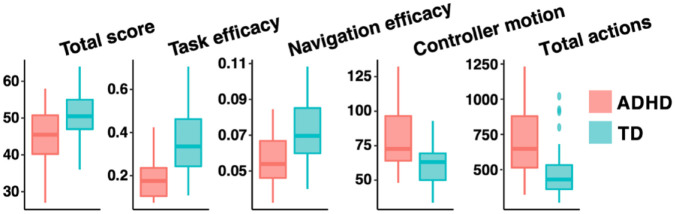
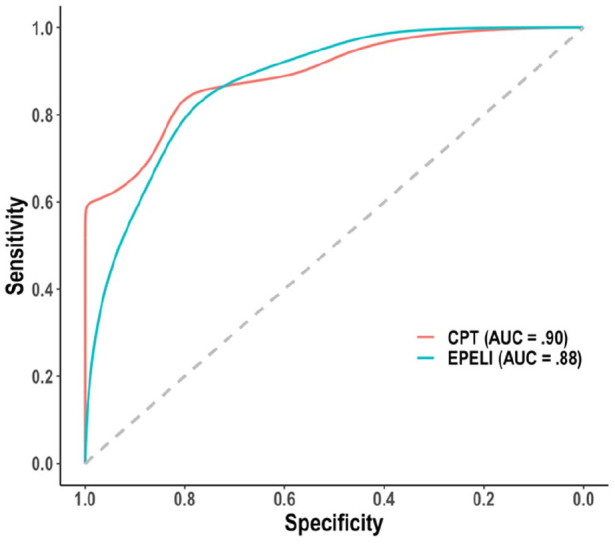
Objective: To quantify goal-directed behavior and ADHD symptoms in naturalistic conditions, we developed a virtual reality task, EPELI (Executive Performance in Everyday LIving), and tested its predictive, discriminant and concurrent validity. Method: We collected EPELI data, conventional neuropsychological task data, and parent-ratings of executive problems and symptoms in 38 ADHD children and 38 typically developing controls. Results: EPELI showed predictive validity as the ADHD group exhibited higher percentage of irrelevant actions reflecting lower attentional-executive efficacy and more controller movements and total game actions, both indicative of hyperactivity-impulsivity. Further, the five combined EPELI measures showed excellent discriminant validity (area under curve 88 %), while the correlations of the EPELI efficacy measure with parent-rated executive problems ( r = .57) and ADHD symptoms ( r = .55) pointed to its concurrent validity. Conclusion: We provide a proof-of-concept validation for a new virtual reality tool for ecologically valid assessment of ADHD symptoms.
Overview
The claims and statistics of this paper haven’t been checked yet.
Free: it reads the open-access text and checks the first 5 claims that cite a source we can check. Create a free account to check every claim.
Integrity signals
Registry
Cites
Statistics
Figures
Verification
Claims the paper makes
The claims and statistics of this paper haven’t been checked yet.
Free: it reads the open-access text and checks the first 5 claims that cite a source we can check. Create a free account to check every claim.
Claims other papers make about this one
Each is checked against this paper’s own text: does it say what the citing paper says it does?
The cited source says what the claim attributes to it.
In the citing paper
“Similar results have been partially reported by other researchers using a comparable task conducted by children with ADHD, in whom the number of irrelevant actions was higher compared to those that in those with neurotypical development [33].”
From Enhancing Ecological Validity: Virtual Reality Assessment of Executive Functioning in Children and Adolescents with ADHD (2024) · cites this paper as [33]
The cited source says what the claim attributes to it.
In the citing paper
“They also fail to incorporate natural types of movement (such as navigating through different scenarios and manipulating various materials) and real-life distractors [35], except for a new task developed to assess prospective memory [33,36].”
From Enhancing Ecological Validity: Virtual Reality Assessment of Executive Functioning in Children and Adolescents with ADHD (2024) · cites this paper as [33]
Self-check
Percentages, sums and reported differences re-computed from the paper’s own numbers.
The self-check needs the paper’s full text.
Citations
Cites
R: A Language and Environment for Statistical Computing
R Core Team (2025) · doi:10.32614/r.manuals · Cited by 352,181
null (2016) · Philosophy Study · doi:10.17265/2159-5313/2016.09.003 · Cited by 28,317
lmerTest Package: Tests in Linear Mixed Effects Models
Kuznetsova, A., Brockhoff, P. B., & Christensen, R. H. B. (2017) · Journal of Statistical Software · doi:10.18637/jss.v082.i13 · Cited by 24,346 · cited 2×
“, 2011), psych (Revelle, 2020), rstatix (Kassambara, 2020), lmerTest (Kuznetsova et al., 2017), tidyverse (Wickham et al.”
BackgroundMethodInfluentialWickham, H., Averick, M., Bryan, J., Chang, W., McGowan, L., François, R., Grolemund, G., Hayes, A., Henry, L., Hester, J., et al. (2019) · Journal of Open Source Software · doi:10.21105/joss.01686 · Cited by 22,138 · cited 2×
“, 2017), tidyverse (Wickham et al., 2019), and ggplot2 (Wickham, 2016).”
MethodInfluentialpROC: an open-source package for R and S+ to analyze and compare ROC curves
Robin, X., Turck, N., Hainard, A., Tiberti, N., Lisacek, F., Sanchez, J.-C., & Müller, M. (2011) · BMC Bioinformatics · doi:10.1186/1471-2105-12-77 · Cited by 13,697 · cited 1×
“All analyses and data visualizations were conducted in R version 4.0.3 (R Core Team, 2020) using packages BayesFactor (Morey & Rouder, 2015), pROC (Robin et al., 2011), MatchIt (Ho et al., 2011), psych (Revelle, 2020), rstatix (Kassambara, 2020), lmerTest (Kuznetsova et al., 2017), tidyverse…”
MethodInfluentialJournal of Clinical Psychiatry
(2018) · Journal of Clinical Psychiatry · doi:10.5505/kpd · Cited by 13,651
(1998) · PubMed · Cited by 10,216
(1991) · Medical Entomology and Zoology · Cited by 8,071
Simulator Sickness Questionnaire: An Enhanced Method for Quantifying Simulator Sickness
Kennedy, R. S., Lane, N. E., Berbaum, K. S., & Lilienthal, M. G. (1993) · The International Journal of Aviation Psychology · doi:10.1207/s15327108ijap0303_3 · Cited by 5,457 · cited 3×
“…participants answered to a shortened version of the Presence Questionnaire 3.0 (Witmer et al., 2005), the Simulator Sickness Questionnaire (Kennedy et al., 1993), a gaming experience questionnaire, and an object familiarity questionnaire after playing EPELI (see Supplemental Tables 5 and…”
BackgroundInfluentialMatchIt : Nonparametric Preprocessing for Parametric Causal Inference
Ho, D. E., Imai, K., King, G., & Stuart, E. A. (2011) · Journal of Statistical Software · doi:10.18637/jss.v042.i08 · Cited by 4,385 · cited 4×
“, 2011), MatchIt (Ho et al., 2011), psych (Revelle, 2020), rstatix (Kassambara, 2020), lmerTest (Kuznetsova et al.”
BackgroundMethodInfluential
Research works printed but not linked: 3
- Ackerman P. L. (1994). Intelligence, attention, and learning: Maximal and typical performance. In Detterman D. K. (Ed.), Current topics in human intelligence (Vol. 4, pp. 1– 27). Ablex.
- Wickham H. (2016). ggplot2: Elegant graphics for data analysis. Springer-Verlag. https://ggplot2.tidyverse.org
- 10.17265/2159-5313/2016.09.003 · DOI · Paper page
Cited by
Virtual reality in the diagnostic and therapy for mental disorders: A systematic review
Wiebe, A., Kannen, K., Selaskowski, B., Mehren, A., Thöne, A.-K., Pramme, L., Blumenthal, N., Li, M., Asché, L., Jonas, S., et al. (2022) · Clinical Psychology Review · doi:10.1016/j.cpr.2022.102213 · Cited by 223
Eye movement behavior in a real-world virtual reality task reveals ADHD in children
Merzon, L., Pettersson, K., Aronen, E. T., Huhdanpää, H., Seesjärvi, E., Henriksson, L., MacInnes, W. J., Mannerkoski, M., Macaluso, E., & Salmi, J. (2022) · Scientific Reports · doi:10.1038/s41598-022-24552-4 · Cited by 82
“The game environment models a typical apartment with a child’s bedroom, living room, kitchen, parents’ bedroom, and a bathroom (for EPELI floor plan, see Seesjärvi and colleagues 12 ).”
BackgroundMethodResultInfluentialSelf-citationThe relationship between bilingual language use and executive functions
Lehtonen, M., Fyndanis, V., & Jylkkä, J. (2023) · Nature Reviews Psychology · doi:10.1038/s44159-023-00178-9 · Cited by 72
Schena, A., Garotti, R., D’Alise, D., Giugliano, S., Polizzi, M., Trabucco, V., Riccio, M. P., & Bravaccio, C. (2023) · International Journal of Environmental Research and Public Health · doi:10.3390/ijerph20043414 · Cited by 41
Oh, S., Joung, Y., Chung, T., Lee, J., Seok, B. J., Kim, N.-U., & Son, H. M. (2024) · Frontiers in Psychiatry · doi:10.3389/fpsyt.2024.1383547 · Cited by 38
Capobianco, M., Puzzo, C., Matteo, C. D., da Costa, A. L. C., & Adriani, W. (2025) · Frontiers in Behavioral Neuroscience · doi:10.3389/fnbeh.2024.1441615 · Cited by 41
Satu, P., Minna, L., & Saalasti, S. (2023) · Review Journal of Autism and Developmental Disorders · doi:10.1007/s40489-023-00377-3 · Cited by 28
“The discriminant validity of the open-ended everyday life contexts VR task was excellent and comparable to that of CPT (Seesjärvi et al., 2022).”
InfluentialSeesjärvi, E., Puhakka, J., Aronen, E. T., Hering, A., Zuber, S., Merzon, L., Kliegel, M., Laine, M., & Salmi, J. (2023) · Psychological Research · doi:10.1007/s00426-022-01770-z · Cited by 19
“This study replicated the previously reported (Seesjärvi et al., 2022) associations between EPELI efficacy measures and parent-reported executive function problems as evaluated with the BRIEF questionnaire total score (GEC).”
BackgroundMethodResultInfluentialSelf-citationZhang, W., Li, H., & Sheng, Y. (2024) · Behavioral Sciences · doi:10.3390/bs14121141 · Cited by 24
Romero-Ayuso, D., del Pino-González, A., Torres-Jiménez, A., Juan-González, J., Celdrán, F. J., Franchella, M. C., Ortega-López, N., Triviño-Juárez, J. M., Garach-Gómez, A., Arrabal-Fernández, L., et al. (2024) · Children · doi:10.3390/children11080986 · Cited by 20
Uimonen, J., Villarreal, S., Laari, S. P. K., Arola, A., Ijäs, P. H., Salmi, J., & Hietanen, M. (2024) · Frontiers in Psychology · doi:10.3389/fpsyg.2024.1319944 · Cited by 19
Self-citationTeruel, M. Á., Sanchís, J., Ruiz‐Robledillo, N., Albaladejo-Blázquez, N., Ferrer‐Cascales, R., & Trujillo, J. C. (2024) · Heliyon · doi:10.1016/j.heliyon.2024.e26555 · Cited by 21
“Obtained results showed higher concurrent and discriminant validity of the tool, demonstrating its accuracy in the evaluation of ADHD symptoms in children [28].”
MethodResultJylkkä, J., Ritakallio, L., Merzon, L., Kangas, S., Kliegel, M., Zuber, S., Hering, A., Salmi, J., & Laine, M. (2023) · PLoS ONE · doi:10.1371/journal.pone.0280717 · Cited by 20
“In a previous VR study involving 38 children with attention deficit hyperactivity disorder (ADHD) and 38 typically developing controls, EPELI showed predictive validity, indicated by a higher rate of irrelevant actions and more controller movement in the ADHD group [14].”
BackgroundMethodResultInfluentialSelf-citationJylkkä, J., Ritakallio, L., Merzon, L., Kangas, S., Kliegel, M., Zuber, S., Hering, A., Laine, M., & Salmi, J. (2023) · Scientific Reports · doi:10.1038/s41598-023-36351-6 · Cited by 20
“Following the earlier child version of EPELI7,41, the main dependent variables were: (1) Total score (correctly performed subtasks), (2) Task efficacy (percentage of relevant actions out of all actions excluding clicks on the waypoints that enable moving around in the environment; ‘relevant’ means actions that contrib…”
MethodSelf-citationNarrative simulation of social experiences in naturalistic context – A neurocinematic approach
Tikka, P., Kaipainen, M., & Salmi, J. (2023) · Neuropsychologia · doi:10.1016/j.neuropsychologia.2023.108654 · Cited by 23
“Related applications further span to almost any other aspect in goal-directed behavior, such as action sequences related to everyday events (Seesjärvi et al. 2022; Merzon et al. 2022), characteristic behaviors in work (Renganayagalu et al.”
Self-citationDigital assessments for children and adolescents with ADHD: a scoping review
Cibrian, F. L., Monteiro, E. M., & Lakes, K. D. (2024) · Frontiers in Digital Health · doi:10.3389/fdgth.2024.1440701 · Cited by 15
Spontaneous memory strategies in a videogame simulating everyday memory tasks
Laine, M., Jylkkä, J., Ritakallio, L., Eräste, T., Kangas, S., Hering, A., Zuber, S., Kliegel, M., Fellman, D., & Salmi, J. (2023) · Quarterly Journal of Experimental Psychology · doi:10.1177/17470218231183958 · Cited by 13
“…conducted with school-age children, found that it differentiated children with attention deficit hyperactivity disorder (ADHD) diagnosis from neurotypical participants, and that efficacy on EPELI game play correlated with parent-rated executive problems and ADHD symptoms (Seesjärvi et al., 2022).”
BackgroundMethodSelf-citationZuber, S., Kliegel, M., Schumacher, V., Martin, M., Ghisletta, P., & Horn, S. S. (2024) · Journal of Memory and Language · doi:10.1016/j.jml.2024.104602 · Cited by 13
Self-citationWearable Motion Sensors in the Detection of ADHD: A Critical Review
Basic, J., Uusimaa, J., & Salmi, J. (2024) · Communications in computer and information science · doi:10.1007/978-3-031-59091-7_12 · Cited by 10
Self-citationSeesjärvi, E., Laine, M., Kasteenpohja, K., & Salmi, J. (2023) · Frontiers in Virtual Reality · doi:10.3389/frvir.2023.1138240 · Cited by 13
“…developing controls (Merzon et al., 2022; Seesjärvi et al., 2022b) and ecological validity (veridicality) by correlating with parent-rated problems of everyday executive function both in children with ADHD (Seesjärvi et al., 2022b) and typically developing children (Seesjärvi et al., 2022a).”
BackgroundMethodResultInfluentialSelf-citationSingle, N., Graham, W. M., Kelson, J. N., & Sulikowski, D. (2025) · JMIR Mental Health · doi:10.2196/71963 · Cited by 14
“Several studies reported that VR was acceptable, comfortable, and easy to use [23,28,54] and achieved a high level of presence [52] or good immersion [33,51], which is consistent with previous research [8,62-64].”
Remembering future intentions: Recent advancements in event- and time-based prospective memory
Zuber, S., Scarampi, C., Laera, G., & Kliegel, M. (2024) · Elsevier eBooks · doi:10.1016/b978-0-443-15754-7.00023-7 · Cited by 8
Self-citationLee, S.-A., Kim, J., & Park, J. (2024) · Journal of Intelligence · doi:10.3390/jintelligence12110108 · Cited by 8
Wong, K. P., Zhang, B., & Qin, J. (2023) · Applied System Innovation · doi:10.3390/asi6060110 · Cited by 7
Selective attention and sensitivity to auditory disturbances in a virtually real classroom
Levy, O., Hackmon, S. L., Zvilichovsky, Y., Korisky, A., Bidet‐Caulet, A., Schweitzer, J. B., & Golumbic, E. Z. (2025) · eLife · doi:10.7554/elife.103235.3 · Cited by 19
Seesjärvi, E., Zuber, S., Joly-Burra, E., Kliegel, M., & Salmi, J. (2025) · Scientific Reports · doi:10.1038/s41598-025-08944-w · Cited by 5
“To address these and related challenges of ecological relevance we recently developed a virtual reality (VR) task called “Executive Performance in Everyday LIving” (EPELI) that can be used to quantify goal-directed behavior in naturalistic but controlled settings 35,36 .”
InfluentialSelf-citationTomlinson, E., Ward, M., Walker, J. G., Benavente, M., Wang, H., Cooper, C., Jones, H. E., Owen‐Smith, A., Manzano, C. L., James, S., et al. (2025) · Health Technology Assessment · doi:10.3310/drdr7171 · Cited by 6
Vinci, L. A., Passaro, A., & Stasolla, F. (2026) · Information · doi:10.3390/info17020186 · Cited by 6
Salmi, J., Merzon, L., Eräste, T., Seesjärvi, E., Huhdanpää, H., Aronen, E. T., Mannerkoski, M., MacInnes, W. J., & Laine, M. (2023) · JAACAP Open · doi:10.1016/j.jaacop.2023.12.002 · Cited by 5
Self-citationAreces, D., Rodríguez, C., Méndez-Freije, I., Saura-Carrasco, M., & Climent, G. (2024) · Research in Developmental Disabilities · doi:10.1016/j.ridd.2024.104898 · Cited by 3
Katabi, G., & Shahar, N. (2024) · Translational Psychiatry · doi:10.1038/s41398-023-02717-7 · Cited by 4
Merzon, L., Tauriainen, S., Triana, A., Nurmi, T., Huhdanpää, H., Mannerkoski, M., Aronen, E. T., Kantonistov, M., Henriksson, L., Macaluso, E., et al. (2025) · PLoS ONE · doi:10.1371/journal.pone.0319746 · Cited by 3
“In the context of EPELI, individuals with ADHD are demonstrated to perform worse in spatial navigation [63,64], which could be linked to hippocampal function [124,125].”
InfluentialSelf-citationSelective attention and sensitivity to auditory disturbances in a virtually real classroomPreprint
Levy, O., Hackmon, S. L., Zvilichovsky, Y., Korisky, A., Bidet-Caulet, A., Schweitzer, J. B., & Golumbic, E. Z. (2025) · eLife · doi:10.7554/elife.103235 · Cited by 1
“In attempt to create laboratory-based tasks that are more ecologically valid, and better capture the type of attentional challenges faced in real-life, recent years have seen increased use of virtual reality (VR) in cognitive research ( Parsons, 2015 ; Seesjärvi et al., 2022 ).”
Gelashvili, A., Resheff, Y. S., & Blumrosen, G. (2024) · IEEE Access · doi:10.1109/access.2024.3483311 · Cited by 3
“Still, research works have shown that motor symptoms and attention are correlated, and most of the subjects who suffer from ADHD have both [28].”
BackgroundMethodAttention Contours: VR in ADHD Assessment
Rajarajeswari, P., Jothikumar, K., & Gomathi, V. (2024) · doi:10.1109/iccsp60870.2024.10544310 · Cited by 2
Attention Contours: A Comparative Study on 2D and Virtual Reality Attention Profile Assessment Tests
Rajarajeswari, P., Madhubala, R., & Gomathi, V. (2024) · International Conference on Data Intelligence and Cognitive Informatics (ICDICI) · doi:10.1109/icdici62993.2024.10810849 · Cited by 2
Bernardelli, G., Arlati, S., Scaglione, A., Saligari, E., Frigerio, P., Sotgiu, A., Flori, V., Lucini, D., Vignoli, A., & Zangiacomi, A. (2025) · Annals of Medicine · doi:10.1080/07853890.2025.2548387 · Cited by 4
Virtuelle Realität in der Diagnostik und Untersuchung der ADHS
Wiebe, A., Pakos, J., Asché, L., Fjaellingsdal, T. G., Philipsen, A., & Braun, N. (2025) · Lernen und Lernstörungen · doi:10.1024/2235-0977/a000501 · Cited by 1
Muszynska, M., & Ossmy, O. (2024) · Lecture notes in computer science · doi:10.1007/978-3-031-74138-8_38 · Cited by 2
Levy, O., Hackmon, S. L., Zvilichovsky, Y., Korisky, A., Bidet‐Caulet, A., Schweitzer, J. B., & Golumbic, E. Z. (2024) · eLife · doi:10.7554/elife.103235.1 · Cited by 1
Seesjärvi, E., Laine, M., Kasteenpohja, K., & Salmitaival, J. (2023) · doi:10.31234/osf.io/56u9v
Self-citationFluctuations of attention during self-paced naturalistic goal-directed behavior in ADHDPreprint
Salmitaival, J. (2023) · doi:10.31234/osf.io/xtwy2
Nikula, M., Mäntymaa, M., LaValle, S. M., Pouttu, A., Jaekel, J., Aronen, E. T., Pokka, T. M.-L., Salmi, J., & Uusimaa, J. (2024) · Communications in computer and information science · doi:10.1007/978-3-031-59091-7_8
Self-citationTowards a Multimodal Approach for Assessing ADHD Hyperactivity Behaviors
Cibrian, F. L., Min, L., & Arnold, V. (2024) · Lecture notes in networks and systems · doi:10.1007/978-3-031-77571-0_1 · Cited by 1
Levy, O., Hackmon, S. L., Zvilichovsky, Y., Korisky, A., Bidet‐Caulet, A., Schweitzer, J. B., & Golumbic, E. Z. (2025) · eLife · doi:10.7554/elife.103235.2 · Cited by 1
Yilmaz, U., Karadeniz, C., Demirkaya, B., Sparrenberg, L., Toraman, D., Yağmurlu, K., Hasoğlu, T., Yüksel, Ç., Sifa, R., & Albayram, Ö. (2025) · AI in neuroscience. · doi:10.1177/2997979x251401408 · Cited by 1
“More recent systems, such as EPELI , 69 a VR game with simulations of daily-life tasks in a simulated home environment, such as brushing teeth or washing hands, to assess executive function, although scenarios are fi xed and do not support real-time adaptation or physiological signal tracking.”
Ayuso, D. M. R., Vidal-Ramírez, C., Pérez-Rodríguez, S., del Pino, A., Triviño-Juárez, J. M., Celdrán, F. J., & González, P. (2025) · Disability and Rehabilitation Assistive Technology · doi:10.1080/17483107.2025.2607061
Uimonen, J., Merzon, L., Villarreal, S., Laari, S. P. K., Arola, A., Ijäs, P. H., Hietanen, M., & Salmi, J. (2026) · Virtual Reality · doi:10.1007/s10055-025-01287-x
Self-citationCarral-Trucios, E., Martinez-Zaldivar, M., Saura-Carrasco, M., & Giglioli, I. A. C. (2026) · Neuropsychology Review · doi:10.1007/s11065-026-09707-8
Korisky, A., Gosavi, R. S., Whittet, S., Toomarian, E. Y., Dewan, V., Kaneshiro, B., & McCandliss, B. D. (2026) · bioRxiv (Cold Spring Harbor Laboratory) · doi:10.64898/2026.08.26.747092
“…moved toward more naturalistic experimental contexts, adopting paradigms that incorporate natural speech and virtual environments (Levy, Korisky, et al., 2025; Levy, Libman Hackmon, et al., 2025; Mangalmurti et al., 2020; Parsons et al., 2017; Rizzo et al., 2000; Seesjärvi et al., 2022).”
Metadata
- Authors
- Seesjärvi, E., Puhakka, J., Aronen, E. T., Lipsanen, J., Mannerkoski, M., Hering, A., Zuber, S., Kliegel, M., Laine, M., & Salmi, J.
- Affiliations
- University of Helsinki (FI)
- Tilburg University (NL)
- University of Geneva (CH)
- Åbo Akademi University (FI)
- Corresponding author
- Salmi, Juha
- ORCID
- Venue
- Journal of Attention Disorders
- Publisher
- SAGE Publications
- Published
- 2021-12-05
- Volume
- 26
- Issue
- 11
- Pages
- 1394-1411
- ISSN
- 1087-0547 (ISSN-L)
- 1557-1246
- PMC
- PMC9304743
- OpenAlex
- W4225947047
- Cited by
- 51
- References
- 65
- Citations by year
- 2026: 4 · 2025: 11 · 2024: 20 · 2023: 13 · 2022: 3
- FWCI
- 6.45
- Type
- journal article
- Language
- en
- Open access
- hybrid
- doi.org
- Locations
- Journal of Attention Disorders (publishedVersion, cc-by)
- PubMed Central (publishedVersion, cc-by)
- PubMed (publishedVersion)
- Aaltodoc (Aalto University) (submittedVersion, cc-by)
- UTUPub (University of Turku) (submittedVersion)
- Research portal (Tilburg University) (submittedVersion, cc-by)
- Data Archiving and Networked Services (DANS) (submittedVersion, cc-by)
- Työväentutkimus Vuosikirja (submittedVersion)
- Åbo Akademi University Research Portal (submittedVersion, cc-by-nc)
- PsyArXiv (OSF Preprints) (submittedVersion)
- Funders
- Suomen Kulttuurirahasto (00190963, 00201002)
- Academy of Finland (323251, 325981, 328954)
- Arvo and Lea Ylppo Foundation (202010005)
- Topics
- Health Sciences › Medicine › Psychiatry and Mental health › Attention Deficit Hyperactivity Disorder
- Social Sciences › Psychology › Neuropsychology and Physiological Psychology › Developmental and Educational Neuropsychology
- Life Sciences › Neuroscience › Cognitive Neuroscience › Autism Spectrum Disorder Research
- Keywords
- attention deficit hyperactivity disorder, virtual reality task, executive function, hyperactivity/impulsivity, attention, naturalistic assessment, ecologically valid assessment, children, predictive validity, discriminant validity, concurrent validity, parent ratings
- MeSH terms
- Virtual Reality, Attention, Attention Deficit Disorder with Hyperactivity, Child, Humans, Neuropsychological Tests, Parents, Executive Function
About these checks
Registry, retraction, Cites and statistics results are computed, not judged, with one exception: a printed reference that no index lists is read once by a model before it counts as a citation error. Claims are extracted by a model and kept only when their quote appears verbatim in the text; each cited source is then checked, with a model’s help, for whether it says what the claim relies on. Those verdicts can be wrong — read the claim’s quote and the cited source before relying on one.
Statistics and arithmetic are recomputed, not judged.
Confidence bands are shown only for fields calibrated on our annotated test set. None is calibrated yet, so no band is shown.
What counts as a claim ›How we measure confidence ›How we check this ›
Are you an author, or do you see a problem with this page? Request a review
Data sources
Bibliographic data: Semantic Scholar, OpenAlex, Crossref.
Contains information from the Semantic Scholar Academic Graph Datasets, made available under the ODC Attribution License (ODC-BY 1.0).
Semantic Scholar’s data is described in: Kinney, R., et al. (2023). The Semantic Scholar Open Data Platform. arXiv:2301.10140.
