

Quantifying ADHD Symptoms in Open-Ended Everyday Life Contexts With a New Virtual Reality Task
Open accessPublished version of a preprint
The DOI matches its Crossref record; 64 of the 65 references it cites were found in a registry or an index.
Abstract
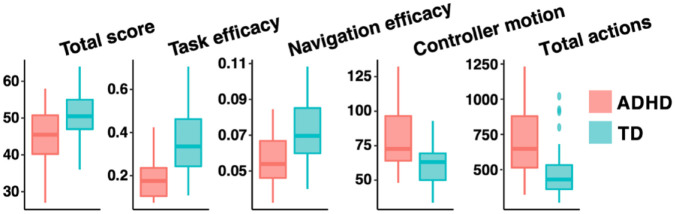
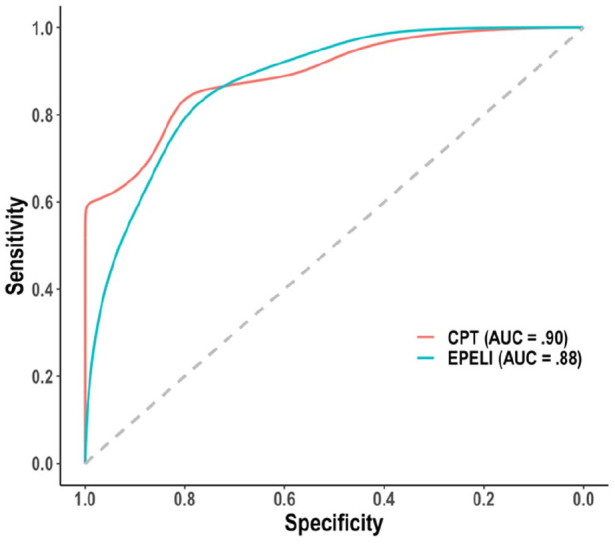
Objective: To quantify goal-directed behavior and ADHD symptoms in naturalistic conditions, we developed a virtual reality task, EPELI (Executive Performance in Everyday LIving), and tested its predictive, discriminant and concurrent validity. Method: We collected EPELI data, conventional neuropsychological task data, and parent-ratings of executive problems and symptoms in 38 ADHD children and 38 typically developing controls. Results: EPELI showed predictive validity as the ADHD group exhibited higher percentage of irrelevant actions reflecting lower attentional-executive efficacy and more controller movements and total game actions, both indicative of hyperactivity-impulsivity. Further, the five combined EPELI measures showed excellent discriminant validity (area under curve 88 %), while the correlations of the EPELI efficacy measure with parent-rated executive problems ( r = .57) and ADHD symptoms ( r = .55) pointed to its concurrent validity. Conclusion: We provide a proof-of-concept validation for a new virtual reality tool for ecologically valid assessment of ADHD symptoms.
Overview
The claims and statistics of this paper haven’t been checked yet.
Free: it reads the open-access text and checks the first 5 claims that cite a source we can check. Create a free account to check every claim.
Integrity signals
Registry
Cites
Statistics
Figures
Verification
Claims the paper makes
The claims and statistics of this paper haven’t been checked yet.
Free: it reads the open-access text and checks the first 5 claims that cite a source we can check. Create a free account to check every claim.
Claims other papers make about this one
Each is checked against this paper’s own text: does it say what the citing paper says it does?
The cited source says what the claim attributes to it.
In the citing paper
“Similar results have been partially reported by other researchers using a comparable task conducted by children with ADHD, in whom the number of irrelevant actions was higher compared to those that in those with neurotypical development [33].”
From Enhancing Ecological Validity: Virtual Reality Assessment of Executive Functioning in Children and Adolescents with ADHD (2024) · cites this paper as [33]
The cited source says what the claim attributes to it.
In the citing paper
“They also fail to incorporate natural types of movement (such as navigating through different scenarios and manipulating various materials) and real-life distractors [35], except for a new task developed to assess prospective memory [33,36].”
From Enhancing Ecological Validity: Virtual Reality Assessment of Executive Functioning in Children and Adolescents with ADHD (2024) · cites this paper as [33]
Self-check
Percentages, sums and reported differences re-computed from the paper’s own numbers.
The self-check needs the paper’s full text.
Citations
Cites
R: A Language and Environment for Statistical Computing
R Core Team (2025) · doi:10.32614/r.manuals · Cited by 352,181
null (2016) · Philosophy Study · doi:10.17265/2159-5313/2016.09.003 · Cited by 28,317
lmerTest Package: Tests in Linear Mixed Effects Models
Kuznetsova, A., Brockhoff, P. B., & Christensen, R. H. B. (2017) · Journal of Statistical Software · doi:10.18637/jss.v082.i13 · Cited by 24,346 · cited 2×
“, 2011), psych (Revelle, 2020), rstatix (Kassambara, 2020), lmerTest (Kuznetsova et al., 2017), tidyverse (Wickham et al.”
BackgroundMethodInfluentialWickham, H., Averick, M., Bryan, J., Chang, W., McGowan, L., François, R., Grolemund, G., Hayes, A., Henry, L., Hester, J., et al. (2019) · Journal of Open Source Software · doi:10.21105/joss.01686 · Cited by 22,138 · cited 2×
“, 2017), tidyverse (Wickham et al., 2019), and ggplot2 (Wickham, 2016).”
MethodInfluentialpROC: an open-source package for R and S+ to analyze and compare ROC curves
Robin, X., Turck, N., Hainard, A., Tiberti, N., Lisacek, F., Sanchez, J.-C., & Müller, M. (2011) · BMC Bioinformatics · doi:10.1186/1471-2105-12-77 · Cited by 13,697 · cited 1×
“All analyses and data visualizations were conducted in R version 4.0.3 (R Core Team, 2020) using packages BayesFactor (Morey & Rouder, 2015), pROC (Robin et al., 2011), MatchIt (Ho et al., 2011), psych (Revelle, 2020), rstatix (Kassambara, 2020), lmerTest (Kuznetsova et al., 2017), tidyverse…”
MethodInfluentialJournal of Clinical Psychiatry
(2018) · Journal of Clinical Psychiatry · doi:10.5505/kpd · Cited by 13,651
(1998) · PubMed · Cited by 10,216
(1991) · Medical Entomology and Zoology · Cited by 8,071
Simulator Sickness Questionnaire: An Enhanced Method for Quantifying Simulator Sickness
Kennedy, R. S., Lane, N. E., Berbaum, K. S., & Lilienthal, M. G. (1993) · The International Journal of Aviation Psychology · doi:10.1207/s15327108ijap0303_3 · Cited by 5,457 · cited 3×
“…participants answered to a shortened version of the Presence Questionnaire 3.0 (Witmer et al., 2005), the Simulator Sickness Questionnaire (Kennedy et al., 1993), a gaming experience questionnaire, and an object familiarity questionnaire after playing EPELI (see Supplemental Tables 5 and…”
BackgroundInfluentialMatchIt : Nonparametric Preprocessing for Parametric Causal Inference
Ho, D. E., Imai, K., King, G., & Stuart, E. A. (2011) · Journal of Statistical Software · doi:10.18637/jss.v042.i08 · Cited by 4,385 · cited 4×
“, 2011), MatchIt (Ho et al., 2011), psych (Revelle, 2020), rstatix (Kassambara, 2020), lmerTest (Kuznetsova et al.”
BackgroundMethodInfluentialWillcutt, E. G., Doyle, A. E., Nigg, J. T., Faraone, S. V., & Pennington, B. F. (2005) · Biological Psychiatry · doi:10.1016/j.biopsych.2005.02.006 · Cited by 3,568 · cited 2×
“Neurodevelopmental disorders such as ADHD do not fall into categorical cognitive domains (Willcutt et al., 2005), but rather manifest themselves as heterogeneous phenotypes with idiosyncratic behavioral characteristics (Luo et al., 2019).”
BackgroundA continuous performance test of brain damage
Rosvold, H. E., Mirsky, A. F., Sarason, I., Bransome, E. D., & Beck, L. H. (1956) · Journal of Consulting Psychology · doi:10.1037/h0043220 · Cited by 2,261 · cited 3×
“The conventional neuropsychological tasks included in the study included the Similarities and Matrix reasoning subtests of the Finnish version of the Wechsler Intelligence Scale for Children (WISC-IV; Wechsler, 2003), Continuous Performance Task (CPT; Rosvold et al., 1956), Simple Reaction Task (SRT; see Psycho-Motor…”
MethodBRST Cohomology of the Chapline-Manton Model
Barnich, G., Leclercq, S., & Spindel, P. (1997) · Dépôt institutionnel de l'Université libre de Bruxelles (Université Libre de Bruxelles) · doi:10.1023/b · Cited by 2,179
(1998) · Cited by 2,026
DEFICITS IN STRATEGY APPLICATION FOLLOWING FRONTAL LOBE DAMAGE IN MAN
SHALLICE, T., & BURGESS, P. W. (1991) · Brain · doi:10.1093/brain/114.2.727 · Cited by 2,017 · cited 2×
“EPELI (link to a video) was designed with equal contribution by ML, JS, and ES based on similar previous studies in other patient groups (e.g., Rand et al., 2009; Rendell & Craik, 2000; Shallice & Burgess, 1991).”
Methodrstatix: Pipe-Friendly Framework for Basic Statistical Tests
Kassambara, A. (2019) · CRAN: Contributed Packages · doi:10.32614/cran.package.rstatix · Cited by 1,777
Wechsler Intelligence Scale for Children, Fourth Edition
Wechsler, D. (2012) · PsycTESTS Dataset · doi:10.1037/t15174-000 · Cited by 1,577
Faraone, S. V., Banaschewski, T., Coghill, D., Zheng, Y., Biederman, J., Bellgrove, M. A., Newcorn, J. H., Gignac, M., Al Saud, N. M., Manor, I., et al. (2021) · Neuroscience & Biobehavioral Reviews · doi:10.1016/j.neubiorev.2021.01.022 · Cited by 1,545 · cited 2×
“ADHD characterized by the symptoms of inattention, hyperactivity, and impulsivity, is among the most common neurodevelopmental disorders, with an estimated 5.9% world-wide prevalence at childhood (Faraone et al., 2021).”
BackgroundInfluentialToplak, M. E., West, R. F., & Stanovich, K. E. (2013) · Journal of Child Psychology and Psychiatry · doi:10.1111/jcpp.12001 · Cited by 1,381 · cited 1×
“…monotonous task structures where the participants are forced to constantly work at their capacity limits do not represent typical goal-directed behavior in everyday situations, where the goals are composed of dynamically changing cascades of daily actions (Ackerman, 1994; Toplak et al., 2013).”
BackgroundBayesFactor: Computation of Bayes Factors for Common Designs
Morey, R. D., & Rouder, J. N. (2012) · CRAN: Contributed Packages · doi:10.32614/cran.package.bayesfactor · Cited by 1,173
Virtual reality in neuroscience research and therapy
Bohil, C. J., Alicea, B., & Biocca, F. A. (2011) · Nature Reviews Neuroscience · doi:10.1038/nrn3122 · Cited by 1,108 · cited 4×
“Giving the participant the freedom to interact with an engaging open-ended realistic environment creates an immersive illusion of real life (Bohil et al., 2011; Slater, 2018) that is expected to prompt typical ADHD-related behavior such as impulsive actions toward attractive task-irrelevant stimuli.”
BackgroundInfluentialSnyder, H. R., Miyake, A., & Hankin, B. L. (2015) · Frontiers in Psychology · doi:10.3389/fpsyg.2015.00328 · Cited by 946 · cited 1×
“However, such efforts face challenges due to the task impurity issue and discrepancies in the factorial structure of conventional experimental executive function measures (Snyder et al., 2015).”
BackgroundSonuga-Barke, E. J. S., & Castellanos, F. X. (2007) · Neuroscience & Biobehavioral Reviews · doi:10.1016/j.neubiorev.2007.02.005 · Cited by 890 · cited 3×
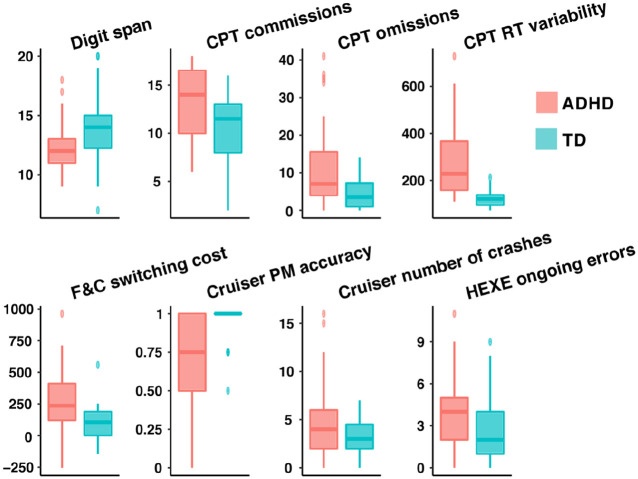
“This is interesting because RT variability is one of the rare measures that is not expected to reflect maximal performance, but rather fluctuations of performance over time (e.g., Sonuga-Barke & Castellanos, 2007).”
BackgroundInfluentialWhite, J. M. L., Kita, M., Krpelanová, E., Alsokhn, C., Costa, M. L., Fibbe, W., Gaebel, W., Reed, G. M., Lokuhetty, D., Woolf, A., et al. (2026) · Bulletin of the World Health Organization · doi:10.2471/blt.25.294650 · Cited by 834
Immersion and the illusion of presence in virtual reality
Slater, M. (2018) · British Journal of Psychology · doi:10.1111/bjop.12305 · Cited by 833 · cited 2×
“Giving the participant the freedom to interact with an engaging open-ended realistic environment creates an immersive illusion of real life (Bohil et al., 2011; Slater, 2018) that is expected to prompt typical ADHD-related behavior such as impulsive actions toward attractive task-irrelevant stimuli.”
BackgroundThe Factor Structure of the Presence Questionnaire
Witmer, B. G., Jerome, C. J., & Singer, M. J. (2005) · Presence: Teleoperators and Virtual Environments · doi:10.1162/105474605323384654 · Cited by 770 · cited 2×
“0 (Witmer et al., 2005), the Simulator Sickness Questionnaire (Kennedy et al.”
BackgroundInfluentialPan, X., & Hamilton, A. F. D. C. (2018) · British Journal of Psychology · doi:10.1111/bjop.12290 · Cited by 729 · cited 1×
“Recent advances in VR technology and related head-mounted displays (HMD) have provided opportunities for developing such environments (Bohil et al., 2011; Pan & Hamilton, 2018) without losing the accuracy of computerized measurements.”
BackgroundProspective Memory : Cognitive, Neuroscience, Developmental, and Applied Perspectives
Kliegel, M., McDaniel, M. A., & Einstein, G. O. (2007) · Cited by 627
Self-citationFractionating impulsivity: neuropsychiatric implications
Dalley, J. W., & Robbins, T. W. (2017) · Nature Reviews Neuroscience · doi:10.1038/nrn.2017.8 · Cited by 607 · cited 1×
“Our impulsivity measure bears a greater resemblance to delayed reward tasks where the target that triggers impulsive behavior is motivating (e.g., Dalley & Robbins, 2017).”
BackgroundBarkley, R. A., & Murphy, K. R. (2010) · Archives of Clinical Neuropsychology · doi:10.1093/arclin/acq014 · Cited by 468 · cited 3×
“…key challenges in the use of experimental tasks in ADHD diagnostic assessment include the weak correspondence between experimental measures and the symptoms defined in the diagnostic classification system, and the limited predictive power of the experimental measures (Barkley & Murphy, 2010, 2011).”
BackgroundBehavior Rating Inventory of Executive Function (BRIEF)
Gioia, Isquith, Guy, & Kenworthy (2020) · A Compendium of Tests, Scales and Questionnaires · doi:10.4324/9781003076391-76 · Cited by 440 · cited 2×
“Parents evaluated their child’s ADHD symptoms, possible executive functions deficits, and possible psychiatric symptoms using the ADHD Rating Scale-IV (ADHD-RS; DuPaul, 1998), the Behavior Rating Inventory for Executive Functions (BRIEF; Gioia et al., 2000), and the Child Behavior Checklist (CBCL; Achenbach, 1991).”
MethodThe neurocognitive profile of attention-deficit/hyperactivity disorder: a review of meta-analyses
Pievsky, M. A., & McGrath, R. E. (2018) · Archives of Clinical Neuropsychology · doi:10.1093/arclin/acx055 · Cited by 401 · cited 1×
“…associated with several adverse outcomes such as impairments in quality of life, emotional and social impairments, and educational underachievement (Faraone et al., 2021), as well as with impairments in multiple cognitive domains as measured by conventional task paradigms (Pievsky & McGrath, 2018).”
A Review of Heterogeneity in Attention Deficit/Hyperactivity Disorder (ADHD)
Luo, Y., Weibman, D., Halperin, J. M., & Li, X. (2019) · Frontiers in Human Neuroscience · doi:10.3389/fnhum.2019.00042 · Cited by 394 · cited 1×
“Neurodevelopmental disorders such as ADHD do not fall into categorical cognitive domains (Willcutt et al., 2005), but rather manifest themselves as heterogeneous phenotypes with idiosyncratic behavioral characteristics (Luo et al., 2019).”
BackgroundVirtual week and actual week: Age‐related differences in prospective memory
Rendell, P. G., & Craik, F. I. M. (2000) · Applied Cognitive Psychology · doi:10.1002/acp.770 · Cited by 360 · cited 1×
“EPELI (link to a video) was designed with equal contribution by ML, JS, and ES based on similar previous studies in other patient groups (e.g., Rand et al., 2009; Rendell & Craik, 2000; Shallice & Burgess, 1991).”
MethodEvaluating vigilance deficits in ADHD: A meta-analysis of CPT performance.
Huang-Pollock, C. L., Karalunas, S. L., Tam, H., & Moore, A. N. (2012) · Journal of Abnormal Psychology · doi:10.1037/a0027205 · Cited by 359 · cited 1×
“This result is not due to a lower performance of our CPT version either: the present AUC of 90% for CPT is on the higher side when compared to other studies, suggesting that our CPT version was functioning well (for a review, see Huang-Pollock et al., 2012).”
ResultCognitive Ethology: A new approach for studying human cognition
Kingstone, A., Smilek, D., & Eastwood, J. D. (2008) · British Journal of Psychology · doi:10.1348/000712607x251243 · Cited by 311 · cited 1×
“Taken together, there is a need for measures that can detect difficulties in typical everyday goal-directed behaviors that arise in rich, open-ended, and dynamic environments (e.g., Kingstone et al., 2008).”
BackgroundParsons, T. D., Bowerly, T., Buckwalter, J. G., & Rizzo, A. A. (2007) · Child Neuropsychology · doi:10.1080/13825580600943473 · Cited by 291 · cited 1×
“Based on prior VR studies, these group differences were expected to be particularly pronounced in scenarios with more distracting stimuli (Negu ț et al., 2017; Parsons et al., 2007).”
BackgroundBarkley, R. A., & Murphy, K. R. (2011) · Journal of Psychopathology and Behavioral Assessment · doi:10.1007/s10862-011-9217-x · Cited by 263 · cited 2×
“…key challenges in the use of experimental tasks in ADHD diagnostic assessment include the weak correspondence between experimental measures and the symptoms defined in the diagnostic classification system, and the limited predictive power of the experimental measures (Barkley & Murphy, 2010, 2011).”
BackgroundObjective measurement of hyperactivity and attentional problems in ADHD
TEICHER, M. H., ITO, Y., GLOD, C. A., & BARBER, N. I. (1996) · Journal of the American Academy of Child & Adolescent Psychiatry · doi:10.1097/00004583-199603000-00015 · Cited by 243 · cited 1×
“There are studies that also register participant motion during cognitive tasks (e.g., Teicher et al., 1996), but they usually include tasks where constant inhibition of movement is desired, even though movement is an integral part of everyday life.”
BackgroundWorking memory training involves learning new skills
Gathercole, S. E., Dunning, D. L., Holmes, J., & Norris, D. (2019) · Journal of Memory and Language · doi:10.1016/j.jml.2018.10.003 · Cited by 225 · cited 1×
“One explanation for this could be that EPELI tasks are highly familiar and may not prompt within-task strategy development in the same way as novel tasks do (see Gathercole et al., 2019).”
BackgroundHall, C. L., Valentine, A. Z., Groom, M. J., Walker, G. M., Sayal, K., Daley, D., & Hollis, C. (2016) · European Child & Adolescent Psychiatry · doi:10.1007/s00787-015-0798-x · Cited by 191 · cited 2×
“ADHD diagnostics still rely largely on interviews and questionnaires prone to reporter’s subjective bias, while the research on the predictive value and clinical utility of the current objective experimental test methods (Hall et al., 2016; Nichols & Waschbusch, 2004) and potential biomarkers (Mehta et al.”
BackgroundMethodADHD: Is Objective Diagnosis Possible?
Gualtieri, C. T., & Johnson, L. G. (2005) · PubMed Central · Cited by 185
A Review of the Validity of Laboratory Cognitive Tasks Used to Assess Symptoms of ADHD
Nichols, S. L., & Waschbusch, D. A. (2004) · Child Psychiatry and Human Development · doi:10.1023/b:chud.0000020681.06865.97 · Cited by 165 · cited 1×
“…largely on interviews and questionnaires prone to reporter’s subjective bias, while the research on the predictive value and clinical utility of the current objective experimental test methods (Hall et al., 2016; Nichols & Waschbusch, 2004) and potential biomarkers (Mehta et al., 2020) is underway.”
BackgroundValidation of the Virtual MET as an assessment tool for executive functions
Rand, D., Rukan, S. B.-A., (Tamar) Weiss, P. L., & Katz, N. (2009) · Neuropsychological Rehabilitation · doi:10.1080/09602010802469074 · Cited by 147 · cited 5×
“Total score resembles the performance measures previously used in naturalistic prospective memory tasks such as the Virtual Multiple Errands Test (Rand et al., 2009).”
MethodInfluentialThe use of actigraphy in the monitoring of sleep and activity in ADHD: A meta-analysis
Crescenzo, F. D., Licchelli, S., Ciabattini, M., Menghini, D., Armando, M., Alfieri, P., Mazzone, L., Pontrelli, G., Livadiotti, S., Foti, F., et al. (2015) · Sleep Medicine Reviews · doi:10.1016/j.smrv.2015.04.002 · Cited by 140 · cited 1×
“In previous studies, activity levels of ADHD participants have been quantified using various sensor technologies (see De Crescenzo et al., 2016 for a meta-analysis).”
MethodParsons, T. D., Carlew, A. R., Magtoto, J., & Stonecipher, K. (2017) · Neuropsychological Rehabilitation · doi:10.1080/09602011.2015.1109524 · Cited by 137 · cited 2×
“Thus, the full potential of VR to capture naturalistic symptom-related behaviors has not yet been realized (Parsons et al., 2017; see also Ryu et al., 2020).”
Background(2016) · doi:10.1080/09297049.2016.1186617 · Cited by 123 · cited 1×
“Based on prior VR studies, these group differences were expected to be particularly pronounced in scenarios with more distracting stimuli (Neguț et al., 2017; Parsons et al., 2007).”
BackgroundParsons, T. D., Duffield, T. C., & Asbee, J. (2019) · Neuropsychology Review · doi:10.1007/s11065-019-09407-6 · Cited by 118 · cited 6×
“Despite these advances, for instance, Parsons et al. (2019) note in their meta-analysis on virtual classroom CPT, that “It is unlikely that the virtual classroom as is currently designed has changed that relationship between computerized testing and self or observer report of real-world executive…”
BackgroundMethodResultInfluentialCipresso, P., Albani, G., Serino, S., Pedroli, E., Pallavicini, F., Mauro, A., & Riva, G. (2014) · Frontiers in Behavioral Neuroscience · doi:10.3389/fnbeh.2014.00405 · Cited by 95 · cited 1×
“…of our knowledge, multitasking measures of this type have not been previously used to assess executive functions in children with ADHD, but there is evidence that such measures can detect executive dysfunction in various other clinical conditions (e.g., Cipresso et al., 2014; Rand et al., 2009).”
MethodKofler, M. J., Raiker, J. S., Sarver, D. E., Wells, E. L., & Soto, E. F. (2016) · Clinical Psychology Review · doi:10.1016/j.cpr.2016.04.004 · Cited by 88 · cited 1×
“Previously, it has been suggested that hyperactivity would be most clearly observed in cognitive tasks where the level of stimulation is low (Kofler et al., 2016).”
BackgroundKliegel, M., Mahy, C. E. V., Voigt, B., Henry, J. D., Rendell, P. G., & Aberle, I. (2013) · Journal of Experimental Child Psychology · doi:10.1016/j.jecp.2013.07.012 · Cited by 81 · cited 3×
“The conventional neuropsychological tasks included in the study included the Similarities and Matrix reasoning subtests of the Finnish version of the Wechsler Intelligence Scale for Children (WISC-IV; Wechsler, 2003), Continuous Performance Task (CPT; Rosvold et al., 1956), Simple Reaction Task (SRT; see Psycho-Motor…”
BackgroundSelf-citationAn Investigation of Prospective Memory in Children With ADHD
Kerns, K. A., & Price, K. J. (2001) · Child Neuropsychology · doi:10.1076/chin.7.3.162.8744 · Cited by 77 · cited 2×
“…Simple Reaction Task (SRT; see Psycho-Motor Vigilance Task in Wilson et al., 2010), Cruiser Task (Kliegel et al., 2013; see also CyberCruiser in Kerns & Price, 2001), Frogs and Cherries Task (F&C; see Dots & Triangles in Zuber et al., 2019), and Heidelberger Exekutivfunktionsdiagnostikum Task…”
MethodZuber, S., Mahy, C. E. V., & Kliegel, M. (2019) · Cognitive Development · doi:10.1016/j.cogdev.2019.03.001 · Cited by 63 · cited 2×
“This prospective memory context employed in EPELI carries a strong executive component (e.g., Zuber et al., 2019) by orienting the participants toward shared goals but leaves open the exact way how the required subtasks are planned and executed.”
BackgroundMethodSelf-citationProspective memory errors in everyday life: does instruction matter?
Haas, M., Zuber, S., Kliegel, M., & Ballhausen, N. (2020) · Memory · doi:10.1080/09658211.2019.1707227 · Cited by 56 · cited 2×
“Further research to develop more ecologically valid measures of time-based prospective memory is certainly needed, as there is evidence that this domain is clearly an important factor in daily life (Haas et al., 2020) and compromised in ADHD (Talbot et al.”
BackgroundSelf-citationComplex Prospective Memory in Children with ADHD
Kliegel, M., Ropeter, A., & Mackinlay, R. (2006) · Child Neuropsychology · doi:10.1080/09297040600696040 · Cited by 53 · cited 3×
“, 2019), and Heidelberger Exekutivfunktionsdiagnostikum Task (HEXE; Kliegel et al., 2006).”
BackgroundSelf-citationADHD History of the Concept: the Case of the Continuous Performance Test
Albrecht, B., Uebel, H., Wiedmann, K., & Rothenberger, A. (2015) · Current Developmental Disorders Reports · doi:10.1007/s40474-014-0035-1 · Cited by 51 · cited 2×
“…has been a logical step, as it has been the most consistent cognitive test method in differentiating children with versus without ADHD (see e.g., Albrecht et al., 2015; Ogundele et al., 2011), and its VR versions can provide additional valuable data such as information about body movements…”
BackgroundMethodObjective measures of attention-deficit/hyperactivity disorder: a pilot study.
Berger, I., & Goldzweig, G. (2010) · PubMed · Cited by 49
Role of computerised continuous performance task tests in ADHD
Ogundele, M. O., Ayyash, H. F., & Banerjee, S. (2011) · Progress in Neurology and Psychiatry · doi:10.1002/pnp.198 · Cited by 48 · cited 3×
“…step, as it has been the most consistent cognitive test method in differentiating children with versus without ADHD (see e.g., Albrecht et al., 2015; Ogundele et al., 2011), and its VR versions can provide additional valuable data such as information about body movements (Parsons et al., 2019).”
BackgroundMethodMangalmurti, A., Kistler, W. D., Quarrie, B., Sharp, W. S., Persky, S., & Shaw, P. (2020) · Scientific Reports · doi:10.1038/s41598-019-56936-4 · Cited by 41 · cited 5×
“This may indicate an increase in hyperactivity-impulsivity symptoms, possibly explained by a decrease in top-down control (e.g., Mangalmurti et al., 2020).”
BackgroundInfluentialReliability of the 5-min psychomotor vigilance task in a primary school classroom setting
Wilson, A., Dollman, J., Lushington, K., & Olds, T. (2010) · Behavior Research Methods · doi:10.3758/brm.42.3.754 · Cited by 26 · cited 1×
“…(WISC-IV; Wechsler, 2003), Continuous Performance Task (CPT; Rosvold et al., 1956), Simple Reaction Task (SRT; see Psycho-Motor Vigilance Task in Wilson et al., 2010), Cruiser Task (Kliegel et al., 2013; see also CyberCruiser in Kerns & Price, 2001), Frogs and Cherries Task (F&C; see Dots &…”
BackgroundBiomarkers for ADHD: the Present and Future Directions
Mehta, T., Mannem, N., Yarasi, N., & Bollu, P. C. (2020) · Current Developmental Disorders Reports · doi:10.1007/s40474-020-00196-9 · Cited by 25 · cited 2×
“…largely on interviews and questionnaires prone to reporter’s subjective bias, while the research on the predictive value and clinical utility of the current objective experimental test methods (Hall et al., 2016; Nichols & Waschbusch, 2004) and potential biomarkers (Mehta et al., 2020) is underway.”
BackgroundProspective memory in children with attention deficit hyperactivity disorder: a review
Talbot, K.-D. S., Müller, U., & Kerns, K. A. (2017) · The Clinical Neuropsychologist · doi:10.1080/13854046.2017.1393563 · Cited by 24 · cited 1×
“Further research to develop more ecologically valid measures of time-based prospective memory is certainly needed, as there is evidence that this domain is clearly an important factor in daily life (Haas et al., 2020) and compromised in ADHD (Talbot et al., 2018).”
BackgroundOn Beginning to Understand the Role of Context in Prospective Memory
Kliegel, M., McDaniel, M. A., & Einstein, G. O. (2007) · Psychology Press eBooks · doi:10.4324/9780203809945-10 · Cited by 15
Self-citationA Novel Approach to Diagnose ADHD Using Virtual Reality
Ryu, S. H., Oh, S., Lee, S., & Chung, T. (2020) · Lecture notes in computer science · doi:10.1007/978-3-030-63924-2_15 · Cited by 10 · cited 1×
“Thus, the full potential of VR to capture naturalistic symptom-related behaviors has not yet been realized (Parsons et al., 2017; see also Ryu et al., 2020).”
Background
Research works printed but not linked: 3
- Ackerman P. L. (1994). Intelligence, attention, and learning: Maximal and typical performance. In Detterman D. K. (Ed.), Current topics in human intelligence (Vol. 4, pp. 1– 27). Ablex.
- Wickham H. (2016). ggplot2: Elegant graphics for data analysis. Springer-Verlag. https://ggplot2.tidyverse.org
- 10.17265/2159-5313/2016.09.003 · DOI · Paper page
Cited by
Virtual reality in the diagnostic and therapy for mental disorders: A systematic review
Wiebe, A., Kannen, K., Selaskowski, B., Mehren, A., Thöne, A.-K., Pramme, L., Blumenthal, N., Li, M., Asché, L., Jonas, S., et al. (2022) · Clinical Psychology Review · doi:10.1016/j.cpr.2022.102213 · Cited by 223
Eye movement behavior in a real-world virtual reality task reveals ADHD in children
Merzon, L., Pettersson, K., Aronen, E. T., Huhdanpää, H., Seesjärvi, E., Henriksson, L., MacInnes, W. J., Mannerkoski, M., Macaluso, E., & Salmi, J. (2022) · Scientific Reports · doi:10.1038/s41598-022-24552-4 · Cited by 82
“The game environment models a typical apartment with a child’s bedroom, living room, kitchen, parents’ bedroom, and a bathroom (for EPELI floor plan, see Seesjärvi and colleagues 12 ).”
BackgroundMethodResultInfluentialSelf-citationThe relationship between bilingual language use and executive functions
Lehtonen, M., Fyndanis, V., & Jylkkä, J. (2023) · Nature Reviews Psychology · doi:10.1038/s44159-023-00178-9 · Cited by 72
Schena, A., Garotti, R., D’Alise, D., Giugliano, S., Polizzi, M., Trabucco, V., Riccio, M. P., & Bravaccio, C. (2023) · International Journal of Environmental Research and Public Health · doi:10.3390/ijerph20043414 · Cited by 41
Oh, S., Joung, Y., Chung, T., Lee, J., Seok, B. J., Kim, N.-U., & Son, H. M. (2024) · Frontiers in Psychiatry · doi:10.3389/fpsyt.2024.1383547 · Cited by 38
Metadata
- Authors
- Seesjärvi, E., Puhakka, J., Aronen, E. T., Lipsanen, J., Mannerkoski, M., Hering, A., Zuber, S., Kliegel, M., Laine, M., & Salmi, J.
- Affiliations
- University of Helsinki (FI)
- Tilburg University (NL)
- University of Geneva (CH)
- Åbo Akademi University (FI)
- Corresponding author
- Salmi, Juha
- ORCID
- Venue
- Journal of Attention Disorders
- Publisher
- SAGE Publications
- Published
- 2021-12-05
- Volume
- 26
- Issue
- 11
- Pages
- 1394-1411
- ISSN
- 1087-0547 (ISSN-L)
- 1557-1246
- PMC
- PMC9304743
- OpenAlex
- W4225947047
- Cited by
- 51
- References
- 65
- Citations by year
- 2026: 4 · 2025: 11 · 2024: 20 · 2023: 13 · 2022: 3
- FWCI
- 6.45
- Type
- journal article
- Language
- en
- Open access
- hybrid
- doi.org
- Locations
- Journal of Attention Disorders (publishedVersion, cc-by)
- PubMed Central (publishedVersion, cc-by)
- PubMed (publishedVersion)
- Aaltodoc (Aalto University) (submittedVersion, cc-by)
- UTUPub (University of Turku) (submittedVersion)
- Research portal (Tilburg University) (submittedVersion, cc-by)
- Data Archiving and Networked Services (DANS) (submittedVersion, cc-by)
- Työväentutkimus Vuosikirja (submittedVersion)
- Åbo Akademi University Research Portal (submittedVersion, cc-by-nc)
- PsyArXiv (OSF Preprints) (submittedVersion)
- Funders
- Suomen Kulttuurirahasto (00190963, 00201002)
- Academy of Finland (323251, 325981, 328954)
- Arvo and Lea Ylppo Foundation (202010005)
- Topics
- Health Sciences › Medicine › Psychiatry and Mental health › Attention Deficit Hyperactivity Disorder
- Social Sciences › Psychology › Neuropsychology and Physiological Psychology › Developmental and Educational Neuropsychology
- Life Sciences › Neuroscience › Cognitive Neuroscience › Autism Spectrum Disorder Research
- Keywords
- attention deficit hyperactivity disorder, virtual reality task, executive function, hyperactivity/impulsivity, attention, naturalistic assessment, ecologically valid assessment, children, predictive validity, discriminant validity, concurrent validity, parent ratings
- MeSH terms
- Virtual Reality, Attention, Attention Deficit Disorder with Hyperactivity, Child, Humans, Neuropsychological Tests, Parents, Executive Function
About these checks
Registry, retraction, Cites and statistics results are computed, not judged, with one exception: a printed reference that no index lists is read once by a model before it counts as a citation error. Claims are extracted by a model and kept only when their quote appears verbatim in the text; each cited source is then checked, with a model’s help, for whether it says what the claim relies on. Those verdicts can be wrong — read the claim’s quote and the cited source before relying on one.
Statistics and arithmetic are recomputed, not judged.
Confidence bands are shown only for fields calibrated on our annotated test set. None is calibrated yet, so no band is shown.
What counts as a claim ›How we measure confidence ›How we check this ›
Are you an author, or do you see a problem with this page? Request a review
Data sources
Bibliographic data: Semantic Scholar, OpenAlex, Crossref.
Contains information from the Semantic Scholar Academic Graph Datasets, made available under the ODC Attribution License (ODC-BY 1.0).
Semantic Scholar’s data is described in: Kinney, R., et al. (2023). The Semantic Scholar Open Data Platform. arXiv:2301.10140.
