

Dermatologists’ perceptions on the utility and limitations of teledermatology after examining 55,000 lesions
Open accessThe DOI matches its Crossref record; 18 of the 18 references it cites were found in a registry or an index.
Abstract
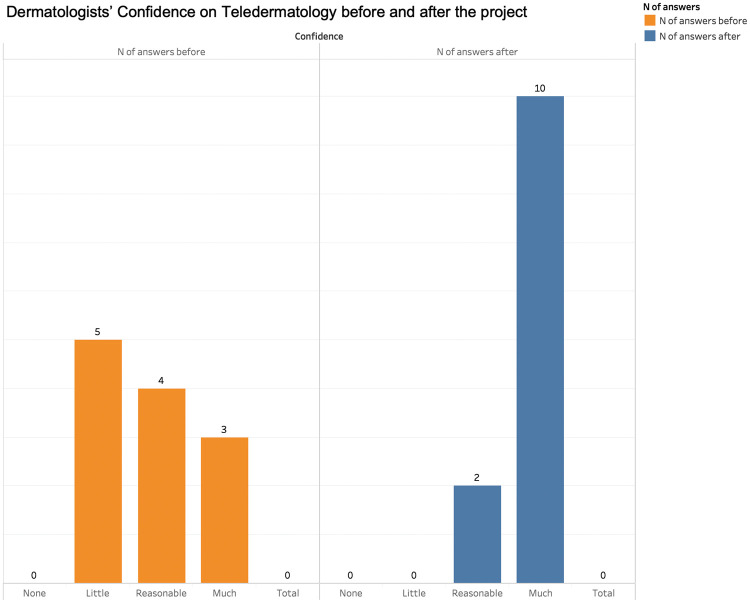
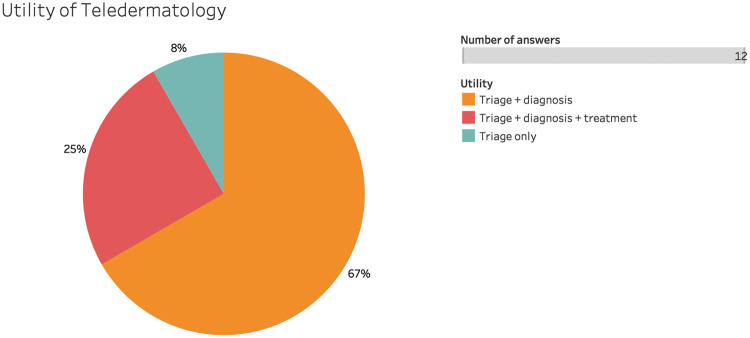
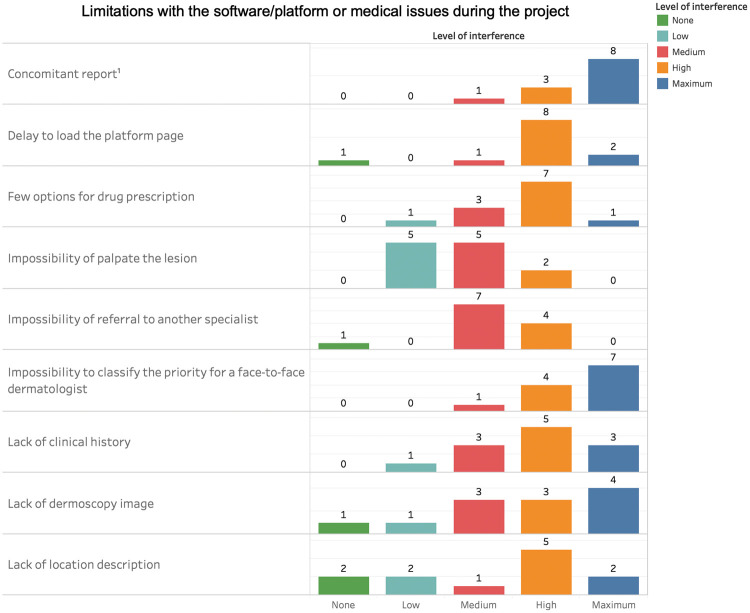
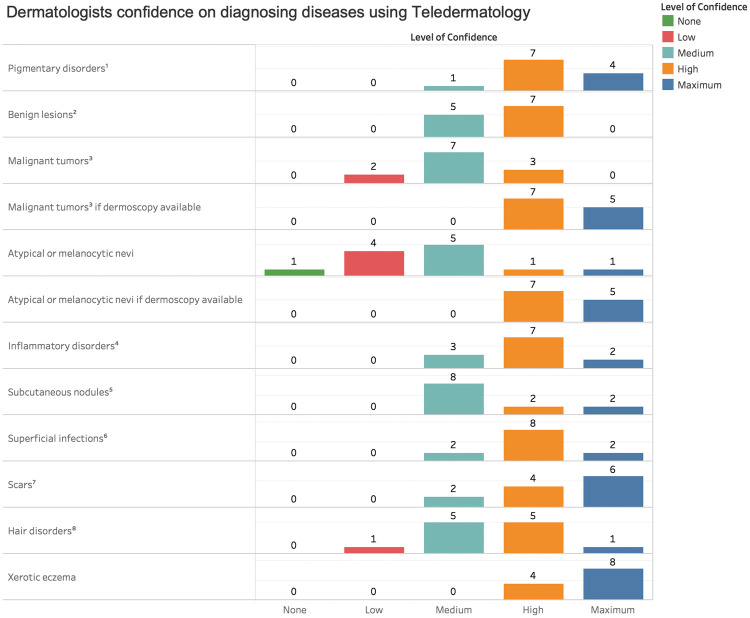
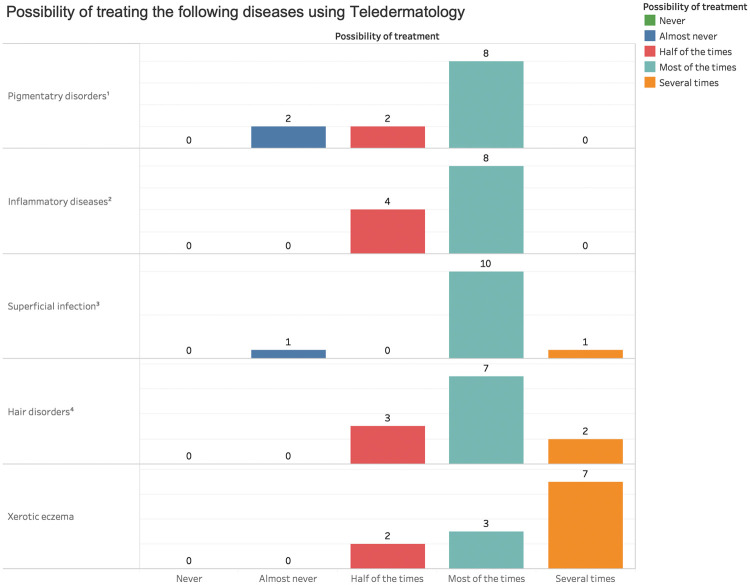
Introduction: Few studies have assessed the perception of teledermatologists about the utility and limitations of teledermatology, especially to diagnose a broad range of skin diseases. This study aimed to evaluate dermatologists’ confidence in teledermatology, its utility and limitations for dermatological conditions in primary care. Methods: An analytical study that used a survey for dermatologists who diagnosed 30,916 patients with 55,012 lesions through teledermatology during a 1-year project in São Paulo, Brazil. Results: Dermatologists found teledermatology useful for triage and diagnosis, especially for xerotic eczema, pigmentary disorders and superficial infections. Their confidence in teledermatology was statistically higher by the end of the project ( p = 0.0012). Limitations included some technical issues and the impossibility to suggest how soon the patient should be assisted face-to-face by a dermatologist. The most treatable group of diseases by teledermatology was superficial infections (92%). The use of dermoscopy images would significantly increase the confidence to treat atypical naevi and malignant tumours ( p < 0.0001 and p = 0.0003 respectively). Follow-ups by teledermatology or feedback from primary-care physicians would be desirable, according to the dermatologists. Discussion: We found it interesting that dermatologists became increasingly confident in teledermatology after the project and how they classified teledermatology as useful for triage, diagnosis and even treatment of most types of skin conditions followed at primary care. Dermoscopy should definitely be added to the photographs, especially for malignant tumours and atypical naevi. Most of the technical limitations found could be solved with a few improvements in the software/platform.
Overview
The claims and statistics of this paper haven’t been checked yet.
Free: it reads the open-access text and checks the first 5 claims that cite a source we can check. Create a free account to check every claim.
Integrity signals
Registry
Cites
Statistics
Figures
Verification
Claims the paper makes
The claims and statistics of this paper haven’t been checked yet.
Free: it reads the open-access text and checks the first 5 claims that cite a source we can check. Create a free account to check every claim.
Claims other papers make about this one
Each is checked against this paper’s own text: does it say what the citing paper says it does?
The cited source doesn’t support the claim as written.
In the citing paper
“Currently, the success of such digital health applications is mostly limited by technical constraints39 and limited acceptance by healthcare practitioners40.”
From The future landscape of large language models in medicine (2023) · cites this paper as [40]
Checked by a reasoning model — may be wrong.
Experimental — accuracy not yet measuredThe source backs part of the claim, not all of it — or backs it for a different population, condition or comparison.
In the citing paper
“Access to dermoscopy images in addition to conventional telemedicine photographs is shown to significantly increase dermatologist diagnostic confidence2.”
From Dermoscopy practice guidelines for use in telemedicine (2022) · cites this paper as [2]
Experimental — accuracy not yet measuredThe source backs part of the claim, not all of it — or backs it for a different population, condition or comparison.
In the citing paper
“Half of teledermatologists have subspeciality in dermoscopy, and 33% subspecialize in skin cancer2.”
From Dermoscopy practice guidelines for use in telemedicine (2022) · cites this paper as [2]
Experimental — accuracy not yet measuredIn the citing paper
“This observation is supported by previous studies showing that teledermatology with regular photographs is useful for superficial lesions but is limited otherwise [47].”
From An mHealth App (eSkinHealth) for detecting and managing skin diseases in resource-limited settings: mixed methods Pilot Study (2023) · cites this paper as [47]
Self-check
Percentages, sums and reported differences re-computed from the paper’s own numbers.
The self-check needs the paper’s full text.
Citations
Cites
Kroemer, S., Frühauf, J., Campbell, T. M., Massone, C., Schwantzer, G., Soyer, H. P., & Hofmann-Wellenhof, R. (2011) · British Journal of Dermatology · doi:10.1111/j.1365-2133.2011.10208.x · Cited by 202
Application of mobile teledermatology for skin cancer screening
Lamel, S. A., Haldeman, K. M., Ely, H., Kovarik, C. L., Pak, H., & Armstrong, A. W. (2012) · Journal of the American Academy of Dermatology · doi:10.1016/j.jaad.2011.11.957 · Cited by 125
Telemedicine and teledermatology: Past, present and future
Wurm, E. M. T., Hofmann‐Wellenhof, R., Wurm, R., & Soyer, H. P. (2008) · JDDG: Journal der Deutschen Dermatologischen Gesellschaft · doi:10.1111/j.1610-0387.2007.06440.x · Cited by 93 · cited 1×
“The diagnostic accuracy of SF-TD is 80–90%(6) and an average of 75% agreement between SF-TD and face-to-face consultation is observed.(1) It is”
BackgroundEminović, N., de Keizer, N. F., Wyatt, J. C., ter Riet, G., Peek, N., van Weert, H. C., Bruijnzeel-Koomen, C. A., & Bindels, P. J. E. (2009) · Archives of Dermatology · doi:10.1001/archdermatol.2009.44 · Cited by 89
Armstrong, A. W., Kwong, M. W., Ledo, L., Nesbitt, T. S., & Shewry, S. L. (2011) · PLoS ONE · doi:10.1371/journal.pone.0028687 · Cited by 89
Ferrándiz, L., Ojeda-Vila, T., Corrales, A., Martín-Gutiérrez, F. J., Ruíz-de-Casas, A., Galdeano, R., Álvarez-Torralba, I., Sánchez-Ibáñez, F., Domínguez-Toro, J. M., Encina, F., et al. (2017) · Journal of the American Academy of Dermatology · doi:10.1016/j.jaad.2016.10.041 · Cited by 75 · cited 1×
“Another study showed the addition of dermoscopic images substantially improves the diagnostic performance, efficacy and cost effectiveness of an SF-TD-based screening system for skin cancer, based exclusively on clinical images.(18) Among common dermatological disorders, TD was useful to diagnose xerotic eczema, pigme…”
BackgroundMassone, C., Wurm, E. M. T., Hofmann-Wellenhof, R., & Soyer, H. P. (2008) · Seminars in Cutaneous Medicine and Surgery · doi:10.1016/j.sder.2007.12.002 · Cited by 74
Few Medicaid and uninsured patients are accessing dermatologists
Resneck, J., Isenstein, A. L., & Kimball, A. B. (2006) · Journal of the American Academy of Dermatology · doi:10.1016/j.jaad.2006.07.012 · Cited by 73
Effect of Teledermatology on the Prognosis of Patients With Cutaneous Melanoma
Ferrándiz, L., Ruiz-de-Casas, A., Martin-Gutierrez, F. J., Peral-Rubio, F., Mendez-Abad, C., Rios-Martin, J. J., & Moreno-Ramirez, D. (2012) · Archives of Dermatology · doi:10.1001/archdermatol.2012.778 · Cited by 70 · cited 1×
“consultations and was considered reliable and accurate.(5) The diagnostic accuracy of SF-TD is 80–90%(6) and an average of 75% agreement between SF-TD and face-to-face consultation is observed.”
BackgroundClinical Outcomes Associated with Telemedicine/Telehealth
Heinzelmann, P. J., Williams, C. M., Lugn, N. E., & Kvedar, J. C. (2005) · Telemedicine and e-Health · doi:10.1089/tmj.2005.11.329 · Cited by 67
Cited by
The future landscape of large language models in medicine
Clusmann, J., Kolbinger, F. R., Muti, H. S., Carrero, Z. I., Eckardt, J.-N., Laleh, N. G., Löffler, C. M. L., Schwarzkopf, S.-C., Unger, M., Veldhuizen, G. P., et al. (2023) · Communications Medicine · doi:10.1038/s43856-023-00370-1 · Cited by 1,045
“Currently, the success of such digital health applications is mostly limited by technical constraints 39 and limited acceptance by healthcare practitioners 40 .”
BackgroundTeledermatology reduces dermatology referrals and improves access to specialists
Bianchi, M. G., Santos, A. P., & Cordioli, E. (2020) · EClinicalMedicine · doi:10.1016/j.eclinm.2020.100641 · Cited by 76
“However, in a previous study, we have shown that the impossibility to palpate the lesion was classified as a low or medium level of interference in the work of the teledermatologists, and that, after working with SFTD, they became much more confident in teledermatology [28].”
BackgroundSelf-citationInternational Teledermatology Review
McKoy, K. C., Halpern, S. M., & Mutyambizi, K. (2021) · Current Dermatology Reports · doi:10.1007/s13671-021-00333-6 · Cited by 55
The majority of skin lesions in pediatric primary care attention could be managed by Teledermatology
Giavina Bianchi, M., Santos, A. P., & Cordioli, E. (2019) · PLOS ONE · doi:10.1371/journal.pone.0225479 · Cited by 48
“However, we have shown that the impossibility to palpate the lesion is not a main issue to the teledermatologists, who became much more confident in Teledermatology after working with TD [10].”
BackgroundSelf-citationDermoscopy practice guidelines for use in telemedicine
Deda, L. C., Goldberg, R. H., Jamerson, T. A., Lee, I., & Tejasvi, T. (2022) · npj Digital Medicine · doi:10.1038/s41746-022-00587-9 · Cited by 43
Benefits of Teledermatology for Geriatric Patients: Population-Based Cross-Sectional Study
G Bianchi, M., Santos, A., & Cordioli, E. (2020) · Journal of Medical Internet Research · doi:10.2196/16700 · Cited by 47
“The study design and method are similar to ones that have been previously published [9,10].”
BackgroundMethodSelf-citationAccuracy and efficiency of telemedicine in atopic dermatitis
Bianchi, M. G., Junior, P. F. G.-B., Santos, A. P., Rizzo, L. V., & Cordioli, E. (2020) · JAAD International · doi:10.1016/j.jdin.2020.08.002 · Cited by 33
“However, the impossibility of palpating the lesion was not reported as an issue by teledermatologists, who became much more confident in telemedicine after working with it.(16) Moreover, our study has limitations.”
BackgroundSelf-citationTeledermatology during the COVID ‐19 pandemic: Experience at a tertiary care centre in North India
Handa, S., Mehta, H., Bishnoi, A., Vinay, K., Mahajan, R., Narang, T. K., Kumaran, M. S., De, D., Dogra, S., & Parsad, D. (2021) · Dermatologic Therapy · doi:10.1111/dth.15022 · Cited by 28
Part II: Accuracy of Teledermatology in Skin Neoplasms
Giavina-Bianchi, M., Azevedo, M. F. D., Sousa, R. M., & Cordioli, E. (2020) · Frontiers in Medicine · doi:10.3389/fmed.2020.598903 · Cited by 25
“The profile of 12 out of the 13 teledermatologists involved in the project was shown in a previously study (19).”
BackgroundSelf-citationJobbágy, A., Kiss, N., Meznerics, F. A., Farkas, K., Plázár, D., Bozsányi, S., Fésűs, L., Bartha, Á., Szabó, E., Lőrincz, K. K., et al. (2022) · International Journal of Environmental Research and Public Health · doi:10.3390/ijerph19052699 · Cited by 21
“Then data are transmitted to a dermatologist who performs the consultation subsequently [9,21].”
BackgroundTulaihi, B. A., Alharbi, K. G., Alhassan, A. M., Altamimi, A., & Akeel, M. A. A. (2021) · Cureus · doi:10.7759/cureus.16107 · Cited by 23
“Some studies suggested that technical issues, feasibility of telemedicine, and privacy and confidentiality issues were additional significant barriers in applying telemedicine [17,18].”
BackgroundYotsu, R. R., Almamy, D., Vagamon, B., Ugai, K., Itoh, S., Koffi, Y. D., Kaloga, M., Dizoé, L. A. S., Kouadio, K., Aka, N., et al. (2023) · JMIR Dermatology · doi:10.2196/46295 · Cited by 18
Yadav, D., Bhatia, S., Ramam, M., Singh, V., Khanna, N., Khandpur, S., & Gupta, V. (2022) · Indian Journal of Dermatology Venereology and Leprology · doi:10.25259/ijdvl_608_2021 · Cited by 21
Myślicka, M., Kawala‐Sterniuk, A., Bryniarska, A., Sudoł, A., Podpora, M., Gasz, R., Martínek, R., Kahankova, R. V., Vilímek, D., Pelc, M., et al. (2024) · Archives of Dermatological Research · doi:10.1007/s00403-024-02828-1 · Cited by 17
“Research has demonstrated that providing dermatologists with access to dermoscopy images in addition to conventional telemedicine photographs significantly enhances their diagnostic confidence [50].”
Goodier, M. C., DeKoven, J. G., Taylor, J. S., Sasseville, D., Fowler, J. F., Fransway, A. F., DeLeo, V. A., Marks, J. G., Zug, K. A., Hylwa, S. A., et al. (2021) · Contact Dermatitis · doi:10.1111/cod.13856 · Cited by 13
“Previous general teledermatology studies have found that confidence in photographic assessment of dermatologic conditions can improve with practice.(25) TABLE 3 Secondary outcome: agreement between in-person dermatologist and teledermatologist for final interpretation”
BackgroundTelehealth: Is It Only for the Rural Areas? A Review of Its Wider Use
Muzammil, S. (2020) · Telehealth and Medicine Today · doi:10.30953/tmt.v5.162 · Cited by 17
Experience of living with psoriasis in Brazil: a Global Psoriasis Atlas online survey
da Silva, J. B., Wright, A. K., de Carvalho, A. V. E., Griffiths, C. E. M., & Ashcroft, D. M. (2024) · International Journal of Dermatology · doi:10.1111/ijd.17387 · Cited by 14
Sánchez-Martín, E., Moreno-Sánchez, I., Morán-Sánchez, M., Pérez-Martín, M., Martín-Morales, M., & García‐Ortiz, L. (2024) · BMC Family Practice · doi:10.1186/s12875-024-02479-1 · Cited by 12
“Dermatologists also have a positive perception of the usefulness of TD and are in favor of its application [35].”
BackgroundAccess, charge and quality of tele-dermatology e-consults in China: A standardized patients study
Guo, R., Hou, M., Han, Y., & Feng, X. L. (2022) · Digital Health · doi:10.1177/20552076221140763 · Cited by 9
“But one has to bear in mind that dermatology is a visual specialty and only text descriptions of the lesion may decrease the physician’s confidence, as one prior study has shown.(38) Thus, it might be a prerequisite condition to incorporate clear images of the skin lesions in tele-dermatology practice.”
BackgroundClinical Features of Acne in Primary Care Patients Assessed Through Teledermatology
Bianchi, M. G., Azevedo, M. F. D., & Cordioli, E. (2022) · Journal of Primary Care & Community Health · doi:10.1177/21501319221074117 · Cited by 11
Self-citationDiluiso, G., Pozzi, M., Liso, F. G., Mendes, V. M., Hannouille, J., Losco, L., Bolletta, A., Cigna, E., & Schettino, M. (2024) · Medicina · doi:10.3390/medicina60010155 · Cited by 8
“What do you think about the use of these techniques in oncodermatology?”
Revolutionizing Skin Cancer Triage: The Role of Patient-Initiated Teledermoscopy in Remote Diagnosis
Foltz, E. A., Łudzik, J., Leachman, S. A., Stoos, E. R., Greiling, T. M., Teske, N. M., Clayton, L., Becker, A. L., & Witkowski, A. M. (2024) · Cancers · doi:10.3390/cancers16142565 · Cited by 7
“Moreover, several studies have indicated that both physicians and patients find the use of teledermoscopy favorable [16–20].”
BackgroundTeledermatology before and after coronavirus
da Silva, D. L. F., Gameiro, L., Serrano, J. Y. M., Magalhães, R. F., & França, A. F. E. D. C. (2021) · Anais Brasileiros de Dermatologia · doi:10.1016/j.abd.2020.09.003 · Cited by 6
The role of teledermatology in Mohs micrographic surgery: a review
Algarin, Y. A., Jaalouk, D., Pulumati, A., & Nouri, K. (2024) · Archives of Dermatological Research · doi:10.1007/s00403-024-02851-2 · Cited by 3
“While physical palpation is impossible using TD services, its absence has not been significantly noted as a limitation by dermatologists [11 ].”
Backgroundvan Sinderen, F., Kuziemsky, C. E., Jaspers, M., & Peute, L. (2024) · JMIR Dermatology · doi:10.2196/56723 · Cited by 8
Brazilian Medical Survey on Telemedicine since the onset of COVID-19
Cordioli, E., Bianchi, M. G., Pedrotti, C. H. S., & Podgaec, S. (2023) · Einstein (São Paulo) · doi:10.31744/einstein_journal/2023ae0428 · Cited by 3
“However, this was also hampered by technical issues.(13) In a survey conducted for general surgeons, <25% of them had come into contact with TM before the COVID-19 pandemic, and 95% of them reported interest in continuing to use it.”
BackgroundSelf-citationTeledermoscopy – An Emerging Technology for Skin Cancer Detection
Delans, K. (2023) · Telehealth and Medicine Today · doi:10.30953/thmt.v8.376 · Cited by 2
Earthworms: Anti-Aging Skin Care Miracle
Christine, A., & Damayanti, P. A. A. (2023) · Jurnal Penelitian Pendidikan IPA · doi:10.29303/jppipa.v9i11.5493 · Cited by 2
“Managing expectations and understanding that anti-aging results are often gradual and cumulative helps dispel any misconceptions that may arise from exaggerated marketing claims (Esteva et al., 2017; Bianchi et al., 2021; Kim et al., 2022).”
BackgroundAssessing Patient Satisfaction with Teledermatology Implementation During the COVID-19 Pandemic
Hamad, J., Fox, A. S., Kammire, M. S., Hollis, A. N., & Khairat, S. (2022) · Studies in health technology and informatics · doi:10.3233/shti220119 · Cited by 3
“9,10 However, prior to telehealth implementation , it is essential to consider patient experience and ability to navigate this novel form of health care.”
BackgroundEnhanced Dermatology Image Quality Assessment via Cross-Domain Training
Montilla, I. H., Medela, A., Pasquali, P., Aguilar, A., Carthy, T. M., Fernández, G., Martorell, A., & Onieva, E. (2025) · International Conference on Bioinformatics Research and Applications (ICBRA) · doi:10.1145/3774976.3774977 · Cited by 2
“From its global validation [49], dermatology has benefited from the advancements in remote care, and it has become a broadly accepted and useful communication method between general practitioners and dermatologists [12][25].”
Pharmacist perceptions of delivering patient care through telehealth
Lobkovich, A. M., Javed, S., Hammoud, R., Habhab, A., & Lipari, M. (2024) · American Journal of Health-System Pharmacy · doi:10.1093/ajhp/zxae020 · Cited by 1
Gibbs, J. H. (2026) · Research Square · doi:10.21203/rs.3.rs-10961744/v1 · Cited by 1
Teledermatologia AC/DC (antes e depois do coronavírus)
da Silva, D. L. F., Gameiro, L., Serrano, J. Y. M., Magalhães, R. F., & França, A. F. E. D. C. (2021) · Anais Brasileiros de Dermatologia · doi:10.1016/j.abdp.2020.09.021
Pudasaini, P., Paudel, S., Sagar, G. C., Adhikari, D. S., Neupane, S., Pudasaini, P., Shah, S., & Traore, I. (2023) · doi:10.2196/preprints.49926
Badr, N. G., Aroutine, N., & Yeretzian, J. S. (2023) · Communications in computer and information science · doi:10.1007/978-3-031-38854-5_11
Kenar, G., Şahin, C., YAZİCİ, E. I., Tuğrul, B., Güner, A., Göğebakan, H., Gencer, A. M., & Tuğsal, H. Y. (2024) · Research Square · doi:10.21203/rs.3.rs-3959869/v1 · Cited by 1
Andreev, D. A., & Камынина, Н. Н. (2024) · Russian Journal of Clinical Dermatology and Venereology · doi:10.17116/klinderma202423021111
Evaluation of Rheumatologists’ Teledermatology Practices and Perspectives
ARTIN, G. K. (2024) · European Journal of Rheumatology · doi:10.5152/eurjrheum.2024.24044
Role of telemedicine in dermatology
Al‐Dhubaibi, M. S. (2024) · Journal of Medicine and Health Studies · doi:10.37881/jmahs.322
The history of Teledermatology and its evolution, practical aspects, and prospects in Brazil
Kim, K. Y., Wen, C. L., & Neto, C. F. (2025) · Anais Brasileiros de Dermatologia · doi:10.1016/j.abd.2025.501208 · Cited by 1
História da Teledermatologia e sua evolução, aspectos práticos e perspectivas futuras no Brasil
Kim, K. Y., Wen, C. L., & Neto, C. F. (2025) · Anais Brasileiros de Dermatologia (Versão em Português) · doi:10.1016/j.abdp.2025.501208 · Cited by 1
Sánchez-Martín, E., Moreno-Sánchez, I., Morán-Sánchez, M., Pérez-Martín, M., Martín-Morales, M., & García-Ortiz, L. (2024) · Figshare · doi:10.6084/m9.figshare.26094500
Sánchez-Martín, E., Moreno-Sánchez, I., Morán-Sánchez, M., Pérez-Martín, M., Martín-Morales, M., & García-Ortiz, L. (2024) · Figshare · doi:10.6084/m9.figshare.26094319
Metadata
- Authors
- Giavina Bianchi, M., Santos, A., & Cordioli, E.
- Affiliations
- Telemedicine Department, Hospital Israelita Albert Einstein, Brazil
- Hospital Israelita Albert Einstein (BR)
- Venue
- Journal of Telemedicine and Telecare
- Publisher
- SAGE Publications
- Published
- 2019-08-14
- Volume
- 27
- Issue
- 3
- Pages
- 166-173
- ISSN
- 1357-633X (ISSN-L)
- 1758-1109
- PMC
- PMC8044615
- OpenAlex
- W2967201151
- Cited by
- 43
- References
- 18
- Citations by year
- 2026: 1 · 2025: 3 · 2024: 14 · 2023: 7 · 2022: 6 · 2021: 6 · 2020: 5 · 2019: 1
- FWCI
- 4.14
- Type
- journal article
- Language
- en
- Open access
- hybrid
- doi.org
- Licence
- Locations
- Journal of Telemedicine and Telecare (publishedVersion, cc-by-nc)
- PubMed Central (publishedVersion, cc-by-nc)
- PubMed (publishedVersion)
- Topics
- Health Sciences › Medicine › Public Health, Environmental and Occupational Health › Telemedicine and Telehealth Implementation
- Health Sciences › Medicine › Oncology › Cutaneous Melanoma Detection and Management
- Health Sciences › Medicine › Radiology, Nuclear Medicine and Imaging › Digital Imaging in Medicine
- Keywords
- teledermatology, dermatological diagnosis, primary care, triage, skin pigmentation disorders, superficial skin infections, dermoscopy, atypical naevi, skin cancer, physician confidence
- MeSH terms
- Dermatologists, Brazil, Dermatology, Humans, Perception, Skin Diseases, Triage, Telemedicine
About these checks
Registry, retraction, Cites and statistics results are computed, not judged, with one exception: a printed reference that no index lists is read once by a model before it counts as a citation error. Claims are extracted by a model and kept only when their quote appears verbatim in the text; each cited source is then checked, with a model’s help, for whether it says what the claim relies on. Those verdicts can be wrong — read the claim’s quote and the cited source before relying on one.
Statistics and arithmetic are recomputed, not judged.
Confidence bands are shown only for fields calibrated on our annotated test set. None is calibrated yet, so no band is shown.
What counts as a claim ›How we measure confidence ›How we check this ›
Are you an author, or do you see a problem with this page? Request a review
Data sources
Bibliographic data: Semantic Scholar, OpenAlex, Crossref.
Contains information from the Semantic Scholar Academic Graph Datasets, made available under the ODC Attribution License (ODC-BY 1.0).
Semantic Scholar’s data is described in: Kinney, R., et al. (2023). The Semantic Scholar Open Data Platform. arXiv:2301.10140.
