

Psychosocial interventions for adults with newly diagnosed chronic disease: A systematic review
Open accessThe DOI matches its Crossref record; 122 of the 122 references it cites were found in a registry or an index.
Abstract
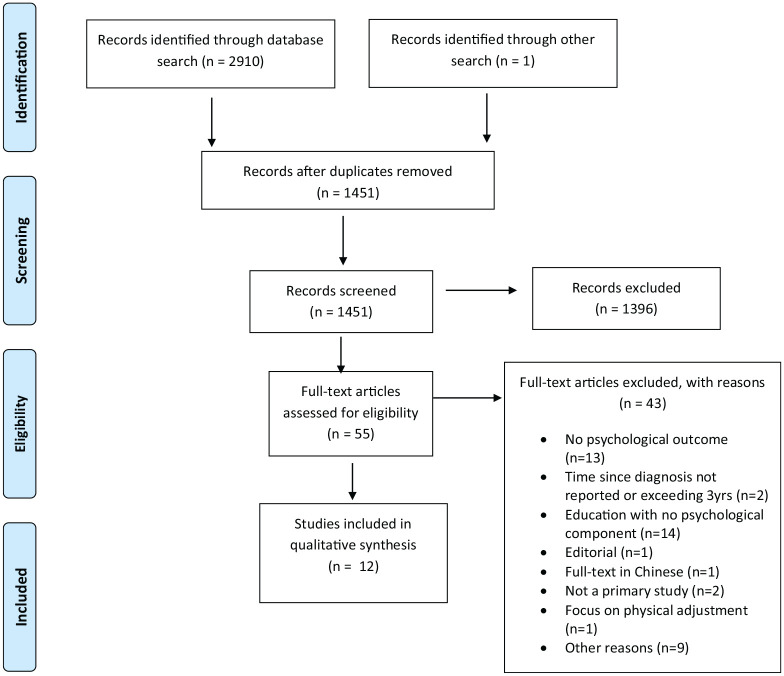
While the need for psychosocial interventions in the early formative period of chronic disease diagnosis is widely acknowledged, little is known about the currently available interventions and what they entail. This review sought to collate existing interventions to synthesize their active ingredients. A systematic search on five electronic databases yielded 2910 records, 12 of which were eligible for this review. Evidence synthesis revealed three broad categories of interventions which used at least two out of eight active techniques. Future studies should adhere to known frameworks for intervention development, and focus on developing core outcome measures to enhance evidence synthesis
Overview
The claims and statistics of this paper haven’t been checked yet.
Free: it reads the open-access text and checks the first 5 claims that cite a source we can check. Create a free account to check every claim.
Integrity signals
Registry
Cites
Statistics
Figures
Verification
Claims the paper makes
The claims and statistics of this paper haven’t been checked yet.
Free: it reads the open-access text and checks the first 5 claims that cite a source we can check. Create a free account to check every claim.
Self-check
Percentages, sums and reported differences re-computed from the paper’s own numbers.
The self-check needs the paper’s full text.
Citations
Cites
Preferred Reporting Items for Systematic Reviews and Meta-Analyses: the PRISMA statement
Moher, D., Liberati, A., Tetzlaff, J., Altman, D. G., & for the PRISMA Group (2009) · BMJ · doi:10.1136/bmj.b2535 · Cited by 83,823
Preferred Reporting Items for Systematic Reviews and Meta-Analyses: The PRISMA Statement
Moher, D., Liberati, A., Tetzlaff, J., Altman, D. G., & The PRISMA Group (2009) · PLoS Medicine · doi:10.1371/journal.pmed.1000097 · Cited by 64,042
The CES-D Scale: A Self-Report Depression Scale for Research in the General Population
Radloff, L. S. (1977) · Applied Psychological Measurement · doi:10.1177/014662167700100306 · Cited by 53,267
The Hospital Anxiety and Depression Scale
Zigmond, A. S., & Snaith, R. P. (1983) · Acta Psychiatrica Scandinavica · doi:10.1111/j.1600-0447.1983.tb09716.x · Cited by 47,139
The PHQ-9: Validity of a brief depression severity measure
Kroenke, K., Spitzer, R. L., & Williams, J. B. W. (2001) · Journal of General Internal Medicine · doi:10.1046/j.1525-1497.2001.016009606.x · Cited by 44,910
(1992) · PubMed · Cited by 33,716
Development and validation of brief measures of positive and negative affect: The PANAS scales.
Watson, D., Clark, L. A., & Tellegen, A. (1988) · Journal of Personality and Social Psychology · doi:10.1037/0022-3514.54.6.1063 · Cited by 32,433
Eysenck, H. J. (1985) · Behaviour Research and Therapy · doi:10.1016/0005-7967(85)90087-7 · Cited by 31,975
A Brief Measure for Assessing Generalized Anxiety Disorder: The GAD-7
Spitzer, R. L., Kroenke, K., Williams, J. B. W., & Löwe, B. (2006) · Archives of Internal Medicine · doi:10.1001/archinte.166.10.1092 · Cited by 31,765
The MOS 36-ltem Short-Form Health Survey (SF-36): I. Conceptual Framework and Item Selection
Ware, J. E., & Sherbourne, C. D. (1992) · Medical Care · doi:10.1097/00005650-199206000-00002 · Cited by 30,033
Research works printed but not linked: 8
- Bauman LJ Weiss E (1995) Multidimensional Social Support Inventory: Revised. New York: Albert Einstein College of Medicine.
- Folkman S Lazarus RS (1988) Manual for the Ways of Coping Questionnaire. Palo Alto, CA: Consulting Psychologists Press.
- Gillanders S Gillanders D (2014) An acceptance and commitment therapy intervention for a woman with secondary progressive multiple sclerosis and a history of childhood trauma. Neuro-Disability and Psychotherapy 2(1–2): 19– 40.
- Junk J Junk U (1981) Entwicklung eines MeBinstrumentes zur epidemiologischen Untersuchung der psychosozialen Belastung durch Lebensereignisse (live events) und des Coping Potentials. Diplomarbeit. Heidelberg Psychologisches institut.
- Prasko J Hruby R Holubova M, et al. (2016) Positive cognitive behavioral therapy. Activitas Nervosa Superior Rediviva 58(1): 23– 32.
- Rosenberg M (1986) Conceiving the Self. Malabar, Florida: RE Krieger.
- Spielberger CD Gorsuch RL Lushene RE (1970) State-trait anxiety inventory manual. Polo Alto, CA: Consulting Psychologists Press.
- Tufanaru C Munn Z Aromataris E, et al. (2017) Chapter 3: Systematic reviews of effectivenes. In: Aromataris E Munn Z (eds) Joanna Briggs Institute Reviewer’s Manual. The Joanna Briggs Institute. Available at: https://reviewersmanual.joannabriggs.org/
Cited by
Akyirem, S., Ekpor, E., Namumbejja Abwoye, D., Batten, J., & Nelson, L. E. (2023) · Diabetes Research and Clinical Practice · doi:10.1016/j.diabres.2023.110774 · Cited by 80
Self-citationExperience of stigma among persons with type 2 diabetes in Africa: a systematic review
Akyirem, S., & Ekpor, E. (2023) · International Health · doi:10.1093/inthealth/ihad045 · Cited by 32
Self-citationInsani, W. N., Wei, L., Abdulah, R., Alfian, S. D., Ramadhani, N. A., Andhika, R., Zakiyah, N., Adesuyan, M., Pamela, Y., Mustafa, R., et al. (2024) · International Journal of Clinical Pharmacy · doi:10.1007/s11096-024-01832-9 · Cited by 34
“Patients with a new diagnosis of chronic disease may have increased concerns about taking a life-long medication regimen [45].”
The impacts of health insurance on financial strain for people with chronic diseases
Peng, Z., & Zhu, L. (2021) · BMC Public Health · doi:10.1186/s12889-021-11075-2 · Cited by 35
“People with chronic diseases usually suffer from problems in the physical, psychological and social domains, having diverse and complex needs in the areas of prevention, care, and cure [42].”
BackgroundInflammatory Bowel Diseases-related Disability: Risk Factors, Outcomes, and Interventions
Tse, C. S., Hunt, M. G., Brown, L. A., & Lewis, J. D. (2023) · Inflammatory Bowel Diseases · doi:10.1093/ibd/izad182 · Cited by 25
Țenea-Cojan, Ș.-T., Dinescu, V.-C., Gheorman, V., Dragne, I.-G., Gheorman, V., Forțofoiu, M.-C., Forţofoiu, M., & Dobrinescu, A. (2025) · Life · doi:10.3390/life15020251 · Cited by 41
“Research indicates that the prevalence of psychiatric conditions varies depending on the specific internal disease [9–17].”
Burke, A. M., Davoren, M. P., Arensman, E., & Harrington, J. M. (2024) · BMJ Open · doi:10.1136/bmjopen-2023-077007 · Cited by 27
“88 For example, peer support can also function as a stand-alone intervention, and is particularly popular for individuals living with an HIV diagnosis.”
BackgroundDue‐Christensen, M., Joensen, L. E., Sarre, S., Romanczuk, E., Wad, J. L., Forde, R., Robert, G., Willaing, I., & Forbes, A. (2021) · BMJ Open · doi:10.1136/bmjopen-2021-051430 · Cited by 23
Self-citationAkyirem, S., Ekpor, E., Batten, J., & Brady, V. (2024) · Social Science & Medicine · doi:10.1016/j.socscimed.2024.117153 · Cited by 21
Self-citationBondar, L. I., Osser, B., Miuţa, C. C., Petran, D., Băltean, A. I., Butari, D. B., Mariș, M. A., Piroș, L. E., Almășan, R., Gavrilă-Ardelean, M., et al. (2024) · Diseases · doi:10.3390/diseases12120320 · Cited by 14
“These findings highlight the need for comprehensive care that addresses not only the physical but also the emotional and psychosocial aspects of the disease [52,53].”
Sheth, M. S., Castle, D. J., Wang, W., Lee, A., Jenkins, Z., & Hawke, L. D. (2023) · SSM - Mental Health · doi:10.1016/j.ssmmh.2023.100190 · Cited by 18
Burke, A. M., Davoren, M. P., Arensman, E., & Harrington, J. M. (2025) · BMC Public Health · doi:10.1186/s12889-025-21906-1 · Cited by 9
“Psychosocial care can have a huge impact on quality of life for people living with a chronic illness, improving emotional well-being and mental health [12].”
Pereira, M. G., Pedras, S., Louro, A. C., Lopes, A., & Vilaça, M. (2023) · Journal of Foot and Ankle Research · doi:10.1186/s13047-022-00592-x · Cited by 15
“Therefore, it makes sense that psychological interventions may have a positive effect and an indirect impact on medication adherence, empowering patients to engage in self-care behaviors, and boosting overall mood [43], as suggested by this study’s participants.”
BackgroundInfluentialHreńczuk, M. K., Rudnicka, W., Piątek, T. D., & Małkowski, P. (2024) · Healthcare · doi:10.3390/healthcare12242562 · Cited by 11
“Studies indicate that there is low health awareness among patients with chronic kidney disease (CKD), which significantly limits the extent to which patients are able to self-manage their disease and directly or indirectly influence their condition [4,14,18].”
Al‐Beltagi, M., Saeed, N. K., Bediwy, A. S., Bediwy, E. A., & Elbeltagi, R. M. (2025) · World Journal of Clinical Pediatrics · doi:10.5409/wjcp.v14.i3.105290 · Cited by 10
Defense mechanisms and inflammatory bowel diseases: a narrative review
Silvestro, O., Vicario, C. M., Costa, L., Sparacino, G., Lund-Jacobsen, T., Spatola, C. A. M., Merlo, E. M., Viola, A., Giorgianni, C. M., Catalano, A., et al. (2025) · Research in Psychotherapy Psychopathology Process and Outcome · doi:10.4081/ripppo.2025.854 · Cited by 19
Rathore, G., & Singh, R. P. (2025) · Intelligent Hospital · doi:10.1016/j.inhs.2025.100001 · Cited by 11
Corrick, S., Johnson, E., Isley, S., Vandermeer, B., Dolgoy, N. D., Bates, J., Godfrey, E., Soltys, C., Muir, C., Tegg, N. L., et al. (2024) · PLOS mental health. · doi:10.1371/journal.pmen.0000048 · Cited by 7
Mei, X., Yeung, W., Hu, Y., He, M., Lu, W., Bayuo, J., Lantta, T., & Li, Y. (2025) · Archives of Psychiatric Nursing · doi:10.1016/j.apnu.2025.151855 · Cited by 6
Griva, K., Lim, P. X. H., Chan, F. H. F., Wong, Y. P., Loei, J., Thach, T., Moskowitz, J. T., Khan, B. A., & Choo, J. C. J. (2024) · Annals of Behavioral Medicine · doi:10.1093/abm/kaae052 · Cited by 5
Pain Resilience and Chronic Low Back Pain Outcomes: The Mediating Role of Pace of Biological Aging
Davis, K. K., Freij, K. W., Agbor, F. B. A. T., Wiggins, A. M., Quinn, T. L., Overstreet, D. S., Grewal, S., Sorge, R. E., Goodin, B. R., & Aroke, E. N. (2025) · Biological Research For Nursing · doi:10.1177/10998004251345491 · Cited by 3
“These fi ndings are consistent with emerging research showing that good mental health, positive emotions, and personality traits associated with resilience can predict healthy aging (Akyirem et al., 2022; Franz et al., 2021; Yoneda et al., 2023).”
Milani, I., Dextre, G. A. L. C., Elisei, R. F., Ripa, P., Capatti, S. R., Magon, A., Cilluffo, S., Terzoni, S., Lusignani, M., Petralito, M., et al. (2025) · Acta Diabetologica · doi:10.1007/s00592-025-02580-6 · Cited by 4
Psychological stress among hypertensive male patients in Jordan: prevalence and associated factors
Aldirawi, A., Alhalaiqa, F., Alwawi, A. A., & Abuzerr, S. S. (2024) · BMC Public Health · doi:10.1186/s12889-024-20733-0 · Cited by 10
“Chronic diseases contribute to psychological stress due to daily management challenges [44, 45].”
Mental Health and Disability: Understanding the Complex Interplay
Sen, A., & Mohanraj, P. S. (2024) · Springer eBooks · doi:10.1007/978-3-031-40858-8_374-1 · Cited by 4
Matsuo, T., Onishi, Y., Morinaga, H., Wada, J., Tanaka, T., & Araki, M. (2025) · Journal of Medical Cases · doi:10.14740/jmc4356 · Cited by 2
“The clinical situation in this patient emphasizes that psychological care and support are crucial in both medical and social contexts [15-17].”
Validation of the Chronic Illness Adjustment Scale in Turkish patients with chronic disease
Turan, G. B., Özer, Z., & Çiftçi, B. (2025) · Health and Quality of Life Outcomes · doi:10.1186/s12955-025-02465-w · Cited by 3
“The adaptation process can often be frightening and challenging for individuals with chronic illnesses [5].”
Jones, H. G., Lavelle, G., Aylwin‐Foster, E., Carr, E., Simpson, A., Hotopf, M. H., & Lawrence, V. C. (2026) · Journal of Medical Internet Research · doi:10.2196/79666 · Cited by 2
“There is a current lack of psychological support to help people with long-term physical health conditions manage their mental well-being that is easily accessible and tailored to their specific psychosocial needs, particularly for those at risk of developing major depression [48,49].”
Bin Qamar, R. A., Pereira, H., & Alckmin-Carvalho, F. (2026) · Advances in respiratory medicine · doi:10.3390/arm94030032 · Cited by 1
“…one or more of the following components: psychoeducation, individual or group counseling, evidence-based psychotherapies (such as cognitive behavioral therapy, acceptance and commitment therapy, or motivational enhancement therapy), peer or family support, and material or social assistance [14–16].”
InfluentialAstım ve KOAH Tanıs Almış Olan Yaşlı Bireylerin Hastalık Hakkındaki Görüşleri
BABAEV, B. B., Ceylan, S., & Günay, G. (2024) · Yaşlı sorunları araştırma dergisi · doi:10.46414/yasad.1443576 · Cited by 1
Ekpor, E., Akyirem, S., Duodu, P. A., Bayuo, J., & Brady, V. (2024) · Mental health and physical activity · doi:10.1016/j.mhpa.2024.100647 · Cited by 1
Self-citationRelationship Between Self-care Activities and Stigmatization in Patients with Type 2 Diabetes
Polat, H. T., & Teke, Z. B. (2025) · Hacettepe Üniversitesi Hemşirelik Fakültesi Dergisi · doi:10.31125/hunhemsire.1478586 · Cited by 2
Assessing the relationship between present bias and diabetes self-care behavior
DePalma, M. T., Heichel, K. T., & O’Leary, A. (2025) · Journal of Health Psychology · doi:10.1177/13591053251350057 · Cited by 1
Hawezy, G. A., Mahmood, K. A., Media, S. K., & Ahmed, S. K. (2025) · Discover Public Health · doi:10.1186/s12982-025-00823-z · Cited by 2
“The data were analyzed using SPSS version [27].”
Clinical Hypnosis for Chronic Illnesses: A Scoping Review of Randomized Controlled Trials
Rinaldi, M., van Luijtelaar, G., Hasanat, N. U., & Yuniarti, K. (2025) · International Journal of Clinical and Experimental Hypnosis · doi:10.1080/00207144.2025.2528232 · Cited by 1
Treatment approach for diabetes mellitus type 2 in a 70-year-old male: A case report
Ndalela, N., Lingela, A. N., & Mpofu, L. (2025) · Medicine · doi:10.1097/md.0000000000042890 · Cited by 3
“According to the National Health Institute, [14] being diagnosed with a chronic disease can be life-changing and worsen multiple physical and psychosocial consequences.”
Stoner, C. R., Perkins, A., Durgante, H. B., Birt, L., & Spector, A. E. (2025) · Psychology Health & Medicine · doi:10.1080/13548506.2025.2573835 · Cited by 4
Laza, R., Luştrea, A., Lăzureanu, V. E., Oancea, C. I., Dehelean, L., Poplicean, E., Bătrîn, A. D., Romosan, R. S., & Romoșan, A. M. (2026) · Journal of Multidisciplinary Healthcare · doi:10.2147/jmdh.s576275 · Cited by 1
Trends and Effects in Evidence-Based Psycho-Social Interventions for Patients with Diabetes
Lim, J. (2023) · Journal of Korean Diabetes · doi:10.4093/jkd.2023.24.3.164 · Cited by 1
“따라서 당뇨병관리는 혈당조절을 넘어 환자의 심리·사회적 건강, 그리고 삶의 질에도 상당한 영향을 미친다 [2,3].”
Anosike, C., Okonkwo, V. C., Ugochukwu, E. J., Jonathan, N., Okoye, C. O., Ukpaka, M. C., Nebonta, S. A., Okpe, O. G., & Udoh, J. P. (2025) · Pharmacy Education · doi:10.46542/pe.2025.251.2030
Living With Chronic Rhinosinusitis: Insights From an Arts‐Based Study
Xiao, J. B., Sarafan, M., Zhu, J., Voizard, B., & Thamboo, A. V. (2025) · World Journal of Otorhinolaryngology - Head and Neck Surgery · doi:10.1002/wjo2.70033
“Previous systematic reviews have found that evaluation and psychological intervention during the treatment of chronic illness can contribute positively to treatment outcomes and overall wellbeing [21 – 23].”
Koç, İ., & Koç, E. A. (2025) · International Journal of Psychiatry in Clinical Practice · doi:10.1080/13651501.2025.2542785 · Cited by 2
“…therapeutic approaches is to help patients accept their illness and adhere to treatment, thereby improving their physical and mental well-being (akyirem et al., 2022). clozapine is an effective antipsychotic drug used in the treatment of treatment-resistant schizophrenia. it is the first of…”
Palli, A. (2025) · European Family Therapy Association series · doi:10.1007/978-3-031-92225-1_13
The Future of Chronic Disease Management: Transforming New Trends from Diagnostic to Rehabilitation
Fatma, S. (2025) · Jurnal Klinik dan Riset Kesehatan · doi:10.11594/jk-risk.04.2.1
An, J., Payne, L. L., & Liechty, T. (2025) · Journal of Leisure Research · doi:10.1080/00222216.2025.2536497 · Cited by 1
“Furthermore, the psychological effects of CHCs manifest through fear about disease progression, anxiety regarding future health outcomes, and concerns about maintaining independence (Akyirem et al., 2022).”
Prehabilitation of kidney transplant candidates – a narrative review
Hreńczuk, M. K., Niewierowska, D., & Piątek, T. D. (2025) · Polish Journal of Surgery · doi:10.5604/01.3001.0055.3299
Mikaeil, A., Nasiri-Amiri, F., Shafizadeh, F., Behmanesh, F., Hamzehpour, R., Bijani, A., Delavar, M. A., & Afshar, Z. M. (2026) · BMJ Open · doi:10.1136/bmjopen-2025-111648
“22 Supportive counselling is a type of counselling to help individuals who are facing a crisis or temporary state of confusion.”
Alzayer, H., Alabbad, E., Alnasrallah, B., Alqawain, A., & Aljishi, M. (2026) · Journal of Patient Experience · doi:10.1177/23743735261439469 · Cited by 1
“44,45 Educational strategies should emphasize the earlier introduction of KF concepts and kidney replacement options, alongside explicit support for coping with uncertainty, treatment-related fear, and role changes.”
Qin, Z., Rajaram, S. S., Padilla, C., & Siu, K. (2026) · Behavioral Sciences · doi:10.3390/bs16040573
Miezah, D., Opoku, M. P., Kumi, E. O., & Gyimah, E. M. (2026) · BMC Public Health · doi:10.1186/s12889-026-27464-4
“Group social support interventions for chronic illness patients are generally effective at improving psychosocial outcomes, including distress, but their effect sizes and consistency differ greatly [126–128].”
Echague, E. T., & Gomez, M. G. A. (2026) · IGI Global eBooks · doi:10.4018/979-8-3373-6846-7.ch006
Gray, L., Björklund, M., Hider, S., Kingstone, T., Chew-Graham, C. A., & Nadia Corp (2026) · Rheumatology Advances in Practice · doi:10.1093/rap/rkag059
“People often require lifestyle changes and adoption of new self-management behaviours to reduce the condition’s impact [14].”
Wang, X., Zhang, S., & An, H. (2026) · Frontiers in Psychology · doi:10.3389/fpsyg.2026.1798196
Integrating Social Work Practice in Lymphedema Care: A Rights-Based Model
Jabir, M., & Choolayil, A. C. (2026) · Journal of Human Rights and Social Work · doi:10.1007/s41134-026-00477-0
Zahrani, Y. I., & Narapureddy, B. R. (2026) · PeerJ · doi:10.7717/peerj.21592
Experiências de adoecimento em pessoas com cirrose hepática
de Souza, A. D. S., Rodrigues, A. S., Pereira, M. O., Silva, D. D. O., Santos, J. Q., Linhares, A. A. D. J., & de Souza, Í. P. (2026) · Ciência Cuidado e Saúde · doi:10.4025/ciencuidsaude.v25i1.78416
Fields, A. M., Hill, R. B. S., Nice, M. L., Allard, K. N., & Castle, M. (2026) · International Journal of Group Psychotherapy · doi:10.1080/00207284.2026.2727603
“Indeed, group counseling offers a structured format that fosters emotional expression, coping skills development, and peer support, which are core elements associated with improved adaptation to chronic illness (Akyirem et al., 2022).”
Alvarez, M., Herrera, S., Cruz, D., & Castro, A. (2026) · International Journal of Social and Psychological Aspects of Healthcare · doi:10.51847/skztcezvaw
Silvestro, O., Costa, L., Ferraù, F., Merlo, E. M., Cannavò, S., Feldt-Rasmussen, U., & Martino, G. (2026) · Frontiers in Endocrinology · doi:10.3389/fendo.2026.1901783
“Early identi fi cation of these pro fi les could facilitate timely referral to psychological support and tailored interventions aimed at improving illness adjustment, self-management, and HR-QoL (105 – 107).”
Shaluhiyah, Z., Handayani, S., Sriatmi, A., Agushybana, F., & Rimawati, E. (2026) · BMJ Open · doi:10.1136/bmjopen-2026-125850
Smith, I. C., Grant, A., Lessard, L., Osman, H., Oelbrandt, F., Lochmüller, H., McMillan, H. J., Pfeffer, G., Korngut, L., Gagnon, C., et al. (2026) · Frontiers in Public Health · doi:10.3389/fpubh.2026.1918801
Metadata
- Authors
- Akyirem, S., Forbes, A., Wad, J. L., & Due-Christensen, M.
- Affiliations
- King's College London (GB)
- Steno Diabetes Center Copenhagen (DK)
- King’s College London, UK
- Corresponding author
- Akyirem, Samuel
- Venue
- Journal of Health Psychology
- Publisher
- SAGE Publications
- Published
- 2021-02-14
- Volume
- 27
- Issue
- 7
- Pages
- 1753-1782
- ISSN
- 1359-1053 (ISSN-L)
- 1461-7277
- PMC
- PMC9092922
- OpenAlex
- W3129649678
- Cited by
- 60
- References
- 121
- Citations by year
- 2026: 18 · 2025: 23 · 2024: 11 · 2023: 6 · 2021: 2
- FWCI
- 0.58
- Type
- journal article
- Language
- en
- Open access
- hybrid
- doi.org
- Locations
- Journal of Health Psychology (publishedVersion, cc-by)
- PubMed Central (publishedVersion, cc-by)
- PubMed (publishedVersion)
- Research Portal (King's College London) (submittedVersion, cc-by)
- Funders
- National Institute for Health Research (PB-PG-0317-20012)
- Topics
- Health Sciences › Medicine › Oncology › Cancer survivorship and care
- Health Sciences › Medicine › Endocrinology, Diabetes and Metabolism › Diabetes Management and Education
- Health Sciences › Health Professions › General Health Professions › Health Policy Implementation Science
- Keywords
- psychosocial interventions, chronic disease, early intervention, active ingredients, core outcome measures, adults
- MeSH terms
- Psychosocial Intervention, Adult, Chronic Disease, Humans
About these checks
Registry, retraction, Cites and statistics results are computed, not judged, with one exception: a printed reference that no index lists is read once by a model before it counts as a citation error. Claims are extracted by a model and kept only when their quote appears verbatim in the text; each cited source is then checked, with a model’s help, for whether it says what the claim relies on. Those verdicts can be wrong — read the claim’s quote and the cited source before relying on one.
Statistics and arithmetic are recomputed, not judged.
Confidence bands are shown only for fields calibrated on our annotated test set. None is calibrated yet, so no band is shown.
What counts as a claim ›How we measure confidence ›How we check this ›
Are you an author, or do you see a problem with this page? Request a review
Data sources
Bibliographic data: Semantic Scholar, OpenAlex, Crossref.
Contains information from the Semantic Scholar Academic Graph Datasets, made available under the ODC Attribution License (ODC-BY 1.0).
Semantic Scholar’s data is described in: Kinney, R., et al. (2023). The Semantic Scholar Open Data Platform. arXiv:2301.10140.
