

Childhood trauma, depression, resilience and suicide risk in individuals with inflammatory bowel disease
Open accessThe DOI matches its Crossref record; 38 of the 38 references it cites were found in a registry or an index.
Abstract
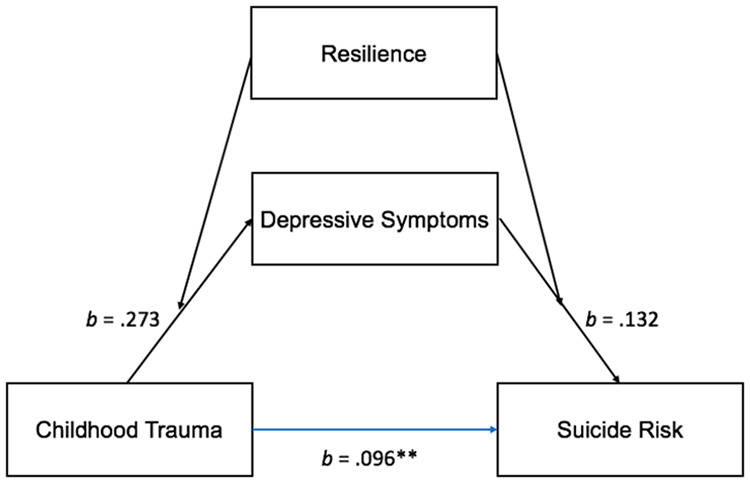
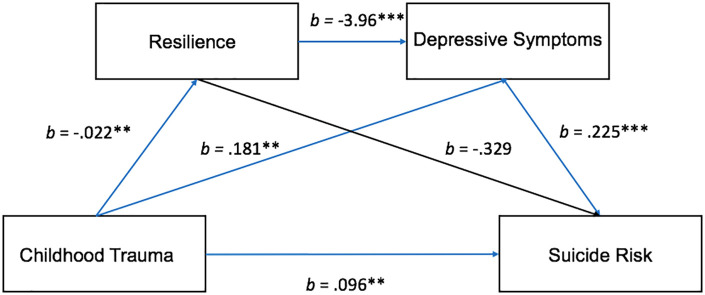
Despite the prevalence of suicide risk in inflammatory bowel disease populations, research has yet to examine associations between childhood trauma, resilience, depression and suicide risk. In the present online study, 172 participants responded to measures of childhood trauma, resilience, depression and suicide risk. A moderated mediation revealed that resilience does not moderate the associations between childhood trauma, depressive symptoms and suicide risk. However, a serial mediation revealed that childhood trauma is associated with decreased resilience, which is related to higher depressive symptoms, and ultimately higher suicide risk, thus suggesting resilience and depression as significant intervention targets.
Overview
The claims and statistics of this paper haven’t been checked yet.
Free: it reads the open-access text and checks the first 5 claims that cite a source we can check. Create a free account to check every claim.
Integrity signals
Registry
Cites
Statistics
Figures
Verification
Claims the paper makes
The claims and statistics of this paper haven’t been checked yet.
Free: it reads the open-access text and checks the first 5 claims that cite a source we can check. Create a free account to check every claim.
Claims other papers make about this one
Each is checked against this paper’s own text: does it say what the citing paper says it does?
The cited source says what the claim attributes to it.
In the citing paper
“In a cross-sectional study, experiences of childhood trauma were associated with lower resilience, which in turn was related to higher depression and higher suicide risk in a sample of 172 adults with IBD (38).”
From The 2023 Impact of Inflammatory Bowel Disease in Canada: Mental Health and Inflammatory Bowel Disease (2023) · cites this paper as [38]
Self-check
Percentages, sums and reported differences re-computed from the paper’s own numbers.
The self-check needs the paper’s full text.
Citations
Cites
The PHQ-9: Validity of a brief depression severity measure
Kroenke, K., Spitzer, R. L., & Williams, J. B. W. (2001) · Journal of General Internal Medicine · doi:10.1046/j.1525-1497.2001.016009606.x · Cited by 44,910
(2013) · Cited by 44,563
Principles and Practice of Structural Equation Modeling
Tabri, N., & Elliott, C. M. (2012) · Canadian Graduate Journal of Sociology and Criminology · doi:10.15353/cgjsc-rcessc.v1i1.25 · Cited by 38,891
Journal of Clinical Psychiatry
(2018) · Journal of Clinical Psychiatry · doi:10.5505/kpd · Cited by 13,651
The brief resilience scale: Assessing the ability to bounce back
Smith, B. W., Dalen, J., Wiggins, K., Tooley, E., Christopher, P., & Bernard, J. (2008) · International Journal of Behavioral Medicine · doi:10.1080/10705500802222972 · Cited by 6,439 · cited 2×
“The Brief Resilience Scale (BRS; Smith et al., 2008) is a reliable, 6-item, selfreport measure (current α = 0.84) assessing resilience in terms of ability to bounce back from stressful events.”
MethodInfluentialOsman, A., Bagge, C. L., Gutierrez, P. M., Konick, L. C., Kopper, B. A., & Barrios, F. X. (2001) · Assessment · doi:10.1177/107319110100800409 · Cited by 2,276 · cited 2×
“The Suicidal Behaviors Questionnaire Revised (SBQ-R; Osman et al., 2001) is a reliable self-report measure (current α = 0.80) assessing four elements of suicidal behaviour (i.e., item 1 assessed lifetime suicidal ideation and attempts [scored 0–4], item 2 assessed frequency of suicidal ideation in…”
BackgroundInfluentialDepression and sensitization to stressors among young women as a function of childhood adversity
Hammen, C., Henry, R., & Daley, S. E. (2000) · Journal of Consulting and Clinical Psychology · doi:10.1037/0022-006x.68.5.782 · Cited by 598 · cited 3×
“Childhood trauma—experiencing or witnessing an event that is frightening, dangerous, or violent—has long been associated with the development of depressive symptoms (Hammen et al., 2000) and IBD (Drossman et al., 1995).”
BackgroundResultMikocka-Walus, A., Knowles, S. R., Keefer, L., & Graff, L. (2016) · Inflammatory Bowel Diseases · doi:10.1097/mib.0000000000000620 · Cited by 567 · cited 1×
“IBD is associated with lower quality of life and higher rates of depression compared to the general population (Knowles et al., 2018; Mikocka-Walus et al., 2015).”
BackgroundDisclosure of traumas and psychosomatic processes
Pennebaker, J. W., & Susman, J. R. (1988) · Social Science & Medicine · doi:10.1016/0277-9536(88)90397-8 · Cited by 559 · cited 1×
“The Childhood Trauma Questionnaire (CTES; Pennebaker and Susman, 1988) is a brief self-report measure of six childhood traumatic experiences (death, divorce, violence, sexual abuse, illness, or other), as well as one’s understanding of the trauma (i.e., their perception of the traumatic event and…”
BackgroundQuality of life in inflammatory bowel disease: a systematic review and meta-analyses—part I
Knowles, S. R., Graff, L. A., Wilding, H., Hewitt, C., Keefer, L., & Mikocka-Walus, A. (2018) · Inflammatory Bowel Diseases · doi:10.1093/ibd/izx100 · Cited by 503 · cited 1×
“IBD is associated with lower quality of life and higher rates of depression compared to the general population (Knowles et al., 2018; Mikocka-Walus et al., 2015).”
Background
Research works printed but not linked: 2
- Lopez S Pedrotti J Snyder C (2019) Positive Psychology, 4th edn. Thousand Oaks, CA: SAGE.
- Targownik L Bernstein C (2017) The economics of inflammatory bowel disease. In: Cohen R (ed.) Inflammatory Bowel Disease Diagnosis and Therapeutics, 3rd edn. Springer International Publishing. Available at: https://ebookcentral.proquest.com/lib/queen-ebooks/reader.action?docID=4890720&query (accessed 20 June 2020).
Cited by
Resilience-based integrated IBD care is associated with reductions in health care use and opioids
Keefer, L., Gorbenko, K., Siganporia, T., Manning, L., Tse, S., Biello, A., Ungaro, R., Cohen, L. J., Cohen, B. L., & Dubinsky, M. C. (2022) · Clinical Gastroenterology and Hepatology · doi:10.1016/j.cgh.2021.11.013 · Cited by 49
Graff, L. A., Geist, R., Kuenzig, M. E., Benchimol, E. I., Kaplan, G. G., Windsor, J. W., Bitton, A., Coward, S., Jones, J. L., Lee, K., et al. (2023) · Journal of the Canadian Association of Gastroenterology · doi:10.1093/jcag/gwad012 · Cited by 30
“In a cross-sectional study, experiences of childhood trauma were associated with lower resilience, which in turn was related to higher depression and higher suicide risk in a sample of 172 adults with IBD (38).”
BackgroundRole of stress and early-life stress in the pathogeny of inflammatory bowel disease
Bonaz, B. L., Sinniger, V., & Pellissier, S. (2024) · Frontiers in Neuroscience · doi:10.3389/fnins.2024.1458918 · Cited by 24
Weng, X., Tang, R., Chen, L., Weng, X., Wang, D., Wu, Z., Yu, L., Fang, X., & Zhang, C. (2024) · European Archives of Psychiatry and Clinical Neuroscience · doi:10.1007/s00406-023-01746-z · Cited by 22
“To date, only one study recruited individuals with inflammatory bowel disease and demonstrated the serial mediating effects of childhood trauma on suicide risk [42].”
Xu, Z., & Zhu, C. (2024) · ALPHA PSYCHIATRY · doi:10.5152/alphapsychiatry.2023.231247 · Cited by 15
“15 It has been previously shown that parental education impacts on children’s belief system, values, and interpersonal habits.”
BackgroundKarska, J., Rejek, M., & Misiak, B. (2024) · BMC Psychiatry · doi:10.1186/s12888-024-05491-y · Cited by 14
“For instance, a history of childhood trauma has been found to correlate with reduced resilience, which in turn is associated with elevated depressive symptoms and ultimately a higher suicide risk [25].”
BackgroundWang, Z., Wang, X., Peng, Y., Liu, C., & He, J. (2022) · Journal of Adult Development · doi:10.1007/s10804-022-09422-7 · Cited by 13
“Only two recent studies, to our knowledge, have investigated the mediating mechanisms (by which childhood maltreatment affects the risk for suicide) (Tripp et al., 2021; Xie et al., 2021).”
BackgroundThe burden of early life stress in chronic inflammatory bowel diseases
Minjoz, S., Sinniger, V., Hot, P., Bonaz, B. L., & Pellissier, S. (2023) · Journal of Health Psychology · doi:10.1177/13591053231173918 · Cited by 10
Akça, S. Ö., Öztaş, G., Karadere, M. E., & Yazla, E. (2021) · Perspectives In Psychiatric Care · doi:10.1111/ppc.12997 · Cited by 12
Differentiating Childhood Traumas in Inflammatory Bowel Disease
Gnat, L., Mihajlovic, V., Jones, K. L., & Tripp, D. A. (2023) · Journal of the Canadian Association of Gastroenterology · doi:10.1093/jcag/gwad026 · Cited by 9
“1,10,23 Contrary to expectations, confiding did not moderate the relationship between trauma severity and resilience, nor between trauma severity to depressive symptoms.”
InfluentialChen, P., Sun, X., Zhang, Q., Yang, C.-Y., Ye, X., Wang, Y., & Yang, X. (2022) · Current Psychology · doi:10.1007/s12144-022-03975-2 · Cited by 6
Alsamman, S., Dajani, R. B., & Al‐Delaimy, W. K. (2024) · PLoS ONE · doi:10.1371/journal.pone.0309051 · Cited by 12
“In a study of inflammatory bowel disease patients with history of childhood trauma resilience was not a significant moderator between childhood trauma and depression [10].”
BackgroundNatuhamya, C., Nabukalu, E., Lyons, M. J., Gittner, K. B., Palmier, J. B., Culbreth, R. E., & Swahn, M. H. (2025) · BMC Psychiatry · doi:10.1186/s12888-025-06930-0 · Cited by 7
“Furthermore, prior research shows that childhood adversity may play an indirect role by decreasing resilience and increasing suicidal risk, which may be driving some of the associations found in our current study [63].”
Dong, M., Ren, Z., Li, Y., & Ye, Q. (2024) · Psychology Crime and Law · doi:10.1080/1068316x.2024.2315076 · Cited by 4
“Prior research has demonstrated that prolonged exposure to stressful events can diminish an individual’s resilience (Ng & Yang, 2022; Tripp et al., 2022).”
Child exposure to domestic violence, substance dependence and suicide resilience in child laborers
Mohammadi, F., Oshvandi, K., Shamsaei, F., Khodaveisi, M., Khazaei, S., & Masoumi, S. Z. (2023) · BMC Public Health · doi:10.1186/s12889-023-15367-7 · Cited by 12
“The score range is between 25 and 150, with higher scores indicating greater resilience against suicide [31].”
BackgroundHolistic care in inflammatory bowel disease: is it in REACH?
Said, H., Moulton, C. D., Hart, A. L., & Keefer, L. (2026) · Journal of Crohn s and Colitis · doi:10.1093/ecco-jcc/jjaf227 · Cited by 3
Mlouki, I., Abbes, Y., Hariz, E., Silini, A., Ayoub, R., Mrabet, H. E. O., Rezg, N., guedria, A., & Mhamdi, S. E. (2023) · IntechOpen eBooks · doi:10.5772/intechopen.1002965 · Cited by 2
Daneshmend, A., Sherratt, F. E., Ethier-Gagnon, M. A., Jarkas, D., & McQuaid, R. J. (2025) · Journal of Interpersonal Violence · doi:10.1177/08862605251372562 · Cited by 1
Liu, Q., Ma, H., Li, J., Chen, M., Zhang, Y., Tang, Z., Du, X., & Ye, G. (2025) · BMC Psychiatry · doi:10.1186/s12888-025-07674-7
“Tripp et al. found that resilience is more appropriately viewed as a mediator within the causal relationship between childhood trauma and suicidal behaviors, rather than functioning as a moderator of this association [59].”
Karska, J., Rejek, M., & Misiak, B. (2024) · Figshare · doi:10.6084/m9.figshare.24965920
Sarı, Y., Koç, A. E., KARAKIŞ, E., Şeker, E., Altınkaya, E., & Ataseven, H. (2026) · European Journal of Therapeutics · doi:10.58600/eurjther3132
Biscoe, N. (2026) · Journal of Behavioral and Cognitive Therapy · doi:10.1016/j.jbct.2026.100633
Metadata
- Authors
- Tripp, D. A., Jones, K., Mihajlovic, V., Westcott, S., & MacQueen, G.
- Affiliations
- Queen's University (CA)
- McMaster University (CA)
- University of Calgary (CA)
- Corresponding author
- Tripp, Dean A
- Venue
- Journal of Health Psychology
- Publisher
- SAGE Publications
- Published
- 2021-03-15
- Volume
- 27
- Issue
- 7
- Pages
- 1626-1634
- ISSN
- 1359-1053 (ISSN-L)
- 1461-7277
- PMC
- PMC9092906
- OpenAlex
- W3139378280
- Cited by
- 22
- References
- 38
- Citations by year
- 2026: 2 · 2025: 4 · 2024: 7 · 2023: 5 · 2022: 2 · 2021: 2
- FWCI
- 2.73
- Type
- journal article
- Language
- en
- Open access
- hybrid
- doi.org
- Licence
- cc-by-nc
- creativecommons.org/licenses/by-nc/4.0/ (unspecified)
- journals.sagepub.com/page/policies/text-and-data-mining-license (tdm)
- Locations
- Journal of Health Psychology (publishedVersion, cc-by-nc)
- PubMed Central (publishedVersion, cc-by-nc)
- PubMed (publishedVersion)
- Topics
- Social Sciences › Psychology › Clinical Psychology › Suicide and Self-Harm Studies
- Social Sciences › Psychology › Clinical Psychology › Resilience and Mental Health
- Social Sciences › Psychology › Clinical Psychology › Child Abuse and Trauma
- Keywords
- childhood trauma, resilience, depression, suicide risk, inflammatory bowel disease, depressive symptoms, moderated mediation, serial mediation, intervention targets
- MeSH terms
- Adverse Childhood Experiences, Cross-Sectional Studies, Depression, Humans, Suicide, Inflammatory Bowel Diseases, Resilience, Psychological
About these checks
Registry, retraction, Cites and statistics results are computed, not judged, with one exception: a printed reference that no index lists is read once by a model before it counts as a citation error. Claims are extracted by a model and kept only when their quote appears verbatim in the text; each cited source is then checked, with a model’s help, for whether it says what the claim relies on. Those verdicts can be wrong — read the claim’s quote and the cited source before relying on one.
Statistics and arithmetic are recomputed, not judged.
Confidence bands are shown only for fields calibrated on our annotated test set. None is calibrated yet, so no band is shown.
What counts as a claim ›How we measure confidence ›How we check this ›
Are you an author, or do you see a problem with this page? Request a review
Data sources
Bibliographic data: Semantic Scholar, OpenAlex, Crossref.
Contains information from the Semantic Scholar Academic Graph Datasets, made available under the ODC Attribution License (ODC-BY 1.0).
Semantic Scholar’s data is described in: Kinney, R., et al. (2023). The Semantic Scholar Open Data Platform. arXiv:2301.10140.
