

Childhood trauma, depression, resilience and suicide risk in individuals with inflammatory bowel disease
Open accessThe DOI matches its Crossref record; 38 of the 38 references it cites were found in a registry or an index.
Abstract
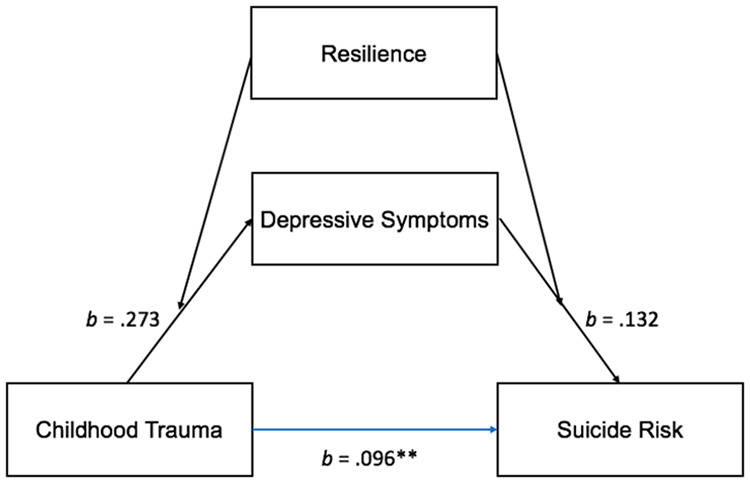
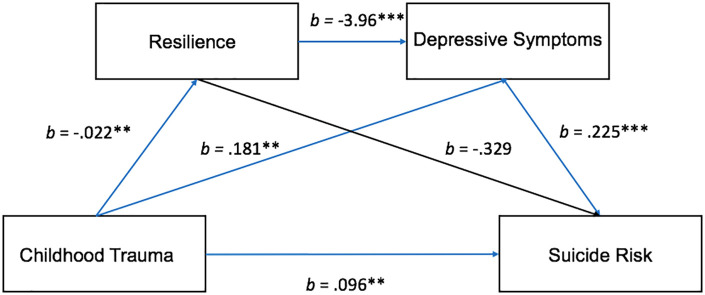
Despite the prevalence of suicide risk in inflammatory bowel disease populations, research has yet to examine associations between childhood trauma, resilience, depression and suicide risk. In the present online study, 172 participants responded to measures of childhood trauma, resilience, depression and suicide risk. A moderated mediation revealed that resilience does not moderate the associations between childhood trauma, depressive symptoms and suicide risk. However, a serial mediation revealed that childhood trauma is associated with decreased resilience, which is related to higher depressive symptoms, and ultimately higher suicide risk, thus suggesting resilience and depression as significant intervention targets.
Overview
The claims and statistics of this paper haven’t been checked yet.
Free: it reads the open-access text and checks the first 5 claims that cite a source we can check. Create a free account to check every claim.
Integrity signals
Registry
Cites
Statistics
Figures
Verification
Claims the paper makes
The claims and statistics of this paper haven’t been checked yet.
Free: it reads the open-access text and checks the first 5 claims that cite a source we can check. Create a free account to check every claim.
Claims other papers make about this one
Each is checked against this paper’s own text: does it say what the citing paper says it does?
The cited source says what the claim attributes to it.
In the citing paper
“In a cross-sectional study, experiences of childhood trauma were associated with lower resilience, which in turn was related to higher depression and higher suicide risk in a sample of 172 adults with IBD (38).”
From The 2023 Impact of Inflammatory Bowel Disease in Canada: Mental Health and Inflammatory Bowel Disease (2023) · cites this paper as [38]
Self-check
Percentages, sums and reported differences re-computed from the paper’s own numbers.
The self-check needs the paper’s full text.
Citations
Cites
The PHQ-9: Validity of a brief depression severity measure
Kroenke, K., Spitzer, R. L., & Williams, J. B. W. (2001) · Journal of General Internal Medicine · doi:10.1046/j.1525-1497.2001.016009606.x · Cited by 44,910
(2013) · Cited by 44,563
Principles and Practice of Structural Equation Modeling
Tabri, N., & Elliott, C. M. (2012) · Canadian Graduate Journal of Sociology and Criminology · doi:10.15353/cgjsc-rcessc.v1i1.25 · Cited by 38,891
Journal of Clinical Psychiatry
(2018) · Journal of Clinical Psychiatry · doi:10.5505/kpd · Cited by 13,651
The brief resilience scale: Assessing the ability to bounce back
Smith, B. W., Dalen, J., Wiggins, K., Tooley, E., Christopher, P., & Bernard, J. (2008) · International Journal of Behavioral Medicine · doi:10.1080/10705500802222972 · Cited by 6,439 · cited 2×
“The Brief Resilience Scale (BRS; Smith et al., 2008) is a reliable, 6-item, selfreport measure (current α = 0.84) assessing resilience in terms of ability to bounce back from stressful events.”
MethodInfluentialOsman, A., Bagge, C. L., Gutierrez, P. M., Konick, L. C., Kopper, B. A., & Barrios, F. X. (2001) · Assessment · doi:10.1177/107319110100800409 · Cited by 2,276 · cited 2×
“The Suicidal Behaviors Questionnaire Revised (SBQ-R; Osman et al., 2001) is a reliable self-report measure (current α = 0.80) assessing four elements of suicidal behaviour (i.e., item 1 assessed lifetime suicidal ideation and attempts [scored 0–4], item 2 assessed frequency of suicidal ideation in…”
BackgroundInfluentialDepression and sensitization to stressors among young women as a function of childhood adversity
Hammen, C., Henry, R., & Daley, S. E. (2000) · Journal of Consulting and Clinical Psychology · doi:10.1037/0022-006x.68.5.782 · Cited by 598 · cited 3×
“Childhood trauma—experiencing or witnessing an event that is frightening, dangerous, or violent—has long been associated with the development of depressive symptoms (Hammen et al., 2000) and IBD (Drossman et al., 1995).”
BackgroundResultMikocka-Walus, A., Knowles, S. R., Keefer, L., & Graff, L. (2016) · Inflammatory Bowel Diseases · doi:10.1097/mib.0000000000000620 · Cited by 567 · cited 1×
“IBD is associated with lower quality of life and higher rates of depression compared to the general population (Knowles et al., 2018; Mikocka-Walus et al., 2015).”
BackgroundDisclosure of traumas and psychosomatic processes
Pennebaker, J. W., & Susman, J. R. (1988) · Social Science & Medicine · doi:10.1016/0277-9536(88)90397-8 · Cited by 559 · cited 1×
“The Childhood Trauma Questionnaire (CTES; Pennebaker and Susman, 1988) is a brief self-report measure of six childhood traumatic experiences (death, divorce, violence, sexual abuse, illness, or other), as well as one’s understanding of the trauma (i.e., their perception of the traumatic event and…”
BackgroundQuality of life in inflammatory bowel disease: a systematic review and meta-analyses—part I
Knowles, S. R., Graff, L. A., Wilding, H., Hewitt, C., Keefer, L., & Mikocka-Walus, A. (2018) · Inflammatory Bowel Diseases · doi:10.1093/ibd/izx100 · Cited by 503 · cited 1×
“IBD is associated with lower quality of life and higher rates of depression compared to the general population (Knowles et al., 2018; Mikocka-Walus et al., 2015).”
BackgroundSexual and Physical Abuse and Gastrointestinal Illness: Review and Recommendations
Drossman, D. A., Talley, N. J., Leserman, J., Olden, K. W., & Barreiro, M. A. (1995) · Annals of Internal Medicine · doi:10.7326/0003-4819-123-10-199511150-00007 · Cited by 445 · cited 1×
“Childhood trauma—experiencing or witnessing an event that is frightening, dangerous, or violent—has long been associated with the development of depressive symptoms (Hammen et al., 2000) and IBD (Drossman et al., 1995).”
BackgroundQuality of life in inflammatory bowel disease: a systematic review and meta-analyses—part II
Knowles, S. R., Keefer, L., Wilding, H., Hewitt, C., Graff, L. A., & Mikocka-Walus, A. (2018) · Inflammatory Bowel Diseases · doi:10.1093/ibd/izy015 · Cited by 416
Wingo, A. P., Wrenn, G., Pelletier, T., Gutman, A. R., Bradley, B., & Ressler, K. J. (2010) · Journal of Affective Disorders · doi:10.1016/j.jad.2010.04.009 · Cited by 376 · cited 1×
“The present findings are consistent with research suggesting that resilience can act as a protective factor against depression and that childhood trauma may be associated with decreased resilience (Crosta et al., 2018; Ding et al., 2017; Wingo et al., 2010).”
ResultChronic pain and suicide risk: A comprehensive review
Racine, M. (2018) · Progress in Neuro-Psychopharmacology and Biological Psychiatry · doi:10.1016/j.pnpbp.2017.08.020 · Cited by 360 · cited 1×
“Suicidal behaviours are prevalent among adults with depression (Angst et al., 1999; Schwartz-Lifshitz et al., 2012), chronic disease (Ferro et al., 2017; Zhang et al., 2018) and chronic pain (Racine, 2018).”
BackgroundAdministration and Policy in Mental Health and Mental Health Services Research
(2013) · Administration and Policy in Mental Health and Mental Health Services Research · doi:10.1007/10488.1573-3289 · Cited by 324
Suicide risk in patients with major depressive disorder.
Angst, J., Angst, F., & Stassen, H. H. (1999) · PubMed · Cited by 308
Fuller-Thomson, E., & Sulman, J. (2006) · Inflammatory Bowel Diseases · doi:10.1097/00054725-200608000-00005 · Cited by 292
Meng, X., Fleury, M.-J., Xiang, Y.-T., Li, M., & D’Arcy, C. (2018) · Social Psychiatry and Psychiatric Epidemiology · doi:10.1007/s00127-018-1485-2 · Cited by 266 · cited 1×
“Although childhood trauma and depression have been associated with IBD incidence, higher patient resiliency can moderate and/or mediate the relationship between trauma and depressive symptoms (Ding et al., 2017; Meng et al., 2018).”
BackgroundCurrent perspectives on gut microbiome dysbiosis and depression
Capuco, A., Urits, I., Hasoon, J., Chun, R., Gerald, B., Wang, J. K., Kassem, H., Ngo, A. L., Abd-Elsayed, A., Simopoulos, T., et al. (2020) · Advances in Therapy · doi:10.1007/s12325-020-01272-7 · Cited by 216 · cited 3×
“further elucidate the relationship between IBD, childhood trauma, depression and suicide risk (Capuco et al., 2020; Moulton et al., 2019).”
BackgroundMalik, T. A. (2015) · Surgical Clinics of North America · doi:10.1016/j.suc.2015.07.006 · Cited by 184 · cited 1×
“Email: dean.tripp@queensu.ca is associated with more severe IBD course, higher rates of pain, and lower quality of life (Malik, 2015).”
BackgroundTunnard, C., Rane, L. J., Wooderson, S. C., Markopoulou, K., Poon, L., Fekadu, A., Juruena, M., & Cleare, A. J. (2014) · Journal of Affective Disorders · doi:10.1016/j.jad.2013.06.037 · Cited by 179 · cited 1×
“Childhood trauma is also a risk factor for suicidal behaviour (de Mattos Souza et al., 2016; Tunnard et al., 2014).”
BackgroundDing, H., Han, J., Zhang, M., Wang, K., Gong, J., & Yang, S. (2017) · Journal of Affective Disorders · doi:10.1016/j.jad.2016.12.056 · Cited by 174 · cited 4×
“Although childhood trauma and depression have been associated with IBD incidence, higher patient resiliency can moderate and/or mediate the relationship between trauma and depressive symptoms (Ding et al., 2017; Meng et al., 2018).”
BackgroundResultInfluentialInflammatory Bowel Disease: Crohn’s disease and ulcerative colitis
Wehkamp, J., Götz, M., Herrlinger, K., Steurer, W., & Stange, E. F. (2016) · Deutsches Ärzteblatt international · doi:10.3238/arztebl.2016.0072 · Cited by 160
Suicidal Behaviour Among Adolescents and Young Adults with Self-Reported Chronic Illness
Ferro, M. A., Rhodes, A. E., Kimber, M., Duncan, L., Boyle, M. H., Georgiades, K., González, A., & MacMillan, H. L. (2017) · The Canadian Journal of Psychiatry · doi:10.1177/0706743717727242 · Cited by 135 · cited 2×
“, 2012), chronic disease (Ferro et al., 2017; Zhang et al., 2018) and chronic pain (Racine, 2018).”
BackgroundBernstein, C. N., Zhang, L., Lix, L. M., Graff, L. A., Walker, J. R., Fisk, J. D., Patten, S. B., Hitchon, C. A., Bolton, J. M., Sareen, J., et al. (2018) · Inflammatory Bowel Diseases · doi:10.1093/ibd/izy068 · Cited by 119 · cited 2×
“89) and has similar reliability in other IBD samples (Bernstein et al., 2018).”
BackgroundResultInfluentialDepressive symptoms in inflammatory bowel disease: an extraintestinal manifestation of inflammation?
Moulton, C. D., Pavlidis, P., Norton, C., Norton, S., Pariante, C., Hayee, B., & Powell, N. (2019) · Clinical and Experimental Immunology · doi:10.1111/cei.13276 · Cited by 101 · cited 2×
“In particular, the role of the inflammatory process and its effects may further elucidate the relationship between IBD, childhood trauma, depression and suicide risk (Capuco et al., 2020; Moulton et al., 2019).”
Background(2017) · Europe PMC (PubMed Central) · Cited by 86
History of childhood trauma as risk factors to suicide risk in major depression
Souza, L. D. D. M., Molina, M. L., da Silva, R. A., & Jansen, K. (2016) · Psychiatry Research · doi:10.1016/j.psychres.2016.11.002 · Cited by 84 · cited 1×
“Childhood trauma is also a risk factor for suicidal behaviour (de Mattos Souza et al., 2016; Tunnard et al., 2014).”
BackgroundCan We Really Prevent Suicide?
Schwartz-Lifshitz, M., Zalsman, G., Giner, L., & Oquendo, M. A. (2012) · Current Psychiatry Reports · doi:10.1007/s11920-012-0318-3 · Cited by 78 · cited 3×
“Identification and treatment of depression in IBD populations may be key in reducing the high rate of patients at risk for suicide (Schwartz-Lifshitz et al., 2012).”
BackgroundInflammatory bowel disease and completed suicide in Danish adults
Gradus, J. L., Qin, P., Lincoln, A. K., Miller, M., Lawler, E., Srensen, H. T., & Lash, T. L. (2010) · Inflammatory Bowel Diseases · doi:10.1002/ibd.21298 · Cited by 62 · cited 2×
“…IBD lifetime rates of suicidal ideation have exceeded 30% (FullerThomson and Sulman, 2006), patients have historically reported greater suicide risk than the general population (Gradus et al., 2010), and recent point prevalence estimates of suicide risk are over 40% (Mihajlovic et al., 2020).”
BackgroundFuller-Thomson, E., West, K. J., Sulman, J., & Baird, S. L. (2015) · Inflammatory Bowel Diseases · doi:10.1097/mib.0000000000000551 · Cited by 50 · cited 1×
“Specifically, certain types of trauma including sexual and physical abuse are associated with the development of ulcerative colitis (Fuller-Thomson et al., 2015).”
BackgroundPereira, J.-A., Barkham, M., Kellett, S., & Saxon, D. (2017) · Administration and Policy in Mental Health and Mental Health Services Research · doi:10.1007/s10488-016-0747-0 · Cited by 49 · cited 1×
“For example, Pereira et al. (2016) observed significant improvements in depressed patients when treated with resilience and mindfulness approaches.”
BackgroundChildhood trauma and resilience in psoriatic patients: A preliminary report
Crosta, M. L., SIMONE, C. D., Pietro, S. D., Acanfora, M., Caldarola, G., Moccia, L., Callea, A., Panaccione, I., Peris, K., Rinaldi, L., et al. (2018) · Journal of Psychosomatic Research · doi:10.1016/j.jpsychores.2018.01.002 · Cited by 48 · cited 3×
“The present findings are consistent with research suggesting that resilience can act as a protective factor against depression and that childhood trauma may be associated with decreased resilience (Crosta et al., 2018; Ding et al., 2017; Wingo et al., 2010).”
BackgroundResultSirois, F. M., & Hirsch, J. K. (2017) · British Journal of Health Psychology · doi:10.1111/bjhp.12262 · Cited by 36 · cited 1×
“Indeed, patients with IBD and higher resiliency report fewer depressive symptoms (Sirois and Hirsch, 2017).”
BackgroundIncidence of Suicide in Inflammatory Bowel Disease: A Systematic Review and Meta-Analysis
Zhang, C., Byrne, G., Lee, T., Singer, J., Giustini, D., & Bressler, B. (2018) · Journal of the Canadian Association of Gastroenterology · doi:10.1093/jcag/gwy025 · Cited by 31 · cited 2×
“, 2012), chronic disease (Ferro et al., 2017; Zhang et al., 2018) and chronic pain (Racine, 2018).”
BackgroundWang, L., Xu, B., Gu, Y., Zhu, J., & Liang, Y. (2018) · Journal of Community Psychology · doi:10.1002/jcop.22133 · Cited by 26 · cited 1×
“Contrary to hypothesis, resilience was not a significant moderator in the associations between childhood trauma, depressive symptoms and suicide risk; similar to Wang et al. (2018) suggesting that resilience does not moderate perceived stress and depression.”
Modelling symptoms to suicide risk in individuals with inflammatory bowel disease
Mihajlovic, V., Tripp, D. A., & Jacobson, J. A. (2020) · Journal of Health Psychology · doi:10.1177/1359105320904750 · Cited by 11 · cited 3×
“Data for the present study were drawn from a larger study documenting a high prevalence rate of suicide risk and its biopsychosocial predictors in individuals with IBD (Mihajlovic et al., 2020).”
BackgroundMethodSans, M., & Figueroa, C. (2008) · Humana Press eBooks · doi:10.1007/978-1-60327-285-8_61 · Cited by 8
Research works printed but not linked: 2
- Lopez S Pedrotti J Snyder C (2019) Positive Psychology, 4th edn. Thousand Oaks, CA: SAGE.
- Targownik L Bernstein C (2017) The economics of inflammatory bowel disease. In: Cohen R (ed.) Inflammatory Bowel Disease Diagnosis and Therapeutics, 3rd edn. Springer International Publishing. Available at: https://ebookcentral.proquest.com/lib/queen-ebooks/reader.action?docID=4890720&query (accessed 20 June 2020).
Cited by
Resilience-based integrated IBD care is associated with reductions in health care use and opioids
Keefer, L., Gorbenko, K., Siganporia, T., Manning, L., Tse, S., Biello, A., Ungaro, R., Cohen, L. J., Cohen, B. L., & Dubinsky, M. C. (2022) · Clinical Gastroenterology and Hepatology · doi:10.1016/j.cgh.2021.11.013 · Cited by 49
Graff, L. A., Geist, R., Kuenzig, M. E., Benchimol, E. I., Kaplan, G. G., Windsor, J. W., Bitton, A., Coward, S., Jones, J. L., Lee, K., et al. (2023) · Journal of the Canadian Association of Gastroenterology · doi:10.1093/jcag/gwad012 · Cited by 30
“In a cross-sectional study, experiences of childhood trauma were associated with lower resilience, which in turn was related to higher depression and higher suicide risk in a sample of 172 adults with IBD (38).”
BackgroundRole of stress and early-life stress in the pathogeny of inflammatory bowel disease
Bonaz, B. L., Sinniger, V., & Pellissier, S. (2024) · Frontiers in Neuroscience · doi:10.3389/fnins.2024.1458918 · Cited by 24
Weng, X., Tang, R., Chen, L., Weng, X., Wang, D., Wu, Z., Yu, L., Fang, X., & Zhang, C. (2024) · European Archives of Psychiatry and Clinical Neuroscience · doi:10.1007/s00406-023-01746-z · Cited by 22
“To date, only one study recruited individuals with inflammatory bowel disease and demonstrated the serial mediating effects of childhood trauma on suicide risk [42].”
Xu, Z., & Zhu, C. (2024) · ALPHA PSYCHIATRY · doi:10.5152/alphapsychiatry.2023.231247 · Cited by 15
“15 It has been previously shown that parental education impacts on children’s belief system, values, and interpersonal habits.”
Background
Metadata
- Authors
- Tripp, D. A., Jones, K., Mihajlovic, V., Westcott, S., & MacQueen, G.
- Affiliations
- Queen's University (CA)
- McMaster University (CA)
- University of Calgary (CA)
- Corresponding author
- Tripp, Dean A
- Venue
- Journal of Health Psychology
- Publisher
- SAGE Publications
- Published
- 2021-03-15
- Volume
- 27
- Issue
- 7
- Pages
- 1626-1634
- ISSN
- 1359-1053 (ISSN-L)
- 1461-7277
- PMC
- PMC9092906
- OpenAlex
- W3139378280
- Cited by
- 22
- References
- 38
- Citations by year
- 2026: 2 · 2025: 4 · 2024: 7 · 2023: 5 · 2022: 2 · 2021: 2
- FWCI
- 2.73
- Type
- journal article
- Language
- en
- Open access
- hybrid
- doi.org
- Licence
- cc-by-nc
- creativecommons.org/licenses/by-nc/4.0/ (unspecified)
- journals.sagepub.com/page/policies/text-and-data-mining-license (tdm)
- Locations
- Journal of Health Psychology (publishedVersion, cc-by-nc)
- PubMed Central (publishedVersion, cc-by-nc)
- PubMed (publishedVersion)
- Topics
- Social Sciences › Psychology › Clinical Psychology › Suicide and Self-Harm Studies
- Social Sciences › Psychology › Clinical Psychology › Resilience and Mental Health
- Social Sciences › Psychology › Clinical Psychology › Child Abuse and Trauma
- Keywords
- childhood trauma, resilience, depression, suicide risk, inflammatory bowel disease, depressive symptoms, moderated mediation, serial mediation, intervention targets
- MeSH terms
- Adverse Childhood Experiences, Cross-Sectional Studies, Depression, Humans, Suicide, Inflammatory Bowel Diseases, Resilience, Psychological
About these checks
Registry, retraction, Cites and statistics results are computed, not judged, with one exception: a printed reference that no index lists is read once by a model before it counts as a citation error. Claims are extracted by a model and kept only when their quote appears verbatim in the text; each cited source is then checked, with a model’s help, for whether it says what the claim relies on. Those verdicts can be wrong — read the claim’s quote and the cited source before relying on one.
Statistics and arithmetic are recomputed, not judged.
Confidence bands are shown only for fields calibrated on our annotated test set. None is calibrated yet, so no band is shown.
What counts as a claim ›How we measure confidence ›How we check this ›
Are you an author, or do you see a problem with this page? Request a review
Data sources
Bibliographic data: Semantic Scholar, OpenAlex, Crossref.
Contains information from the Semantic Scholar Academic Graph Datasets, made available under the ODC Attribution License (ODC-BY 1.0).
Semantic Scholar’s data is described in: Kinney, R., et al. (2023). The Semantic Scholar Open Data Platform. arXiv:2301.10140.
