

Analgesic effects of adenylyl cyclase inhibitor NB001 on bone cancer pain in a mouse model
Open accessThe DOI matches its Crossref record; 36 of the 36 references it cites were found in a registry or an index.
Abstract
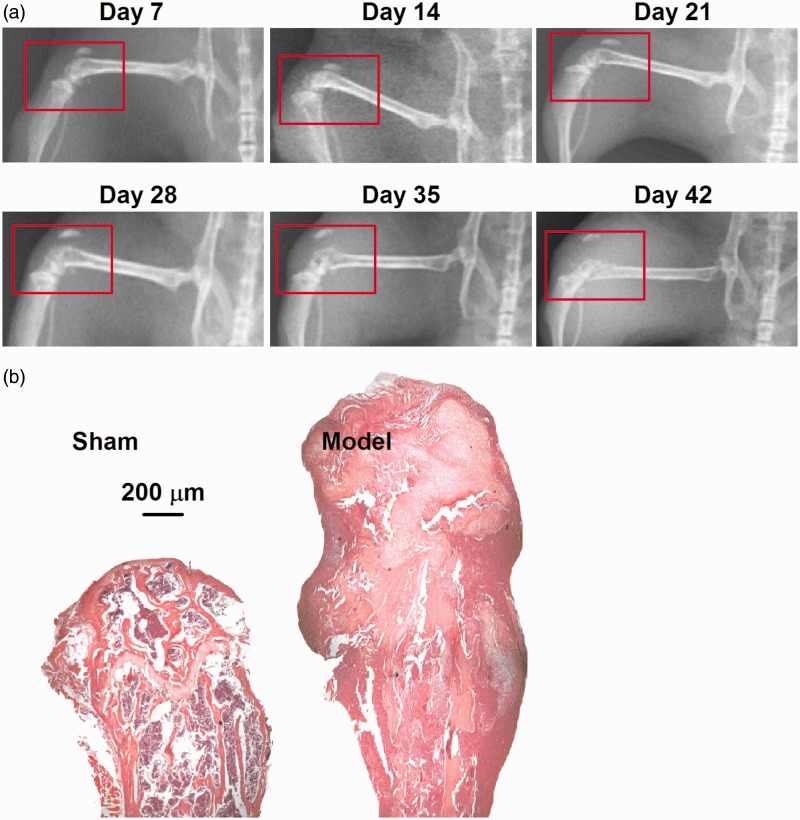
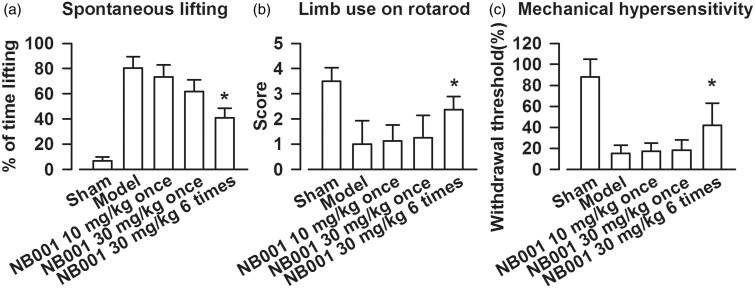
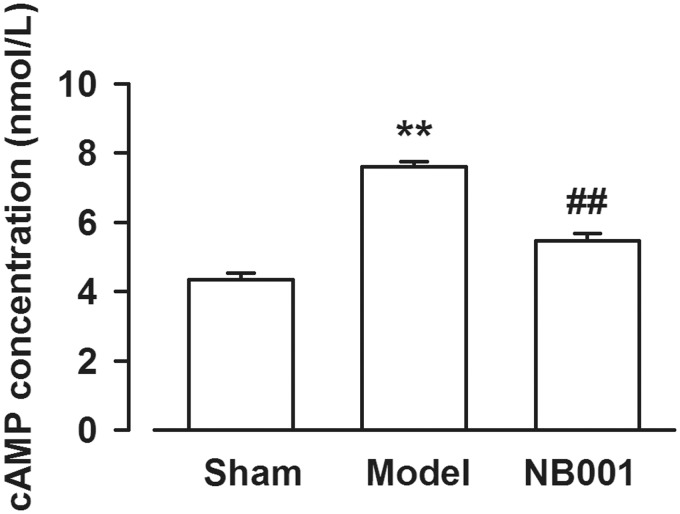
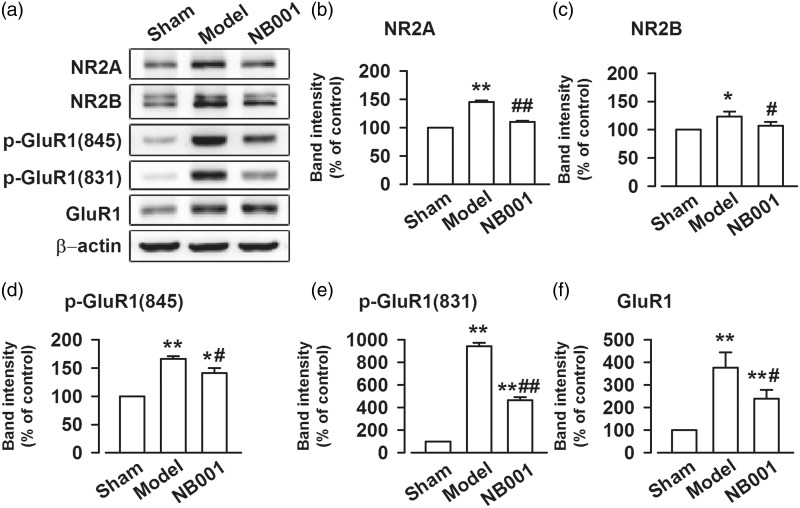
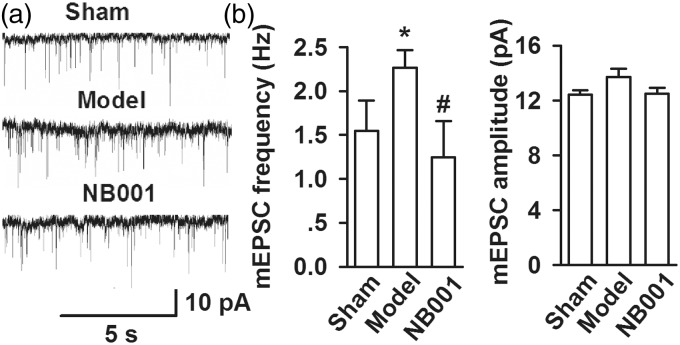
Background: Cancer pain, especially the one caused by metastasis in bones, is a severe type of pain. Pain becomes chronic unless its causes and consequences are resolved. With improvements in cancer detection and survival among patients, pain has been considered as a great challenge because traditional therapies are partially effective in terms of providing relief. Cancer pain mechanisms are more poorly understood than neuropathic and inflammatory pain states. Chronic inflammatory pain and neuropathic pain are influenced by NB001, an adenylyl cyclase 1 (AC1)-specific inhibitor with analgesic effects. In this study, the analgesic effects of NB001 on cancer pain were evaluated. Results: Pain was induced by injecting osteolytic murine sarcoma cell NCTC 2472 into the intramedullary cavity of the femur of mice. The mice injected with sarcoma cells for four weeks exhibited significant spontaneous pain behavior and mechanical allodynia. The continuous systemic application of NB001 (30 mg/kg, intraperitoneally, twice daily for three days) markedly decreased the number of spontaneous lifting but increased the mechanical paw withdrawal threshold. NB001 decreased the concentrations of cAMP and the levels of GluN2A, GluN2B, p-GluA1 (831), and p-GluA1 (845) in the anterior cingulate cortex, and inhibited the frequency of presynaptic neurotransmitter release in the anterior cingulate cortex of the mouse models. Conclusions: NB001 may serve as a novel analgesic to treat bone cancer pain. Its analgesic effect is at least partially due to the inhibition of AC1 in anterior cingulate cortex.
Overview
The claims and statistics of this paper haven’t been checked yet.
Free: it reads the open-access text and checks the first 5 claims that cite a source we can check. Create a free account to check every claim.
Integrity signals
Registry
Cites
Statistics
Figures
Verification
Claims the paper makes
The claims and statistics of this paper haven’t been checked yet.
Free: it reads the open-access text and checks the first 5 claims that cite a source we can check. Create a free account to check every claim.
Claims other papers make about this one
Each is checked against this paper’s own text: does it say what the citing paper says it does?
In the citing paper
“Furthermore, recent studies have demonstrated the involvement of AC1 in bone cancer (230), models of diabetic neuropathy pain (231, 232), migraine (233), and visceral pain (234, 235).”
From Physiological roles of mammalian transmembrane adenylyl cyclase isoforms (2022) · cites this paper as [230]
Self-check
Percentages, sums and reported differences re-computed from the paper’s own numbers.
The self-check needs the paper’s full text.
Citations
Cites
Quantitative assessment of tactile allodynia in the rat paw
Chaplan, S. R., Bach, F. W., Pogrel, J. W., Chung, J. M., & Yaksh, T. L. (1994) · Journal of Neuroscience Methods · doi:10.1016/0165-0270(94)90144-9 · Cited by 7,697 · cited 2×
“Paw withdrawal thresholds in response to probing with calibrated von Frey filaments were determined in the manner described by Chaplan et al.21 Mice were kept in suspended cages with wire mesh floors and the von Frey filament applied perpendicularly to the plantar surface of the ipsilateral paw until it buckled slight…”
MethodCentral sensitization: a generator of pain hypersensitivity by central neural plasticity
Latremoliere, A., & Woolf, C. J. (2009) · The Journal of Pain · doi:10.1016/j.jpain.2009.06.012 · Cited by 3,913
Efficient Analysis of Experimental Observations
Dixon, W. J. (1980) · Annual Review of Pharmacology and Toxicology · doi:10.1146/annurev.pa.20.040180.002301 · Cited by 2,208 · cited 2×
“The 50% paw withdrawal threshold was determined by the non-parametric method of Dixon.(22)”
MethodFRACTIONATION AND CHARACTERIZATION OF A CYCLIC ADENINE RIBONUCLEOTIDE FORMED BY TISSUE PARTICLES
Sutherland, E. W., & Rall, T. W. (1958) · Journal of Biological Chemistry · doi:10.1016/s0021-9258(19)77423-7 · Cited by 1,076
Neurochemical and Cellular Reorganization of the Spinal Cord in a Murine Model of Bone Cancer Pain
Schwei, M. J., Honore, P., Rogers, S. D., Salak-Johnson, J. L., Finke, M. P., Ramnaraine, M. L., Clohisy, D. R., & Mantyh, P. W. (1999) · The Journal of Neuroscience · doi:10.1523/jneurosci.19-24-10886.1999 · Cited by 516 · cited 1×
“We examined the potential analgesic effects of the AC1 inhibitor NB001 on bone cancer pain by using a mouse model.(18) We found that the continuous systemic application of an increased dose of NB001 (30mg/kg, intraperitoneal (ip), twice per day for three days) can effectively decrease the concentrations of cAMP, GluN2…”
MethodRoles of NMDA NR2B Subtype Receptor in Prefrontal Long-Term Potentiation and Contextual Fear Memory
Zhao, M.-G., Toyoda, H., Lee, Y.-S., Wu, L.-J., Ko, S. W., Zhang, X.-H., Jia, Y., Shum, F., Xu, H., Li, B.-M., et al. (2005) · Neuron · doi:10.1016/j.neuron.2005.08.014 · Cited by 495 · cited 1×
“On the day 29 after the surgery, the brains were removed and coronal brain slices (300 mm) containing the ACC were prepared as described previously.(23) Experiments were performed in a recording chamber on the stage of an Axioskop 2FS microscope (Zeiss, Oberkochen, Germany) with infrared differential interference cont…”
MethodSelf-citationIsoforms of Mammalian Adenylyl Cyclase: Multiplicities of Signaling
Sunahara, R. K. (2002) · Molecular Interventions · doi:10.1124/mi.2.3.168 · Cited by 406 · cited 1×
“Among these ACs, AC isoforms 1–9 are present in the brain.(31,32) Two of these isoforms, namely, AC1 and AC8, are activated by calcium via a calcium-binding protein calmodulin.”
BackgroundPain and Nociception: Mechanisms of Cancer-Induced Bone Pain
Falk, S., & Dickenson, A. H. (2014) · Journal of Clinical Oncology · doi:10.1200/jco.2013.51.7219 · Cited by 352 · cited 1×
“pain) and inflammatory environmental stimuli (inflammatory pain).(1,2) Classic treatment approaches for bone cancer pain are usually combined with analgesic drugs and radiotherapy, but the overall efficiency is less than satisfactory.”
BackgroundNeural Mechanisms Underlying Anxiety–Chronic Pain Interactions
Zhuo, M. (2016) · Trends in Neurosciences · doi:10.1016/j.tins.2016.01.006 · Cited by 341
Self-citationBleakman, D., Alt, A., & Nisenbaum, E. S. (2006) · Seminars in Cell & Developmental Biology · doi:10.1016/j.semcdb.2006.10.008 · Cited by 283 · cited 1×
“Furthermore, ionotropic glutamate receptor channels play an important role in the transmission of pain signals.(9) Peripheral pain stimulation prompts the release of presynaptic glutamate in the CNS; as a result, postsynaptic ionotropic glutamate receptor channels open and promote calcium influx.”
Background
Cited by
The Medial Prefrontal Cortex as a Central Hub for Mental Comorbidities Associated with Chronic Pain
Kummer, K. K., Mitrić, M., Kalpachidou, T., & Kress, M. (2020) · International Journal of Molecular Sciences · doi:10.3390/ijms21103440 · Cited by 158
cAMP-PKA/EPAC signaling and cancer: the interplay in tumor microenvironment
Zhang, H., Liu, Y., Liu, J., Chen, J., Wang, J., Hua, H. M., & Jiang, Y. (2024) · Journal of Hematology & Oncology · doi:10.1186/s13045-024-01524-x · Cited by 172
“Another adenylate cyclase 1 inhibitor, NB-001, has analgesic effect on cancer pain [347].”
BackgroundPhysiological roles of mammalian transmembrane adenylyl cyclase isoforms
Ostrom, K. F., LaVigne, J. E., Brust, T. F., Seifert, R., Dessauer, C. W., Watts, V. J., & Ostrom, R. S. (2022) · Physiological Reviews · doi:10.1152/physrev.00013.2021 · Cited by 131
NMDA receptors and synaptic plasticity in the anterior cingulate cortex
Chen, Q., Li, X., & Zhuo, M. (2021) · Neuropharmacology · doi:10.1016/j.neuropharm.2021.108749 · Cited by 90
“In addition, an inhibitor of the adenylyl cyclase subtype 1 (AC1) - NB001- caused analgesic effects on bone cancer pain by inhibiting the presynaptic release and postsynaptic signaling pathway in the ACC of the mouse models (Kang et al., 2016).”
Self-citationKoga, K., Shimoyama, S., Yamada, A., Furukawa, T., Nikaido, Y., Furue, H., Nakamura, K., & Ueno, S. (2018) · Molecular Pain · doi:10.1177/1744806918783478 · Cited by 58
Anxiolytic effect of CPEB1 knockdown on the amygdala of a mouse model of inflammatory pain
Yue, J., Wang, X., Guo, Y., Zheng, K.-Y., Liu, H., Hu, L., Zhao, M., & Liu, S. (2017) · Brain Research Bulletin · doi:10.1016/j.brainresbull.2017.12.002 · Cited by 52
Self-citationCortical plasticity as synaptic mechanism for chronic pain
Zhuo, M. (2019) · Journal of Neural Transmission · doi:10.1007/s00702-019-02071-3 · Cited by 47
Self-citationNeuronal Adenylyl Cyclase Targeting Central Plasticity for the Treatment of Chronic Pain
Li, X., Chen, Q., & Zhuo, M. (2020) · Neurotherapeutics · doi:10.1007/s13311-020-00927-1 · Cited by 42
“The upregulation of cAMP, GluN2A, GluN2B, p-GluA1 (Ser831), p-GluA1 (Ser845), and GluA1 were decreased by NB001 in bone cancer pain mice [74].”
BackgroundSelf-citationKaur, J. P., Soto‐Velasquez, M., Ding, Z. J., Ghanbarpour, A., Lill, M. A., van Rijn, R. M., Watts, V. J., & Flaherty, D. P. (2018) · European Journal of Medicinal Chemistry · doi:10.1016/j.ejmech.2018.11.036 · Cited by 37
Wnt5b/Ryk-mediated membrane trafficking of P2X3 receptors contributes to bone cancer pain
He, J., Wang, X., Liang, C., Yao, X., Zhang, Z., Yang, R., & Fang, D. (2020) · Experimental Neurology · doi:10.1016/j.expneurol.2020.113482 · Cited by 29
Novel treatments for chronic pain: moving beyond opioids
O’Brien, J. B., & Roman, D. L. (2021) · Translational research · doi:10.1016/j.trsl.2021.03.008 · Cited by 23
Li, Y., Li, C., Chen, Q., Hao, S., Mao, J., Zhang, W., Han, X., Zhao, D. H., Liu, R., Tang, W., et al. (2024) · The Journal of Headache and Pain · doi:10.1186/s10194-024-01778-3 · Cited by 17
Self-citationWang, W., Chen, Q., Zhao, P., Zhong, J., Wang, Y., Li, X., Zhuo, M., & Chen, X. (2022) · Molecular Pain · doi:10.1177/17448069221089596 · Cited by 16
Self-citationZhou, Z., Shi, W., Fan, K., Xue, M., Zhou, S.-B., Chen, Q., Lu, J.-S., Li, X., & Zhuo, M. (2021) · Molecular Pain · doi:10.1177/17448069211021698 · Cited by 16
“As an AC1 inhibitor, NB001 is known to produce analgesic effects in different pain models.(15,17,31,32) However, there is limited information about female.”
BackgroundSelf-citationZhang, W., Cao, H., Li, Y., Fu, X., & Zhang, Y. (2022) · JCI Insight · doi:10.1172/jci.insight.153191 · Cited by 15
“Systemic administration of AC1 inhibitor antagonized neuropathic, inflammatory, and cancer pain (17, 58).”
Toward the unknown: consciousness and pain
Ambron, R. T. (2023) · Neuroscience of Consciousness · doi:10.1093/nc/niad002 · Cited by 17
Inhibiting neuronal AC1 for treating anxiety and headache in the animal model of migraine
Liu, R.-H., Zhang, M., Xue, M., Wang, T., Lu, J.-S., Li, X., Chen, Y., Fan, K., Shi, W., Zhou, S.-B., et al. (2023) · iScience · doi:10.1016/j.isci.2023.106790 · Cited by 13
“891, unpaired t test; M-1d: t (32) = 2.”
Self-citationCortical LTP: A Synaptic Model for Chronic Pain
Zhuo, M. (2018) · Advances in experimental medicine and biology · doi:10.1007/978-981-13-1756-9_13 · Cited by 13
Self-citationKim, K., Nan, G., Bak, H., Kim, H. Y., Kim, J., Cha, M., & Lee, B. H. (2024) · Neurobiology of Disease · doi:10.1016/j.nbd.2024.106466 · Cited by 9
“It has been reported that the AMPAR and NR2B antagonists induces analgesic effects on neuropathic pain and reduces behavioral sensitization (Kang et al., 2016; Pedersen and Gjerstad, 2008; Qiu et al., 2013; Qu et al., 2009), and these results are consistent with our present study.”
ResultAmbron, R. T. (2024) · Frontiers in Human Neuroscience · doi:10.3389/fnhum.2024.1462211 · Cited by 9
“In addition, injecting an AC-1 inhibitor directly into the mouse ACC alleviated chronic inflammatory pain without an effect on anxiety or fear (Kang et al., 2016).”
BackgroundDualism, Materialism, and the relationship between the brain and the mind in experiencing pain
Ambron, R. T. (2024) · Neuroscience · doi:10.1016/j.neuroscience.2024.10.017 · Cited by 6
Zhou, Z., Chen, Q., Zhuo, M., & Xu, P. (2024) · Molecular Pain · doi:10.1177/17448069241266683 · Cited by 4
Self-citationCortical Tagged Synaptic Long-Term Depression in the Anterior Cingulate Cortex of Adult Mice
Liu, W., Chen, Q., Li, X., Zhou, Z., & Zhuo, M. (2024) · Journal of Neuroscience · doi:10.1523/jneurosci.0028-24.2024 · Cited by 4
Self-citationShi, W., Chen, Q., Ma, Y., Wan, J., Li, X., & Zhuo, M. (2024) · Molecular Brain · doi:10.1186/s13041-024-01083-9 · Cited by 4
Self-citationExperiencing pain: electromagnetic waves, consciousness, and the mind
Ambron, R. T. (2025) · Frontiers in Human Neuroscience · doi:10.3389/fnhum.2025.1568019 · Cited by 4
Synergistic Interplay of Stimulatory Cofactors in the Activation of Adenylyl Cyclase Isoform 1
Li, T., Krishnan, S., Hicks, T., & Li, J. (2025) · The Journal of Physical Chemistry B · doi:10.1021/acs.jpcb.5c04367 · Cited by 1
Li, Y., Li, C., Chen, Q.-Y., Hao, S., Mao, J., Zhang, W., Han, X., Dong, Z., 刘若卓, Tang, W., et al. (2024) · Figshare · doi:10.6084/m9.figshare.26722047
Self-citationLi, Y., Li, C., Chen, Q.-Y., Hao, S., Mao, J., Zhang, W., Han, X., Dong, Z., 刘若卓, Tang, W., et al. (2024) · Figshare · doi:10.6084/m9.figshare.26722050
Self-citationLi, Y., Li, C., Chen, Q.-Y., Hao, S., Mao, J., Zhang, W., Han, X., Dong, Z., 刘若卓, Tang, W., et al. (2024) · Figshare · doi:10.6084/m9.figshare.26722053
Self-citationLi, X.-Q., Wu, S., Sun, R.-L., Li, W., Yang, Y., Liao, X.-W., Huang, Z.-Y., Zhang, J.-W., & Sun, F. (2026) · Regional Anesthesia & Pain Medicine · doi:10.1136/rapm-2026-107766
Self-citationPositive Feedback Mechanisms in Pain Modulation and Chronic Pain
Zhuo, M. (2026) · European Journal of Neuroscience · doi:10.1111/ejn.70679
“Calcium-stimulated AC1 is shown to be critical for such forms of potentiation in case of chronic neuropathic pain, visceral pain, cancer pain, inflammatory pain and headaches (Wang et al. 2011; Zhuo 2012; Kang et al. 2016; Li et al. 2020; Liu, Xue, et al. 2020).”
Self-citationBindingDB Entry 50008650: Optimization of a 1,3,4-oxadiazole series for inhibition of Ca
BindingDB (2021) · UC San Diego · doi:10.7270/q23x8b2x
Metadata
- Authors
- Kang, W.-B., Yang, Q., Guo, Y.-Y., Wang, L., Wang, D.-S., Cheng, Q., Li, X.-M., Tang, J., Zhao, J.-N., Liu, G., Zhuo, M., & Zhao, M.-G.
- Affiliations
- Department of Orthopedics, Nanjing General Hospital of Nanjing Military Command, Second Military Medical University, Nanjing, China
- Air Force Medical University (CN)
- Department of Pharmacology, School of Pharmacy, Fourth Military Medical University, Xi’an, China
- Second Military Medical University (CN)
- University of Toronto (CA)
- Xi'an Jiaotong University (CN)
- Corresponding author
- Zhao, Ming-gao
- Venue
- Molecular Pain
- Publisher
- SAGE Publications
- Published
- 2016-01
- Volume
- 12
- ISSN
- 1744-8069 (ISSN-L)
- PMC
- PMC5019365
- OpenAlex
- W2509586699
- Cited by
- 32
- References
- 36
- Citations by year
- 2026: 2 · 2025: 3 · 2024: 11 · 2023: 2 · 2022: 1 · 2021: 5 · 2020: 3 · 2019: 1 · 2018: 3 · 2017: 1
- FWCI
- 1.34
- Type
- journal article
- Language
- en
- Open access
- gold
- doi.org
- Licence
- cc-by-nc
- journals.sagepub.com/page/policies/text-and-data-mining-license (tdm)
- Locations
- Molecular Pain (publishedVersion, cc-by-nc)
- PubMed Central (publishedVersion, cc-by-nc)
- PubMed (publishedVersion)
- DOAJ (DOAJ: Directory of Open Access Journals) (submittedVersion, cc-by-sa)
- Topics
- Health Sciences › Medicine › Physiology (medical) › Pain Mechanisms and Treatments
- Health Sciences › Medicine › Anesthesiology and Pain Medicine › Pain Management and Opioid Use
- Health Sciences › Medicine › Anesthesiology and Pain Medicine › Pain Management and Treatment
- Keywords
- bone cancer pain, chronic pain, mechanical allodynia, anterior cingulate cortex, cAMP signaling, NMDA receptor subunits, presynaptic neurotransmitter release, analgesic effect
- MeSH terms
- Cancer Pain, Cyclic AMP, Adenosine Triphosphate, Analgesics, Animals, Bone Neoplasms, Disease Models, Animal, Follow-Up Studies, Gyrus Cinguli, Hyperalgesia, Male, Motor Activity, Sarcoma, Sarcoma, Experimental, Signal Transduction, Receptors, N-Methyl-D-Aspartate, Pain Threshold, Excitatory Postsynaptic Potentials, Cell Line, Tumor, Mice
About these checks
Registry, retraction, Cites and statistics results are computed, not judged, with one exception: a printed reference that no index lists is read once by a model before it counts as a citation error. Claims are extracted by a model and kept only when their quote appears verbatim in the text; each cited source is then checked, with a model’s help, for whether it says what the claim relies on. Those verdicts can be wrong — read the claim’s quote and the cited source before relying on one.
Statistics and arithmetic are recomputed, not judged.
Confidence bands are shown only for fields calibrated on our annotated test set. None is calibrated yet, so no band is shown.
What counts as a claim ›How we measure confidence ›How we check this ›
Are you an author, or do you see a problem with this page? Request a review
Data sources
Bibliographic data: Semantic Scholar, OpenAlex, Crossref.
Contains information from the Semantic Scholar Academic Graph Datasets, made available under the ODC Attribution License (ODC-BY 1.0).
Semantic Scholar’s data is described in: Kinney, R., et al. (2023). The Semantic Scholar Open Data Platform. arXiv:2301.10140.
