

The DOI matches its Crossref record; 4 of the 4 references it cites were found in a registry or an index.
Navigating challenges in access to antenatal and intrapartum care: Afghan refugee women’s experiences amidst the COVID-19 pandemic in Pakistan
Open accessAbstract
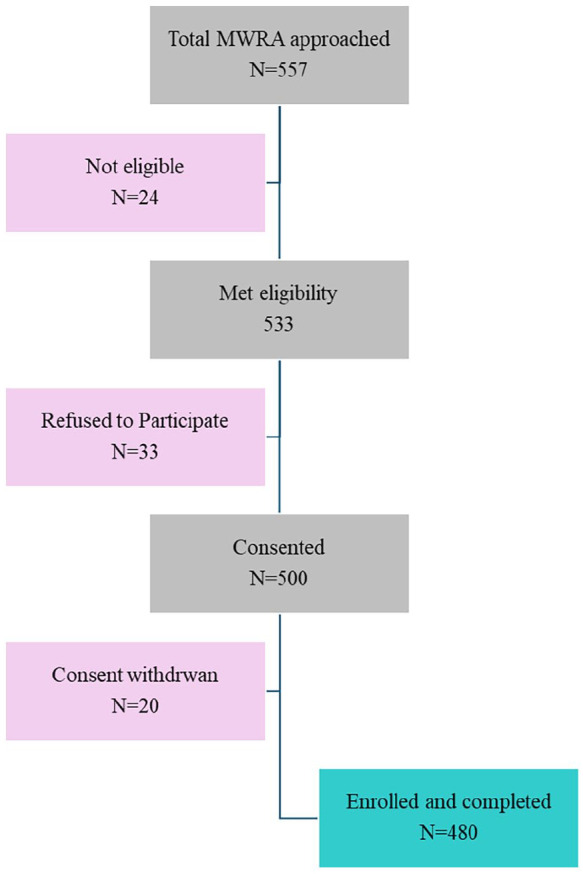
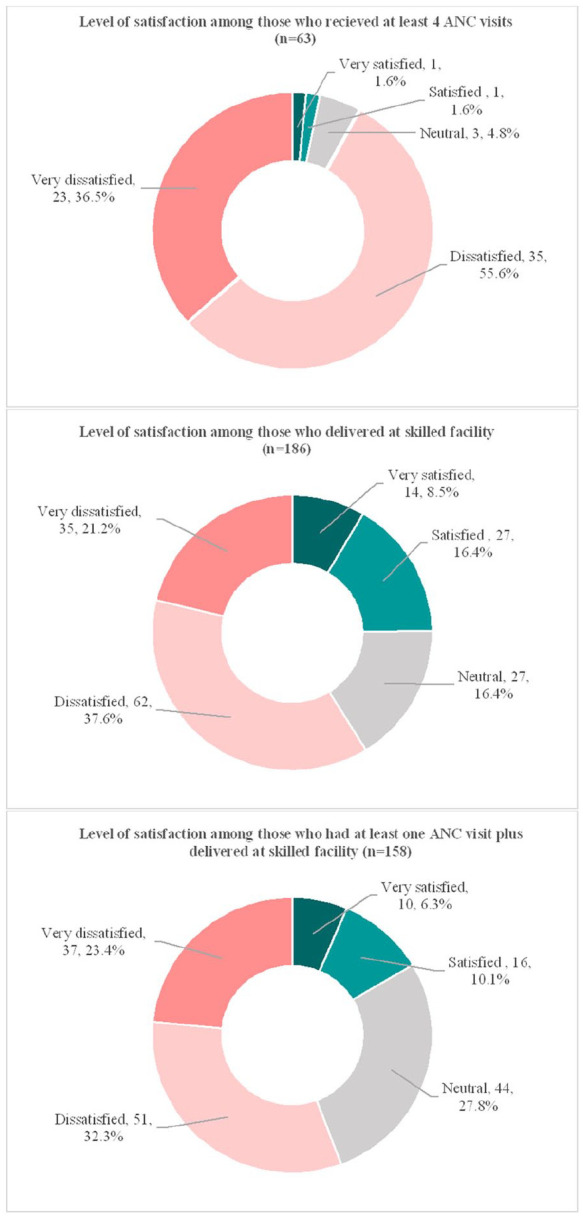
Background: Balochistan, Pakistan’s most economically and health system-deprived province, hosts a significant portion of the Afghan refugee population. The province’s already fragile healthcare infrastructure faces additional strain due to the refugees. Objective: This study aimed to investigate the barriers to antenatal and intrapartum care seeking among Afghan refugee women in Balochistan during the Coronavirus disease 2019 (COVID-19) pandemic. Design: This study employed a cross-sectional survey approach to assess antenatal and intrapartum care-seeking behavior among Afghan refugee women residing in Balochistan, Pakistan. The study focused on refugee women living in Kharotabad Union Council in Quetta city to understand their barriers to accessing maternal healthcare services. Methods: The survey focused on antenatal and childbirth care-seeking behaviors among married women of reproductive age (MWRA) with at least one child aged 12–23 months born during the first four waves of COVID-19 in Pakistan. Results: Of 480 MWRAs, only 36.9% sought antenatal care (ANC); only 13.1% received at least four ANC visits. Furthermore, only 38.8% of MWRA had skilled birth attendance. Only 32.9% of MWRAs received at least one ANC and had skilled birth attendance (i.e., comprehensive care). Accessing comprehensive care was associated with maternal age less than 25 years (adjusted odds ratio (OR): 0.40; 95% confidence interval (CI): 0.21, 0.78), Tajik ethnicity (adjusted OR: 0.40; 95% CI: 0.23, 0.70) and large family size (adjusted OR: 0.58; 95% CI: 0.37, 0.93). Predictors of poor access were concern related to documentation of the refugee women they faced (adjusted OR: 1.52; 95% CI: 1.00, 2.34), women with no one at household to accompany them at health facility (adjusted OR: 1.75; 95% CI: 1.13, 2.70), myths and misconceptions related to available care (adjusted OR: 1.89; 95% CI: 1.18, 3.02), and the transport availability (adjusted OR: 1.76; 95% CI: 1.12, 2.77). Concerns related to COVID-19 had no association. Conclusion: The study highlights the barriers to maternal, neonatal and child health service utilization among Afghan refugee women in Balochistan. Tailoring healthcare services to consider age, ethnicity, cultural dynamics, and system constraints is crucial for improving access.
Overview
The claims and statistics of this paper haven’t been checked yet.
Run the check — free, no account needed. It reads the open-access text and checks the sources it cites.
Integrity signals
Registry
Cites
Statistics
Figures
Verification
Claims the paper makes
The claims and statistics of this paper haven’t been checked yet.
Run the check — free, no account needed. It reads the open-access text and checks the sources it cites.
Claims other papers make about this one
Each is checked against this paper’s own text: does it say what the citing paper says it does?
The cited source doesn’t support the claim as written.
In the citing paper
“and in refugee settings specifically [33].”
From Predictors of antenatal care utilization among the Rohingya population in the refugee camps of Cox's Bazar, Bangladesh (2025) · cites this paper as [33]
Checked by a reasoning model — may be wrong.
Experimental — accuracy not yet measured
Self-check
Percentages, sums and reported differences re-computed from the paper’s own numbers.
The self-check needs the paper’s full text.
Citations
Cites
Filip, R., Gheorghita Puscaselu, R., Anchidin-Norocel, L., Dimian, M., & Savage, W. K. (2022) · Journal of Personalized Medicine · doi:10.3390/jpm12081295 · Cited by 802
Sarker, M., Saha, A., Matin, M., Mehjabeen, S., Tamim, M. A., Sharkey, A. B., Kim, M., Nyankesha, E. U., Widiati, Y., & Shahabuddin, A. S. M. (2020) · PLoS ONE · doi:10.1371/journal.pone.0230732 · Cited by 32
Rawal, L. B., Kanda, K., Biswas, T., Tanim, M. I., Dahal, P. K., Islam, M. R., Huda, T. M. N., Begum, T., Sahle, B. W., Renzaho, A. M. N., et al. (2021) · Global Health Research and Policy · doi:10.1186/s41256-021-00223-1 · Cited by 20 · cited 1×
“62,63 Similarly, Rohingya refugee women in Bangladesh report widespread exclusion from government-run public health facilities, which require documentation of nationality in order to provide maternity services, thereby with-holding life-saving care to undocumented refugees.”
Khan, M. N., Khanam, S. J., & Alam, M. B. (2024) · Journal of Migration and Health · doi:10.1016/j.jmh.2024.100213 · Cited by 10 · cited 1×
“11,12 In sub-Saharan Africa, during public health emergencies like the Ebola outbreak, there was a marked decline in MNCH services, highlighting how conflict and crisis exacerbate health vulnerabilities.”
Research works printed but not linked: 63
- Ali Y, Sabir M, Muhammad N. Refugees and host country nexus: a case study of Pakistan. J Int Migr Integr 2019; 20: 137–53.
- 10.1016/S2214-109X(16)30002-X · DOI
- 10.1186/s12939-016-0399-4 · DOI
- 10.1002/wmh3.231 · DOI
- 10.1111/1758-5899.13156 · DOI
- 10.1016/j.outlook.2014.12.013 · DOI
- 10.5334/aogh.2353 · DOI
- 10.1186/s13031-024-00572-x · DOI
- 10.1186/s13031-022-00465-x · DOI
- Panezaia S, Ahmadb MM, Saqibc SJ. Exploring the reasons for underutilization of primary health care services in Pakistan: a qualitative analysis. PONTE Int J Sci Res 2020; 76(12/1): 19.
- Riaz S, Panezai S. Assessment of the causes and treatment of Female infertility in Quetta, Balochistan, Pakistan. J Obstet Gynaecol Res 2022; 7(1): 1–9.
- 10.1186/s12939-022-01657-w · DOI
- 10.1186/s13031-015-0054-5 · DOI
- National Institute of Population Studies (NIPS) [Pakistan] and ICF. Pakistan Maternal Mortality Survey 2019: Key Indicators Report. Islamabad Pakistan and Rockville Maryland USA: NIPS and ICF [cited 13 November 2023] https://dhsprogram.com/pubs/pdf/PR128/PR128.pdf (2020).
- ICF NI of PS (NIPS) [Pakistan]. Pakistan demographic and health survey 2017–18. National Institute of Population Studies Pakistan ICF [cited 13 November 2023] https://dhsprogram.com/pubs/pdf/FR354/FR354.pdf (2019).
- 10.1186/s12978-021-01307-4 · DOI
- 10.1136/bmjgh-2023-013477 · DOI
- 10.1007/s41649-020-00139-x · DOI
- 10.1371/journal.pone.0287722 · DOI
- 10.1016/S0140-6736(07)61602-X · DOI · Paper page
- 10.1016/S2214-109X(20)30229-1 · DOI
- 10.1371/journal.pone.0281326 · DOI
- 10.1186/s12939-021-01416-3 · DOI
- 10.1016/j.jclinepi.2013.12.010 · DOI
- Hojat M, Louis DZ, Maxwell K, et al. A brief instrument to measure patients’ overall satisfaction with primary care physicians. Fam Med Kans City 2011; 43(6): 412.
- 10.1177/1355819613508381 · DOI
- 10.1371/journal.pone.0217827 · DOI
- 10.1016/S2214-109X(21)00217-5 · DOI
- 10.1186/s12978-021-01309-2 · DOI
- 10.1016/j.jmh.2020.100025 · DOI
- 10.1186/s12889-022-14305-3 · DOI
- Jamal Z, Alameddine M, Diaconu K, et al. Health system resilience in the face of crisis: analysing the challenges, strategies and capacities for UNRWA in Syria. Health Policy Plan 2020; 35(1): 26–35.
- 10.1371/journal.pone.0305234 · DOI
- Silitonga DF, Muljabar H, Umarach MS. Analysis of the significant increase of gender-based violence during the Covid-19 pandemic in the conflict zone: the case of Afghanistan. J Islam World Polit 2022; 6(1): 1–19. · DOI
- Zafar H. Empowering women: NGOs project impacts in Baluchistan-Pakistan. Western Sydney University, 2016.
- 10.1007/978-3-030-50204-1_4 · DOI
- Edgcumbe SL. Between “Small Arms Fire” and Support: How Rural Afghan Women Simultaneously Resist and Reproduce Patriarchal Power Structures in the Hirat and Balkh Provinces of Afghanistan During Winter and Spring 2019. [Internet]. 2019 [cited 21 June 2024]. Available from: https://studenttheses.uu.nl/bitstream/handle/20.500.12932/33861/THESIS.pdf?sequence=2&isAllowed=y
- Azizi N, Delgoshaei B, Aryankhesal A. Barriers and facilitators of providing primary health care to Afghan refugees: a qualitative study from the perspective of health care providers. Med J Islam Repub Iran 2021; 35: 1.
- Panezai S, Ahmed MM, Saqib SE. Gender differences in client satisfaction and its relationship with utilization of primary health care services in Pakistan. J Geogr Soc Sci 2019; 1(1): 30–43.
- 10.1186/s12939-023-01951-1 · DOI
- 10.1186/s12889-024-17916-0 · DOI
- 10.1108/SEAMJ-04-2023-0033 · DOI
- 10.21315/ijaps2022.18.2.8 · DOI
- 10.7189/jogh.08.020309 · DOI · Paper page
- 10.1186/s12939-022-01626-3 · DOI · Paper page
- 10.4103/ijcm.ijcm_985_21 · DOI
- 10.1371/journal.pone.0294225 · DOI
- Ghaffar A, Pongponich S, Ghaffar N, et al. Factors associated with utilization of antenatal care services in Balochistan province of Pakistan: an analysis of the Multiple Indicator Cluster Survey (MICS) 2010. Pak J Med Sci 2015; 31(6): 1447.
- 10.1186/s12884-017-1246-3 · DOI
- 10.1186/s12884-023-05750-y · DOI
- Hameed F, Panezai S, Saqib SE, et al. Assessing the quality, use and determinant of family planning services: the case of Panjgur District, Balochistan. Public Health Res 2021; 11(2): 33–43.
- Ali A, Naseem M, Khalid SN, et al. Assessment of services provided by Lady Health Workers’ (LHWs) at primary health centers at District Quetta, Balochistan. Pak J Public Health 2014; 4(4): 13.
- Ghaffar A, Pongpanich S, Chapman RS, et al. Provision and utilization of routine antenatal care in rural Balochistan Province, Pakistan: a survey of knowledge, attitudes, and practices of pregnant women. J Appl Med Sci 2012; 1(1): 93–24.
- 10.1093/heapol/czg032 · DOI
- Abbas A, Maqsood A, Sehar A. Health facilities in baluchistan and women approach toward health facilities. Int J Adv Biotechnol Res 2018; 9(1): 147–150.
- 10.1186/s12992-015-0117-9 · DOI
- World Health Organization. Delivered by women, led by men: a gender and equity analysis of the global health and social workforce. World Health Organization, 2019.
- 10.1186/1752-1505-9-S1-S4 · DOI
- 10.1146/annurev.publhealth.25.101802.123134 · DOI
- 10.1080/07370016.2018.1404832 · DOI
- 10.2147/RMHP.S70173 · DOI
- Muhammad Q, Eiman H, Fazal F, et al. Healthcare in Pakistan: navigating challenges and building a brighter future. Cureus 2023; 15(6): e40218.
- 10.15171/ijhpm.2018.53 · DOI
Cited by
Sorted by citations
Simon, D., Michael, D., Rahman, M. S., Hiott, M. C., Rahim, A., Sanin, K. I., Tofail, F., & Wuermli, A. J. (2025) · Conflict and Health · doi:10.1186/s13031-025-00733-6 · Cited by 2
“Given the timing of the pregnancies reported on in this study it is important to note that there was a marked decline in ANC utilization during the COVID-19 pandemic in Bangladesh more generally [32], and in refugee settings specifically [33].”
Metadata
- Authors
- Shafiq, Y., Muhammad, A., Suhag, Z. H., Tahir, R., Jan, A., Atiq, H., Khakwani, S., Ahmed, M., Eva, D., Ragazzoni, L., Barone-Adesi, F., & Valente, M.
- Affiliations
- Aga Khan University (PK)
- Vital Pakistan Trust (PK)
- Trust for Vaccines & Immunization (PK)
- Università degli Studi del Piemonte Orientale “Amedeo Avogadro” (IT)
- CRIMEDIM–Center for Research and Training in Disaster Medicine, Humanitarian Aid and Global Health, Università del Piemonte Orientale, Novara, Italy
- Corresponding author
- Shafiq, Yasir
- Venue
- Women's Health
- Publisher
- SAGE Publications
- Published
- 2025-06-24
- Volume
- 21
- Pages
- 17455057251347081-17455057251347081
- ISSN
- 1745-5057 (ISSN-L)
- 1745-5065
- PMC
- PMC12188067
- OpenAlex
- W4411597475
- Cited by
- 5
- References
- 4
- Citations by year
- 2026: 3 · 2025: 2
- FWCI
- 7.61
- Type
- journal article
- Language
- en
- Open access
- gold
- doi.org
- Licence
- Locations
- Women s Health (publishedVersion, cc-by-nc)
- Europe PMC (PubMed Central) (publishedVersion, cc-by-nc)
- PubMed Central (publishedVersion, cc-by-nc)
- PubMed (publishedVersion)
- eCommons - AKU (Aga Khan University) (submittedVersion)
- DOAJ (DOAJ: Directory of Open Access Journals) (submittedVersion, cc-by-sa)
- Topics
- Health Sciences › Medicine › Pediatrics, Perinatology and Child Health › Global Maternal and Child Health
- Social Sciences › Psychology › Clinical Psychology › Migration, Health and Trauma
- Health Sciences › Medicine › Pediatrics, Perinatology and Child Health › Maternal and Neonatal Healthcare
- Keywords
- prenatal care, intrapartum care, access to maternal health services, COVID-19 pandemic, skilled birth attendance, barriers to care, refugee documentation, myths and misconceptions, maternal age, family size, Balochistan, Quetta, obstetric care
- MeSH terms
- COVID-19, SARS-CoV-2, Adolescent, Adult, Afghanistan, Cross-Sectional Studies, Female, Health Services Accessibility, Humans, Maternal Health Services, Pakistan, Patient Acceptance of Health Care, Pregnancy, Prenatal Care, Refugees, Young Adult, Pandemics
About these checks
Registry, retraction, Cites and statistics results are computed, not judged, with one exception: a printed reference that no index lists is read once by a model before it counts as a citation error. Claims are extracted by a model and kept only when their quote appears verbatim in the text; each cited source is then checked, with a model’s help, for whether it says what the claim relies on. Those verdicts can be wrong — read the claim’s quote and the cited source before relying on one.
Statistics and arithmetic are recomputed, not judged.
Confidence bands are shown only for fields calibrated on our annotated test set. None is calibrated yet, so no band is shown.
What counts as a claim ›How we measure confidence ›How we check this ›
Are you an author, or do you see a problem with this page? Request a review
How to cite
Cite CoChat for the checks on this page, and the paper for its own findings.
- This page
- CoChat. (2026). Citation check: Navigating challenges in access to antenatal and intrapartum care: Afghan refugee women’s experiences amidst the COVID-19 pandemic in Pakistan. https://app.cochat.ai/papers/10.1177/17455057251347081
- The paper
- Shafiq, Y., Muhammad, A., Suhag, Z. H., Tahir, R., Jan, A., Atiq, H., Khakwani, S., Ahmed, M., Eva, D., Ragazzoni, L., Barone-Adesi, F., & Valente, M. (2025). Navigating challenges in access to antenatal and intrapartum care: Afghan refugee women’s experiences amidst the COVID-19 pandemic in Pakistan. Women's Health. https://doi.org/10.1177/17455057251347081
