

Anti-inflammatory role of glucagon-like peptide 1 receptor agonists and its clinical implications
Open accessThe DOI matches its Crossref record; 116 of the 116 references it cites were found in a registry or an index; 78 of the 118 sources its claims cite were checked for support.
Abstract
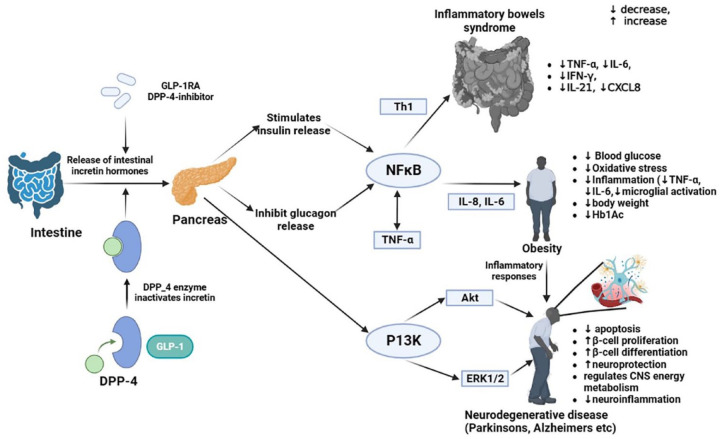
Glucagon-like peptide 1 receptor agonists (GLP-1RAs) have emerged as promising therapeutic agents with potent anti-inflammatory properties and diverse clinical implications. This in-depth review article explores the mechanisms behind the anti-inflammatory actions of GLP-1RAs and assesses their prospective applicability in a wide range of disease scenarios. The current review establishes the significance of comprehending the anti-inflammatory role of GLP-1RAs and identifies pertinent research gaps. A concise overview of inflammation and its clinical consequences underscores the critical need for effective anti-inflammatory interventions. Subsequently, the article elucidates the intricate mechanisms through which GLP-1RAs modulate immune cell signaling and regulate the nuclear factor-kappa B (NF-κB) pathway. Detailed discussions encompass their impact on inflammatory responses, cytokine production, and attenuation of oxidative stress. The exposition is substantiated by a collection of pertinent examples and an extensive array of references from both preclinical and clinical investigations. The historical trajectory of GLP-1RA drugs, including exenatide, lixisenatide, liraglutide, and semaglutide, is traced to delineate their development as therapeutic agents. Moreover, the review emphasizes the therapeutic potential of GLP-1RAs in specific disease contexts like type 2 diabetes, a neurodegenerative disorder, and inflammatory bowel disease (IBD), shedding light on their anti-inflammatory effects through rigorous examination of preclinical and clinical studies. The article also provides an outlook on future perspectives for GLP-1RAs, encompassing the domains of diabetes, neurodegenerative diseases, and IBD. In conclusion, GLP-1RAs exhibit substantial anti-inflammatory effects, rendering them promising therapeutic agents with broad clinical implications. They are very useful in a wide variety of diseases because they regulate immunological responses, block NF-κB activation, and decrease production of pro-inflammatory cytokines. Ongoing research endeavors aim to optimize their therapeutic use, delineate patient-specific treatment paradigms, and explore novel therapeutic applications. GLP-1RAs represent a significant breakthrough in anti-inflammatory therapy, offering novel treatment options, and improved patient outcomes.
Overview
CoChat Summary
TL;DR
This review argues that GLP-1 receptor agonists (GLP-1RAs) have anti-inflammatory effects beyond glucose lowering, acting through immune-cell signaling, NF-κB suppression, oxidative stress reduction, and related pathways. It concludes that these drugs show promise across type 2 diabetes, neurodegenerative disease, and inflammatory bowel disease, but emphasizes that more long-term and disease-specific evidence is needed.
Key findings
- The review identifies several anti-inflammatory mechanisms for GLP-1RAs: suppression of pro-inflammatory cytokines such as TNF-α, IL-6, and IL-1β; increased IL-10; inhibition of NF-κB; activation of AMPK; and reduction of reactive oxygen species.
- In diabetes-related studies, liraglutide and semaglutide improved glycemic outcomes and were also linked to inflammation reductions; for example, liraglutide reduced the mean CRP concentration in a retrospective study of obese individuals with T2DM, and semaglutide significantly reduced hs-CRP in people with T2D and cardiovascular disease.
- In obesity/weight-loss trials cited in the review, liraglutide 3.0 mg in the SCALE study produced dose-responsive weight loss of 6.0 to 8.8 kg, versus 0.2 to 3.0 kg with placebo; in another trial, exenatide plus lifestyle change led to −6.2 ± 0.5 kg versus −4.0 ± 0.5 kg with lifestyle plus placebo.
- For neurodegenerative disease, the review cites a preliminary clinical trial in Parkinson’s disease where exenatide improved patients by 2.7 points on the MDS-UPDRS after 12 months, compared with a 2.2-point decline in controls, and a pilot study in 45 individuals with mild PD using single-blind design.
Methods
- Narrative review of preclinical and clinical literature on GLP-1RAs and inflammation, with disease-focused discussion spanning diabetes, neurodegenerative disorders, and inflammatory bowel disease.
- The paper synthesizes examples from animal models, cell studies, retrospective studies, and clinical trials; specific cited studies include obese individuals with T2DM, AD and PD patients, and IBD models/patients.
- Main analysis is qualitative/mechanistic: the review organizes evidence by pathways and disease contexts rather than performing a meta-analysis or pooled quantitative synthesis.
Limitations
- The paper states that there is limited long-term data on the anti-inflammatory effects of GLP-1RAs across diseases and that these drugs have not yet been tested for long-term effectiveness and safety in terms of inflammation.
- It also states that further studies are necessary to determine optimal dosage schedules, treatment periods, and the best combinations with other therapies.
- Evident from the text: this is a review rather than an original study, so its conclusions depend on the quality and heterogeneity of the cited studies; the paper itself notes that responses may vary by disease severity, comorbidities, and patient characteristics.
Model-written summary. Check it against the paper before relying on it.
Integrity signals
Registry
Cites
Statistics
Figures
Verification
Claims the paper makes
65 Valid · 10 Not valid · 35 Not checked · 26 Own results and interpretations
At least one cited source doesn’t support this claim or points to a different paper, and none confirmed it — see the verdicts below.
In the paper
“Restoring NF-κB activity reversed cytokine-induced reductions in eNOS (NOS3) mRNA levels.”
§ Anti-inflammatory role of glucagon-like peptide 1 receptor agonists and its clinical implications > Regulation of nuclear factor-kappa B pathway
What the sources say
- Disputedcites [41] Hattori Y Jojima T Tomizawa A, et al. A glucagon-like peptide-1 (GLP-1) analogue, liraglutide, upregulates nitric oxide production and exerts anti-inflammatory action in endothelial cells. Diabetologia 2010; 53: 2256– 2263. 20593161 sourceExperimental — accuracy not yet measured
The Results section (page unavailable) reports that inhibiting NF-κB partially prevented the TNFα-induced reduction in eNOS mRNA. It also reports that liraglutide attenuated that reduction; the paper says suppression, not restoration, of NF-κB activity accompanied this effect. (LLM, conf=0.88)
Checked by a reasoning model — may be wrong.
plainstates a cause- Asserted: passes — The authors put it forward as true.
- Checkable: passes — It can be checked against evidence.
- Load-bearing: unclear — It is unclear whether the paper’s conclusions depend on it.
- Based: passes — The paper gives a reason why it holds.
- Disputed
At least one cited source doesn’t support this claim or points to a different paper, and none confirmed it — see the verdicts below.
In the paper
“Recorded clinical data in 2019 demonstrated that liraglutide, a specific GLP-1RA, effectively diminishes adiposity and overall body fat by enhancing lipolysis among patients with T2DM who are obese. 76”
§ Anti-inflammatory role of glucagon-like peptide 1 receptor agonists and its clinical implications > Impact of GLP1-RAs on diabetes and inflammation
What the sources say
- Disputedcites [76] Anholm C Kumarathurai P Samkani A, et al. Effect of liraglutide on estimates of lipolysis and lipid oxidation in obese patients with stable coronary artery disease and newly diagnosed type 2 diabetes: a randomized trial. Diabetes Obes Metab 2019; 21: 2012– 2016. 31050161 sourceExperimental — accuracy not yet measured
The Lipolysis results report that liraglutide reduced, rather than enhanced, estimated lipolysis compared with placebo. The paper reports weight loss, but does not establish a reduction in overall body fat or attribute weight loss to enhanced lipolysis. (LLM, conf=0.90)
Checked by a reasoning model — may be wrong.
boostedstates a cause- Asserted: passes — The authors put it forward as true.
- Checkable: passes — It can be checked against evidence.
- Load-bearing: unclear — It is unclear whether the paper’s conclusions depend on it.
- Based: passes — The paper gives a reason why it holds.
- Disputed
At least one cited source doesn’t support this claim or points to a different paper, and none confirmed it — see the verdicts below.
In the paper
“The nuclei containing GLP1-R are located in the circumventricular area postrema and median eminence, as well as in the nucleus of the solitary tract (NTS). 98”
§ Anti-inflammatory role of glucagon-like peptide 1 receptor agonists and its clinical implications > GLP-1RA and the inflammatory link to ND
What the sources say
- Disputedcites [98] Gabery S Salinas CG Paulsen SJ, et al. Semaglutide lowers body weight in rodents via distributed neural pathways. JCI Insight 2020; 5: 1– 18. PMC7213778 32213703 sourceExperimental — accuracy not yet measured
The section on GLP-1R-expressing neurons in the ARH and AP reports GLP-1R-positive cells in the area postrema but explicitly says there were no GLP-1R-positive cell bodies in the NTS. Figure 4 describes only limited GLP-1R staining in tanycytes lining the median eminence, not GLP-1R-containing nuclei there. No page number was available in our copy. (LLM, conf=0.88)
Checked by a reasoning model — may be wrong.
plain- Asserted: passes — The authors put it forward as true.
- Checkable: passes — It can be checked against evidence.
- Load-bearing: unclear — It is unclear whether the paper’s conclusions depend on it.
- Based: passes — The paper gives a reason why it holds.
- Disputed
Every source the paper cites for this claim was checked and supports it.
In the paper
“There was a dose-response relationship between liraglutide and increased nitric oxide generation in.”
§ Anti-inflammatory role of glucagon-like peptide 1 receptor agonists and its clinical implications > Regulation of nuclear factor-kappa B pathway
What the sources say
- Supportedcites [41] Hattori Y Jojima T Tomizawa A, et al. A glucagon-like peptide-1 (GLP-1) analogue, liraglutide, upregulates nitric oxide production and exerts anti-inflammatory action in endothelial cells. Diabetologia 2010; 53: 2256– 2263. 20593161 source
The Results section reports that liraglutide increased nitric oxide in HUVECs in a concentration-dependent manner. This directly supports the attributed dose-response relationship. (LLM, conf=0.94)
plainstates an association- Asserted: passes — The authors put it forward as true.
- Checkable: passes — It can be checked against evidence.
- Load-bearing: unclear — It is unclear whether the paper’s conclusions depend on it.
- Based: passes — The paper gives a reason why it holds.
- Supported
The cited sources support only part of this claim — read each source’s verdict below.
In the paper
“Pro-inflammatory cytokines, including TNF-α, IL-6, and IL-1β, are suppressed by GLP-1R in immune cells.”
§ Anti-inflammatory role of glucagon-like peptide 1 receptor agonists and its clinical implications > Mechanisms of action
What the sources say
- Partly supportedcites [33] Pang J Feng JN Ling W, et al. The anti-inflammatory feature of glucagon-like peptide-1 and its based diabetes drugs – therapeutic potential exploration in lung injury. Acta Pharm Sin B 2022; 12: 4040– 4055. 36386481 PMC9643154 sourceExperimental — accuracy not yet measured
The anti-inflammation section (page not provided) reports that in vivo exenatide treatment suppressed TNF-α, IL-1β and IL-6 in peripheral blood mononuclear cells. It does not establish that GLP-1R in those immune cells caused the suppression: the same section says GLP-1R was not detected in the tested human immune cells and that receptor mediation remains undetermined. (LLM, conf=0.90)
- Not checked — no full text of the sourcecites [36] Ferreira ST. Brain insulin, insulin-like growth factor 1 and glucagon-like peptide 1 signalling in Alzheimer’s disease. J Neuroendocrinol 2021; 33: 1– 11. 33739563 source
plainstates a cause- Asserted: passes — The authors put it forward as true.
- Checkable: passes — It can be checked against evidence.
- Load-bearing: passes — The paper’s conclusions depend on it.
- Based: passes — The paper gives a reason why it holds.
- Partly supported
75 more claims · 38 with their cited sources checked
Create a free account to see all 136 claims and to verify the 2 references still open.
- It may state two separate claims as one. 47
- Probably not a substantial claim. 13
- The quote only partly states this claim. 1
Claims other papers make about this one
Each is checked against this paper’s own text: does it say what the citing paper says it does?
In the citing paper
“Specifically, moro anthocyanins activate AMPK, enhance lipolysis, and suppress adipogenesis, reducing fat accumulation in experimental models [348,349].”
From Nutritional Approaches to Enhance GLP-1 Analogue Therapy in Obesity: A Narrative Review (2025) · cites this paper as [348]
In the citing paper
“Although direct studies evaluating moro extract with GLP-1RAs are lacking, current evidence supports its inclusion in a multi-targeted obesity regimen [120,348].”
From Nutritional Approaches to Enhance GLP-1 Analogue Therapy in Obesity: A Narrative Review (2025) · cites this paper as [348]
In the citing paper
“the suppression of pro-inflammatory cytokines (e.g., TNF-α, IL-6) and inflammatory pathways, including the blocking of NF-κB activation [39, 91], contributes to the establishment of an anti-inflammatory environment that can mitigate oxidative stress and inflammation induced muscle protein catabolism, thereby supporting the preservation of SMM and functional capacity [40].”
From GLP-1 Receptor Agonists for Obesity Management in Older Adults: A Scoping Review on the Risk of Sarcopenia and Sarcopenic Obesity (2026) · doi:10.1007/s13668-026-00777-x · cites this paper as [91]
Self-check
Percentages, sums and reported differences re-computed from the paper’s own numbers.
Each contradiction between two passages listed here was confirmed by an independent check.
Rated minor: it would not touch a result — a value no result rests on, a p-value that stays on the same side of the significance level, or a conflict that is clerical, resolved elsewhere in the paper, or outside its own findings.
In the paper
§ Anti-inflammatory role of glucagon-like peptide 1 receptor agonists and its clinical implications > Modulation of lipid metabolism pathway
“Subsequent research conducted by Parlevliet et al. 55 substantiates this point while also revealing both DPP-1i (exendin-4) and GLP1-RA result in decreased hepatic lipogenesis among mice consuming high-fat diets.”
§ Anti-inflammatory role of glucagon-like peptide 1 receptor agonists and its clinical implications > Impact of GLP1-RAs on diabetes and inflammation
“Exendin-4, a GLP-1 analog, showed cardioprotective properties in a diabetic animal model by preventing heart remodeling and diastolic dysfunction.”
Cited works that were retracted
Works this paper cites that were later retracted, from the retraction notices publishers deposit. Major when the notice came out before this paper was published.
Rated major: it would touch a result — a value a result rests on, reported and recomputed p-values on opposite sides of the significance level, two passages that conflict with no sign which is right, or a cited work retracted before this paper was published.
In the paper
“10.1007/s00125-010-1831-8”
Cited work 10.1007/s00125-010-1831-8 · retracted 2011-12-15 · notice 10.1007/s00125-011-2394-z · this paper published 2024-01
Citations
Cites
1 retracted
Hattori, Y., Jojima, T., Tomizawa, A., Satoh, H., Hattori, S., Kasai, K., & Hayashi, T. (2010) · Diabetologia · doi:10.1007/s00125-010-1831-8 · Cited by 183
RetractedReactive Oxygen Species in Inflammation and Tissue Injury
Mittal, M., Siddiqui, M. R., Tran, K., Reddy, S. P., & Malik, A. B. (2014) · Antioxidants & Redox Signaling · doi:10.1089/ars.2012.5149 · Cited by 4,897
Dyslipidemia in obesity: Mechanisms and potential targets
Klop, B., Elte, J., & Cabezas, M. (2013) · Nutrients · doi:10.3390/nu5041218 · Cited by 1,665 · cited 1×
“51 Upon direct infusion of carbohydrates or fats into the ileum, healthy human bodies witness a swift rise in GLP-1 plasma concentrations.”
BackgroundGLP-1 receptor agonists in the treatment of type 2 diabetes - state-of-the-art
Nauck, M. A., Quast, D. R., Wefers, J., & Meier, J. J. (2021) · Molecular Metabolism · doi:10.1016/j.molmet.2020.101102 · Cited by 1,647
9. Pharmacologic Approaches to Glycemic Treatment: Standards of Medical Care in Diabetes—2022
American Diabetes Association Professional Practice Committee (2022) · Diabetes Care · doi:10.2337/dc22-s009 · Cited by 1,555 · cited 1×
“78 Recent rigorous scientific studies, specifically randomized controlled trials, have proven that GLP-1RAs consistently offer substantial weight loss advantages beyond the early stages of treat-ment.”
BackgroundInflammation in Neurodegenerative Disease—A Double-Edged Sword
Wyss-Coray, T., & Mucke, L. (2002) · Neuron · doi:10.1016/s0896-6273(02)00794-8 · Cited by 1,235 · cited 1×
“Injured neurons and synapses produce chemicals, and inflammatory regulatory systems are disrupted, all of which contribute to the progression of these ND. 95 There is a lack of knowledge on GLP-1RA’s precise effect on neurogenesis.”
BackgroundDavies, M. J., Bergenstal, R., Bode, B., Kushner, R. F., Lewin, A., Skjøth, T. V., Andreasen, A. H., Jensen, C. B., DeFronzo, R. A., & for the NN8022-1922 Study Group (2015) · JAMA · doi:10.1001/jama.2015.9676 · Cited by 1,198
Athauda, D., Maclagan, K., Skene, S. S., Bajwa-Joseph, M., Letchford, D., Chowdhury, K., Hibbert, S., Budnik, N., Zampedri, L., Dickson, J., et al. (2017) · The Lancet · doi:10.1016/s0140-6736(17)31585-4 · Cited by 889
Mucosal healing in inflammatory bowel diseases: a systematic review
Neurath, M. F., & Travis, S. P. L. (2012) · Gut · doi:10.1136/gutjnl-2012-302830 · Cited by 810
Semaglutide lowers body weight in rodents via distributed neural pathways.
Gabery, S., Salinas, C. G., Paulsen, S. J., Ahnfelt-Rønne, J., Alanentalo, T., Baquero, A. F., Buckley, S. T., Farkas, E., Fekete, C., Frederiksen, K. S., et al. (2020) · JCI Insight · doi:10.1172/jci.insight.133429 · Cited by 717 · cited 2×
“98 The transportation of GLP-1 or its ligands through the central nervous system (CNS) may be mediated by astrocytes and tanycytes.”
Background
Cited by
Items 101–200 of 340
Ching, L. M., Guirguis, C. A., Iskandar, N. L., & Tung, J. K. (2025) · JAAD International · doi:10.1016/j.jdin.2025.07.003 · Cited by 11
SGLT2 Inhibitors and GLP-1 Receptor Agonists in PAD: A State-of-the-Art Review
Caturano, A., D’Ardes, D., Simeone, P., Lessiani, G., Gregorio, N. D., Andreetto, L., Grassi, D., Serra, C., Santilli, F., Guagnano, M. T., et al. (2025) · Journal of Clinical Medicine · doi:10.3390/jcm14155549 · Cited by 10
Wen, J., How-Volkman, C., Truong, A., Nadora, D., Bernstein, E. M., Akhtar, M., Puglisi, J. L., & Frezza, E. E. (2024) · Cureus · doi:10.7759/cureus.75304 · Cited by 12
Li, T., Chen, K., Sun, Y., & Zhang, L. (2026) · Frontiers in Genetics · doi:10.3389/fgene.2026.1760654 · Cited by 13
Mohammed, O., & Kelemu, T. (2025) · Health Science Reports · doi:10.1002/hsr2.71065 · Cited by 6
Decoding the hallmarks of GLP-1RA weight-loss super-responders
Venkatakrishnan, A., Murugadoss, K., & Soundararajan, V. (2026) · Biology Methods and Protocols · doi:10.1093/biomethods/bpag021 · Cited by 8
Mashayekhi, Y., Asgari, A.-M., Pahlevan‐Fallahy, M., Karimi, M. A., Jalali, R., & Shaker, F. (2025) · Journal of orthopaedic surgery · doi:10.1177/10225536251391959 · Cited by 7
Glucagon-like Peptide-1 Receptor Agonist Use and Risk of Cataract Development
Ahuja, A. S., Paredes, A. A., AHUJA, S. A., & Young, B. K. (2025) · American Journal of Ophthalmology · doi:10.1016/j.ajo.2025.10.021 · Cited by 9
Storey, K. M., Shay, L. A., Poteat, T., Pennington, K. A., & Schulz, L. C. (2025) · Reproduction · doi:10.1530/rep-25-0050 · Cited by 9
Chen, Z. J., Sun, Z., Zhang, Z., Lei, C., Ren, Z., Di, Y., & Wang, Z. (2025) · Frontiers in Oncology · doi:10.3389/fonc.2025.1498927 · Cited by 9
Thapa, D., Patil, M., Warne, L. N., Carlessi, R., & Falasca, M. (2024) · Cells · doi:10.3390/cells13232013 · Cited by 10
Biotechnology Revolution Shaping the Future of Diabetes Management
Kundnani, N. R., Lolescu, B. M., Dinu, A. R., Berceanu-Vaduva, D. M., Dumitrescu, P., Tamaș, T.-P., Sharma, A., & Popa, M.-D. (2024) · Biomolecules · doi:10.3390/biom14121563 · Cited by 7
Sampada, Naseem, M., Solanki, M., Sharma, R., Singh, C., & Sohal, A. (2025) · World Journal of Gastrointestinal Pathophysiology · doi:10.4291/wjgp.v16.i4.111029 · Cited by 6
Cardiovascular Dysfunction in Polycystic Ovary Syndrome: Mitochondrial and Inflammatory Mechanisms
Badejogbin, O. C., Agunloye, M. O., Chijioke‐Agu, O. E., Olubiyi, M. V., Olugbuyiro, S. O., Soetan, O. A., Bamgbose, O. A., & Olaleye, T. O. (2026) · BioMed Research International · doi:10.1155/bmri/1110229 · Cited by 8
Sayed, N. F. E., Baraka, S. A., El-Mokadem, B. M., Elosaily, H., & Bishr, A. (2025) · Journal of Pharmacology and Experimental Therapeutics · doi:10.1016/j.jpet.2025.103629 · Cited by 6
Maracle, B., Quan, S., Hamilton, P., Shaikh, A., Hazra, D., Lorenzetti, D., Gold, S. L., Raman, M., & St‐Pierre, J. (2025) · Alimentary Pharmacology & Therapeutics · doi:10.1111/apt.70485 · Cited by 19
Effect of liraglutide on the dysglycemia, inflammation, and gut microbiota in prediabetic KKay mice
Zhang, Y., Yang, X., Yang, P., Sun, H., Chen, L., Zhang, X., & Liu, S. (2025) · Frontiers in Pharmacology · doi:10.3389/fphar.2025.1714859 · Cited by 6
Yang, M., Huo, Y., Liu, Z., Bai, G., He, D., & Zhang, L. (2025) · Frontiers in Medicine · doi:10.3389/fmed.2025.1621958 · Cited by 11
Cell-Mediated and Peptide-Based Delivery Systems: Emerging Frontiers in Targeted Therapeutics
Erdei, E., Deme, R., Balogh, B., & Mándity, I. M. (2025) · Pharmaceutics · doi:10.3390/pharmaceutics17121597 · Cited by 8
Research Progress on the Association Between GLP-1 Receptor Agonists and Cardiomyopathy
Yang, X., & Li, X. (2025) · Reviews in Cardiovascular Medicine · doi:10.31083/rcm37180 · Cited by 6
From obesity to cardiovascular disease: pathological basis and clinical implications
Nardin, M., Mehran, R., Oliva, A., Kedhi, E., Galasso, G., Nardin, S., Savonitto, S., Condorelli, G., & Luca, G. D. (2026) · The American Journal of Medicine · doi:10.1016/j.amjmed.2026.04.041 · Cited by 7
Meeting the Challenge of Controlling Viral Immunopathology
Berber, E., Mulik, S., & Rouse, B. T. (2024) · International Journal of Molecular Sciences · doi:10.3390/ijms25073935 · Cited by 5
Ailawadi, S., Murphy, J. E., Storandt, M. H., & Mahipal, A. (2026) · Cancers · doi:10.3390/cancers18020179 · Cited by 11
Effects of Semaglutide on Cognitive Function in People With HIV: A Randomized, Controlled Trial
Atieh, O., Daher, J., Abboud, M., Wu, Q., Sattar, A., Baissary, J., Koberssy, Z., Labbato, D. E., Eckard, A. R., & McComsey, G. A. (2025) · Clinical Infectious Diseases · doi:10.1093/cid/ciaf577 · Cited by 10
Polymeri, A., Feres, M., Giannobile, W. V., & Loos, B. G. (2026) · Journal of Periodontology · doi:10.1002/jper.70092 · Cited by 15
A Systematic Review of the Clinical Impact of GLP-1 Receptor Agonists in Hidradenitis Suppurativa
Visan, M.-A., Carroll, E., Ryan, S., Pender, E., Costache, D. O., Căruntu, C., Hughes, R., & Kirby, B. (2026) · American Journal of Clinical Dermatology · doi:10.1007/s40257-026-01049-8 · Cited by 6
GLP-1 Signalling as a Therapeutic Avenue in Parkinson’s Disease: A Comprehensive Review
Orozco, M. P., Rivadeneira, V. V., & León-Rojas, J. E. (2025) · International Journal of Molecular Sciences · doi:10.3390/ijms262412163 · Cited by 8
Effect of GLP-1 Receptor Agonist on Ischemia Reperfusion Injury in Rats with Metabolic Syndrome
Ravić, M. P., Srejovic, I. M., Novakovic, J. N., Andjic, M. M., Sretenovic, J. Z., Muric, M. D., Nikolic, M. R., Bolevich, S., Касабов, К. А., Фисенко, В. П., et al. (2024) · Pharmaceuticals · doi:10.3390/ph17040525 · Cited by 7
Li, Z., Li, H., Wang, P., Xie, W. C., Shao, G., & Zhu, H. (2025) · Scientific Reports · doi:10.1038/s41598-025-12094-4 · Cited by 7
Naderian, R., Pari, S. M., Hemmati, M. A., & Eslami, M. (2025) · Journal of Diabetes & Metabolic Disorders · doi:10.1007/s40200-025-01802-6 · Cited by 8
Korakas, E., Thymis, J., Oikonomou, E. K., Mourouzis, K., Kountouri, A., Pliouta, L., Pililis, S., Pavlidis, G., Lampsas, S., Katogiannis, K., et al. (2024) · Journal of Clinical Medicine · doi:10.3390/jcm13247497 · Cited by 6
Obesity Alters the Vascular Morphology and VEGF‐A Signaling in Adipose Tissue
Lee, Y., Tukei, K. L., Fang, Y., Kuila, S., Liu, X., & Imoukhuede, P. I. (2025) · FASEB BioAdvances · doi:10.1096/fba.2025-00027 · Cited by 9
Arrhythmia-Induced Cardiomyopathy in Atrial Fibrillation: Pathogenesis, Diagnosis, and Treatment
Karakasis, P., Theofilis, P., Vlachakis, P. K., Apostolos, A., Ktenopoulos, N., Grigoriou, K., Patoulias, D., Antoniadis, A. P., & Fragakis, N. (2025) · Life · doi:10.3390/life15111675 · Cited by 9
邵倩, Xiong, J., Wu, J., Mao, J., & Hu, Q. (2026) · Frontiers in Molecular Biosciences · doi:10.3389/fmolb.2025.1729904 · Cited by 5
Hanna, S., Sethiadi, J., Ali, Q., & Sinha, S. (2025) · Cancers · doi:10.3390/cancers17162600 · Cited by 7
Liraglutide attenuates autoimmune myocarditis by inhibiting NLRP3 and NF-κb pathways
Zhang, L., Han, L., Yang, L., & Chen, Q. (2025) · Scientific Reports · doi:10.1038/s41598-025-12715-y · Cited by 6
Obesity Medications and Their Impact on Cardiovascular Health: A Narrative Review
Islam, K. N., Islam, R. K., Tong, V. T., Shami, M. Z., Allen, K. E., Brodtmann, J. R., & Book, J. A. (2024) · Cureus · doi:10.7759/cureus.71875 · Cited by 6
Huang, Y., Tsou, M., Li, P., Chen, J., Liu, Y., Meyerowitz‐Katz, G., Tsai, T., & Su, P. (2025) · Advanced Science · doi:10.1002/advs.202518813 · Cited by 8
Treating obesity to optimize women’s health outcomes
Rubino, D., & Schon, S. B. (2025) · Menopause The Journal of The North American Menopause Society · doi:10.1097/gme.0000000000002595 · Cited by 4
GLP-1RAs: antidiabetic drug crossover—new hope for chronic inflammatory airway diseases
Chen, Y., Shen, Y., Shen, H., & Liu, Z. (2026) · Respiratory Research · doi:10.1186/s12931-026-03569-7 · Cited by 5
Anti-inflammatory effects of GLP1-RA drugs
Quintana, L., Tabaza, N., Kurt, B., & Kahles, F. (2026) · The Journal of Clinical Endocrinology & Metabolism · doi:10.1210/clinem/dgag218 · Cited by 7
Chen, S.-H., Tseng, Y., Huang, C., Yang, S., Fudim, M., Chuang, S., Sung, S., & Cheng, H.-M. (2026) · Diabetes Obesity and Metabolism · doi:10.1111/dom.70503 · Cited by 6
Yang, J., Hwang, Y., Ju, J., Han, S., An, J., & Shim, J. H. (2026) · Hepatology · doi:10.1097/hep.0000000000001695 · Cited by 8
New Markers for the Assessment of Microvascular Complications in Patients with Metabolic Syndrome
Nikolova, D., & Kamenov, Z. A. (2025) · Metabolites · doi:10.3390/metabo15030184 · Cited by 6
Bolek, T., Turňová, P., Jánošová, S., Péč, M. J., Ságová, I., Nagy, N., Jurica, J., Mokáň, M., & Samoš, M. (2025) · Clinical Nutrition ESPEN · doi:10.1016/j.clnesp.2025.102885 · Cited by 7
Lin, J., Luo, M., Tang, H., Lu, K., Mou, Y., Jiang, Q., Yuan, X., Deng, Z., Xu, W., Nie, M., et al. (2026) · Journal of Orthopaedic Translation · doi:10.1016/j.jot.2026.101166 · Cited by 4
From traditional to targeted: the changing trajectory of therapies in dermatomyositis
Castillo, R., Hashemi, K. B., Rainone, E., Shaw, K. S., & Vleugels, R. A. (2024) · Current Opinion in Rheumatology · doi:10.1097/bor.0000000000001041 · Cited by 4
Park, C. M., Thanapluetiwong, S., Chen, X., Oh, G., Ko, D., & Kim, D. H. (2025) · Diabetes Care · doi:10.2337/dc25-1031 · Cited by 7
Lu, X., & Yang, L. (2026) · Frontiers in Medicine · doi:10.3389/fmed.2026.1763185 · Cited by 7
GLP-1 receptor agonists in asthma: targeting metabolic-inflammatory crossroads
O’Brien, H., Franciosi, A. N., & Butler, M. W. (2026) · Current Opinion in Pulmonary Medicine · doi:10.1097/mcp.0000000000001249 · Cited by 3
Mahmoud, A. K., Awad, K., Sheashaa, H., Kandil, O., Farina, J. M., Ibrahim, R., Abdelnabi, M., Allam, M., Mital, R., Shipman, J., et al. (2026) · European Heart Journal - Quality of Care and Clinical Outcomes · doi:10.1093/ehjqcco/qcag051 · Cited by 3
Ciancìo, G., Maranini, B., Sandri, G., Amati, G., Bortoluzzi, A., Silvagni, E., Govoni, M., & Giuggioli, D. (2026) · Frontiers in Immunology · doi:10.3389/fimmu.2026.1744308 · Cited by 11
GLP-1 Receptor Agonists and Cardiovascular and Kidney Outcomes by Body Mass Index in Type 2 Diabetes
Ramadurgum, P., Sharma, K. M., Pinon, A., Kattamuri, L. P. V., & Botros, M. (2026) · Current Cardiology Reports · doi:10.1007/s11886-026-02356-6 · Cited by 3
Ali, Y. H., Latif, F., Hoda, F., Hassan, A., Ahmed, H., Ahmed, R., & Jaiswal, V. (2025) · Atherosclerosis Plus · doi:10.1016/j.athplu.2025.04.001 · Cited by 3
The emerging roles of necroptosis in skeletal muscle health and disease
Qaisar, R. (2024) · Pflügers Archiv - European Journal of Physiology · doi:10.1007/s00424-024-02994-1 · Cited by 5
Can GLP-1RAs redefine transplantation standard of care?
Almalki, B. A. (2025) · Trends in Pharmacological Sciences · doi:10.1016/j.tips.2025.08.013 · Cited by 6
Economos, H., & MacIsaac, R. J. (2025) · World Journal of Nephrology · doi:10.5527/wjn.v14.i4.109457 · Cited by 5
Wang, L., Chen, S., Li, J.-L., Dai, J., Qin, D., He, R., & Chen, G. (2025) · Human Vaccines & Immunotherapeutics · doi:10.1080/21645515.2025.2475601 · Cited by 3
Dennis, C. J., He, A. Z., Krishnaraj, A., Quan, A., Teoh, H., Connelly, K. A., Hess, D. A., & Verma, S. (2026) · Circulation Research · doi:10.1161/circresaha.126.327425 · Cited by 4
Saghafi, S., Yaghoubi, M. A., Safarpour, H., Raeisi, H., & Mousavi, Z. (2026) · Biomedicine & Pharmacotherapy · doi:10.1016/j.biopha.2025.118948 · Cited by 4
GLP-1 Receptor Agonists: From Clinical Success to Mechanistic Insight
Patel, T., Rose, J., Katsurada, K., Yada, T., Koutakis, P., Salomon, J., Patel, K. P., & Alfaidi, M. (2026) · Circulation Research · doi:10.1161/circresaha.126.327683 · Cited by 5
Shetty, S., Karunakara, M. B., Kristipati, R. R., Kalthur, G., & Kumari, S. (2025) · F1000Research · doi:10.12688/f1000research.167998.1 · Cited by 2
Reytor-González, C., Jiménez-Flores, E., Toral-Noristz, M., Campuzano-Donoso, M., Román-Galeano, N. M., & Simancas‐Racines, D. (2025) · International Journal of Molecular Sciences · doi:10.3390/ijms262211130 · Cited by 4
Glucagon-like peptide-1 mimotopes screened from an Fv-antibody library
Bae, H. E., Choi, D., Sung, J. S., Lee, H. W., Kang, M., Jose, J., Lee, M., & Pyun, J. (2026) · Journal of Materials Chemistry B · doi:10.1039/d5tb02128f · Cited by 3
Kazi, M. A. I., Singh, S., & Haq, N. (2025) · Journal of Clinical Medicine · doi:10.3390/jcm14248882 · Cited by 3
Shabil, M., Patil, J., Satapathy, P., Gaidhane, A. M., Chennakesavulu, K., Vadia, N., Menon, S. V., Panigrahi, R., Bushi, G., Singh, M. P., et al. (2025) · Journal of Diabetes Investigation · doi:10.1111/jdi.70111 · Cited by 4
Khalifa, O., & Arredouani, A. (2026) · Pharmaceuticals · doi:10.3390/ph19030408 · Cited by 8
The miR-200 family in type 2 diabetes: therapeutic and biomarker perspectives
Ajonijebu, T. E., & Mazibuko-Mbeje, S. E. (2025) · Journal of Diabetes and its Complications · doi:10.1016/j.jdiacomp.2025.109211 · Cited by 3
Song, J. T., Kang, Y., Wang, L., Guo, Y., Jia, X., Dong, S., Li, Y., Wang, D., Gao, J., & Yang, A. (2025) · PLoS ONE · doi:10.1371/journal.pone.0329965 · Cited by 5
Alshaikh, A., Alshehri, A., Alzubaidi, L. M. Y., Elbadawi, H., Alsaeed, A. H., Almehthel, M. S., Aldahash, R., Alsabaan, F., Alotaibi, M. S., Alghamdi, K. A., et al. (2025) · Diabetes Therapy · doi:10.1007/s13300-025-01826-4 · Cited by 2
Exercise-induced anaphylaxis with a cofactor of GIP/GLP-1 receptor agonist: A case report
Chong, A. C., Elshaer, A., Menindez, M. D., Squire, J. D., Wonnaparhown, A. M., & Freeman, C. M. (2026) · Journal of Allergy and Clinical Immunology Global · doi:10.1016/j.jacig.2026.100751 · Cited by 1
The Potential of Using Glucagon-Like Peptide-1 Receptor Agonists in Sepsis
Tomy, N., Shwartzman, B., & Frishman, W. H. (2025) · Cardiology in Review · doi:10.1097/crd.0000000000000998 · Cited by 3
Sauter, E. R., & Agurs‐Collins, T. (2024) · Cancers · doi:10.3390/cancers16193275 · Cited by 2
(2026) · doi:10.1007/s13668-026-00777-x · Cited by 10
Boukind, A., He, K., Speller, N., & Badran, S. M. (2025) · Aesthetic Surgery Journal · doi:10.1093/asj/sjaf244 · Cited by 8
Emerging insights into inflammation-driven atherosclerosis: immune cell mechanisms
Mohamud, A. O., & Dai, Z. (2026) · Frontiers in Cardiovascular Medicine · doi:10.3389/fcvm.2026.1839374 · Cited by 2
Ribosome collisions and ZAKα activation: explores the therapeutic potential of metabolic diseases
Zhang, W., Zhang, K., Kan, C., Sheng, S., Hou, N., Han, F., Zhang, J., & Sun, X. (2025) · American Journal of Physiology-Endocrinology and Metabolism · doi:10.1152/ajpendo.00334.2025 · Cited by 2
Gliozzi, M., Coppoletta, A. R., Cardamone, A., Carresi, C., Mollace, R., Musolino, V., & Mollace, V. (2025) · Pharmacological Research · doi:10.1016/j.phrs.2025.107744 · Cited by 3
Renin-Angiotensin Aldosterone System Modulation and Cardiovascular-Kidney-Metabolic HealthPreprint
Mochel, J. P. (2024) · Preprints.org · doi:10.20944/preprints202406.2075.v1 · Cited by 1
Chan, S.-H., Li, P.-Y., Li, P., Lin, Y.-F., Wang, W.-H., Huang, Y., & Chen, J.-Y. (2025) · Diabetes Research and Clinical Practice · doi:10.1016/j.diabres.2025.113073 · Cited by 6
Advances in GLP-1 receptor agonists delivery systems for obesity and diabetes
Abbasi, M., Sun, K., Huggins, K. W., Heath, B., DeLoit, H., McGinness, L., & Mccamy, K. (2026) · Acta Pharmaceutica Sinica B · doi:10.1016/j.apsb.2026.01.035 · Cited by 11
Bacha, A. S., Ding, Z., Li, W., Khan, I., Ishaq, M., Jan, A. U., Khan, A., Chen, M., Hanif, A., & Guo, X. (2026) · Journal of Translational Medicine · doi:10.1186/s12967-025-07651-4 · Cited by 2
Yoon, J. P., Park, S.-J., Kim, D.-H., Lee, H., Kim, J.-Y., Pham, D. T., Cho, C., & Chung, S. W. (2026) · Journal of Shoulder and Elbow Surgery · doi:10.1016/j.jse.2025.12.019 · Cited by 2
Effects of semaglutide on obstructive sleep apnea risk and outcomes in patients with obesity
Wu, J., Lin, Y., Hsu, W., Liu, T.-H., Tsai, Y., Huang, P., Chuang, M., Yu, T., & Lai, C. (2026) · Annals of the American Thoracic Society · doi:10.1093/annalsats/aaoaf070 · Cited by 5
Hu, L., Li, S., Deng, X., Zhou, Z., Yang, L., & Li, B. X. (2026) · Frontiers in Cardiovascular Medicine · doi:10.3389/fcvm.2026.1836833 · Cited by 3
Almohammad, A. A., Aldossari, S. K., Sukumbaji, Z. A., Faden, R. A., Almutairi, M. A., Al-Harbi, N. H., Al-Saaib, M. Y., Almarshedy, B., Alharabi, E., Alhazri, W. A., et al. (2025) · Cureus · doi:10.7759/cureus.95792 · Cited by 10
Abdelaziz, A. M. (2026) · International Immunopharmacology · doi:10.1016/j.intimp.2026.116628 · Cited by 2
The Beneficial Effects of Glucagon-Like Peptide-1 Agonists on Blood Pressure: A Comprehensive Review
Gala, D., Botros, F., & Makaryus, A. N. (2025) · Reviews in Cardiovascular Medicine · doi:10.31083/rcm45204 · Cited by 3
Menzella, F., Cottini, M., & Chan, R. (2025) · Journal of International Medical Research · doi:10.1177/03000605251392717 · Cited by 5
AbdRabou, M. A., Atwa, A., Alrayes, Z. R., Massoud, D., Al-Ghamdi, F. A., Asran, A. M., Germoush, M. O., Alharbi, H. M., Alruwaili, H. K., Faddladdeen, K. A. J., et al. (2024) · Cellular Physiology and Biochemistry · doi:10.33594/000000748 · Cited by 2
Birda, C. L., & Sebastian, S. (2025) · Indian Journal of Gastroenterology · doi:10.1007/s12664-025-01854-9 · Cited by 2
Regulatory cycles of orexin and glucagon-Like peptide-1 in postviral syndromes
Ruhrländer, J., Schieffer, E., & Schieffer, B. (2026) · Endocrine Reviews · doi:10.1210/endrev/bnag009 · Cited by 2
Glucagon-like peptide-1 receptor agonists across anti-inflammation
Chen, D. (2026) · Molecular Aspects of Medicine · doi:10.1016/j.mam.2026.101474 · Cited by 1
Pathophysiology and pharmacotherapy of cardiovascular complications in metabolic syndrome
Dhalla, N. S., Patel, C. A., Beladiya, J., Mehta, A. A., & Gandhi, T. R. (2026) · Journal of Molecular and Cellular Cardiology · doi:10.1016/j.yjmcc.2026.04.007 · Cited by 1
Chiang, Y.-L., Li, T.-H., Fang, Y.-W., Liu, Y.-F., Wu, J., & Tsai, M. (2026) · Frontiers in Endocrinology · doi:10.3389/fendo.2026.1801203 · Cited by 5
Abdelnabi, M. H., Chaisrimaneepan, N., Castillo‐Rodriguez, C., Eshak, N., Sullivan, M. M., Ibrahim, R., Pham, H. N., Farina, J., Ayoub, C., Nagaraja, V., et al. (2025) · Current Treatment Options in Cardiovascular Medicine · doi:10.1007/s11936-025-01124-z · Cited by 1
Thome, A. D., Thonhoff, J. R., Wang, J., Berman, H., Grossman, F., & Appel, S. H. (2025) · NeuroImmune Pharmacology and Therapeutics · doi:10.1515/nipt-2025-0001 · Cited by 1
Pan, S., Weng, C., Sheen, Y., Chen, J., Lin, H., Wang, I., & Chou, C.-C. (2026) · Ophthalmology Science · doi:10.1016/j.xops.2026.101245 · Cited by 2
Abdelaziz, O., Zayed, Z. G., Khalafallah, M. A., Hanafy, M. A., Hadhoud, A. M., & Elmenawi, K. A. (2026) · Arthroplasty · doi:10.1186/s42836-026-00375-w · Cited by 1
Metadata
- Authors
- Alharbi, S. H.
- Affiliations
- Imam Mohammad ibn Saud Islamic University (SA)
- Corresponding author
- Alharbi, Saleh Hadi
- ORCID
- Alharbi, Saleh Hadi
- Venue
- Therapeutic Advances in Endocrinology and Metabolism
- Publisher
- SAGE Publications
- Published
- 2024-01
- Volume
- 15
- Pages
- 20420188231222367-20420188231222367
- ISSN
- 2042-0188 (ISSN-L)
- 2042-0196
- PMC
- PMC10823863
- OpenAlex
- W4391294421
- Cited by
- 358
- References
- 116
- Citations by year
- 2026: 169 · 2025: 147 · 2024: 42
- FWCI
- 20.88
- Type
- journal article
- Language
- en
- Open access
- gold
- doi.org
- Licence
- Locations
- Therapeutic Advances in Endocrinology and Metabolism (publishedVersion, cc-by-nc)
- PubMed Central (publishedVersion, cc-by-nc)
- PubMed (publishedVersion)
- DOAJ (DOAJ: Directory of Open Access Journals) (submittedVersion, cc-by-sa)
- Topics
- Health Sciences › Medicine › Endocrinology, Diabetes and Metabolism › Diabetes Treatment and Management
- Health Sciences › Medicine › Endocrinology, Diabetes and Metabolism › Adipokines, Inflammation, and Metabolic Diseases
- Life Sciences › Neuroscience › Cellular and Molecular Neuroscience › Neuropeptides and Animal Physiology
- Keywords
- GLP-1 receptor agonists, anti-inflammatory activity, NF-κB signaling, inflammatory cytokines, oxidative stress, exenatide, lixisenatide, liraglutide, semaglutide, type 2 diabetes, neurodegenerative diseases, inflammatory bowel disease, immune cell signaling
About these checks
Registry, retraction, Cites and statistics results are computed, not judged, with one exception: a printed reference that no index lists is read once by a model before it counts as a citation error. Claims are extracted by a model and kept only when their quote appears verbatim in the text; each cited source is then checked, with a model’s help, for whether it says what the claim relies on. Those verdicts can be wrong — read the claim’s quote and the cited source before relying on one.
The claim verdicts this report counts are experimental: their accuracy is not yet measured.
A language model drew the claims from the paper on 2026-09-30, under version 3 of the claim definition (model deepseek-v4.1-flash, prompt extract-v3).
A second model labelled each claim on 2026-09-30 (model jev-1.13-20260917, definition revision gold-guideline-v0.2).
Cited sources are checked with a language model’s help (gpt-6-sol).
Statistics and arithmetic are recomputed, not judged.
Confidence bands are shown only for fields calibrated on our annotated test set. None is calibrated yet, so no band is shown.
What counts as a claim ›How we measure confidence ›How we check this ›
Are you an author, or do you see a problem with this page? Request a review
Data sources
Bibliographic data: Semantic Scholar, OpenAlex, Crossref.
Contains information from the Semantic Scholar Academic Graph Datasets, made available under the ODC Attribution License (ODC-BY 1.0).
Semantic Scholar’s data is described in: Kinney, R., et al. (2023). The Semantic Scholar Open Data Platform. arXiv:2301.10140.
