

Semaglutide for the treatment of antipsychotic-associated weight gain in patients not responding to metformin – a case series
Open accessThe DOI matches its Crossref record; 52 of the 53 references it cites were found in a registry or an index; 11 of the 27 sources its claims cite were checked for support.
Abstract
Metformin is the currently accepted first-line treatment for antipsychotic-associated weight gain (AAWG). However, not all patients benefit from metformin. Glucagon-like peptide-1 receptor agonists (GLP1-RA) have shown promise in the management of obesity in the general population, with preliminary evidence supporting efficacy in AAWG. Semaglutide is a weekly injectable GLP-1RA which received recent approval for obesity management and noted superiority over other GLP-1RAs. This study explored the efficacy and tolerability of semaglutide in AAWG among individuals with severe mental illness. A retrospective chart review of patients treated with semaglutide in the Metabolic Clinic at the Center for Addiction and Mental Health (CAMH) between 2019 and 2021 was conducted. Patients failing a trial of metformin (<5% weight loss or continuing to meet criteria for metabolic syndrome) after 3 months at the maximum tolerated dose (1500–2000 mg/day) were initiated on semaglutide up to 2 mg/week. The primary outcome measure was a change in weight at 3, 6, and 12 months. Twelve patients on weekly semaglutide injections of 0.71 ± 0.47 mg/week were included in the analysis. About 50% were female; the average age was 36.09 ± 13.32 years. At baseline, mean weight was 111.4 ± 31.7 kg, BMI was 36.7 ± 8.2 kg/m 2 , with a mean waist circumference of 118.1 ± 19.3 cm. A weight loss of 4.56 ± 3.15 kg ( p < 0.001), 5.16 ± 6.27 kg ( p = 0.04) and 8.67 ± 9 kg ( p = 0.04) was seen at 3, 6, and 12 months, respectively, after initiation of semaglutide with relatively well-tolerated side-effects. Initial evidence from our real-world clinical setting suggests that semaglutide may be effective in reducing AAWG in patients not responding to metformin. Randomized control trials investigating semaglutide for AAWG are needed to corroborate these findings.
Overview
CoChat Summary
## TL;DR
This retrospective case series evaluated semaglutide for antipsychotic-associated weight gain in 12 patients who had not responded to metformin. Weight loss was observed at 3, 6, and 12 months, with relatively well-tolerated mostly gastrointestinal side effects.
## Key findings
- From 399 patients seen in the clinic between March 2019 and May 2021, 12 patients (3%) met inclusion criteria and were analyzed.
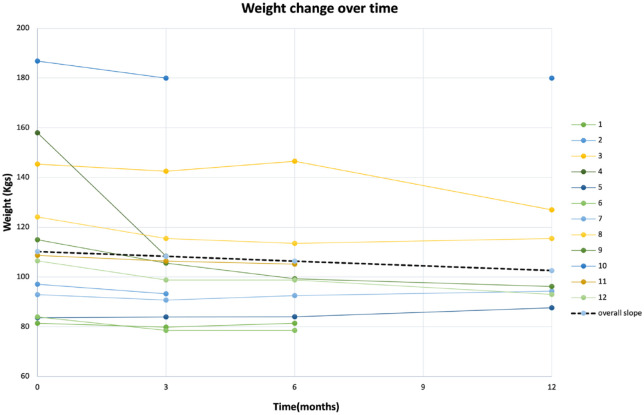
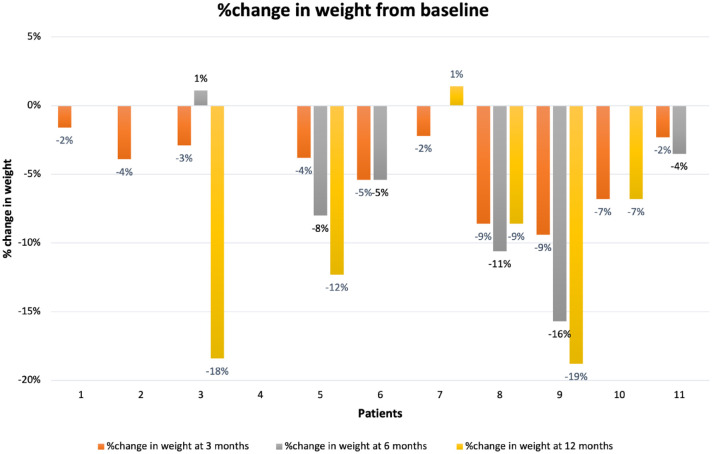
- Mean weight loss after semaglutide was 4.56 ± 3.15 kg at 3 months (p < 0.001), 5.16 ± 6.27 kg at 6 months (p = 0.04), and 8.67 ± 9 kg at 12 months (p = 0.04).
- This corresponded to average weight loss of 5% at 3 months, 6.6% at 6 months, and 8.7% at 12 months; 50% of patients lost more than 5%, and 41.6% lost more than 7% of baseline weight.
- Four patients (33%) reported gastrointestinal side effects (nausea, vomiting, diarrhea), which decreased over time; no serious adverse events were reported.
## Methods
- Retrospective chart review of patients attending the Mental health and Metabolism clinic at CAMH, Toronto, between March 2019 and May 2021.
- Included patients had stable antipsychotic treatment (>3 months), met criteria for adjunctive pharmacological intervention, and had failed metformin defined as <5% weight loss in 3 months or persistent metabolic syndrome after 3 months.
- Baseline and follow-up data at 3, 6, and 12 months were extracted; outcomes were analyzed with descriptive statistics, t-tests/chi-square, and a mixed-model analysis of time on weight.
## Limitations
- The paper states the study was a small convenience sample and a case series.
- The paper states semaglutide doses were well below the approved obesity dose (mean 0.7 mg weekly vs 2.4 mg weekly), because data were collected before the higher-dose obesity approval.
- The paper states there was no placebo arm and treatment was open-label; it also states COVID-19 constraints limited follow-up and reduced available anthropometric and laboratory data.
- Evident from the text: the sample was small (12 patients) and some follow-up data were missing at later time points (10 patients at 6 months, 8 at 12 months), which limits generalizability.
Model-written summary. Check it against the paper before relying on it.
Integrity signals
Registry
Cites
Statistics
Figures
Verification
Claims the paper makes
4 Valid · 2 Not valid · 3 Not checked · 21 Own results and interpretations
Some cited sources support this claim and some don’t — read each source’s verdict below.
In the paper
“with preliminary evidence supporting efficacy in AAWG.”
§ Semaglutide for the treatment of antipsychotic-associated weight gain in patients not responding to metformin – a case series > Abstract Metformin is the currently accepted first-line treatment for antipsychotic-associated weight gain (AAWG). However, not all patients benefit from metformin. Glucagon-like peptide-1 receptor agonists (GLP1-RA) have shown promise in the management of obesity in the general population, with preliminary evidence supporting efficacy in AAWG. Semaglutide is a weekly injectable GLP-1RA which received recent approval for obesity management and noted superiority over other GLP-1RAs. This study explored the efficacy and tolerability of semaglutide in AAWG among individuals with severe mental illness. A retrospective chart review of patients treated with semaglutide in the Metabolic Clinic at the Center for Addiction and Mental Health (CAMH) between 2019 and 2021 was conducted. Patients failing a trial of metformin (<5% weight loss or continuing to meet criteria for metabolic syndrome) after 3 months at the maximum tolerated dose (1500–2000 mg/day) were initiated on semaglutide up to 2 mg/week. The primary outcome measure was a change in weight at 3, 6, and 12 months. Twelve patients on weekly semaglutide injections of 0.71 ± 0.47 mg/week were included in the analysis. About 50% were female; the average age was 36.09 ± 13.32 years. At baseline, mean weight was 111.4 ± 31.7 kg, BMI was 36.7 ± 8.2 kg/m2, with a mean waist circumference of 118.1 ± 19.3 cm. A weight loss of 4.56 ± 3.15 kg (p < 0.001), 5.16 ± 6.27 kg (p = 0.04) and 8.67 ± 9 kg (p = 0.04) was seen at 3, 6, and 12 months, respectively, after initiation of semaglutide with relatively well-tolerated side-effects. Initial evidence from our real-world clinical setting suggests that semaglutide may be effective in reducing AAWG in patients not responding to metformin. Randomized control trials investigating semaglutide for AAWG are needed to corroborate these findings.
What the sources say
- Disputedcites [49] Ishøy PL Knop FK Broberg BV, et al. Effect of GLP-1 receptor agonist treatment on body weight in obese antipsychotic-treated patients with schizophrenia: a randomized, placebo-controlled trial byline. Diabetes Obes Metab 2017; 19: 162– 171. 27717222 PMC5299524 sourceExperimental — accuracy not yet measured
The Results (Primary outcome; page not available) report that exenatide and placebo produced similar weight loss after three months in obese, antipsychotic-treated patients with schizophrenia. This trial therefore does not provide the claimed preliminary evidence of efficacy for antipsychotic-associated weight gain. (LLM, conf=0.90)
Checked by a reasoning model — may be wrong.
- Supportedcites [50] Larsen JR Vedtofte L Jakobsen MSL, et al. Effect of liraglutide treatment on prediabetes and overweight or obesity in clozapine-or olanzapine-treated patients with schizophrenia spectrum disorder: a randomized clinical trial. JAMA Psychiatry 2017; 74: 719– 728. 28601891 PMC5710254 source
The Discussion reports that liraglutide, a GLP-1 receptor agonist, reduced body weight compared with placebo in patients taking clozapine or olanzapine. This supports the citing sentence’s cautious description of preliminary evidence for efficacy against antipsychotic-associated weight gain; the paper does not establish that all GLP-1 receptor agonists are effective. (LLM, conf=0.90)
- Not matchedcites [51] Patino LR Rummelhoff ER Blom T, et al. A double-blind placebo-controlled study of exenatide for the treatment of weight gain associated with olanzapine in overweight or obese adults with bipolar disorder, major depressive disorder, schizophrenia or schizoaffective disorder. Biol Psychiatry 2015; 77: 132S.
We don’t have this paper’s reference list.
- Not checked — no full text of the sourcecites [52] Whicher CA Price HC Phiri P, et al. The use of liraglutide 3.0 mg daily in the management of overweight and obesity in people with schizophrenia, schizoaffective disorder and first episode psychosis: results of a pilot randomized, double-blind, placebo-controlled trial. Diabetes Obes Metab 2021; 23: 1262– 1271. 33528914 source
- Not checked — no full text of the sourcecites [53] Siskind D Russell AW Gamble C, et al. Treatment of clozapine-associated obesity and diabetes with exenatide in adults with schizophrenia: a randomised controlled trial (CODEX). Diabetes Obes Metab 2018; 20: 1050– 1055. 29194917 source
hedgedstates a possible causen = 12 ·- Asserted: passes — The authors put it forward as true.
- Checkable: passes — It can be checked against evidence.
- Load-bearing: passes — The paper’s conclusions depend on it.
- Based: passes — The paper gives a reason why it holds.
- Disputed
Every source the paper cites for this claim was checked and supports it.
In the paper
“published data from a multisite randomized control trial (RCT) show that only approximately 17% of patients lose ⩾5% body weight with metformin, 16”
§ Semaglutide for the treatment of antipsychotic-associated weight gain in patients not responding to metformin – a case series > Background
What the sources say
- Supportedcites [16] Jarskog LF Hamer RM Catellier DJ, et al. Metformin for weight loss and metabolic control in overweight outpatients with schizophrenia and schizoaffective disorder. Am J Psychiatry 2013; 170: 1032– 1040. 23846733 PMC3874085 source
The Results (Weight and BMI; page unavailable in our copy) report that 13 metformin recipients (17.3%) lost more than 5% of their baseline weight over 16 weeks. The Methods (Setting and Study Design; page unavailable) identify this as a multisite randomized trial in overweight outpatients with schizophrenia or schizoaffective disorder. (LLM, conf=0.94)
plainstates a cause- Asserted: passes — The authors put it forward as true.
- Checkable: passes — It can be checked against evidence.
- Load-bearing: passes — The paper’s conclusions depend on it.
- Based: passes — The paper gives a reason why it holds.
- Supported
The cited sources support only part of this claim — read each source’s verdict below.
In the paper
“noted superiority over other GLP-1RAs.”
- Also stated in: § Background · plain
“STEP 8 trial compared SC semaglutide to SC liraglutide and found 15.8% change in baseline weight with semaglutide when compared to 6.4% reduction with liraglutide.”
§ Semaglutide for the treatment of antipsychotic-associated weight gain in patients not responding to metformin – a case series > Abstract Metformin is the currently accepted first-line treatment for antipsychotic-associated weight gain (AAWG). However, not all patients benefit from metformin. Glucagon-like peptide-1 receptor agonists (GLP1-RA) have shown promise in the management of obesity in the general population, with preliminary evidence supporting efficacy in AAWG. Semaglutide is a weekly injectable GLP-1RA which received recent approval for obesity management and noted superiority over other GLP-1RAs. This study explored the efficacy and tolerability of semaglutide in AAWG among individuals with severe mental illness. A retrospective chart review of patients treated with semaglutide in the Metabolic Clinic at the Center for Addiction and Mental Health (CAMH) between 2019 and 2021 was conducted. Patients failing a trial of metformin (<5% weight loss or continuing to meet criteria for metabolic syndrome) after 3 months at the maximum tolerated dose (1500–2000 mg/day) were initiated on semaglutide up to 2 mg/week. The primary outcome measure was a change in weight at 3, 6, and 12 months. Twelve patients on weekly semaglutide injections of 0.71 ± 0.47 mg/week were included in the analysis. About 50% were female; the average age was 36.09 ± 13.32 years. At baseline, mean weight was 111.4 ± 31.7 kg, BMI was 36.7 ± 8.2 kg/m2, with a mean waist circumference of 118.1 ± 19.3 cm. A weight loss of 4.56 ± 3.15 kg (p < 0.001), 5.16 ± 6.27 kg (p = 0.04) and 8.67 ± 9 kg (p = 0.04) was seen at 3, 6, and 12 months, respectively, after initiation of semaglutide with relatively well-tolerated side-effects. Initial evidence from our real-world clinical setting suggests that semaglutide may be effective in reducing AAWG in patients not responding to metformin. Randomized control trials investigating semaglutide for AAWG are needed to corroborate these findings.
What the sources say
- Partly supportedcites [29] Rubino D Abrahamsson N Davies M, et al. Effect of continued weekly subcutaneous semaglutide vs placebo on weight loss maintenance in adults with overweight or obesity: the STEP 4 randomized clinical trial. JAMA 2021; 325: 1414– 1425. 33755728 PMC7988425 sourceExperimental — accuracy not yet measured
The Discussion reports greater weight loss with semaglutide than with liraglutide, another GLP-1 receptor agonist. It does not establish superiority over GLP-1 receptor agonists generally, and STEP 4 compared continued semaglutide with a switch to placebo, not with other agonists. (LLM, conf=0.86)
- Partly supportedcites [30] Rubino DM Greenway FL Khalid U, et al. Effect of weekly subcutaneous semaglutide vs daily liraglutide on body weight in adults with overweight or obesity without diabetes: the STEP 8 randomized clinical trial. JAMA 2022; 327: 138– 150. 35015037 PMC8753508 sourceExperimental — accuracy not yet measured
The Primary Outcome section reports significantly greater weight loss with semaglutide than with liraglutide at 68 weeks in adults with overweight or obesity without diabetes. The study compared semaglutide with one other GLP-1 receptor agonist, liraglutide; it does not establish superiority over GLP-1 receptor agonists generally. (LLM, conf=0.87)
- Partly supportedcites [31] Wilding JPH Batterham RL Calanna S, et al. Once-weekly semaglutide in adults with overweight or obesity. N Engl J Med 2021; 384: 989. 33567185 sourceExperimental — accuracy not yet measured
The Discussion reports greater placebo-corrected weight loss with semaglutide than was reported with liraglutide, another GLP-1 receptor agonist. It cautions that differences between the studies limit the comparison. It does not establish superiority over GLP-1 receptor agonists as a group. (LLM, conf=0.87)
- Not checked yetcites [32] Davies M Færch L Jeppesen OK, et al. Semaglutide 2·4 mg once a week in adults with overweight or obesity, and type 2 diabetes (STEP 2): a randomised, double-blind, double-dummy, placebo-controlled, phase 3 trial. Lancet 2021; 397: 971– 984. 33667417 source
Checked before — its earlier verdict is held back until a new check runs.
- Partly supportedcites [33] Wadden TA Bailey TS Billings LK, et al. Effect of subcutaneous semaglutide vs placebo as an adjunct to intensive behavioral therapy on body weight in adults with overweight or obesity: the STEP 3 randomized clinical trial. JAMA 2021; 325: 1403– 1413. 33625476 PMC7905697 sourceExperimental — accuracy not yet measured
The Abstract reports greater weight loss with semaglutide than with placebo. The Introduction mentions liraglutide, another GLP-1 receptor agonist, but this trial did not compare the two; the copy therefore does not establish superiority over other GLP-1 receptor agonists. (LLM, conf=0.84)
- Not checked — no full text of the sourcecites [34] Kadowaki T Isendahl J Khalid U, et al. Semaglutide once a week in adults with overweight or obesity, with or without type 2 diabetes in an east Asian population (STEP 6): a randomised, double-blind, double-dummy, placebo-controlled, phase 3a trial. Lancet Diabetes Endocrinol 2022; 10: 193– 206. 35131037 source
plainstates a causen = 12- Asserted: passes — The authors put it forward as true.
- Checkable: passes — It can be checked against evidence.
- Load-bearing: unclear — It is unclear whether the paper’s conclusions depend on it.
- Based: passes — The paper gives a reason why it holds.
- Also stated in: § Background · plain
The cited sources support only part of this claim — read each source’s verdict below.
In the paper
“Across these trials, semaglutide demonstrated significant body weight reductions from baseline to end of treatment versus all comparators.”
- Also stated in: § Background · plain
“Results from STEP 1–4 showed that 2.4 mg SC semaglutide, when used in combination with lifestyle modifications, led to clinically significant weight loss in patients with obesity compared to placebo.”
§ Semaglutide for the treatment of antipsychotic-associated weight gain in patients not responding to metformin – a case series > Background
What the sources say
- Not checked — no full text of the sourcecites [18] Sorli C Harashima SI Tsoukas GM, et al. Efficacy and safety of once-weekly semaglutide monotherapy versus placebo in patients with type 2 diabetes (SUSTAIN 1): a double-blind, randomised, placebo-controlled, parallel-group, multinational, multicentre phase 3a trial. Lancet Diabetes Endocrinol 2017; 5: 251– 260. 28110911 source
- Not checked — no full text of the sourcecites [19] Ahmann AJ Capehorn M Charpentier G, et al. Efficacy and safety of once-weekly semaglutide versus exenatide ER in subjects with type 2 diabetes (SUSTAIN 3): a 56-week, open-label, randomized clinical trial. Diabetes Care 2018; 41: 258– 266. 29246950 source
- Partly supportedcites [20] Rodbard HW. Semaglutide added to basal insulin in type 2 diabetes (SUSTAIN 5): a randomized, controlled trial. J Clin Endocrinol Metab 2018; 103: 2291– 2301. 29688502 PMC5991220 sourceExperimental — accuracy not yet measured
The Results (Body weight and related endpoints) report significant weight reductions with semaglutide versus placebo at week 30. SUSTAIN 5 studied patients with type 2 diabetes receiving basal insulin, not the general population; as a single trial with a placebo comparator, it also cannot establish the citing sentence’s claim about all comparators across trials. (LLM, conf=0.90)
- Not checked — no full text of the sourcecites [21] Aroda VR Bain SC Cariou B, et al. Efficacy and safety of once-weekly semaglutide versus once-daily insulin glargine as add-on to metformin (with or without sulfonylureas) in insulin-naive patients with type 2 diabetes (SUSTAIN 4): a randomised, open-label, parallel-group, multicentre, multinational, phase 3a trial. Lancet Diabetes Endocrinol 2017; 5: 355– 366. 28344112 source
- Not checked — no full text of the sourcecites [22] Pratley RE Aroda VR Lingvay I, et al. Semaglutide versus dulaglutide once weekly in patients with type 2 diabetes (SUSTAIN 7): a randomised, open-label, phase 3b trial. Lancet Diabetes Endocrinol 2018; 6: 275– 286. 29397376 source
- Not checked — no full text of the sourcecites [23] Ahrén B Masmiquel L Kumar H, et al. Efficacy and safety of once-weekly semaglutide versus once-daily sitagliptin as an add-on to metformin, thiazolidinediones, or both, in patients with type 2 diabetes (SUSTAIN 2): a 56-week, double-blind, phase 3a, randomised trial. Lancet Diabetes Endocrinol 2017; 5: 341– 354. 28385659 source
- Partly supportedcites [24] Ji L Dong X Li Y, et al. Efficacy and safety of once-weekly semaglutide versus once-daily sitagliptin as add-on to metformin in patients with type 2 diabetes in SUSTAIN China: a 30-week, double-blind, phase 3a, randomized trial. Diabetes Obes Metab 2021; 23: 404– 414. 33074557 PMC7839591 sourceExperimental — accuracy not yet measured
The Introduction reports greater body-weight reductions with semaglutide than with placebo and a range of active comparators across the SUSTAIN trials. The Discussion reports greater weight reduction than with sitagliptin in this trial. These findings concern patients with type 2 diabetes, not the general population, so they do not support that broader population claim. (LLM, conf=0.88)
- Partly supportedcites [25] Marso SP Bain SC Consoli A, et al. Semaglutide and cardiovascular outcomes in patients with type 2 diabetes. N Engl J Med 2016; 375: 1834– 1844. 27633186 sourceExperimental — accuracy not yet measured
The Body Weight section reports significant weight reductions with semaglutide versus placebo at 104 weeks. But the Patients section limits this trial to people with type 2 diabetes and cardiovascular disease, kidney disease, or cardiovascular risk factors; it does not establish effectiveness in the general population. This paper also tests placebo, not all comparators across multiple trials. (LLM, conf=0.90)
- Not checked — no full text of the sourcecites [26] Zinman B Bhosekar V Busch R, et al. Semaglutide once weekly as add-on to SGLT-2 inhibitor therapy in type 2 diabetes (SUSTAIN 9): a randomised, placebo-controlled trial. Lancet Diabetes Endocrinol 2019; 7: 356– 367. 30833170 source
- Not checked — no full text of the sourcecites [27] Lingvay I Catarig AM Frias JP, et al. Efficacy and safety of once-weekly semaglutide versus daily canagliflozin as add-on to metformin in patients with type 2 diabetes (SUSTAIN 8): a double-blind, phase 3b, randomised controlled trial. Lancet Diabetes Endocrinol 2019; 7: 834– 844. 31540867 source
boostedstates a cause- Asserted: passes — The authors put it forward as true.
- Checkable: passes — It can be checked against evidence.
- Load-bearing: passes — The paper’s conclusions depend on it.
- Based: passes — The paper gives a reason why it holds.
- Also stated in: § Background · plain
The paper states this without a source or data behind it here, so there is nothing to check it against. The quote shows it is in the paper.
In the paper
“No serious adverse events were reported in the treatment cohort.”
§ Semaglutide for the treatment of antipsychotic-associated weight gain in patients not responding to metformin – a case series > Results > Adverse effects
- Asserted: passes — The authors put it forward as true.
- Checkable: passes — It can be checked against evidence.
- Load-bearing: passes — The paper’s conclusions depend on it.
- Based: unclear — It is unclear why the paper says it holds.
14 more claims
Create a free account to see all 30 claims and to verify the 1 reference still open.
- Probably not a substantial claim. 6
- It may state two separate claims as one. 6
Claims other papers make about this one
Each is checked against this paper’s own text: does it say what the citing paper says it does?
The cited source says what the claim attributes to it.
In the citing paper
“Interestingly, our findings show greater weight loss in the inpatient population. This is likely attributable to a larger overall sample size, higher doses of semaglutide during the study period, alongside an inpatient setting, which may have enhanced treatment adherence to semaglutide.”
From The Effect of Semaglutide on Antipsychotic-Induced Weight Gain and Other Metabolic Parameters, among a Cohort of Inpatients (2026) · cites this paper as [33]
Citations
Cites
Semaglutide and Cardiovascular Outcomes in Patients with Type 2 Diabetes
Marso, S. P., Bain, S. C., Consoli, A., Eliaschewitz, F. G., Jódar, E., Leiter, L. A., Lingvay, I., Rosenstock, J., Seufert, J., Warren, M. L., et al. (2016) · New England Journal of Medicine · doi:10.1056/nejmoa1607141 · Cited by 6,900
Self-citationOnce-Weekly Semaglutide in Adults with Overweight or Obesity
Wilding, J. P. H., Batterham, R. L., Calanna, S., Davies, M., Van Gaal, L. F., Lingvay, I., McGowan, B. M., Rosenstock, J., Tran, M. T. D., Wadden, T. A., et al. (2021) · New England Journal of Medicine · doi:10.1056/nejmoa2032183 · Cited by 5,205
Rubino, D., Abrahamsson, N., Davies, M., Hesse, D., Greenway, F. L., Jensen, C., Lingvay, I., Mosenzon, O., Rosenstock, J., Rubio, M. A., et al. (2021) · JAMA · doi:10.1001/jama.2021.3224 · Cited by 1,444
Davies, M., Færch, L., Jeppesen, O. K., Pakseresht, A., Pedersen, S. D., Perreault, L., Rosenstock, J., Shimomura, I., Viljoen, A., Wadden, T. A., et al. (2021) · The Lancet · doi:10.1016/s0140-6736(21)00213-0 · Cited by 1,419
Metabolic and cardiovascular adverse effects associated with antipsychotic drugs.
De Hert, M., Detraux, J., van Winkel, R., Yu, W., & Correll, C. U. (2012) · Nature Reviews Endocrinology · doi:10.1038/nrendo.2011.156 · Cited by 1,145
Wadden, T. A., Bailey, T. S., Billings, L. K., Davies, M., Frias, J. P., Koroleva, A., Lingvay, I., O’Neil, P. M., Rubino, D. M., Skovgaard, D., et al. (2021) · JAMA · doi:10.1001/jama.2021.1831 · Cited by 1,114
Rubino, D. M., Greenway, F. L., Khalid, U., O’Neil, P. M., Rosenstock, J., Sørrig, R., Wadden, T. A., Wizert, A., Garvey, W. T., STEP 8 Investigators, et al. (2022) · JAMA · doi:10.1001/jama.2021.23619 · Cited by 995
Pratley, R. E., Aroda, V. R., Lingvay, I., Lüdemann, J., Andreassen, C., Navarria, A., & Viljoen, A. (2018) · The Lancet Diabetes & Endocrinology · doi:10.1016/s2213-8587(18)30024-x · Cited by 790
Sorli, C., Harashima, S.-I., Tsoukas, G. M., Unger, J., Karsbøl, J. D., Hansen, T., & Bain, S. C. (2017) · The Lancet Diabetes & Endocrinology · doi:10.1016/s2213-8587(17)30013-x · Cited by 745
Compliance With Medication Regimens for Mental and Physical Disorders
Cramer, J. A., & Rosenheck, R. (1998) · Psychiatric Services · doi:10.1176/ps.49.2.196 · Cited by 725
Research works printed but not linked: 1
- Patino LR Rummelhoff ER Blom T, et al. A double-blind placebo-controlled study of exenatide for the treatment of weight gain associated with olanzapine in overweight or obese adults with bipolar disorder, major depressive disorder, schizophrenia or schizoaffective disorder. Biol Psychiatry 2015; 77: 132S.
Cited by
Bueno, H., Deaton, C., Farrero, M., Forsyth, F., Braunschweig, F., Buccheri, S., Dragan, S., Gevaert, S., Held, C., Kurpas, D., et al. (2025) · European Heart Journal · doi:10.1093/eurheartj/ehaf191 · Cited by 178
Psychotropic Drug–Related Weight Gain and Its Treatment
McIntyre, R. S., Kwan, A. T. H., Rosenblat, J. D., Teopiz, K. M., & Mansur, R. B. (2024) · American Journal of Psychiatry · doi:10.1176/appi.ajp.20230922 · Cited by 113
De Giorgi, R., Ghenciulescu, A., Dziwisz, O., Taquet, M., Adler, A. I., Koychev, I., Upthegrove, R., Solmi, M., McCutcheon, R., Pillinger, T., et al. (2025) · Nature Mental Health · doi:10.1038/s44220-025-00390-x · Cited by 77
Carolan, A., Hynes-Ryan, C., Agarwal, S. M., Bourke, R., Cullen, W., Gaughran, F., Hahn, M. K., Krivoy, A., Lally, J., Leucht, S., et al. (2025) · Schizophrenia Bulletin · doi:10.1093/schbul/sbae205 · Cited by 70
Self-citationAntipsychotic-Induced Weight Gain in Severe Mental Illness: Risk Factors and Special Considerations
Stogios, N., Humber, B. E., Agarwal, S. M., & Hahn, M. (2023) · Current Psychiatry Reports · doi:10.1007/s11920-023-01458-0 · Cited by 64
Self-citationBak, M., Campforts, B. C. M., Domen, P. A. E., van Amelsvoort, T., & Drukker, M. (2024) · Acta Psychiatrica Scandinavica · doi:10.1111/acps.13734 · Cited by 67
“5 GLP-1 agonists also delay gastric emptying and reduce food intake by promoting satiety 34 and directly activating proopiomelanocortin (POMC) and cocaine and amphetamine regulated transcript (CART) neurons.”
Jain, A. B., & Lai, V. (2024) · Diabetes Therapy · doi:10.1007/s13300-024-01628-0 · Cited by 32
“A case series of patients with antipsy-chotic-associated weight gain showed successful weight loss with the use of once weekly low dose semaglutide; however, statistically significant reduction in fasting glucose and A1c were not seen [43].”
BackgroundIUPHAR themed review: The gut microbiome in schizophrenia
Kamath, S., Sokolenko, E., Collins, K., Chan, N. S. L., Mills, N. T., Clark, S. R., Marques, F. Z., & Joyce, P. M. (2024) · Pharmacological Research · doi:10.1016/j.phrs.2024.107561 · Cited by 27
How ‘miracle’ weight‐loss semaglutide promises to change medicine but can we afford the expense?
Weiskirchen, R., & Lonardo, A. (2025) · British Journal of Pharmacology · doi:10.1111/bph.70003 · Cited by 30
“Meformin is the first-line treatment for AAWG, although not all patients benefit from it (Prasad et al., 2023).”
Semaglutide for weight loss: unanswered questions
Tzoulis, P., & Baldeweg, S. E. (2024) · Frontiers in Endocrinology · doi:10.3389/fendo.2024.1382814 · Cited by 30
Shchendrygina, A., Rakisheva, A., Giverts, I., Rustamova, Y., & Soloveva, A. E. (2024) · Cardiac failure review · doi:10.15420/cfr.2024.05 · Cited by 24
Breit, S., & Hubl, D. (2025) · Psychoneuroendocrinology · doi:10.1016/j.psyneuen.2025.107415 · Cited by 29
Embracing the Pros and Cons of the New Weight Loss Medications (Semaglutide, Tirzepatide, Etc.)
Moyad, M. A. (2023) · Current Urology Reports · doi:10.1007/s11934-023-01180-7 · Cited by 21
“It is imperative that clinicians and researchers throughout medical specialties become accus-tomed to the evolving potential advantages and disadvantages of these products within their respective disciplines [29 •• , 31 •• ], and even from case series [93].”
BackgroundAntidepressants and Weight Gain: An Update on the Evidence and Clinical Implications
Moss, L., Laudenslager, M., Steffen, K. J., Sockalingam, S., & Coughlin, J. W. (2025) · Current Obesity Reports · doi:10.1007/s13679-024-00598-5 · Cited by 23
Semaglutide in Psychiatry—Opportunities and Challenges
Agarwal, S. M., & Hahn, M. (2024) · JAMA Psychiatry · doi:10.1001/jamapsychiatry.2024.2412 · Cited by 16
Self-citationCampforts, B. C. M., Drukker, M., van Amelsvoort, T., & Bak, M. (2024) · BMC Psychiatry · doi:10.1186/s12888-024-06317-7 · Cited by 22
Strube, W., Wagner, E. M., Luykx, J. J., & Hasan, A. (2024) · Expert Opinion on Drug Safety · doi:10.1080/14740338.2024.2348561 · Cited by 10
“…management of severe obesity, but not indicated for SGA induced weight gain or prediabetes, GLP-1 receptor agonists and bariatric surgery have successfully been tried in a selected subgroup of adherent patients in combination with calorie-restricted diets and increased physical activity [92–95].”
BackgroundEspinoza, R. T., & Antongiorgi, Z. D. (2024) · Journal of Ect · doi:10.1097/yct.0000000000000992 · Cited by 8
Glucagon-Like Peptide-1 Receptor Agonists in Psychiatry: A Pharmacoepidemiological Scoping Review
Volkow, N. D., & Xu, R. (2026) · Biological Psychiatry · doi:10.1016/j.biopsych.2026.03.1002 · Cited by 14
Miedlich, S. U., & Lamberti, J. S. (2025) · Annals of the New York Academy of Sciences · doi:10.1111/nyas.15301 · Cited by 13
Jakobsen, M. I., Austin, S. F., Storebø, O. J., Simonsen, E. H., & Nielsen, J. (2025) · BMJ Open · doi:10.1136/bmjopen-2024-093394 · Cited by 10
Carminati, M., Tondello, M., Concina, A., Olgiati, P., & Zanardi, R. (2025) · International Clinical Psychopharmacology · doi:10.1097/yic.0000000000000595 · Cited by 13
Glucagon-like Peptide-1 Receptor Agonists: Exciting Avenues Beyond Weight Loss
Sundararaman, L. V., Gouda, D., Kumar, A., Sundararaman, S., & Goudra, B. (2025) · Journal of Clinical Medicine · doi:10.3390/jcm14061978 · Cited by 7
Jacobson, S., Margolese, N., & Margolese, H. C. (2025) · The Canadian Journal of Psychiatry · doi:10.1177/07067437251386626 · Cited by 11
Browne, J., Wu, W., Jiang, L., Bayer, T. A., Kunicki, Z. J., Thompson, M. F., Bozzay, M. L., Vito, A. N. D., Howe, M. D., Singh, M., et al. (2025) · Schizophrenia Bulletin · doi:10.1093/schbul/sbaf143 · Cited by 5
Novel drug treatments for schizophrenia
Coyle, J. T., & Paul, S. M. (2026) · Nature Reviews Drug Discovery · doi:10.1038/s41573-025-01335-w · Cited by 11
Vu, C., Thai, R., Dike, D., & Sydner, B. (2025) · Psychiatric Quarterly · doi:10.1007/s11126-025-10137-7 · Cited by 9
“This threshold has been established in similar studies examining AIWG [5].”
Varghese, J. S., Goldsmith, D. R., Cotes, R. O., Ravikumar, V., Ali, M. K., & Pasquel, F. J. (2025) · International Journal of Obesity · doi:10.1038/s41366-025-01885-4 · Cited by 6
“However, our results are consistent with real-world effectiveness studies of these medications among people with and without type 2 diabetes that suggest lower rates of weight loss [18, 19].”
Mental Health Implications of Weight Loss Medications: A Narrative Review
Harding, S. (2024) · The Journal for Nurse Practitioners · doi:10.1016/j.nurpra.2024.105207 · Cited by 44
Varshney, K., Panda, S., Fernando, D. M. H., Sava, S. T., & Khan, T. (2025) · Obesities · doi:10.3390/obesities5040072 · Cited by 4
IUPHAR review: Drug repurposing in Schizophrenia – An updated review of clinical trials
Zaki, J. K., Tomasik, J., & Bahn, S. (2025) · Pharmacological Research · doi:10.1016/j.phrs.2025.107633 · Cited by 4
“Initial results on the effects of semaglutide in schizophrenia suggest a significant average weight loss of 8.67 kg with limited side-effects [132] and improved cognitive function compared to other antidiabetic medications as determined from electronic health records [133].”
InfluentialTaormina, J. M., & Camidge, D. R. (2023) · Journal of Thoracic Oncology · doi:10.1016/j.jtho.2023.05.006 · Cited by 2
De, R., Amin Alfatwa, Y., Kanagasundaram, P., Saragosa, J. E., Chan, J., Remington, G., Retnakaran, R., Sanches, M., Sockalingam, S., Agarwal, S. M., et al. (2026) · Schizophrenia Bulletin · doi:10.1093/schbul/sbaf236 · Cited by 1
“33 Interestingly, our findings show greater weight loss in the inpatient population.”
Self-citationGreat Expectations: Semaglutide as Antidiabetic Weight Management in a Psychiatric Hospital
Shannon, K. C., & Shyh, G. I. (2024) · Journal of Pharmacy Practice · doi:10.1177/08971900241294122 · Cited by 2
Psychopharmakainduzierte Gewichtszunahme – sind Inkretine/Twinkretine eine Option?
Paulzen, M. (2025) · Der Nervenarzt · doi:10.1007/s00115-024-01788-1 · Cited by 3
Depression and Suicide in the “World’s Happiest Countries”
Fogel, B. S., & Jiang, X. (2025) · Oxford University Press eBooks · doi:10.1093/med/9780190850074.003.0013 · Cited by 1
Stogios, N., Prasannakumar, A., Mehra, K., Hahn, M., & Agarwal, S. M. (2025) · FOCUS The Journal of Lifelong Learning in Psychiatry · doi:10.1176/appi.focus.20250020 · Cited by 2
Self-citationBrenisin, K., Kinnafick, F., King, J. A., Millard, L., Arya, D., Hodgson, E., Huggins, M., Simmons-Roberts, A., O'Dowd, M., Rayment, N., et al. (2025) · JMIR Research Protocols · doi:10.2196/76013 · Cited by 1
“Prasad et al [38] explored semaglutide for the treatment of AIWG, and initial results suggested the potential effectiveness of the drug; however, a more rigorous trial is required.”
Vieta, E., Montejo, Á., Pillinger, T., Dell’Osso, B. M., Dimitraka, M., Farooq, S., Jesús, G., Parro-Torres, C., Wobrock, T., & Pappa, S. (2025) · Annals of General Psychiatry · doi:10.1186/s12991-025-00620-7 · Cited by 2
Serendipity (and Clinical Observation) Strike Again: GLP-1 Receptor Agonists
Nierenberg, A. A. (2023) · Psychiatric Annals · doi:10.3928/00485713-20230925-01 · Cited by 1
Metabolische unerwünschte Arzneimittelwirkungen von Psychopharmaka
Gahr, M. (2024) · Fortschritte der Neurologie · Psychiatrie · doi:10.1055/a-2405-5087 · Cited by 2
Fink‐Jensen, A., & Correll, C. U. (2024) · Acta Psychiatrica Scandinavica · doi:10.1111/acps.13772 · Cited by 1
Self-citationCampforts, B. C. M., Bak, M., Domen, P. A. E., van Amelsvoort, T., & Drukker, M. (2024) · Acta Psychiatrica Scandinavica · doi:10.1111/acps.13784 · Cited by 1
Schizophrenia and Related Psychoses
(2025) · Wiley eBooks · doi:10.1002/9781119870203.mpg001.pub2 · Cited by 2
Abbas, A., Mektebi, A., El-Gayar, R. M., Hamad, A. A., Hefnawy, M. T., Rady, A. H. A., Ballut, O. O., Moawad, M. H. E. D., Elsayed, M., & Schönfeldt‐Lecuona, C. (2023) · Research Square · doi:10.21203/rs.3.rs-3150409/v1
(2024) · Reactions Weekly · doi:10.1007/s40278-024-54589-9
List of Abbreviations and Acronyms
Fogel, B. S., & Jiang, X. (2025) · Oxford University Press eBooks · doi:10.1093/med/9780190850074.002.0009
Dimensions and Implications of Cultural Identity
Fogel, B. S., & Jiang, X. (2025) · Oxford University Press eBooks · doi:10.1093/med/9780190850074.003.0004
Seeing Depression Through A Cultural Lens
Fogel, B. S., & Jiang, X. (2025) · doi:10.1093/med/9780190850074.001.0001
Fogel, B. S., & Jiang, X. (2025) · Oxford University Press eBooks · doi:10.1093/med/9780190850074.002.0006
Fogel, B. S., & Jiang, X. (2025) · Oxford University Press eBooks · doi:10.1093/med/9780190850074.003.0002
Fogel, B. S., & Jiang, X. (2025) · Oxford University Press eBooks · doi:10.1093/med/9780190850074.003.0006
Ancient Wisdom Meets Modern Science: Depression in Traditional Medicine
Fogel, B. S., & Jiang, X. (2025) · Oxford University Press eBooks · doi:10.1093/med/9780190850074.003.0009
South Korea: Han and Passionate Intensity
Fogel, B. S., & Jiang, X. (2025) · Oxford University Press eBooks · doi:10.1093/med/9780190850074.003.0012
Picturing Depression: Faces, Backgrounds, and Foregrounds
Fogel, B. S., & Jiang, X. (2025) · Oxford University Press eBooks · doi:10.1093/med/9780190850074.003.0001
Fogel, B. S., & Jiang, X. (2025) · Oxford University Press eBooks · doi:10.1093/med/9780190850074.002.0003
Cultural Identity and Personal Biography
Fogel, B. S., & Jiang, X. (2025) · Oxford University Press eBooks · doi:10.1093/med/9780190850074.003.0005
Fogel, B. S., & Jiang, X. (2025) · Oxford University Press eBooks · doi:10.1093/med/9780190850074.003.0018
Cultural Correlates and Clinical Consequences
Fogel, B. S., & Jiang, X. (2025) · Oxford University Press eBooks · doi:10.1093/med/9780190850074.003.0008
Depression and Social Class: A Four-Dimensional View
Fogel, B. S., & Jiang, X. (2025) · Oxford University Press eBooks · doi:10.1093/med/9780190850074.003.0007
Japan: Invisible Double-Edged Swords
Fogel, B. S., & Jiang, X. (2025) · Oxford University Press eBooks · doi:10.1093/med/9780190850074.003.0011
China: Confucian Harmony and Dissonance
Fogel, B. S., & Jiang, X. (2025) · Oxford University Press eBooks · doi:10.1093/med/9780190850074.003.0010 · Cited by 1
Beyond Shades of Gray: Depression and the Bipolar Spectrum
Fogel, B. S., & Jiang, X. (2025) · Oxford University Press eBooks · doi:10.1093/med/9780190850074.003.0003
Fogel, B. S., & Jiang, X. (2025) · Oxford University Press eBooks · doi:10.1093/med/9780190850074.002.0007
Flying High, Feeling Low: Depression in Airline Pilots
Fogel, B. S., & Jiang, X. (2025) · Oxford University Press eBooks · doi:10.1093/med/9780190850074.003.0017
American Regional Cultures and Geography of Mood
Fogel, B. S., & Jiang, X. (2025) · Oxford University Press eBooks · doi:10.1093/med/9780190850074.003.0014
Fogel, B. S., & Jiang, X. (2025) · Oxford University Press eBooks · doi:10.1093/med/9780190850074.002.0004
The Dark Side of Creative Talent
Fogel, B. S., & Jiang, X. (2025) · Oxford University Press eBooks · doi:10.1093/med/9780190850074.003.0015
Physicians in Pain: Depression in the Medical Profession
Fogel, B. S., & Jiang, X. (2025) · Oxford University Press eBooks · doi:10.1093/med/9780190850074.003.0016
Metabolische unerwünschte Arzneimittelwirkungen von Psychopharmaka
Gahr, M. (2025) · Diabetes aktuell · doi:10.1055/a-2539-1129
Li, X. (2025) · International Journal of Biology and Life Sciences · doi:10.54097/0hrwrt87
“For those with poor efficacy of metformin, Prasad et al. proposed that semaglutide, a GLP-1 receptor agonist, should be considered (Prasad et al., 2023).”
Effects of antidepressants on weight: mechanisms, clinical effects, and management strategies
Bairamalov, V. A., Dautova, V. A., Bakhareva, M. D., Mariams, A. S. Z., Alyeva, L. R., Ismikhanov, M. M., Gazizova, A. I., Zorina, N. A., Malinina, Y. A., Vedernikova, V. V., et al. (2025) · Russian Medicine · doi:10.17816/medjrf675281
Semaglutide for clozapine-treated patients with schizophrenia
Agarwal, S. M., & Hahn, M. (2025) · The Lancet Psychiatry · doi:10.1016/s2215-0366(25)00166-x
Self-citationToor, M. A. W., & Hasan, M. Q. (2025) · Psychoneuroendocrinology · doi:10.1016/j.psyneuen.2025.107562
Breit, S., & Hubl, D. (2025) · Psychoneuroendocrinology · doi:10.1016/j.psyneuen.2025.107572
Choi, W.-S., Song, M.-K., Seo, M. W., Woo, Y. S., & Bahk, W. (2026) · Therapeutic Advances in Psychopharmacology · doi:10.1177/20451253261419609 · Cited by 2
Wu, Y., Zhao, X., Cui, J., et al. (2026) · Medicine · doi:10.1097/md.0000000000046908
“[13] Within this context, our data suggest that DWD as an adjunct to standard WM may augment weight, waist, lipid, and glycemic responses over 8 weeks.”
Weng, S., Lin, J., & Chai, D. (2026) · Frontiers in Pharmacology · doi:10.3389/fphar.2025.1729264 · Cited by 1
Milano, W., Campanile, R., Marchese, M., Milano, M. F., Ragozino, L., Saetta, B., & Capasso, A. (2026) · OBM Neurobiology · doi:10.21926/obm.neurobiol.2602330
Correia, J. C., Richard-Lepouriel, H., Chalut-Carpentier, A., & Pataky, Z. (2026) · Frontiers in Psychiatry · doi:10.3389/fpsyt.2026.1699908 · Cited by 2
“In the context of BD, small-scale studies and case series have demonstrated that GLP-1 RAs such as liraglutide and semaglutide may mitigate antipsychotic-induced weight gain and metabolic dysregulation, particularly in PlwBD resistant to lifestyle interventions or metformin therapy (81, 82, 84, 85).”
Controversial effects of metformin on human physiology and pathophysiology
Fang, S., Liu, Q., Lu, Y., & Zhang, J. (2026) · Frontiers in Pharmacology · doi:10.3389/fphar.2026.1799374 · Cited by 1
Effectiveness of GLP-1RA vs metformin for diabetes prevention in antipsychotic-treated patients
Liu, T.-H., Lee, C.-H., Liu, C.-Y., Wu, J., Tsai, Y., Kao, P., & Lai, C. (2026) · European Neuropsychopharmacology · doi:10.1016/j.euroneuro.2026.112853
Jena, S., Dutta, D., Mukherjee, A., Joshi, A. S., Kamrul-Hasan, A. B. M., & Bhattacharya, S. (2026) · Indian Journal of Endocrinology and Metabolism · doi:10.4103/ijem.ijem_1037_25
“In two single‑arm real‑world studies (Prasad et al ., 2023 [22] ; Heald et al ., 2025 [23] ), semaglutide therapy resulted in a pooled mean weight reduction of ‑6.15 kg [MD ‑6.15 kg (95% CI: –20.15, 7.84); P = 0.27; I² =17.9%)].”
InfluentialMeftah, A., Yoade, B., Cowart, C., Choi, A., Popoola, O., Afe, O., Efremoff, S., Ezema, C., Johnson, B. O., Lawrence, J., et al. (2026) · Cureus · doi:10.7759/cureus.109089
“In psychiatry, interest in GLP-1 RAs has emerged and is increasing due to their potential in mitigating antipsychotic-induced weight gain and insulin resistance, particularly with agents like Clozapine and Olanzapine [53].”
Xie, K., Tian, W., Zhang, Y., Zhang, Y., Li, J., Cao, D., & Pan, W. (2026) · Frontiers in Psychiatry · doi:10.3389/fpsyt.2026.1846995
Buczkowska, A., Glinski, M., Danieluk, J., Adamaszek, N., Kacprzak, U., Dołęga-Mostowska, D., Stochaj, L., Flejszman, M., Wójcik, J., & Sochowska, J. (2026) · Cureus · doi:10.7759/cureus.114435
“By restoring this vital satiety brake, GLP-1 RAs counteract SGA-induced hyperphagia, normalize food-related reward signaling in the mesolimbic pathway, and delay gastric emptying, thereby smoothing postprandial glucose excursions [3,7,26,30,32-33].”
Energetic dysregulations in psychotic disorders: Targets for new therapeutics
Anderson, J., Sonntag, K., Le, T. D. V., Shannon, K., Wang, C., Du, F., Chen, X., McPhie, D. L., Öngür, D., Cohen, B. M., et al. (2026) · FEBS Journal · doi:10.1111/febs.70719
Metadata
- Authors
- Prasad, F., De, R., Korann, V., Chintoh, A. F., Remington, G., Ebdrup, B. H., Siskind, D., Knop, F. K., Vilsbøll, T., Fink-Jensen, A., Hahn, M. K., & Agarwal, S. M.
- Affiliations
- Centre for Addiction and Mental Health (CA)
- University of Copenhagen (DK)
- The University of Queensland (AU)
- Center for Neuropsychiatric Schizophrenia Research, Mental Health Centre Glostrup, University of Copenhagen, Glostrup, Denmark
- Corresponding author
- Agarwal, Sri Mahavir
- ORCID
- Venue
- Therapeutic Advances in Psychopharmacology
- Publisher
- SAGE Publications
- Published
- 2023-01
- Volume
- 13
- Pages
- 20451253231165169-20451253231165169
- ISSN
- 2045-1253 (ISSN-L)
- 2045-1261
- PMC
- PMC10126648
- OpenAlex
- W4366433723
- Semantic Scholar
- 51e494f132ea3ac9d920992cb40f402991dbc4b8
- Cited by
- 88
- References
- 53
- Citations by year
- 2026: 14 · 2025: 51 · 2024: 18 · 2023: 5
- FWCI
- 13.66
- Type
- journal article
- Language
- en
- Update notices
- correction (2024-05-28)
- Open access
- gold
- doi.org
- Licence
- Locations
- Therapeutic Advances in Psychopharmacology (publishedVersion, cc-by-nc)
- PubMed Central (publishedVersion, cc-by-nc)
- PubMed (publishedVersion)
- Research at the University of Copenhagen (University of Copenhagen) (publishedVersion, cc-by-nc)
- DOAJ (DOAJ: Directory of Open Access Journals) (submittedVersion, cc-by-sa)
- Funders
- Steno Diabetes Center Copenhagen (SDCC 3.F CMP)
- Physicians' Services Incorporated Foundation
- University of Toronto
- HLS Therapeutics
- Department of Psychiatry, University of Toronto
- Canadian Institutes of Health Research
- Banting and Best Diabetes Centre, University of Toronto
- National Health and Medical Research Council (1194635)
- Topics
- Health Sciences › Medicine › Pharmacology (medical) › Pharmacology and Obesity Treatment
- Health Sciences › Medicine › Psychiatry and Mental health › Schizophrenia research and treatment
- Health Sciences › Medicine › Endocrinology, Diabetes and Metabolism › Diabetes Treatment and Management
- Keywords
- semaglutide, GLP-1 receptor agonists, severe mental illness, weight loss, obesity treatment, metabolic syndrome, tolerability, real-world effectiveness, treatment-resistant obesity
About these checks
Registry, retraction, Cites and statistics results are computed, not judged, with one exception: a printed reference that no index lists is read once by a model before it counts as a citation error. Claims are extracted by a model and kept only when their quote appears verbatim in the text; each cited source is then checked, with a model’s help, for whether it says what the claim relies on. Those verdicts can be wrong — read the claim’s quote and the cited source before relying on one.
The claim verdicts this report counts are experimental: their accuracy is not yet measured.
A language model drew the claims from the paper on 2026-10-11, under version 3 of the claim definition (model deepseek-v4.1-flash, prompt extract-v3).
A second model labelled each claim on 2026-10-11 (model jev-1.13-20260917, definition revision gold-guideline-v0.2).
Cited sources are checked with a language model’s help (gpt-6-sol).
Statistics and arithmetic are recomputed, not judged.
Confidence bands are shown only for fields calibrated on our annotated test set. None is calibrated yet, so no band is shown.
What counts as a claim ›How we measure confidence ›How we check this ›
Are you an author, or do you see a problem with this page? Request a review
Data sources
Bibliographic data: Semantic Scholar, OpenAlex, Crossref.
Contains information from the Semantic Scholar Academic Graph Datasets, made available under the ODC Attribution License (ODC-BY 1.0).
Semantic Scholar’s data is described in: Kinney, R., et al. (2023). The Semantic Scholar Open Data Platform. arXiv:2301.10140.
