

Semaglutide for the treatment of antipsychotic-associated weight gain in patients not responding to metformin – a case series
Open accessThe DOI matches its Crossref record; 52 of the 53 references it cites were found in a registry or an index; 11 of the 27 sources its claims cite were checked for support.
Abstract
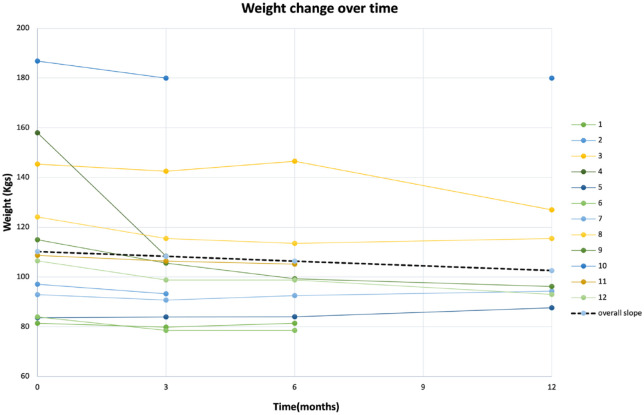
Metformin is the currently accepted first-line treatment for antipsychotic-associated weight gain (AAWG). However, not all patients benefit from metformin. Glucagon-like peptide-1 receptor agonists (GLP1-RA) have shown promise in the management of obesity in the general population, with preliminary evidence supporting efficacy in AAWG. Semaglutide is a weekly injectable GLP-1RA which received recent approval for obesity management and noted superiority over other GLP-1RAs. This study explored the efficacy and tolerability of semaglutide in AAWG among individuals with severe mental illness. A retrospective chart review of patients treated with semaglutide in the Metabolic Clinic at the Center for Addiction and Mental Health (CAMH) between 2019 and 2021 was conducted. Patients failing a trial of metformin (<5% weight loss or continuing to meet criteria for metabolic syndrome) after 3 months at the maximum tolerated dose (1500–2000 mg/day) were initiated on semaglutide up to 2 mg/week. The primary outcome measure was a change in weight at 3, 6, and 12 months. Twelve patients on weekly semaglutide injections of 0.71 ± 0.47 mg/week were included in the analysis. About 50% were female; the average age was 36.09 ± 13.32 years. At baseline, mean weight was 111.4 ± 31.7 kg, BMI was 36.7 ± 8.2 kg/m 2 , with a mean waist circumference of 118.1 ± 19.3 cm. A weight loss of 4.56 ± 3.15 kg ( p < 0.001), 5.16 ± 6.27 kg ( p = 0.04) and 8.67 ± 9 kg ( p = 0.04) was seen at 3, 6, and 12 months, respectively, after initiation of semaglutide with relatively well-tolerated side-effects. Initial evidence from our real-world clinical setting suggests that semaglutide may be effective in reducing AAWG in patients not responding to metformin. Randomized control trials investigating semaglutide for AAWG are needed to corroborate these findings.
Overview
CoChat Summary
## TL;DR
This retrospective case series evaluated semaglutide for antipsychotic-associated weight gain in 12 patients who had not responded to metformin. Weight loss was observed at 3, 6, and 12 months, with relatively well-tolerated mostly gastrointestinal side effects.
## Key findings
- From 399 patients seen in the clinic between March 2019 and May 2021, 12 patients (3%) met inclusion criteria and were analyzed.
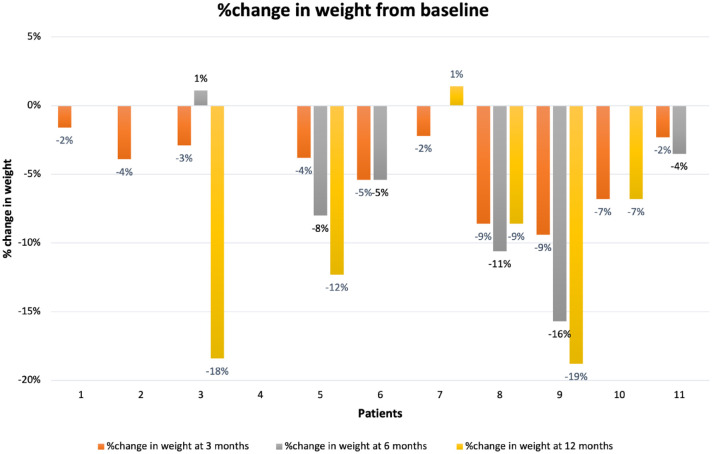
- Mean weight loss after semaglutide was 4.56 ± 3.15 kg at 3 months (p < 0.001), 5.16 ± 6.27 kg at 6 months (p = 0.04), and 8.67 ± 9 kg at 12 months (p = 0.04).
- This corresponded to average weight loss of 5% at 3 months, 6.6% at 6 months, and 8.7% at 12 months; 50% of patients lost more than 5%, and 41.6% lost more than 7% of baseline weight.
- Four patients (33%) reported gastrointestinal side effects (nausea, vomiting, diarrhea), which decreased over time; no serious adverse events were reported.
## Methods
- Retrospective chart review of patients attending the Mental health and Metabolism clinic at CAMH, Toronto, between March 2019 and May 2021.
- Included patients had stable antipsychotic treatment (>3 months), met criteria for adjunctive pharmacological intervention, and had failed metformin defined as <5% weight loss in 3 months or persistent metabolic syndrome after 3 months.
- Baseline and follow-up data at 3, 6, and 12 months were extracted; outcomes were analyzed with descriptive statistics, t-tests/chi-square, and a mixed-model analysis of time on weight.
## Limitations
- The paper states the study was a small convenience sample and a case series.
- The paper states semaglutide doses were well below the approved obesity dose (mean 0.7 mg weekly vs 2.4 mg weekly), because data were collected before the higher-dose obesity approval.
- The paper states there was no placebo arm and treatment was open-label; it also states COVID-19 constraints limited follow-up and reduced available anthropometric and laboratory data.
- Evident from the text: the sample was small (12 patients) and some follow-up data were missing at later time points (10 patients at 6 months, 8 at 12 months), which limits generalizability.
Model-written summary. Check it against the paper before relying on it.
Integrity signals
Registry
Cites
Statistics
Figures
Verification
Claims the paper makes
4 Valid · 2 Not valid · 3 Not checked · 21 Own results and interpretations
Some cited sources support this claim and some don’t — read each source’s verdict below.
In the paper
“with preliminary evidence supporting efficacy in AAWG.”
§ Semaglutide for the treatment of antipsychotic-associated weight gain in patients not responding to metformin – a case series > Abstract Metformin is the currently accepted first-line treatment for antipsychotic-associated weight gain (AAWG). However, not all patients benefit from metformin. Glucagon-like peptide-1 receptor agonists (GLP1-RA) have shown promise in the management of obesity in the general population, with preliminary evidence supporting efficacy in AAWG. Semaglutide is a weekly injectable GLP-1RA which received recent approval for obesity management and noted superiority over other GLP-1RAs. This study explored the efficacy and tolerability of semaglutide in AAWG among individuals with severe mental illness. A retrospective chart review of patients treated with semaglutide in the Metabolic Clinic at the Center for Addiction and Mental Health (CAMH) between 2019 and 2021 was conducted. Patients failing a trial of metformin (<5% weight loss or continuing to meet criteria for metabolic syndrome) after 3 months at the maximum tolerated dose (1500–2000 mg/day) were initiated on semaglutide up to 2 mg/week. The primary outcome measure was a change in weight at 3, 6, and 12 months. Twelve patients on weekly semaglutide injections of 0.71 ± 0.47 mg/week were included in the analysis. About 50% were female; the average age was 36.09 ± 13.32 years. At baseline, mean weight was 111.4 ± 31.7 kg, BMI was 36.7 ± 8.2 kg/m2, with a mean waist circumference of 118.1 ± 19.3 cm. A weight loss of 4.56 ± 3.15 kg (p < 0.001), 5.16 ± 6.27 kg (p = 0.04) and 8.67 ± 9 kg (p = 0.04) was seen at 3, 6, and 12 months, respectively, after initiation of semaglutide with relatively well-tolerated side-effects. Initial evidence from our real-world clinical setting suggests that semaglutide may be effective in reducing AAWG in patients not responding to metformin. Randomized control trials investigating semaglutide for AAWG are needed to corroborate these findings.
What the sources say
- Disputedcites [49] Ishøy PL Knop FK Broberg BV, et al. Effect of GLP-1 receptor agonist treatment on body weight in obese antipsychotic-treated patients with schizophrenia: a randomized, placebo-controlled trial byline. Diabetes Obes Metab 2017; 19: 162– 171. 27717222 PMC5299524 sourceExperimental — accuracy not yet measured
The Results (Primary outcome; page not available) report that exenatide and placebo produced similar weight loss after three months in obese, antipsychotic-treated patients with schizophrenia. This trial therefore does not provide the claimed preliminary evidence of efficacy for antipsychotic-associated weight gain. (LLM, conf=0.90)
Checked by a reasoning model — may be wrong.
- Supportedcites [50] Larsen JR Vedtofte L Jakobsen MSL, et al. Effect of liraglutide treatment on prediabetes and overweight or obesity in clozapine-or olanzapine-treated patients with schizophrenia spectrum disorder: a randomized clinical trial. JAMA Psychiatry 2017; 74: 719– 728. 28601891 PMC5710254 source
The Discussion reports that liraglutide, a GLP-1 receptor agonist, reduced body weight compared with placebo in patients taking clozapine or olanzapine. This supports the citing sentence’s cautious description of preliminary evidence for efficacy against antipsychotic-associated weight gain; the paper does not establish that all GLP-1 receptor agonists are effective. (LLM, conf=0.90)
- Not matchedcites [51] Patino LR Rummelhoff ER Blom T, et al. A double-blind placebo-controlled study of exenatide for the treatment of weight gain associated with olanzapine in overweight or obese adults with bipolar disorder, major depressive disorder, schizophrenia or schizoaffective disorder. Biol Psychiatry 2015; 77: 132S.
We don’t have this paper’s reference list.
- Not checked — no full text of the sourcecites [52] Whicher CA Price HC Phiri P, et al. The use of liraglutide 3.0 mg daily in the management of overweight and obesity in people with schizophrenia, schizoaffective disorder and first episode psychosis: results of a pilot randomized, double-blind, placebo-controlled trial. Diabetes Obes Metab 2021; 23: 1262– 1271. 33528914 source
- Not checked — no full text of the sourcecites [53] Siskind D Russell AW Gamble C, et al. Treatment of clozapine-associated obesity and diabetes with exenatide in adults with schizophrenia: a randomised controlled trial (CODEX). Diabetes Obes Metab 2018; 20: 1050– 1055. 29194917 source
hedgedstates a possible causen = 12 ·- Asserted: passes — The authors put it forward as true.
- Checkable: passes — It can be checked against evidence.
- Load-bearing: passes — The paper’s conclusions depend on it.
- Based: passes — The paper gives a reason why it holds.
- Disputed
Every source the paper cites for this claim was checked and supports it.
In the paper
“published data from a multisite randomized control trial (RCT) show that only approximately 17% of patients lose ⩾5% body weight with metformin, 16”
§ Semaglutide for the treatment of antipsychotic-associated weight gain in patients not responding to metformin – a case series > Background
What the sources say
- Supportedcites [16] Jarskog LF Hamer RM Catellier DJ, et al. Metformin for weight loss and metabolic control in overweight outpatients with schizophrenia and schizoaffective disorder. Am J Psychiatry 2013; 170: 1032– 1040. 23846733 PMC3874085 source
The Results (Weight and BMI; page unavailable in our copy) report that 13 metformin recipients (17.3%) lost more than 5% of their baseline weight over 16 weeks. The Methods (Setting and Study Design; page unavailable) identify this as a multisite randomized trial in overweight outpatients with schizophrenia or schizoaffective disorder. (LLM, conf=0.94)
plainstates a cause- Asserted: passes — The authors put it forward as true.
- Checkable: passes — It can be checked against evidence.
- Load-bearing: passes — The paper’s conclusions depend on it.
- Based: passes — The paper gives a reason why it holds.
- Supported
The cited sources support only part of this claim — read each source’s verdict below.
In the paper
“noted superiority over other GLP-1RAs.”
- Also stated in: § Background · plain
“STEP 8 trial compared SC semaglutide to SC liraglutide and found 15.8% change in baseline weight with semaglutide when compared to 6.4% reduction with liraglutide.”
§ Semaglutide for the treatment of antipsychotic-associated weight gain in patients not responding to metformin – a case series > Abstract Metformin is the currently accepted first-line treatment for antipsychotic-associated weight gain (AAWG). However, not all patients benefit from metformin. Glucagon-like peptide-1 receptor agonists (GLP1-RA) have shown promise in the management of obesity in the general population, with preliminary evidence supporting efficacy in AAWG. Semaglutide is a weekly injectable GLP-1RA which received recent approval for obesity management and noted superiority over other GLP-1RAs. This study explored the efficacy and tolerability of semaglutide in AAWG among individuals with severe mental illness. A retrospective chart review of patients treated with semaglutide in the Metabolic Clinic at the Center for Addiction and Mental Health (CAMH) between 2019 and 2021 was conducted. Patients failing a trial of metformin (<5% weight loss or continuing to meet criteria for metabolic syndrome) after 3 months at the maximum tolerated dose (1500–2000 mg/day) were initiated on semaglutide up to 2 mg/week. The primary outcome measure was a change in weight at 3, 6, and 12 months. Twelve patients on weekly semaglutide injections of 0.71 ± 0.47 mg/week were included in the analysis. About 50% were female; the average age was 36.09 ± 13.32 years. At baseline, mean weight was 111.4 ± 31.7 kg, BMI was 36.7 ± 8.2 kg/m2, with a mean waist circumference of 118.1 ± 19.3 cm. A weight loss of 4.56 ± 3.15 kg (p < 0.001), 5.16 ± 6.27 kg (p = 0.04) and 8.67 ± 9 kg (p = 0.04) was seen at 3, 6, and 12 months, respectively, after initiation of semaglutide with relatively well-tolerated side-effects. Initial evidence from our real-world clinical setting suggests that semaglutide may be effective in reducing AAWG in patients not responding to metformin. Randomized control trials investigating semaglutide for AAWG are needed to corroborate these findings.
What the sources say
- Partly supportedcites [29] Rubino D Abrahamsson N Davies M, et al. Effect of continued weekly subcutaneous semaglutide vs placebo on weight loss maintenance in adults with overweight or obesity: the STEP 4 randomized clinical trial. JAMA 2021; 325: 1414– 1425. 33755728 PMC7988425 sourceExperimental — accuracy not yet measured
The Discussion reports greater weight loss with semaglutide than with liraglutide, another GLP-1 receptor agonist. It does not establish superiority over GLP-1 receptor agonists generally, and STEP 4 compared continued semaglutide with a switch to placebo, not with other agonists. (LLM, conf=0.86)
- Partly supportedcites [30] Rubino DM Greenway FL Khalid U, et al. Effect of weekly subcutaneous semaglutide vs daily liraglutide on body weight in adults with overweight or obesity without diabetes: the STEP 8 randomized clinical trial. JAMA 2022; 327: 138– 150. 35015037 PMC8753508 sourceExperimental — accuracy not yet measured
The Primary Outcome section reports significantly greater weight loss with semaglutide than with liraglutide at 68 weeks in adults with overweight or obesity without diabetes. The study compared semaglutide with one other GLP-1 receptor agonist, liraglutide; it does not establish superiority over GLP-1 receptor agonists generally. (LLM, conf=0.87)
- Partly supportedcites [31] Wilding JPH Batterham RL Calanna S, et al. Once-weekly semaglutide in adults with overweight or obesity. N Engl J Med 2021; 384: 989. 33567185 sourceExperimental — accuracy not yet measured
The Discussion reports greater placebo-corrected weight loss with semaglutide than was reported with liraglutide, another GLP-1 receptor agonist. It cautions that differences between the studies limit the comparison. It does not establish superiority over GLP-1 receptor agonists as a group. (LLM, conf=0.87)
- Not checked yetcites [32] Davies M Færch L Jeppesen OK, et al. Semaglutide 2·4 mg once a week in adults with overweight or obesity, and type 2 diabetes (STEP 2): a randomised, double-blind, double-dummy, placebo-controlled, phase 3 trial. Lancet 2021; 397: 971– 984. 33667417 source
Checked before — its earlier verdict is held back until a new check runs.
- Partly supportedcites [33] Wadden TA Bailey TS Billings LK, et al. Effect of subcutaneous semaglutide vs placebo as an adjunct to intensive behavioral therapy on body weight in adults with overweight or obesity: the STEP 3 randomized clinical trial. JAMA 2021; 325: 1403– 1413. 33625476 PMC7905697 sourceExperimental — accuracy not yet measured
The Abstract reports greater weight loss with semaglutide than with placebo. The Introduction mentions liraglutide, another GLP-1 receptor agonist, but this trial did not compare the two; the copy therefore does not establish superiority over other GLP-1 receptor agonists. (LLM, conf=0.84)
- Not checked — no full text of the sourcecites [34] Kadowaki T Isendahl J Khalid U, et al. Semaglutide once a week in adults with overweight or obesity, with or without type 2 diabetes in an east Asian population (STEP 6): a randomised, double-blind, double-dummy, placebo-controlled, phase 3a trial. Lancet Diabetes Endocrinol 2022; 10: 193– 206. 35131037 source
plainstates a causen = 12- Asserted: passes — The authors put it forward as true.
- Checkable: passes — It can be checked against evidence.
- Load-bearing: unclear — It is unclear whether the paper’s conclusions depend on it.
- Based: passes — The paper gives a reason why it holds.
- Also stated in: § Background · plain
The cited sources support only part of this claim — read each source’s verdict below.
In the paper
“Across these trials, semaglutide demonstrated significant body weight reductions from baseline to end of treatment versus all comparators.”
- Also stated in: § Background · plain
“Results from STEP 1–4 showed that 2.4 mg SC semaglutide, when used in combination with lifestyle modifications, led to clinically significant weight loss in patients with obesity compared to placebo.”
§ Semaglutide for the treatment of antipsychotic-associated weight gain in patients not responding to metformin – a case series > Background
What the sources say
- Not checked — no full text of the sourcecites [18] Sorli C Harashima SI Tsoukas GM, et al. Efficacy and safety of once-weekly semaglutide monotherapy versus placebo in patients with type 2 diabetes (SUSTAIN 1): a double-blind, randomised, placebo-controlled, parallel-group, multinational, multicentre phase 3a trial. Lancet Diabetes Endocrinol 2017; 5: 251– 260. 28110911 source
- Not checked — no full text of the sourcecites [19] Ahmann AJ Capehorn M Charpentier G, et al. Efficacy and safety of once-weekly semaglutide versus exenatide ER in subjects with type 2 diabetes (SUSTAIN 3): a 56-week, open-label, randomized clinical trial. Diabetes Care 2018; 41: 258– 266. 29246950 source
- Partly supportedcites [20] Rodbard HW. Semaglutide added to basal insulin in type 2 diabetes (SUSTAIN 5): a randomized, controlled trial. J Clin Endocrinol Metab 2018; 103: 2291– 2301. 29688502 PMC5991220 sourceExperimental — accuracy not yet measured
The Results (Body weight and related endpoints) report significant weight reductions with semaglutide versus placebo at week 30. SUSTAIN 5 studied patients with type 2 diabetes receiving basal insulin, not the general population; as a single trial with a placebo comparator, it also cannot establish the citing sentence’s claim about all comparators across trials. (LLM, conf=0.90)
- Not checked — no full text of the sourcecites [21] Aroda VR Bain SC Cariou B, et al. Efficacy and safety of once-weekly semaglutide versus once-daily insulin glargine as add-on to metformin (with or without sulfonylureas) in insulin-naive patients with type 2 diabetes (SUSTAIN 4): a randomised, open-label, parallel-group, multicentre, multinational, phase 3a trial. Lancet Diabetes Endocrinol 2017; 5: 355– 366. 28344112 source
- Not checked — no full text of the sourcecites [22] Pratley RE Aroda VR Lingvay I, et al. Semaglutide versus dulaglutide once weekly in patients with type 2 diabetes (SUSTAIN 7): a randomised, open-label, phase 3b trial. Lancet Diabetes Endocrinol 2018; 6: 275– 286. 29397376 source
- Not checked — no full text of the sourcecites [23] Ahrén B Masmiquel L Kumar H, et al. Efficacy and safety of once-weekly semaglutide versus once-daily sitagliptin as an add-on to metformin, thiazolidinediones, or both, in patients with type 2 diabetes (SUSTAIN 2): a 56-week, double-blind, phase 3a, randomised trial. Lancet Diabetes Endocrinol 2017; 5: 341– 354. 28385659 source
- Partly supportedcites [24] Ji L Dong X Li Y, et al. Efficacy and safety of once-weekly semaglutide versus once-daily sitagliptin as add-on to metformin in patients with type 2 diabetes in SUSTAIN China: a 30-week, double-blind, phase 3a, randomized trial. Diabetes Obes Metab 2021; 23: 404– 414. 33074557 PMC7839591 sourceExperimental — accuracy not yet measured
The Introduction reports greater body-weight reductions with semaglutide than with placebo and a range of active comparators across the SUSTAIN trials. The Discussion reports greater weight reduction than with sitagliptin in this trial. These findings concern patients with type 2 diabetes, not the general population, so they do not support that broader population claim. (LLM, conf=0.88)
- Partly supportedcites [25] Marso SP Bain SC Consoli A, et al. Semaglutide and cardiovascular outcomes in patients with type 2 diabetes. N Engl J Med 2016; 375: 1834– 1844. 27633186 sourceExperimental — accuracy not yet measured
The Body Weight section reports significant weight reductions with semaglutide versus placebo at 104 weeks. But the Patients section limits this trial to people with type 2 diabetes and cardiovascular disease, kidney disease, or cardiovascular risk factors; it does not establish effectiveness in the general population. This paper also tests placebo, not all comparators across multiple trials. (LLM, conf=0.90)
- Not checked — no full text of the sourcecites [26] Zinman B Bhosekar V Busch R, et al. Semaglutide once weekly as add-on to SGLT-2 inhibitor therapy in type 2 diabetes (SUSTAIN 9): a randomised, placebo-controlled trial. Lancet Diabetes Endocrinol 2019; 7: 356– 367. 30833170 source
- Not checked — no full text of the sourcecites [27] Lingvay I Catarig AM Frias JP, et al. Efficacy and safety of once-weekly semaglutide versus daily canagliflozin as add-on to metformin in patients with type 2 diabetes (SUSTAIN 8): a double-blind, phase 3b, randomised controlled trial. Lancet Diabetes Endocrinol 2019; 7: 834– 844. 31540867 source
boostedstates a cause- Asserted: passes — The authors put it forward as true.
- Checkable: passes — It can be checked against evidence.
- Load-bearing: passes — The paper’s conclusions depend on it.
- Based: passes — The paper gives a reason why it holds.
- Also stated in: § Background · plain
The paper states this without a source or data behind it here, so there is nothing to check it against. The quote shows it is in the paper.
In the paper
“No serious adverse events were reported in the treatment cohort.”
§ Semaglutide for the treatment of antipsychotic-associated weight gain in patients not responding to metformin – a case series > Results > Adverse effects
- Asserted: passes — The authors put it forward as true.
- Checkable: passes — It can be checked against evidence.
- Load-bearing: passes — The paper’s conclusions depend on it.
- Based: unclear — It is unclear why the paper says it holds.
14 more claims
Create a free account to see all 30 claims and to verify the 1 reference still open.
- Probably not a substantial claim. 6
- It may state two separate claims as one. 6
Claims other papers make about this one
Each is checked against this paper’s own text: does it say what the citing paper says it does?
The cited source says what the claim attributes to it.
In the citing paper
“Interestingly, our findings show greater weight loss in the inpatient population. This is likely attributable to a larger overall sample size, higher doses of semaglutide during the study period, alongside an inpatient setting, which may have enhanced treatment adherence to semaglutide.”
From The Effect of Semaglutide on Antipsychotic-Induced Weight Gain and Other Metabolic Parameters, among a Cohort of Inpatients (2026) · cites this paper as [33]
Citations
Cites
Semaglutide and Cardiovascular Outcomes in Patients with Type 2 Diabetes
Marso, S. P., Bain, S. C., Consoli, A., Eliaschewitz, F. G., Jódar, E., Leiter, L. A., Lingvay, I., Rosenstock, J., Seufert, J., Warren, M. L., et al. (2016) · New England Journal of Medicine · doi:10.1056/nejmoa1607141 · Cited by 6,900
Self-citationOnce-Weekly Semaglutide in Adults with Overweight or Obesity
Wilding, J. P. H., Batterham, R. L., Calanna, S., Davies, M., Van Gaal, L. F., Lingvay, I., McGowan, B. M., Rosenstock, J., Tran, M. T. D., Wadden, T. A., et al. (2021) · New England Journal of Medicine · doi:10.1056/nejmoa2032183 · Cited by 5,205
Rubino, D., Abrahamsson, N., Davies, M., Hesse, D., Greenway, F. L., Jensen, C., Lingvay, I., Mosenzon, O., Rosenstock, J., Rubio, M. A., et al. (2021) · JAMA · doi:10.1001/jama.2021.3224 · Cited by 1,444
Davies, M., Færch, L., Jeppesen, O. K., Pakseresht, A., Pedersen, S. D., Perreault, L., Rosenstock, J., Shimomura, I., Viljoen, A., Wadden, T. A., et al. (2021) · The Lancet · doi:10.1016/s0140-6736(21)00213-0 · Cited by 1,419
Metabolic and cardiovascular adverse effects associated with antipsychotic drugs.
De Hert, M., Detraux, J., van Winkel, R., Yu, W., & Correll, C. U. (2012) · Nature Reviews Endocrinology · doi:10.1038/nrendo.2011.156 · Cited by 1,145
Wadden, T. A., Bailey, T. S., Billings, L. K., Davies, M., Frias, J. P., Koroleva, A., Lingvay, I., O’Neil, P. M., Rubino, D. M., Skovgaard, D., et al. (2021) · JAMA · doi:10.1001/jama.2021.1831 · Cited by 1,114
Rubino, D. M., Greenway, F. L., Khalid, U., O’Neil, P. M., Rosenstock, J., Sørrig, R., Wadden, T. A., Wizert, A., Garvey, W. T., STEP 8 Investigators, et al. (2022) · JAMA · doi:10.1001/jama.2021.23619 · Cited by 995
Pratley, R. E., Aroda, V. R., Lingvay, I., Lüdemann, J., Andreassen, C., Navarria, A., & Viljoen, A. (2018) · The Lancet Diabetes & Endocrinology · doi:10.1016/s2213-8587(18)30024-x · Cited by 790
Sorli, C., Harashima, S.-I., Tsoukas, G. M., Unger, J., Karsbøl, J. D., Hansen, T., & Bain, S. C. (2017) · The Lancet Diabetes & Endocrinology · doi:10.1016/s2213-8587(17)30013-x · Cited by 745
Compliance With Medication Regimens for Mental and Physical Disorders
Cramer, J. A., & Rosenheck, R. (1998) · Psychiatric Services · doi:10.1176/ps.49.2.196 · Cited by 725
Ahmann, A. J., Capehorn, M., Charpentier, G., Dotta, F., Henkel, E., Lingvay, I., Holst, A. G., Annett, M. P., & Aroda, V. R. (2018) · Diabetes Care · doi:10.2337/dc17-0417 · Cited by 596
Pratley, R., Amod, A., Hoff, S. T., Kadowaki, T., Lingvay, I., Nauck, M., Pedersen, K. B., Saugstrup, T., & Meier, J. J. (2019) · The Lancet · doi:10.1016/s0140-6736(19)31271-1 · Cited by 594
Nasrallah, H. A., Meyer, J. M., Goff, D. C., McEvoy, J. P., Davis, S. M., Stroup, T. S., & Lieberman, J. A. (2006) · Schizophrenia Research · doi:10.1016/j.schres.2006.06.026 · Cited by 556
Ahrén, B., Masmiquel, L., Kumar, H., Sargin, M., Karsbøl, J. D., Jacobsen, S. H., & Chow, F. (2017) · The Lancet Diabetes & Endocrinology · doi:10.1016/s2213-8587(17)30092-x · Cited by 495
Aroda, V. R., Bain, S. C., Cariou, B., Piletič, M., Rose, L., Axelsen, M., Rowe, E., & DeVries, J. H. (2017) · The Lancet Diabetes & Endocrinology · doi:10.1016/s2213-8587(17)30085-2 · Cited by 464
Rodbard, H. W., Rosenstock, J., Canani, L. H., Deerochanawong, C., Gumprecht, J., Lindberg, S. Ø., Lingvay, I., Søndergaard, A. L., Treppendahl, M. B., Montanya, E., et al. (2019) · Diabetes Care · doi:10.2337/dc19-0883 · Cited by 463
Rosenstock, J., Allison, D., Birkenfeld, A. L., Blicher, T. M., Deenadayalan, S., Jacobsen, J. B., Serusclat, P., Violante, R., Watada, H., Davies, M., et al. (2019) · JAMA · doi:10.1001/jama.2019.2942 · Cited by 421
Semaglutide added to basal insulin in type 2 diabetes (SUSTAIN 5): a randomized, controlled trial.
Rodbard, H. W., Lingvay, I., Reed, J., de la Rosa, R., Rose, L., Sugimoto, D., Araki, E., Chu, P.-L., Wijayasinghe, N., & Norwood, P. (2018) · The Journal of Clinical Endocrinology & Metabolism · doi:10.1210/jc.2018-00070 · Cited by 412
Capehorn, M. S., Catarig, A.-M., Furberg, J. K., Janez, A., Price, H. C., Tadayon, S., Vergès, B., & Marre, M. (2020) · Diabetes & Metabolism · doi:10.1016/j.diabet.2019.101117 · Cited by 412
Correll, C. U., Robinson, D. G., Schooler, N. R., Brunette, M. F., Mueser, K. T., Rosenheck, R. A., Marcy, P., Addington, J., Estroff, S. E., Robinson, J., et al. (2014) · JAMA Psychiatry · doi:10.1001/jamapsychiatry.2014.1314 · Cited by 384
Zinman, B., Bhosekar, V., Busch, R., Holst, I., Ludvik, B., Thielke, D., Thrasher, J., Woo, V., & Philis-Tsimikas, A. (2019) · The Lancet Diabetes & Endocrinology · doi:10.1016/s2213-8587(19)30066-x · Cited by 376
Mosenzon, O., Blicher, T. M., Rosenlund, S., Eriksson, J. W., Heller, S., Hels, O. H., Pratley, R., Sathyapalan, T., Desouza, C., Abramof, R., et al. (2019) · The Lancet Diabetes & Endocrinology · doi:10.1016/s2213-8587(19)30192-5 · Cited by 351
Disparities in Diabetes Care: Impact of Mental Illness
Frayne, S. M., Halanych, J. H., Miller, D. R., Wang, F., Lin, H., Pogach, L., Sharkansky, E. J., Keane, T. M., Skinner, K. M., Rosen, C. S., et al. (2005) · Archives of Internal Medicine · doi:10.1001/archinte.165.22.2631 · Cited by 336
Kadowaki, T., Isendahl, J., Khalid, U., Lee, S. Y., Nishida, T., Ogawa, W., Tobe, K., Yamauchi, T., & Lim, S. (2022) · The Lancet Diabetes & Endocrinology · doi:10.1016/s2213-8587(22)00008-0 · Cited by 330 · cited 2×
“34 Results from STEP 1–4 showed that 2.4 mg SC semaglu-tide, when used in combination with lifestyle modifications, led to clinically significant weight loss in patients with obesity compared to placebo.”
BackgroundInfluentialZinman, B., Aroda, V. R., Buse, J. B., Cariou, B., Harris, S. B., Hoff, S. T., Pedersen, K. B., Tarp-Johansen, M. J., Araki, E., PIONEER 8 Investigators, et al. (2019) · Diabetes Care · doi:10.2337/dc19-0898 · Cited by 300
Self-citationLingvay, I., Catarig, A.-M., Frias, J. P., Kumar, H., Lausvig, N. L., le Roux, C. W., Thielke, D., Viljoen, A., & McCrimmon, R. J. (2019) · The Lancet Diabetes & Endocrinology · doi:10.1016/s2213-8587(19)30311-0 · Cited by 298
Cooper, S. J., Reynolds, G. P., order):, W. E. C.-A. (. A., Barnes, T., England, E., Haddad, P., Heald, A., Holt, R., Lingford-Hughes, A., Osborn, D., et al. (2016) · Journal of Psychopharmacology · doi:10.1177/0269881116645254 · Cited by 292
Pieber, T. R., Bode, B., Mertens, A., Cho, Y. M., Christiansen, E., Hertz, C. L., Wallenstein, S. O. R., Buse, J. B., Akın, S., Aladağ, N., et al. (2019) · The Lancet Diabetes & Endocrinology · doi:10.1016/s2213-8587(19)30194-9 · Cited by 287
Larsen, J. R., Vedtofte, L., Jakobsen, M. S. L., Jespersen, H. R., Jakobsen, M. I., Svensson, C. K., Koyuncu, K., Schjerning, O., Oturai, P. S., Kjaer, A., et al. (2017) · JAMA Psychiatry · doi:10.1001/jamapsychiatry.2017.1220 · Cited by 250
Self-citationYamada, Y., Katagiri, H., Hamamoto, Y., Deenadayalan, S., Navarria, A., Nishijima, K., Seino, Y., Fukushima, Y., Hamamoto, Y., Hisatomi, A., et al. (2020) · The Lancet Diabetes & Endocrinology · doi:10.1016/s2213-8587(20)30075-9 · Cited by 228 · cited 1×
“The PIONEER (Peptide Innovation for Early Diabetes Treatment) clinical trial program 35–44 not only showcased a significant decrease in both glycosylated hemoglobin (HbA1c) and body weight with oral semaglutide when compared with placebo but also proved superior to other oral antidiabetic…”
BackgroundJensterle, M., Rizzo, M., Haluzík, M., & Janež, A. (2022) · Advances in Therapy · doi:10.1007/s12325-022-02153-x · Cited by 215 · cited 1×
“17 28 Across these trials, semaglutide demonstrated significant body weight reductions from baseline to end of treatment versus all comparators.”
BackgroundYabe, D., Nakamura, J., Kaneto, H., Deenadayalan, S., Navarria, A., Gislum, M., Inagaki, N., Arisaka, T., Asakura, T., Azuma, N., et al. (2020) · The Lancet Diabetes & Endocrinology · doi:10.1016/s2213-8587(20)30074-7 · Cited by 210
Roberts, S. H., & Bailey, J. E. (2011) · Journal of Advanced Nursing · doi:10.1111/j.1365-2648.2010.05546.x · Cited by 174 · cited 1×
“13 This accentuates the need for adjunctive pharmacological interventions for AAWG.”
BackgroundLeung, A. W. Y., Chan, R. S. M., Sea, M. M. M., & Woo, J. (2017) · International Journal of Environmental Research and Public Health · doi:10.3390/ijerph14080922 · Cited by 166
Compliance with antipsychotic treatment
Oehl, M., Hummer, M., & Fleischhacker, W. W. (2000) · Acta Psychiatrica Scandinavica · doi:10.1034/j.1600-0447.2000.00016.x · Cited by 151 · cited 1×
“45,46 Patients have also reported better quality of life and treatment satisfaction with once-weekly semaglutide in comparison to other drugs within the same drug class.”
BackgroundMolecular pathophysiology of metabolic effects of antipsychotic medications
Ballon, J. S., Pajvani, U. B., Freyberg, Z., Leibel, R. L., & Lieberman, J. A. (2014) · Trends in Endocrinology and Metabolism · doi:10.1016/j.tem.2014.07.004 · Cited by 148
Jarskog, L. F., Hamer, R. M., Catellier, D. J., Stewart, D. D., LaVange, L., Ray, N., Golden, L. H., Lieberman, J. A., Stroup, T. S., & for the METS Investigators (2013) · American Journal of Psychiatry · doi:10.1176/appi.ajp.2013.12010127 · Cited by 145 · cited 1×
“…safety profile, and established weight loss properties of metformin in AAWG, published data from a multisite randomized con-trol trial (RCT) show that only approximately 17% of patients lose ⩾ 5% body weight with metformin, 16 leaving a large majority of patients with unclear subsequent options.”
BackgroundSiskind, D., Hahn, M., Correll, C. U., Fink‐Jensen, A., Russell, A. W., Bak, N., Broberg, B. V., Larsen, J., Ishøy, P. L., Vilsbøll, T., et al. (2019) · Diabetes, Obesity and Metabolism · doi:10.1111/dom.13522 · Cited by 144 · cited 1×
“48 While the small convenient sample is acknowledged as a limitation, to the best of our knowledge, this is the first report demonstrating the real-world efficacy and tolerability of semaglutide in the context of AAWG in SMI.”
BackgroundSelf-citationThethi, T. K., Pratley, R., & Meier, J. J. (2020) · Diabetes, Obesity and Metabolism · doi:10.1111/dom.14054 · Cited by 134
Quality of Diabetes Care Among Adults With Serious Mental Illness
Goldberg, R. W., Kreyenbuhl, J. A., Medoff, D. R., Dickerson, F. B., Wohlheiter, K., Fang, L. J., Brown, C. H., & Dixon, L. B. (2007) · Psychiatric Services · doi:10.1176/ps.2007.58.4.536 · Cited by 118
Ji, L., Dong, X., Li, Y., Li, Y., Lim, S., Liu, M., Ning, Z., Rasmussen, S., Skjøth, T. V., Yuan, G., et al. (2021) · Diabetes, Obesity and Metabolism · doi:10.1111/dom.14232 · Cited by 113
Kreyenbuhl, J., Dickerson, F. B., Medoff, D. R., Brown, C. H., Goldberg, R. W., Fang, L., Wohlheiter, K., Mittal, L. P., & Dixon, L. B. (2006) · Journal of Nervous & Mental Disease · doi:10.1097/01.nmd.0000221177.51089.7d · Cited by 112
Body mass index, waist circumference and quality of life in individuals with schizophrenia☆
Faulkner, G., Cohn, T., Remington, G., & Irving, H. M. (2006) · Schizophrenia Research · doi:10.1016/j.schres.2006.10.009 · Cited by 102
Self-citationIshøy, P. L., Knop, F. K., Broberg, B. V., Bak, N., Andersen, U. B., Jørgensen, N. R., Holst, J. J., Glenthøj, B. Y., & Ebdrup, B. H. (2017) · Diabetes, Obesity and Metabolism · doi:10.1111/dom.12795 · Cited by 102
Self-citationSiskind, D. J., Russell, A. W., Gamble, C., Winckel, K., Mayfield, K., Hollingworth, S., Hickman, I., Siskind, V., & Kisely, S. (2018) · Diabetes, Obesity and Metabolism · doi:10.1111/dom.13167 · Cited by 98
Self-citationWhicher, C. A., Price, H. C., Phiri, P., Rathod, S., Barnard‐Kelly, K., Ngianga, K., Thorne, K., Asher, C., Peveler, R. C., McCarthy, J., et al. (2021) · Diabetes, Obesity and Metabolism · doi:10.1111/dom.14334 · Cited by 77
Strategies to counter antipsychotic-associated weight gain in patients with schizophrenia
Marteene, W., Winckel, K., Hollingworth, S., Kisely, S., Gallagher, E., Hahn, M., Ebdrup, B. H., Firth, J., & Siskind, D. (2019) · Expert Opinion on Drug Safety · doi:10.1080/14740338.2019.1674809 · Cited by 62
Self-citationGoh, K. K., Chen, C.-H., & Lu, M.-L. (2019) · International Journal of Psychiatry in Clinical Practice · doi:10.1080/13651501.2018.1449864 · Cited by 40 · cited 1×
“14,15 Of the existing pharmacological interventions, metformin is recommended in several national guidelines to treat or prevent AAWG in patients with SMI.”
BackgroundEbdrup, B. H., Broberg, B. V., Ishøy, P. L., Bak, N., Andersen, U. B., Jørgensen, N. R., Holst, J. J., Knop, F. K., & Glenthøj, B. Y. (2018) · Diabetes, Obesity and Metabolism · doi:10.1111/dom.13204 · Cited by 35
Self-citationYoung, S. J., Praskova, A., Hayward, N., & Patterson, S. (2017) · Health & Social Care in the Community · doi:10.1111/hsc.12349 · Cited by 31
Jendle, J., Birkenfeld, A. L., Polonsky, W. H., Silver, R., Uusinarkaus, K., Hansen, T., Håkan‐Bloch, J., Tadayon, S., & Davies, M. J. (2019) · Diabetes, Obesity and Metabolism · doi:10.1111/dom.13816 · Cited by 19 · cited 1×
“47 While semaglutide’s weight loss properties have been investigated extensively in the general population with obesity and weight-related comorbidities, no studies have investigated semaglutide’s efficacy in the mentally ill.”
BackgroundIshii, H., Hansen, B. B., Langer, J., & Horio, H. (2021) · Diabetes Therapy · doi:10.1007/s13300-020-00985-w · Cited by 19
Research works printed but not linked: 1
- Patino LR Rummelhoff ER Blom T, et al. A double-blind placebo-controlled study of exenatide for the treatment of weight gain associated with olanzapine in overweight or obese adults with bipolar disorder, major depressive disorder, schizophrenia or schizoaffective disorder. Biol Psychiatry 2015; 77: 132S.
Cited by
Bueno, H., Deaton, C., Farrero, M., Forsyth, F., Braunschweig, F., Buccheri, S., Dragan, S., Gevaert, S., Held, C., Kurpas, D., et al. (2025) · European Heart Journal · doi:10.1093/eurheartj/ehaf191 · Cited by 178
Psychotropic Drug–Related Weight Gain and Its Treatment
McIntyre, R. S., Kwan, A. T. H., Rosenblat, J. D., Teopiz, K. M., & Mansur, R. B. (2024) · American Journal of Psychiatry · doi:10.1176/appi.ajp.20230922 · Cited by 113
De Giorgi, R., Ghenciulescu, A., Dziwisz, O., Taquet, M., Adler, A. I., Koychev, I., Upthegrove, R., Solmi, M., McCutcheon, R., Pillinger, T., et al. (2025) · Nature Mental Health · doi:10.1038/s44220-025-00390-x · Cited by 77
Carolan, A., Hynes-Ryan, C., Agarwal, S. M., Bourke, R., Cullen, W., Gaughran, F., Hahn, M. K., Krivoy, A., Lally, J., Leucht, S., et al. (2025) · Schizophrenia Bulletin · doi:10.1093/schbul/sbae205 · Cited by 70
Self-citationAntipsychotic-Induced Weight Gain in Severe Mental Illness: Risk Factors and Special Considerations
Stogios, N., Humber, B. E., Agarwal, S. M., & Hahn, M. (2023) · Current Psychiatry Reports · doi:10.1007/s11920-023-01458-0 · Cited by 64
Self-citation
Metadata
- Authors
- Prasad, F., De, R., Korann, V., Chintoh, A. F., Remington, G., Ebdrup, B. H., Siskind, D., Knop, F. K., Vilsbøll, T., Fink-Jensen, A., Hahn, M. K., & Agarwal, S. M.
- Affiliations
- Centre for Addiction and Mental Health (CA)
- University of Copenhagen (DK)
- The University of Queensland (AU)
- Center for Neuropsychiatric Schizophrenia Research, Mental Health Centre Glostrup, University of Copenhagen, Glostrup, Denmark
- Corresponding author
- Agarwal, Sri Mahavir
- ORCID
- Venue
- Therapeutic Advances in Psychopharmacology
- Publisher
- SAGE Publications
- Published
- 2023-01
- Volume
- 13
- Pages
- 20451253231165169-20451253231165169
- ISSN
- 2045-1253 (ISSN-L)
- 2045-1261
- PMC
- PMC10126648
- OpenAlex
- W4366433723
- Semantic Scholar
- 51e494f132ea3ac9d920992cb40f402991dbc4b8
- Cited by
- 88
- References
- 53
- Citations by year
- 2026: 14 · 2025: 51 · 2024: 18 · 2023: 5
- FWCI
- 13.66
- Type
- journal article
- Language
- en
- Update notices
- correction (2024-05-28)
- Open access
- gold
- doi.org
- Licence
- Locations
- Therapeutic Advances in Psychopharmacology (publishedVersion, cc-by-nc)
- PubMed Central (publishedVersion, cc-by-nc)
- PubMed (publishedVersion)
- Research at the University of Copenhagen (University of Copenhagen) (publishedVersion, cc-by-nc)
- DOAJ (DOAJ: Directory of Open Access Journals) (submittedVersion, cc-by-sa)
- Funders
- Steno Diabetes Center Copenhagen (SDCC 3.F CMP)
- Physicians' Services Incorporated Foundation
- University of Toronto
- HLS Therapeutics
- Department of Psychiatry, University of Toronto
- Canadian Institutes of Health Research
- Banting and Best Diabetes Centre, University of Toronto
- National Health and Medical Research Council (1194635)
- Topics
- Health Sciences › Medicine › Pharmacology (medical) › Pharmacology and Obesity Treatment
- Health Sciences › Medicine › Psychiatry and Mental health › Schizophrenia research and treatment
- Health Sciences › Medicine › Endocrinology, Diabetes and Metabolism › Diabetes Treatment and Management
- Keywords
- semaglutide, GLP-1 receptor agonists, severe mental illness, weight loss, obesity treatment, metabolic syndrome, tolerability, real-world effectiveness, treatment-resistant obesity
About these checks
Registry, retraction, Cites and statistics results are computed, not judged, with one exception: a printed reference that no index lists is read once by a model before it counts as a citation error. Claims are extracted by a model and kept only when their quote appears verbatim in the text; each cited source is then checked, with a model’s help, for whether it says what the claim relies on. Those verdicts can be wrong — read the claim’s quote and the cited source before relying on one.
The claim verdicts this report counts are experimental: their accuracy is not yet measured.
A language model drew the claims from the paper on 2026-10-11, under version 3 of the claim definition (model deepseek-v4.1-flash, prompt extract-v3).
A second model labelled each claim on 2026-10-11 (model jev-1.13-20260917, definition revision gold-guideline-v0.2).
Cited sources are checked with a language model’s help (gpt-6-sol).
Statistics and arithmetic are recomputed, not judged.
Confidence bands are shown only for fields calibrated on our annotated test set. None is calibrated yet, so no band is shown.
What counts as a claim ›How we measure confidence ›How we check this ›
Are you an author, or do you see a problem with this page? Request a review
Data sources
Bibliographic data: Semantic Scholar, OpenAlex, Crossref.
Contains information from the Semantic Scholar Academic Graph Datasets, made available under the ODC Attribution License (ODC-BY 1.0).
Semantic Scholar’s data is described in: Kinney, R., et al. (2023). The Semantic Scholar Open Data Platform. arXiv:2301.10140.
