

The DOI matches its Crossref record; 147 of the 147 references it cites were found in a registry or an index.
Challenges in the development of digital public health interventions and mapped solutions: Findings from a scoping review
Open accessAbstract
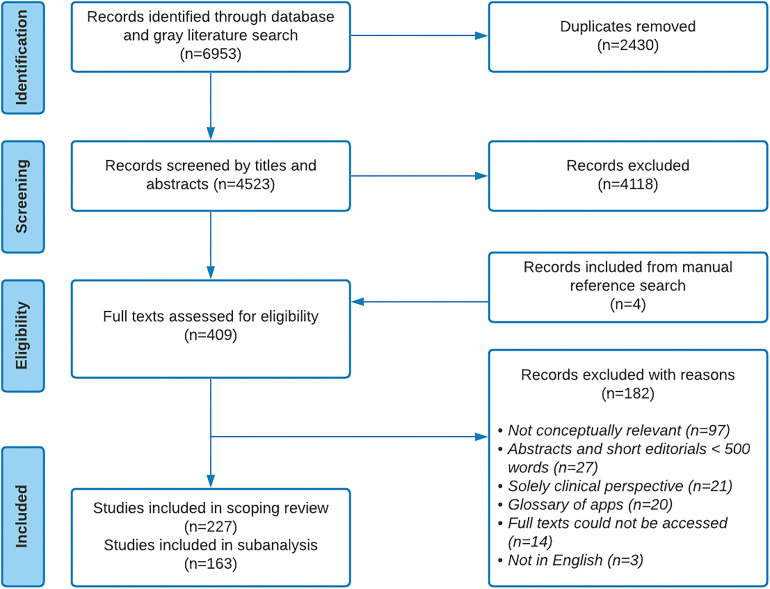
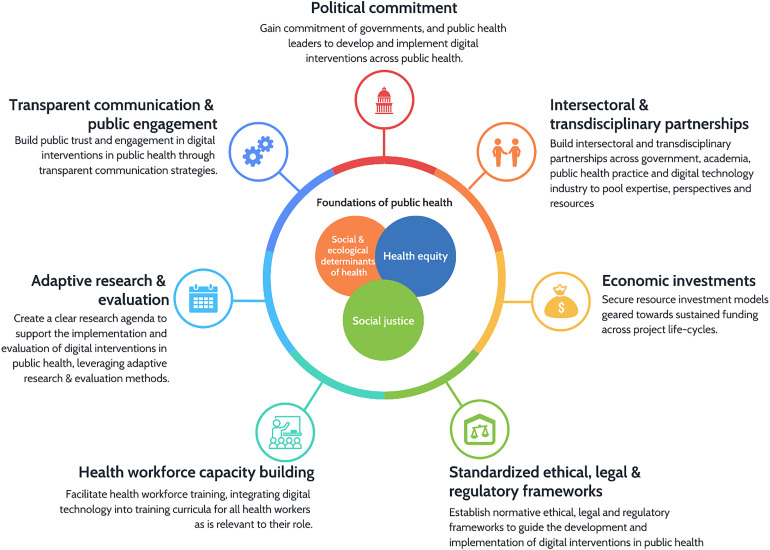
Background: “Digital public health” has emerged from an interest in integrating digital technologies into public health. However, significant challenges which limit the scale and extent of this digital integration in various public health domains have been described. We summarized the literature about these challenges and identified strategies to overcome them. Methods: We adopted Arksey and O’Malley's framework (2005) integrating adaptations by Levac et al. (2010). OVID Medline, Embase, Google Scholar, and 14 government and intergovernmental agency websites were searched using terms related to “digital” and “public health.” We included conceptual and explicit descriptions of digital technologies in public health published in English between 2000 and June 2020. We excluded primary research articles about digital health interventions. Data were extracted using a codebook created using the European Public Health Association's conceptual framework for digital public health. Results and analysis: Overall, 163 publications were included from 6953 retrieved articles with the majority (64%, n = 105) published between 2015 and June 2020. Nontechnical challenges to digital integration in public health concerned ethics, policy and governance, health equity, resource gaps, and quality of evidence. Technical challenges included fragmented and unsustainable systems, lack of clear standards, unreliability of available data, infrastructure gaps, and workforce capacity gaps. Identified strategies included securing political commitment, intersectoral collaboration, economic investments, standardized ethical, legal, and regulatory frameworks, adaptive research and evaluation, health workforce capacity building, and transparent communication and public engagement. Conclusion: Developing and implementing digital public health interventions requires efforts that leverage identified strategies to overcome diverse challenges encountered in integrating digital technologies in public health.
Overview
The claims and statistics of this paper haven’t been checked yet.
Run the check — free, no account needed. It reads the open-access text and checks the sources it cites.
Integrity signals
Registry
Cites
Statistics
Figures
Verification
Claims the paper makes
The claims and statistics of this paper haven’t been checked yet.
Run the check — free, no account needed. It reads the open-access text and checks the sources it cites.
Claims other papers make about this one
Each is checked against this paper’s own text: does it say what the citing paper says it does?
The cited source says what the claim attributes to it.
In the citing paper
“The sustainability of digital health interventions, particularly with limited public health funding, remains challenging [141,142].”
Self-check
Percentages, sums and reported differences re-computed from the paper’s own numbers.
The self-check needs the paper’s full text.
Citations
Cites
Using thematic analysis in psychology
Braun, V., & Clarke, V. (2006) · Qualitative Research in Psychology · doi:10.1191/1478088706qp063oa · Cited by 194,414
PRISMA Extension for Scoping Reviews (PRISMA-ScR): Checklist and Explanation
Tricco, A. C., Lillie, E., Zarin, W., O'Brien, K. K., Colquhoun, H., Levac, D., Moher, D., Peters, M. D. J., Horsley, T., Weeks, L., et al. (2018) · Annals of Internal Medicine · doi:10.7326/m18-0850 · Cited by 43,565 · cited 1×
“Our reports adhere to the Preferred Reporting Items for Systematic Reviews and Meta-Analyses (PRISMA) for scoping reviews.(13) Data sources”
MethodScoping studies: towards a methodological framework
Arksey, H., & O'Malley, L. (2005) · International Journal of Social Research Methodology · doi:10.1080/1364557032000119616 · Cited by 36,742 · cited 1×
“We followed Arksey and O ’ Malley ’ s framework for scoping reviews, 11 with adaptations suggested by Levac et al.. 12 Our reports adhere to the Preferred Reporting Items for Systematic Reviews and Meta-Analyses (PRISMA) for scoping reviews.”
MethodScoping studies: advancing the methodology
Levac, D., Colquhoun, H., & O'Brien, K. K. (2010) · Implementation Science · doi:10.1186/1748-5908-5-69 · Cited by 15,268 · cited 1×
“We followed Arksey and O’Malley’s framework for scoping reviews,(11) with adaptations suggested by Levac et al..(12) Our reports adhere to the Preferred Reporting Items for Systematic Reviews and Meta-Analyses (PRISMA) for scoping reviews.”
MethodUnderstanding digital transformation: A review and a research agenda
Vial, G. (2019) · The Journal of Strategic Information Systems · doi:10.1016/j.jsis.2019.01.003 · Cited by 7,337 · cited 1×
“9 However, public health action requires wide-ranging public engagement, a population health perspective, and prompt information exchange and cooperation across diverse organizations and public health agencies.”
BackgroundMoorhead, S. A., Hazlett, D. E., Harrison, L., Carroll, J. K., Irwin, A., & Hoving, C. (2013) · Journal of Medical Internet Research · doi:10.2196/jmir.1933 · Cited by 2,517
Deep Learning for Health Informatics
Ravì, D., Wong, C., Deligianni, F., Berthelot, M., Andreu-Perez, J., Lo, B., & Yang, G.-Z. (2017) · IEEE Journal of Biomedical and Health Informatics · doi:10.1109/jbhi.2016.2636665 · Cited by 2,000 · cited 3×
“24,39,40 43 Health equity.”
BackgroundEysenbach, G. (2009) · Journal of Medical Internet Research · doi:10.2196/jmir.1157 · Cited by 1,351 · cited 2×
“52,154 There is an ethical imperative to implement such strategies as misinfor-mation and disinformation ampli fi ed through digital technology has signi fi cant public health consequences.”
BackgroundDigital technologies in the public-health response to COVID-19
Budd, J., Miller, B. S., Manning, E. M., Lampos, V., Zhuang, M., Edelstein, M., Rees, G., Emery, V. C., Stevens, M. M., Keegan, N., et al. (2020) · Nature Medicine · doi:10.1038/s41591-020-1011-4 · Cited by 1,195 · cited 1×
“163,164 However, we remain con fi - dent that the broad challenges and strategies identi fi ed in this review remain relevant in our current context.”
BackgroundArtificial intelligence and the future of global health
Schwalbe, N., & Wahl, B. (2020) · The Lancet · doi:10.1016/s0140-6736(20)30226-9 · Cited by 956 · cited 7×
“Further, the iterative and fast-paced evolution of digital technologies is not matched by current research methods which are often rigid and slow to adapt.(27,36,43,45,77,82,83,88,89) There is also a lack of widely agreed-upon standards for assessing outcomes(55,90) and reliable outcome measures that extend beyond use…”
BackgroundInfluential
Research works printed but not linked: 22
- World Health Organization (WHO), 2020, Draft global strategy on digital health 2020–2024
- Public Health England, 2017, Digital-first public health: public health England’s digital strategy
- Canadian Public Health Association, The Canadian Public Health Association, Canadian Public Health Association, 2017, Public health: a conceptual framework
- Veritas Health Innovation. Covidence systematic review software, www.covidence.org.
- Deny S, The Health Foundation
- Kreps GL, 2017, Stud Health Technol Inform, 240, 347
- Murray E, 2012, Med 20, 1, e3
- Norman CD, 2012, Stud Health Technol Inform, 172, 54
- EXPH, Report on Assessing the impact of digital transformation of health services, expert panel on effective ways of investing in health (EXPH)
- Fountain JE, 2004, Prev Chronic Dis, 1, 1
- Heldman MPH AB, 2013, Public Health Rev, 35, 1
- Savel TG, 2012, MMWR Surveill Summ, 61, 20
- UNICEF Health Section Implementation Research and Delivery Science Unit and the Office of Innovation Global Innovation Centre, 2018, UNICEF’s approach to digital health
- Canadian Institutes for Health Research, 2019, AI For public health equity: workshop report
- Kostkova P, Proceedings of the 22nd International Conference on World Wide Web - WWW ‘13 Companion, 687
- Topol, E, 2019, The topol review. Preparing the healthcare workforce to deliver the digital future. An independent report on behalf of the Secretary of State for Health and Social Care
- UNFPA, World Health Organization (WHO), Accelerator discussion paper 6: data and digital health
- Rachadell JJ, 2020, Digital health in 2019. A summary report of the track of digital health at the 12th European Public Health conference 2019 in Marseille
- World Health Organization (WHO), 2018, Digital technologies: shaping the future of primary health care
- World Health Organization (WHO), 2018, Towards a roadmap for the digitalization of national health systems in Europe
- European Commission, Communication from the commission: guidance on apps supporting the fight against COVID-19 pandemic in relation to data protection 2020/C 124 I/01
- European Observatory on Health Systems and Policies & Hamilton, Clayton, Eurohealth, 25
Cited by
Sorted by citations
Erku, D., Khatri, R. B., Endalamaw, A., Wolka, E., Nigatu, F., Zewdie, A., & Assefa, Y. A. (2023) · International Journal of Environmental Research and Public Health · doi:10.3390/ijerph20196854 · Cited by 224
“In addition to comprehensive training for PHC providers, continuous monitoring, updates, and quality assurance mechanisms must be embedded within these digital interventions in order to maximize the benefits of digital tools while minimizing the potential risks [85].”
Abell, B., Naicker, S., Rodwell, D., Donovan, T., Tariq, A., Baysari, M., Blythe, R., Parsons, R., & McPhail, S. M. (2023) · Implementation Science · doi:10.1186/s13012-023-01287-y · Cited by 131
“Ideally, hospital-system and research stakeholders need to identify constructs that have been shown to influence implementation processes and outcomes, understand potential mechanisms of change, and identify potential barriers and facilitators to successful implementation [13, 14].”
BackgroundJolles, M. P., Fort, M. P., & Glasgow, R. E. (2024) · International Journal for Equity in Health · doi:10.1186/s12939-024-02130-6 · Cited by 88
“Most often, complex health-related interventions are implemented in dynamic and diverse contexts [7, 43, 44].”
BackgroundTHE IMPACT OF BIG DATA ON HEALTHCARE PRODUCT DEVELOPMENT: A THEORETICAL AND ANALYTICAL REVIEW
Ogundipe, D. O. (2024) · International Medical Science Research Journal · doi:10.51594/imsrj.v4i3.932 · Cited by 80
Digital Literacy 5.0 to Enhance Multicultural Education
Anurogo, D., Ramba, H. L., Putri, N. D., & Putri, U. M. P. (2023) · Multicultural Islamic Education Review · doi:10.23917/mier.v1i2.3414 · Cited by 103
Yew, S. Q., Trivedi, D. P., Adanan, N. I. H., & Chew, B. (2025) · Journal of Medical Internet Research · doi:10.2196/63482 · Cited by 61
“…empowerment, efficient health care delivery, timely and personalized care, remote monitoring, and data-driven decision-making, the implementation process of DHTs in the hospital settings, including its facilitators and barriers, is mostly described in the context of high-income countries [26,27].”
Bernhardsson, S., Larsson, A., Bergenheim, A., Ho-Henriksson, C.-M., Ekhammar, A., Lange, E., Larsson, M. E. H., Nordeman, L., Samsson, K. S., & Bornhöft, L. (2023) · PLoS ONE · doi:10.1371/journal.pone.0283013 · Cited by 54
“Thus, both physiotherapists and patients using digital assessment must rely on IT providers to offer secure and reliable real-time video systems as well as systems to safely store their patients’ health data [59, 60].”
BackgroundHarnessing digital health interventions to bridge the gap in prevention for older adults
Daniels, K., & Bonnechère, B. (2024) · Frontiers in Public Health · doi:10.3389/fpubh.2023.1281923 · Cited by 39
Ulrich, S., Gantenbein, A. R., Zuber, V., Von Wyl, A., Kowatsch, T., & Künzli, H. (2024) · Journal of Medical Internet Research · doi:10.2196/50132 · Cited by 36
“The sustainability of digital health interventions, particularly with limited public health funding, remains challenging [141,142].”
Towett, G., Snead, R. S., Grigoryan, K., & Marczika, J. (2023) · Globalization and Health · doi:10.1186/s12992-023-00998-7 · Cited by 33
“This is particularly concerning in many parts of the world where the legal and regulatory frameworks governing digital health solutions (DHSs) are either lacking, poorly enforced, or not aligned with international standards [52].”
BackgroundDuggal, M., Ayadi, A. E., Duggal, B., Reynolds, N. R., & Bascarán, C. (2023) · Frontiers in Public Health · doi:10.3389/fpubh.2022.1090303 · Cited by 33
Hurvitz, N., & Ilan, Y. (2023) · Clinics and Practice · doi:10.3390/clinpract13040089 · Cited by 35
Tensions and Paradoxes of Scaling Up: A Critical Reflection on Physical Activity Promotion
Koorts, H., Bauman, A. E., Edwards, N. C., Bellew, W., Brown, W. J., Duncan, M. J., Lubans, D. R., Milat, A., Morgan, P. J., Nathan, N., et al. (2022) · International Journal of Environmental Research and Public Health · doi:10.3390/ijerph192114284 · Cited by 25
“The time required for scaling up was also perceived as particularly problematic for digital health interventions, which were competing with fast-paced developments in technology [67].”
BackgroundRamachandran, S., Chang, H.-J., Worthington, C., Kushniruk, A., Ibáñez-Carrasco, F., Davies, H., McKee, G., Brown, A., Gilbert, M., & Iyamu, I. (2024) · JMIR Public Health and Surveillance · doi:10.2196/52798 · Cited by 23
Self-citationAdhikari, S., Ahmad, I., Bajracharya, D. C., Khanal, B., Solomon, C., Jayaratne, K., Mamum, K. A. A., Talukder, M. S. H., Shakya, S., Manandhar, S., et al. (2025) · npj Digital Medicine · doi:10.1038/s41746-025-01534-0 · Cited by 29
Iyamu, I. O., Ramachandran, S., Chang, H.-J., Kushniruk, A. W., Ibáñez-Carrasco, F., Worthington, C., Davies, H., McKee, G. R., Brown, A. D., & Gilbert, M. (2025) · BMC Public Health · doi:10.1186/s12889-024-21089-1 · Cited by 24
“Our study demonstrates gaps in current staccato approaches to building competencies through self-led capacity building results in signi�cant waste as these self-built competencies are limited by systems not built to leverage new digital competencies [30].”
Self-citationBarriers to digital health implementation in low- and middle-income countries: a narrative review
Olayiwola, Q. B., Sanusi, O. M., Amoo, G. S., Agboola, O. J., Adeyemi, J. A., Suleiman, H. A., Ibrahim, M. A., & Hassan, T. A. (2026) · Discover Public Health · doi:10.1186/s12982-026-01875-5 · Cited by 27
Brand, T., Herrera-Espejel, P. S., Muellmann, S., Wiersing, R., & Busse, H. (2024) · Bundesgesundheitsblatt - Gesundheitsforschung - Gesundheitsschutz · doi:10.1007/s00103-024-03832-6 · Cited by 18
Borda, A., Molnar, A., Heys, M., Musyimi, C. W., & Kostkova, P. (2023) · Frontiers in Public Health · doi:10.3389/fpubh.2023.1153971 · Cited by 14
Farías, M. A., Badino, M., Martí, M., Báscolo, E., García-Saisó, S., & D'Agostino, M. J. (2023) · Revista Panamericana de Salud Pública · doi:10.26633/rpsp.2023.150 · Cited by 12
“Tales alianzas también se consideran importantes para crear marcos comunes y coor-dinados de interoperabilidad, gobernanza e investigación y así obtener los recursos, el conocimiento y las capacidades necesa-rias para aprovechar el potencial de las intervenciones de salud pública digital (33).”
BackgroundPetit, P., & Vuillerme, N. (2025) · JMIR Public Health and Surveillance · doi:10.2196/62939 · Cited by 16
Ukaegbu, O. C., & Fan, M. (2025) · Health Policy and Technology · doi:10.1016/j.hlpt.2025.101024 · Cited by 12
Processes Underpinning Successful Co‐Design: Lessons From a Digital Health Project
Burns, C., Kilkenny, M. F., Purvis, T. L., Gall, S., Farmer, C., Barker, S., Booth, B. E., Bray, J., Cadilhac, D. A.-M., Cameron, J., et al. (2025) · Health Expectations · doi:10.1111/hex.70272 · Cited by 11
Delivering Digital Health Solutions that Patients Need: A Call to Action
Popa, V., Geißler, J., Vermeulen, R., Priest, E., Capperella, K., Susuzlu, G., Terry, S. F., & Brooke, N. J. (2023) · Therapeutic Innovation & Regulatory Science · doi:10.1007/s43441-023-00592-4 · Cited by 11
“These include fragmentation of the digital health landscape [13, 14], regulatory barriers [15, 16], lack of transparency and data sharing (to support further research and improve research efficiency) [17–20], limited identification and sharing of best practice [21, 22], insufficient digital health…”
BackgroundDereje, D., Lamba, D., Abessa, T. G., Kenea, C., Ramari, C., Osama, M., Kossi, O., Boma, P. M., Panda, J., Kushnir, A. D., et al. (2025) · Frontiers in Digital Health · doi:10.3389/fdgth.2025.1505717 · Cited by 11
FDA launches health care at home initiative to drive equity in digital medical care
Brückner, S., Brightwell, C., & Gilbert, S. (2024) · npj Digital Medicine · doi:10.1038/s41746-024-01198-2 · Cited by 10
Maaß, L., Badino, M., Iyamu, I. O., & Holl, F. (2024) · JMIR Public Health and Surveillance · doi:10.2196/63031 · Cited by 14
Self-citationDigital Health Revolution in India: Transforming Health and Medicine
Rana, R. K., Kapoor, N., Kumar, D., Verma, M., & Taneja, G. (2024) · Indian Journal of Community Medicine · doi:10.4103/ijcm.ijcm_803_24 · Cited by 16
“[28] Technical challenges include adapting evidence-based standards, privacy and data governance issues, and the potential to manage health inequities.”
Brasileiro, J., Queiroz, A. A. F. L. N., Hightow‐Weidman, L., & Muessig, K. E. (2025) · Current HIV/AIDS Reports · doi:10.1007/s11904-025-00732-5 · Cited by 9
Digital Healthcare Innovative Services in Times of Crisis: A Literature Review
Anastasiadou, O., Tsipouras, M. G., Mpogiatzidis, P., & Angelidis, P. A. (2025) · Healthcare · doi:10.3390/healthcare13080889 · Cited by 11
“This shift is illustrated by the increased use of wireless handheld devices among healthcare professionals, which support seamless data collection and are particularly beneficial for patient care during emergencies [19].”
Why are you? Exploring patients’ behavior in selecting physicians in online health communities
Sun, Z., Wang, K., Jin, Y., Wang, Z., & Yang, R. (2025) · Information & Management · doi:10.1016/j.im.2025.104176 · Cited by 9
Tucker, J., & Lorig, F. (2024) · Frontiers in Public Health · doi:10.3389/fpubh.2023.1337151 · Cited by 8
Wang, P., Tadeo, X., Chew, H. S. J., Sapanel, Y., Ong, Y. H., Leung, N. Y. T., Chow, E. K., & Ho, D. (2024) · PNAS Nexus · doi:10.1093/pnasnexus/pgae214 · Cited by 5
Ali, S. I., & Shaban, M. (2026) · Nurse Education in Practice · doi:10.1016/j.nepr.2026.104771 · Cited by 6
Meierkord, A., Körner-Nahodilová, L., Gotsche, C. I., Baruch, J., Briesemeister, V., Correa-Martínez, C. L., & Hanefeld, J. (2024) · Public Health · doi:10.1016/j.puhe.2024.04.040 · Cited by 6
Adu, M. K., Banire, B., Dockrill, M., Ilie, A., Lappin, E., McGrath, P., Munro, S., Myers, K., Obuobi-Donkor, G., Orji, R., et al. (2024) · Frontiers in Digital Health · doi:10.3389/fdgth.2024.1449129 · Cited by 10
Smrke, U., Rehberger, A., Plohl, N., & Mlakar, I. (2025) · Applied Sciences · doi:10.3390/app15041937 · Cited by 7
Grannell, A., Hallson, H., Gunlaugsson, B., & Jónsson, H. (2023) · Frontiers in Digital Health · doi:10.3389/fdgth.2023.1250979 · Cited by 8
Iyamu, I. O., Wheelans, C., Haag, D., Roe, I., Chang, H.-J., Donelle, L., Ellis, U. M., McKee, G., Bartlett, S., & Gilbert, M. (2026) · Frontiers in Public Health · doi:10.3389/fpubh.2026.1802392 · Cited by 9
“This indicates that workforce readiness is not being systematically addressed along-side technological change, underscoring the need to align workforce capacity with the design, governance, and deployment of AI-enabled healthcare and public health systems (9, 14, 57).”
Self-citationHeitkemper, E., Hulse, S. T., Bekemeier, B., Schultz, M., Whitman, G., & Turner, A. M. (2024) · JMIR Human Factors · doi:10.2196/51666 · Cited by 6
“…public health data are well documented in the literature and include the critical problems of a lack of investment in public health data systems and infrastructure [36-39], issues with data quality [40-42] and data fragmentation [43,44], and the sparse data available about rural communities [8,45].”
BackgroundInfodemiology and Infoveillance of the Four Most Widespread Arbovirus Diseases in Italy
Santangelo, O. E., Provenzano, S., Vella, C., Firenze, A., Stacchini, L., Cedrone, F., & Gianfredi, V. (2024) · Epidemiologia · doi:10.3390/epidemiologia5030024 · Cited by 6
“Future research can contribute to the development of standardized approaches for digital epidemiology, facilitating cross-country comparisons and collaborative efforts [25].”
BackgroundAshtarian, K., & Etemadi, M. (2023) · International Journal of Health Governance · doi:10.1108/ijhg-10-2022-0094 · Cited by 5
Zamantakis, A., Zapata, J. P., Greenawalt, I., Knapp, A. A., Benbow, N., & Mustanski, B. S. (2024) · AIDS and Behavior · doi:10.1007/s10461-024-04525-6 · Cited by 5
“In contrast, the inflexibility of DHIs or their limited adaptability has been cited as a major barrier in previous DHI studies [ 30 ].”
LaMonica, H. M., Loblay, V., Poulsen, A., Hindmarsh, G., Alam, M., Ekambareshwar, M., Khan, Q., Song, Y. J. C., Crouse, J. J., Wilson, C. E., et al. (2025) · Journal of Medical Internet Research · doi:10.2196/65705 · Cited by 5
König, L. M., Allmeta, A., Perski, O., Smit, E. S., Newby, K. V., Vandelanotte, C., Poduval, S., Gordon, L., Gültzow, T., Alblas, M. C., et al. (2024) · OSF Preprints (OSF Preprints) · doi:10.31219/osf.io/d9zx7 · Cited by 5
Williams, C. J., & Duff, J. S. (2024) · Perioperative Care and Operating Room Management · doi:10.1016/j.pcorm.2024.100427 · Cited by 5
Sekalala, S. R., & Lake, S. J. (2025) · Oxford Open Digital Health · doi:10.1093/oodh/oqaf010 · Cited by 5
“Certain evaluative criteria were additionally informed by literature on digital health regulation, as discussed in the introduction of this article [5, 9, 27, 32, 33] (Table 1).”
Iyamu, I. O., Ramachandran, S., Chang, H.-J., Kushniruk, A. W., Ibáñez-Carrasco, F., Worthington, C., Davies, H., McKee, G. R., Brown, A. D., & Gilbert, M. (2025) · JMIR Public Health and Surveillance · doi:10.2196/73088 · Cited by 4
“Our study extends the literature by characterizing the nature of inter-and transdisciplinary partnerships, which are critical for designing and delivering such training programs [17,29,32].”
InfluentialSelf-citationUnraveling the Factors Associated With Digital Health Intervention Uptake: Cross-Sectional Study
Ruotsalainen, I., Valtanen, M., Kärsämä, R., Umer, A., Liedes, H., Parikka, S., Lundqvist, A., Aittola, K., Manninen, S., Pihlajamäki, J., et al. (2025) · JMIR mhealth and uhealth · doi:10.2196/63896 · Cited by 7
Chikovani, I., Soselia, G., Huang, A., Uchaneishvili, M., Zhao, Y., Cao, C., Lyu, M., Tang, K., & Gotsadze, G. (2024) · Health Policy and Planning · doi:10.1093/heapol/czad098 · Cited by 3
“For national ownership of the HMIS, accountability mandates matter, also noted in the literature (Chaulagai et al. , 2005; Tull, 2018; Iyamu et al. , 2022).”
MethodBrand, T., Herrera-Espejel, P. S., & Busse, H. (2025) · Springer series on epidemiology and public health · doi:10.1007/978-3-031-90154-6_12 · Cited by 4
Gehrmann, J., Stephan, J., Dehner, J., Stullich, A., & Richter, M. (2026) · BMC Health Services Research · doi:10.1186/s12913-026-14631-x · Cited by 3
“We admit patients every 14 days on Thursday” (Exp2, PhTh, 15)”
Nishan, M. N. H. (2026) · Journal of Public Health Research · doi:10.1177/22799036261455523 · Cited by 3
Iyamu, I. O., Haag, D., Carson, A., Wang, I., King, C., Roe, I., Kerr, K., Bartlett, S. R., McKee, G. R., & Gilbert, M. (2025) · JMIR Public Health and Surveillance · doi:10.2196/72588 · Cited by 3
“Within this context, incentives for privacy and infrastructure workarounds that are dependent on an enthusiastic few continue to complicate perceived fragmentation [22,37,41].”
InfluentialSelf-citationChen, J., Zhang, Q., Fong, P., & Meng, L. (2025) · Nursing Open · doi:10.1002/nop2.70275 · Cited by 3
Enhancing Patient Communication Through Health Professionals’ Digital Literacy
Brînzac, M. G., Ungureanu, M., BUMBU, M., & Baba, C. O. (2024) · Transylvanian Review of Administrative Sciences · doi:10.24193/tras.72e.1 · Cited by 3
DiScO: novel rapid systems mapping to inform digital transformation of health systems
Katapally, T. R., Elsahli, N., & Bhawra, J. (2024) · Frontiers in Public Health · doi:10.3389/fpubh.2024.1441328 · Cited by 5
Fikrie, A., Daniel, D., Ermiyas, S., Hassen, H., Seyoum, W., Kebede, S., & Wako, W. G. (2025) · PLoS ONE · doi:10.1371/journal.pone.0311956 · Cited by 3
Unraveling the factors associated with digital health intervention uptakePreprint
Ruotsalainen, I., Valtanen, M., Kärsämä, R., Umer, A., Liedes, H., Parikka, S., Lundqvist, A., Aittola, K., Manninen, S. M., Pihlajamäki, J., et al. (2024) · medRxiv · doi:10.1101/2024.03.18.24304467 · Cited by 3
“Despite the potential, there are notable concerns regarding the digital divide and its impact on health equity 21 .”
BackgroundGilbert, M., Ablona, A., Chang, H.-J., Iyamu, I. O., Sierra-Rosales, R., Pedersen, H., Flowers, P., Lachowsky, N. J., Grace, D., & Worthington, C. (2025) · Digital Health · doi:10.1177/20552076251339016 · Cited by 2
Self-citationChu, J., Liu, C., Ritchie, C. D., & Kan, K. M. (2025) · Journal of Pediatric Urology · doi:10.1016/j.jpurol.2025.07.020 · Cited by 2
Sun, Y.-H., Tseng, S., Hou, W., Chen, H., Lin, C., & Wang, Y.-H. (2025) · European Child & Adolescent Psychiatry · doi:10.1007/s00787-025-02860-0 · Cited by 3
Canella, C., Braun, C., & Witt, C. M. (2024) · Digital Health · doi:10.1177/20552076241255928 · Cited by 2
Discursive framework for a multi-disease digital health passport in Africa: a perspective
Towett, G., Snead, R. S., Marczika, J., & y Nogueira, I. P. (2024) · Globalization and Health · doi:10.1186/s12992-024-01067-3 · Cited by 2
“Additionally, enforcement of existing frameworks may be inadequate, they may misalign with international standards, or they may be outdated, having been established before the emergence of advanced DHS technologies [62].”
BackgroundIyamu, I. O., Gorun, P., Chang, H.-J., Sierra-Rosales, R., Haag, D., Pedersen, H., Bartlett, S. R., Lachowsky, N. J., McKee, G. R., Worthington, C., et al. (2025) · Journal of Medical Internet Research · doi:10.2196/78008 · Cited by 2
“Within the context of societal digital transformation, there has been increasing recognition of the need for improved measures of DHL to guide public health advocacy, policy, and action at multiple levels [2,8,43,44].”
Self-citationBackman, C., Papp, S., Harley, A., Kolle, A. T., Visintini, S. M., Shah, S., Berdusco, R., Poitras, S., Beaulé, P. E., & French-Merkley, V. (2023) · JMIR Research Protocols · doi:10.2196/42056 · Cited by 2
“Although asynchronous digital platforms can sometimes be challenging, especially in relation to technological issues [6], successful use of these platforms has been described with patients living with diabetes [7,8], cardiovascular disease [9,10], chronic obstructive pulmonary disease [11], and patients recovering pos…”
BackgroundThe Future of Digital Healthcare: Integrating Rights, AI and Open StandardsPreprint
Clim, A. (2023) · SSRN Electronic Journal · doi:10.2139/ssrn.4576606 · Cited by 2
Guo, L., Tan, J., & Hughes, M. C. (2025) · Frontiers in Public Health · doi:10.3389/fpubh.2025.1472398 · Cited by 1
Role of AI in Revolutionizing Clinical Care
Ghosh, O., Kumar, B., & Roy, P. K. (2025) · Advances in computational intelligence and robotics book series · doi:10.4018/979-8-3373-4332-7.ch003 · Cited by 1
Assuring a Sufficient and Competent Public Health Workforce for Digital Public Health (EPHO 7)
Brînzac, M. G., Hrzic, R., Hachem, M., & Ogunlayi, F. (2025) · Springer series on epidemiology and public health · doi:10.1007/978-3-031-90154-6_22 · Cited by 1
Izadirad, H., Moein, H., Omara, E., Nakhaie, S., Masoudy, G., & Shahestan, M. K. (2025) · The Open Public Health Journal · doi:10.2174/0118749445407325250919071552 · Cited by 1
Kalawatia, M., Mehrunkar, A., & Lucke-Wold, B. P. (2025) · World Journal of Psychiatry · doi:10.5498/wjp.v15.i10.109462 · Cited by 3
Digital Health: Context and Challenges in Brazil with Focus on Public Health
Conrado, L. F., dos Reis, M. E. D. M., Couto, J. F., Viera, L. E. V., Lima, N., Zeferino, A. C. S., da Silva, E. S., & Calado, R. D. (2025) · IEEE International Conference on Industry Applications · doi:10.1109/induscon66435.2025.11241578 · Cited by 1
“The non-technical challenges can be considered as “key barriers with regard to the development and implementation of digital public health interventions” [17].”
Thew, H. Z., Yap, A. Q. R., Tan, T. Q., Goh, J. H., & Chen, T. C. (2025) · Springer eBooks · doi:10.1007/978-981-95-2175-3_4 · Cited by 1
Malungana, L., Motsi, L., & Chimbo, B. (2025) · Lecture notes in networks and systems · doi:10.1007/978-981-96-6935-6_46 · Cited by 1
Mannix, S., & Albury, K. (2026) · BMC Health Services Research · doi:10.1186/s12913-025-13970-5 · Cited by 1
Snowdon, A. W., Wright, A., Abdulkadir, H., Wymer, J., Howgate, J., & Storey, T. (2026) · Frontiers in Public Health · doi:10.3389/fpubh.2025.1680904 · Cited by 2
Lindberg, J. O., Lundgren, A. S., Eriksson, M., & Lindgren, H. (2026) · Frontiers in Digital Health · doi:10.3389/fdgth.2026.1748259 · Cited by 1
Hsiao, K. H., Quinn, E., Johnstone, T., Gomez, M., Ingleton, A., Parasuraman, A., Najjar, Z., & Gupta, L. (2024) · JMIR Public Health and Surveillance · doi:10.2196/37625 · Cited by 1
“However, the public health field is beleaguered by tools that are short-lived, duplicative, disconnected, of poor quality, or not suited to user needs [2,4,5].”
BackgroundRamachandran, S., Iyamu, I. O., Chang, H.-J., Kushniruk, A. W., Ibáñez-Carrasco, F., Worthington, C., Davies, H., McKee, G. R., Brown, A. D., & Gilbert, M. (2023) · doi:10.2196/preprints.52798 · Cited by 1
Self-citationHealth, Technology And Built Environment Nexus: A Systematic Literature ReviewPreprint
Ndimako, O. O., & Sholanke, A. B. (2024) · Preprints.org · doi:10.20944/preprints202404.0088.v1
Vetrivel, S. C., Sabareeshwari, V., Ambikapathi, R., Arun, V. P., & Sowmiya, K. C. (2025) · doi:10.1002/9781394275397.ch1 · Cited by 1
Foisey, L., Kothari, A. R., Donelle, L., Booth, R. G., & Quan‐Haase, A. (2023) · doi:10.2196/preprints.47571
Digital Health Intervention of Healthy Indonesia Program with Family Approach: Does it Work?
Prasiska, D. I., & Yaqin, M. J. A. (2023) · Jurnal PROMKES · doi:10.20473/jpk.v11.i1si.2023.1-8
Difficulties and Barriers in Accomplishment of HFA 2000
Yee, H. H. L., & Law, V. (2023) · Springer eBooks · doi:10.1007/978-981-99-4491-0_3
‘Alam, G. F., Wiyono, B. B., Burhanuddin, B., & Muslihati, M. (2023) · doi:10.1109/icet59790.2023.10435257
“Digital public health arises from an interest in being able to integrate digital technology into the wider scope of people's lives with the breadth of digital integration in various scientific fields [1].”
BackgroundBondaronek, P., Slee, A. E., & Hamilton, F. L. (2024) · doi:10.2196/preprints.57492
Digitale Transformation im chinesischen Gesundheitswesen: Eine Übersicht und Best Practice
Jiang‐Siebert, Q., Yang, M. J., & Yu, L. (2024) · Springer eBooks · doi:10.1007/978-3-658-43236-2_64
Djamaluddin, M., Akib, H., & Anshari, A. (2024) · Journal of Multidisciplinary Science MIKAILALSYS · doi:10.58578/mikailalsys.v3i1.4473
Iyamu, I. O., Haag, D., Carson, A., Wang, I., King, C., Roe, I., Kerr, K., McKee, G. R., & Gilbert, M. (2025) · doi:10.2196/preprints.72588
Self-citationIyamu, I. O., Ramachandran, S., Chang, H., Kushniruk, A. W., Ibáñez-Carrasco, F., Worthington, C., Davies, H., McKee, G. R., Brown, A. D., & Gilbert, M. (2025) · doi:10.2196/preprints.73088
Self-citationBondaronek, P., Slee, A. E., & Hamilton, F. L. (2025) · Qeios · doi:10.32388/pgu6li
Kindler, G. S., Kelly, N., & Watson, J. E. M. (2025) · Integrative Conservation · doi:10.1002/inc3.70031
Anforderungen und Möglichkeiten von Digitalisierung in der Verhaltens- und Verhältnisprävention
Zeeb, H., Muellmann, S., & Schüz, B. (2025) · Springer eBooks · doi:10.1007/978-3-662-71115-6_3
Digital Transformation for Improving Child Health in South Asia: Do We Need a Reboot?
Dwivedi, V., Dyson, M., Källander, K., & Boussery, G. (2025) · Journal of Medical Internet Research · doi:10.2196/73053
“Despite their potential, digital health interventions remain largely at the project or program level or in pilot phase due to various technical and nontechnical challenges (Textbox 1) in the development of the digital public health infrastructure required to optimize data for health outcomes [4].”
Finlay, S., Lamoureux, G., Moïse‐Richard, A., Ménard, L., & Verduyckt, I. A. (2025) · International Journal of Language & Communication Disorders · doi:10.1111/1460-6984.70115 · Cited by 1
“Overreliance on digital tools could create a reductionist perspective, suggesting that these tools alone are sufficient to address complex public health challenges (Iyamu et al. 2022).”
Participatory Approaches for Digital Public Health: Giving Voice to Values
Shrestha, R., Reinschluessel, A. V., & Niess, J. (2025) · Springer series on epidemiology and public health · doi:10.1007/978-3-031-90154-6_4
Evidence-Based Approaches in Digital Public Health
Albrecht, J., Tokgöz, P., & Dockweiler, C. (2025) · Springer series on epidemiology and public health · doi:10.1007/978-3-031-90154-6_6
Disease Prevention, Including Early Detection of Illnesses (EPHO5)
Iyamu, I. O., Haag, D., Pedersen, H., & Gilbert, M. (2025) · Springer series on epidemiology and public health · doi:10.1007/978-3-031-90154-6_20
Self-citation
Metadata
- Authors
- Iyamu, I., Gómez-Ramírez, O., Xu, A. X., Chang, H.-J., Watt, S., Mckee, G., & Gilbert, M.
- Affiliations
- University of British Columbia (CA)
- BC Centre for Disease Control (CA)
- British Columbia Centre for Disease Control, Vancouver, BC, Canada
- Corresponding author
- Gilbert, Mark
- Venue
- DIGITAL HEALTH
- Publisher
- SAGE Publications
- Published
- 2022-01
- Volume
- 8
- Pages
- 205520762211022
- ISSN
- 2055-2076 (ISSN-L)
- PMC
- PMC9152201
- OpenAlex
- W4282924562
- Cited by
- 118
- References
- 147
- Citations by year
- 2026: 23 · 2025: 45 · 2024: 29 · 2023: 20 · 2022: 1
- FWCI
- 4.59
- Type
- journal article
- Language
- en
- Open access
- gold
- doi.org
- Locations
- Digital Health (publishedVersion, cc-by)
- PubMed Central (publishedVersion, cc-by)
- PubMed (publishedVersion)
- DOAJ (DOAJ: Directory of Open Access Journals) (submittedVersion)
- Funders
- Foundation for Population and Public Health at the British Columbia Center for Disease Control
- Topics
- Health Sciences › Health Professions › General Health Professions › Mobile Health and mHealth Applications
- Health Sciences › Medicine › Public Health, Environmental and Occupational Health › Public Health Policies and Education
- Health Sciences › Medicine › Public Health, Environmental and Occupational Health › Healthcare Systems and Practices
- Keywords
- digital public health, digital health interventions, implementation barriers, health equity, health policy, data infrastructure, workforce capacity, intersectoral collaboration, political commitment, citizen participation, digital integration
About these checks
Registry, retraction, Cites and statistics results are computed, not judged, with one exception: a printed reference that no index lists is read once by a model before it counts as a citation error. Claims are extracted by a model and kept only when their quote appears verbatim in the text; each cited source is then checked, with a model’s help, for whether it says what the claim relies on. Those verdicts can be wrong — read the claim’s quote and the cited source before relying on one.
Statistics and arithmetic are recomputed, not judged.
Confidence bands are shown only for fields calibrated on our annotated test set. None is calibrated yet, so no band is shown.
What counts as a claim ›How we measure confidence ›How we check this ›
Are you an author, or do you see a problem with this page? Request a review
