

Mind-Body Skills Training for Resident Wellness: A Pilot Study of a Brief Mindfulness Intervention
Open accessThe DOI matches its Crossref record; 23 of the 23 references it cites were found in a registry or an index.
Abstract
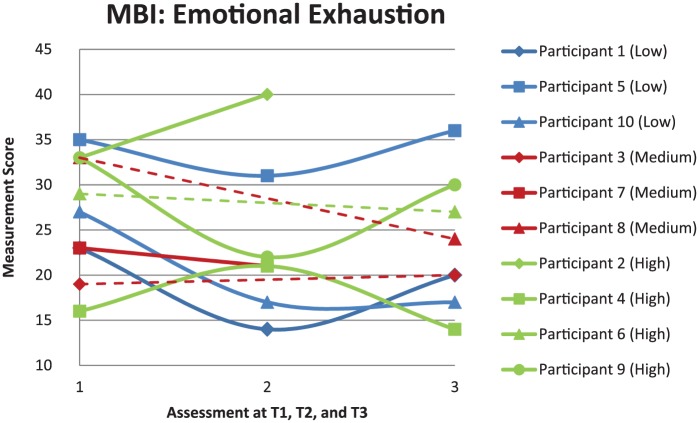
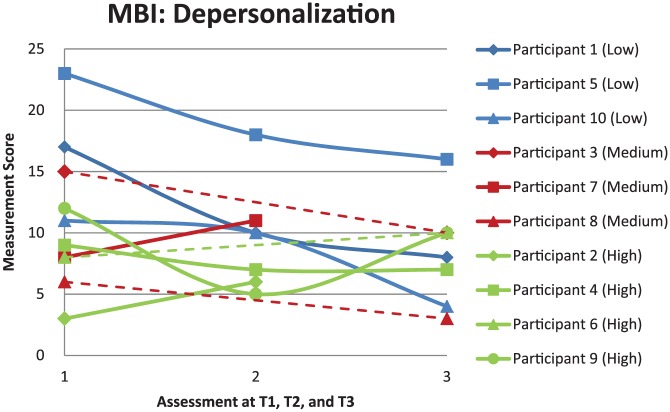
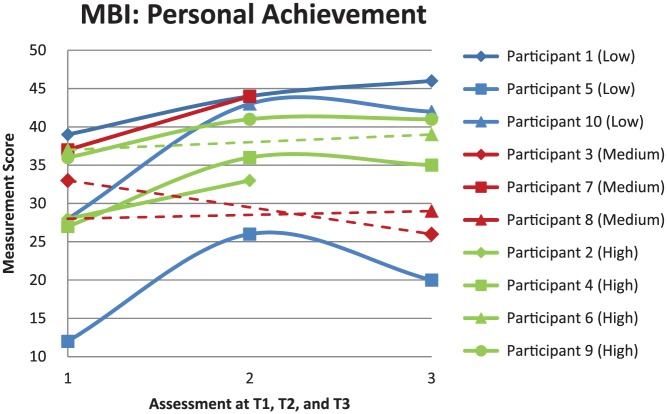
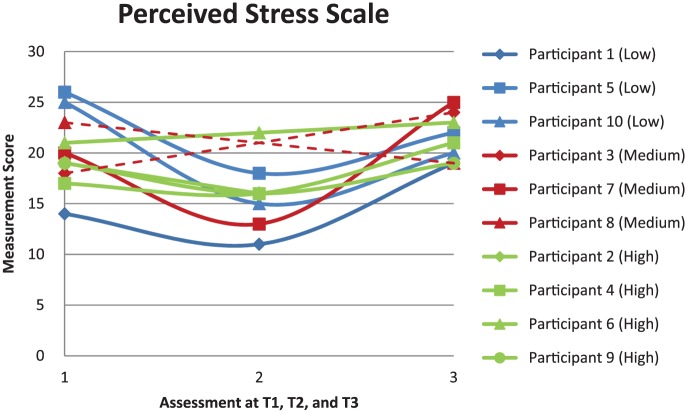
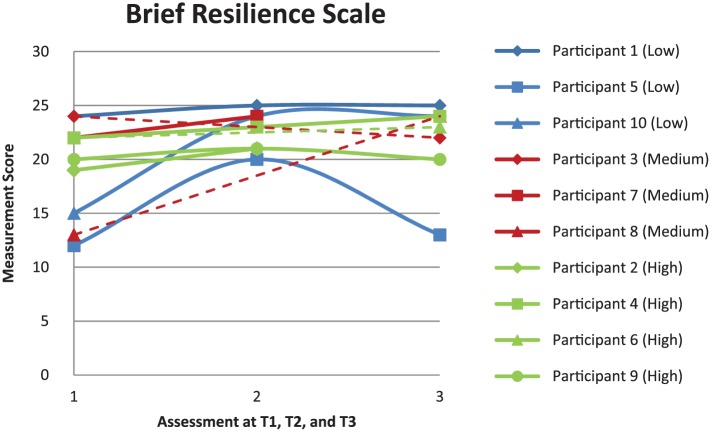
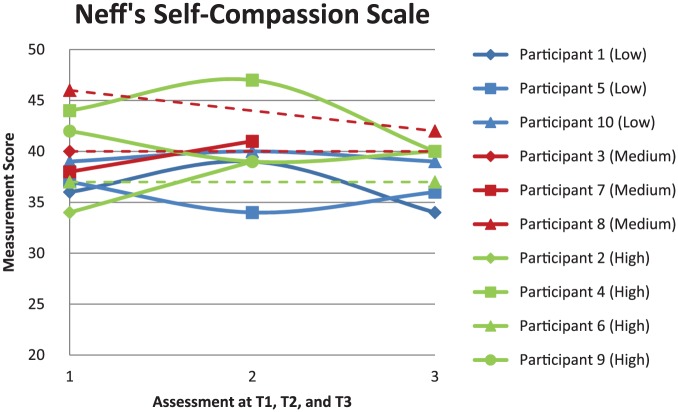
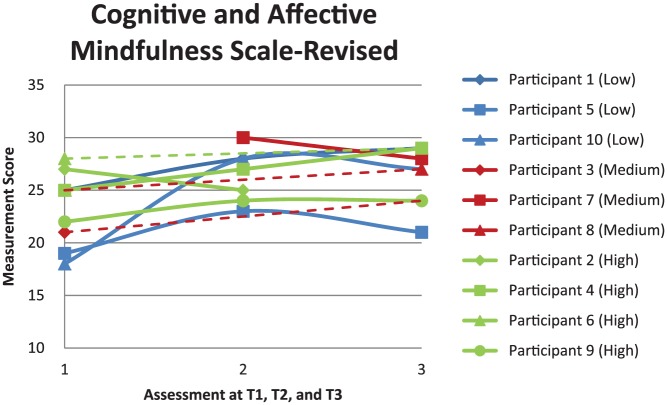
Background: Interventions to address burnout include mind-body skills training (MBST), but few studies have evaluated the feasibility of MBST for busy pediatric residents. Objective: In this pilot study, we tested the feasibility of a brief MBST intervention, using in-person peer-led training supported by online modules, to decrease stress and burnout in pediatric resident physicians. Methods: Of 99 (10%) residents, 10 residents at Nationwide Children’s Hospital in Ohio participated in up to four 90-minute MBST sessions more than 1 month, led by a co-resident with 5 years of informal training in mind-body skills. Participants were offered 8 assigned online modules through OSU Center for Integrative Health and Wellness. Measures including Maslach Burnout Inventory (MBI), Cohen’s Perceived Stress, Smith’s Brief Resilience, Cognitive and Affective Mindfulness Scale-Revised, and Neff’s Self-Compassion Scale (NSS) were administered before (T1) and after (T2) the course. Participants were offered optional monthly “maintenance” sessions for 6 months and completed a third set of measures at this follow-up (T3). Results: The residents completed an average of 4.3/8 online modules and attended an average of 2.8/4 in-person sessions. There was significant improvement in positive attitude, perceived stress, and resilience post intervention (T2). Follow-up evaluation (T3) also demonstrated significant improvement in burnout (depersonalization) and mindfulness. More than 75% of participants found the course worthwhile. Conclusions: A short mixed-method mindfulness-based skills course may be a practical way to offer resilience and stress management training to busy resident physicians.
Overview
The claims and statistics of this paper haven’t been checked yet.
Free: it reads the open-access text and checks the first 5 claims that cite a source we can check. Create a free account to check every claim.
Integrity signals
Registry
Cites
Statistics
Figures
Verification
Claims the paper makes
The claims and statistics of this paper haven’t been checked yet.
Free: it reads the open-access text and checks the first 5 claims that cite a source we can check. Create a free account to check every claim.
Claims other papers make about this one
Each is checked against this paper’s own text: does it say what the citing paper says it does?
The cited source doesn’t support the claim as written.
In the citing paper
“Eight studies assessed burnout symptoms (68, 70–76), with six reporting significant reductions (70–72, 74–76), and two did not (68, 73).”
From Digital resilience interventions for healthcare workers: a systematic review (2025) · cites this paper as [76]
Checked by a reasoning model — may be wrong.
Experimental — accuracy not yet measuredThe source backs part of the claim, not all of it — or backs it for a different population, condition or comparison.
In the citing paper
“Another study demonstrated significant results immediately after the intervention but lost effects at the six months follow-up (76).”
From Digital resilience interventions for healthcare workers: a systematic review (2025) · cites this paper as [76]
Experimental — accuracy not yet measuredThe source backs part of the claim, not all of it — or backs it for a different population, condition or comparison.
In the citing paper
“Seven studies (68–71, 73, 76, 77) measured resilience, with four studies achieving statistical relevance (68, 70, 71, 76), three did not (69, 73, 77).”
From Digital resilience interventions for healthcare workers: a systematic review (2025) · cites this paper as [76]
Experimental — accuracy not yet measuredThe cited source says what the claim attributes to it.
In the citing paper
“Post-intervention, one study showed a significant improvement in resilience (76), whereas four did not (69, 71, 73, 77).”
From Digital resilience interventions for healthcare workers: a systematic review (2025) · cites this paper as [76]
The cited source says what the claim attributes to it.
In the citing paper
“Seven studies examined the outcome of stress (70–72, 74–77), with four achieving significant results (70, 71, 75, 76), and three not (72, 74, 77).”
From Digital resilience interventions for healthcare workers: a systematic review (2025) · cites this paper as [76]
5 more claims about this paper
Create a free account to see every claim other papers make about this one.
Self-check
Percentages, sums and reported differences re-computed from the paper’s own numbers.
The self-check needs the paper’s full text.
Citations
Cites
A Global Measure of Perceived Stress
Cohen, S., Kamarck, T., & Mermelstein, R. (1983) · Journal of Health and Social Behavior · doi:10.2307/2136404 · Cited by 32,807
(1996) · Consulting Psychologists Press eBooks · Cited by 7,863
The brief resilience scale: Assessing the ability to bounce back
Smith, B. W., Dalen, J., Wiggins, K., Tooley, E., Christopher, P., & Bernard, J. (2008) · International Journal of Behavioral Medicine · doi:10.1080/10705500802222972 · Cited by 6,439
Construction and factorial validation of a short form of the Self-Compassion Scale
Raes, F., Pommier, E., Neff, K. D., & Van Gucht, D. (2011) · Clinical Psychology & Psychotherapy · doi:10.1002/cpp.702 · Cited by 2,997
Interventions to prevent and reduce physician burnout: a systematic review and meta-analysis
West, C. P., Dyrbye, L. N., Erwin, P. J., & Shanafelt, T. D. (2016) · The Lancet · doi:10.1016/s0140-6736(16)31279-x · Cited by 2,362
Burnout and self-reported patient care in an internal medicine residency program
Shanafelt, T. D., Bradley, K. A., Wipf, J. E., & Back, A. L. (2002) · Annals of Internal Medicine · doi:10.7326/0003-4819-136-5-200203050-00008 · Cited by 2,165 · cited 1×
“We hypothesized that the program would (1) lead to improvement in resident mindfulness, self-compassion, resilience, and burnout, as demonstrated in more complex mindfulness trials7; (2) demonstrate feasibility and practicality; (3) be perceived as educational and worthwhile; and (4) succeed with a peer resident leade…”
BackgroundKrasner, M. S. (2009) · JAMA · doi:10.1001/jama.2009.1384 · Cited by 1,650
Feldman, G., Hayes, A., Kumar, S., Greeson, J., & Laurenceau, J.-P. (2007) · Journal of Psychopathology and Behavioral Assessment · doi:10.1007/s10862-006-9035-8 · Cited by 1,630
Ludwig, D. S. (2008) · JAMA · doi:10.1001/jama.300.11.1350 · Cited by 957
Burnout During Residency Training: A Literature Review
IsHak, W. W., Lederer, S., Mandili, C., Nikravesh, R., Seligman, L., Vasa, M., Ogunyemi, D., & Bernstein, C. A. (2009) · Journal of Graduate Medical Education · doi:10.4300/jgme-d-09-00054.1 · Cited by 643 · cited 1×
“We hypothesized that the program would (1) lead to improvement in resident mindfulness, self-compassion, resilience, and burnout, as demonstrated in more complex mindfulness trials7; (2) demonstrate feasibility and practicality; (3) be perceived as educational and worthwhile; and (4) succeed with a peer resident leade…”
Background
Cited by
Fendel, J. C., Bürkle, J. J., & Göritz, A. S. (2021) · Academic Medicine · doi:10.1097/acm.0000000000003936 · Cited by 127
Wasson, R. S., Barratt, C., & O’Brien, W. H. (2020) · Mindfulness · doi:10.1007/s12671-020-01342-5 · Cited by 109
“Some studies also revealed nonsignificant changes in selfcompassion among health care professionals participating in similar interventions (e.g., Brooker et al. 2013; Mahon et al. 2017; Romcevich et al. 2018).”
ResultBurnout in Pediatric Residents: Three Years of National Survey Data
Kemper, K. J., Schwartz, A., Wilson, P. M., Mahan, J. D., Schubert, C. J., Staples, B. B., McClafferty, H. H., Serwint, J. R., & Batra, M. (2020) · PEDIATRICS · doi:10.1542/peds.2019-1030 · Cited by 126
“Strongly agree 291 (40) 191 (21) 368 (37) 245 (21) 382 (37) 245 (20) Less than strongly agree 443 (60) 731 (79) 619 (63) 919 (79) 652 (63) 960 (80) Resident career mentoring is a high priority in my program ,.”
Self-citationMindfulness in Healthcare Professionals and Medical Education
Chmielewski, J., Łoś, K., & Łuczyński, W. (2021) · International Journal of Occupational Medicine and Environmental Health · doi:10.13075/ijomeh.1896.01542 · Cited by 96
Bai, C.-F., Cui, N.-X., Xu, X., Mi, G.-L., Sun, J.-W., Shao, D., Li, J., Jiang, Y.-Z., Yang, Q.-Q., Zhang, X., et al. (2019) · Human Reproduction · doi:10.1093/humrep/dez066 · Cited by 65
Gordon, J. L., Halleran, M., Beshai, S., Eisenlohr-Moul, T. A., Frederick, J., & Campbell, T. S. (2021) · Psychoneuroendocrinology · doi:10.1016/j.psyneuen.2021.105277 · Cited by 48
Nguyen, M. C., Gabbe, S. G., Kemper, K. J., Mahan, J. D., Cheavens, J. S., & Moffatt-Bruce, S. D. (2020) · The Journal of Positive Psychology · doi:10.1080/17439760.2019.1578892 · Cited by 45
Self-citationNaef, R., Filipovic, M., Jeitziner, M., von Felten, S., Safford, J., Riguzzi, M., & Rufer, M. (2022) · Trials · doi:10.1186/s13063-022-06454-y · Cited by 56
“Brief Resilience Scale (BRS): The BRS-6 is conceived to measure the essence of resilience as the ability to bounce back from stress [89], and evidence from intervention studies suggests that the scale is sensitive to change [90, 91].”
BackgroundMarchand, W. R., Klinger, W., Block, K., VerMerris, S., Herrmann, T. S., Johnson, C., Shubin, E., & Sheppard, S. (2018) · Complementary Therapies in Medicine · doi:10.1016/j.ctim.2018.07.013 · Cited by 36
Resilience interventions in physicians: A systematic review and meta-analysis
Angelopoulou, P., & Panagopoulou, E. (2022) · Applied Psychology: Health and Well-Being · doi:10.1111/aphw.12287 · Cited by 34
Effect of stress coping ability and working hours on burnout among residents
Kijima, S., Tomihara, K., & Tagawa, M. (2020) · BMC Medical Education · doi:10.1186/s12909-020-02134-0 · Cited by 43
“Several studies have reported that inadequate remuneration [8] and frequent calls [9] and night duty [10] are promoting (or worsening) factors for BO, and that 80 or fewer hours of work per week [11], counselling [12,13], the existence of somebody to consult with, such as those in mentoring programs [14,15], stress-re…”
BackgroundDeveloping a Mindfulness Skills-Based Training Program for Resident Physicians
Minichiello, V., Hayer, S., Gillespie, B., Goss, M., & Barrett, B. (2020) · Family Medicine · doi:10.22454/fammed.2020.461348 · Cited by 30
Smith, B. W., deCruz-Dixon, N., Schodt, K. B., & Torres, F. (2023) · Springer eBooks · doi:10.1007/978-3-030-77644-2_92-1 · Cited by 46
Vasquez, T. S., Close, J., & Bylund, C. L. (2021) · Journal of Graduate Medical Education · doi:10.4300/jgme-d-20-01433.1 · Cited by 28
Shapiro, P., Lebeau, R. B., & Tobia, A. (2019) · Medical Science Educator · doi:10.1007/s40670-019-00708-2 · Cited by 28
Loewenthal, J., Dyer, N. L., Lipsyc-Sharf, M., Borden, S., Mehta, D. H., Dusek, J. A., & Khalsa, S. B. S. (2021) · Global Advances in Health and Medicine · doi:10.1177/21649561211001038 · Cited by 20
Purdie, D. R., Federman, M., Chin, A., Winston, D., Bursch, B., Olmstead, R., Bulut, Y., & Irwin, M. R. (2023) · Journal of Clinical Psychology in Medical Settings · doi:10.1007/s10880-022-09896-3 · Cited by 19
“Additionally, only one small pilot study, to our knowledge, has evaluated whether or not hybrid (in-person and digital) delivery of mindfulness reduces perceived stress in resident physicians (Romcevich et al., 2018).”
Freedenberg, V. A., Jiang, J., Cheatham, C., Sibinga, E. M., Powell, C. A., Martin, G. R., Steinhorn, D. M., & Kemper, K. J. (2020) · Global Advances in Health and Medicine · doi:10.1177/2164956120959272 · Cited by 19
Self-citationCevallos, J. R., Gonzales, P. A., Berler, M. H., Greenberg, A. L., & Lebares, C. C. (2023) · Journal of the American College of Surgeons · doi:10.1097/xcs.0000000000000775 · Cited by 18
To the Point: a prescription for well-being in medical education
Hopkins, L., Morgan, H. K., Buery-Joyner, S. D., Craig, L. B., Everett, E. N., Forstein, D. A., Graziano, S., Hampton, B. S., McKenzie, M. L., Page-Ramsey, S. M., et al. (2019) · American Journal of Obstetrics and Gynecology · doi:10.1016/j.ajog.2019.05.012 · Cited by 19
Digital resilience interventions for healthcare workers: a systematic review
Larsson, M., Ho, D. M., Kirschner, M., Seifritz, E., & Manoliu, A. (2025) · Frontiers in Psychiatry · doi:10.3389/fpsyt.2025.1519670 · Cited by 14
Prevalence of Burnout and Associated Factors Among Family Medicine Residency in Thailand
Charoentanyarak, A., Anothaisintawee, T., Kanhasing, R., & Poonpetcharat, P. (2020) · Journal of Medical Education and Curricular Development · doi:10.1177/2382120520944920 · Cited by 17
Hirayama, Y., Khan, S., Gill, C., Thoburn, M., Hancox, J., & Muzaffar, J. (2024) · Future Healthcare Journal · doi:10.1016/j.fhj.2024.100195 · Cited by 17
Wilson, P. M., Batra, M., Kemper, K. J., Mahan, J. D., Staples, B. B., & Serwint, J. R. (2019) · Pediatrics in Review · doi:10.1542/pir.2018-0329 · Cited by 11
Self-citationVivian, E., Oduor, H., Lundberg, L., Vo, A., & Mantry, P. (2019) · Health Services Research and Managerial Epidemiology · doi:10.1177/2333392819855397 · Cited by 10
Breath–Body–Mind Core Techniques to Manage Medical Student Stress
Gerbarg, P. L., Cruz-Cordero, Y. L., Conte, V. A., García, M. E., Braña, A., Estapé, E. S., & Brown, R. P. (2023) · Journal of Medical Education and Curricular Development · doi:10.1177/23821205231212056 · Cited by 7
Burnout Woman-Style: The Female Face of Burnout in Obstetrics and Gynecology
Fronek, H. S., & Brubaker, L. T. (2019) · Clinical Obstetrics & Gynecology · doi:10.1097/grf.0000000000000443 · Cited by 8
Smith, B. W., deCruz-Dixon, N., Schodt, K. B., & Torres, F. (2025) · Springer eBooks · doi:10.1007/978-3-031-47219-0_92 · Cited by 11
Mayers, T., Okamura, Y., Kanaji, M., Shimoda, T. M., Maki, N., & Maeno, T. (2024) · COVID · doi:10.3390/covid4090105 · Cited by 7
Minichiello, V. J., & Webber, S. A. (2023) · Journal of Graduate Medical Education · doi:10.4300/jgme-d-22-00492.1 · Cited by 4
Dealing with Difficult People and Why It Matters
Rivedal, D. D., Cichocki, M. N., & Chung, K. C. (2023) · Plastic & Reconstructive Surgery · doi:10.1097/prs.0000000000010790 · Cited by 5
Wellness Principles Correlate With More Favorable Burnout Scores in Junior Anesthesiology Residents
Ungerman, E. A., Vogt, K. M., Sakai, T., Metro, D. G., & Adams, P. S. (2020) · Journal of Education in Perioperative Medicine · doi:10.46374/volxxii-issue1-ungerman · Cited by 4
“311 Moderate burnout 3 (23) 1 (7) Depersonalization Score 12 (10-15) 9.”
Beauchemin, J. D., Krueger, D., Yates, H. T., & Ding, X. H. (2023) · Journal of Evidence-Based Social Work · doi:10.1080/26408066.2023.2284918 · Cited by 3
Bajaj, N., & Reed, S. M. (2022) · Annals of Medicine · doi:10.1080/07853890.2022.2148731 · Cited by 5
“include workshops for stress management [12], stress reduction and enhanced communication [13], and mind-body skills training [14].”
BackgroundSelf-citationInterventions to promote well-being of nightshift nursing team members
Wyche, H., Weber, A., McNulty, T., Ruiz, M., Keller, S., Salmon, M. L., O'Donnell, S., Horner, J., Geiger-Brown, J. M., McLeese, R. W., et al. (2025) · Journal of Pediatric Nursing · doi:10.1016/j.pedn.2025.02.008 · Cited by 3
Burnout before and during COVID: A systematic review and meta‐analysis of 48 698 trainees
Prentice, S., Dorstyn, D., Massy‐Westropp, N., Benson, J., & Elliott, T. E. (2025) · Medical Education · doi:10.1111/medu.15760 · Cited by 2
Supporting Resident Wellness Through Reflection on Professional Identity: A Novel Curriculum
Toubassi, D., Forte, M., Herzog, L. S., Roberts, M., Schenker, C., Waters, I., & Bearss, E. (2022) · Education in the Health Professions · doi:10.4103/ehp.ehp_1_22 · Cited by 2
A tailored online mindfulness intervention for junior doctors: a mixed-methods study
Moore, S., Ngo, H., Auret, K. A., Toffoli, A., O’Sullivan, L., Cuesta‐Briand, B., Hassed, C. S., Chambers, R., & Mavaddat, N. (2026) · BMC Medical Education · doi:10.1186/s12909-026-09947-5 · Cited by 1
Weisbaum, E., Chadi, N., & Young, L. T. (2023) · CMAJ Open · doi:10.9778/cmajo.20220252 · Cited by 3
“45–47 The most prolific MBIs included in the literature, developed primarily for patient populations, are typically 8 weeks in length.”
BackgroundRoseman-Halsband, J. L., Ding, J. J., & Thompson, E. S. (2019) · Alternative and Complementary Therapies · doi:10.1089/act.2019.29212.jlr · Cited by 1
From Patient Studies to a Hospital-Wide Initiative: A Mindfulness Journey
Freedenberg, V. A. (2023) · Springer eBooks · doi:10.1007/978-3-031-22152-1_12 · Cited by 1
Mindfulness in the Medical Learning Environment: An Opportunity for the Struggling Learner?
Vipler, B. S., & Williams, E. (2024) · Medical Science Educator · doi:10.1007/s40670-024-02115-8
“MBIs have been shown to improve stress and burnout in resident populations [31, 36, 37], with potentially greater benefit based on resident perception of residency stress [38], or degree of emotional exhaustion [39].”
Bajaj, N., Reed, S. M., Myers, R., Mahan, J. D., & Ponitz, K. (2024) · Academic Pediatrics · doi:10.1016/j.acap.2024.102607
Self-citationGreene, M. T., Houchens, N., Sheffield, V. M., Kulkarni, P. A., Fowler, K. E., Clive, D., Harrod, M., Quinn, M., Trautner, B. W., & Saint, S. K. (2026) · BMJ Quality & Safety · doi:10.1136/bmjqs-2025-019980
Metadata
- Authors
- Romcevich, L. E., Reed, S., Flowers, S. R., Kemper, K. J., & Mahan, J. D.
- Affiliations
- Nationwide Children's Hospital (US)
- Corresponding author
- Reed, Suzanne
- Venue
- Journal of Medical Education and Curricular Development
- Publisher
- SAGE Publications
- Published
- 2018-01-01
- Volume
- 5
- Pages
- 2382120518773061-2382120518773061
- ISSN
- 2382-1205 (ISSN-L)
- PMC
- PMC5954313
- OpenAlex
- W2802855195
- Cited by
- 44
- References
- 23
- Citations by year
- 2026: 2 · 2025: 4 · 2024: 4 · 2023: 8 · 2022: 4 · 2021: 5 · 2020: 7 · 2019: 9 · 2018: 1
- FWCI
- 6.45
- Type
- journal article
- Language
- en
- Open access
- gold
- doi.org
- Licence
- cc-by-nc
- journals.sagepub.com/page/policies/text-and-data-mining-license (tdm)
- Locations
- Journal of Medical Education and Curricular Development (publishedVersion, cc-by-nc)
- Europe PMC (PubMed Central) (publishedVersion, cc-by-nc)
- PubMed Central (publishedVersion, cc-by-nc)
- PubMed (publishedVersion)
- Journal of Bioresource Management (submittedVersion, cc-by-nc)
- DOAJ (DOAJ: Directory of Open Access Journals) (submittedVersion)
- Journal of Bioresource Management (submittedVersion, cc-by)
- Topics
- Social Sciences › Psychology › Clinical Psychology › Mindfulness and Compassion Interventions
- Health Sciences › Health Professions › General Health Professions › Healthcare professionals’ stress and burnout
- Social Sciences › Psychology › Social Psychology › Stress and Burnout Research
- Keywords
- mindfulness, burnout, pediatric residents, physician well-being, perceived stress, resilience, self-compassion, peer-led intervention, online modules, stress management training, feasibility
About these checks
Registry, retraction, Cites and statistics results are computed, not judged, with one exception: a printed reference that no index lists is read once by a model before it counts as a citation error. Claims are extracted by a model and kept only when their quote appears verbatim in the text; each cited source is then checked, with a model’s help, for whether it says what the claim relies on. Those verdicts can be wrong — read the claim’s quote and the cited source before relying on one.
Statistics and arithmetic are recomputed, not judged.
Confidence bands are shown only for fields calibrated on our annotated test set. None is calibrated yet, so no band is shown.
What counts as a claim ›How we measure confidence ›How we check this ›
Are you an author, or do you see a problem with this page? Request a review
Data sources
Bibliographic data: Semantic Scholar, OpenAlex, Crossref.
Contains information from the Semantic Scholar Academic Graph Datasets, made available under the ODC Attribution License (ODC-BY 1.0).
Semantic Scholar’s data is described in: Kinney, R., et al. (2023). The Semantic Scholar Open Data Platform. arXiv:2301.10140.
