

Off to a Jump Start: Using Immersive Activities to Integrate Continuity Clinic and Advocacy
Open accessThe DOI matches its Crossref record; 18 of the 18 references it cites were found in a registry or an index.
Abstract
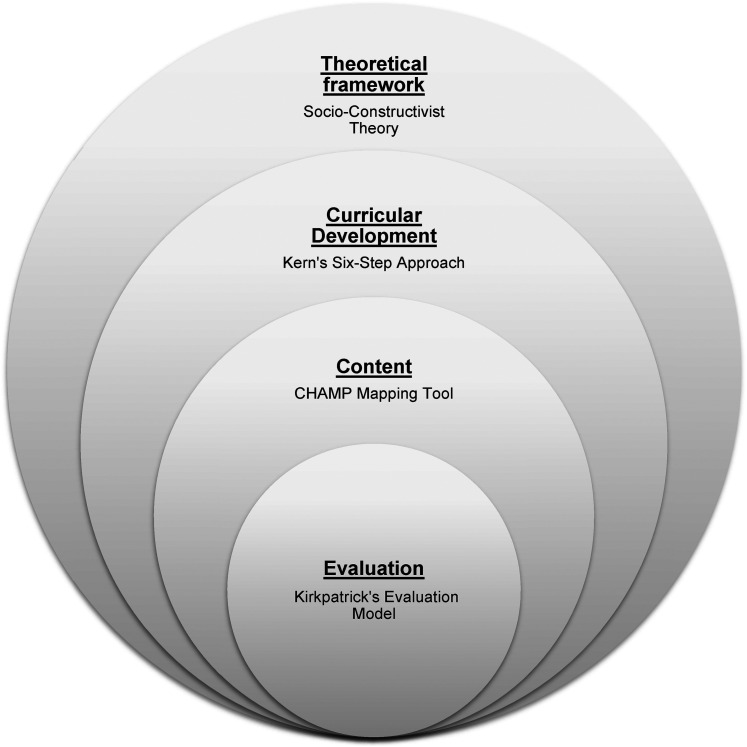
BACKGROUND: Training in advocacy is an important component of graduate medical education. Several models have been implemented by residency programs to address this objective. Little has been published regarding application of immersive advocacy activities integrated into continuity clinic. OBJECTIVE: To create an Integrated Community Health and Child Advocacy Curriculum (ICHCA) by integrating advocacy activities that were immersive and contextualized in a continuity clinic setting and to familiarize interns with continuity clinic immediately at the beginning of their training. METHODS: We utilized a socio-constructivist lens, Kern's Six-step curriculum development and a published curriculum mapping tool to create the curriculum. Twenty residents completed ICHCA in 2019. Evaluations from key stakeholders including participants, support staff and attendings were analyzed on four levels of Kirkpatrick's model. We compared results before intervention, immediately following intervention and ten months following intervention. RESULTS: We demonstrated improvement in learner satisfaction, knowledge and behaviors with respect to advocacy in the clinical environment. Response rate was 70% (7/10) for attendings, 75% for support staff (15/20) and 72.5% for residents (29/40). Our intervention was feasible, no cost, and required no additional materials or training as it relied on learning in real time. CONCLUSIONS: An integrated advocacy curriculum utilizing the mapping tool for curricular design and evaluation is feasible and has value demonstrated by improvements in reaction, knowledge, and behaviors. This model improves understanding of social responsibility and can be implemented similarly in other residency programs.
Overview
The claims and statistics of this paper haven’t been checked yet.
Free: it reads the open-access text and checks the first 5 claims that cite a source we can check. Create a free account to check every claim.
Integrity signals
Registry
Cites
Statistics
Figures
Verification
Claims the paper makes
The claims and statistics of this paper haven’t been checked yet.
Free: it reads the open-access text and checks the first 5 claims that cite a source we can check. Create a free account to check every claim.
Claims other papers make about this one
Each is checked against this paper’s own text: does it say what the citing paper says it does?
The source backs part of the claim, not all of it — or backs it for a different population, condition or comparison.
In the citing paper
“some programs developed no- or low-cost10,17 curricular elements implementable without any faculty expertise.”
From Advocacy Curricula in Graduate Medical Education: an Updated Systematic Review from 2017 to 2022 (2023) · cites this paper as [10]
Experimental — accuracy not yet measuredThe source backs part of the claim, not all of it — or backs it for a different population, condition or comparison.
In the citing paper
“Data suggests that meaningful engagement in advocacy can reinforce physician identity and the choice to practice medicine8–11,26, provide an outlet for stress management27, mitigate burnout7–9,26,28, and support professional development29.”
From Advocacy Curricula in Graduate Medical Education: an Updated Systematic Review from 2017 to 2022 (2023) · cites this paper as [10]
Experimental — accuracy not yet measuredThe source backs part of the claim, not all of it — or backs it for a different population, condition or comparison.
In the citing paper
“Many emphasized the need for protected time to participate in offered curricula12,15,17,19–21,27,42, specifically recommending designated rotation blocks7,10,18,26,41, existing noon conferences13,16,20, academic half days15,16, and meals during meetings7,11,12,21 as strategies to facilitate curricular engagement.”
From Advocacy Curricula in Graduate Medical Education: an Updated Systematic Review from 2017 to 2022 (2023) · cites this paper as [10]
Experimental — accuracy not yet measuredThe cited source says what the claim attributes to it.
In the citing paper
“Early introduction of curricula16 was thought to promote advocacy-related knowledge acquisition, skill-building, and bonding10,11 and ultimately increase engagement in advocacy efforts throughout training.17”
From Advocacy Curricula in Graduate Medical Education: an Updated Systematic Review from 2017 to 2022 (2023) · cites this paper as [10]
The cited source says what the claim attributes to it.
In the citing paper
“Several articles suggested integrating advocacy work with existing clinical responsibilities10 to make the impact of advocacy more visible12, bridge the gap between recognizing an issue and engaging in work that decreases disparities16,26, and support trainees in guiding tangible improvements in their clinical practice13,15,26.”
From Advocacy Curricula in Graduate Medical Education: an Updated Systematic Review from 2017 to 2022 (2023) · cites this paper as [10]
1 more claim about this paper
Create a free account to see every claim other papers make about this one.
Self-check
Percentages, sums and reported differences re-computed from the paper’s own numbers.
The self-check needs the paper’s full text.
Citations
Cites
Situated Cognition and the Culture of Learning
Brown, J. S., Collins, A., & Duguid, P. (1989) · Educational Researcher · doi:10.3102/0013189x018001032 · Cited by 13,645 · cited 2×
“From a socio-constructivist perspective, learning is seen as an activity that happens not only in a formal classroom context, but it is part of our everyday experiences.(11) Learners engaged in contextualized activities connect ‘new’ knowledge to previously acquired knowledge.”
BackgroundActivity theory as a framework for designing constructivist learning environments
Jonassen, D. H., & Rohrer-Murphy, L. (1999) · Educational Technology Research and Development · doi:10.1007/bf02299477 · Cited by 1,181
Eberts, R. W., & O’Leary, C. J. (2005) · Local economic and employment development · doi:10.1787/9789264017092-12-en · Cited by 495
Curriculum Development for Medical Education
Thomas, P. (2016) · Johns Hopkins University Press eBooks · doi:10.1353/book.44600 · Cited by 415
Constructivism in Education: Interpretations and Criticisms from Science Education
Taber, K. S. (2016) · Advances in Educational Technologies and Instructional Design · doi:10.4018/978-1-4666-9634-1.ch006 · Cited by 311
A Systematic Review of Advocacy Curricula in Graduate Medical Education
Howell, B. A., Kristal, R. B., Whitmire, L. R., Gentry, M., Rabin, T. L., & Rosenbaum, J. (2019) · Journal of General Internal Medicine · doi:10.1007/s11606-019-05184-3 · Cited by 88 · cited 2×
“Of the 38 articles included for qualitative analysis, teaching methodologies varied; however, none described rotations that focused on both improving continuity clinic experience and improving advocacy clinic.(10) Specifically, no publications describe an integrated rotation solely focused on continuity clinic and adv…”
Klein, M. D., Alcamo, A. M., Beck, A. F., O’Toole, J. K., Mclinden, D. J., Henize, A. W., & Kahn, R. S. (2014) · Academic Pediatrics · doi:10.1016/j.acap.2013.11.002 · Cited by 60
Shipley, L. J., Stelzner, S. M., Zenni, E. A., Hargunani, D., O’Keefe, J., Miller, C., Alverson, B., & Swigonski, N. (2005) · Pediatrics · doi:10.1542/peds.2004-2825j · Cited by 59
From the eye of the nurses: 360-degree evaluation of residents
Ogunyemi, D. A., González, G. M. C., Fong, A., Alexander, C. J., Finke, D., Donnon, T., & Azziz, R. (2009) · Journal of Continuing Education in the Health Professions · doi:10.1002/chp.20019 · Cited by 36 · cited 1×
“Nurses are known to be effective evaluators of resident milestones and competencies.(23) The role of nurses and other clinical staff in curricular evaluation is less well established but aligns with a socio-constructivist framework.”
Competency in Community Pediatrics: Consensus Statement of the Dyson Initiative Curriculum Committee
Rezet, B., Risko, W., Blaschke, G. S., & for the Anne E. Dyson Community Pediatrics Training Initiative Curriculum Committee (2005) · Pediatrics · doi:10.1542/peds.2004-2825o · Cited by 36
Chang, A. Y., Bass, T. L., Duwell, M. M., Berger, J. S., Bangalore, R., Lee, N. S., AMDUR, R. L., Andrews, M. R., Fahnestock, E., Kahsay, L., et al. (2016) · Journal of Graduate Medical Education · doi:10.4300/jgme-d-16-00212.1 · Cited by 23 · cited 1×
“”(16) In medical education, the concept of immersion has been explored both with respect to the continuity clinic experience(17) and in advocacy curricula.(18,19)”
BackgroundKeystone: Exploring Pediatric Residents’ Experiences in a Longitudinal Integrated Block
Michelson, C. D., Dzara, K., Ramani, S., Vinci, R. J., & Schumacher, D. J. (2018) · Teaching and Learning in Medicine · doi:10.1080/10401334.2018.1478732 · Cited by 21 · cited 1×
“Specifically, no publications describe an integrated rotation solely focused on continuity clinic and advocacy: education that is by definition immersive and contextualized or “meaning making” as the socio-constructivists would describe.(8,10)”
Hoffman, B. D., Barnes, M. M., Ferrell, C. L., Gellin, C. E., Lichtenstein, C., Donnelly, J., Kaczorowski, J. M., Barnes, M. M., Blaschke, G. S., Gellin, C. E., et al. (2016) · Academic Pediatrics · doi:10.1016/j.acap.2016.03.006 · Cited by 19 · cited 1×
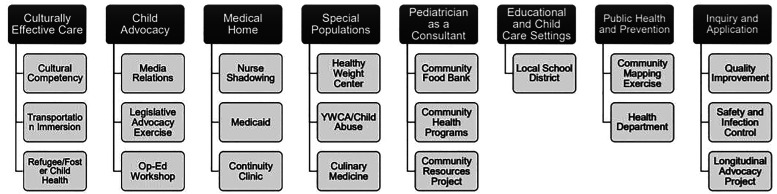
“Building on this work, the Community Health and Advocacy Milestones Profile (CHAMP) was developed.(5) This curriculum development tool maps pediatric milestones to the thirtysix CPTI objectives in eight content areas.”
Advocacy by Physicians for Patients and for Social Change
Freeman, J. (2014) · The AMA Journal of Ethic · doi:10.1001/virtualmentor.2014.16.09.jdsc1-1409 · Cited by 14
DeLago, C., & Gracely, E. (2007) · Clinical Pediatrics · doi:10.1177/0009922807304149 · Cited by 13 · cited 1×
“Multiple programs have utilized this tool to implement advocacy curriculum.(6,7)”
Using a Community Bus Tour for Pediatric Residents to Increase Their Knowledge of Health Disparities
Lichtenstein, C., de la Torre, D., Falusi, O. O., Corley, A. M. S., Smiley, Y., & Baiyewu, M. (2018) · Academic Pediatrics · doi:10.1016/j.acap.2018.03.004 · Cited by 10 · cited 1×
“”(16) In medical education, the concept of immersion has been explored both with respect to the continuity clinic experience(17) and in advocacy curricula.(18,19)”
Dulay, M., Laponis, R., OʼBrien, B. C., Gupta, R., Ramanan, R. A., & Julian, K. A. (2017) · Journal of Graduate Medical Education · doi:10.4300/jgme-d-16-00696.1 · Cited by 6
Disbrow, E., Sieplinga, K. R., Triemstra, J. D., & van de Ridder, M. (2020) · Academic Pediatrics · doi:10.1016/j.acap.2020.06.052 · Cited by 1
Self-citation
Research works printed but not linked: 4
- American Medical Association. Accessed June, 2021. www.ama-assn.org/delivering-care/public-health/ama-declaration-professional-resposibility.
- von Glasersfeld E. A constructivist approach to teaching. In: Steffe LP Gale J, eds. Constructivism in education. Erlbaum; 1995: 3- 15. http://www.vonglasersfeld.com/172
- Schcolnik M Kol S Abarbanel J. Constructivism in theory and in practice. English teaching forum 2006 (Vol. 44, No. 4, pp. 12–20). US Department of State. Bureau of Educational and Cultural Affairs, Office of English Language Programs, SA-5, 220° C Street NW 4th Floor, Washington, DC 20037.
- Kanselaar G. Constructivism and socio-constructivism. Constr Socio-constr. 2002: 1- 7.
Cited by
Advocacy Curricula in Graduate Medical Education: an Updated Systematic Review from 2017 to 2022
Agrawal, N., Lucier, J., Ogawa, R., & Arons, A. (2023) · Journal of General Internal Medicine · doi:10.1007/s11606-023-08244-x · Cited by 34
Applications of the Kirkpatrick Model in Post-secondary Health Sciences Education: A Scoping Review
Gallant, N. L., Paolucci, E. O., Russill, C. L., Jewett, R., Recsky, C., Ford, K. L., Idriss-Wheeler, D., Tseung, V., Ansari, H., Ladak, Z., et al. (2026) · International Journal of Health Policy and Management · doi:10.34172/ijhpm.8857 · Cited by 2
“First, our use of the scoping review methodology allowed us to capture 38, 40, 43, 44, 46-48, 50, 53, 55, 56, 58-60, 63, 64, 67, 70, 71 Knowledge Translation, Communication, & Brokerage(n = 14) 38, 42, 44, 46, 48, 50, 53, 58, 59, 61, 63, 69-71 Analysis of Data, Evidence, & Critical Thinking(n = 8)…”
К вопросу о сущности международного лоббизма
Михайловна, В. В. (2012) · Власть · Cited by 3
Kazi, A., Andoniou, E., Rodas, J., Janakiram, P., & Rouleau, K. D. (2026) · Frontiers in Medicine · doi:10.3389/fmed.2026.1894165
“…and emphasizes marginalized populations; the South African Leadership Framework, which embeds community-oriented primary care as a core family physician role within an equity-focused governance model; and newer paediatric programs incorporating anti-racist and anti-oppressive frameworks (44).”
Metadata
- Authors
- Sieplinga, K., Disbrow, E., Triemstra, J., & van de Ridder, M.
- Affiliations
- Spectrum Health (US)
- Sparrow Hospital (US)
- Michigan State University College of Human Medicine, Pediatric Residency Spectrum Health/Helen DeVos Children’s Hospital, Grand Rapids, MI, USA
- Corresponding author
- Sieplinga, Kira
- ORCID
- Triemstra, Justin
- Venue
- Journal of Medical Education and Curricular Development
- Publisher
- SAGE Publications
- Published
- 2021-01
- Volume
- 8
- Pages
- 23821205211059652-23821205211059652
- ISSN
- 2382-1205 (ISSN-L)
- PMC
- PMC8671658
- OpenAlex
- W4200053823
- Cited by
- 4
- References
- 18
- Citations by year
- 2026: 2 · 2023: 1
- FWCI
- 0.22
- Type
- journal article
- Language
- en
- Open access
- gold
- doi.org
- Locations
- Journal of Medical Education and Curricular Development (publishedVersion, cc-by)
- PubMed Central (publishedVersion, cc-by)
- PubMed (publishedVersion)
- DOAJ (DOAJ: Directory of Open Access Journals) (submittedVersion, cc-by-sa)
- Topics
- Social Sciences › Education › Innovations in Medical Education
- Health Sciences › Health Professions › General Health Professions › Health and Medical Education
- Health Sciences › Medicine › Psychiatry and Mental health › Empathy and Medical Education
- Keywords
- health care advocacy, continuity clinic, immersive learning, graduate medical education, curriculum development, child advocacy, community health, Kirkpatrick evaluation, socio-constructivist learning, social responsibility, residency training
About these checks
Registry, retraction, Cites and statistics results are computed, not judged, with one exception: a printed reference that no index lists is read once by a model before it counts as a citation error. Claims are extracted by a model and kept only when their quote appears verbatim in the text; each cited source is then checked, with a model’s help, for whether it says what the claim relies on. Those verdicts can be wrong — read the claim’s quote and the cited source before relying on one.
Statistics and arithmetic are recomputed, not judged.
Confidence bands are shown only for fields calibrated on our annotated test set. None is calibrated yet, so no band is shown.
What counts as a claim ›How we measure confidence ›How we check this ›
Are you an author, or do you see a problem with this page? Request a review
Data sources
Bibliographic data: Semantic Scholar, OpenAlex, Crossref.
Contains information from the Semantic Scholar Academic Graph Datasets, made available under the ODC Attribution License (ODC-BY 1.0).
Semantic Scholar’s data is described in: Kinney, R., et al. (2023). The Semantic Scholar Open Data Platform. arXiv:2301.10140.
