

That’s a Lot to Process! Pitfalls of Popular Path Models
Open accessPublished version of a preprint
The DOI matches its Crossref record; 67 of the 69 references it cites were found in a registry or an index, and 2 are not checked yet.
Abstract
Path models to test claims about mediation and moderation are a staple of psychology. But applied researchers may sometimes not understand the underlying causal inference problems and thus endorse conclusions that rest on unrealistic assumptions. In this article, we aim to provide a clear explanation for the limited conditions under which standard procedures for mediation and moderation analysis can succeed. We discuss why reversing arrows or comparing model fit indices cannot tell us which model is the right one and how tests of conditional independence can at least tell us where our model goes wrong. Causal modeling practices in psychology are far from optimal but may be kept alive by domain norms that demand every article makes some novel claim about processes and boundary conditions. We end with a vision for a different research culture in which causal inference is pursued in a much slower, more deliberate, and collaborative manner.
Overview
The claims and statistics of this paper haven’t been checked yet.
Free: it reads the open-access text and checks the first 5 claims that cite a source we can check. Create a free account to check every claim.
Integrity signals
Registry
Cites
Statistics
Figures

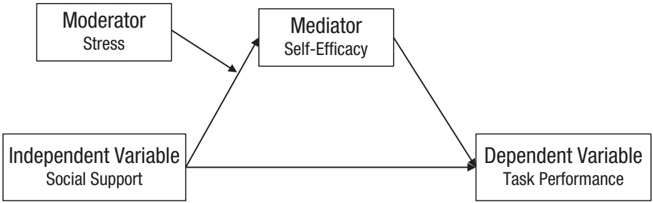
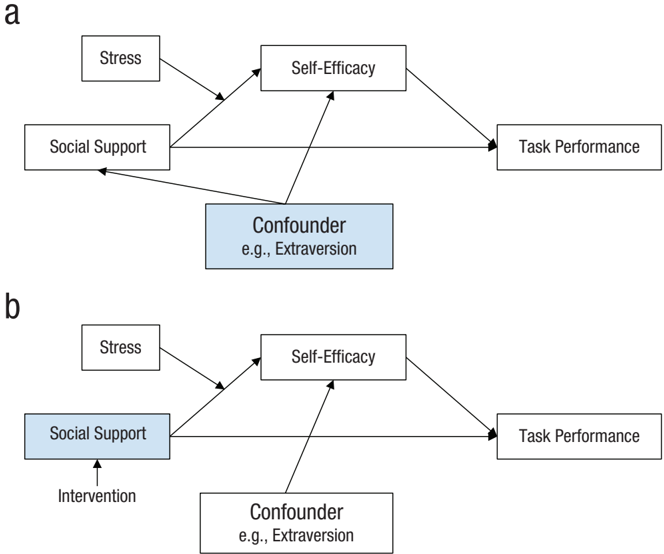
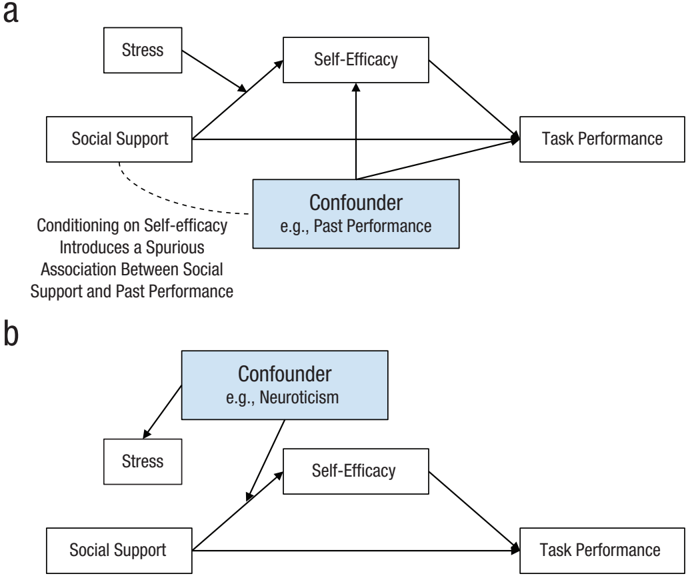
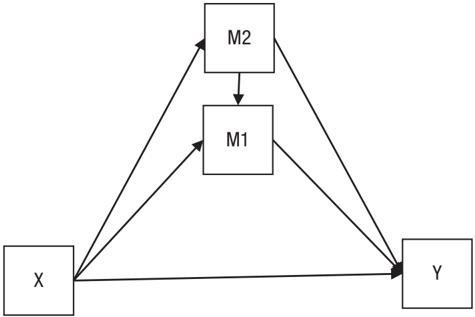
Verification
Claims the paper makes
The claims and statistics of this paper haven’t been checked yet.
Free: it reads the open-access text and checks the first 5 claims that cite a source we can check. Create a free account to check every claim.
Claims other papers make about this one
Each is checked against this paper’s own text: does it say what the citing paper says it does?
The source backs part of the claim, not all of it — or backs it for a different population, condition or comparison.
In the citing paper
“Further, researchers must measure and model all reasonably relevant variables, or risk obfuscating the causal relationships present within the data (Rohrer et al., 2021).”
From Acceptance and Commitment Therapy Processes and Mediation: Challenges and How to Address Them (2023) · cites this paper as Rohrer et al., 2021
Experimental — accuracy not yet measured
Self-check
Percentages, sums and reported differences re-computed from the paper’s own numbers.
The self-check needs the paper’s full text.
Citations
Cites
Unobservable Selection and Coefficient Stability: Theory and Evidence
Oster, E. (2019) · Journal of Business & Economic Statistics · doi:10.1080/07350015.2016.1227711 · Cited by 5,367 · cited 2×
“For example, alternative models with alternative sets of assumptions may be reported, and quantitative methods can be used to estimate to what extent conclusions are sensitive to unobserved confounding (e.g., Blackwell, 2014; Imai et al., 2010; Oster, 2019; VanderWeele, 2010).”
BackgroundEquivalence of the Mediation, Confounding and Suppression Effect
MacKinnon, D. P., Krull, J. L., & Lockwood, C. M. (2000) · Prevention Science · doi:10.1023/a:1026595011371 · Cited by 4,188
A general approach to causal mediation analysis.
Imai, K., Keele, L., & Tingley, D. (2010) · Psychological Methods · doi:10.1037/a0020761 · Cited by 4,143 · cited 3×
“For example, alternative models with alternative sets of assumptions may be reported, and quantitative methods can be used to estimate to what extent conclusions are sensitive to unobserved confounding (e.g., Blackwell, 2014; Imai et al., 2010; Oster, 2019; VanderWeele, 2010).”
BackgroundMethodBias in cross-sectional analyses of longitudinal mediation
Maxwell, S. E., & Cole, D. A. (2007) · Psychological Methods · doi:10.1037/1082-989x.12.1.23 · Cited by 3,401 · cited 1×
“Even in the absence of confounders, mediation chains unfold over time, and trying to recover the longitudinal effects from cross-sectional data works only under very narrow conditions (Maxwell & Cole, 2007; Maxwell et al., 2011; O’Laughlin et al., 2018).”
BackgroundInternational Journal of Epidemiology
(1973) · Journal of Medical Genetics · doi:10.1136/jmg.10.1.100-a · Cited by 2,838
On making causal claims: A review and recommendations
Antonakis, J., Bendahan, S., Jacquart, P., & Lalive, R. (2010) · The Leadership Quarterly · doi:10.1016/j.leaqua.2010.10.010 · Cited by 2,441
Causal Inference in Statistics
Pearl, J., Glymour, M., & Jewell, N. P. (2016) · Cited by 2,058
Choosing Prediction Over Explanation in Psychology: Lessons From Machine Learning
Yarkoni, T., & Westfall, J. (2017) · Perspectives on Psychological Science · doi:10.1177/1745691617693393 · Cited by 1,916
Identification, Inference and Sensitivity Analysis for Causal Mediation Effects
Imai, K., Keele, L., & Yamamoto, T. (2010) · Statistical Science · doi:10.1214/10-sts321 · Cited by 1,628 · cited 3×
“For example, alternative models with alternative sets of assumptions may be reported, and quantitative methods can be used to estimate to what extent conclusions are sensitive to unobserved confounding (e.g., Blackwell, 2014; Imai et al., 2010; Oster, 2019; VanderWeele, 2010).”
BackgroundMethodIMAI, K., KEELE, L., TINGLEY, D., & YAMAMOTO, T. (2011) · American Political Science Review · doi:10.1017/s0003055411000414 · Cited by 1,537
Research works printed but not linked: 6
- Avin, C., Shpitser, I., & Pearl, J. (2005, June 1). Identifiability of path-specific effects [Conference session]. 19th International
- Joint Conference on Artificial Intelligence, IJCAI 2005, Edinburgh. https://escholarship.org/uc/item/45x689gq
- Bareinboim, E., & Pearl, J. (2012). Causal inference by surrogate experiments: z-identifiability . arXiv. http://arxiv.org/ abs/1210.4842 · arXiv
- Hayes, A. F. (2017). Introduction to mediation, moderation, and conditional process analysis, second edition: A regression-based approach . The Guilford Press.
- Morgan, S. L., & Winship, C. (2015). Counterfactuals and causal inference . Cambridge University Press.
- Pearl, J., & Bareinboim, E. (2014). External validity: From doCalculus to transportability across populations. Schweizerische Monatsschrift Fur Zahnheilkunde = Revue Mensuelle Suisse d'odonto-stomatologie / SSO , 29 (4), 579-595.
Cited by
Items 101–200 of 268
The significance of parental mentalizing for four-year-old children’s solitary pretend play
Smith‐Nielsen, J., Stuart, A. C., Wendelboe, K. I., Egmose, I., Roos, C. O., & Væver, M. S. (2024) · PLoS ONE · doi:10.1371/journal.pone.0297671 · Cited by 8
Reward processing and reinforcement learning: From adolescence to aging
Cutler, J., Apps, M. A. J., & Lockwood, P. L. (2023) · Elsevier eBooks · doi:10.1016/b978-0-12-820480-1.00010-3 · Cited by 16
Career Adaptability and Parental Career Support: A Moderated Mediation Model
Leung, S. A., & Zhou, S. (2024) · Journal of Career Assessment · doi:10.1177/10690727241289945 · Cited by 9
van Lit, J., & Meijers, M. J. (2025) · West European Politics · doi:10.1080/01402382.2025.2525601 · Cited by 5
A New Journalism for a New Climate: Is Solutions Journalism the Solution?
Thier, K. (2025) · Science Communication · doi:10.1177/10755470251378065 · Cited by 8
Goodwin, L. F., Wallymahmed, A. H., Triandafilidis, Z., & Barker, D. (2025) · BMC Health Services Research · doi:10.1186/s12913-025-13437-7 · Cited by 14
Mohr, M. V., Hackenburg, K., Tanzer, M., Fotopoulou, A., Campbell, C., & Tsakiris, M. (2024) · Politics and the Life Sciences · doi:10.1017/pls.2024.11 · Cited by 5
Debatin, T., Stoeger, H., & Ziegler, A. (2025) · Journal of Youth and Adolescence · doi:10.1007/s10964-025-02162-3 · Cited by 5
Prison education in the resocialization of incarcerated individuals
Romero-Carazas, R., Delgado, F. D. C., Casco, R. J. E., Bernedo-Moreira, D. H., Morales-García, W. C., Rodríguez-Asto, R. A. A., & Quiñones-Ormeño, L. K. (2025) · Frontiers in Education · doi:10.3389/feduc.2025.1592692 · Cited by 13
Chen, Y. A., & Toma, C. L. (2025) · Human Communication Research · doi:10.1093/hcr/hqaf022 · Cited by 7
Stark, J., Daniel, A., & Twardawski, M. (2024) · Social Psychological and Personality Science · doi:10.1177/19485506241239993 · Cited by 6
Wei, J., Chan, S. H. J., & Gao, H. (2024) · Journal of Career Assessment · doi:10.1177/10690727241252828 · Cited by 4
Varet, F., Fournier, V., & Delouvée, S. (2024) · Applied Psychology Health and Well-Being · doi:10.1111/aphw.12615 · Cited by 7
Personality, Ideology, and Attitudes Toward Social Justice
Xu, X., Scarborough, A. N., Anthony, L. M., & Smillie, L. D. (2025) · Journal of Personality · doi:10.1111/jopy.13014 · Cited by 6
Çoksan, S., & Yilmaz, A. D. (2023) · Analyses of Social Issues and Public Policy · doi:10.1111/asap.12371 · Cited by 5
Discovering Cyclic Causal Models in Psychological ResearchPreprint
Park, K., Waldorp, L., & Ryan, O. (2023) · doi:10.31234/osf.io/qb9t3 · Cited by 4
The Basic Needs in Games (BANG) Model of Video Game Play and Mental HealthPreprint
Ballou, N., & Deterding, S. (2023) · doi:10.31234/osf.io/6vedg · Cited by 4
Introduction to causality in science studiesPreprint
Klebel, T., & Traag, V. (2024) · SocArXiv (OSF Preprints) · doi:10.31235/osf.io/4bw9e · Cited by 8
Anticipated affect predicts moral praise and character judgments.
Amormino, P., Mercier, B., & Inbar, Y. (2024) · Journal of Personality and Social Psychology · doi:10.1037/pspa0000377 · Cited by 6
Hammond, D., Ong, L. Q., Morstead, T., DeLongis, A., Sin, N. L., & Klaiber, P. (2025) · Psychology and Health · doi:10.1080/08870446.2025.2505909 · Cited by 3
Robust Mediation Analysis: What We Talk About When We Talk About Robustness
Alfons, A., & Schley, D. R. (2025) · Wiley Interdisciplinary Reviews Computational Statistics · doi:10.1002/wics.70051 · Cited by 6
Hagger, M. S. (2026) · Social Science & Medicine · doi:10.1016/j.socscimed.2026.119264 · Cited by 6
Lin, C., Guo, X., & Luo, J. (2024) · Proceedings of the Institution of Mechanical Engineers Part A Journal of Power and Energy · doi:10.1177/09576509241271873 · Cited by 3
Chan, C. W., & Feldman, G. (2024) · Cognition & Emotion · doi:10.1080/02699931.2024.2434156 · Cited by 3
Kassab, Y., Halbeisen, G., & Walther, E. (2025) · BMC Psychology · doi:10.1186/s40359-025-02732-x · Cited by 5
Paths to peaceful and violent action: Identity fusion and group identification
Özkan, Z., El‐Astal, S., & Çakal, H. (2025) · British Journal of Social Psychology · doi:10.1111/bjso.70002 · Cited by 4
Does reading still make you smarter? It depends
Bråten, I., Skovdahl, O., Anmarkrud, Ø., & Strømsø, H. I. (2025) · Reading and Writing · doi:10.1007/s11145-025-10668-2 · Cited by 7
Community attitudes towards advancing climate justice with climate aid
Stanley, S. K., Ghasemi, O., Kerr, J. R., Ross, R. M., Marques, M. D., Mede, N. G., Berger, S., Alfano, M., Levy, N. L., Ferreira, M., et al. (2025) · Journal of Environmental Psychology · doi:10.1016/j.jenvp.2025.102679 · Cited by 4
Why do people choose extreme candidates? The role of identity relevance
Hussein, M. A., Tormala, Z. L., & Wheeler, S. C. (2025) · Journal of Experimental Social Psychology · doi:10.1016/j.jesp.2025.104821 · Cited by 6
KÜÇÜK, S. S., & Çoksan, S. (2023) · Universal Journal of History and Culture · doi:10.52613/ujhc.1167573 · Cited by 3
van Houwelingen, G., & van Dijke, M. (2023) · PLoS ONE · doi:10.1371/journal.pone.0284500 · Cited by 7
Womick, J., & King, L. A. (2023) · Journal of Applied Social Psychology · doi:10.1111/jasp.13007 · Cited by 3
Tal, I., Cervin, M., Liberman, N., & Dar, R. (2023) · Brain Sciences · doi:10.3390/brainsci13101463 · Cited by 6
Victim empowerment and satisfaction: The potential of imagery rescripting
Twardawski, M., Gollwitzer, M., Altenmüller, M. S., Bertsch, K., Lobbestael, J., Philippi, A. L. E., & Wittekind, C. E. (2024) · European Journal of Social Psychology · doi:10.1002/ejsp.3073 · Cited by 4
Assim, A., Kaminer, D., Hogarth, L., Magner-Parsons, B., & Seedat, S. (2024) · Child Abuse & Neglect · doi:10.1016/j.chiabu.2024.106885 · Cited by 4
Ahluwalia‐McMeddes, A., Moore, A., Marr, C., & Kunders, Z. (2024) · British Journal of Social Psychology · doi:10.1111/bjso.12781 · Cited by 4
Bain, K., Coll, K. A., Kreps, T. A., & Tenney, E. R. (2024) · Journal of Business Ethics · doi:10.1007/s10551-024-05799-5 · Cited by 5
Haverkamp, Y. E., Bråten, I., Latini, N., & Strømsø, H. I. (2024) · Literacy Research and Instruction · doi:10.1080/19388071.2024.2414027 · Cited by 4
Green, Z. A., & Karuppannan, G. (2025) · Journal of Career Assessment · doi:10.1177/10690727251315743 · Cited by 5
McCormick, E. M., Borgeest, G. S., & Kievit, R. (2022) · PsyArXiv (OSF Preprints) · doi:10.31234/osf.io/48xj5 · Cited by 3
Loh, W. W., & Ren, D. (2022) · doi:10.31234/osf.io/s387m · Cited by 3
Methods in Causal Inference Part 1: Causal Diagrams and ConfoundingPreprint
Bulbulia, J. A. (2023) · doi:10.31234/osf.io/b23k7 · Cited by 3
Hirshberg, M. J., Dahl, C. J., Bolt, D. M., Davidson, R. J., & Goldberg, S. B. (2023) · doi:10.31234/osf.io/vya39 · Cited by 3
From Maternal to Infant InteroceptionPreprint
Tünte, M. R., Hoehl, S., Nguyen, T., Pointner, N., Maier, N., Tsakiris, M., & Kayhan, E. (2024) · PsyArXiv (OSF Preprints) · doi:10.31234/osf.io/8gtcq · Cited by 3
Nostalgia increases punitiveness by intensifying moral concern
Lasaleta, J. D., Wildschut, T., & Sedikides, C. (2024) · Scientific Reports · doi:10.1038/s41598-024-61858-x · Cited by 3
Semenyna, S. W., Vasey, P. L., & Honey, P. L. (2025) · Archives of Sexual Behavior · doi:10.1007/s10508-025-03092-8 · Cited by 4
Compensating personal climate response inefficacy with political conservatism?
Lou, X., Li, L. M. W., & Ito, K. (2025) · Political Psychology · doi:10.1111/pops.70045 · Cited by 3
Abe-Džujka, H., & Dienlin, T. (2025) · Media Psychology · doi:10.1080/15213269.2025.2591065 · Cited by 3
Womick, J., Kubin, E., Goya‐Tocchetto, D., Ochoa, N. R., Rebollar, C., Kapsaskis, K., Pratt, S., Devine, H., Payne, B. K., Vaisey, S., et al. (2026) · Personality and Social Psychology Bulletin · doi:10.1177/01461672261422957 · Cited by 14
ŞAHİN, A., Bekir, S. A. R. I., GÜLER, B., & Çoksan, S. (2022) · Current Research in Social Sciences · doi:10.30613/curesosc.1162897 · Cited by 2
Morstead, T., & DeLongis, A. (2023) · Journal of Genetic Counseling · doi:10.1002/jgc4.1679 · Cited by 6
Mitchell, B. J., Al-Shawaf, L., & Coifman, K. G. (2024) · Personality and Individual Differences · doi:10.1016/j.paid.2024.112620 · Cited by 2
Quinn‐Nilas, C., & Milhausen, R. R. (2024) · Personal Relationships · doi:10.1111/pere.12546 · Cited by 3
The effects of social exclusion on distributive fairness judgements and cooperative behaviour
Sun, Q., Molenmaker, W. E., Liu, Y., & van Dijk, E. (2024) · British Journal of Social Psychology · doi:10.1111/bjso.12810 · Cited by 2
Harris, M. N., Krajewski, A. T., Wilds, K. M., & Blarcum, L. V. (2025) · Deviant Behavior · doi:10.1080/01639625.2024.2443080 · Cited by 3
Guvensoy, I., Bağci, S. Ç., Turner, R. N., & Stathi, S. (2025) · Group Processes & Intergroup Relations · doi:10.1177/13684302251315063 · Cited by 4
Böhm, F., Blickle, G., & Wihler, A. (2025) · Personality and Individual Differences · doi:10.1016/j.paid.2025.113172 · Cited by 4
Fazio, L., & Bürkner, P. (2025) · Multivariate Behavioral Research · doi:10.1080/00273171.2025.2483252 · Cited by 7
Schlette, A., Stark, T., & Smeekes, A. (2025) · British Journal of Social Psychology · doi:10.1111/bjso.12898 · Cited by 2
What Narcissists Look Like and Why It’s Important
Smith, S. F., Proulx, T., & Haddock, G. (2025) · Personality and Social Psychology Bulletin · doi:10.1177/01461672251339014 · Cited by 3
Reducing the causal illusion: a question of motivation or of information?
Vinas, A., Blanco, F., & Matute, H. (2025) · Royal Society Open Science · doi:10.1098/rsos.250082 · Cited by 2
Phalen, H. J., Bettis, T. C., Bean, S. R., & Salerno, J. M. (2025) · Behavioral Sciences · doi:10.3390/bs15070965 · Cited by 3
Collective Narcissism, Left‐ and Right‐Wing Authoritarianisms, and Justification of War
Żemojtel-Piotrowska, M. A., Radkiewicz, P., Rudnev, M., Kumove, H. A., & Piotrowski, J. P. (2025) · Politics and Governance · doi:10.17645/pag.10025 · Cited by 2
Psychology’s reform movement needs a reconceptualization of scientific expertise
Tunç, D. U., & Tunç, M. N. (2023) · Social Psychological Bulletin · doi:10.32872/spb.10303 · Cited by 3
On the Statistical Analysis of Experiments With Manipulation Checks
Mathur, M. B. (2025) · Advances in Methods and Practices in Psychological Science · doi:10.1177/25152459241297537 · Cited by 5
Algorithm Credulity: Human and Algorithmic Advice in Prediction ExperimentsPreprint
Chevrier, M., Corgnet, B., Guerci, É., & Rosaz, J. (2024) · SSRN Electronic Journal · doi:10.2139/ssrn.4828701 · Cited by 3
When and how does social curiosity trait lead to interpersonal citizenship behaviors?
Jahantab, F., Garcia, F. M., & Triana, M. D. C. (2024) · Personality and Individual Differences · doi:10.1016/j.paid.2024.112727 · Cited by 2
Ishitsuka, M., Muroi, K., Hachisuka, T., Shibata, I., Hori, D., Doki, S., Takahashi, T., Sasahara, S., & Matsuzaki, I. (2024) · Japan Journal of Nursing Science · doi:10.1111/jjns.12618 · Cited by 2
Njinyah, S., Areneke, G., Ofori, I. K., & Lepawa, G. L. C. (2024) · Africa Journal of Management · doi:10.1080/23322373.2024.2375948 · Cited by 6
How Political Overconfidence Fuels Affective Polarization in Cross-cutting Discussions
Lin, H. Y., & Kim, Y. (2024) · Communication Research · doi:10.1177/00936502241301174 · Cited by 4
García, E. D. L. D. G., Ramos, P. F. A., & Quintana, J. C. M. (2024) · World Leisure Journal · doi:10.1080/16078055.2024.2442570 · Cited by 2
Autistic traits modulate neural and behavioral responses to social vs nonsocial rewards
Haffey, A., Hsu, C., & Chakrabarti, B. (2025) · Personality Neuroscience · doi:10.1017/pen.2025.10003 · Cited by 1
Waggoner, B., Volk, F. A., & Murch, H. E. (2025) · Sexual Health & Compulsivity · doi:10.1080/10720162.2025.2558629 · Cited by 1
Papaioannou, K., Pantazi, M., & van Prooijen, J. (2025) · Acta Politica · doi:10.1057/s41269-025-00400-x · Cited by 2
Green, Z. A. (2025) · International Journal of Applied Positive Psychology · doi:10.1007/s41042-025-00257-7 · Cited by 2
Au, A. K. Y., Ng, J. C. K., & Chen, S. X. (2026) · British Journal of Psychology · doi:10.1111/bjop.70058 · Cited by 1
Sirois, F. M., & Hirsch, J. K. (2026) · Personality and Individual Differences · doi:10.1016/j.paid.2026.113683 · Cited by 1
Childhood Trauma and Aggression: The Role of Epistemic Trust
Garofalo, C., Raspa, V., Delvecchio, E., Aiolfi, I., Laricchiuta, D., Howard, R., & Mazzeschi, C. (2026) · Journal of Child & Adolescent Trauma · doi:10.1007/s40653-026-00841-2 · Cited by 1
SH-BRB: A semantically-grounded and explainable AI framework for dynamic mental health assessment
Chi, Y., Li, S., Wang, Y., Huang, H., Wang, J., Ji, K., Li, X., & Zhao, Y. (2026) · Journal of King Saud University - Computer and Information Sciences · doi:10.1007/s44443-026-00677-8 · Cited by 3
Chambon, M., Dalege, J., Elberse, J., & van Harreveld, F. (2026) · Behavior Research Methods · doi:10.3758/s13428-026-02965-7 · Cited by 7
Paredes-Aguirre, M., Ayala, Y., Karaeminoğulları, A., & Peñalver, J. (2026) · Journal of Career Assessment · doi:10.1177/10690727261440543 · Cited by 1
From Narcissism to Drug-Taking Intentions: Direct and Indirect Pathways Explored
Moon, C., & Attinger, E. (2026) · Psychological Reports · doi:10.1177/00332941261446929 · Cited by 1
KÜRÜ, S. A. (2026) · International journal of organizational analysis · doi:10.1108/ijoa-02-2026-6502 · Cited by 1
Rasul, M. E., Hameiri, B., Hacohen, G., Malovicki-Yaffe, N., & Moore‐Berg, S. L. (2026) · Political Psychology · doi:10.1111/pops.70172 · Cited by 2
Rude, E. D., & Shaddy, F. (2024) · Psychological Science · doi:10.1177/09567976241228504 · Cited by 2
Choi, K., & Hong, Y.-J. (2024) · Infant Behavior and Development · doi:10.1016/j.infbeh.2024.102009 · Cited by 2
Is an eye truly for an eye? Magnitude differences affect moral praise more than moral blame
Tan, L., Anderson, R. A., & Basu, S. (2024) · Cognition · doi:10.1016/j.cognition.2024.106040 · Cited by 1
Power effects on interindividual and intergroup competition
Wildschut, T., & Insko, C. A. (2025) · British Journal of Social Psychology · doi:10.1111/bjso.12831 · Cited by 1
Virtual worlds and mental health: A scoping review
Barreda-Ángeles, M., Amendola, S., Hartmann, T., Meier, A., Mansfield, K. L., Coecke, S., & Hupont, I. (2026) · Humanities and Social Sciences Communications · doi:10.1057/s41599-026-08349-8 · Cited by 1
A Positive Empathy Intervention to Improve Well-being on InstagramPreprint
Depow, G. J., de Mello, V. O., & Inzlicht, M. (2023) · doi:10.31234/osf.io/8dz3w · Cited by 1
Editorial Journal of Psycholinguistic Research
Brysbaert, M., & Folk, J. R. (2026) · Journal of Psycholinguistic Research · doi:10.1007/s10936-026-10208-1 · Cited by 4
Image discrepancy around professional work matters: a moderated mediation study
Chen, H. C., Lin, S., & Chen, I. (2023) · Current Psychology · doi:10.1007/s12144-023-04845-1
Kilger, H., Reis, D., & Friese, M. (2023) · Motivation and Emotion · doi:10.1007/s11031-023-10031-4 · Cited by 2
Paulewicz, B. (2023) · Przegląd Psychologiczny · doi:10.31648/przegldpsychologiczny.9461
Guetz, B., & Bidmon, S. (2023) · Journal of Medical Internet Research · doi:10.2196/52877
Paulewicz, B. (2023) · Przegląd Psychologiczny · doi:10.31648/przegldpsychologiczny.9731
A graphical method for causal program attribution in theory-based evaluation
Schmidt, R. (2024) · Evaluation · doi:10.1177/13563890231223171
Cho, J., Lee, S., Daniels, D. P., & Galinsky, A. D. (2024) · SSRN Electronic Journal · doi:10.2139/ssrn.4778906
DETERMINING FACTORS OF SELF-CONFIDENCE IN A USING SOCIAL ENVIRONMENT PATH ANALYSIS
Setyaningsih, E., Yani, M. N., & Prasetyo, N. C. (2024) · European Journal of Education Studies · doi:10.46827/ejes.v11i5.5326
The role of sleep health and cognitive control in the occurrence of hallucinatory experiencesPreprint
Punton, G., Smailes, D., McCarty, K., Ellis, J. G., & Moseley, P. (2024) · doi:10.31234/osf.io/erqh4
Metadata
- Authors
- Rohrer, J. M., Hünermund, P., Arslan, R. C., & Elson, M.
- Affiliations
- Leipzig University (DE)
- Copenhagen Business School (DK)
- Max Planck Institute for Human Development (DE)
- Ruhr University Bochum (DE)
- Corresponding author
- Rohrer, Julia M.
- Venue
- Advances in Methods and Practices in Psychological Science
- Publisher
- SAGE Publications
- Published
- 2022-04
- Volume
- 5
- Issue
- 2
- ISSN
- 2515-2459 (ISSN-L)
- 2515-2467
- OpenAlex
- W4288766776
- Cited by
- 267
- References
- 64
- Citations by year
- 2026: 67 · 2025: 61 · 2024: 74 · 2023: 47 · 2022: 15
- FWCI
- 36.33
- Type
- journal article
- Language
- en
- Open access
- gold
- doi.org
- Licence
- Locations
- Advances in Methods and Practices in Psychological Science (publishedVersion, cc-by-nc)
- DOAJ (DOAJ: Directory of Open Access Journals) (submittedVersion, cc-by-sa)
- CBS Research Portal (Copenhagen Business School) (submittedVersion, cc-by-nc)
- Funders
- ministerium für kultur und wissenschaft des landes nordrhein-westfalen (1706dgn006)
- Topics
- Physical Sciences › Mathematics › Statistics and Probability › Advanced Causal Inference Techniques
- Social Sciences › Decision Sciences › Management Science and Operations Research › Psychometric Methodologies and Testing
- Physical Sciences › Mathematics › Statistics and Probability › Statistical Methods and Bayesian Inference
- Keywords
- path analysis, mediation analysis, moderation analysis, causal inference, model selection, model fit indices, conditional independence testing, reverse causality, boundary conditions, research culture
About these checks
Registry, retraction, Cites and statistics results are computed, not judged, with one exception: a printed reference that no index lists is read once by a model before it counts as a citation error. Claims are extracted by a model and kept only when their quote appears verbatim in the text; each cited source is then checked, with a model’s help, for whether it says what the claim relies on. Those verdicts can be wrong — read the claim’s quote and the cited source before relying on one.
Statistics and arithmetic are recomputed, not judged.
Confidence bands are shown only for fields calibrated on our annotated test set. None is calibrated yet, so no band is shown.
What counts as a claim ›How we measure confidence ›How we check this ›
Are you an author, or do you see a problem with this page? Request a review
Data sources
Bibliographic data: Semantic Scholar, OpenAlex, Crossref.
Contains information from the Semantic Scholar Academic Graph Datasets, made available under the ODC Attribution License (ODC-BY 1.0).
Semantic Scholar’s data is described in: Kinney, R., et al. (2023). The Semantic Scholar Open Data Platform. arXiv:2301.10140.
