

Efficacy of Oral Arginine as Treatment to Improve Height in Prepubertal Children With Idiopathic Short Stature: A Systematic Review and Meta-Analysis
Open accessThe DOI matches its Crossref record; 28 of the 28 references it cites were found in a registry or an index; none of the 66 sources its claims cite is checked for support yet.
Abstract
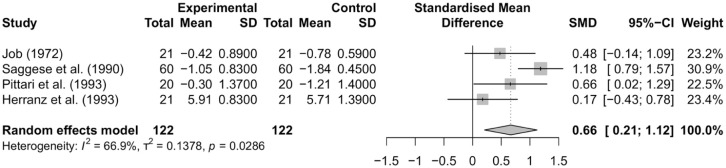
Background: Arginine can stimulate growth hormone production. However, a synthesis of the evidence on the effect in children’s height is lacking. Objectives: To systematically evaluate the efficacy of oral arginine in improving height in prepubertal children with idiopathic short stature. Design: Systematic review and meta-analysis. Data sources and methods: We included clinical trials and cohort studies. We searched in 7 databases until May 31, 2025. Effects were pooled using standardized mean differences (SMDs) and re-expressed as mean differences (MDs). Results: We only found low-quality studies. Oral arginine administered for 6 or 12 months increased growth velocity (SMD 0.66, 95% CI 0.21-1.12), but the benefit was clinically small (re-expressed MD 0.59 cm/year [95% CI 0.19-1.00]), and the effect was not statistically significant when administered for exclusively 12 months. Conclusion: Oral arginine administered for 12 months may not affect growth. Well-designed RCTs are required. Registration: PROSPERO (CRD42024503778).
Overview
CoChat Summary
TL;DR
This systematic review and meta-analysis of 6 low-quality studies (1 RCT, 5 quasi-experimental; published 1972–1993) found that oral arginine for 6 or 12 months increased growth velocity in prepubertal children with idiopathic short stature, but the pooled benefit was clinically small and not statistically significant when restricted to 12 months. The authors conclude that oral arginine for 12 months may not affect growth and that well-designed RCTs are needed.
Key findings
- Six articles met inclusion; only one was an RCT (Cicognani 1990), and five were quasi-experimental. All were low quality, and GRADE certainty was very low for the meta-analyzed outcomes.
- Pooled 6- or 12-month treatment increased growth velocity: SMD 0.66 (95% CI 0.21–1.12); re-expressed MD 0.59 cm/year (95% CI 0.19–1.00). The authors describe this benefit as clinically small.
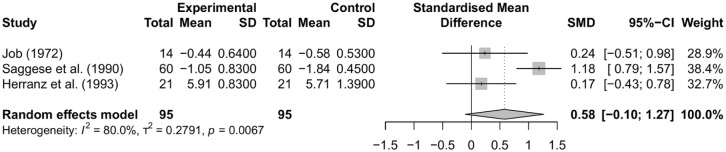
- The 12-month-only meta-analysis showed no statistically significant effect (SMD 0.58; Summary of Findings table reports 0.10 fewer to 1.27 more; re-expressed MD 0.52 [95% CI 0.09–1.14] as stated in the results text).
- The single RCT found no significant difference between arginine and placebo for ΔGV (MD 0.45 cm/year [95% CI −1.34 to 2.23]) or ΔGV-SDS (MD 0.91 [95% CI −1.26 to 3.07]), with high risk of bias. Four studies reported no complications; one reported increased appetite in 7 and sleepiness in 2 patients; one patient stopped arginine due to nausea.
Methods
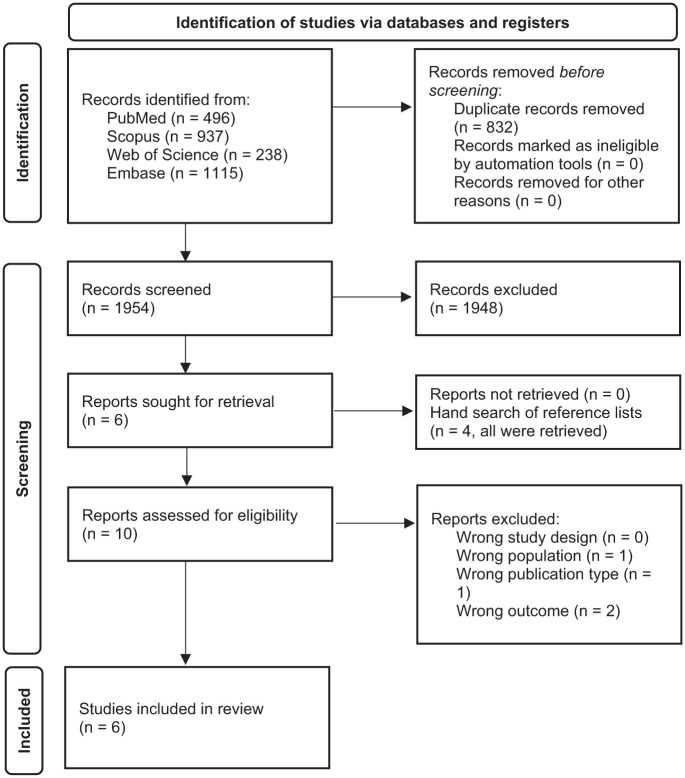
- Systematic review and meta-analysis; protocol registered in PROSPERO (CRD42024503778); reported per PRISMA 2020. Searched Scopus, PubMed, Web of Science, Embase, Cochrane CENTRAL, ICTRP, and ClinicalTrials.gov from inception to May 31, 2025, limited to English, Spanish, or Italian. Included RCTs, non-randomized trials, and retrospective/prospective cohort studies of oral arginine in prepubertal children with idiopathic short stature.
- Two reviewers independently screened, extracted data, and assessed risk of bias using Cochrane RoB2 for RCTs and the JBI tool for quasi-experimental studies; certainty of evidence was assessed with GRADE. Random-effects inverse-variance meta-analyses used SMDs (Cohen’s d) and MDs, with heterogeneity assessed by I²; SMDs were re-expressed using a reference growth-velocity SD of 0.9 cm/year.
- Six articles were included (1972–1993; Italy, France, Spain). Meta-analyses pooled 4 quasi-experimental studies (Herranz Jordán, Saggese, Pittari, Job); the Aicardi study was excluded due to very high risk of bias. The RCT could not be pooled with the quasi-experimental studies.
Limitations
- Stated: the only RCT had high risk of bias; the other included studies were quasi-experimental; meta-analyzed outcomes had very low certainty evidence; the literature is not recent, so some patients may have been misdiagnosed with idiopathic short stature due to limitations of medicine at the time; if an undiagnosed disease caused growth failure, no growth improvement is expected without etiological treatment.
- Evident from the text: small sample sizes (15–60 patients per study; 122 and 95 patients in the pooled analyses), high heterogeneity (I² = 66.9% and 80.0%), strong suspicion of publication bias, lack of allocation concealment and blinding in all studies, and unclear whether participants received other interventions simultaneously.
- Also evident: possible undetected nutritional deficiencies in some included populations; the Aicardi study was excluded for invalid statistical analysis and subjective follow-up measurement; the Herranz Jordán study was included despite 2 children entering puberty because individual data were lacking.
Model-written summary. Check it against the paper before relying on it.
Integrity signals
Registry
Cites
Statistics
Figures
Verification
Claims the paper makes
0 Valid · 0 Not valid · 47 Not checked · 32 Own results and interpretations
None of the sources cited for this claim have been checked yet.
In the paper
“and 2 quasi-experimental studies4,16 also showed no statistically significant effect (Table 2).”
§ Efficacy of Oral Arginine as Treatment to Improve Height in Prepubertal Children With Idiopathic Short Stature: A Systematic Review and Meta-Analysis > Results
plain- Asserted: passes — The authors put it forward as true.
- Checkable: passes — It can be checked against evidence.
- Load-bearing: unclear — It is unclear whether the paper’s conclusions depend on it.
- Based: passes — The paper gives a reason why it holds.
A result the paper states — it cites no source for it, so there is none to check. The quote shows it is in the paper.
In the paper
“However, a synthesis of the evidence on the effect in children’s height is lacking.”
- Also stated in: § Introduction · plain
“However, a quality assessment and synthesis of the evidence on the effect of oral arginine in children with ISS has not been published.”
§ Efficacy of Oral Arginine as Treatment to Improve Height in Prepubertal Children With Idiopathic Short Stature: A Systematic Review and Meta-Analysis > Abstract > Background:
plain- Asserted: passes — The authors put it forward as true.
- Checkable: passes — It can be checked against evidence.
- Load-bearing: passes — The paper’s conclusions depend on it.
- Based: passes — The paper gives a reason why it holds.
- Also stated in: § Introduction · plain
A result the paper reports from its own data — it cites no other source for it, so there is none to check. The quote shows it is in the paper.
In the paper
“We only found low-quality studies.”
§ Efficacy of Oral Arginine as Treatment to Improve Height in Prepubertal Children With Idiopathic Short Stature: A Systematic Review and Meta-Analysis > Abstract > Results:
plain- Asserted: passes — The authors put it forward as true.
- Checkable: passes — It can be checked against evidence.
- Load-bearing: passes — The paper’s conclusions depend on it.
- Based: passes — The paper gives a reason why it holds.
None of the sources cited for this claim have been checked yet.
In the paper
“Herranz Jordán et al 4 reported no statistically significant benefit of oral arginine to increase Ht-SDS in prepubertal children with ISS.”
§ Efficacy of Oral Arginine as Treatment to Improve Height in Prepubertal Children With Idiopathic Short Stature: A Systematic Review and Meta-Analysis > Results
plain- Asserted: passes — The authors put it forward as true.
- Checkable: passes — It can be checked against evidence.
- Load-bearing: unclear — It is unclear whether the paper’s conclusions depend on it.
- Based: passes — The paper gives a reason why it holds.
A result the paper reports from its own data — it cites no other source for it, so there is none to check. The quote shows it is in the paper.
In the paper
“Oral arginine administered for 6 or 12 months increased growth velocity (SMD 0.66, 95% CI 0.21-1.12)”
§ Efficacy of Oral Arginine as Treatment to Improve Height in Prepubertal Children With Idiopathic Short Stature: A Systematic Review and Meta-Analysis > Abstract > Results:
plainstates a cause- Asserted: passes — The authors put it forward as true.
- Checkable: passes — It can be checked against evidence.
- Load-bearing: passes — The paper’s conclusions depend on it.
- Based: passes — The paper gives a reason why it holds.
- Rests on an assumption not shown here.
34 more claims
Create a free account to see all 79 claims and to verify the 66 references still open.
- Probably not a substantial claim. 32
- It may state two separate claims as one. 12
Claims other papers make about this one
Each is checked against this paper’s own text: does it say what the citing paper says it does?
In the citing paper
“However, the evidence was considered low quality, and the effect was not statistically significant when the analysis was restricted to 12-month interventions.”
From Arginine and Linear Growth in Children and Adolescents: Scientific Evidence or Marketing Claim? (2026) · cites this paper as [14]
In the citing paper
“Rather, current evidence suggests that a small signal may be present in some analyses, but the certainty of the evidence is low, the magnitude of the effect is limited, and the durability and clinical importance of the observed effect remain uncertain (14).”
From Arginine and Linear Growth in Children and Adolescents: Scientific Evidence or Marketing Claim? (2026) · cites this paper as [14]
In the citing paper
“A 2026 systematic review and meta-analysis of oral arginine in prepubertal children with idiopathic short stature reported a small increase in height velocity in pooled analyses that included 6-or 12-month interventions, corresponding to a re-expressed mean difference of approximately 0.59 cm/year (95% CI: 0.19 -1.00).”
From Arginine and Linear Growth in Children and Adolescents: Scientific Evidence or Marketing Claim? (2026) · cites this paper as [14]
Self-check
Percentages, sums and reported differences re-computed from the paper’s own numbers.
Each contradiction between two passages listed here was confirmed by an independent check.
Rated major: it would touch a result — a value a result rests on, reported and recomputed p-values on opposite sides of the significance level, two passages that conflict with no sign which is right, or a cited work retracted before this paper was published.
In the paper
§ Efficacy of Oral Arginine as Treatment to Improve Height in Prepubertal Children With Idiopathic Short Stature: A Systematic Review and Meta-Analysis > Results
“the meta-analysis that included only studies and patients that received oral arginine for 12 months4,6,16 showed no statistically significant effect (SMD 0.58 [95% CI 0.10-1.27]; re-expressed MD 0.52 [95% CI 0.09-1.14]; Figure 3).”
§ Efficacy of Oral Arginine as Treatment to Improve Height in Prepubertal Children With Idiopathic Short Stature: A Systematic Review and Meta-Analysis > Results
“SMD 0.58 SD more (0.10 fewer to 1.27 more)”
Rated major: it would touch a result — a value a result rests on, reported and recomputed p-values on opposite sides of the significance level, two passages that conflict with no sign which is right, or a cited work retracted before this paper was published.
In the paper
§ Efficacy of Oral Arginine as Treatment to Improve Height in Prepubertal Children With Idiopathic Short Stature: A Systematic Review and Meta-Analysis > Results
“Two quasi-experimental studies reported Ht-SDS before and after 1 year of treatment, showing no statistically significant effect4,6 (Table 2).”
§ Efficacy of Oral Arginine as Treatment to Improve Height in Prepubertal Children With Idiopathic Short Stature: A Systematic Review and Meta-Analysis > Results
“| MD [95% CI] or P | | P > .1ǂ | P < .001* | | | | |”
Rated minor: it would not touch a result — a value no result rests on, a p-value that stays on the same side of the significance level, or a conflict that is clerical, resolved elsewhere in the paper, or outside its own findings.
In the paper
§ Efficacy of Oral Arginine as Treatment to Improve Height in Prepubertal Children With Idiopathic Short Stature: A Systematic Review and Meta-Analysis > Results
“A: 7.85 ± 1.5”
§ Efficacy of Oral Arginine as Treatment to Improve Height in Prepubertal Children With Idiopathic Short Stature: A Systematic Review and Meta-Analysis > Results
“A: 3.0-7.5”
Rated minor: it would not touch a result — a value no result rests on, a p-value that stays on the same side of the significance level, or a conflict that is clerical, resolved elsewhere in the paper, or outside its own findings.
In the paper
§ Efficacy of Oral Arginine as Treatment to Improve Height in Prepubertal Children With Idiopathic Short Stature: A Systematic Review and Meta-Analysis > Results
“The studies by Herranz Jordán et al and Pittari et al only provided information about GV, and information needed to calculate GV-SDS was lacking.”
§ Efficacy of Oral Arginine as Treatment to Improve Height in Prepubertal Children With Idiopathic Short Stature: A Systematic Review and Meta-Analysis > Results
“The study by Pittari et al 5 only reported the mean ± SD of GV-SDS.”
Citations
Cites
The PRISMA 2020 statement: An updated guideline for reporting systematic reviews
Page, M. J., McKenzie, J. E., Bossuyt, P. M., Boutron, I., Hoffmann, T. C., Mulrow, C. D., Shamseer, L., Tetzlaff, J. M., Akl, E. A., Brennan, S. E., et al. (2021) · BMJ · doi:10.1136/bmj.n71 · Cited by 108,283
RoB 2: a revised tool for assessing risk of bias in randomised trials
Sterne, J. A. C., Savović, J., Page, M. J., Elbers, R. G., Blencowe, N. S., Boutron, I., Cates, C. J., Cheng, H.-Y., Corbett, M. S., Eldridge, S. M., et al. (2019) · BMJ · doi:10.1136/bmj.l4898 · Cited by 34,787
GRADE guidelines: 3. Rating the quality of evidence
Balshem, H., Helfand, M., Schünemann, H. J., Oxman, A. D., Kunz, R., Brozek, J., Vist, G. E., Falck-Ytter, Y., Meerpohl, J., & Norris, S. (2011) · Journal of Clinical Epidemiology · doi:10.1016/j.jclinepi.2010.07.015 · Cited by 8,285
Tanner, J. M., Whitehouse, R. H., & Takaishi, M. (1966) · Archives of Disease in Childhood · doi:10.1136/adc.41.220.613 · Cited by 2,553
Tanner, J. M., Whitehouse, R. H., & Takaishi, M. (1966) · Archives of Disease in Childhood · doi:10.1136/adc.41.219.454 · Cited by 1,345
Barker, T. H., Habibi, N., Aromataris, E., Stone, J. C., Leonardi-Bee, J., Sears, K., Hasanoff, S., Klugar, M., Tufanaru, C., Moola, S., et al. (2024) · JBI Evidence Synthesis · doi:10.11124/jbies-23-00268 · Cited by 843
Grimberg, A., DiVall, S. A., Polychronakos, C., Allen, D. B., Cohen, L. E., Quintos, J. B., Rossi, W. C., Feudtner, C., Murad, M. H., & on behalf of the Drug and Therapeutics Committee and Ethics Committee of the Pediatric Endocrine Society (2016) · Hormone Research in Paediatrics · doi:10.1159/000452150 · Cited by 821
Schwedhelm, E., Maas, R., Freese, R., Jung, D., Lukacs, Z., Jambrecina, A., Spickler, W., Schulze, F., & Böger, R. H. (2008) · British Journal of Clinical Pharmacology · doi:10.1111/j.1365-2125.2007.02990.x · Cited by 494 · cited 1×
“26 So, oral administration of L-arginine probably is not an efficient way to deliver this molecule to the target tissues.”
Arginine and Arginases Modulate Metabolism, Tumor Microenvironment and Prostate Cancer Progression
Matos, A., Carvalho, M., Bicho, M., & Ribeiro, R. J. T. (2021) · Nutrients · doi:10.3390/nu13124503 · Cited by 123 · cited 6×
“22 The need of cancer cells for certain amino acids because of their inability to produce them has been the basis for treatment strategies that involve depriving the cells of these specific.”
InfluentialArginine behaviour after arginine or citrulline administration in older subjects
Moinard, C., Maccario, J., Walrand, S., Lasserre, V., Marc, J., Boirie, Y., & Cynober, L. (2016) · British Journal of Nutrition · doi:10.1017/s0007114515004638 · Cited by 55 · cited 2×
“21 Arginine, a nonessential amino acid, is acquired from diet, protein turnover and produced endogenously; and is crucial for protein synthesis.”
Research works printed but not linked: 5
- Schünemann H Vist G Higgins J, et al. Chapter 15: Interpreting results and drawing conclusions. In: Higgins J Thomas J Chandler J Cumpston M Li T Page M, eds. Cochrane Handbook for Systematic Reviews of Interventions Version 6.5. Cochrane; 2024. Accessed February 2, 2026. https://www.cochrane.org/authors/handbooks-and-manuals/handbook/current/chapter-15
- Job JC. [ Effects of arginine chlorhydrate on the secretion of pituitary growth hormone and on the growth of children]. Rev Pédiatrie. 1972; 8(3): 173- 185.
- Aicardi G Naselli A Di Battista E Vignolo M. Impiego dell’arginina cloridrato nei deficit e ritardi staturali essenziali. Not Pediatr. 1982; 4(3): 24- 28.
- Charvet JP Jaquet P Jaquet C Leone M. [ The use of L-arginine on growth retardation]. Rev Pédiatrie. 1975; 11(3): 155- 158.
- Klain U Ferrara M. [ Somatic deficits and retards: treatment with arginine hydrochloride]. Rass Int Clin Ter. 1982; 42(5): 334- 338.
Cited by
Arginine and Linear Growth in Children and Adolescents: Scientific Evidence or Marketing Claim?
Elyasi, B. (2026) · Journal of Comprehensive Pediatrics · doi:10.5812/jcp-175161
Metadata
- Authors
- Virú-Loza, M. A., Chávez-Nomberto, R. E., & Hernandez, A. V.
- Affiliations
- Universidad San Ignacio de Loyola (PE)
- Instituto Nacional de Salud del Niño (PE)
- Universidad San Ignacio de Loyola, Lima, Peru
- Corresponding author
- Virú-Loza, Manuel André
- Venue
- Sage Open Pediatrics
- Publisher
- SAGE Publications
- Published
- 2026-03
- Volume
- 13
- Pages
- 30502225261433767-30502225261433767
- ISSN
- 3050-2225 (ISSN-L)
- PMC
- PMC13031728
- OpenAlex
- W7140920363
- Semantic Scholar
- 78adfd64020026a424569ce559166b9d0bffcdeb
- Cited by
- 1
- References
- 28
- Citations by year
- 2026: 1
- FWCI
- 0.63
- Type
- journal article
- Language
- en
- Open access
- hybrid
- doi.org
- Licence
- cc-by-nc
- creativecommons.org/licenses/by-nc/4.0/ (vor)
- journals.sagepub.com/page/policies/text-and-data-mining-license (tdm)
- Locations
- Sage Open Pediatrics (publishedVersion, cc-by-nc)
- PubMed Central (publishedVersion, cc-by-nc)
- PubMed (publishedVersion)
- Topics
- Health Sciences › Medicine › Endocrinology, Diabetes and Metabolism › Growth Hormone and Insulin-like Growth Factors
- Health Sciences › Medicine › Reproductive Medicine › Hypothalamic control of reproductive hormones
- Health Sciences › Medicine › Pediatrics, Perinatology and Child Health › Human Health and Disease
- Keywords
- idiopathic short stature, prepubertal children, growth rate, growth hormone stimulation
About these checks
Registry, retraction, Cites and statistics results are computed, not judged, with one exception: a printed reference that no index lists is read once by a model before it counts as a citation error. Claims are extracted by a model and kept only when their quote appears verbatim in the text; each cited source is then checked, with a model’s help, for whether it says what the claim relies on. Those verdicts can be wrong — read the claim’s quote and the cited source before relying on one.
A language model drew the claims from the paper on 2026-11-28, under version 3 of the claim definition (model deepseek-v4.1-flash, prompt extract-v3).
A second model labelled each claim on 2026-11-28 (model jev-1.13-20260917, definition revision gold-guideline-v0.2).
Statistics and arithmetic are recomputed, not judged.
Confidence bands are shown only for fields calibrated on our annotated test set. None is calibrated yet, so no band is shown.
What counts as a claim ›How we measure confidence ›How we check this ›
Are you an author, or do you see a problem with this page? Request a review
Data sources
Bibliographic data: Semantic Scholar, OpenAlex, Crossref.
Contains information from the Semantic Scholar Academic Graph Datasets, made available under the ODC Attribution License (ODC-BY 1.0).
Semantic Scholar’s data is described in: Kinney, R., et al. (2023). The Semantic Scholar Open Data Platform. arXiv:2301.10140.
