

The DOI matches its Crossref record; 3 of the 3 references it cites were found in a registry or an index.
RUNX1-mutated families show phenotype heterogeneity and a somatic mutation profile unique to germline predisposed AML
Abstract
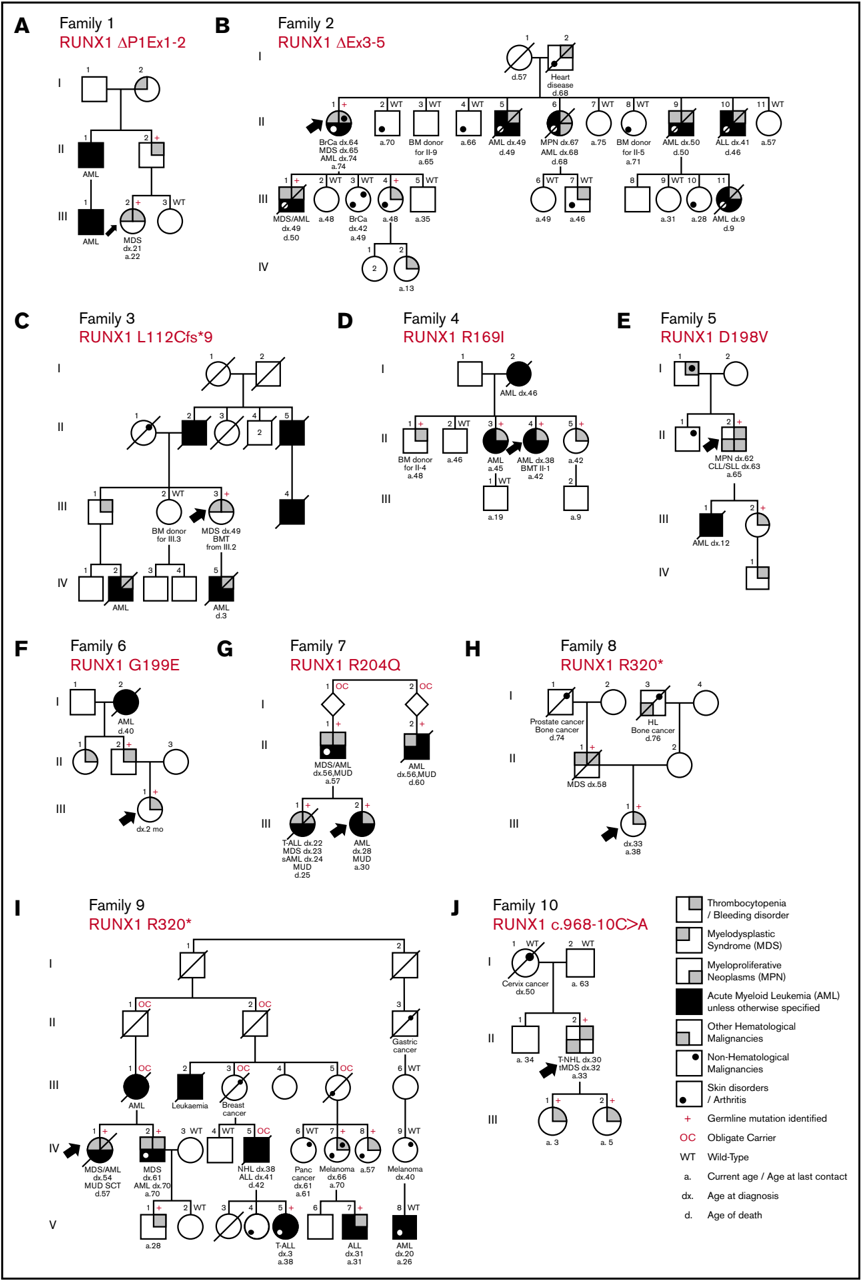
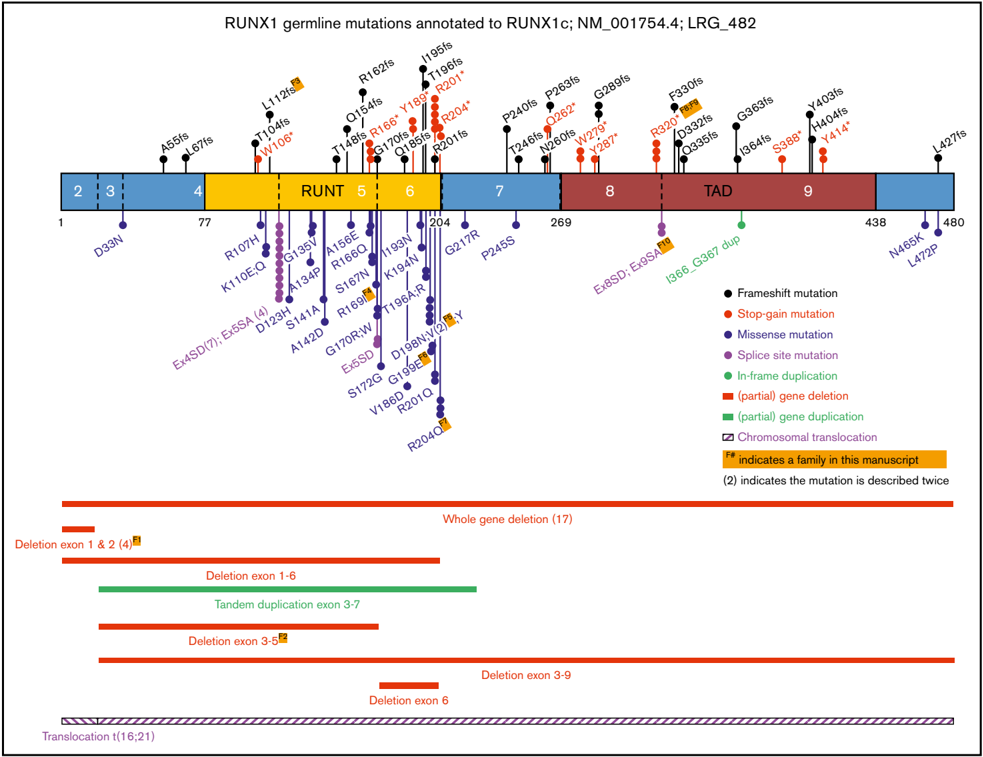
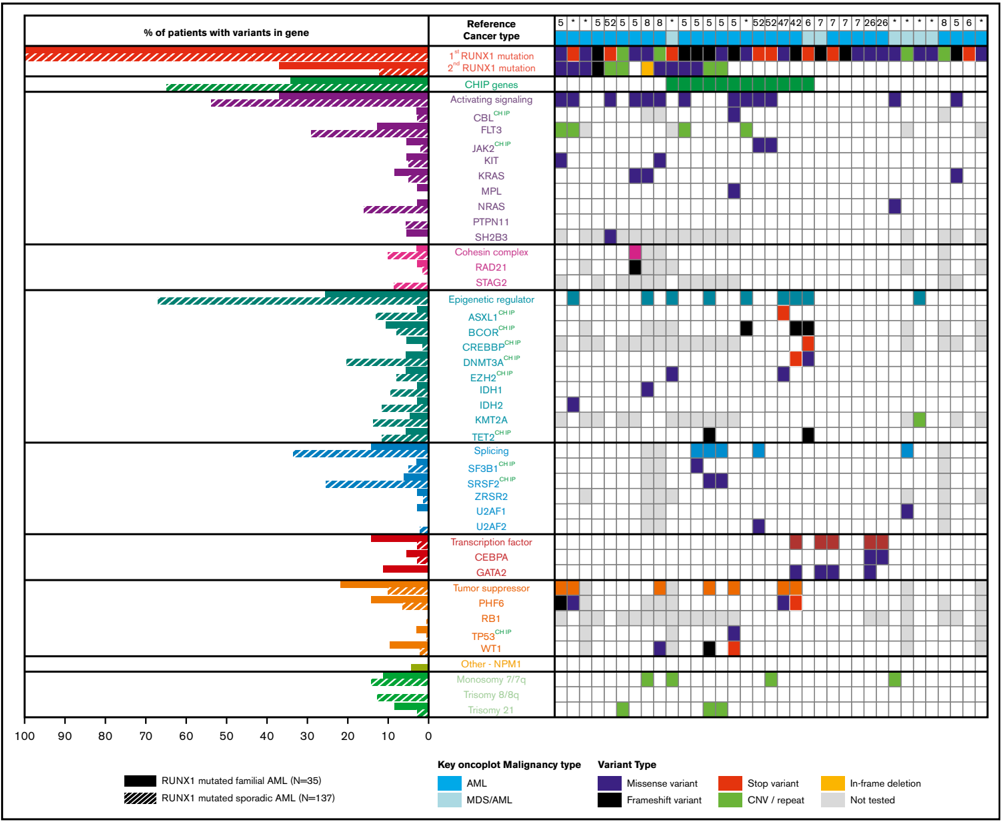
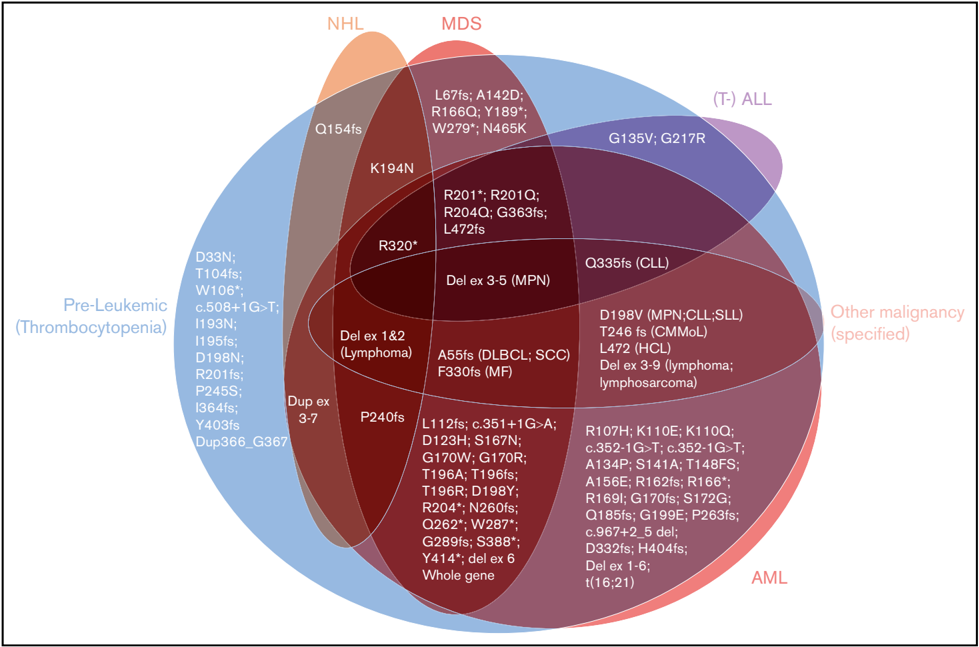
First reported in 1999, germline runt-related transcription factor 1 (RUNX1) mutations are a well-established cause of familial platelet disorder with predisposition to myeloid malignancy (FPD-MM). We present the clinical phenotypes and genetic mutations detected in 10 novel RUNX1-mutated FPD-MM families. Genomic analyses on these families detected 2 partial gene deletions, 3 novel mutations, and 5 recurrent mutations as the germline RUNX1 alterations leading to FPD-MM. Combining genomic data from the families reported herein with aggregated published data sets resulted in 130 germline RUNX1 families, which allowed us to investigate whether specific germline mutation characteristics (type, location) could explain the large phenotypic heterogeneity between patients with familial platelet disorder and different HMs. Comparing the somatic mutational signatures between the available familial (n = 35) and published sporadic (n = 137) RUNX1-mutated AML patients showed enrichment for somatic mutations affecting the second RUNX1 allele and GATA2. Conversely, we observed a decreased number of somatic mutations affecting NRAS, SRSF2, and DNMT3A and the collective genes associated with CHIP and epigenetic regulation. This is the largest aggregation and analysis of germline RUNX1 mutations performed to date, providing a unique opportunity to examine the factors underlying phenotypic differences and disease progression from FPD to MM.
Overview
The claims and statistics of this paper haven’t been checked yet.
Run the check — free, no account needed. It reads the open-access text and checks the sources it cites.
Integrity signals
Registry
Cites
Statistics
Figures
Verification
Claims the paper makes
The claims and statistics of this paper haven’t been checked yet.
Run the check — free, no account needed. It reads the open-access text and checks the sources it cites.
Claims other papers make about this one
Each is checked against this paper’s own text: does it say what the citing paper says it does?
In the citing paper
“Among individuals with rare Mendelian cancer predisposition syndromes, carriers often show distinct CH mutational profiles reflecting strong selective pressures18–21.”
From Germline genetic variation impacts clonal hematopoiesis landscape and progression to malignancy (2025) · cites this paper as [20]
Self-check
Percentages, sums and reported differences re-computed from the paper’s own numbers.
The self-check needs the paper’s full text.
Citations
Cites
Richards, S., Aziz, N., Bale, S., Bick, D., Das, S., Gastier-Foster, J., Grody, W. W., Hegde, M., Lyon, E., Spector, E., et al. (2015) · Genetics in Medicine · doi:10.1038/gim.2015.30 · Cited by 32,594
Arber, D. A., Orazi, A., Hasserjian, R., Thiele, J., Borowitz, M. J., Le Beau, M. M., Bloomfield, C. D., Cazzola, M., & Vardiman, J. W. (2016) · Blood · doi:10.1182/blood-2016-03-643544 · Cited by 10,119
Genomic classification and prognosis in acute myeloid leukemia
Papaemmanuil, E., Gerstung, M., Bullinger, L., Gaidzik, V. I., Paschka, P., Roberts, N. D., Potter, N. E., Heuser, M., Thol, F., Bolli, N., et al. (2016) · New England Journal of Medicine · doi:10.1056/nejmoa1516192 · Cited by 4,350
Self-citation
Research works printed but not linked: 81
- Song, 1999, Haploinsufficiency of CBFA2 causes familial thrombocytopenia with propensity to develop acute myelogenous leukaemia, Nat Genet, 23, 166, 10.1038/13793 · DOI · Paper page
- Brown, 2017, Recognition of familial myeloid neoplasia in adults, Semin Hematol, 54, 60, 10.1053/j.seminhematol.2016.11.003 · DOI
- Sood, 2017, Role of RUNX1 in hematological malignancies, Blood, 129, 2070, 10.1182/blood-2016-10-687830 · DOI
- Antony-Debré, 2016, Somatic mutations associated with leukemic progression of familial platelet disorder with predisposition to acute myeloid leukemia, Leukemia, 30, 999, 10.1038/leu.2015.236 · DOI
- Churpek, 2015, Genomic analysis of germ line and somatic variants in familial myelodysplasia/acute myeloid leukemia, Blood, 126, 2484, 10.1182/blood-2015-04-641100 · DOI · Paper page
- Yoshimi, 2014, Recurrent CDC25C mutations drive malignant transformation in FPD/AML, Nat Commun, 5, 4770, 10.1038/ncomms5770 · DOI
- Kanagal-Shamanna, 2017, Bone marrow pathologic abnormalities in familial platelet disorder with propensity for myeloid malignancy and germline RUNX1 mutation, Haematologica, 102, 1661, 10.3324/haematol.2017.167726 · DOI
- Stengel, 2018, Number of RUNX1 mutations, wild-type allele loss and additional mutations impact on prognosis in adult RUNX1-mutated AML, Leukemia, 32, 295, 10.1038/leu.2017.239 · DOI
- Gaidzik, 2016, RUNX1 mutations in acute myeloid leukemia are associated with distinct clinico-pathologic and genetic features [published correction appears in Leukemia. 2016;30(11):2282, Leukemia, 30, 2160, 10.1038/leu.2016.126 · DOI
- Luo, 2019, ClinGen Myeloid Malignancy Variant Curation Expert Panel recommendations for germline RUNX1 variants, Blood Adv, 3, 2962, 10.1182/bloodadvances.2019000644 · DOI
- Hahn, 2015, A tale of two siblings: two cases of AML arising from a single pre-leukemic DNMT3A mutant clone, Leukemia, 29, 2101, 10.1038/leu.2015.67 · DOI
- Favero, 2015, Sequenza: allele-specific copy number and mutation profiles from tumor sequencing data, Ann Oncol, 26, 64, 10.1093/annonc/mdu479 · DOI
- Singhal, 2019, The mutational burden of therapy-related myeloid neoplasms is similar to primary myelodysplastic syndrome but has a distinctive distribution, Leukemia, 33, 2842, 10.1038/s41375-019-0479-8 · DOI · Paper page
- Tahirov, 2001, Structural analyses of DNA recognition by the AML1/Runx-1 Runt domain and its allosteric control by CBFbeta, Cell, 104, 755, 10.1016/S0092-8674(01)00271-9 · DOI
- Johnson, 2016, Whole exome sequencing identifies genetic variants in inherited thrombocytopenia with secondary qualitative function defects, Haematologica, 101, 1170, 10.3324/haematol.2016.146316 · DOI
- Preudhomme, 2009, High frequency of RUNX1 biallelic alteration in acute myeloid leukemia secondary to familial platelet disorder, Blood, 113, 5583, 10.1182/blood-2008-07-168260 · DOI
- Osato, 1999, Biallelic and heterozygous point mutations in the runt domain of the AML1/PEBP2alphaB gene associated with myeloblastic leukemias, Blood, 93, 1817, 10.1182/blood.V93.6.1817.406k36_1817_1824 · DOI
- Owen, 2008, Familial myelodysplasia and acute myeloid leukaemia–a review, Br J Haematol, 140, 123, 10.1111/j.1365-2141.2007.06909.x · DOI
- Owen, 2008, Five new pedigrees with inherited RUNX1 mutations causing familial platelet disorder with propensity to myeloid malignancy, Blood, 112, 4639, 10.1182/blood-2008-05-156745 · DOI · Paper page
- Pastor, 2017, Mutational landscape in children with myelodysplastic syndromes is distinct from adults: specific somatic drivers and novel germline variants, Leukemia, 31, 759, 10.1038/leu.2016.342 · DOI
- Stockley, 2013, Enrichment of FLI1 and RUNX1 mutations in families with excessive bleeding and platelet dense granule secretion defects, Blood, 122, 4090, 10.1182/blood-2013-06-506873 · DOI
- Latger-Cannard, 2016, Haematological spectrum and genotype-phenotype correlations in nine unrelated families with RUNX1 mutations from the French network on inherited platelet disorders, Orphanet J Rare Dis, 11, 49, 10.1186/s13023-016-0432-0 · DOI
- Michaud, 2002, In vitro analyses of known and novel RUNX1/AML1 mutations in dominant familial platelet disorder with predisposition to acute myelogenous leukemia: implications for mechanisms of pathogenesis, Blood, 99, 1364, 10.1182/blood.V99.4.1364 · DOI
- Simon, 2017, Chemogenomic landscape of RUNX1-mutated AML reveals importance of RUNX1 allele dosage in genetics and glucocorticoid sensitivity, Clin Cancer Res, 23, 6969, 10.1158/1078-0432.CCR-17-1259 · DOI
- De Rocco, 2017, Mutations of RUNX1 in families with inherited thrombocytopenia, Am J Hematol, 92, E86, 10.1002/ajh.24703 · DOI
- Perez Botero, 2017, Clinical characteristics and platelet phenotype in a family with RUNX1 mutated thrombocytopenia, Leuk Lymphoma, 58, 1963, 10.1080/10428194.2016.1265118 · DOI
- Sun, 2004, Association of CBFA2 mutation with decreased platelet PKC-theta and impaired receptor-mediated activation of GPIIb-IIIa and pleckstrin phosphorylation: proteins regulated by CBFA2 play a role in GPIIb-IIIa activation, Blood, 103, 948, 10.1182/blood-2003-07-2299 · DOI · Paper page
- Ouchi-Uchiyama, 2015, Analyses of Genetic and Clinical Parameters for Screening Patients With Inherited Thrombocytopenia with Small or Normal-Sized Platelets, Pediatr Blood Cancer, 62, 2082, 10.1002/pbc.25668 · DOI
- Guidugli, 2017, Clinical utility of gene panel-based testing for hereditary myelodysplastic syndrome/acute leukemia predisposition syndromes, Leukemia, 31, 1226, 10.1038/leu.2017.28 · DOI
- Walker, 2002, A novel inherited mutation of the transcription factor RUNX1 causes thrombocytopenia and may predispose to acute myeloid leukaemia, Br J Haematol, 117, 878, 10.1046/j.1365-2141.2002.03512.x · DOI
- Schwartz, 2017, The genomic landscape of pediatric myelodysplastic syndromes, Nat Commun, 8, 1557, 10.1038/s41467-017-01590-5 · DOI
- Béri-Dexheimer, 2008, Clinical phenotype of germline RUNX1 haploinsufficiency: from point mutations to large genomic deletions, Eur J Hum Genet, 16, 1014, 10.1038/ejhg.2008.89 · DOI
- Marneth, 2017, Platelet CD34 expression and α/δ-granule abnormalities in GFI1B- and RUNX1-related familial bleeding disorders, Blood, 129, 1733, 10.1182/blood-2016-11-749366 · DOI
- DiNardo, 2016, Evaluation of Patients and Families With Concern for Predispositions to Hematologic Malignancies Within the Hereditary Hematologic Malignancy Clinic (HHMC), Clin Lymphoma Myeloma Leuk, 16, 417, 10.1016/j.clml.2016.04.001 · DOI
- Bluteau, 2011, Down-regulation of the RUNX1-target gene NR4A3 contributes to hematopoiesis deregulation in familial platelet disorder/acute myelogenous leukemia, Blood, 118, 6310, 10.1182/blood-2010-12-325555 · DOI
- Haslam, 2016, Targeted next-generation sequencing of familial platelet disorder with predisposition to acute myeloid leukaemia, Br J Haematol, 175, 161, 10.1111/bjh.13838 · DOI
- Obata, 2015, Whole-exome sequencing confirmation of a novel heterozygous mutation in RUNX1 in a pregnant woman with platelet disorder, Platelets, 26, 364, 10.3109/09537104.2014.912750 · DOI
- Sakurai, 2016, Genetic basis of myeloid transformation in familial platelet disorder/acute myeloid leukemia patients with haploinsufficient RUNX1 allele, Blood Cancer J, 6, e392, 10.1038/bcj.2015.81 · DOI
- Chin, 2016, RUNX1 haploinsufficiency results in granulocyte colony-stimulating factor hypersensitivity, Blood Cancer J, 6, e379, 10.1038/bcj.2015.105 · DOI
- Buijs, 2012, Elucidation of a novel pathogenomic mechanism using genome-wide long mate-pair sequencing of a congenital t(16;21) in a series of three RUNX1-mutated FPD/AML pedigrees, Leukemia, 26, 2151, 10.1038/leu.2012.79 · DOI
- Ng, 2018, Preleukemic and second-hit mutational events in an acute myeloid leukemia patient with a novel germline RUNX1 mutation, Biomark Res, 6, 16, 10.1186/s40364-018-0130-2 · DOI
- Zhang, 2015, Genomic analysis of bone marrow failure and myelodysplastic syndromes reveals phenotypic and diagnostic complexity, Haematologica, 100, 42, 10.3324/haematol.2014.113456 · DOI
- Chisholm, 2019, Bone Marrow Morphology Associated With Germline RUNX1 Mutations in Patients With Familial Platelet Disorder With Associated Myeloid Malignancy, Pediatr Dev Pathol, 22, 315, 10.1177/1093526618822108 · DOI
- Badin, 2017, Molecular phenotype and bleeding risks of an inherited platelet disorder in a family with a RUNX1 frameshift mutation, Haemophilia, 23, e204, 10.1111/hae.13169 · DOI
- Manchev, 2017, Acquired TET2 mutation in one patient with familial platelet disorder with predisposition to AML led to the development of pre-leukaemic clone resulting in T2-ALL and AML-M0, J Cell Mol Med, 21, 1237, 10.1111/jcmm.13051 · DOI
- Langabeer, 2010, A novel RUNX1 mutation in a kindred with familial platelet disorder with propensity to acute myeloid leukaemia: male predominance of affected individuals, Eur J Haematol, 85, 552, 10.1111/j.1600-0609.2010.01513.x · DOI
- Buijs, 2001, A novel CBFA2 single-nucleotide mutation in familial platelet disorder with propensity to develop myeloid malignancies, Blood, 98, 2856, 10.1182/blood.V98.9.2856 · DOI
- Ripperger, 2009, A novel pedigree with heterozygous germline RUNX1 mutation causing familial MDS-related AML: can these families serve as a multistep model for leukemic transformation?, Leukemia, 23, 1364, 10.1038/leu.2009.87 · DOI
- Nishimoto, 2010, T cell acute lymphoblastic leukemia arising from familial platelet disorder, Int J Hematol, 92, 194, 10.1007/s12185-010-0612-y · DOI
- Tawana, 2017, Recurrent somatic JAK-STAT pathway variants within a RUNX1-mutated pedigree, Eur J Hum Genet, 25, 1020, 10.1038/ejhg.2017.80 · DOI
- Holme, 2012, Marked genetic heterogeneity in familial myelodysplasia/acute myeloid leukaemia, Br J Haematol, 158, 242, 10.1111/j.1365-2141.2012.09136.x · DOI
- Linden, 2010, Childhood B-cell precursor acute lymphoblastic leukaemia in a patient with familial thrombocytopenia and RUNX1 mutation, Br J Haematol, 151, 528, 10.1111/j.1365-2141.2010.08370.x · DOI
- Heller, 2005, Low Mpl receptor expression in a pedigree with familial platelet disorder with predisposition to acute myelogenous leukemia and a novel AML1 mutation, Blood, 105, 4664, 10.1182/blood-2005-01-0050 · DOI · Paper page
- Appelmann, 2009, Hereditary thrombocytopenia and acute myeloid leukemia: a common link due to a germline mutation in the AML1 gene, Ann Hematol, 88, 1037, 10.1007/s00277-009-0722-x · DOI
- Schmit, 2015, Two novel RUNX1 mutations in a patient with congenital thrombocytopenia that evolved into a high grade myelodysplastic syndrome, Leuk Res Rep, 4, 24
- Ok, 2016, Detection of an Abnormal Myeloid Clone by Flow Cytometry in Familial Platelet Disorder With Propensity to Myeloid Malignancy, Am J Clin Pathol, 145, 271, 10.1093/ajcp/aqv080 · DOI
- Shiba, 2012, CBL mutation in chronic myelomonocytic leukemia secondary to familial platelet disorder with propensity to develop acute myeloid leukemia (FPD/AML), Blood, 119, 2612, 10.1182/blood-2011-02-333435 · DOI
- Staňo Kozubík, 2018, C-terminal RUNX1 mutation in familial platelet disorder with predisposition to myeloid malignancies, Int J Hematol, 108, 652, 10.1007/s12185-018-2514-3 · DOI
- Churpek, 2010, Identification and molecular characterization of a novel 3′ mutation in RUNX1 in a family with familial platelet disorder, Leuk Lymphoma, 51, 1931, 10.3109/10428194.2010.503821 · DOI
- Yoshimi, 2016, Spectrum of clinical and genetic features of patients with inherited platelet disorder with suspected predisposition to hematological malignancies: a nationwide survey in Japan, Ann Oncol, 27, 887, 10.1093/annonc/mdw066 · DOI
- Sorrell, 2012, Hereditary leukemia due to rare RUNX1c splice variant (L472X) presents with eczematous phenotype, Int J Clin Med, 3, 37110, 10.4236/ijcm.2012.37110 · DOI
- Cavalcante de Andrade Silva, 2018, Deletion of RUNX1 exons 1 and 2 associated with familial platelet disorder with propensity to acute myeloid leukemia, Cancer Genet, 222-223, 32, 10.1016/j.cancergen.2018.01.002 · DOI
- Jongmans, 2010, Novel RUNX1 mutations in familial platelet disorder with enhanced risk for acute myeloid leukemia: clues for improved identification of the FPD/AML syndrome, Leukemia, 24, 242, 10.1038/leu.2009.210 · DOI
- Shinawi, 2008, Syndromic thrombocytopenia and predisposition to acute myelogenous leukemia caused by constitutional microdeletions on chromosome 21q, Blood, 112, 1042, 10.1182/blood-2008-01-135970 · DOI
- van der Crabben, 2010, Constitutional RUNX1 deletion presenting as non-syndromic thrombocytopenia with myelodysplasia: 21q22 ITSN1 as a candidate gene in mental retardation, Leuk Res, 34, e8, 10.1016/j.leukres.2009.06.030 · DOI
- Hoyer, 2007, Molecular karyotyping in patients with mental retardation using 100K single-nucleotide polymorphism arrays, J Med Genet, 44, 629, 10.1136/jmg.2007.050914 · DOI
- Lyle, 2009, Genotype-phenotype correlations in Down syndrome identified by array CGH in 30 cases of partial trisomy and partial monosomy chromosome 21, Eur J Hum Genet, 17, 454, 10.1038/ejhg.2008.214 · DOI · Paper page
- Katzaki, 2010, Syndromic mental retardation with thrombocytopenia due to 21q22.11q22.12 deletion: Report of three patients, Am J Med Genet A, 152A, 1711, 10.1002/ajmg.a.33478 · DOI
- Link, 2016, “CHIP”ping away at clonal hematopoiesis, Leukemia, 30, 1633, 10.1038/leu.2016.130 · DOI
- Valent, 2019, Clonal Hematopoiesis with Oncogenic Potential (CHOP): Separation from CHIP and Roads to AML, Int J Mol Sci, 20, 789, 10.3390/ijms20030789 · DOI
- Knudson, 1971, Mutation and cancer: statistical study of retinoblastoma, Proc Natl Acad Sci USA, 68, 820, 10.1073/pnas.68.4.820 · DOI · Paper page
- Hong, 2019, RUNX1-dependent mechanisms in biological control and dysregulation in cancer, J Cell Physiol, 234, 8597, 10.1002/jcp.27841 · DOI
- Patrick, 2019, Integrative Approach to Reveal Cell Type Specificity and Gene Candidates for Psoriatic Arthritis Outside the MHC, Front Genet, 10, 304, 10.3389/fgene.2019.00304 · DOI
- Helms, 2003, A putative RUNX1 binding site variant between SLC9A3R1 and NAT9 is associated with susceptibility to psoriasis, Nat Genet, 35, 349, 10.1038/ng1268 · DOI
- Yin, 2015, Genome-wide meta-analysis identifies multiple novel associations and ethnic heterogeneity of psoriasis susceptibility, Nat Commun, 6, 6916, 10.1038/ncomms7916 · DOI
- Tokuhiro, 2003, An intronic SNP in a RUNX1 binding site of SLC22A4, encoding an organic cation transporter, is associated with rheumatoid arthritis, Nat Genet, 35, 341, 10.1038/ng1267 · DOI
- Chiaroni-Clarke, 2014, Independent confirmation of juvenile idiopathic arthritis genetic risk loci previously identified by immunochip array analysis, Pediatr Rheumatol Online J, 12, 53, 10.1186/1546-0096-12-53 · DOI
- Jones, 2009, JAK2 haplotype is a major risk factor for the development of myeloproliferative neoplasms, Nat Genet, 41, 446, 10.1038/ng.334 · DOI
- Thol, 2017, Acute myeloid leukemia derived from lympho-myeloid clonal hematopoiesis, Leukemia, 31, 1286, 10.1038/leu.2016.345 · DOI
- Adelman, 2019, Aging Human Hematopoietic Stem Cells Manifest Profound Epigenetic Reprogramming of Enhancers That May Predispose to Leukemia, Cancer Discov, 9, 1080, 10.1158/2159-8290.CD-18-1474 · DOI
- Hamilton, 2019, Stopping Leukemia in Its Tracks: Should Preemptive Hematopoietic Stem-Cell Transplantation be Offered to Patients at Increased Genetic Risk for Acute Myeloid Leukemia?, J Clin Oncol, 37, 2098, 10.1200/JCO.19.00181 · DOI
Cited by
Clonal hematopoiesis and inflammation – the perpetual cycle
Avagyan, S., & Zon, L. I. (2023) · Trends in Cell Biology · doi:10.1016/j.tcb.2022.12.001 · Cited by 79
Germline genetic variation impacts clonal hematopoiesis landscape and progression to malignancy
Liu, J., Tran, D., Xue, L., Wiley, B. J., Vlasschaert, C., Watson, C. J., MacGregor, H. A. J., Zong, X., Chan, I. C. C., Das, I., et al. (2025) · Nature Genetics · doi:10.1038/s41588-025-02250-x · Cited by 33
Self-citation
Metadata
- Authors
- Brown, A. L., Arts, P., Carmichael, C. L., Babic, M., Dobbins, J., Chong, C.-E., Schreiber, A. W., Feng, J., Phillips, K., Wang, P. P. S., Ha, T., Homan, C. C., King-Smith, S. L., Rawlings, L., Vakulin, C., Dubowsky, A., Burdett, J., Moore, S., McKavanagh, G., Henry, D., Wells, A., Mercorella, B., Nicola, M., Suttle, J., Wilkins, E., Li, X.-C., Michaud, J., Brautigan, P., Cannon, P., Altree, M., Jaensch, L., Fine, M., Butcher, C., D’Andrea, R. J., Lewis, I. D., Hiwase, D. K., Papaemmanuil, E., Horwitz, M. S., Natsoulis, G., Rienhoff, H. Y., Patton, N., Mapp, S., Susman, R., Morgan, S., Cooney, J., Currie, M., Popat, U., Bochtler, T., Izraeli, S., Bradstock, K., Godley, L. A., Krämer, A., Fröhling, S., Wei, A. H., Forsyth, C., Mar Fan, H., Poplawski, N. K., Hahn, C. N., & Scott, H. S.
- Venue
- Blood Advances
- Publisher
- American Society of Hematology
- Published
- 2020-03-24
- Volume
- 4
- Issue
- 6
- Pages
- 1131-1144
- ISSN
- 2473-9529
- 2473-9537
- Cited by
- 155
- References
- 3
- Language
- en
About these checks
Registry, retraction, Cites and statistics results are computed, not judged, with one exception: a printed reference that no index lists is read once by a model before it counts as a citation error. Claims are extracted by a model and kept only when their quote appears verbatim in the text; each cited source is then checked, with a model’s help, for whether it says what the claim relies on. Those verdicts can be wrong — read the claim’s quote and the cited source before relying on one.
Statistics and arithmetic are recomputed, not judged.
Confidence bands are shown only for fields calibrated on our annotated test set. None is calibrated yet, so no band is shown.
What counts as a claim ›How we measure confidence ›How we check this ›
Are you an author, or do you see a problem with this page? Request a review
