

Myelodysplastic syndrome unrelated to lentiviral vector in a patient treated with gene therapy for sickle cell disease
Open accessThe DOI matches its Crossref record; 32 of the 32 references it cites were found in a registry or an index.
Abstract
Key Points: Ability to accurately attribute adverse events post–gene therapy is required to describe the benefit-risk of these novel treatments. A SCD patient developed myelodysplastic syndrome post-LentiGlobin treatment; we show how insertional oncogenesis was excluded as the cause.
Overview
The claims and statistics of this paper haven’t been checked yet.
Free: it reads the open-access text and checks the first 5 claims that cite a source we can check. Create a free account to check every claim.
Integrity signals
Registry
Cites
Statistics
Figures

Verification
Claims the paper makes
The claims and statistics of this paper haven’t been checked yet.
Free: it reads the open-access text and checks the first 5 claims that cite a source we can check. Create a free account to check every claim.
Claims other papers make about this one
Each is checked against this paper’s own text: does it say what the citing paper says it does?
The source backs part of the claim, not all of it — or backs it for a different population, condition or comparison.
In the citing paper
“Although insertional mutagenesis risk has been reduced by improved vector design19, the development of myelodysplastic syndrome (MDS) and acute myeloid leukemia (AML) at 3–5.5 years post-transplantation in 2 of 47 patients who had undergone GT for SCD20–23 has generated renewed concerns.”
From Clonal selection of hematopoietic stem cells after gene therapy for sickle cell disease (2023) · cites this paper as [20]
Experimental — accuracy not yet measuredThe cited source says what the claim attributes to it.
In the citing paper
“Myeloablative conditioning is required for all cell-based therapeutics but has been associated with myelodysplasia”
From Fetal hemoglobin in sickle cell anemia (2020) · cites this paper as [129]
In the citing paper
“though neither were reported to be mutated in patients who experienced post-GT myeloid malignancies20,21”
From Clonal selection of hematopoietic stem cells after gene therapy for sickle cell disease (2023) · cites this paper as [20]
Self-check
Percentages, sums and reported differences re-computed from the paper’s own numbers.
The self-check needs the paper’s full text.
Citations
Cites
Lentiviral Hematopoietic Stem Cell Gene Therapy Benefits Metachromatic Leukodystrophy
Biffi, A., Montini, E., Lorioli, L., Cesani, M., Fumagalli, F., Plati, T., Baldoli, C., Martino, S., Calabria, A., Canale, S., et al. (2013) · Science · doi:10.1126/science.1233158 · Cited by 1,180
Self-citationMontini, E., Cesana, D., Schmidt, M., Sanvito, F., Ponzoni, M., Bartholomae, C., Sergi, L. S., Benedicenti, F., Ambrosi, A., Di Serio, C., et al. (2006) · Nature Biotechnology · doi:10.1038/nbt1216 · Cited by 701
Self-citationGene therapy in a patient with sickle cell disease
Ribeil, J.-A., Hacein-Bey-Abina, S., Payen, E., Magnani, A., Semeraro, M., Magrin, E., Caccavelli, L., Neven, B., Bourget, P., El Nemer, W., et al. (2017) · New England Journal of Medicine · doi:10.1056/nejmoa1609677 · Cited by 696 · cited 3×
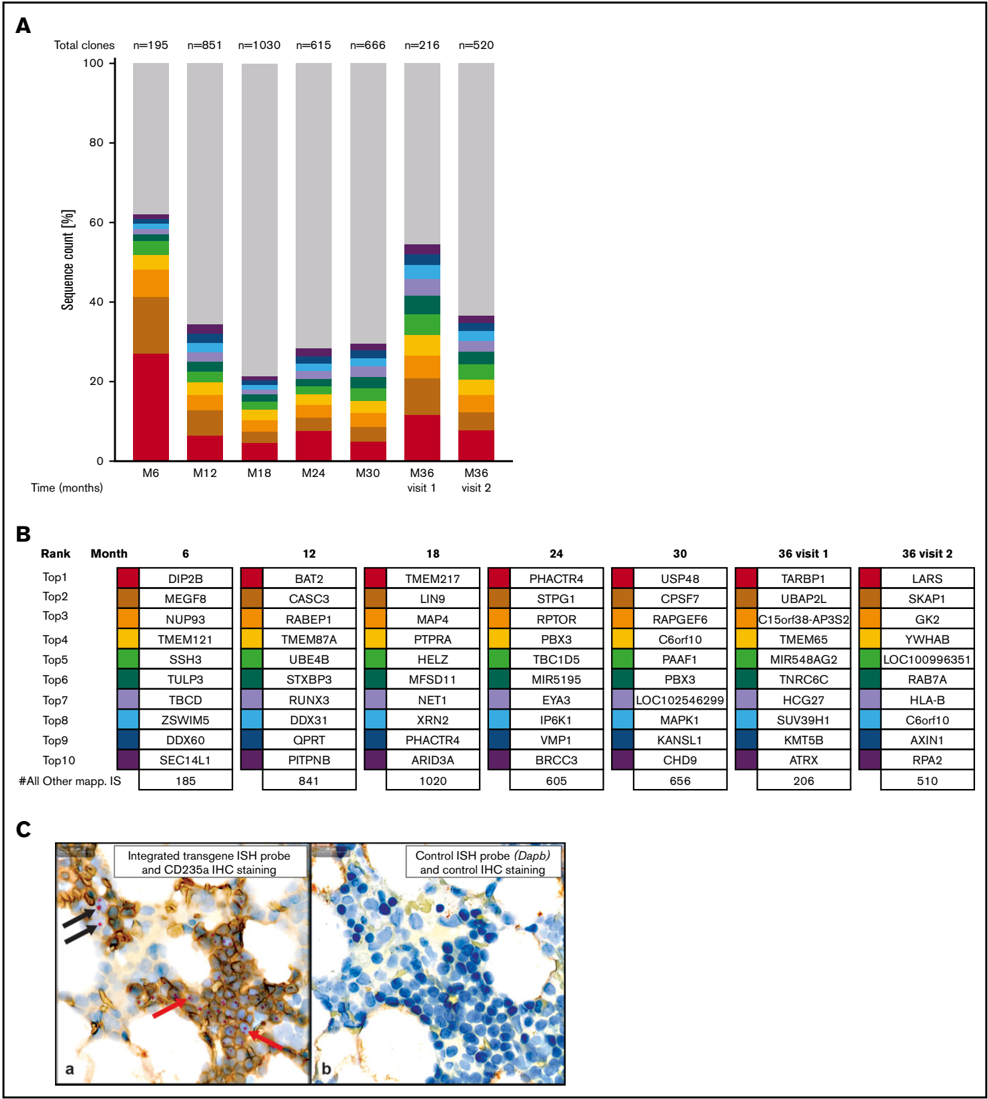
“Routine integration site (IS) analyses performed at 6-month intervals post-LentiGlobin infusion showed no protocol-defined clonal dominance through 36 months (Figure 1A).(2) No single IS represented .”
BackgroundMethodGene Therapy in Patients with Transfusion-Dependent β-Thalassemia
Thompson, A. A., Walters, M. C., Kwiatkowski, J., Rasko, J. E. J., Ribeil, J.-A., Hongeng, S., Magrin, E., Schiller, G. J., Payen, E., Semeraro, M., et al. (2018) · New England Journal of Medicine · doi:10.1056/nejmoa1705342 · Cited by 684
Self-citationThe incidence of secondary leukemias.
Leone, G. G. M., Mele, L., Pulsoni, A., Equitani, F., & Pagano, L. (1999) · PubMed · Cited by 346
Stable mixed hematopoietic chimerism after bone marrow transplantation for sickle cell anemia
Walters, M. C., Patience, M., Leisenring, W., Rogers, Z. R., Aquino, V. M., Buchanan, G. R., Roberts, I. A. G., Yeager, A. M., Hsu, L., Adamkiewicz, T., et al. (2001) · Biology of Blood and Marrow Transplantation · doi:10.1053/bbmt.2001.v7.pm11787529 · Cited by 324
Self-citationSystematic Review: Hydroxyurea for the Treatment of Adults with Sickle Cell Disease
Lanzkron, S., Strouse, J. J., Wilson, R., Beach, M. C., Haywood, C., Park, H., Witkop, C., Bass, E. B., & Segal, J. B. (2008) · Annals of Internal Medicine · doi:10.7326/0003-4819-148-12-200806170-00221 · Cited by 287 · cited 2×
“Although MDS has been reported in 2 individuals with SCD after 14 and 15 years of HU treatment, respectively,(16,17) a systematic literature review (with up to 9 years of patient follow-up) concluded that HU use is not leukemogenic in patients with SCD.(18) Whether underlying SCD increases the risk of myeloid neoplasm…”
BackgroundPalchaudhuri, R., Saez, B., Hoggatt, J., Schajnovitz, A., Sykes, D. B., Tate, T. A., Czechowicz, A., Kfoury, Y., Ruchika, F., Rossi, D. J., et al. (2016) · Nature Biotechnology · doi:10.1038/nbt.3584 · Cited by 217 · cited 1×
“More recently, preclinical models were used to investigate approaches coupling cytotoxic conjugates, such as saporin, to antibodies targeting either CD45, expressed exclusively on most hematopoietic cells including HSCs, or CD117 (c-Kit), a marker of HSCs and hematopoietic progenitors.(28,29) Additionally, anti–c-Kit…”
MethodBiffi, A., Bartolomae, C. C., Cesana, D., Cartier, N., Aubourg, P., Ranzani, M., Cesani, M., Benedicenti, F., Plati, T., Rubagotti, E., et al. (2011) · Blood · doi:10.1182/blood-2010-09-306761 · Cited by 216
Self-citationFerrua, F., Cicalese, M. P., Galimberti, S., Giannelli, S., Dionisio, F., Barzaghi, F., Migliavacca, M., Bernardo, M. E., Calbi, V., Assanelli, A. A., et al. (2019) · The Lancet Haematology · doi:10.1016/s2352-3026(19)30021-3 · Cited by 214
Gene therapy targeting haematopoietic stem cells for inherited diseases: progress and challenges
Cavazzana, M., Bushman, F. D., Miccio, A., André-Schmutz, I., & Six, E. (2019) · Nature Reviews Drug Discovery · doi:10.1038/s41573-019-0020-9 · Cited by 199 · cited 1×
“LVV gene therapy has been safe in animal models,(8-11) and there have been no published cases of insertional oncogenesis in patients thus far.(6,12-15) The patient received HU for several years, Table 1.”
BackgroundCzechowicz, A., Palchaudhuri, R., Scheck, A., Hu, Y., Hoggatt, J., Saez, B., Pang, W. W., Mansour, M. K., Tate, T. A., Chan, Y. Y., et al. (2019) · Nature Communications · doi:10.1038/s41467-018-08201-x · Cited by 197 · cited 1×
“More recently, preclinical models were used to investigate approaches coupling cytotoxic conjugates, such as saporin, to antibodies targeting either CD45, expressed exclusively on most hematopoietic cells including HSCs, or CD117 (c-Kit), a marker of HSCs and hematopoietic progenitors.(28,29) Additionally, anti–c-Kit…”
MethodHematopoietic stem cell transplantation in immunocompetent hosts without radiation or chemotherapy
Chhabra, A., Ring, A. M., Weiskopf, K., Schnorr, P. J., Gordon, S., Le, A. C., Kwon, H.-S., Ring, N. G., Volkmer, J., Ho, P. Y., et al. (2016) · Science Translational Medicine · doi:10.1126/scitranslmed.aae0501 · Cited by 172 · cited 3×
“This patient was a part of the initial cohort of 7 HGB-206 patients (group A) for whom the HSCs were collected by bone marrow (BM) harvest and DPs were made using the original manufacturing process, which was later modified for subsequent patients enrolled.7 The LentiGlobin DP for this patient had a vector copy number…”
BackgroundInfluentialGene Therapy of the β-Hemoglobinopathies by Lentiviral Transfer of the β A(T87Q) - Globin Gene
Negre, O., Eggimann, A.-V., Beuzard, Y., Ribeil, J.-A., Bourget, P., Borwornpinyo, S., Hongeng, S., Hacein-Bey, S., Cavazzana, M., Leboulch, P., et al. (2016) · Human Gene Therapy · doi:10.1089/hum.2016.007 · Cited by 159
Increased risk of leukemia among sickle cell disease patients in California
Brunson, A., Keegan, T. H. M., Bang, H., Mahajan, A., Paulukonis, S., & Wun, T. (2017) · Blood · doi:10.1182/blood-2017-05-783233 · Cited by 139 · cited 2×
“Similarly, the Brunson et al study reported a 72% higher risk of hematologic malignancies for patients with SCD in California compared with the general population of California; the risk of solid tumors was 38% lower.(20) High cellular turnover in the BM and chronic inflammation associated with SCD have been discussed…”
BackgroundLentiviral Hematopoietic Cell Gene Therapy for X-Linked Adrenoleukodystrophy
Cartier, N., Hacein-Bey-Abina, S., Bartholomae, C. C., Bougnères, P., Schmidt, M., Von Kalle, C., Fischer, A., Cavazzana-Calvo, M., & Aubourg, P. (2012) · Methods in Enzymology · doi:10.1016/b978-0-12-386509-0.00010-7 · Cited by 123
Self-citationTreating Immunodeficiency through HSC Gene Therapy
Booth, C., Gaspar, H. B., & Thrasher, A. J. (2016) · Trends in Molecular Medicine · doi:10.1016/j.molmed.2016.02.002 · Cited by 117 · cited 1×
“Hematologic malignancies due to insertional oncogenesis were previously reported following gene therapy with g-retroviral vectors in several hematologic diseases.(5) We have thus used a modified LVV developed to mitigate the potential risk of insertional oncogenesis, with no such cases reported for .”
BackgroundInfluentialAbraham, A., Hsieh, M., Eapen, M., Fitzhugh, C., Carreras, J., Keesler, D., Guilcher, G., Kamani, N., Walters, M. C., Boelens, J. J., et al. (2017) · Biology of Blood and Marrow Transplantation · doi:10.1016/j.bbmt.2017.08.038 · Cited by 109
Self-citationFitzhugh, C. D., Hsieh, M. M., Taylor, T., Coles, W., Roskom, K., Wilson, D., Wright, E., Jeffries, N., Gamper, C. J., Powell, J., et al. (2017) · Blood Advances · doi:10.1182/bloodadvances.2016002972 · Cited by 105 · cited 3×
“One report showed that 2 of 23 patients with hemoglobinopathies (21 with SCD and 2 with thalassemia) who received 400 cGy total-body irradiation and/or posttransplant addition of alkylating agent cyclophosphamide developed high-grade MDS.24 Another report highlighted a patient with SCD who underwent prolonged HU treat…”
BackgroundInfluentialSelf-citationSeminog, O. O., Ogunlaja, O. I., Yeates, D., & Goldacre, M. J. (2016) · Journal of the Royal Society of Medicine · doi:10.1177/0141076816651037 · Cited by 103 · cited 1×
“006, depending on type) compared with the non-SCD patient cohort.(19) Similarly, the Brunson et al study reported a 72% higher risk of hematologic malignancies for patients with SCD in California compared with the general population of California; the risk of solid tumors was 38% lower.”
ResultPagano, L., Pulsoni, A., Tosti, M. E., Annino, L., Mele, A., Camera, A., Martino, B., Guglielmi, C., Cerri, R., Bona, E. D., et al. (1999) · British Journal of Haematology · doi:10.1046/j.1365-2141.1999.01636.x · Cited by 89 · cited 2×
“The genomic stability of the patient’s HSCs might have been compromised by hematopoietic stress associated with SCD and further disrupted by chemotherapy, potentially resulting in MDS, given that MDS and secondary AML are identified risks following HSCT using alkylating agents.(4) The finding of monosomy 7 in this pat…”
BackgroundGeorge, B. M., Kao, K. S., Kwon, H.-S., Velasco, B. J., Poyser, J., Chen, A. C., Le, A., Chhabra, A., Burnett, C. E., Cajuste, D., et al. (2019) · Cell stem cell · doi:10.1016/j.stem.2019.05.018 · Cited by 77
Heffner, G. C., Bonner, M., Christiansen, L., Pierciey, F. J., Campbell, D., Smurnyy, Y., Zhang, W., Hamel, A., Shaw, S., Lewis, G., et al. (2018) · Molecular Therapy · doi:10.1016/j.ymthe.2017.09.025 · Cited by 72
Self-citationAgarwal, R., Dvorak, C. C., Prohaska, S. S., Long-Boyle, J. R., Kwon, H.-S., Brown, J. W., Weinberg, K. I., Le, A., Guttman-Klein, A., Logan, A. C., et al. (2019) · Transplantation and Cellular Therapy · doi:10.1016/j.bbmt.2018.12.172 · Cited by 42
Lidonnici, M. R., Paleari, Y., Tiboni, F., Mandelli, G., Rossi, C., Vezzoli, M., Aprile, A., Lederer, C. W., Ambrosi, A., Chanut, F. J.-A., et al. (2018) · Molecular Therapy — Methods & Clinical Development · doi:10.1016/j.omtm.2018.09.001 · Cited by 26
Nègre, O., Fusil, F., Colomb, C., Roth, S. L., Gillet-Legrand, B., Henri, A., Beuzard, Y., Bushman, F. D., Leboulch, P., & Payen, E. (2011) · Blood · doi:10.1182/blood-2010-01-263582 · Cited by 25
Baz, W., Najfeld, V., Yotsuya, M., Talwar, J., Terjanian, T., & Forte, F. (2012) · Clinical Medicine Insights: Oncology · doi:10.4137/cmo.s8810 · Cited by 25
Aumont, C., Driss, F., Lazure, T., Picard, V., Creidy, R., de Botton, S., Saada, V., Lambotte, O., Bilhou‐Nabera, C., Tertian, G., et al. (2015) · American Journal of Hematology · doi:10.1002/ajh.24010 · Cited by 21
Janakiram, M., Verma, A., Wang, Y., Budhathoki, A., Suarez Londono, J., Murakhovskaya, I., Braunschweig, I., & Minniti, C. P. (2018) · Leukemia & Lymphoma · doi:10.1080/10428194.2017.1324158 · Cited by 20 · cited 1×
“5 years) and developed a rapidly progressing MDS that transformed into AML after graft failure following an HLAhaploidentical transplant that included both radiotherapy and alkylating agents.(25) Currently, ex vivo HSC gene therapy requires myeloablative chemotherapy to ensure engraftment of gene-modified cells, but a…”
BackgroundTanizawa, R. S. D. S., Kumeda, C. A., Azevedo, R. S., Leal, A., Ferreira, P. D. B., & Velloso, E. D. R. P. (2011) · Revista Brasileira de Hematologia e Hemoterapia · doi:10.5581/1516-8484.20110117 · Cited by 9 · cited 1×
“The finding of monosomy 7 in this patient is expected in secondary myeloid neoplasia, including following exposure to alkylating agents such as the busulfan.(23) Reports describe MDS in patients with SCD who experienced graft failure and autologous reconstitution post–HLA-haploidentical HSCT using nonmyeloablative con…”
BackgroundWalters, M. C., Tisdale, J. F., Kwiatkowski, J. L., Krishnamurti, L., Mapara, M. Y., Schmidt, M., Miller, A. L., Pierciey, F. J., Huang, W., Ribeil, J., et al. (2019) · Blood · doi:10.1182/blood-2019-128814 · Cited by 7 · cited 1×
“This patient was a part of the initial cohort of 7 HGB-206 patients (group A) for whom the HSCs were collected by bone marrow (BM) harvest and DPs were made using the original manufacturing process, which was later modified for subsequent patients enrolled.(7) The LentiGlobin DP for this patient had a vector copy numb…”
MethodSelf-citationDevouring the Hematopoietic Stem Cell: Setting the Table for Marrow Cell Transplantation
Cowan, M. J., & Kiem, H. (2016) · Molecular Therapy · doi:10.1038/mt.2016.193 · Cited by 3 · cited 1×
“Although these methods have enabled varying levels of HSC clearance in animal models, their efficacy and safety in human studies, in particular with respect to off-target effects, the impact on the body’s ability to fight opportunistic infections, and potential to result in long-term multilineage engraftment of transp…”
Cited by
Post-Transcriptional Genetic Silencing of BCL11A to Treat Sickle Cell Disease
Esrick, E. B., Lehmann, L. E., Biffi, A., Achebe, M., Brendel, C., Ciuculescu, M. F., Daley, H., MacKinnon, B., Morris, E., Federico, A., et al. (2021) · New England Journal of Medicine · doi:10.1056/nejmoa2029392 · Cited by 449
Biologic and Clinical Efficacy of LentiGlobin for Sickle Cell Disease
Kanter, J., Walters, M. C., Krishnamurti, L., Mapara, M. Y., Kwiatkowski, J. L., Rifkin-Zenenberg, S., Aygun, B., Kasow, K. A., Pierciey, F. J., Bonner, M., et al. (2022) · New England Journal of Medicine · doi:10.1056/nejmoa2117175 · Cited by 442
Self-citationKattamis, A., Kwiatkowski, J. L., & Aydinok, Y. (2022) · The Lancet · doi:10.1016/s0140-6736(22)00536-0 · Cited by 313
Betibeglogene Autotemcel Gene Therapy for Non–β 0 /β 0 Genotype β-Thalassemia
Locatelli, F., Thompson, A. A., Kwiatkowski, J. L., Porter, J. B., Thrasher, A. J., Hongeng, S., Sauer, M. G., Thuret, I., Lal, A., Algeri, M., et al. (2022) · New England Journal of Medicine · doi:10.1056/nejmoa2113206 · Cited by 283
Self-citationAcute Myeloid Leukemia Case after Gene Therapy for Sickle Cell Disease
Goyal, S., Tisdale, J., Schmidt, M., Kanter, J., Jaroscak, J., Whitney, D., Bitter, H., Gregory, P. D., Parsons, G., Foos, M., et al. (2022) · New England Journal of Medicine · doi:10.1056/nejmoa2109167 · Cited by 211
Self-citation
Metadata
- Authors
- Hsieh, M. M., Bonner, M., Pierciey, F. J., Uchida, N., Rottman, J., Demopoulos, L., Schmidt, M., Kanter, J., Walters, M. C., Thompson, A. A., Asmal, M., & Tisdale, J. F.
- Affiliations
- National Institutes of Health (US)
- Bluebird Bio (United States) (US)
- GeneWerk GmbH, Heidelberg, Germany;
- University of Alabama at Birmingham (US)
- University of California, San Francisco (US)
- Northwestern University (US)
- ORCID
- Venue
- Blood Advances
- Publisher
- American Society of Hematology
- Published
- 2020-05-12
- Volume
- 4
- Issue
- 9
- Pages
- 2058-2063
- ISSN
- 2473-9529 (ISSN-L)
- 2473-9537
- PMC
- PMC7218414
- OpenAlex
- W3024470836
- Semantic Scholar
- db43b7cc489cc960858f76584a7f5aeb74c17f9b
- Cited by
- 152
- References
- 32
- Citations by year
- 2026: 14 · 2025: 24 · 2024: 25 · 2023: 35 · 2022: 29 · 2021: 23 · 2020: 2
- FWCI
- 13.03
- Type
- journal article
- Language
- en
- Open access
- gold
- doi.org
- Licence
- cc-by-nc-nd
- Locations
- Blood Advances (publishedVersion, cc-by-nc-nd)
- PubMed Central (publishedVersion)
- PubMed (publishedVersion)
- eScholarship (California Digital Library) (submittedVersion)
- Funders
- bluebird bio
- Topics
- Life Sciences › Biochemistry, Genetics and Molecular Biology › Genetics › Virus-based gene therapy research
- Health Sciences › Medicine › Genetics (clinical) › Hemoglobinopathies and Related Disorders
- Health Sciences › Medicine › Genetics (clinical) › Lysosomal Storage Disorders Research
- Keywords
- myelodysplastic syndrome, sickle cell disease, gene therapy, lentiviral vectors, insertional oncogenesis, risk-benefit assessment
- MeSH terms
- Anemia, Sickle Cell, Humans, Myelodysplastic Syndromes, Genetic Therapy, Lentivirus
About these checks
Registry, retraction, Cites and statistics results are computed, not judged, with one exception: a printed reference that no index lists is read once by a model before it counts as a citation error. Claims are extracted by a model and kept only when their quote appears verbatim in the text; each cited source is then checked, with a model’s help, for whether it says what the claim relies on. Those verdicts can be wrong — read the claim’s quote and the cited source before relying on one.
Statistics and arithmetic are recomputed, not judged.
Confidence bands are shown only for fields calibrated on our annotated test set. None is calibrated yet, so no band is shown.
What counts as a claim ›How we measure confidence ›How we check this ›
Are you an author, or do you see a problem with this page? Request a review
Data sources
Bibliographic data: Semantic Scholar, OpenAlex, Crossref.
Contains information from the Semantic Scholar Academic Graph Datasets, made available under the ODC Attribution License (ODC-BY 1.0).
Semantic Scholar’s data is described in: Kinney, R., et al. (2023). The Semantic Scholar Open Data Platform. arXiv:2301.10140.
