

Myelodysplastic syndrome unrelated to lentiviral vector in a patient treated with gene therapy for sickle cell disease
Open accessThe DOI matches its Crossref record; 32 of the 32 references it cites were found in a registry or an index.
Abstract
Key Points: Ability to accurately attribute adverse events post–gene therapy is required to describe the benefit-risk of these novel treatments. A SCD patient developed myelodysplastic syndrome post-LentiGlobin treatment; we show how insertional oncogenesis was excluded as the cause.
Overview
The claims and statistics of this paper haven’t been checked yet.
Free: it reads the open-access text and checks the first 5 claims that cite a source we can check. Create a free account to check every claim.
Integrity signals
Registry
Cites
Statistics
Figures

Verification
Claims the paper makes
The claims and statistics of this paper haven’t been checked yet.
Free: it reads the open-access text and checks the first 5 claims that cite a source we can check. Create a free account to check every claim.
Claims other papers make about this one
Each is checked against this paper’s own text: does it say what the citing paper says it does?
The source backs part of the claim, not all of it — or backs it for a different population, condition or comparison.
In the citing paper
“Although insertional mutagenesis risk has been reduced by improved vector design19, the development of myelodysplastic syndrome (MDS) and acute myeloid leukemia (AML) at 3–5.5 years post-transplantation in 2 of 47 patients who had undergone GT for SCD20–23 has generated renewed concerns.”
From Clonal selection of hematopoietic stem cells after gene therapy for sickle cell disease (2023) · cites this paper as [20]
Experimental — accuracy not yet measuredThe cited source says what the claim attributes to it.
In the citing paper
“Myeloablative conditioning is required for all cell-based therapeutics but has been associated with myelodysplasia”
From Fetal hemoglobin in sickle cell anemia (2020) · cites this paper as [129]
In the citing paper
“though neither were reported to be mutated in patients who experienced post-GT myeloid malignancies20,21”
From Clonal selection of hematopoietic stem cells after gene therapy for sickle cell disease (2023) · cites this paper as [20]
Self-check
Percentages, sums and reported differences re-computed from the paper’s own numbers.
The self-check needs the paper’s full text.
Citations
Cites
Lentiviral Hematopoietic Stem Cell Gene Therapy Benefits Metachromatic Leukodystrophy
Biffi, A., Montini, E., Lorioli, L., Cesani, M., Fumagalli, F., Plati, T., Baldoli, C., Martino, S., Calabria, A., Canale, S., et al. (2013) · Science · doi:10.1126/science.1233158 · Cited by 1,180
Self-citationMontini, E., Cesana, D., Schmidt, M., Sanvito, F., Ponzoni, M., Bartholomae, C., Sergi, L. S., Benedicenti, F., Ambrosi, A., Di Serio, C., et al. (2006) · Nature Biotechnology · doi:10.1038/nbt1216 · Cited by 701
Self-citationGene therapy in a patient with sickle cell disease
Ribeil, J.-A., Hacein-Bey-Abina, S., Payen, E., Magnani, A., Semeraro, M., Magrin, E., Caccavelli, L., Neven, B., Bourget, P., El Nemer, W., et al. (2017) · New England Journal of Medicine · doi:10.1056/nejmoa1609677 · Cited by 696 · cited 3×
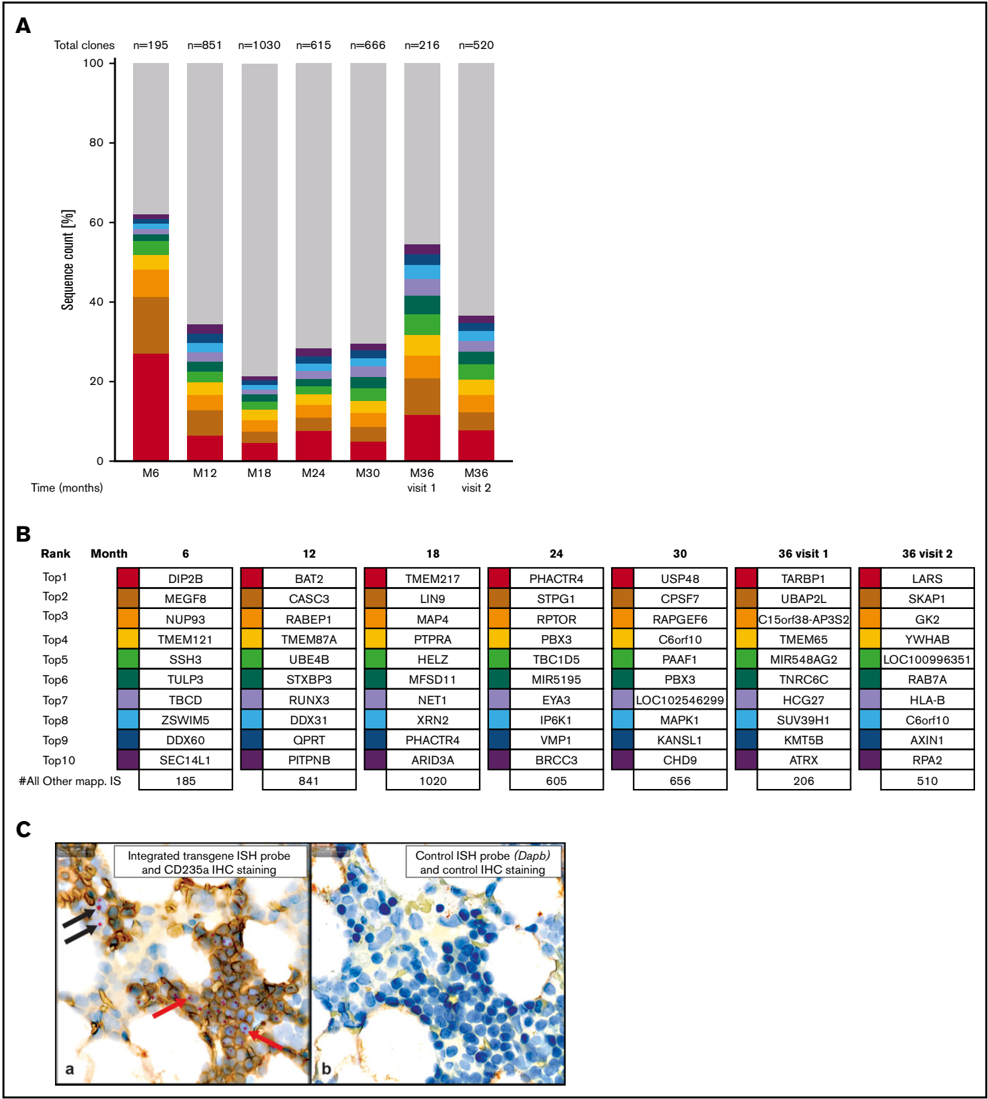
“Routine integration site (IS) analyses performed at 6-month intervals post-LentiGlobin infusion showed no protocol-defined clonal dominance through 36 months (Figure 1A).(2) No single IS represented .”
BackgroundMethodGene Therapy in Patients with Transfusion-Dependent β-Thalassemia
Thompson, A. A., Walters, M. C., Kwiatkowski, J., Rasko, J. E. J., Ribeil, J.-A., Hongeng, S., Magrin, E., Schiller, G. J., Payen, E., Semeraro, M., et al. (2018) · New England Journal of Medicine · doi:10.1056/nejmoa1705342 · Cited by 684
Self-citationThe incidence of secondary leukemias.
Leone, G. G. M., Mele, L., Pulsoni, A., Equitani, F., & Pagano, L. (1999) · PubMed · Cited by 346
Stable mixed hematopoietic chimerism after bone marrow transplantation for sickle cell anemia
Walters, M. C., Patience, M., Leisenring, W., Rogers, Z. R., Aquino, V. M., Buchanan, G. R., Roberts, I. A. G., Yeager, A. M., Hsu, L., Adamkiewicz, T., et al. (2001) · Biology of Blood and Marrow Transplantation · doi:10.1053/bbmt.2001.v7.pm11787529 · Cited by 324
Self-citationSystematic Review: Hydroxyurea for the Treatment of Adults with Sickle Cell Disease
Lanzkron, S., Strouse, J. J., Wilson, R., Beach, M. C., Haywood, C., Park, H., Witkop, C., Bass, E. B., & Segal, J. B. (2008) · Annals of Internal Medicine · doi:10.7326/0003-4819-148-12-200806170-00221 · Cited by 287 · cited 2×
“Although MDS has been reported in 2 individuals with SCD after 14 and 15 years of HU treatment, respectively,(16,17) a systematic literature review (with up to 9 years of patient follow-up) concluded that HU use is not leukemogenic in patients with SCD.(18) Whether underlying SCD increases the risk of myeloid neoplasm…”
BackgroundPalchaudhuri, R., Saez, B., Hoggatt, J., Schajnovitz, A., Sykes, D. B., Tate, T. A., Czechowicz, A., Kfoury, Y., Ruchika, F., Rossi, D. J., et al. (2016) · Nature Biotechnology · doi:10.1038/nbt.3584 · Cited by 217 · cited 1×
“More recently, preclinical models were used to investigate approaches coupling cytotoxic conjugates, such as saporin, to antibodies targeting either CD45, expressed exclusively on most hematopoietic cells including HSCs, or CD117 (c-Kit), a marker of HSCs and hematopoietic progenitors.(28,29) Additionally, anti–c-Kit…”
MethodBiffi, A., Bartolomae, C. C., Cesana, D., Cartier, N., Aubourg, P., Ranzani, M., Cesani, M., Benedicenti, F., Plati, T., Rubagotti, E., et al. (2011) · Blood · doi:10.1182/blood-2010-09-306761 · Cited by 216
Self-citationFerrua, F., Cicalese, M. P., Galimberti, S., Giannelli, S., Dionisio, F., Barzaghi, F., Migliavacca, M., Bernardo, M. E., Calbi, V., Assanelli, A. A., et al. (2019) · The Lancet Haematology · doi:10.1016/s2352-3026(19)30021-3 · Cited by 214
Cited by
Post-Transcriptional Genetic Silencing of BCL11A to Treat Sickle Cell Disease
Esrick, E. B., Lehmann, L. E., Biffi, A., Achebe, M., Brendel, C., Ciuculescu, M. F., Daley, H., MacKinnon, B., Morris, E., Federico, A., et al. (2021) · New England Journal of Medicine · doi:10.1056/nejmoa2029392 · Cited by 449
Biologic and Clinical Efficacy of LentiGlobin for Sickle Cell Disease
Kanter, J., Walters, M. C., Krishnamurti, L., Mapara, M. Y., Kwiatkowski, J. L., Rifkin-Zenenberg, S., Aygun, B., Kasow, K. A., Pierciey, F. J., Bonner, M., et al. (2022) · New England Journal of Medicine · doi:10.1056/nejmoa2117175 · Cited by 442
Self-citationKattamis, A., Kwiatkowski, J. L., & Aydinok, Y. (2022) · The Lancet · doi:10.1016/s0140-6736(22)00536-0 · Cited by 313
Betibeglogene Autotemcel Gene Therapy for Non–β 0 /β 0 Genotype β-Thalassemia
Locatelli, F., Thompson, A. A., Kwiatkowski, J. L., Porter, J. B., Thrasher, A. J., Hongeng, S., Sauer, M. G., Thuret, I., Lal, A., Algeri, M., et al. (2022) · New England Journal of Medicine · doi:10.1056/nejmoa2113206 · Cited by 283
Self-citationAcute Myeloid Leukemia Case after Gene Therapy for Sickle Cell Disease
Goyal, S., Tisdale, J., Schmidt, M., Kanter, J., Jaroscak, J., Whitney, D., Bitter, H., Gregory, P. D., Parsons, G., Foos, M., et al. (2022) · New England Journal of Medicine · doi:10.1056/nejmoa2109167 · Cited by 211
Self-citationAssessing and advancing the safety of CRISPR-Cas tools: from DNA to RNA editing
Tao, J., Bauer, D. E., & Chiarle, R. (2023) · Nature Communications · doi:10.1038/s41467-023-35886-6 · Cited by 207
Piel, F. B., Rees, D. C., DeBaun, M. R., Nnodu, O., Ranque, B., Thompson, A. A., Ware, R. E., Abboud, M. R., Abraham, A., Ambrose, E. E., et al. (2023) · The Lancet Haematology · doi:10.1016/s2352-3026(23)00096-0 · Cited by 177
Self-citationTucci, F., Galimberti, S., Naldini, L., Valsecchi, M. G., & Aiuti, A. (2022) · Nature Communications · doi:10.1038/s41467-022-28762-2 · Cited by 145
Fetal hemoglobin in sickle cell anemia
Steinberg, M. H. (2020) · Blood · doi:10.1182/blood.2020007645 · Cited by 136
Kanter, J., Thompson, A. A., Pierciey, F. J., Hsieh, M., Uchida, N., Leboulch, P., Schmidt, M., Bonner, M., Guo, R., Miller, A., et al. (2023) · American Journal of Hematology · doi:10.1002/ajh.26741 · Cited by 134
“The first case (Group A, patient 2) was initially diagnosed as myelodysplastic syndrome approximately 3 years after lovocel infusion and subsequently progressed to AML that was fatal.(26) Further investigations revealed the absence of BB305 LVV integration in the CD34+ blast cell population and presence of monosomy 7.”
BackgroundSelf-citationGene therapy for sickle cell disease: moving from the bench to the bedside
Abraham, A., & Tisdale, J. F. (2021) · Blood · doi:10.1182/blood.2019003776 · Cited by 113
Self-citationJones, R. J., & DeBaun, M. R. (2021) · Blood · doi:10.1182/blood.2021011488 · Cited by 99
Genetic engineering meets hematopoietic stem cell biology for next-generation gene therapy
Ferrari, S., Valeri, E., Conti, A., Scala, S., Aprile, A., Di Micco, R., Kajaste-Rudnitski, A., Montini, E., Ferrari, G., Aiuti, A., et al. (2023) · Cell Stem Cell · doi:10.1016/j.stem.2023.04.014 · Cited by 70
2021 update on clinical trials in β‐thalassemia
Musallam, K. M., Bou‐Fakhredin, R., Cappellini, M. D., & Taher, A. T. (2021) · American Journal of Hematology · doi:10.1002/ajh.26316 · Cited by 74
“cell patient but multiple independent assays demonstrated the absence of vector integration in the CD341 blasts and excluded lentiviral vectormediated oncogenesis as the MDS cause.(33)”
Boulad, F., Maggio, A., Wang, X., Moi, P., Acuto, S., Kogel, F., Takpradit, C., Prockop, S. E., Mansilla‐Soto, J., Cabriolu, A., et al. (2022) · Nature Medicine · doi:10.1038/s41591-021-01554-9 · Cited by 69
Treatment of cerebral adrenoleukodystrophy: allogeneic transplantation and lentiviral gene therapy
Gupta, A. O., Raymond, G., Pierpont, E. I., Kemp, S., McIvor, R. S., Rayannavar, A., Miller, B., Lund, T. C., & Orchard, P. J. (2022) · Expert Opinion on Biological Therapy · doi:10.1080/14712598.2022.2124857 · Cited by 67
“after treatment on a trial utilizing the BB305 lentiviral vector encoding the -globin gene (HGB-206 Study) [85,86].”
MethodClonal selection of hematopoietic stem cells after gene therapy for sickle cell disease
Spencer Chapman, M., Cull, A. H., Ciuculescu, M. F., Esrick, E. B., Mitchell, E., Jung, H., O’Neill, L., Roberts, K., Fabre, M. A., Williams, N., et al. (2023) · Nature Medicine · doi:10.1038/s41591-023-02636-6 · Cited by 67
“Recent occurrences of myeloid transformation events 20,21,36 not associated with insertional oncogenesis have highlighted the need for more detailed information about genetic predisposition to leukemia and the potential occurrence of mutations in the post-GT pool of engrafting HSPCs.”
InfluentialHematopoietic Stem Cell Gene-Addition/Editing Therapy in Sickle Cell Disease
Germino-Watnick, P., Hinds, M., Le, A., Chu, R., Liu, X., & Uchida, N. (2022) · Cells · doi:10.3390/cells11111843 · Cited by 70
“The first case of MDS, which eventually transformed into AML, was reported in a patient 3 years post-gene therapy [55].”
BackgroundSelf-citationCRISPR-Cas9 to induce fetal hemoglobin for the treatment of sickle cell disease
Demirci, S., Leonard, A. K., Essawi, K., & Tisdale, J. F. (2021) · Molecular Therapy — Methods & Clinical Development · doi:10.1016/j.omtm.2021.09.010 · Cited by 63
“In a clinical trial investigating adult b-globin gene transfer to SCD patients’ HSPCs, myelodysplastic syndrome (MDS) developed in a patient after gene therapy.100 Comprehensive genome integration analysis demonstrated the absence of vector integration in the blasts and vector-mediated oncogenesis as the cause of MDS.”
BackgroundSelf-citationSecondary Neoplasms After Hematopoietic Cell Transplant for Sickle Cell Disease
Eapen, M., Brazauskas, R., Williams, D. A., Walters, M. C., St Martin, A., Jacobs, B. L., Antin, J. H., Bona, K., Chaudhury, S., Coleman-Cowger, V. H., et al. (2023) · Journal of Clinical Oncology · doi:10.1200/jco.22.01203 · Cited by 60
“1991-1999 — 8 (7) 2000-2009 7 (32) 18 (16) 2010-2016 15 (68) 84 (76) Follow-up, median (range), months 97 (48-181) 73 (12-313)”
Self-citationUchida, N., Stasula, U., Demirci, S., Germino-Watnick, P., Hinds, M., Le, A., Chu, R., Berg, A., Liu, X., Su, L., et al. (2023) · Nature Communications · doi:10.1038/s41467-023-41153-5 · Cited by 59
“The exhaustive studies did not implicate vector insertion as driving leukemic transformation in these patients 9,10 .”
Self-citationClonal hematopoiesis in sickle cell disease
Liggett, L. A., Cato, L. D., Weinstock, J. S., Zhang, Y., Nouraie, S. M., Gladwin, M. T., Garrett, M. E., Ashley-Koch, A., Telen, M. J., Custer, B., et al. (2022) · Journal of Clinical Investigation · doi:10.1172/jci156060 · Cited by 57
Gene Therapy for Hemoglobinopathies
Leonard, A. K., Tisdale, J. F., & Bonner, M. A. (2022) · Hematology/Oncology Clinics of North America · doi:10.1016/j.hoc.2022.03.008 · Cited by 55
Self-citationEvolution of Gene Therapy, Historical Perspective
Malech, H. L., Garabedian, E., & Hsieh, M. M. (2022) · Hematology/Oncology Clinics of North America · doi:10.1016/j.hoc.2022.05.001 · Cited by 54
Self-citationGene Therapy and Gene Editing for β-Thalassemia
Christakopoulos, G. E., Telange, R., Yen, J. S., & Weiss, M. J. (2023) · Hematology/Oncology Clinics of North America · doi:10.1016/j.hoc.2022.12.012 · Cited by 53
Lawal, R. A., Mukherjee, D., Limerick, E. M., Coles, W., Hsieh, M. M., Dillon, L. W., Hourigan, C. S., & Fitzhugh, C. D. (2022) · Blood · doi:10.1182/blood.2022017960 · Cited by 49
Self-citationOttaviano, G., & Qasim, W. (2025) · Leukemia · doi:10.1038/s41375-025-02585-8 · Cited by 52
“Two cases of leukaemia were reported after LV-gene therapy for sickle cell disease in the HGB-206 Phase I/II clinical trial [34 – 36].”
Autologous gene therapy for hemoglobinopathies: From bench to patient’s bedside
Locatelli, F., Cavazzana, M., Frangoul, H., de la Fuente, J., Algeri, M., & Meisel, R. (2024) · Molecular Therapy · doi:10.1016/j.ymthe.2024.03.005 · Cited by 48
“66,69,70 Still, these results would highlight the need for long-term monitoring of patients treated with BB305 lentiviral vector to better understand the insertion patterns associated with BB305 lentiviral vector transduction.”
Hematopoietic Stem Cell-Targeted Gene-Addition and Gene-Editing Strategies for β-hemoglobinopathies
Drysdale, C. M., Nassehi, T., Gamer, J., Yapundich, M., Tisdale, J. F., & Uchida, N. (2021) · Cell stem cell · doi:10.1016/j.stem.2021.01.001 · Cited by 45
Self-citationβ-Thalassemia: evolving treatment options beyond transfusion and iron chelation
Langer, A. L., & Esrick, E. B. (2021) · Hematology · doi:10.1182/hematology.2021000313 · Cited by 45
Gene therapy for sickle cell disease: recent advances, clinical trials and future directions
Ballantine, J., & Tisdale, J. F. (2024) · Cytotherapy · doi:10.1016/j.jcyt.2024.11.006 · Cited by 42
Self-citationA pause in gene therapy: Reflecting on the unique challenges of sickle cell disease
Leonard, A. K., & Tisdale, J. F. (2021) · Molecular Therapy · doi:10.1016/j.ymthe.2021.03.010 · Cited by 42
“The absence of vector among the blasts along with complex cytogenetic abnormalities and driver gene mutations suggested that this complication arose from the busulfan (BU) conditioning and was unrelated to the LV.2 Another patient in group A has just been reported to have developed AML 5.5 years after treatment.”
BackgroundMethodSelf-citationSickle Cell Disease: From Genetics to Curative Approaches
Hardouin, G., Magrin, E., Corsia, A., Cavazzana, M., Miccio, A., & Semeraro, M. (2023) · Annual Review of Genomics and Human Genetics · doi:10.1146/annurev-genom-120122-081037 · Cited by 40
How I treat sickle cell disease with gene therapy
Sharma, A. (2024) · Blood · doi:10.1182/blood.2024024519 · Cited by 40
Lee, B., Lozano, R. J., & Dunbar, C. E. (2021) · Molecular Therapy · doi:10.1016/j.ymthe.2021.09.001 · Cited by 42
Tang, A., Strat, A. N., Rahman, M., Zhang, H., Bao, W., Liu, Y., Shi, D., An, X., Manwani, D. G., Shi, P. A., et al. (2021) · Blood · doi:10.1182/blood.2021012663 · Cited by 38
Frati, G., Brusson, M., Sartre, G., Mlayah, B., Félix, T., Chalumeau, A., Antoniou, P., Hardouin, G., Concordet, J., Romano, O., et al. (2024) · Molecular Therapy · doi:10.1016/j.ymthe.2024.07.015 · Cited by 37
“Recently, the occurrence of malignant transformations has been reported in two SCD patients who underwent an LV-based clinical trial, 8,9 causing a partial clinical hold in Europe and the United States, although no causallinkbetweentheseeventsandLVtransductionhasbeenproven.”
Ferraresi, M., Panzieri, D. L., Leoni, S., Cappellini, M. D., Kattamis, A., & Motta, I. (2023) · European Journal of Pediatrics · doi:10.1007/s00431-023-04900-w · Cited by 38
“On February 2021, Bluebird Bio announced the temporary suspension of clinical trials and marketing of lovotibeglogene autotemcel following two reports of acute myeloid leukemia (AML) and myelodysplastic syndrome (MDS) later evolved in AML in SCD patients recruited in the HGB-206 trial [89, 90].”
BackgroundGene therapy for sickle cell disease
Leonard, A. K., & Tisdale, J. F. (2023) · Hematology · doi:10.1182/hematology.2023000487 · Cited by 37
Self-citationEditing outside the body: Ex vivo gene-modification for β-hemoglobinopathy cellular therapy
Rosanwo, T. O., & Bauer, D. E. (2021) · Molecular Therapy · doi:10.1016/j.ymthe.2021.10.002 · Cited by 35
Gene Therapy for β-Hemoglobinopathies: From Discovery to Clinical Trials
Segura, E., Ayoub, P. G., Hart, K. L., & Kohn, D. B. (2023) · Viruses · doi:10.3390/v15030713 · Cited by 35
“All analyses supported busulfan conditioning to be the cause in the first patient, rather than mediated insertional oncogenesis, as multiple independent assays demonstrated absence of vector integration in CD34+ blast, along with complex cytogenetic abnormalities and driver gene mutations [97].”
BackgroundThe p53 challenge of hematopoietic stem cell gene editing
Dorset, S. R., & Bak, R. O. (2023) · Molecular Therapy - Methods & Clinical Development · doi:10.1016/j.omtm.2023.06.003 · Cited by 33
“30 Septem to regenerative hematopoiesis, possibly combined with exposure of the HSCs to chronic inflammation and hypoxemia in SCD patients, might have promoted malignant transformation of dormant pre-malignant clones.(27,28)”
BackgroundGene therapy in pediatrics – Clinical studies and approved drugs (as of 2023)
Gol, T. M., Zahedipour, F., Trosien, P., Ureña-Bailén, G., Kim, M., Antony, J. S., & Mezger, M. (2024) · Life Sciences · doi:10.1016/j.lfs.2024.122685 · Cited by 35
Ball, J., Bradley, A., Le, A., Tisdale, J. F., & Uchida, N. (2025) · Molecular Therapy · doi:10.1016/j.ymthe.2025.03.016 · Cited by 31
Self-citationGenetic therapies for the first molecular disease
Doerfler, P. A., Sharma, A., Porter, J. S., Zheng, Y., Tisdale, J. F., & Weiss, M. J. (2021) · Journal of Clinical Investigation · doi:10.1172/jci146394 · Cited by 31
“One individual who received LV gene therapy with high-dose busulfan for SCD developed myelodysplastic syndrome after approximately 3 years (13).”
BackgroundMethodInfluentialSelf-citationRattananon, P., Anurathapan, U., Bhukhai, K., & Hongeng, S. (2021) · Frontiers in Pharmacology · doi:10.3389/fphar.2021.730873 · Cited by 31
Recent advancements in gene therapy for sickle cell disease and β-thalassemia
Li, L., & Mandal, P. K. (2024) · Frontiers in Hematology · doi:10.3389/frhem.2024.1468952 · Cited by 31
Botchkarev, V. V., Harrington, S., Stoppato, M., Justen, A., Kimber, C., Kapuria, A., Gibson, K. M., Chu, C.-S., Xu, Y., Haugh, K. A., et al. (2025) · Nature Biotechnology · doi:10.1038/s41587-025-02915-2 · Cited by 29
The transformative potential of HSC gene therapy as a genetic medicine
Sagoo, P., & Gaspar, H. B. (2021) · Gene Therapy · doi:10.1038/s41434-021-00261-x · Cited by 28
“However, it is noteworthy that there was no evidence of vector insertion in the initial case of myelodysplastic syndrome, suggesting that it might be related to the SCD background marrow, which is chronically stressed [77].”
BackgroundGondek, L. P., Sheehan, V., & Fitzhugh, C. D. (2022) · Journal of Clinical Medicine · doi:10.3390/jcm11113160 · Cited by 29
“3%) developed leukemia after gene therapy for SCD [66,67].”
BackgroundGrimley, M. S., Davies, S. M., Shrestha, A., Shova, A., Asnani, M., Kent, M. W., Sayani, F. A., Quinn, C. T., Niss, O., Lutzko, C., et al. (2025) · Nature Medicine · doi:10.1038/s41591-025-03662-2 · Cited by 26
Research in Sickle Cell Disease: From Bedside to Bench to Bedside
Cisneros, G. S., & Thein, S. L. (2021) · HemaSphere · doi:10.1097/hs9.0000000000000584 · Cited by 26
Brusson, M., Chalumeau, A., Martinucci, P., Romano, O., Félix, T., Poletti, V., Scaramuzza, S., Ramadier, S., Masson, C., Ferrari, G., et al. (2023) · Molecular Therapy — Nucleic Acids · doi:10.1016/j.omtn.2023.03.012 · Cited by 25
Demirci, S., Zeng, J., Palchaudhuri, R., Wu, C., Abraham, D. M., Hayal, T. B., Essawi, K., Nguyen, M. A., Stasula, U., Chu, R., et al. (2024) · Cell stem cell · doi:10.1016/j.stem.2024.10.014 · Cited by 25
Self-citationLeonard, A. K., Bertaina, A., Bonfim, C., Cohen, S., Prockop, S. E., Purtill, D., Russell, A. L., Boelens, J. J., Wynn, R. F., Ruggeri, A., et al. (2021) · Cytotherapy · doi:10.1016/j.jcyt.2021.09.003 · Cited by 25
Hurdles to the Adoption of Gene Therapy as a Curative Option for Transfusion-Dependent Thalassemia
Thuret, I., Ruggeri, A., Angelucci, E., & Chabannon, C. (2022) · Stem Cells Translational Medicine · doi:10.1093/stcltm/szac007 · Cited by 25
Innovative Treatments for Rare Anemias
Cappellini, M. D., Marcon, A., Fattizzo, B., & Motta, I. (2021) · HemaSphere · doi:10.1097/hs9.0000000000000576 · Cited by 24
Clonal hematopoiesis in children with predisposing conditions
Attardi, E., Corey, S. J., & Włodarski, M. W. (2024) · Seminars in Hematology · doi:10.1053/j.seminhematol.2024.01.005 · Cited by 23
Treating Sickle Cell Disease: Gene Therapy Approaches
Cavazzana, M., Corsia, A., Brusson, M., Miccio, A., & Semeraro, M. (2024) · The Annual Review of Pharmacology and Toxicology · doi:10.1146/annurev-pharmtox-022124-022000 · Cited by 23
Outcomes and long-term effects of hematopoietic stem cell transplant in sickle cell disease
Inam, Z. S., Tisdale, J. F., & Leonard, A. K. (2023) · Expert Review of Hematology · doi:10.1080/17474086.2023.2268271 · Cited by 21
“To date there are 2 reported episodes of acute myeloid leukemia (AML) 3 and 5.5 years after gene therapy [92,115,116,136].”
BackgroundInfluentialSelf-citationGene therapies for sickle cell disease: Effectiveness and value
Nikitin, D., Beaudoin, F. L., Thokala, P., McKenna, A., Nhan, E., Rind, D. M., & Pearson, S. D. (2023) · Journal of Managed Care & Specialty Pharmacy · doi:10.18553/jmcp.2023.29.11.1253 · Cited by 21
Effective therapies for sickle cell disease: are we there yet?
Crossley, M., Christakopoulos, G. E., & Weiss, M. J. (2022) · Trends in Genetics · doi:10.1016/j.tig.2022.07.003 · Cited by 23
Editing human hematopoietic stem cells: advances and challenges
Bhoopalan, S. V., Yen, J. S., Levine, R. M., & Sharma, A. (2022) · Cytotherapy · doi:10.1016/j.jcyt.2022.08.003 · Cited by 20
Fitzhugh, C. D. (2022) · Hematology · doi:10.1182/hematology.2022000371 · Cited by 20
Targeting fetal hemoglobin expression to treat β hemoglobinopathies
Steinberg, M. H. (2022) · Expert Opinion on Therapeutic Targets · doi:10.1080/14728222.2022.2066519 · Cited by 19
Persistent hematopoietic polyclonality after lentivirus-mediated gene therapy for Fabry disease
Saleh, A. H., Rothe, M., Barber, D. L., McKillop, W. M., Fraser, G. A. M., Morel, C. F., Schambach, A., Auray‐Blais, C., West, M. L., Khan, A., et al. (2023) · Molecular Therapy — Methods & Clinical Development · doi:10.1016/j.omtm.2023.01.003 · Cited by 18
“As for the patient who developed MDS, CD34 blasts did not carry lentivirus vector integrations.(20) The underlying mechanism is likely due to the underlying sickle cell disease and the transplantation procedure and its associated risks, including exposure to the conditioning agent.”
BackgroundSickle cell disease and acute leukemia: one case report and an extensive review
Cannas, G., Poutrel, S., Heiblig, M., Labussière, H., Larcher, M., Thomas, X., & Hot, A. (2023) · Annals of Hematology · doi:10.1007/s00277-023-05294-3 · Cited by 18
“The first case was considered to be related to busulfan conditioning [34].”
BackgroundMethodInfluentialGene Therapy for Hemoglobinopathies
Lidonnici, M. R., Scaramuzza, S., & Ferrari, G. (2023) · Human Gene Therapy · doi:10.1089/hum.2023.138 · Cited by 18
Gupta, A. O., Azul, M., Bhoopalan, S. V., Abraham, A., Bertaina, A., Bidgoli, A., Bonfim, C., Dezern, A. E., Li, J., Louis, C. U., et al. (2024) · Cytotherapy · doi:10.1016/j.jcyt.2024.06.002 · Cited by 17
Oved, J. H., Russell, A. L., Dezern, A. E., Prockop, S. E., Bonfim, C., Sharma, A., Purtill, D., Lakkaraja, M. M., Bidgoli, A., Bhoopalan, S. V., et al. (2024) · Cytotherapy · doi:10.1016/j.jcyt.2024.09.001 · Cited by 17
Çelik, B., Rintz, E., Sansanwal, N., Khan, S. A., Bigger, B., & Tomatsu, S. (2024) · Human Gene Therapy · doi:10.1089/hum.2024.094 · Cited by 17
Dogan, Y., Barese, C. N., Schindler, J. W., Yoon, J. K., Unnisa, Z., Guda, S., Jacobs, M. E., Oborski, C., Maiwald, T., Clarke, D. L., et al. (2022) · Molecular Therapy — Methods & Clinical Development · doi:10.1016/j.omtm.2022.10.017 · Cited by 17
Genome editing for sickle cell disease: still time to correct?
Ceglie, G., Lecis, M., Canciani, G., Algeri, M., & Frati, G. (2023) · Frontiers in Pediatrics · doi:10.3389/fped.2023.1249275 · Cited by 16
“One of these patients presented leukemic blasts carrying a lentiviral vector insertion site, unveiling the possible pathogenetic role of insertional mutagenesis events (10, 11).”
BackgroundKhan, A., Barber, D. L., McKillop, W. M., Rupar, C. A., Auray‐Blais, C., Fraser, G. A. M., Fowler, D. H., Berger, A., Foley, R., Keating, A., et al. (2025) · Clinical and Translational Medicine · doi:10.1002/ctm2.70073 · Cited by 16
Treating genetic blood disorders in the era of CRISPR-mediated genome editing
Almotiri, A., Abogosh, A., Abdelfattah, A., Alowaisy, D., & Rodrigues, N. P. (2025) · Molecular Therapy · doi:10.1016/j.ymthe.2025.01.031 · Cited by 16
Bouziana, S. D., & Bouzianas, D. G. (2024) · International Journal of Molecular Sciences · doi:10.3390/ijms25179518 · Cited by 16
“It is well known that sickle cell patients harbour an inherently higher risk of developing clonal haematopoiesis and malignancies compared to the general population [69–71].”
BackgroundLesmana, H. L., Kim, S. Y., Morales, A., & Poskanzer, S. A. (2024) · Genetics in Medicine Open · doi:10.1016/j.gimo.2024.101875 · Cited by 15
Franceschi, L. D., Locatelli, F., Rees, D. C., Chabannon, C., Dalle, J., Rivella, S., Iolascon, A., Lobitz, S., Abboud, M. R., de la Fuente, J., et al. (2025) · HemaSphere · doi:10.1002/hem3.70089 · Cited by 15
“82 It was determined that AML developed from busulfan conditioning due to the absence of vector integration in the leukemic cells.”
Kwiatkowski, J. L., Thompson, A. A., Schneiderman, J., Thuret, I., Kulozik, A. E., Yannaki, E., Cavazzana, M., Hongeng, S., Olson, T. S., Sauer, M. G., et al. (2026) · Blood · doi:10.1182/blood.2025029196 · Cited by 15
Self-citationRotin, L. E., Viswabandya, A., Kumar, R., Patriquin, C. J., & Kuo, K. H. M. (2023) · Hematology · doi:10.1080/16078454.2022.2163357 · Cited by 15
“In the GT studies, 1 patient from the Hgb-206 study developed MDS 36 months post-infusion, which ultimately progressed to AML [76].”
BackgroundDefining curative endpoints for sickle cell disease in the era of gene therapy and gene editing
Locatelli, F., Corbacioglu, S., Hobbs, W., Frangoul, H., & Walters, M. C. (2023) · American Journal of Hematology · doi:10.1002/ajh.27164 · Cited by 14
Self-citationKassim, A. A., & Leonard, A. K. (2022) · Journal of Clinical Medicine · doi:10.3390/jcm11164775 · Cited by 13
“gene mutations, suggested that this complication arose from the busulfan conditioning and was unrelated to the lentiviral vector [71].”
BackgroundThe evolving treatment landscape for children with sickle cell disease
Jacob, S. A., Talati, R., & Kanter, J. (2023) · The Lancet Child & Adolescent Health · doi:10.1016/s2352-4642(23)00201-8 · Cited by 13
Self-citationRibeil, J. (2021) · American Journal of Hematology · doi:10.1002/ajh.26371 · Cited by 12
“case was considered to be a secondary myeloid neoplasm related to busulfan conditioning.(13) In the second case, the myeloid neoplasm clone developed from genetically modified HSC, which was not affected”
BackgroundGene therapy for sickle cell disease and thalassemia
Scaramellini, N., Panzieri, D. L., & Cappellini, M. D. (2025) · Current Opinion in Hematology · doi:10.1097/moh.0000000000000867 · Cited by 11
Puig-Serra, P., Hinckley-Boned, A., Tristán‐Manzano, M., Río, P., Torres-Ruiz, R., Rodríguez, S., & Martín, F. (2025) · Human Gene Therapy · doi:10.1177/10430342251372474 · Cited by 11
Increased prevalence of clonal hematopoiesis in children with sickle cell disease
Ulloa, J., Wuichet, K., Rashkin, S. R., Pershad, Y., Shore, C., Vlasschaert, C., Rodeghier, M., Yao, Y., Gordeuk, V. R., Shah, B. N., et al. (2025) · Blood · doi:10.1182/blood.2025030898 · Cited by 10
A systematic review of clinical trials for gene therapies for β-hemoglobinopathy around the world
Rós, F. A., Couto, S. C. F., Milhomens, J., Ovider, I., Tozatto‐Maio, K., Jennifer, V., Ramos, R. N., Picanço‐Castro, V., Kashima, S. H., Calado, R. T., et al. (2023) · Cytotherapy · doi:10.1016/j.jcyt.2023.05.006 · Cited by 10
Therapy-related myelodysplastic syndromes and acute myeloid leukemia
Venugopal, S., & Dezern, A. E. (2024) · Seminars in Hematology · doi:10.1053/j.seminhematol.2024.09.004 · Cited by 10
The hematopoietic saga of clonality in sickle cell disease
Stonestrom, A. J., & Levine, R. L. (2022) · Journal of Clinical Investigation · doi:10.1172/jci158251 · Cited by 10
Clark, A., Clouston, H. J., Rao, K., Folarin, N. I., de la Fuente, J., Hamblin, A. D., Olavarría, E., Richardson, D., Talley, P. J., Potter, V., et al. (2025) · British Journal of Haematology · doi:10.1111/bjh.70061 · Cited by 9
Sharma, A., Kassim, A. A., Thompson, A. A., Williams, D. A., Liu, H. D., Boelens, J. J., LaBelle, J. L., Tisdale, J. F., de la Fuente, J., Kanter, J., et al. (2026) · Transplantation and Cellular Therapy · doi:10.1016/j.jtct.2026.03.019 · Cited by 9
Self-citationBusulfan and subsequent malignancy: An evidence‐based risk assessment
Long-Boyle, J. R., Kohn, D. B., Shah, A. J., Spencer, S. M., Sevilla, J., Booth, C., Lorenzo, J. L. L., Nicoletti, E., Shah, A., Reatz, M., et al. (2023) · Pediatric Blood & Cancer · doi:10.1002/pbc.30738 · Cited by 10
CIRCLE-Seq for Interrogation of Off-Target Gene Editing
Inen, J., Han, C. M., Farrel, D. M., Bilousova, G., & Kogut, I. (2024) · Journal of Visualized Experiments · doi:10.3791/67069 · Cited by 10
A landscape analysis and discussion of value of gene therapies for sickle cell disease
Quach, D., Jiao, B., Basu, A., Bender, M. A., Hankins, J. S., Ramsey, S. D., & Devine, B. (2022) · Expert Review of Pharmacoeconomics & Outcomes Research · doi:10.1080/14737167.2022.2060823 · Cited by 9
Hematopoietic stem cell therapy with gene modification to treat sickle cell disease
Ball, J., Bradley, A., Le, A., Tisdale, J. F., & Uchida, N. (2025) · Stem Cells Translational Medicine · doi:10.1093/stcltm/szaf042 · Cited by 8
Self-citationClinical data comparison for FDA-approved gene therapies in sickle cell disease
Leonard, A. K., & Kanter, J. (2025) · Experimental Biology and Medicine · doi:10.3389/ebm.2025.10806 · Cited by 8
Self-citationLiu, B., Klatt, D., Zhou, Y., Manis, J. P., Sauvageau, G., Pellin, D., Brendel, C., & Williams, D. A. (2024) · Blood Advances · doi:10.1182/bloodadvances.2024013932 · Cited by 8
“3,6,7 8-10 Notably, the occurrence of oncogenesis has high-lighted the still unde fi ned possibility of an underlying predisposition to cancer in patients with SCD that may be ampli fi ed with stress of ex vivo manipulation and in vivo reconstitution.”
Aprile, A., Lidonnici, M. R., & Ferrari, G. (2025) · Cell Reports Medicine · doi:10.1016/j.xcrm.2025.102419 · Cited by 7
“…cases of acute myeloid leukemia (AML) were diagnosed in this study in patients with inefficient in vivo LV marking, but no causative effect by LV was demonstrated, 38,39 although blasts in peripheral blood resulted positive for insertion of lentiglobin in VAMP4 gene, with no role in oncogenesis.”
Malhotra, M., & Shenoy, S. S. (2022) · Transfusion and Apheresis Science · doi:10.1016/j.transci.2022.103554 · Cited by 7
Metadata
- Authors
- Hsieh, M. M., Bonner, M., Pierciey, F. J., Uchida, N., Rottman, J., Demopoulos, L., Schmidt, M., Kanter, J., Walters, M. C., Thompson, A. A., Asmal, M., & Tisdale, J. F.
- Affiliations
- National Institutes of Health (US)
- Bluebird Bio (United States) (US)
- GeneWerk GmbH, Heidelberg, Germany;
- University of Alabama at Birmingham (US)
- University of California, San Francisco (US)
- Northwestern University (US)
- ORCID
- Venue
- Blood Advances
- Publisher
- American Society of Hematology
- Published
- 2020-05-12
- Volume
- 4
- Issue
- 9
- Pages
- 2058-2063
- ISSN
- 2473-9529 (ISSN-L)
- 2473-9537
- PMC
- PMC7218414
- OpenAlex
- W3024470836
- Semantic Scholar
- db43b7cc489cc960858f76584a7f5aeb74c17f9b
- Cited by
- 152
- References
- 32
- Citations by year
- 2026: 14 · 2025: 24 · 2024: 25 · 2023: 35 · 2022: 29 · 2021: 23 · 2020: 2
- FWCI
- 13.03
- Type
- journal article
- Language
- en
- Open access
- gold
- doi.org
- Licence
- cc-by-nc-nd
- Locations
- Blood Advances (publishedVersion, cc-by-nc-nd)
- PubMed Central (publishedVersion)
- PubMed (publishedVersion)
- eScholarship (California Digital Library) (submittedVersion)
- Funders
- bluebird bio
- Topics
- Life Sciences › Biochemistry, Genetics and Molecular Biology › Genetics › Virus-based gene therapy research
- Health Sciences › Medicine › Genetics (clinical) › Hemoglobinopathies and Related Disorders
- Health Sciences › Medicine › Genetics (clinical) › Lysosomal Storage Disorders Research
- Keywords
- myelodysplastic syndrome, sickle cell disease, gene therapy, lentiviral vectors, insertional oncogenesis, risk-benefit assessment
- MeSH terms
- Anemia, Sickle Cell, Humans, Myelodysplastic Syndromes, Genetic Therapy, Lentivirus
About these checks
Registry, retraction, Cites and statistics results are computed, not judged, with one exception: a printed reference that no index lists is read once by a model before it counts as a citation error. Claims are extracted by a model and kept only when their quote appears verbatim in the text; each cited source is then checked, with a model’s help, for whether it says what the claim relies on. Those verdicts can be wrong — read the claim’s quote and the cited source before relying on one.
Statistics and arithmetic are recomputed, not judged.
Confidence bands are shown only for fields calibrated on our annotated test set. None is calibrated yet, so no band is shown.
What counts as a claim ›How we measure confidence ›How we check this ›
Are you an author, or do you see a problem with this page? Request a review
Data sources
Bibliographic data: Semantic Scholar, OpenAlex, Crossref.
Contains information from the Semantic Scholar Academic Graph Datasets, made available under the ODC Attribution License (ODC-BY 1.0).
Semantic Scholar’s data is described in: Kinney, R., et al. (2023). The Semantic Scholar Open Data Platform. arXiv:2301.10140.
