

Ex vivo drug screening defines novel drug sensitivity patterns for informing personalized therapy in myeloid neoplasms
Open accessThe DOI matches its Crossref record; 52 of the 52 references it cites were found in a registry or an index.
Abstract
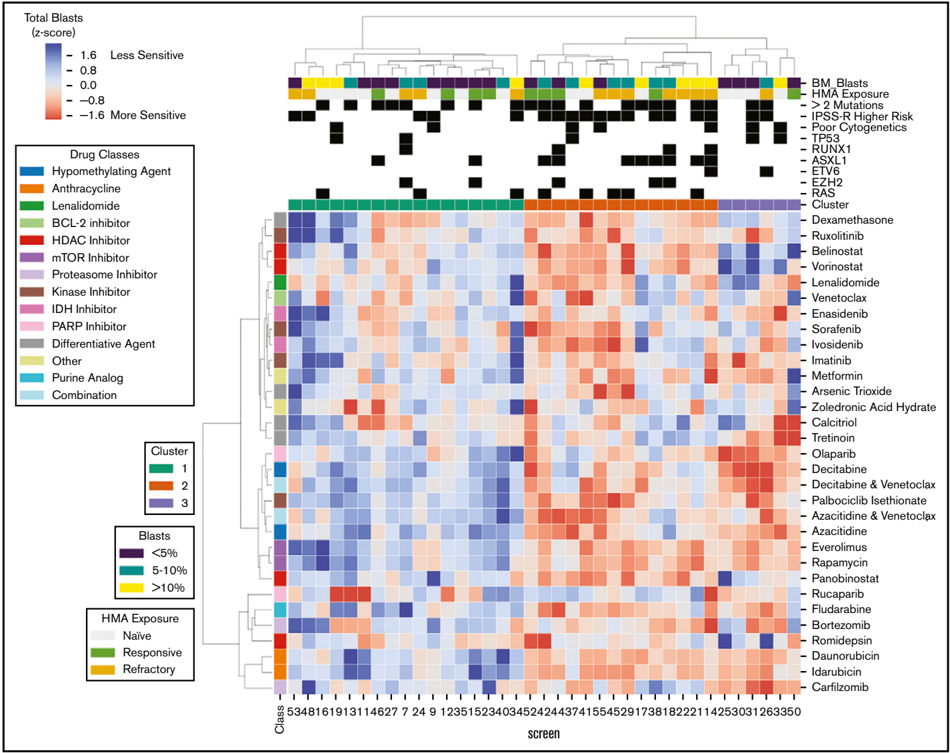
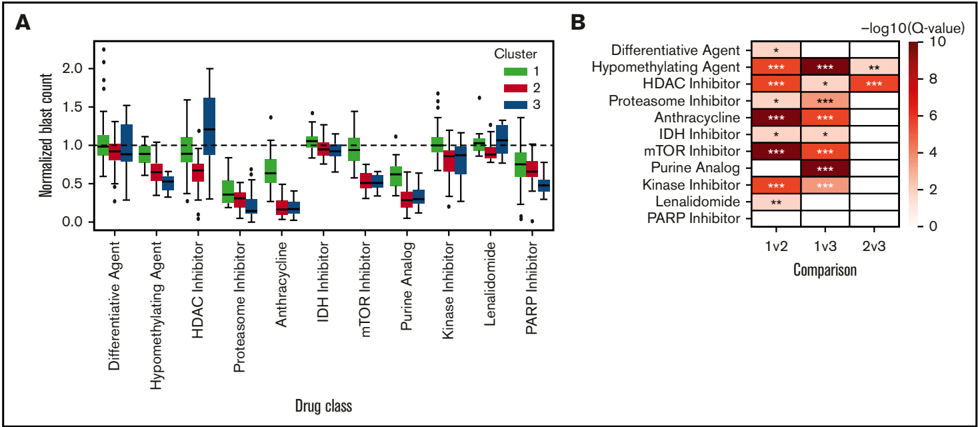
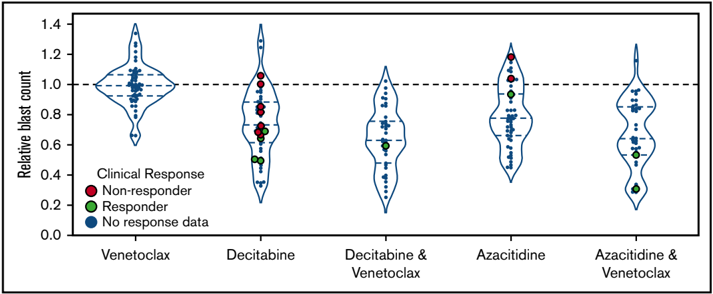
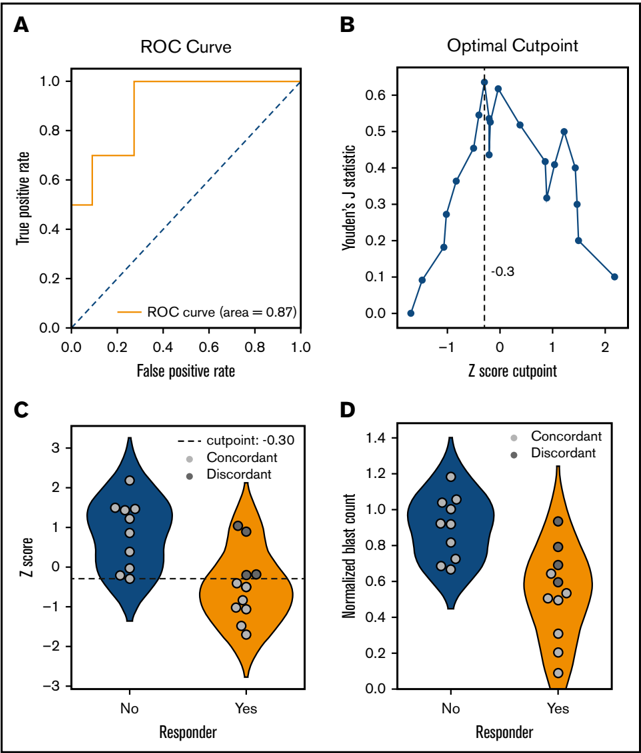
Precision medicine approaches such as ex vivo drug sensitivity screening (DSS) are appealing to inform rational drug selection in myelodysplastic syndromes (MDSs) and acute myeloid leukemia, given their marked biologic heterogeneity. We evaluated a novel, fully automated ex vivo DSS platform that uses high-throughput flow cytometry in 54 patients with newly diagnosed or treatment-refractory myeloid neoplasms to evaluate sensitivity (blast cytotoxicity and differentiation) to 74 US Food and Drug Administration–approved or investigational drugs and 36 drug combinations. After piloting the platform in 33 patients, we conducted a prospective feasibility study enrolling 21 patients refractory to hypomethylating agents (HMAs) to determine whether this assay could be performed within a clinically actionable time frame and could accurately predict clinical responses in vivo. When assayed for cytotoxicity, ex vivo drug sensitivity patterns were heterogeneous, but they defined distinct patient clusters with differential sensitivity to HMAs, anthracyclines, histone deacetylase inhibitors, and kinase inhibitors (P < .001 among clusters) and demonstrated synergy between HMAs and venetoclax (P < .01 for combinations vs single agents). In our feasibility study, ex vivo DSS results were available at a median of 15 days after bone marrow biopsy, and they informed personalized therapy, which frequently included venetoclax combinations, kinase inhibitors, differentiative agents, and androgens. In 21 patients with available ex vivo and in vivo clinical response data, the DSS platform had a positive predictive value of 0.92, negative predictive value of 0.82, and overall accuracy of 0.85. These data demonstrate the utility of this approach for identifying potentially useful and often novel therapeutic drugs for patients with myeloid neoplasms refractory to standard therapies.
Overview
The claims and statistics of this paper haven’t been checked yet.
Free: it reads the open-access text and checks the first 5 claims that cite a source we can check. Create a free account to check every claim.
Integrity signals
Registry
Cites
Statistics
Figures
Verification
Claims the paper makes
The claims and statistics of this paper haven’t been checked yet.
Free: it reads the open-access text and checks the first 5 claims that cite a source we can check. Create a free account to check every claim.
Claims other papers make about this one
Each is checked against this paper’s own text: does it say what the citing paper says it does?
The source backs part of the claim, not all of it — or backs it for a different population, condition or comparison.
In the citing paper
“The paucity of primitive CD34+CD38− cells in CML patients’ samples also hinders the direct application of flow-cytometry-based drug sensitivity screening, which has been successfully applied in other leukemias.14,15”
From Integrated drug profiling and CRISPR screening identify BCR::ABL1-independent vulnerabilities in chronic myeloid leukemia (2024) · cites this paper as [15]
Experimental — accuracy not yet measured
Self-check
Percentages, sums and reported differences re-computed from the paper’s own numbers.
The self-check needs the paper’s full text.
Citations
Cites
SciPy 1.0: fundamental algorithms for scientific computing in Python
Virtanen, P., Gommers, R., Oliphant, T. E., Haberland, M., Reddy, T., Cournapeau, D., Burovski, E., Peterson, P., Weckesser, W., Bright, J., et al. (2020) · Nature Methods · doi:10.1038/s41592-019-0686-2 · Cited by 38,430
Hierarchical Grouping to Optimize an Objective Function
Ward, J. H. (1963) · Journal of the American Statistical Association · doi:10.1080/01621459.1963.10500845 · Cited by 20,598
Bootstrap methods: another look at the jackknife
Efron, B. (1979) · The Annals of Statistics · doi:10.1214/aos/1176344552 · Cited by 17,602
SciPy 1.0: fundamental algorithms for scientific computing in Python
Virtanen, P., Gommers, R., Oliphant, T. E., Haberland, M., Reddy, T., Cournapeau, D., Burovski, E., Peterson, P., Weckesser, W., Bright, J., et al. (2019) · Apollo - University of Cambridge Repository · doi:10.17863/cam.64134 · Cited by 10,460
Arber, D. A., Orazi, A., Hasserjian, R., Thiele, J., Borowitz, M. J., Le Beau, M. M., Bloomfield, C. D., Cazzola, M., & Vardiman, J. W. (2016) · Blood · doi:10.1182/blood-2016-03-643544 · Cited by 10,119
Exact Matrix Completion via Convex Optimization
Candès, E. J., & Recht, B. (2009) · Foundations of Computational Mathematics · doi:10.1007/s10208-009-9045-5 · Cited by 4,877
Genomic classification and prognosis in acute myeloid leukemia
Papaemmanuil, E., Gerstung, M., Bullinger, L., Gaidzik, V. I., Paschka, P., Roberts, N. D., Potter, N. E., Heuser, M., Thol, F., Bolli, N., et al. (2016) · New England Journal of Medicine · doi:10.1056/nejmoa1516192 · Cited by 4,350
Comparing Individual Means in the Analysis of Variance
Tukey, J. W. (1949) · Biometrics · doi:10.2307/3001913 · Cited by 4,246
Revised International Prognostic Scoring System for Myelodysplastic Syndromes
Greenberg, P. L., Tuechler, H., Schanz, J., Sanz, G., Garcia-Manero, G., Solé, F., Bennett, J. M., Bowen, D., Fenaux, P., Dreyfus, F., et al. (2012) · Blood · doi:10.1182/blood-2012-03-420489 · Cited by 2,844
Self-citationFenaux, P., Mufti, G. J., Hellstrom-Lindberg, E., Santini, V., Finelli, C., Giagounidis, A., Schoch, R., Gattermann, N., Sanz, G., List, A., et al. (2009) · The Lancet Oncology · doi:10.1016/s1470-2045(09)70003-8 · Cited by 2,663
Frequent pathway mutations of splicing machinery in myelodysplasia
Yoshida, K., Sanada, M., Shiraishi, Y., Nowak, D., Nagata, Y., Yamamoto, R., Sato, Y., Sato-Otsubo, A., Kon, A., Nagasaki, M., et al. (2011) · Nature · doi:10.1038/nature10496 · Cited by 2,029
Clinical and biological implications of driver mutations in myelodysplastic syndromes
Papaemmanuil, E., Gerstung, M., Malcovati, L., Tauro, S., Gundem, G., Van Loo, P., Yoon, C. J., Ellis, P., Wedge, D. C., Pellagatti, A., et al. (2013) · Blood · doi:10.1182/blood-2013-08-518886 · Cited by 1,832
DiNardo, C. D., Pratz, K., Pullarkat, V., Jonas, B. A., Arellano, M., Becker, P. S., Frankfurt, O., Konopleva, M., Wei, A. H., Kantarjian, H. M., et al. (2019) · Blood · doi:10.1182/blood-2018-08-868752 · Cited by 1,825
CVXPY: A Python-Embedded Modeling Language for Convex Optimization.
Diamond, S., & Boyd, S. (2016) · PubMed · Cited by 1,648
Clinical Effect of Point Mutations in Myelodysplastic Syndromes
Bejar, R., Stevenson, K., Abdel-Wahab, O., Galili, N., Nilsson, B., Garcia-Manero, G., Kantarjian, H., Raza, A., Levine, R. L., Neuberg, D., et al. (2011) · New England Journal of Medicine · doi:10.1056/nejmoa1013343 · Cited by 1,627
Cheson, B. D. (2006) · Blood · doi:10.1182/blood-2005-10-4149 · Cited by 1,580
The origin and evolution of mutations in acute myeloid leukemia
Welch, J. S., Ley, T. J., Link, D. C., Miller, C. A., Larson, D. E., Koboldt, D. C., Wartman, L. D., Lamprecht, T. L., Liu, F., Xia, J., et al. (2012) · Cell · doi:10.1016/j.cell.2012.06.023 · Cited by 1,575
Landscape of genetic lesions in 944 patients with myelodysplastic syndromes
Haferlach, T., Nagata, Y., Grossmann, V, Okuno, Y., Bacher, U., Nagae, G., Schnittger, S., Sanada, M., Kon, A., Alpermann, T., et al. (2014) · Leukemia · doi:10.1038/leu.2013.336 · Cited by 1,532
Kantarjian, H., Issa, J. J., Rosenfeld, C. S., Bennett, J. M., Albitar, M., DiPersio, J., Klimek, V., Slack, J., de Castro, C., Ravandi, F., et al. (2006) · Cancer · doi:10.1002/cncr.21792 · Cited by 1,530
Measures of location and scale for velocities in clusters of galaxies - A robust approach
Beers, T. C., Flynn, K., & Gebhardt, K. (1990) · The Astronomical Journal · doi:10.1086/115487 · Cited by 1,395
Functional genomic landscape of acute myeloid leukaemia
Tyner, J. W., Tognon, C. E., Bottomly, D., Wilmot, B., Kurtz, S. E., Savage, S. L., Long, N., Schultz, A. R., Traer, E., Abel, M., et al. (2018) · Nature · doi:10.1038/s41586-018-0623-z · Cited by 1,303
Prognostic Mutations in Myelodysplastic Syndrome after Stem-Cell Transplantation
Lindsley, R. C., Saber, W., Mar, B. G., Redd, R., Wang, T., Haagenson, M. D., Grauman, P. V., Hu, Z.-H., Spellman, S. R., Lee, S. J., et al. (2017) · New England Journal of Medicine · doi:10.1056/nejmoa1611604 · Cited by 776
The genetics of myelodysplastic syndrome: from clonal haematopoiesis to secondary leukaemia
Sperling, A. S., Gibson, C. J., & Ebert, B. L. (2017) · Nature Reviews Cancer · doi:10.1038/nrc.2016.112 · Cited by 678
Lübbert, M., Suciu, S., Baila, L., Rüter, B. H., Platzbecker, U., Giagounidis, A., Selleslag, D., Labar, B., Germing, U., Salih, H. R., et al. (2011) · Journal of Clinical Oncology · doi:10.1200/jco.2010.30.9245 · Cited by 552
Outcome of High-Risk Myelodysplastic Syndrome After Azacitidine Treatment Failure
Prébet, T., Gore, S. D., Esterni, B., Gardin, C., Itzykson, R., Thepot, S., Dreyfus, F., Rauzy, O. B., Recher, C., Adès, L., et al. (2011) · Journal of Clinical Oncology · doi:10.1200/jco.2011.35.8135 · Cited by 475
CVXPY: A Python-Embedded Modeling Language for Convex Optimization
Diamond, S., & Boyd, S. (2016) · arXiv (Cornell University) · doi:10.48550/arxiv.1603.00943 · Cited by 462
Landscape Of Genetic Lesions In 944 Patients With Myelodysplastic Syndromes
Nagata, Y., Grossmann, V., Okuno, Y., Bacher, U., Nagae, G., Schnittger, S., Shiozawa, Y., Kon, A., Alpermann, T., Yoshida, K., et al. (2013) · Blood · doi:10.1182/blood.v122.21.521.521 · Cited by 431
Bejar, R., Stevenson, K. E., Caughey, B., Lindsley, R. C., Mar, B. G., Stojanov, P., Getz, G., Steensma, D. P., Ritz, J., Soiffer, R., et al. (2014) · Journal of Clinical Oncology · doi:10.1200/jco.2013.52.3381 · Cited by 396
(2013) · doi:10.1158/2159-8290.cd-13-0350 · Cited by 393
Frismantas, V., Dobay, M. P., Rinaldi, A., Tchinda, J., Dunn, S. H., Kunz, J., Richter-Pechanska, P., Marovca, B., Pail, O., Jenni, S., et al. (2017) · Blood · doi:10.1182/blood-2016-09-738070 · Cited by 262
Schlenk, R. F., Dohner, K., Kneba, M., Gotze, K., Hartmann, F., del Valle, F., Kirchen, H., Koller, E., Fischer, J. T., Bullinger, L., et al. (2009) · Haematologica · doi:10.3324/haematol.13378 · Cited by 210
Snijder, B., Vladimer, G. I., Krall, N., Miura, K., Schmolke, A.-S., Kornauth, C., Lopez de la Fuente, O., Choi, H.-S., van der Kouwe, E., Gültekin, S., et al. (2017) · The Lancet Haematology · doi:10.1016/s2352-3026(17)30208-9 · Cited by 177
Tsao, T., Shi, Y., Kornblau, S., Lu, H., Konoplev, S., Antony, A., Ruvolo, V., Qiu, Y. H., Zhang, N., Coombes, K. R., et al. (2012) · Annals of Hematology · doi:10.1007/s00277-012-1537-8 · Cited by 171
Bogenberger, J. M., Delman, D., Hansen, N., Valdez, R., Fauble, V., Mesa, R. A., & Tibes, R. (2015) · Leukemia & Lymphoma · doi:10.3109/10428194.2014.910657 · Cited by 151
Drug-perturbation-based stratification of blood cancer
Dietrich, S., Oleś, M., Lu, J., Sellner, L., Anders, S., Velten, B., Wu, B., Hüllein, J., da Silva Liberio, M., Walther, T., et al. (2017) · Journal of Clinical Investigation · doi:10.1172/jci93801 · Cited by 145
How we treat higher-risk myelodysplastic syndromes
Sekeres, M. A., & Cutler, C. S. (2013) · Blood · doi:10.1182/blood-2013-08-496935 · Cited by 110
Kurtz, S. E., Eide, C. A., Kaempf, A., Khanna, V., Savage, S. L., Rofelty, A., English, I., Ho, H., Pandya, R., Bolosky, W. J., et al. (2017) · Proceedings of the National Academy of Sciences · doi:10.1073/pnas.1703094114 · Cited by 110
Drug-perturbation-based stratification of blood cancer
Dietrich, S., Oleś, M., Lu, J., Sellner, L., Anders, S., Velten, B., Wu, B., Hüllein, J., Libério, M. S., Walther, T., et al. (2017) · Kölner Universitäts PublikationsServer (Universität zu Köln) · doi:10.17863/cam.20903 · Cited by 109
Zeidan, A. M., Pollyea, D. A., Garcia, J. S., Brunner, A. M., Roncolato, F., Borate, U., Odenike, O. M., Bajel, A. R., Watson, A. M., Götze, K. S. S., et al. (2019) · Blood · doi:10.1182/blood-2019-124994 · Cited by 69
Swords, R. T., Azzam, D. J., Al‐Ali, H., Lohse, I., Volmar, C., Watts, J. M., Perez, A., Rodriguez, A. J., Vargas, F., Elias, R. M., et al. (2017) · Leukemia Research · doi:10.1016/j.leukres.2017.11.008 · Cited by 63
Wei, A. H., Garcia, J. S., Borate, U., Fong, C. Y., Baer, M. R., Nolte, F., Péterlin, P., Jurcic, J. G., Garcia‐Manero, G., Hong, W., et al. (2019) · Blood · doi:10.1182/blood-2019-124437 · Cited by 46
Majumder, M. M., Silvennoinen, R. H., Anttila, P. M., Tamborero, D., Eldfors, S., Yadav, B., Karjalainen, R., Kuusanmäki, H. A., Lievonen, J., Parsons, A., et al. (2017) · Oncotarget · doi:10.18632/oncotarget.17630 · Cited by 45
Gocek, E., Kiełbiński, M., Baurska, H., Haus, O., Kutner, A., & Marcinkowska, E. (2009) · Leukemia Research · doi:10.1016/j.leukres.2009.10.004 · Cited by 41
Molecular pathophysiology of the myelodysplastic syndromes: insights for targeted therapy
Aleshin, A., & Greenberg, P. L. (2018) · Blood Advances · doi:10.1182/bloodadvances.2018015834 · Cited by 34
Self-citationVitamin D compounds and myelodysplastic syndrome
Okamoto, R., Akagi, T., & Koeffler, H. P. (2008) · Leukemia & lymphoma/Leukemia and lymphoma · doi:10.1080/10428190701757827 · Cited by 18
Drusbosky, L. M., Singh, N. K., Hawkins, K. E., Salan, C., Turcotte, M., Wise, E. A., Meacham, A. M., Vijay, V., Anderson, G. G., Kim, C. C., et al. (2019) · Blood Advances · doi:10.1182/bloodadvances.2018028316 · Cited by 16
Computational Modeling and Treatment Identification in the Myelodysplastic Syndromes
Drusbosky, L. M., & Cogle, C. R. (2017) · Current Hematologic Malignancy Reports · doi:10.1007/s11899-017-0412-z · Cited by 11
Rocchi, L., Faenza, A., Rambelli, L., Guadagnuolo, V., Marconi, G., Simonetti, G., Papayannidis, C., Padella, A., Pecorari, N., Giulianelli, L., et al. (2016) · Blood · doi:10.1182/blood.v128.22.1675.1675 · Cited by 5
Yeung, K. Y., Blau, C. A., Oehler, V. G., Lee, S., Miller, C. P., Chien, S. S., Martins, T. J., Estey, E. H., & Becker, P. S. (2013) · Blood · doi:10.1182/blood.v122.21.483.483 · Cited by 4
Prashad, S., Drusbosky, L. M., Sibai, H. A., Minden, M. D., Western, S. J., Biondi, C., Shah, R. D., Liu, D., Nguyen, T., Warnock, C., et al. (2016) · Blood · doi:10.1182/blood.v128.22.5206.5206 · Cited by 4
Self-citationDrusbosky, L. M., Abbasi, T., Vali, S., Radhakrishnan, S., Singh, N. K., Usmani, S., Parashar, D., Vidva, R., Druker, B. J., Tognon, C. E., et al. (2016) · Blood · doi:10.1182/blood.v128.22.1713.1713 · Cited by 3
(1950) · doi:10.1002/1097-0142(1950)3:1<32::aid-cncr2820030106>3.0.co;2-3
Cited by
Implementing a Functional Precision Medicine Tumor Board for Acute Myeloid Leukemia
Malani, D., Kumar, A., Brück, O., Kontro, M., Yadav, B., Hellesøy, M., Kuusanmäki, H., Dufva, O., Kankainen, M., Eldfors, S., et al. (2022) · Cancer Discovery · doi:10.1158/2159-8290.cd-21-0410 · Cited by 193
Ianevski, A., Nader, K. M., Driva, K., Senkowski, W., Bulanova, D. R., Moyano‐Galceran, L., Ruokoranta, T. M., Kuusanmäki, H. A., Ikonen, N., Sergeev, P., et al. (2024) · Nature Communications · doi:10.1038/s41467-024-52980-5 · Cited by 76
“Table 4), underscoring the capability of the prediction approach to identify clinically relevant and potentially ef fi cacious cancer treatment options.”
Ex vivo venetoclax sensitivity testing predicts treatment response in acute myeloid leukemia
Kuusanmäki, H. A., Kytölä, S., Vänttinen, I., Ruokoranta, T. M., Ranta, A., Huuhtanen, J., Suvela, M. H., Parsons, A., Holopainen, A., Partanen, A., et al. (2022) · Haematologica · doi:10.3324/haematol.2022.281692 · Cited by 58
Patient-tailored design for selective co-inhibition of leukemic cell subpopulations
Ianevski, A., Lahtela, J., Javarappa, K. K., Sergeev, P., Ghimire, B. R., Gautam, P., Vähä-Koskela, M. J. V., Turunen, L., Linnavirta, N., Kuusanmäki, H. A., et al. (2021) · Science Advances · doi:10.1126/sciadv.abe4038 · Cited by 43
An ex vivo platform to guide drug combination treatment in relapsed/refractory lymphoma
Goh, J., Mel, S. D., Hoppe, M. M., Rashid, M. B. M. A., Zhang, X. Y., Jaynes, P. W., Ng, E. K. Y., Rahmat, N. D. B., Jayalakshmi, Liu, C. X., et al. (2022) · Science Translational Medicine · doi:10.1126/scitranslmed.abn7824 · Cited by 43
“This number of QPOP-guided off-label treatment patients is small but comparable to other similar ex vivo studies where 8 of 21 (38%) (9), 8 of 18 (44%) (39), 17 of 48 (35%) (10), and 32 of 419 (7%) (40) patients of total study cohort have received guided therapies.”
Result
Metadata
- Authors
- Spinner, M. A., Aleshin, A., Santaguida, M. T., Schaffert, S. A., Zehnder, J. L., Patterson, A. S., Gekas, C., Heiser, D., & Greenberg, P. L.
- Affiliations
- Stanford Medicine (US)
- Notable Labs (United States) (US)
- ORCID
- Venue
- Blood Advances
- Publisher
- American Society of Hematology
- Published
- 2020-06-22
- Volume
- 4
- Issue
- 12
- Pages
- 2768-2778
- ISSN
- 2473-9529 (ISSN-L)
- 2473-9537
- PMC
- PMC7322964
- OpenAlex
- W3036598834
- Cited by
- 40
- References
- 52
- Citations by year
- 2026: 3 · 2025: 6 · 2024: 9 · 2023: 7 · 2022: 12 · 2021: 3
- FWCI
- 3.47
- Type
- journal article
- Language
- en
- Open access
- gold
- doi.org
- Licence
- cc-by-nc-nd
- Locations
- Blood Advances (publishedVersion, cc-by-nc-nd)
- PubMed Central (publishedVersion)
- PubMed (publishedVersion)
- Funders
- American Society of Hematology
- Topics
- Health Sciences › Medicine › Hematology › Acute Myeloid Leukemia Research
- Life Sciences › Biochemistry, Genetics and Molecular Biology › Molecular Biology › Retinoids in leukemia and cellular processes
- Health Sciences › Medicine › Hematology › Chronic Myeloid Leukemia Treatments
- Keywords
- myeloid neoplasms, myelodysplastic syndrome, acute myeloid leukemia, hypomethylating agents, venetoclax, drug synergy, personalized treatment, high-throughput flow cytometry, combination therapy, histone deacetylase inhibitors, kinase inhibitors, anthracyclines, refractory disease, prediction accuracy
- MeSH terms
- Drug Evaluation, Preclinical, Pharmaceutical Preparations, Humans, Myelodysplastic Syndromes, Prospective Studies, United States, Leukemia, Myeloid, Acute
About these checks
Registry, retraction, Cites and statistics results are computed, not judged, with one exception: a printed reference that no index lists is read once by a model before it counts as a citation error. Claims are extracted by a model and kept only when their quote appears verbatim in the text; each cited source is then checked, with a model’s help, for whether it says what the claim relies on. Those verdicts can be wrong — read the claim’s quote and the cited source before relying on one.
Statistics and arithmetic are recomputed, not judged.
Confidence bands are shown only for fields calibrated on our annotated test set. None is calibrated yet, so no band is shown.
What counts as a claim ›How we measure confidence ›How we check this ›
Are you an author, or do you see a problem with this page? Request a review
Data sources
Bibliographic data: Semantic Scholar, OpenAlex, Crossref.
Contains information from the Semantic Scholar Academic Graph Datasets, made available under the ODC Attribution License (ODC-BY 1.0).
Semantic Scholar’s data is described in: Kinney, R., et al. (2023). The Semantic Scholar Open Data Platform. arXiv:2301.10140.
