

The DOI matches its Crossref record; 43 of the 43 references it cites were found in a registry or an index.
Formation of H2 and CH4by weathering of olivine at temperatures between 30 and 70°C
Open accessAbstract
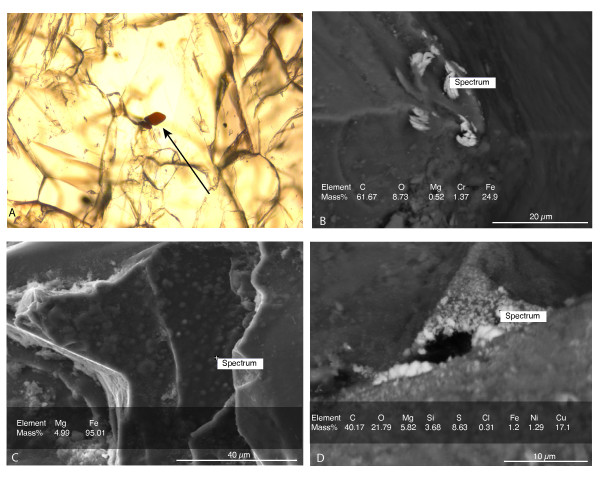
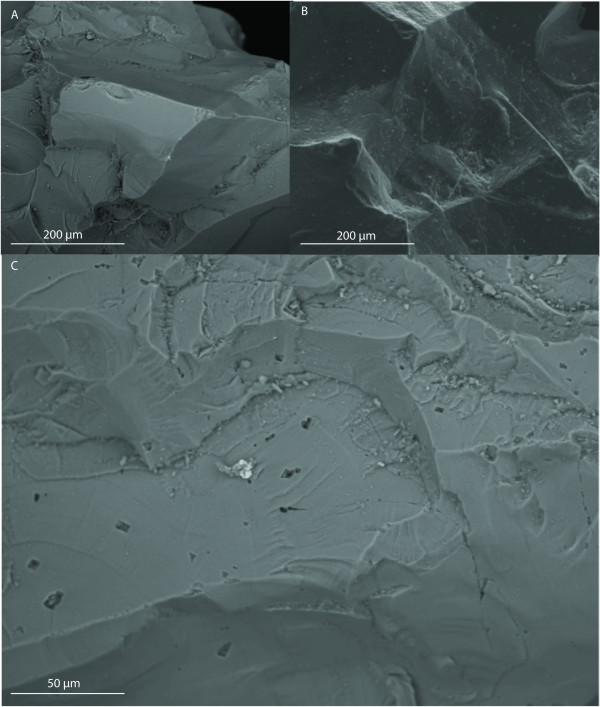
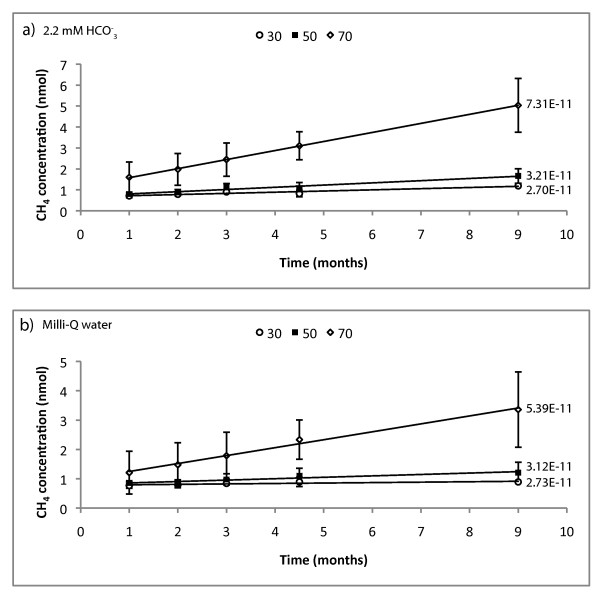
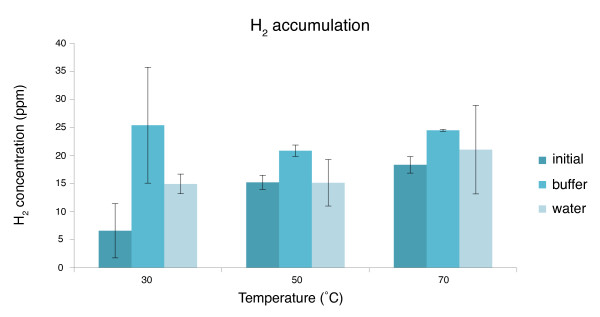
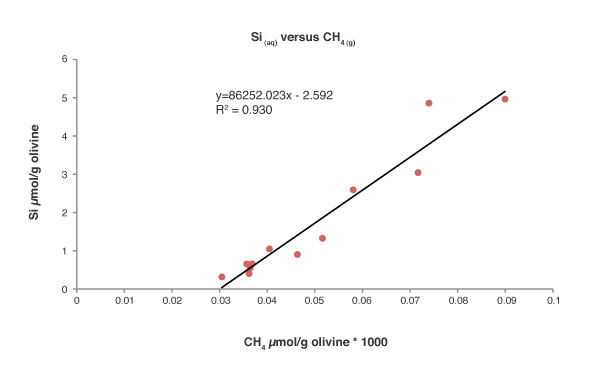
Hydrocarbons such as CH4 are known to be formed through the Fischer-Tropsch or Sabatier type reactions in hydrothermal systems usually at temperatures above 100°C. Weathering of olivine is sometimes suggested to account for abiotic formation of CH4 through its redox lowering and water splitting properties. Knowledge about the CH4 and H2 formation processes at low temperatures is important for the research about the origin and cause of early Earth and Martian CH4 and for CO2 sequestration. We have conducted a series of low temperature, long-term weathering experiments in which we have tested the CH4 and H2 formation potential of forsteritic olivine.The results show low temperature CH4 production that is probably influenced by chromite and magnetite as catalysts. Extensive analyses of a potential CH4 source trapped in the crystal structure of the olivine showed no signs of incorporated CH4. Also, the available sources of organic carbon were not enough to support the total amount of CH4 detected in our experiments. There was also a linear relationship between silica release into solution and the net CH4 accumulation into the incubation bottle headspaces suggesting that CH4 formation under these conditions could be a qualitative indicator of olivine dissolution.It is likely that minerals such as magnetite, chromite and other metal-rich minerals found on the olivine surface catalyze the formation of CH4, because of the low temperature of the system. This may expand the range of environments plausible for abiotic CH4 formation both on Earth and on other terrestrial bodies.
Overview
The claims and statistics of this paper haven’t been checked yet.
Run the check — free, no account needed. It reads the open-access text and checks the sources it cites.
Integrity signals
Registry
Cites
Statistics
Figures
Verification
Claims the paper makes
The claims and statistics of this paper haven’t been checked yet.
Run the check — free, no account needed. It reads the open-access text and checks the sources it cites.
Claims other papers make about this one
Each is checked against this paper’s own text: does it say what the citing paper says it does?
In the citing paper
“High experimental methane production has been reported (51, 52), but similar experiments with 13C-labeled carbon have shown that the methane produced is derived from background organic carbon contamination (53, 54).”
From Disequilibrium biosignatures over Earth history and implications for detecting exoplanet life (2018) · cites this paper as [52]
Self-check
Percentages, sums and reported differences re-computed from the paper’s own numbers.
The self-check needs the paper’s full text.
Citations
Cites
Short history and present trends of Fischer–Tropsch synthesis
Schulz, H. (1999) · Applied Catalysis A General · doi:10.1016/s0926-860x(99)00160-x · Cited by 1,426
Charlou, J., Donval, J., Fouquet, Y., Jean‐Baptiste, P., & Holm, N. G. (2002) · Chemical Geology · doi:10.1016/s0009-2541(02)00134-1 · Cited by 950
Self-citationDetection of methane in the atmosphere of Mars
Formisano, V., Atreya, S., Encrenaz, T., Ignatiev, N., & Giuranna, M. (2004) · Science · doi:10.1126/science.1101732 · Cited by 781
Thermodynamic constraints on hydrogen generation during serpentinization of ultramafic rocks
McCollom, T. M., & Bach, W. (2008) · Geochimica et Cosmochimica Acta · doi:10.1016/j.gca.2008.10.032 · Cited by 672
Strong Release of Methane on Mars in Northern Summer 2003
Mumma, M. J., Villanueva, G. L., Novak, R. E., Hewagama, T., Bonev, B. P., DiSanti, M. A., Mandell, A. M., & Smith, M. D. (2009) · Science · doi:10.1126/science.1165243 · Cited by 615 · cited 2×
“Sabatier or FTT reactions reduce CO2 to CH4 but are thought to require high temperatures or strong catalysts [1].”
BackgroundAbiogenic Methane Formation and Isotopic Fractionation Under Hydrothermal Conditions
Horita, J., & Berndt, M. E. (1999) · Science · doi:10.1126/science.285.5430.1055 · Cited by 590
On Silica Activity and Serpentinization
Frost, C. D., & Beard, J. S. (2007) · Journal of Petrology · doi:10.1093/petrology/egm021 · Cited by 579
H 2 -rich fluids from serpentinization: Geochemical and biotic implications
Sleep, N. H., Meibom, A., Fridriksson, T., Coleman, R. G., & Bird, D. K. (2004) · Proceedings of the National Academy of Sciences · doi:10.1073/pnas.0405289101 · Cited by 568
Detection of methane in the martian atmosphere: evidence for life?
Krasnopolsky, V. A., Maillard, J. P., & Owen, T. C. (2004) · Icarus · doi:10.1016/j.icarus.2004.07.004 · Cited by 544
Kinetics and mechanism of forsterite dissolution at 25°C and pH from 1 to 12
Pokrovsky, O. S., & Schott, J. (2000) · Geochimica et Cosmochimica Acta · doi:10.1016/s0016-7037(00)00434-8 · Cited by 486
McCollom, T. M., & Seewald, J. S. (2001) · Geochimica et Cosmochimica Acta · doi:10.1016/s0016-7037(01)00655-x · Cited by 447
The experimental deformation of dunite
Chopra, P., & Paterson, M. S. (1981) · Tectonophysics · doi:10.1016/0040-1951(81)90024-x · Cited by 398
Klein, F., Bach, W., Jöns, N., McCollom, T. M., Moskowitz, B. M., & Berquó, T. S. (2009) · Geochimica et Cosmochimica Acta · doi:10.1016/j.gca.2009.08.021 · Cited by 392
Hydrocarbons in Hydrothermal Vent Fluids: The Role of Chromium-Bearing Catalysts
Foustoukos, D., & Seyfried, W. (2004) · Science · doi:10.1126/science.1096033 · Cited by 356
Janecky, D. R., & Seyfried, W. E. (1986) · Geochimica et Cosmochimica Acta · doi:10.1016/0016-7037(86)90311-x · Cited by 323
Serpentinization and its implications for life on the early earth and Mars
Schulte, M., Blake, D., Hoehler, T., & McCollom, T. (2006) · Astrobiology · doi:10.1089/ast.2006.6.364 · Cited by 321
Have olivine, will gas: Serpentinization and the abiogenic production of methane on Mars
Oze, C., & Sharma, M. (2005) · Geophysical Research Letters · doi:10.1029/2005gl022691 · Cited by 300
Methane and related trace species on Mars: Origin, loss, implications for life, and habitability
Atreya, S. K., Mahaffy, P. R., & Wong, A. S. (2006) · Planetary and Space Science · doi:10.1016/j.pss.2006.02.005 · Cited by 288
Charlou, J. L., Fouquet, Y., Bougault, H., Donval, J. P., Étoubleau, J., Jean‐Baptiste, P., Dapoigny, A., Appriou, P., & Rona, P. A. (1998) · Geochimica et Cosmochimica Acta · doi:10.1016/s0016-7037(98)00138-0 · Cited by 275
Experimental investigation of single carbon compounds under hydrothermal conditions
Seewald, J. S., Zolotov, M. Y., & McCollom, T. M. (2006) · Geochimica et Cosmochimica Acta · doi:10.1016/j.gca.2005.09.002 · Cited by 261
Extending the Sub-Sea-Floor Biosphere
Roussel, E. G., Cambon‐Bonavita, M., Quérellou, J., Cragg, B. A., Webster, G., Prieur, D., & Parkes, R. J. (2008) · Science · doi:10.1126/science.1154545 · Cited by 247
Carbon Isotope Fractionation in the Fischer-Tropsch Synthesis and in Meteorites
Lancet, M. S., & Anders, E. (1970) · Science · doi:10.1126/science.170.3961.980 · Cited by 210
McCollom, T. M., Lollar, B. S., Lacrampe‐Couloume, G., & Seewald, J. S. (2010) · Geochimica et Cosmochimica Acta · doi:10.1016/j.gca.2010.02.008 · Cited by 182
Fu, Q., Lollar, B. S., Horita, J., Lacrampe‐Couloume, G., & Seyfried, W. E. (2007) · Geochimica et Cosmochimica Acta · doi:10.1016/j.gca.2007.01.022 · Cited by 178
Lollar, B. S., Voglesonger, K. M., Lin, L., Lacrampe‐Couloume, G., Telling, J. P., Abrajano, T. A., Onstott, T. C., & Pratt, L. M. (2007) · Astrobiology · doi:10.1089/ast.2006.0096 · Cited by 175
McCollom, T. M. (2007) · Astrobiology · doi:10.1089/ast.2006.0119 · Cited by 172
The Molecular origins of life: assembling pieces of the puzzle
(1999) · Choice Reviews Online · doi:10.5860/choice.36-6269 · Cited by 157
Lohitharn, N., & GOODWINJR, J. (2008) · Journal of Catalysis · doi:10.1016/j.jcat.2008.04.015 · Cited by 117
Hydrogen Consumption by Methanogens on the Early Earth
Kral, T. A., Brink, K. M., Miller, S. L., & McKay, C. P. (1998) · Origins of life and evolution of the biosphere · doi:10.1023/a:1006552412928 · Cited by 107
Nakamura, K., Morishita, T., Bach, W., Klein, F., Hara, K., Okino, K., Takai, K., & Kumagai, H. (2009) · Earth and Planetary Science Letters · doi:10.1016/j.epsl.2009.01.024 · Cited by 102
Microbial energetics applied to waste repositories
Hanselmann, K. W. (1991) · Cellular and Molecular Life Sciences · doi:10.1007/bf01958816 · Cited by 100
ten Kate, I. L. (2010) · Astrobiology · doi:10.1089/ast.2010.0498 · Cited by 89
Serpentinization and the inorganic synthesis of H2 in planetary surfaces
Oze, C., & Sharma, M. M. (2006) · Icarus · doi:10.1016/j.icarus.2006.09.012 · Cited by 74
Hydrogen in Rocks: An Energy Source for Deep Microbial Communities
Freund, F., Dickinson, J. T., & Cash, M. (2002) · Astrobiology · doi:10.1089/153110702753621367 · Cited by 69
Holm, N. G., & Andersson, E. M. (1998) · Cambridge University Press eBooks · doi:10.1017/cbo9780511626180.006 · Cited by 63
Self-citationIvarsson, M., Lindblom, S., Broman, C., & Holm, N. G. (2008) · Geobiology · doi:10.1111/j.1472-4669.2007.00139.x · Cited by 42
Self-citationAdvantages of doubly polished thin sections for the study of microfossils in volcanic rock
Ivarsson, M. (2006) · Geochemical Transactions · doi:10.1186/1467-4866-7-5 · Cited by 30
HAUSRATH, E. M., Liermann, L. J., House, C. H., Ferry, J. G., & Brantley, S. L. (2007) · Geobiology · doi:10.1111/j.1472-4669.2007.00095.x · Cited by 28
Cluster electron observations of the separatrix layer during traveling compression regions
Owen, C. J., Slavin, J. A., Fazakerley, A. N., Dunlop, M. W., & Balogh, A. (2005) · Geophysical Research Letters · doi:10.1029/2004gl021767 · Cited by 25
Preadsorbed Water-Promoted Mechanism of the Water−Gas Shift Reaction
Zeinalipour‐Yazdi, C. D., & Efstathiou, A. M. (2008) · The Journal of Physical Chemistry C · doi:10.1021/jp806366j · Cited by 23
On the forcing mechanism for the H2-driven deep biosphere
Hellevang, H. (2008) · International Journal of Astrobiology · doi:10.1017/s1473550408004205 · Cited by 19
Hydrogen ion exchange on amorphous silica in seawater
Culberson, C., Pytkowicz, R. M., & Atlas, E. (1975) · Marine Chemistry · doi:10.1016/0304-4203(75)90025-0 · Cited by 5
Research works printed but not linked: 1
- Horita J, Berndt ME: Abiogenic Methane Formation and Isotopic Fractionation Under Hydrothermal Conditions. Science. 1999, 285: 1055-1057. 10.1126/science.285.5430.1055. · DOI · Paper page
Cited by
Sorted by citations
Living at the Extremes: Extremophiles and the Limits of Life in a Planetary Context
Merino, N., Aronson, H. S., Bojanova, D. P., Feyhl‐Buska, J., Wong, M. L., Zhang, S. J., & Giovannelli, D. (2019) · Frontiers in Microbiology · doi:10.3389/fmicb.2019.00780 · Cited by 707
Life under extreme energy limitation: a synthesis of laboratory- and field-based investigations
Lever, M. A., Rogers, K. L., Lloyd, K. G., Overmann, J., Schink, B., Thauer, R. K., Hoehler, T. M., & Jørgensen, B. B. (2015) · FEMS Microbiology Reviews · doi:10.1093/femsre/fuv020 · Cited by 378
The contribution of the Precambrian continental lithosphere to global H2 production
Lollar, B. S., Onstott, T. C., Lacrampe‐Couloume, G., & Ballentine, C. J. (2014) · Nature · doi:10.1038/nature14017 · Cited by 378
Hydrogen generation from low-temperature water–rock reactions
Mayhew, L. E., Ellison, E. T., McCollom, T. M., Trainor, T. P., & Templeton, A. S. (2013) · Nature Geoscience · doi:10.1038/ngeo1825 · Cited by 307
Olivine dissolution rates: A critical review
Oelkers, E. H., Declercq, J., Saldi, G. D., Gislason, S. R., & Schott, J. (2018) · Chemical Geology · doi:10.1016/j.chemgeo.2018.10.008 · Cited by 296
Metadata
- Authors
- Neubeck, A., Duc, N. T., Bastviken, D., Crill, P., & Holm, N. G.
- Affiliations
- Stockholm University (SE)
- Linköping University (SE)
- Corresponding author
- Neubeck, Anna
- Venue
- Geochemical Transactions
- Published
- 2011-06-27
- Volume
- 12
- Issue
- 1
- Pages
- 6-6
- ISSN
- 1467-4866 (ISSN-L)
- PMC
- PMC3157414
- OpenAlex
- W2169148758
- Semantic Scholar
- 4036500642b0b3f7023fe48f497d2c24ddc2fbfb
- Cited by
- 135
- References
- 43
- Citations by year
- 2026: 20 · 2025: 14 · 2024: 5 · 2023: 9 · 2022: 6 · 2021: 7 · 2020: 9 · 2019: 8 · 2018: 7 · 2017: 4 · 2016: 12 · 2015: 8 · 2014: 8 · 2013: 10 · 2012: 6
- FWCI
- 4.24
- Type
- journal article
- Language
- en
- Open access
- gold
- doi.org
- Licence
- cc-by
- Locations
- Geochemical Transactions (publishedVersion, cc-by)
- PubMed Central (publishedVersion, cc-by)
- PubMed (publishedVersion)
- DiVA (Linkoping University) (submittedVersion, other-oa)
- DOAJ (DOAJ: Directory of Open Access Journals) (submittedVersion, cc-by-sa)
- Funders
- Vetenskapsrådet (621-2008-2712)
- Umeå Universitet
- Stockholms Universitet
- Topics
- Physical Sciences › Physics and Astronomy › Astronomy and Astrophysics › Origins and Evolution of Life
- Physical Sciences › Earth and Planetary Sciences › Geochemistry and Petrology › Geochemistry and Elemental Analysis
- Physical Sciences › Environmental Science › Environmental Engineering › CO2 Sequestration and Geologic Interactions
- Keywords
- olivine weathering, methane production, hydrogen formation, abiotic methane, forsterite, silica release, hydrothermal systems, Martian methane, CO2 sequestration, Fischer-Tropsch synthesis, CO2 methanation, water splitting
About these checks
Registry, retraction, Cites and statistics results are computed, not judged, with one exception: a printed reference that no index lists is read once by a model before it counts as a citation error. Claims are extracted by a model and kept only when their quote appears verbatim in the text; each cited source is then checked, with a model’s help, for whether it says what the claim relies on. Those verdicts can be wrong — read the claim’s quote and the cited source before relying on one.
Statistics and arithmetic are recomputed, not judged.
Confidence bands are shown only for fields calibrated on our annotated test set. None is calibrated yet, so no band is shown.
What counts as a claim ›How we measure confidence ›How we check this ›
Are you an author, or do you see a problem with this page? Request a review
