

Automatic classification of sentences to support Evidence Based Medicine.
Open accessThe DOI matches its Crossref record; 32 of the 33 references it cites were found in a registry or an index.
Abstract
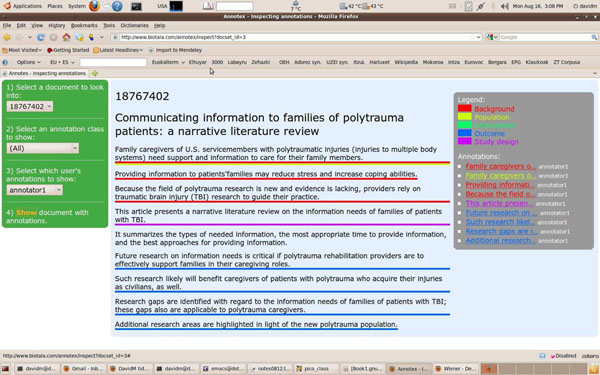
Aim: Given a set of pre-defined medical categories used in Evidence Based Medicine, we aim to automatically annotate sentences in medical abstracts with these labels. Method: We constructed a corpus of 1,000 medical abstracts annotated by hand with specified medical categories (e.g. Intervention , Outcome ). We explored the use of various features based on lexical, semantic, structural, and sequential information in the data, using Conditional Random Fields (CRF) for classification. Results: For the classification tasks over all labels, our systems achieved micro-averaged f-scores of 80.9% and 66.9% over datasets of structured and unstructured abstracts respectively, using sequential features. In labeling only the key sentences, our systems produced f-scores of 89.3% and 74.0% over structured and unstructured abstracts respectively, using the same sequential features. The results over an external dataset were lower (f-scores of 63.1% for all labels, and 83.8% for key sentences). Conclusions: Of the features we used, the best for classifying any given sentence in an abstract were based on unigrams, section headings, and sequential information from preceding sentences. These features resulted in improved performance over a simple bag-of-words approach, and outperformed feature sets used in previous work.
Overview
The claims and statistics of this paper haven’t been checked yet.
Free: it reads the open-access text and checks the first 5 claims that cite a source we can check. Create a free account to check every claim.
Integrity signals
Registry
Cites
Statistics
Figures
Verification
Claims the paper makes
The claims and statistics of this paper haven’t been checked yet.
Free: it reads the open-access text and checks the first 5 claims that cite a source we can check. Create a free account to check every claim.
Claims other papers make about this one
Each is checked against this paper’s own text: does it say what the citing paper says it does?
The source backs part of the claim, not all of it — or backs it for a different population, condition or comparison.
In the citing paper
“Design 1000 abstracts”
From Data extraction methods for systematic review (semi)automation: Update of a living systematic review (2025) · cites this paper as [52]
Experimental — accuracy not yet measuredThe source backs part of the claim, not all of it — or backs it for a different population, condition or comparison.
In the citing paper
“PICO, like NER, is a sequence labeling task where the model extracts spans describing the Participants, Interventions, Comparisons, and Outcomes in a clinical trial paper (Kim et al., 2011).”
From SciBERT: A Pretrained Language Model for Scientific Text (2019) · cites this paper as Kim et al., 2011
Experimental — accuracy not yet measuredThe cited source says what the claim attributes to it.
In the citing paper
“Micro scores were most widely used, including Al-Hussaini et al. (2022), 32 Sanchez-Graillet et al. (2022), 51 Kim et al. (2011), 52 Verbeke et al. (2012), 53 and Jin and Szolovits (2020) 54”
From Data extraction methods for systematic review (semi)automation: a living systematic review (2021) · cites this paper as [52]
In the citing paper
“extraction, domains neoplasm, glaucoma, hepatitis, diabetes, hypertension Yes, https://github.com/jetsunwhitton/RCT-ART Excluded for containing only glaucoma studies”
From Data extraction methods for systematic review (semi)automation: Update of a living systematic review (2025) · cites this paper as [52]
In the citing paper
“Structured and unstructured abstracts, multi-label on sentences.”
From Data extraction methods for systematic review (semi)automation: Update of a living systematic review (2025) · cites this paper as [52]
3 more claims about this paper
Create a free account to see every claim other papers make about this one.
Self-check
Percentages, sums and reported differences re-computed from the paper’s own numbers.
The self-check needs the paper’s full text.
Citations
Cites
The Measurement of Observer Agreement for Categorical Data
Landis, J. R., & Koch, G. G. (1977) · Biometrics · doi:10.2307/2529310 · Cited by 81,148 · cited 1×
“The averaged score over all classes was 0.62, which indicates “substantial agreement” [ 19 ].”
ResultInfluentialAn introduction to hidden Markov models
Rabiner, L., & Juang, B. (1986) · IEEE ASSP Magazine · doi:10.1109/massp.1986.1165342 · Cited by 4,775 · cited 1×
“In terms of finding suitable machine learners, well-known machine learning techniques have been applied to the tasks, including Naïve Bayes (NB) [7], Support Vector Machines (SVM) [4], Hidden Markov Models (HMM) [14], and Conditional Random Fields (CRF) [4].”
MethodUtilization of the PICO framework to improve searching PubMed for clinical questions
Schardt, C., Adams, M. B., Owens, T., Keitz, S., & Fontelo, P. (2007) · BMC Medical Informatics and Decision Making · doi:10.1186/1472-6947-7-16 · Cited by 3,053
The well-built clinical question: A key to evidence-based decisions
(1995) · ACP Journal Club · doi:10.7326/acpjc-1995-123-3-a12 · Cited by 2,931 · cited 1×
“They generally follow the PICO criterion [1]: Population (P) (i.”
BackgroundIntroduction to Statistical Relational Learning
(2007) · doi:10.7551/mitpress/7432.001.0001 · Cited by 1,643
The Unified Medical Language System
Humphreys, B. L., McCray, A. T., & Lindberg, D. A. B. (1993) · Methods of Information in Medicine · doi:10.1055/s-0038-1634945 · Cited by 1,182
An Introduction to Conditional Random Fields for Relational Learning
Sutton, C., & McCallum, A. (2007) · Introduction to Statistical Relational Learning · doi:10.7551/mitpress/7432.003.0006 · Cited by 841
BMC Medical Informatics and Decision Making
McConnell, P. I., Dash, R., Chilukuri, R., Pietrobon, R. S., Johnson, K. S., Annechiarico, R. P., & Cuticchia, A. J. (2008) · Cited by 678
Imaging Studies for Low Back Pain
Clearingh, N. Q. M., & Agency for Healthcare Research and (2008) · Journal of Pain & Palliative Care Pharmacotherapy · doi:10.1080/15360280802537332 · Cited by 653
The Unified Medical Language System
Humphreys, B. L., McCray, A. T., & Lindberg, D. A. B. (1993) · Yearbook of Medical Informatics · doi:10.1055/s-0038-1637976 · Cited by 507
Research works printed but not linked: 1
- Shimbo M Yamasaki T Matsumoto Y Using sectioning information for text retrieval: a case study with the medline abstracts Proceedings of 2nd International Workshop on Active Mining 2003 Maebashi, Japan 32 41
Cited by
SciBERT: A Pretrained Language Model for Scientific Text
Beltagy, I., Lo, K., & Cohan, A. (2019) · Proceedings of the 2019 Conference on Empirical Methods in Natural Language Processing and the 9th International Joint Conference on Natural Language Processing (EMNLP-IJCNLP) · doi:10.18653/v1/d19-1371 · Cited by 3,218
“Dependency Parsing (DEP) PICO, like NER, is a sequence labeling task where the model extracts spans describing the Participants, Interventions, Comparisons, and Outcomes in a clinical trial paper (Kim et al., 2011).”
MethodSystematic review automation technologies
Tsafnat, G., Glasziou, P., Choong, M. K., Dunn, A., Galgani, F., & Coiera, E. (2014) · Systematic Reviews · doi:10.1186/2046-4053-3-74 · Cited by 472
“Often, information highlighting algorithms focus on PICO elements reported in the trial [95-97] but may also focus on the size of the trial [97,98], and its randomization procedure [95,97].”
BackgroundMethodAutomating data extraction in systematic reviews: a systematic review
Jonnalagadda, S. R., Goyal, P., & Huffman, M. D. (2015) · Systematic Reviews · doi:10.1186/s13643-015-0066-7 · Cited by 287
“…the Cochrane Handbook for Systematic Reviews [1], the CONsolidated Standards Of Reporting Trials (CONSORT) [9] statement, the Standards for Reporting of Diagnostic Accuracy (STARD) initiative [10], and PICO [11], PECODR [12], and PIBOSO [13] frameworks to obtain the data elements to be considered.”
MethodInfluentialCan ChatGPT Write a Good Boolean Query for Systematic Review Literature Search?
Wang, S., Scells, H., Koopman, B., & Zuccon, G. (2023) · Proceedings of the 46th International ACM SIGIR Conference on Research and Development in Information Retrieval · doi:10.1145/3539618.3591703 · Cited by 275
“If there are, in fact, clusters of relevant documents amongst a large number of non-relevant ones, then automated classification techniques may help to uncover these [2, 32, 41, 70, 74].”
BackgroundFrandsen, T. F., Bruun Nielsen, M. F., Lindhardt, C. L., & Eriksen, M. B. (2020) · Journal of Clinical Epidemiology · doi:10.1016/j.jclinepi.2020.07.005 · Cited by 251
Artificial intelligence for literature reviews: opportunities and challenges
Bolaños, F., Salatino, A., Osborne, F., & Motta, E. (2024) · Artificial Intelligence Review · doi:10.1007/s10462-024-10902-3 · Cited by 246
“We then describe the PRISMA methodology [24] employed to identify, filter, and analyse the SLR tools (Section 2.2).”
Influential(2016) · PubMed · Cited by 134
Xiong, Z., Liu, T., Tse, G., Gong, M., Gladding, P. A., Smaill, B. H., Stiles, M. K., Gillis, A. M., & Zhao, J. (2018) · Frontiers in Physiology · doi:10.3389/fphys.2018.00835 · Cited by 117
“Previous studies have also proposed automated methods of text mining to aid the initial screening stage of meta-analyses (Ananiadou et al., 2009; Kim et al., 2011; Thomas et al., 2011; Cohen et al., 2012; García Adeva et al., 2013) as we did in our systematic review.”
MethodPretrained Language Models for Sequential Sentence Classification
Cohan, A., Beltagy, I., King, D., Dalvi, B., & Weld, D. (2019) · Proceedings of the 2019 Conference on Empirical Methods in Natural Language Processing and the 9th International Joint Conference on Natural Language Processing (EMNLP-IJCNLP) · doi:10.18653/v1/d19-1383 · Cited by 112
“NICTA (Kim et al., 2011) contains 1,000 biomedical abstracts with sentences classified into PICO categories (Population, Intervention, Comparison, Outcome) (Richardson et al., 1995).”
BackgroundInfluentialData extraction methods for systematic review (semi)automation: a living systematic review
Schmidt, L., Olorisade, B. K., McGuinness, L. A., Thomas, J., & Higgins, J. P. T. (2021) · F1000Research · doi:10.12688/f1000research.51117.1 · Cited by 106
Information retrieval in the workplace: A comparison of professional search practices
Russell‐Rose, T., Chamberlain, J., & Azzopardi, L. A. (2018) · Information Processing & Management · doi:10.1016/j.ipm.2018.07.003 · Cited by 124
Innovation in Pharmacovigilance: Use of Artificial Intelligence in Adverse Event Case Processing
Schmider, J., Kumar, K., LaForest, C., Swankoski, B., Naim, K., & Caubel, P. (2018) · Clinical Pharmacology & Therapeutics · doi:10.1002/cpt.1255 · Cited by 91
Annotating the biomedical literature for the human variome
Verspoor, K., Jimeno Yepes, A., Cavedon, L., McIntosh, T., Herten-Crabb, A., Thomas, Z., & Plazzer, J.-P. (2013) · Database · doi:10.1093/database/bat019 · Cited by 79
“, [38, 39]) has addressed annotation of PICO (Population, Intervention, Comparison, Outcome) or similar criteria used in Evidence-Based Medicine.”
Self-citationHierarchical Neural Networks for Sequential Sentence Classification in Medical Scientific Abstracts
Jin, D., & Szolovits, P. (2018) · Proceedings of the 2018 Conference on Empirical Methods in Natural Language Processing · doi:10.18653/v1/d18-1349 · Cited by 69
“They are mainly based on naive Bayes (Ruch et al., 2007), support vector machine (SVM) (McKnight and Srini-vasan, 2003; Yamamoto and Takagi, 2005; Liu et al., 2013), Hidden Markov Model (HMM) (Lin , 2006), and CRF (Kim et al., 2011; Hassan-zadeh et al., 2014; Hirohata et al., 2008; Chung, 2009).”
MethodSummarizing Medical Conversations via Identifying Important Utterances
Song, Y., Tian, Y., Wang, N., & Xia, F. (2020) · Proceedings of the 28th International Conference on Computational Linguistics · doi:10.18653/v1/2020.coling-main.63 · Cited by 73
“…medical field is a prevailing trend nowadays and has great potential in many applications, such as key information extraction in medical literature (Kim et al., 2011; Dernoncourt et al., 2017; ˇSeva et al., 2018), risk factor identification in electronic health records (Chang et al., 2015; Cormack…”
BackgroundMethodProceedings of the BioNLP 2018 workshop
(2018) · doi:10.18653/v1/w18-23 · Cited by 71
Neural Networks for Joint Sentence Classification in Medical Paper Abstracts
Dernoncourt, F., Lee, J. Y., & Szolovits, P. (2017) · Proceedings of the 15th Conference of the European Chapter of the Association for Computational Linguistics: Volume 2, Short Papers · doi:10.18653/v1/e17-2110 · Cited by 68
DiMeX: A Text Mining System for Mutation-Disease Association Extraction
Mahmood, A. S. M. A., Wu, T.-J., Mazumder, R., & Vijay-Shanker, K. (2016) · PLOS ONE · doi:10.1371/journal.pone.0152725 · Cited by 67
“There are previous works [38–43] that use different approaches to classify sentences into rhetorical zones or sections.”
ResultAfzal, M., Alam, F., Malik, K. M., & Malik, G. M. (2020) · Journal of Medical Internet Research · doi:10.2196/19810 · Cited by 65
“In addition, in previous works, the dataset used for training and testing [29] contained only 1000 abstracts, which is not sufficient for a deep-learning model to be generalized.”
MethodCampillos-Llanos, L., Valverde-Mateos, A., Capllonch-Carrión, A., & Moreno-Sandoval, A. (2021) · BMC Medical Informatics and Decision Making · doi:10.1186/s12911-021-01395-z · Cited by 65
Santos, Á. O. D., da Silva, E. S., Couto, L. M., Reis, G. V. L., & Belo, V. S. (2023) · Journal of Biomedical Informatics · doi:10.1016/j.jbi.2023.104389 · Cited by 64
Identifying scientific artefacts in biomedical literature: The Evidence Based Medicine use case.
Hassanzadeh, H., Groza, T., & Hunter, J. (2014) · Journal of Biomedical Informatics · doi:10.1016/j.jbi.2014.02.006 · Cited by 62
PICO Element Detection in Medical Text via Long Short-Term Memory Neural Networks.
Jin, D., & Szolovits, P. (2018) · Proceedings of the BioNLP 2018 workshop · doi:10.18653/v1/w18-2308 · Cited by 61
“In all previous works, the only dataset used for training and test and made public is from (Kim et al., 2011).”
BackgroundMethodInfluentialImproving reference prioritisation with PICO recognition.
Brockmeier, A. J., Ju, M., Przybyła, P., & Ananiadou, S. (2019) · BMC Medical Informatics and Decision Making · doi:10.1186/s12911-019-0992-8 · Cited by 62
Biomedical text mining for research rigor and integrity: tasks, challenges, directions
Kilicoglu, H. (2017) · Briefings in Bioinformatics · doi:10.1093/bib/bbx057 · Cited by 61
Predicting the Rise and Fall of Scientific Topics from Trends in their Rhetorical Framing
Prabhakaran, V., Hamilton, W. L., McFarland, D. A., & Jurafsky, D. (2016) · Proceedings of the conference - Association for Computational Linguistics. Meeting · doi:10.18653/v1/p16-1111 · Cited by 81
“Mane and Börner (2004) and Guo et al.”
BackgroundMethodAutomating Risk of Bias Assessment for Clinical Trials
Marshall, I. J., Kuiper, J., & Wallace, B. C. (2015) · IEEE Journal of Biomedical and Health Informatics · doi:10.1109/jbhi.2015.2431314 · Cited by 59
PICO element detection in medical text without metadata: are first sentences enough?
Huang, K.-C., Chiang, I.-J., Xiao, F., Liao, C.-C., Liu, C. C.-H., & Wong, J.-M. (2013) · Journal of Biomedical Informatics · doi:10.1016/j.jbi.2013.07.009 · Cited by 52
Generating Better Queries for Systematic Reviews
Scells, H., & Zuccon, G. (2018) · The 41st International ACM SIGIR Conference on Research & Development in Information Retrieval · doi:10.1145/3209978.3210020 · Cited by 52
“Techniques such as query generation [12] and query expansion and reduction [16, 25] have seen success in the medical information retrieval space for both clinical and consumer purposes.”
BackgroundUMLS-based data augmentation for natural language processing of clinical research literature
Kang, T., Perotte, A., Tang, Y., Ta, C., & Weng, C. (2021) · Journal of the American Medical Informatics Association · doi:10.1093/jamia/ocaa309 · Cited by 55
Collaborative large language models for automated data extraction in living systematic reviews
Khan, M. A., Ayub, U., Naqvi, S. A. A., Khakwani, K. Z. R., Sipra, Z. B. R., Raina, A., Zhou, S., He, H., Saeidi, A., Hasan, B., et al. (2025) · Journal of the American Medical Informatics Association · doi:10.1093/jamia/ocae325 · Cited by 50
Domain-Independent Extraction of Scientific Concepts from Research Articles
Brack, A., D’Souza, J., Hoppe, A., Auer, S., & Ewerth, R. (2020) · Lecture notes in computer science · doi:10.1007/978-3-030-45439-5_17 · Cited by 78
“The aforementioned datasets were usually annotated by domain experts [12,22,2,28,18,27].”
BackgroundModernizing the systematic review process to inform comparative effectiveness: tools and methods
Wallace, B. C., Dahabreh, I. J., Schmid, C. H., Lau, J., & Trikalinos, T. A. (2013) · Journal of Comparative Effectiveness Research · doi:10.2217/cer.13.17 · Cited by 51
Pretraining to Recognize PICO Elements from Randomized Controlled Trial Literature.
Tian, K., Shirui, Z., & Chunhua, W. (2019) · Studies in Health Technology and Informatics · doi:10.3233/shti190209 · Cited by 45
Data extraction methods for systematic review (semi)automation: Update of a living systematic review
Schmidt, L., Finnerty Mutlu, A. N., Elmore, R., Olorisade, B. K., Thomas, J., & Higgins, J. P. T. (2023) · F1000Research · doi:10.12688/f1000research.51117.2 · Cited by 44
Opportunities for Business Intelligence and Big Data Analytics in Evidence Based Medicine
El-Gayar, O., & Timsina, P. (2014) · Hawaii International Conference on System Sciences (HICSS) · doi:10.1109/hicss.2014.100 · Cited by 51
“…systematic reviews [23, 24] (b) Automatically structure the abstract of article in PICO (population, intervention, comparison and outcome) criteria [25] (c) mine the free-text document of clinician notes [26] (d) mine the electronic health record and identify the patient’s condition [27, 28] (e)…”
BackgroundBuilding an automated SOAP classifier for emergency department reports
Mowery, D. L., Wiebe, J., Visweswaran, S., Harkema, H., & Chapman, W. W. (2011) · Journal of Biomedical Informatics · doi:10.1016/j.jbi.2011.08.020 · Cited by 58
“) from MEDLINE abstracts that focused on randomized control trials [23].”
SciBERT: A Pretrained Language Model for Scientific Text
Beltagy, I., Lo, K., & Cohan, A. (2019) · arXiv · doi:10.48550/arxiv.1903.10676 · Cited by 41
“Dependency Parsing (DEP) PICO, like NER, is a sequence labeling task where the model extracts spans describing the Participants, Interventions, Comparisons, and Outcomes in a clinical trial paper (Kim et al., 2011).”
MethodA Statistical Relational Learning Approach to Identifying Evidence Based Medicine Categories
Verbeke, M., Asch, V. V., Morante, R., Frasconi, P., Daelemans, W. M. P., & Raedt, L. D. (2012) · Lirias · Cited by 52
Crowd control: Effectively utilizing unscreened crowd workers for biomedical data annotation
Cocos, A., Qian, T., Callison-Burch, C., & Masino, A. J. (2017) · Journal of Biomedical Informatics · doi:10.1016/j.jbi.2017.04.003 · Cited by 40
“The conventional approach relies on enlisting experts with the appropriate domain knowledge to provide manual annotations which are then used to train automatic classifiers [6].”
MethodToward assessing clinical trial publications for reporting transparency
Kilicoglu, H., Rosemblat, G., Hoang, L., Wadhwa, S., Peng, Z., Malički, M., Schneider, J., & ter Riet, G. (2021) · Journal of Biomedical Informatics · doi:10.1016/j.jbi.2021.103717 · Cited by 34
Sundaram, G., & Berleant, D. (2023) · Lecture notes in networks and systems · doi:10.1007/978-981-99-3243-6_7 · Cited by 48
Proceedings of the 6th Workshop on Argument Mining
(2019) · doi:10.18653/v1/w19-45 · Cited by 33
Fast and scalable neural embedding models for biomedical sentence classification
Agibetov, A., Blagec, K., Xu, H., & Samwald, M. (2018) · BMC Bioinformatics · doi:10.1186/s12859-018-2496-4 · Cited by 42
Automatic evidence quality prediction to support evidence-based decision making
Sarker, A., Mollá, D., & Paris, C. L. (2015) · Artificial Intelligence in Medicine · doi:10.1016/j.artmed.2015.04.001 · Cited by 33
Aurélie Névéol, A., Wilbur, W. J., & Lu, Z. (2011) · Bioinformatics · doi:10.1093/bioinformatics/btr573 · Cited by 29
“Our longterm research interest is in assessing the value of using deposition statements for predicting future trends of data production.”
BackgroundMethodInfluentialAutomating risk of bias assessment for clinical trials
Marshall, I. J., Kuiper, J., & Wallace, B. C. (2014) · Proceedings of the 5th ACM Conference on Bioinformatics, Computational Biology, and Health Informatics · doi:10.1145/2649387.2649406 · Cited by 28
“has previously been recognized that machine learning tools can assist abstract screening [15]–[18], data extraction [19]–[23], summarization [24], [25], and scoping [26].”
BackgroundAlpaPICO: Extraction of PICO frames from clinical trial documents using LLMs.
Ghosh, M., Mukherjee, S., Ganguly, A., Basuchowdhuri, P., Naskar, S. K., & Ganguly, D. (2024) · Methods · doi:10.1016/j.ymeth.2024.04.005 · Cited by 27
Data extraction methods for systematic review (semi)automation: Update of a living systematic review
Schmidt, L., Finnerty Mutlu, A. N., Elmore, R., Olorisade, B. K., Thomas, J., & Higgins, J. P. T. (2025) · F1000Research · doi:10.12688/f1000research.51117.3 · Cited by 27
“When using, or mapping to UMLS concepts, ambiguity was discussed in.(27,44,50)”
Sequential sentence classification in research papers using cross-domain multi-task learning
Brack, A., Entrup, E., Stamatakis, M., Buschermöhle, P., Hoppe, A., & Ewerth, R. (2024) · International Journal on Digital Libraries · doi:10.1007/s00799-023-00392-z · Cited by 35
“Intervention, Population (Kim et al., 2011), or Hypothesis, Model, Experiment (Liakata et al.”
InfluentialAceso: PICO-Guided Evidence Summarization on Medical Literature.
Zhang, X., Geng, P., Zhang, T., Lu, Q., Gao, P., & Mei, J. (2020) · IEEE Journal of Biomedical and Health Informatics · doi:10.1109/jbhi.2020.2984704 · Cited by 25
“Many machine learning models have been proposed to detect PICO elements, including Naive Bayes [22], [23], Random Forest [22], Support Vector Machines [5], Conditional Random Fields [21] and multilayer perceptions [24].”
BackgroundMethodInfluentialMulti-Vector Models with Textual Guidance for Fine-Grained Scientific Document Similarity
Mysore, S., Cohan, A., & Hope, T. (2022) · Proceedings of the 2022 Conference of the North American Chapter of the Association for Computational Linguistics: Human Language Technologies · doi:10.18653/v1/2022.naacl-main.331 · Cited by 16
Stylianou, N., Razis, G., Goulis, D. G., & Vlahavas, I. (2020) · Artificial Intelligence in Medicine · doi:10.1016/j.artmed.2020.101949 · Cited by 22
Masoumi, S., Amirkhani, H., Sadeghian, N., & Shahraz, S. (2024) · Systematic Reviews · doi:10.1186/s13643-024-02470-y · Cited by 33
“NLP can, for example, help extract the number of individuals who participated in particular clinical trials [6, 7].”
Brack, A., Hoppe, A., Stocker, M., Auer, S., & Ewerth, R. (2021) · International Journal on Digital Libraries · doi:10.1007/s00799-021-00306-x · Cited by 38
Relation Extraction in Clinical Text using NLP Based Regular Expressions
Veena, G., Hemanth, R. V., & Hareesh, J. (2019) · International Conference on Intelligent Computing, Instrumentation and Control Technologies (ICICICT) · doi:10.1109/icicict46008.2019.8993274 · Cited by 27
Hu, Y., Keloth, V. K., Raja, K., Chen, Y., & Xu, H. (2023) · Bioinformatics · doi:10.1093/bioinformatics/btad542 · Cited by 21
Query-oriented evidence extraction to support evidence-based medicine practice
Sarker, A., Mollá, D., & Paris, C. L. (2015) · Journal of Biomedical Informatics · doi:10.1016/j.jbi.2015.11.010 · Cited by 25
“[44] to classify all the sentences of the abstracts in our corpus into PIBOSO (Population, Intervention, Background, Other, Study, Outcome) elements.”
BackgroundFeature Stacking for Sentence Classification in Evidence-Based Medicine
Lui, M. (2012) · Cited by 22
A survey on biomedical automatic text summarization with large language models
Huang, Z., Chen, X., Wang, Y., Huang, J., & Zhao, X. (2025) · Information Processing & Management · doi:10.1016/j.ipm.2025.104216 · Cited by 27
Combination of conditional random field with a rule based method in the extraction of PICO elements.
Chabou, S., & Iglewski, M. (2018) · BMC Medical Informatics and Decision Making · doi:10.1186/s12911-018-0699-2 · Cited by 19
“The choice of the CRF algorithm is motivated by the fact that CRFs perform well for sentence classification with PICO labels ([9, 12, 14]).”
BackgroundMethodInfluentialBringing Structure into Summaries: a Faceted Summarization Dataset for Long Scientific Documents
Meng, R., Thaker, K. M., Zhang, L., Dong, Y., Yuan, X., Wang, T., & He, D. (2021) · doi:10.18653/v1/2021.acl-short.137 · Cited by 51
“In fact, existing studies in faceted summarization (Huang et al., 2020; Tauch-mann et al., 2018; Jaidka et al., 2016; Contractor et al., 2012; Kim et al., 2011; Jaidka et al., 2018; Stead et al., 2019) are often conducted with rather limited amount of data that are grossly insufficient to meet…”
BackgroundMethodInfluentialA corpus for research in text processing for evidence based medicine
Mollá, D., Santiago-Martínez, M. E., Sarker, A., & Paris, C. L. (2015) · Language Resources and Evaluation · doi:10.1007/s10579-015-9327-2 · Cited by 19
“…sentences according to a range of features including sentence position, sentence length, similarity to the question, sentence type based on the PIBOSO taxonomy (Kim et al. 2011), n-grams, parts of speech, domain information based on the Unified Medical Language System (UMLS), and question type.”
MethodAppraising the Quality of Systematic Reviews for Age-Related Macular Degeneration Interventions
Downie, L. E., Makrai, E., Bonggotgetsakul, Y., Dirito, L. J., Kristo, K., Pham, M.-A. N., You, M., Verspoor, K. M., & Pianta, M. J. (2018) · JAMA Ophthalmology · doi:10.1001/jamaophthalmol.2018.2620 · Cited by 19
Outcome Polarity Identification of Medical Papers
Sarker, A., Mollá, D., & Paris, C. L. (2011) · Cited by 18
Cross-domain multi-task learning for sequential sentence classification in research papers
Brack, A., Hoppe, A., Buschermöhle, P., & Ewerth, R. (2022) · ACM/IEEE Joint Conference on Digital Libraries · doi:10.1145/3529372.3530922 · Cited by 29
“Analysis of Semantic Relatedness of Classes: Based on the annotation guidelines of the investigated datasets PMD [18], NIC [37], DRI [23], and ART [45], we identified six clusters of semantically related classes, which are depicted in Figure 5.”
BackgroundMethodInfluentialAn Approach for Query-Focused Text Summarisation for Evidence Based Medicine
Sarker, A., Mollá, D., & Paris, C. L. (2013) · Lecture notes in computer science · doi:10.1007/978-3-642-38326-7_41 · Cited by 19
“We use the system proposed by [8] to classify all the sentences of the abstracts in our corpus into PIBOSO (population, intervention, background, other, study, outcome) elements.”
MethodJiang, L., Lan, M., Menke, J. D., Vorland, C. J., & Kilicoglu, H. (2024) · Scientific Reports · doi:10.1038/s41598-024-72130-7 · Cited by 18
“Research on other key characteristics is less common, although methods have been reported for identifying study design 29,30,41 , sample size 28,37,41 , statistical methods 42 , and limitations 43 .”
MethodExploiting classification correlations for the extraction of evidence-based practice information.
(2012) · PubMed Central · Cited by 16
Context-aware grading of quality evidences for evidence-based decision-making
Afzal, M., Hussain, M., Haynes, R. B., & Lee, S. (2017) · Health Informatics Journal · doi:10.1177/1460458217719560 · Cited by 16
Pianta, M. J., Makrai, E., Verspoor, K. M., Cohn, T. A., & Downie, L. E. (2018) · Journal of Clinical Epidemiology · doi:10.1016/j.jclinepi.2018.07.015 · Cited by 15
Automatic recognition of self-acknowledged limitations in clinical research literature
Kilicoglu, H., Rosemblat, G., Malički, M., & ter Riet, G. (2018) · Journal of the American Medical Informatics Association · doi:10.1093/jamia/ocy038 · Cited by 15
Bashir, R., Surian, D., & Dunn, A. G. (2019) · Journal of Clinical Epidemiology · doi:10.1016/j.jclinepi.2019.02.015 · Cited by 18
A Study on Agreement in PICO Span Annotations
Lee, G. E., & Sun, A. (2019) · International ACM SIGIR Conference on Research and Development in Information Retrieval (SIGIR) · doi:10.1145/3331184.3331352 · Cited by 26
“Other existing PICO annotation datasets are sentence-level annotations [1, 3] and/or contain only a few hundreds of documents [2].”
BackgroundMethodEvaluation of Scientific Elements for Text Similarity in Biomedical Publications
Neves, M., Butzke, D., & Grune, B. (2019) · Workshop on Argument Mining (ArgMining) · doi:10.18653/v1/w19-4515 · Cited by 25
“We also dismissed the tool 15 from Jin and Szolovits (2018) for the PIBOSO and Pub-MedRCT schemes.”
BackgroundInfluentialHassanzadeh, H., Groza, T., Nguyen, A. N., & Hunter, J. (2015) · PLoS ONE · doi:10.1371/journal.pone.0129392 · Cited by 15
“In order to investigate the applicability of such an approach to consolidating scientific artefacts in EBM, we performed a separate set of experiments using the NICTA-PIBOSO corpus [6].”
BackgroundMethodInfluentialNorman, C. R., Leeflang, M., & Névéol, A. (2018) · Europe PMC (PubMed Central) · doi:10.5281/zenodo.2574709 · Cited by 22
Overview of the ALTA 2012 Shared Task
Amini, I., Martínez, D., & Mollá, D. (2012) · Cited by 30
Aliyu, M. B., Iqbal, R., & James, A. E. (2018) · International Conference on Social Networks Analysis, Management and Security (SNAMS) · doi:10.1109/snams.2018.8554896 · Cited by 14
Identification of highly related references about gene-disease association
Liu, R., & Shih, C. C. (2014) · BMC Bioinformatics · doi:10.1186/1471-2105-15-286 · Cited by 12
“To automatically classify sentences in a reference into the categories about evidence-based medicine (EBM), positions of the terms in the reference were also shown to be good features for the classifiers [31,32].”
MethodRequirements Analysis for an Open Research Knowledge Graph
Brack, A., Hoppe, A., Stocker, M., Auer, S., & Ewerth, R. (2020) · Lecture notes in computer science · doi:10.1007/978-3-030-54956-5_1 · Cited by 17
A neuro-symbolic method for understanding free-text medical evidence.
Kang, T., Turfah, A., Kim, J., Perotte, A., & Weng, C. (2021) · Journal of the American Medical Informatics Association · doi:10.1093/jamia/ocab077 · Cited by 11
Sequential Span Classification with Neural Semi-Markov CRFs for Biomedical Abstracts
Yamada, K. C., Hirao, T., Sasano, R., Takeda, K., & Nagata, M. (2020) · Findings of the Association for Computational Linguistics: EMNLP (Findings of EMNLP) · doi:10.18653/v1/2020.findings-emnlp.77 · Cited by 18
“BiLSTMs have been successfully used to represent spans as vectors in many NLP tasks such as semantic role labeling (Ouchi et al., 2018), syntactic parsing (Stern et al., 2017), and coreference resolution (Lee et al., 2017).”
MethodHassanzadeh, H., Nguyen, A. N., & Verspoor, K. M. (2019) · Journal of Biomedical Informatics · doi:10.1016/j.jbi.2019.103321 · Cited by 13
Inferring appropriate eligibility criteria in clinical trial protocols without labeled data
Restificar, A. C., & Ananiadou, S. (2012) · Data and Text Mining in Bioinformatics · doi:10.1145/2390068.2390074 · Cited by 12
“We took advantage of earlier studies, e.g., [10, 24, 20, 4], suggesting that the use of the PICO [23] framework and its variants, e.g., PIBOSO [12], are helpful in the clinical question-answering problem domain.”
BackgroundA Span-based Dynamic Local Attention Model for Sequential Sentence Classification
Shang, X., Ma, Q., Lin, Z., Yan, J., & Chen, Z. (2021) · doi:10.18653/v1/2021.acl-short.26 · Cited by 20
“NICTA-PIBOSO (Kim et al., 2011) and PubMed 20k RCT (Dernoncourt and Lee, 2017).”
Extractive summarization of medical documents using domain knowledge and corpus statistics
Sarker, A. (2012) · Australasian Medical Journal · doi:10.4066/amj.2012.1361 · Cited by 10
Jiang, X., Zhang, B., Ye, Y., & Liu, Z. (2019) · Lecture notes in computer science · doi:10.1007/978-3-030-32236-6_7 · Cited by 14
Hassanzadeh, H., Groza, T., Nguyen, A. N., & Hunter, J. (2014) · Lecture notes in computer science · doi:10.1007/978-3-319-13560-1_84 · Cited by 10
“6% F-score for Study design (Kim et al., 2011).”
BackgroundMethodInfluentialA distantly supervised dataset for automated data extraction from diagnostic studies.
Norman, C., Leeflang, M., Spijker, R., Kanoulas, E., & Névéol, A. (2019) · Proceedings of the 18th BioNLP Workshop and Shared Task · doi:10.18653/v1/w19-5012 · Cited by 9
Collaborative Large Language Models for Automated Data Extraction in Living Systematic Reviews
Khan, M. A., Ayub, U., Naqvi, S. A. A., Khakwani, K. Z. R., Sipra, Z. B. R., Raina, A., Zou, S., He, H., Hossein, S. A., Hasan, B., et al. (2024) · doi:10.1101/2024.09.20.24314108 · Cited by 54
A Light-Weight Text Summarization System for Fast Access to Medical Evidence
Sarker, A., Yang, Y., Al-Garadi, M. A., & Abbas, A. (2020) · Frontiers in Digital Health · doi:10.3389/fdgth.2020.585559 · Cited by 12
“To compare our approach with the extractive summarization method proposed by Demner-Fushman and Lin (17), we used an automatic classifier to detect Outcome sentences (42); the last three outcome sentences were extracted as the summary.”
MethodEvaluating automated entity extraction with respect to drug and non-drug treatment strategies.
Guo, J., Blake, C., & Guan, Y. (2019) · Journal of Biomedical Informatics · doi:10.1016/j.jbi.2019.103177 · Cited by 8
Overview of the TAC 2018 Systematic Review Information Extraction Track.
Schmitt, C., Walker, V. R., Williams, A. R., Varghese, A., Ahmad, Y., Rooney, A., & Wolfe, M. S. (2018) · Theory and applications of categories · Cited by 8
Lan, M., Cheng, M., Hoang, L., ter Riet, G., & Kilicoglu, H. (2024) · Journal of Biomedical Informatics · doi:10.1016/j.jbi.2024.104628 · Cited by 15
Modernizing Evidence Synthesis for Evidence-Based Medicine
Wallace, B., Dahabreh, I. J., Schmid, C. H., Lau, J., & Trikalinos, T. A. (2014) · Elsevier eBooks · doi:10.1016/b978-0-12-398476-0.00012-9 · Cited by 14
Méndez-Cruz, C.-F., Gama‐Castro, S., Mejía-Almonte, C., Castillo-Villalba, M. P., Muñiz-Rascado, L., & Collado‐Vides, J. (2017) · Database · doi:10.1093/database/bax070 · Cited by 8
“Let SKIP4(MS, AS) be the overlapped unigrams and skip-bigrams; then we can calculate ROUGE-SU4 scores as shown in Equation (11):”
MethodInfluentialBonin, F., Gleize, M., Hou, Y., Ganguly, D., Finnerty, A. N., Jochim, C., Pascale, A., Tommasi, P., Aonghusa, P. M., & Michie, S. (2020) · PubMed Central · Cited by 6
Angrosh, M. A., Cranefield, S., & Stanger, N. (2012) · Natural Language Engineering · doi:10.1017/s1351324912000277 · Cited by 10
Metadata
- Authors
- Kim, S. N., Martinez, D., Cavedon, L., & Yencken, L.
- Affiliations
- The University of Melbourne (AU)
- ORCID
- Cavedon, Lawrence
- Venue
- BMC Bioinformatics
- Published
- 2011-03-29
- Volume
- 12
- Issue
- S2
- Pages
- S5-S5
- ISSN
- 1471-2105 (ISSN-L)
- PMC
- PMC3073185
- OpenAlex
- W2147994374
- Semantic Scholar
- a80b29a0c5229e518206b9b5683487f0d9d41e20
- Cited by
- 214
- References
- 33
- Citations by year
- 2026: 4 · 2025: 9 · 2024: 24 · 2023: 19 · 2022: 9 · 2021: 16 · 2020: 19 · 2019: 23 · 2018: 23 · 2017: 7 · 2016: 4 · 2015: 13 · 2014: 13 · 2013: 10 · 2012: 17
- FWCI
- 5.59
- Type
- journal article
- Language
- en
- Open access
- gold
- doi.org
- Licence
- cc-by
- Locations
- BMC Bioinformatics (publishedVersion, cc-by)
- PubMed Central (publishedVersion, cc-by)
- PubMed (publishedVersion)
- RMIT Research Repository (RMIT University Library) (submittedVersion)
- DOAJ (DOAJ: Directory of Open Access Journals) (submittedVersion)
- Funders
- Australian Government
- Australian Research Council
- U.S. National Library of Medicine
- Topics
- Health Sciences › Medicine › Health Informatics › Biomedical Text Mining and Ontologies
- Physical Sciences › Computer Science › Artificial Intelligence › Text and Document Classification Technologies
- Physical Sciences › Computer Science › Artificial Intelligence › Advanced Text Analysis Techniques
- Keywords
- sentence classification, medical abstracts, evidence-based medicine, clinical text annotation, conditional random fields, section headings, biomedical text mining
- MeSH terms
- Abstracting and Indexing, Electronic Data Processing, Natural Language Processing, Semantics, Information Storage and Retrieval, Evidence-Based Medicine
About these checks
Registry, retraction, Cites and statistics results are computed, not judged, with one exception: a printed reference that no index lists is read once by a model before it counts as a citation error. Claims are extracted by a model and kept only when their quote appears verbatim in the text; each cited source is then checked, with a model’s help, for whether it says what the claim relies on. Those verdicts can be wrong — read the claim’s quote and the cited source before relying on one.
Statistics and arithmetic are recomputed, not judged.
Confidence bands are shown only for fields calibrated on our annotated test set. None is calibrated yet, so no band is shown.
What counts as a claim ›How we measure confidence ›How we check this ›
Are you an author, or do you see a problem with this page? Request a review
Data sources
Bibliographic data: Semantic Scholar, OpenAlex, Crossref.
Contains information from the Semantic Scholar Academic Graph Datasets, made available under the ODC Attribution License (ODC-BY 1.0).
Semantic Scholar’s data is described in: Kinney, R., et al. (2023). The Semantic Scholar Open Data Platform. arXiv:2301.10140.
