

The DOI matches its Crossref record; 60 of the 61 references it cites were found in a registry or an index.
Redundancy in electronic health record corpora: analysis, impact on text mining performance and mitigation strategies
Open accessAbstract
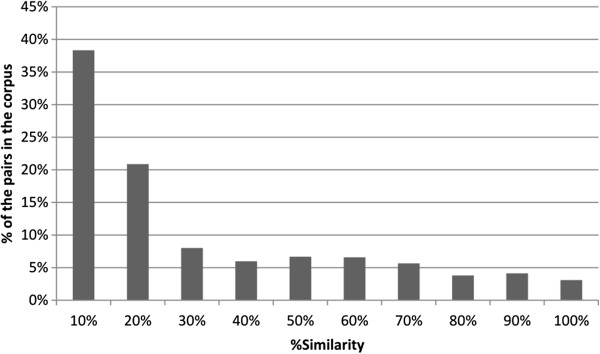
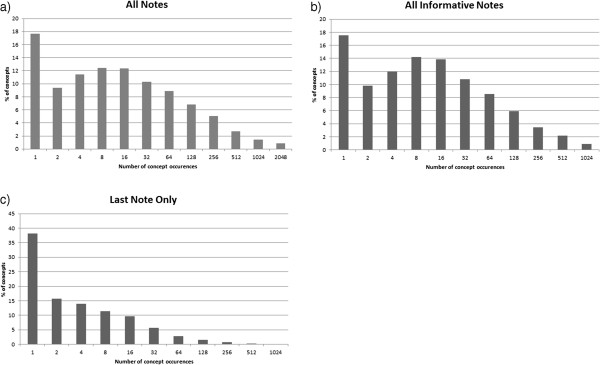
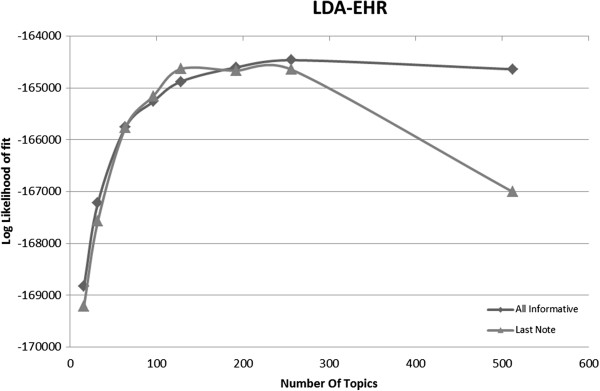
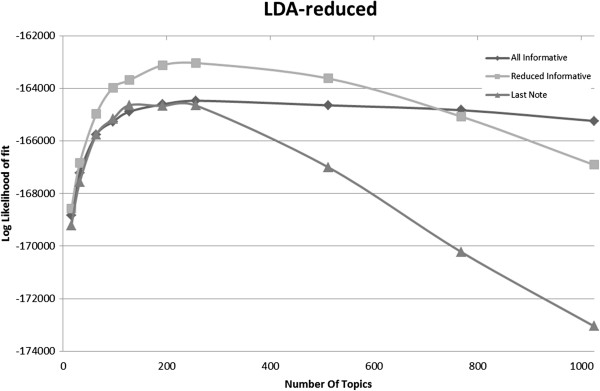
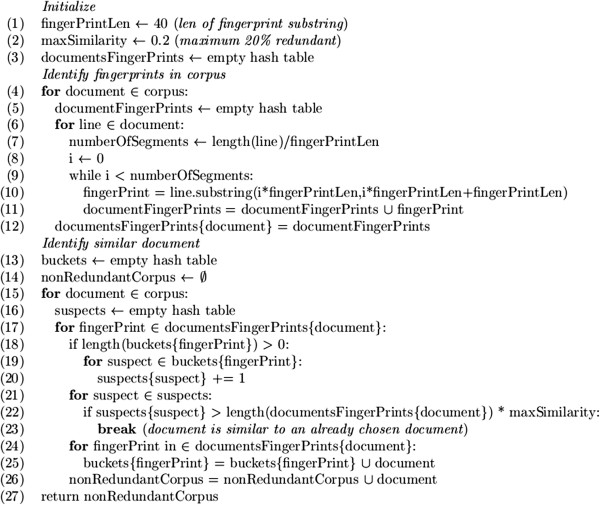
BACKGROUND: The increasing availability of Electronic Health Record (EHR) data and specifically free-text patient notes presents opportunities for phenotype extraction. Text-mining methods in particular can help disease modeling by mapping named-entities mentions to terminologies and clustering semantically related terms. EHR corpora, however, exhibit specific statistical and linguistic characteristics when compared with corpora in the biomedical literature domain. We focus on copy-and-paste redundancy: clinicians typically copy and paste information from previous notes when documenting a current patient encounter. Thus, within a longitudinal patient record, one expects to observe heavy redundancy. In this paper, we ask three research questions: (i) How can redundancy be quantified in large-scale text corpora? (ii) Conventional wisdom is that larger corpora yield better results in text mining. But how does the observed EHR redundancy affect text mining? Does such redundancy introduce a bias that distorts learned models? Or does the redundancy introduce benefits by highlighting stable and important subsets of the corpus? (iii) How can one mitigate the impact of redundancy on text mining? RESULTS: We analyze a large-scale EHR corpus and quantify redundancy both in terms of word and semantic concept repetition. We observe redundancy levels of about 30% and non-standard distribution of both words and concepts. We measure the impact of redundancy on two standard text-mining applications: collocation identification and topic modeling. We compare the results of these methods on synthetic data with controlled levels of redundancy and observe significant performance variation. Finally, we compare two mitigation strategies to avoid redundancy-induced bias: (i) a baseline strategy, keeping only the last note for each patient in the corpus; (ii) removing redundant notes with an efficient fingerprinting-based algorithm. (a)For text mining, preprocessing the EHR corpus with fingerprinting yields significantly better results. CONCLUSIONS: Before applying text-mining techniques, one must pay careful attention to the structure of the analyzed corpora. While the importance of data cleaning has been known for low-level text characteristics (e.g., encoding and spelling), high-level and difficult-to-quantify corpus characteristics, such as naturally occurring redundancy, can also hurt text mining. Fingerprinting enables text-mining techniques to leverage available data in the EHR corpus, while avoiding the bias introduced by redundancy.
Overview
The claims and statistics of this paper haven’t been checked yet.
Run the check — free, no account needed. It reads the open-access text and checks the sources it cites.
Integrity signals
Registry
Cites
Statistics
Figures
Verification
Claims the paper makes
The claims and statistics of this paper haven’t been checked yet.
Run the check — free, no account needed. It reads the open-access text and checks the sources it cites.
Claims other papers make about this one
Each is checked against this paper’s own text: does it say what the citing paper says it does?
The source backs part of the claim, not all of it — or backs it for a different population, condition or comparison.
In the citing paper
“The over representation of certain SDoH factors because of the duplication impairs the training and evaluation of machine learning and deep learning models81,82.”
From Social determinants of health extraction from clinical notes across institutions using large language models (2025) · cites this paper as [82]
Experimental — accuracy not yet measured
Self-check
Percentages, sums and reported differences re-computed from the paper’s own numbers.
The self-check needs the paper’s full text.
Citations
Cites
Basic local alignment search tool
Altschul, S. F., Gish, W., Miller, W., Myers, E. W., & Lipman, D. J. (1990) · Journal of Molecular Biology · doi:10.1006/jmbi.1990.9999 · Cited by 98,669
Gapped BLAST and PSI-BLAST: a new generation of protein database search programs
Altschul, S. (1997) · Nucleic Acids Research · doi:10.1093/nar/25.17.3389 · Cited by 73,302
(2003) · Journal of Machine Learning Research · doi:10.5555/944919.944937 · Cited by 32,337
Colowick, S. P., Joshi, M. D., Jagannathan, & KAPLAN, N. O. (1966) · Cited by 26,137
Advances in neural information processing systems 7
Cios, K. J., & Shields, M. E. (1997) · Neurocomputing · doi:10.1016/s0925-2312(97)90018-7 · Cited by 22,093
The Pfam Protein Families Database
Bateman, A. G. (2002) · Nucleic Acids Research · doi:10.1093/nar/30.1.276 · Cited by 14,075
Foundations of statistical natural language processing
Manning, C. D., & Schütze, H. (1999) · Cited by 9,816
(2004) · Cited by 9,718
The unified medical language system (UMLS): integrating biomedical terminology
Bodenreider, O. (2004) · Nucleic Acids Research · doi:10.1093/nar/gkh061 · Cited by 4,356
Advances in Neural Information Processing Systems 20
Bonilla, E. V., Chai, K. M. A., & Williams, C. K. I. (2008) · neural information processing systems · Cited by 2,701
Research works printed but not linked: 5
- Joshi M, Pedersen T, Maclin R Proceedings of the 2nd Indian International Conference on Artificial Intelligence (IICAI’05): 2005. A comparative study of support vector machines applied to the supervised word sense disambiguation problem in the medical domain 2005, 3449-3468.
- Zeng QT, Crowell J: Semantic classification of consumer health content. MEDNET Retrieved May 2008, 2006: 19.
- Yoshimasa Tsuruoka YT, Jin-Dong K, Tomoko O, Sophia A, Jun’ichi T Lecture Notes in Computer Science. Developing a Robust Part-of-Speech Tagger for Biomedical Text 2005.
- Baldridge J, Morton T, Bierner G Technical report, SourceForge. The opennlp maximum entropy package 2002.
- McCallum AK: Mallet: A machine learning for language toolkit. 2002.
Cited by
Sorted by citations
Miotto, R., Li, L., Kidd, B. A., & Dudley, J. T. (2016) · Scientific Reports · doi:10.1038/srep26094 · Cited by 1,710
De novo identification of differentially methylated regions in the human genome
Peters, T. J., Buckley, M. J., Statham, A. L., Pidsley, R., Samaras, K., Lord, R. V., Clark, S. J., & Molloy, P. L. (2015) · Epigenetics & Chromatin · doi:10.1186/1756-8935-8-6 · Cited by 982
Big data analytics for preventive medicine
Razzak, I., Imran, M. A., & Xu, G. (2019) · Neural Computing and Applications · doi:10.1007/s00521-019-04095-y · Cited by 362
Automated methods for the summarization of electronic health records
Perotte, R., & Elhadad, N. (2015) · Journal of the American Medical Informatics Association · doi:10.1093/jamia/ocv032 · Cited by 227
Self-citationYou, Z., Chan, K. C. C., & Hu, P. (2015) · PLoS ONE · doi:10.1371/journal.pone.0125811 · Cited by 175
Graph-based prediction of Protein-protein interactions with attributed signed graph embedding
Yang, F., Fan, K., Song, D., & Lin, H.-K. (2020) · BMC Bioinformatics · doi:10.1186/s12859-020-03646-8 · Cited by 144
Miotto, R., & Weng, C. (2015) · Journal of the American Medical Informatics Association · doi:10.1093/jamia/ocu050 · Cited by 104
Fuzzy Approach Topic Discovery in Health and Medical Corpora
Karami, A., Gangopadhyay, A., Zhou, B., & Kharrazi, H. (2017) · International Journal of Fuzzy Systems · doi:10.1007/s40815-017-0327-9 · Cited by 95
Identifying and mitigating biases in EHR laboratory tests
Pivovarov, R., Albers, D. J., Sepulveda, J. L., & Elhadad, N. (2014) · Journal of Biomedical Informatics · doi:10.1016/j.jbi.2014.03.016 · Cited by 91
Self-citationLength and redundancy of outpatient progress notes across a decade at an academic medical center
Rule, A., Bedrick, S., Chiang, M. F., & Hribar, M. R. (2021) · JAMA Network Open · doi:10.1001/jamanetworkopen.2021.15334 · Cited by 90
Levis, M., Leonard Westgate, C., Gui, J., Watts, B. V., & Shiner, B. (2021) · Psychological Medicine · doi:10.1017/s0033291720000173 · Cited by 87
Big data are coming to psychiatry: a general introduction
Monteith, S., Glenn, T., Geddes, J. R., & Bauer, M. (2015) · International Journal of Bipolar Disorders · doi:10.1186/s40345-015-0038-9 · Cited by 95
Detecting Social and Behavioral Determinants of Health with Structured and Free-Text Clinical Data
Feller, D. J., Bear Don't Walk IV, O. J., Zucker, J., Yin, M. T., Gordon, P., & Elhadad, N. (2020) · Applied Clinical Informatics · doi:10.1055/s-0040-1702214 · Cited by 86
Self-citationScientific evidence for clinical text summarization using large language models: scoping review
Bednarczyk, L., Reichenpfader, D., Gaudet-Blavignac, C., Ette, A. K., Zaghir, J., Zheng, Y., Bensahla, A., Bjelogrlic, M., & Lovis, C. (2025) · Journal of Medical Internet Research · doi:10.2196/68998 · Cited by 83
Wong, L., You, Z., Li, S., Huang, Y., & Liu, G. (2015) · Lecture notes in computer science · doi:10.1007/978-3-319-22053-6_75 · Cited by 80
Prevalence and Sources of Duplicate Information in the Electronic Medical Record
Steinkamp, J., Kantrowitz, J. J., & Airan-Javia, S. (2022) · JAMA Network Open · doi:10.1001/jamanetworkopen.2022.33348 · Cited by 74
Redundancy-Aware Topic Modeling for Patient Record Notes
Cohen, R., Aviram, I., Elhadad, M., & Elhadad, N. (2014) · PLoS ONE · doi:10.1371/journal.pone.0087555 · Cited by 71
“While these initial results are promising on EHR data, initial research suggests that the specific characteristics of the clinical language affect the methods and results of these techniques [3,22,23].”
BackgroundMethodResultInfluentialSelf-citationEffects of preprocessing and training biases in latent factor models for recommender systems
Yuan, Y., Luo, X., & Shang, M. (2017) · Neurocomputing · doi:10.1016/j.neucom.2017.10.040 · Cited by 62
Natural Language Processing in medicine and ophthalmology: A review for the 21st-century clinician
Rojas-Carabali, W. A., Agrawal, R., Gutiérrez-Sinisterra, L., Baxter, S. L., Cifuentes‐González, C., Wei, Y. C., Abisheganaden, J. A., Kannapiran, P., Wong, S., Lee, B. T. K., et al. (2024) · Asia-Pacific Journal of Ophthalmology · doi:10.1016/j.apjo.2024.100084 · Cited by 70
Selecting relevant features from the electronic health record for clinical code prediction
Scheurwegs, E., Čule, B., Luyckx, K., Luyten, L., & Daelemans, W. M. P. (2017) · Journal of Biomedical Informatics · doi:10.1016/j.jbi.2017.09.004 · Cited by 48
Iqbal, E., Mallah, R., Rhodes, D. R., Wu, H., Romero, A., Chang, N., Dzahini, O., Pandey, C., Broadbent, M. T. M., Stewart, R. J., et al. (2017) · PLoS ONE · doi:10.1371/journal.pone.0187121 · Cited by 48
Rashid, J., Shah, S. A. A., Irtaza, A., Mahmood, T., Nisar, M., Shafiq, M., & Gardezi, A. (2019) · IEEE Access · doi:10.1109/access.2019.2944973 · Cited by 37
What’s in a Summary? Laying the Groundwork for Advances in Hospital-Course Summarization
Adams, G., Alsentzer, E., Ketenci, M., Zucker, J. E., & Elhadad, N. (2021) · Conference of the North American Chapter of the Association for Computational Linguistics: Human Language Technologies (NAACL-HLT) · doi:10.18653/v1/2021.naacl-main.382 · Cited by 57
Self-citationManagerial hubris detection: the case of Enron
Eckhaus, E., & Sheaffer, Z. (2018) · Risk Management · doi:10.1057/s41283-018-0037-0 · Cited by 42
Bandyopadhyay, S., Ray, S., Mukhopadhyay, A., & Maulik, U. (2015) · Algorithms for Molecular Biology · doi:10.1186/s13015-015-0056-2 · Cited by 34
Integrating multiple networks for protein function prediction
Yu, G., Zhu, H., Domeniconi, C., & Guo, M. (2015) · BMC Systems Biology · doi:10.1186/1752-0509-9-s1-s3 · Cited by 31
Organizing standardized electronic healthcare records data for mining
Batra, S., & Sachdeva, S. (2016) · Health Policy and Technology · doi:10.1016/j.hlpt.2016.03.006 · Cited by 30
(2018) · Europe PMC (PubMed Central) · Cited by 30
Self-citationRule, A., & Hribar, M. R. (2021) · Journal of the American Medical Informatics Association · doi:10.1093/jamia/ocab230 · Cited by 25
Predicting protein function via downward random walks on a gene ontology
Yu, G., Zhu, H., Domeniconi, C., & Liu, J. (2015) · BMC Bioinformatics · doi:10.1186/s12859-015-0713-y · Cited by 25
Keloth, V. K., Selek, S., Chen, Q., Gilman, C., Fu, S., Dang, Y., Chen, X., Hu, X., Zhou, Y., He, H., et al. (2025) · npj Digital Medicine · doi:10.1038/s41746-025-01645-8 · Cited by 24
Bazoge, A., Morin, E., Daille, B., & Gourraud, P. (2023) · JMIR Medical Informatics · doi:10.2196/42477 · Cited by 29
Clinical data quality: a data life cycle perspective
Weng, C.-H. (2019) · Biostatistics & Epidemiology · doi:10.1080/24709360.2019.1572344 · Cited by 15
Apathy, N. C., Hare, A. J., Fendrich, S. J., & Cross, D. A. (2022) · Journal of the American Medical Informatics Association · doi:10.1093/jamia/ocac211 · Cited by 23
Cross-narrative Temporal Ordering of Medical Events
Raghavan, P., Fosler‐Lussier, E., Elhadad, N., & Lai, A. M. (2014) · Proceedings of the conference - Association for Computational Linguistics. Meeting · doi:10.3115/v1/p14-1094 · Cited by 21
Self-citationDetecting clinically relevant new information in clinical notes across specialties and settings
Zhang, R., Pakhomov, S., Arsoniadis, E. G., Lee, J. T., Wang, Y., & Melton, G. B. (2017) · BMC Medical Informatics and Decision Making · doi:10.1186/s12911-017-0464-y · Cited by 21
Natural Language Processing for Radiation Oncology: Personalizing Treatment Pathways
Lin, H., Ni, L., Phuong, C., & Hong, J. C. (2024) · Pharmacogenomics and Personalized Medicine · doi:10.2147/pgpm.s396971 · Cited by 22
Addressing Note Bloat: Solutions for Effective Clinical Documentation
Genes, N. G., Sills, J., Heaton, H. A., Shy, B. D., & Scofi, J. (2025) · Journal of the American College of Emergency Physicians Open · doi:10.1016/j.acepjo.2024.100031 · Cited by 19
UNIPred: Unbalance-Aware Network Integration and Prediction of Protein Functions
Frasca, M., Bertoni, A., & Valentini, G. (2015) · Journal of Computational Biology · doi:10.1089/cmb.2014.0110 · Cited by 18
Fu, S., Vassilaki, M., Ibrahim, O. A., Petersen, R. C., Pagali, S., St Sauver, J., Moon, S., Wang, L., Fan, J. W., Liu, H., et al. (2022) · Frontiers in Digital Health · doi:10.3389/fdgth.2022.958539 · Cited by 15
Evolution of Genes Neighborhood within Reconciled Phylogenies: An Ensemble Approach
Chauve, C., Ponty, Y., & Zanetti, J. P. P. (2014) · Lecture notes in computer science · doi:10.1007/978-3-319-12418-6_7 · Cited by 17
Individual Case Safety Report Replication: An Analysis of Case Reporting Transmission Networks
van Stekelenborg, J., Kara, V., Haack, R., Vogel, U. F., Garg, A., Krupp, M., Gofman, K., Dreyfus, B., Hauben, M., & Bate, A. (2022) · Drug Safety · doi:10.1007/s40264-022-01251-7 · Cited by 15
Rashid, J., Shah, S. A. A., & Irtaza, A. (2019) · Journal of Intelligent & Fuzzy Systems · doi:10.3233/jifs-182776 · Cited by 12
BIM-Enabled Claims Management Concept: Implications for Dispute Avoidance and Management
Giwa, F., Omotayo, T., Tzortzopoulos, P., & Malalgoda, C. I. (2024) · Journal of Legal Affairs and Dispute Resolution in Engineering and Construction · doi:10.1061/jladah.ladr-1112 · Cited by 14
Characterizing the Value of Information in Medical Notes
Hsu, C.-C., Karnwal, S., Mullainathan, S., Obermeyer, Z., & Tan, C. (2020) · Findings of the Association for Computational Linguistics: EMNLP (Findings of EMNLP) · doi:10.18653/v1/2020.findings-emnlp.187 · Cited by 20
Hardjojo, A., Gunachandran, A., Pang, L., Abdullah, M. R. B., Wah, W., Chong, J. W. C., Goh, E. H., Teo, S. H., Lim, G., Lee, M. L., et al. (2018) · JMIR Medical Informatics · doi:10.2196/medinform.8204 · Cited by 14
Alberts, N. M., Law, E. F., Chen, A., Ritterband, L. M., & Palermo, T. M. (2018) · Internet Interventions · doi:10.1016/j.invent.2018.07.005 · Cited by 14
A novel multiple kernel fuzzy topic modeling technique for biomedical data
Rashid, J., Kim, J., Hussain, A., Naseem, U., & Juneja, S. (2022) · BMC Bioinformatics · doi:10.1186/s12859-022-04780-1 · Cited by 11
Hiebel, N., Ferret, O., Fort, K., & Névéol, A. (2023) · Conference of the European Chapter of the Association for Computational Linguistics · doi:10.18653/v1/2023.eacl-main.170 · Cited by 16
Walsh, C. G., & Elhadad, N. (2014) · Europe PMC (PubMed Central) · Cited by 13
Self-citationKeloth, V., Selek, S., Chen, Q.-Y., Gilman, C., Fu, S.-Y., Dang, Y., Chen, X., Hu, X.-Y., Zhou, Y.-J., He, H., et al. (2024) · medRxiv · doi:10.1101/2024.05.21.24307726 · Cited by 6
Mahbub, M., Srinivasan, S., Begoli, E., & Peterson, G. D. (2022) · Bioinformatics · doi:10.1093/bioinformatics/btac508 · Cited by 11
Rajaram, A., Patel, N., Hickey, Z., Wolfrom, B., & Newbigging, J. (2022) · Health Informatics Journal · doi:10.1177/14604582221093498 · Cited by 11
Longitudinal analysis of new information types in clinical notes.
Zhang, R., Pakhomov, S., & Melton, G. B. (2014) · Europe PMC (PubMed Central) · Cited by 10
Gene-pseudogene evolution: a probabilistic approach
Mahmudi, O., Sennblad, B., Arvestad, L., Nowick, K., & Lagergren, J. (2015) · BMC Genomics · doi:10.1186/1471-2164-16-s10-s12 · Cited by 10
Labrosse, J., Lam, T., Sebbag, C., Benque, M., Abdennebi, I., Merckelbagh, H., Osdoit, M., Priour, M., Guerin, J., Balezeau, T., et al. (2019) · JCO Clinical Cancer Informatics · doi:10.1200/cci.19.00031 · Cited by 10
New model of Electronic Health Record: Macedonian case study
Gavrilov, G., & Trajkovik, V. (2016) · Journal of Emerging research and solutions in ICT · doi:10.20544/ersict.02.16.p08 · Cited by 9
Probabilistic modeling of the evolution of gene synteny within reconciled phylogenies
Semeria, M., Tannier, É., & Guéguen, L. (2015) · BMC Bioinformatics · doi:10.1186/1471-2105-16-s14-s5 · Cited by 8
Rajagopal, M., Kuwelkar, S., & Sivakumar, R. (2022) · Measurement Sensors · doi:10.1016/j.measen.2022.100577 · Cited by 11
Soft Computing Methods for Disulfide Connectivity Prediction
Marquez-Chamorro, A. E., & Aguilar–Ruiz, J. S. (2015) · Evolutionary Bioinformatics · doi:10.4137/ebo.s25349 · Cited by 8
Chakrabarti, S., Sen, A. K., Huser, V., Hruby, G. W., Rusanov, A., Albers, D. J., & Weng, C. (2017) · Journal of Healthcare Informatics Research · doi:10.1007/s41666-017-0005-6 · Cited by 8
Antunes, R., Silva, J., & Matos, S. (2020) · ACM Symposium on Applied Computing · doi:10.1145/3341105.3373987 · Cited by 8
Redundancy of Progress Notes for Serial Office Visits
Hribar, M. R., Rule, A., Huang, A. E., Dusek, H., Goldstein, I. H., Henriksen, B., Lin, W.-C., Igelman, A. D., & Chiang, M. F. (2019) · Ophthalmology · doi:10.1016/j.ophtha.2019.06.015 · Cited by 7
Evolution of genes neighborhood within reconciled phylogenies: an ensemble approach
Chauve, C., Ponty, Y., & Zanetti, J. P. P. (2015) · BMC Bioinformatics · doi:10.1186/1471-2105-16-s19-s6 · Cited by 7
A Clustering Algorithm Based on Document Embedding to Identify Clinical Note Templates
Tang, C., Plasek, J. M., Xiong, Y., Zhang, Z., Bates, D. W., & Zhou, L. (2020) · Annals of Data Science · doi:10.1007/s40745-020-00296-8 · Cited by 6
Integration of Neural Embeddings and Probabilistic Models in Topic Modeling
Koochemeshkian, P., & Bouguila, N. (2024) · Applied Artificial Intelligence · doi:10.1080/08839514.2024.2403904 · Cited by 8
Rajaram, A., Judd, M., & Barber, D. (2025) · JMIR AI · doi:10.2196/64279 · Cited by 6
Xiong, Y., Yang, X., Liu, L., Wong, K., Chen, Q., Xiang, Y., & Tang, B. (2023) · Findings of the Association for Computational Linguistics: EMNLP (Findings of EMNLP) · doi:10.18653/v1/2023.findings-emnlp.586 · Cited by 4
Sørup, F. K. H., Brunak, S., & Eriksson, R. (2020) · BMC Medical Research Methodology · doi:10.1186/s12874-020-00993-1 · Cited by 5
Copy and paste in the electronic medical record: A scoping review
(2021) · Knowledge Management & E-Learning: An International Journal · doi:10.34105/j.kmel.2021.13.028 · Cited by 5
Dataset Debt in Biomedical Language Modeling
Fries, J., Seelam, N., Altay, G., Weber, L., Kang, M., Datta, D., Su, R., Garda, S., Wang, B., Ott, S., et al. (2022) · doi:10.18653/v1/2022.bigscience-1.10 · Cited by 8
Electronic Health Record Summarization over Heterogeneous and Irregularly Sampled Clinical Data
Pivovarov, R. (2015) · doi:10.7916/d89w0f6v · Cited by 11
Scalable Wide and Deep Learning for Computer Assisted Coding
Amoia, M., Diehl, F., Gimenez, J., Pinto, J., Schumann, R., Stemmer, F., Vozila, P., & Zhang, Y. (2018) · Conference of the North American Chapter of the Association for Computational Linguistics: Human Language Technologies (NAACL-HLT) · doi:10.18653/v1/n18-3001 · Cited by 4
Electronic health record note review in an outpatient specialty clinic: who is looking?
Chen, J., Hribar, M. R., Goldstein, I. H., Rule, A., Lin, W.-C., Dusek, H., & Chiang, M. F. (2021) · JAMIA Open · doi:10.1093/jamiaopen/ooab044 · Cited by 4
Hu, S., Lu, L., Jin, X., Jiang, Y., Zheng, H., Xu, Q., Cai, F., Meng, Y., & Zhang, C. (2017) · IEEE International Conference on Bioinformatics and Biomedicine (BIBM) · doi:10.1109/bibm.2017.8217797 · Cited by 4
Physician Integrity, Templates, and the ‘F’ Word
Musher, D. M., Hayward, C. P., & Musher, B. (2019) · Journal of Emergency Medicine · doi:10.1016/j.jemermed.2019.03.046 · Cited by 4
Estrogen mediates acute elastic fibre homeostasis in skinPreprint
Saville, C. R., Holmes, D. F., Swift, J., Derby, B., Emmerson, E., Hardman, M. J., & Sherratt, M. J. (2019) · bioRxiv (Cold Spring Harbor Laboratory) · doi:10.1101/728865 · Cited by 4
Kocaman, V., Cheng, F.-Y., Bonis, J., Raut, G., Timsina, P., Talby, D., & Kia, A. (2025) · JMIR AI · doi:10.2196/59251 · Cited by 3
Redundancy in French Electronic Health Records: A preliminary study
D'hondt, E., Tannier, X., & Aurélie Névéol, A. (2015) · International Workshop on Health Text Mining and Information Analysis (LOUHI) · doi:10.18653/v1/w15-2603 · Cited by 3
Delespierre, T., & Josseran, L. (2018) · JMIR Public Health and Surveillance · doi:10.2196/publichealth.9022 · Cited by 3
Analysis of Search on Clinical Narrative within the EHR
Natarajan, K. (2012) · ProQuest LLC eBooks · doi:10.7916/d8ww7qsq · Cited by 3
Breithaupt, A. G., Mohan, S., Thombley, R. L., Pimentel, S. D., & Douglas, V. C. (2025) · Neurology Education · doi:10.1212/ne9.0000000000200200 · Cited by 2
Diagnostics Based Patient Classification for Clinical Decision Support Systems
Paliwal, G., Bunglowala, A., & Kanthed, P. (2024) · Journal of Automation Mobile Robotics & Intelligent Systems · doi:10.14313/jamris/2-2024/16 · Cited by 2
Huang, Y., You, Z., Li, J., Wong, L., & Cai, S. (2015) · Lecture notes in computer science · doi:10.1007/978-3-319-22186-1_63 · Cited by 2
Patro, R., Norel, R., Prill, R. J., Sáez-Rodríguez, J., Lorenz, P., Steinbeck, F., Ziems, B., Luštrek, M., Barbarini, N., Tiengo, A., et al. (2016) · BMC Bioinformatics · doi:10.1186/s12859-016-1008-7 · Cited by 2
Towards A Model Of Knowledge Extraction Of Text Mining For Palliative Care Patients In Panama.
Cedeño-Moreno, D., & Vargas-Lombardo, M. (2016) · International journal of scientific and technology research · Cited by 2
Metrics for Electronic-Nursing-Record-Based Narratives: cross-sectional analysis
Kim, K., Jeong, S., Lee, K., Park, H., Min, Y. H., Lee, J., Kim, Y., Yoo, S., Doh, G., & Ahn, S. (2016) · Applied Clinical Informatics · doi:10.4338/aci-2016-07-ra-0119 · Cited by 2
Combining learning and constraints for genome-wide protein annotation
Teso, S., Masera, L., Diligenti, M., & Passerini, A. (2019) · BMC Bioinformatics · doi:10.1186/s12859-019-2875-5 · Cited by 2
Text mining-based measurement of precision of polysomnographic reports as basis for intervention
Baty, F., Hegermann, J., Locatelli, T., Rüegg, C., Gysin, C., Rassouli, F., & Brutsche, M. H. (2022) · Journal of Biomedical Semantics · doi:10.1186/s13326-022-00259-3 · Cited by 2
Hospital Discharge Summarization Data Provenance
Landes, P., Chaise, A. J., Patel, K., Huang, S. S., & Eugenio, B. D. (2023) · Workshop on Biomedical Language Processing (BioNLP) · doi:10.18653/v1/2023.bionlp-1.41 · Cited by 2
Hidden Variable Models in Text Classification and Sentiment Analysis
Koochemeshkian, P., Ihou, K. E., & Bouguila, N. (2024) · Electronics · doi:10.3390/electronics13101859 · Cited by 2
Ou-Yang, C., Wulandari, C. P., Iqbal, M., Wang, H.-C., & Chen, C.-F. (2019) · Applied Sciences · doi:10.3390/app9224962 · Cited by 2
Prediction of Sudden Health Crises Owing to Congestive Heart Failure with Deep Learning Models
Shabbeer, S., & Reddy, E. S. (2021) · Revue d intelligence artificielle · doi:10.18280/ria.350108 · Cited by 2
Systematic Analysis of the Factors Contributing to the Variation and Change of the Microbiome
Aiello, K. D. (2018) · Cited by 1
Feller, D. (2020) · Polymer Journal · doi:10.7916/d8-60pj-0831 · Cited by 1
Contextual Variation of Clinical Notes induced by EHR Migration.
Miller, K., Moon, S., Fu, S., & Liu, H. (2023) · PubMed Central · Cited by 1
Flexible Distribution Approaches to Enhance Regression and Deep Topic Modelling Techniques
Koochemeshkian, P., & Bouguila, N. (2024) · Expert Systems · doi:10.1111/exsy.13789 · Cited by 1
Exploring Temporal Patterns in Emergency Department Triage Notes with Topic Models
Kocbek, S., Verspoor, K. M., & Buntine, W. (2014) · RMIT Research Repository (RMIT University Library) · Cited by 1
Knowledge Mapping Analysis on Text Mining Research of Medicine Related Fields in Different Regions
Gou, M., & Zhao, W. (2017) · Cross-cultural communication · doi:10.3968/10006 · Cited by 1
Metadata
- Authors
- Cohen, R., Elhadad, M., & Elhadad, N.
- Affiliations
- Ben-Gurion University of the Negev (IL)
- Columbia University (US)
- Corresponding author
- Cohen, Raphael
- Venue
- BMC Bioinformatics
- Published
- 2013-01-16
- Volume
- 14
- Issue
- 1
- Pages
- 10-10
- ISSN
- 1471-2105 (ISSN-L)
- PMC
- PMC3599108
- OpenAlex
- W2146408445
- Cited by
- 121
- References
- 61
- Citations by year
- 2026: 3 · 2025: 6 · 2024: 10 · 2023: 6 · 2022: 13 · 2021: 7 · 2020: 10 · 2019: 10 · 2018: 9 · 2017: 8 · 2016: 10 · 2015: 18 · 2014: 8 · 2013: 2
- FWCI
- 5.68
- Type
- journal article
- Language
- en
- Open access
- gold
- doi.org
- Licence
- Locations
- BMC Bioinformatics (publishedVersion, cc-by)
- Europe PMC (PubMed Central) (publishedVersion, cc-by)
- PubMed Central (publishedVersion, cc-by)
- PubMed (publishedVersion)
- Funders
- U.S. National Library of Medicine
- Topics
- Health Sciences › Medicine › Health Informatics › Biomedical Text Mining and Ontologies
- Physical Sciences › Computer Science › Artificial Intelligence › Machine Learning in Healthcare
- Social Sciences › General Social Sciences › Computational and Text Analysis Methods
- Keywords
- electronic health records, clinical text, collocation identification, topic modeling, fingerprinting, data cleaning, named entity recognition, phenotype extraction, longitudinal patient records
- MeSH terms
- Algorithms, Humans, Semantics, Health Records, Personal, Data Mining, Electronic Health Records
About these checks
Registry, retraction, Cites and statistics results are computed, not judged, with one exception: a printed reference that no index lists is read once by a model before it counts as a citation error. Claims are extracted by a model and kept only when their quote appears verbatim in the text; each cited source is then checked, with a model’s help, for whether it says what the claim relies on. Those verdicts can be wrong — read the claim’s quote and the cited source before relying on one.
Statistics and arithmetic are recomputed, not judged.
Confidence bands are shown only for fields calibrated on our annotated test set. None is calibrated yet, so no band is shown.
What counts as a claim ›How we measure confidence ›How we check this ›
Are you an author, or do you see a problem with this page? Request a review
